
Reviewed · OSAKA TOURS
【Family Friendly】Traditional Mochi Pounding Experience
Fresh mochi is a hands-on Osaka treat. This one-hour activity turns a familiar Japanese sweet into a lively cultural lesson, with a short talk, steaming rice, rhythmic pounding, and plenty of tasting at the end. I especially like the family-friendly format and the central Dotonbori location. The main thing to consider is that mochi can be hard to chew and swallow, so older adults should eat small portions carefully.
The activity costs $32.29 per person, which is fair for a small-group session capped at 10 people. I also like that children under 13 can join, adults may participate without children, and the staff provide patient instruction in English, with Chinese support through slides or interpretation.
In This Review
- Key points at a glance
- Why mochi pounding works so well in Osaka
- Arriving at Oh Mochi in Dotonbori
- The 10-minute introduction to mochi
- Steaming the glutinous rice
- Taking turns with the mortar and pestle
- Tasting five or more traditional toppings
- A good fit for children, adults, and grandparents
- How much value you get for $32.29
- What could be better
- Timing, cancellation, and planning advice
- Should you book the Osaka mochi experience?
- FAQ
- Is this mochi pounding experience suitable for children under 13?
- How long does the mochi pounding activity last?
- Where does the experience begin and end?
- What will I do during the activity?
- What toppings are available?
- Is the activity available in English?
- Can vegetarians and vegans participate?
- How many people can join one session?
- What happens if I need to cancel?
Key points at a glance
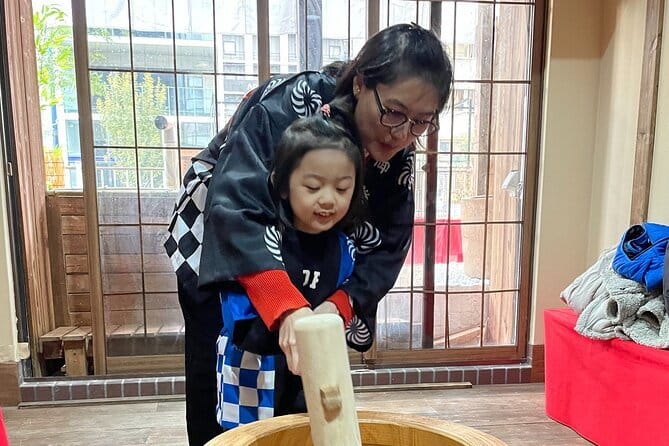
- Pound rice with traditional tools: You use a mortar and pestle to turn steamed glutinous rice into soft mochi.
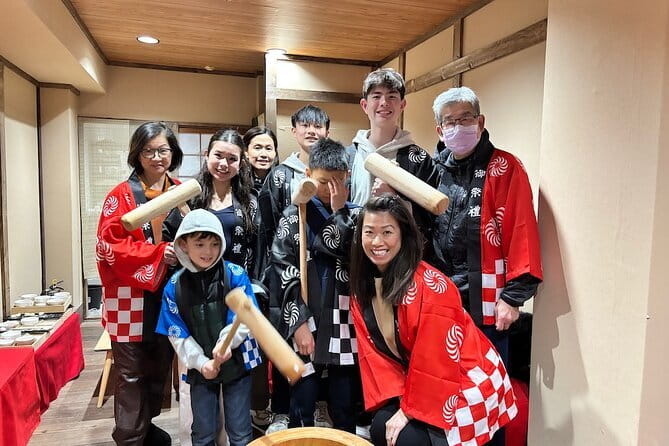
- Built for families: Children as young as 5 and 6 have enjoyed taking part, while grandparents and teenagers can join too.
- Eight topping choices: Depending on the session, you may taste mochi with kinako, red bean paste, nori, sweet soy sauce, and other options.
- Only about 45 to 60 minutes: It is an easy activity to fit between Dotonbori sightseeing, shopping, or a meal.
- A small group of up to 10: The limited size gives the instructors room to guide each person.
- Highly praised for friendly staff: The hosts receive repeated praise for patient explanations, good organization, and making the activity fun.
Why mochi pounding works so well in Osaka
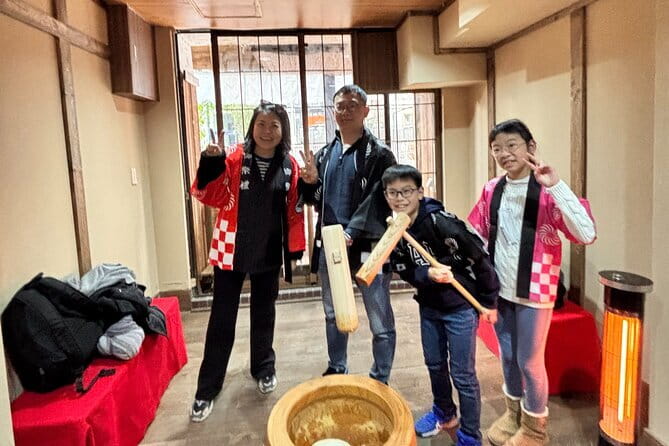
Mochi is made from glutinous rice that becomes sticky and stretchy when cooked. The traditional pounding process, known as mochitsuki, changes the texture by repeatedly pressing and striking the steamed rice until it becomes a smooth mass.
That process is what makes this more than a snack tasting. You learn how the food is made, then take part in the work yourself. The rhythm, noise, and teamwork give the activity a playful quality that a simple cooking demonstration would miss.
The session begins with about 10 minutes on the history and cultural meaning of mochi pounding. This is short enough for children to follow, but it gives the food a place in Japanese life rather than presenting it as just another sweet.
I appreciate that balance. You get context without sitting through a long lecture. The main event remains the food and the chance to handle the traditional equipment.
A few more options to weigh up in Osaka
- Osaka Go Karting Tour with Funny Costume
★ 5.0 · 2,658 reviews - Osaka Castle: Museum and Tower Entry Ticket
★ 4.5 · 2,380 reviews - Osaka: Shinsekai Food Tour with 13-15 Dishes at 5 Eateries
★ 4.8 · 2,204 reviews
Arriving at Oh Mochi in Dotonbori
The meeting point is Mochi Pounding Experience Osaka, also called Oh Mochi, at 2-chōme-4-11 Dōtonbori in Chuo Ward. The activity begins and ends at this same location, and it is near public transportation.
That central setting adds real value. Dotonbori is one of Osaka’s best-known areas for food, lights, shopping, and evening walks. You can place this activity into a larger visit without spending extra time traveling across the city.
The location also makes the one-hour length useful. You can schedule the mochi session before exploring Dotonbori, after a meal, or during a break from sightseeing. If you are traveling with children, a short activity can be easier than committing to a full afternoon cooking class.
The exact meeting procedure is not described in detail, so check your confirmation carefully for the start time and arrival instructions. A mobile ticket is provided, which makes showing your booking on your phone simple.
The 10-minute introduction to mochi
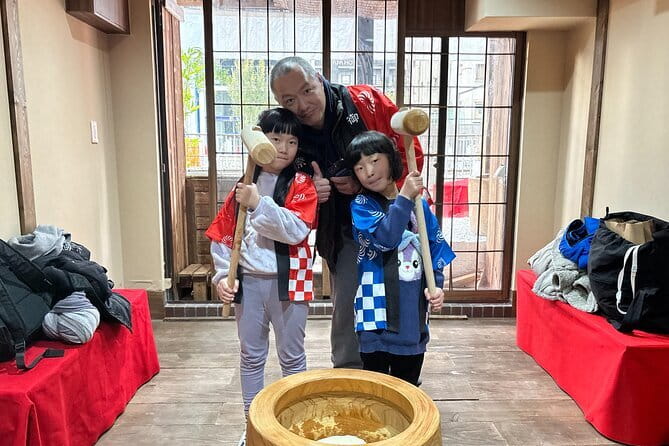
The opening talk covers the history and cultural significance of mochi pounding. This gives you a quick explanation of why the pounding process matters and how it fits into Japanese tradition.
The introduction is especially useful for children. They may first see the activity as a chance to hit rice with a wooden tool, but the talk helps connect the action to a longer food tradition. Adults who already know mochi from Japanese restaurants or sweets shops should still find the preparation details worthwhile.
The language options are English and Chinese. English instruction is available, while Chinese information is provided through slides or interpreted using ChatGPT. That means the depth of explanation may vary by language, but the main physical steps are easy to follow by watching the instructors.
The staff are repeatedly praised for being friendly and patient. That matters here because the rice changes texture as you work with it, and first-time participants need clear guidance on timing and technique.
Steaming the glutinous rice

The next step is joining the process of steaming the glutinous rice. The information does not specify how long the steaming takes or how much of the preparation you personally handle, so you should think of this as part of the demonstration and group process rather than a full kitchen class.
Still, seeing the rice before it becomes mochi helps explain the food. The finished sweet can seem mysterious when bought in a shop. Here, you watch the basic ingredient move from cooked rice to a sticky dough.
For children, this stage provides a useful pause before the louder pounding begins. For adults, it adds a practical bit of food knowledge. You see that mochi is not a pastry with a complicated list of ingredients. Its appeal comes from texture, timing, and the work needed to change the rice.
A completely different kind of day out:
- Osaka Food Tour: 13 Dishes at 5 Local Eateries
★ 5.0 · 2,149 reviews - Hungry Osaka Street Food Tour:15 Tastings & 3 Drinks with a Local
★ 5.0 · 1,727 reviews - Osaka: Tea Ceremony Experience
★ 4.9 · 1,426 reviews - Osaka Kickstart: Hotspots & Hidden Gems Tour
★ 5.0 · 1,306 reviews
Taking turns with the mortar and pestle
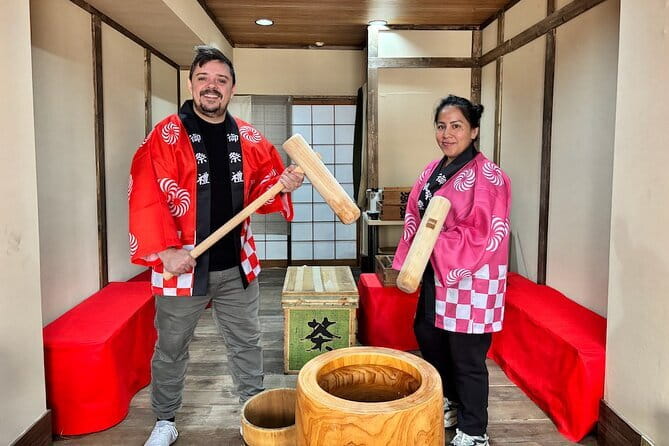
The central activity is pounding the steamed rice with traditional tools. You use the pestle to strike and press the rice in the mortar, following the staff’s instructions as the mixture becomes smoother and more elastic.
This is a group activity, so you should expect to take turns rather than pound continuously for the entire session. Some participants have described shouting yo shoi during the process, adding a simple call-and-response rhythm to the work.
That rhythm is part of the fun. It gives children a clear way to join in, and it keeps the group involved while each person takes a turn. The instructors guide the pace, so you do not need previous cooking experience or special strength.
The activity has also worked well for mixed-age groups. Families with children around 5 and 6 have enjoyed it, and a group including two people in their 70s and a 17-year-old also completed the session happily. That said, anyone with limited mobility or difficulty handling the tool should follow the staff’s instructions and participate at a comfortable level.
The process can take about 45 minutes according to one detailed account, although the advertised duration is approximately one hour. Plan for the full hour so you are not rushing to your next appointment.
Tasting five or more traditional toppings
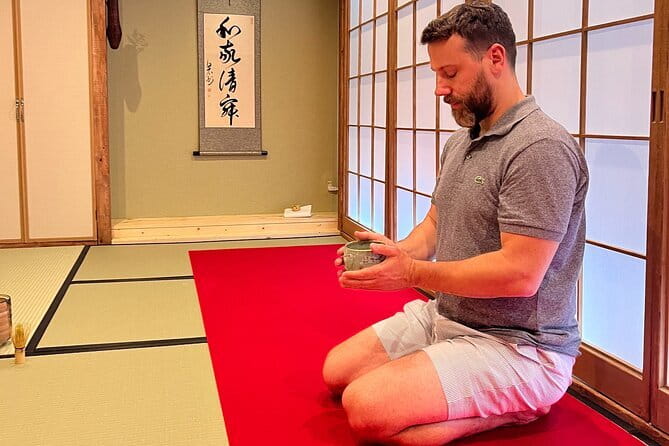
After the pounding, you taste the mochi you helped make. The listed accompaniments include kinako, roasted soybean powder, sweet red bean paste, nori, and sweet soy sauce. One account describes eight options, while the formal activity details mention five beloved seasonings and ingredients.
The important point is variety. Plain mochi lets you notice the fresh texture, while the toppings add sweetness, salt, nuttiness, or a savory note. Kinako is a good choice if you want a dry, nutty coating. Red bean paste gives you a familiar Japanese dessert flavor. Nori and sweet soy sauce offer a different direction from the sweeter toppings.
Freshly pounded mochi has a softer texture than packaged versions, which is one of the best reasons to choose this activity. You are not only tasting a finished product. You are eating it soon after making it.
Tea is served alongside the mochi. That small addition makes the tasting feel more like a traditional sweet break than a quick sample at the end of a class.
The portion may be more generous than you expect. One participant noted receiving more mochi than they could eat. This is good value, though it also makes the safety warning important. Mochi is sticky and can be difficult to swallow, particularly for older people. Eat small pieces, chew carefully, and do not treat it like a soft cake.
A good fit for children, adults, and grandparents
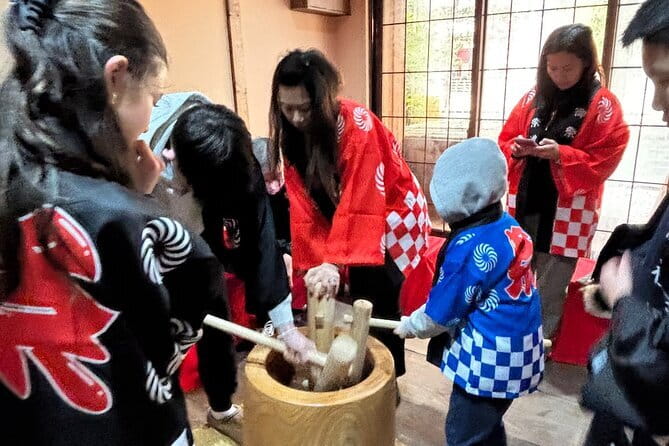
This is one of the stronger family activities in central Osaka because children are not merely allowed to attend. They have an active role.
A child can watch the rice being prepared, take part in the pounding, help with shaping, and choose toppings at the end. The hands-on format gives younger participants something clear to do, while the short duration helps prevent the activity from dragging.
Teenagers should find the process more appealing than a passive museum visit. Several family groups described the experience as a highlight of their Osaka trip, and teenagers were specifically included in that praise.
Adults without children can also book. The activity is not presented as a children-only class, and the small-group format works for couples, friends, or solo participants who want a food experience with a traditional focus.
Older adults can join as well, though the mochi itself requires care. One mixed-age group with two people aged 70 and a teenager completed the session and left pleased. The key concern is swallowing, not the cultural or social side of the activity.
Vegetarians and vegans are welcome according to the activity information. If your diet is strict, it is still sensible to confirm the ingredients of each topping before eating, since the precise recipe for every accompaniment is not provided.
How much value you get for $32.29

At $32.29 per person, this is not the cheapest snack in Osaka. You could buy mochi for much less at a shop. The price makes sense because you are paying for instruction, the cultural introduction, use of the equipment, participation in the preparation, tea, and a multi-topping tasting.
The small maximum of 10 people also helps justify the cost. You are less likely to be lost in a large crowd, and the instructors can guide participants as they take turns with the rice.
Families should calculate the total cost carefully, since each person pays individually. Even so, the activity can compare well with longer cooking classes if you want something short and focused. It offers a complete experience in roughly an hour, with no need to travel to a distant neighborhood.
I would call it good value for families who want a shared activity rather than another meal. It is also a sensible splurge for adults who have already tried packaged mochi and want to understand how it is made.
What could be better
The short length is mostly a strength, but it also limits how much you learn. The 10-minute talk is an introduction, not a detailed lesson in Japanese food history. If you want to prepare several kinds of mochi from start to finish, this session may feel brief.
The information also leaves some practical details open. It does not specify the exact number of pieces served, the full list of eight topping choices, or how much time each person gets with the pestle. You should book it for the shared activity and tasting, not for a long technical cooking course.
Language support is available in English and Chinese, but Chinese may rely on slides or ChatGPT interpretation. English speakers appear to have the clearest stated support.
Finally, mochi requires caution. The warning for older people applies more broadly to anyone who has trouble swallowing sticky foods. Small portions and careful chewing are essential.
Timing, cancellation, and planning advice
The experience is near public transportation and returns to the meeting point, so you do not need to arrange a separate end location. The mobile ticket makes access simple, but you should keep your phone charged and check the confirmation for the exact start time.
Free cancellation is available if you cancel at least 24 hours before the scheduled start. Cancellations or changes made within 24 hours are not refunded or accepted. The cut-off uses Osaka local time.
The activity requires good weather. If poor weather causes cancellation, you are offered another date or a full refund. Since the exact reason for the weather requirement is not explained, avoid placing a tight, unchangeable plan immediately afterward.
The provider is Theosaka. The experience has a 5 out of 5 rating from 26 reviews, with 100 percent recommending it. The most consistent praise goes to the friendly hosts, the clear organization, the fun pounding rhythm, and the generous tasting at the end.
Should you book the Osaka mochi experience?
I would book this if you want a short, cheerful activity that gives your family something to do together. It is especially suitable for families with children, mixed-age groups, mochi fans, vegetarians, and anyone spending time around Dotonbori.
I would also choose it for a rainy-day replacement only if the provider confirms the session will run, since poor weather can lead to cancellation. The central location, one-hour schedule, and small group make it easy to fit into an Osaka itinerary.
Skip it if you want a serious, long-form cooking class or a detailed lesson in Japanese confectionery. For most visitors, though, the combination of tradition, teamwork, fresh food, and a little shouting makes this a memorable use of an hour. At $32.29, the value comes from making the mochi yourself, not simply eating it.
FAQ
Is this mochi pounding experience suitable for children under 13?
Yes. Children under 13 are allowed to participate, and the activity is specifically designed as family-friendly. Adults may also join without children.
How long does the mochi pounding activity last?
The advertised duration is approximately one hour. One detailed account described completing it in about 45 minutes, so you should allow the full hour.
Where does the experience begin and end?
It begins at Mochi Pounding Experience Osaka, also called Oh Mochi, at 2-chōme-4-11 Dōtonbori, Chuo Ward, Osaka. It ends back at the same meeting point.
What will I do during the activity?
You receive about 10 minutes of instruction about mochi pounding, take part in steaming glutinous rice, pound the rice with traditional tools, and taste the finished mochi with tea.
What toppings are available?
The listed choices include kinako, sweet red bean paste, nori, and sweet soy sauce. The experience information also refers to five ingredients, while one account describes eight options.
Is the activity available in English?
Yes. English instruction is available. Chinese support is provided through slides or interpretation using ChatGPT.
Can vegetarians and vegans participate?
Yes. The activity states that vegetarian and vegan dietary preferences can be accommodated. You may wish to confirm the ingredients of individual toppings if you have strict dietary needs.
How many people can join one session?
The maximum group size is 10 participants.
What happens if I need to cancel?
You can receive a full refund if you cancel at least 24 hours before the start time. Cancellations or changes within 24 hours are not refunded. If poor weather causes the provider to cancel, you are offered another date or a full refund.
Just added in Osaka
- Osaka Highlights: 4Hrs Guided Walking Tour with a Native Expert★ 5.0 · 12 reviews
- Hiroshima and Miyajima Private Day Tour from Kyoto/Osaka★ 5.0 · 17 reviews
- Osaka Private Food Tours by Local Foodies: 100% Personalized★ 5.0 · 17 reviews
- Osaka Castle Tour – With Optional City Highlights (3 hours)★ 4.5 · 14 reviews
- Honor – Experience Samurai & traditional Culture to the fullest★ 5.0 · 32 reviews
- Deep Dive: Osaka Food Markets from Local to Luxurious!★ 5.0 · 31 reviews
- Meet Osaka locals and Japanese speaking experience at Pub Umeda★ 5.0 · 58 reviews
- Osaka Okonomiyaki Cooking Class “Learn here and make it at home”★ 5.0 · 20 reviews
Osaka Tours, compared.



Shinsekai Food Tour with 13-15 Dishes at 5 Eateries
Read our review →
Osaka Food Tour: 13 Dishes at 5 Local Eateries
Read our review →
Hungry Osaka Street Food Tour:15 Tastings & 3 Drinks with a Local
Read our review →

Hotspots & Hidden Gems Walking Tour Private or Group
Read our review →Browse the lists this tour appears in