Reviewed · OSAKA TOURS
90 min Shared Handmade Udon Experience
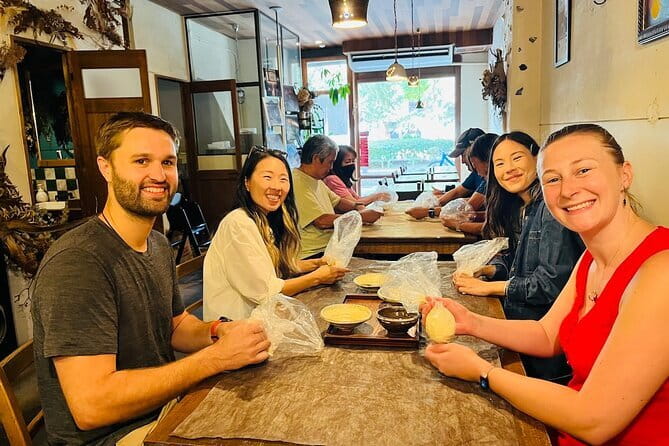
Get your feet ready for noodles. This Osaka cooking class turns a simple bowl of udon into a hands-on lesson in Japanese food culture. At UDONZIN美糸, you knead Sanuki udon dough with your feet, watch the chef cook your noodles, and eat them with a carefully made broth.
I like the class’s friendly, family-ready format and the fact that you receive a recipe to repeat the dish at home. I also like that the restaurant was featured in the Michelin Guide from 2018 through 2023, while still offering a warm, small-scale setting rather than a formal culinary school.
The main drawback is that this is a shared class, so you may work with other people in a group of up to 20. The 90 minutes should suit most schedules, but guests hoping for a long restaurant meal or a private lesson may find the format a little brisk.
In This Review
- Key points to know before booking
- Why this Osaka udon class feels different
- Arriving at UDONZIN美糸 in Shinmachi
- The foot-kneading lesson
- The history and culture behind the bowl
- Eating the udon you helped make
- How much value do you get for $52.85?
- Who will enjoy the shared format most?
- Dietary needs, clothing, and practical limits
- Cancellation and booking details
- Should you book this udon experience?
- FAQ
- Where does the handmade udon class take place?
- How long does the udon experience last?
- What type of udon do you learn to make?
- Do I really knead the udon dough with my feet?
- Is the udon tasting included in the price?
- Are drinks included?
- Can vegetarians join the class?
- Can children participate?
- Is the class suitable for someone with a wheat allergy?
- What happens if I need to cancel?
Key points to know before booking
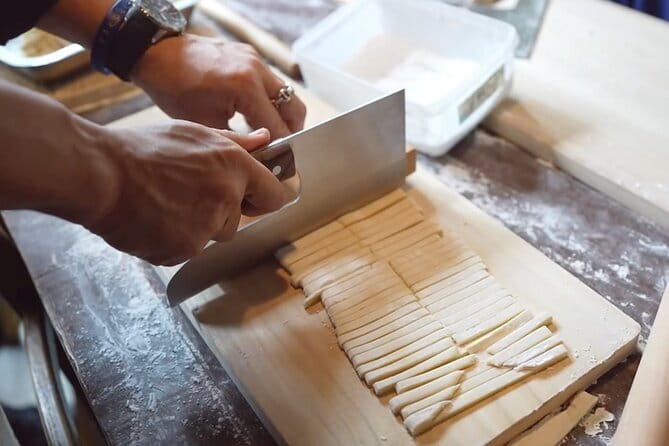
- You knead the dough with your feet: This Sanuki-style method helps create udon that is firm, smooth, and pleasantly soft.
- Your noodles are cooked for you: After the lesson, the chef serves your udon hot or cold with a broth made from kombu, shiitake mushrooms, and katsuobushi.
- The class welcomes children: Children aged 2 and above can participate, with a listed fee of ¥5,000 for children.
- You receive useful take-home material: The recipe gives you a way to try the process again after returning home.
- The restaurant has Michelin recognition: It was featured in the Michelin Guide from 2018 to 2023.
- Drinks and extras cost more: Sake, beer, tempura, and extra udon are available to order but are not included.
Why this Osaka udon class feels different
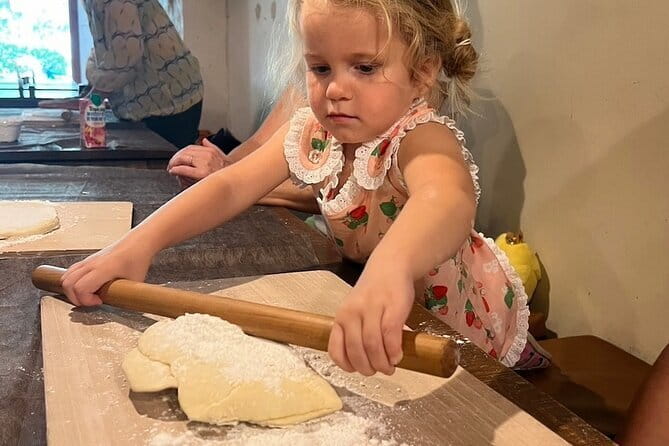
Osaka is famous for eating well, but a food tour does not have to mean standing in line for another popular dish. Here, you take part in making the food. The central idea is simple: udon dough gets a good kneading, but not with a rolling pin or a machine. You use your feet.
That foot-kneading step is the playful heart of the class. It is also tied to the style being taught. Sanuki udon is known for noodles with a firm bite and a smooth, soft finish. The class explains how the method affects the texture, so you are not just performing a funny activity for a photograph.
I think this works especially well in Osaka because it links the meal to a recognizable part of everyday Japanese food culture. You get a short lesson, a practical cooking skill, and a bowl of food made from your own dough. It is more memorable than simply ordering noodles from a menu.
The class is suitable for people with no cooking background. That matters if you are booking for a family or a mixed group with different skill levels. Nobody needs to arrive knowing how to make dough.
A few more options to weigh up in Japan
- Universal Studios Japan Studio Pass
★ 4.8 · 89,883 reviews - Universal Studios Japan Express Pass
★ 4.7 · 53,138 reviews - Osaka Amazing Pass
★ 4.7 · 21,697 reviews
Arriving at UDONZIN美糸 in Shinmachi
The meeting point is UDONZIN美糸, at 1-chōme-16-17 Shinmachi in Osaka’s Nishi Ward, postal code 550-0013. The location is near public transportation, which makes it practical to reach from other parts of Osaka, though you should allow enough time to find the restaurant and arrive ready for the start.
Punctuality matters here. The restaurant returns to serving regular customers after the class, so a late arrival could cut into your lesson. I would plan to arrive early rather than trying to reach the door at the exact starting time.
The setting is described as small and cozy, with cohesive decor and a clean bathroom. That gives you a better idea of the atmosphere than the Michelin mention alone. This is not presented as a large commercial cooking studio. It is a working restaurant, and the class takes place in a more personal setting.
Because the activity is shared, you could be grouped with other participants. One class included 11 friends from three families, with five children among them. That suggests the format can handle a lively family group, but it also means the mood may depend partly on the mix of people in your session.
The foot-kneading lesson
The class teaches Sanuki udon, beginning with dough preparation and kneading. The unusual part is clear: you use your feet to work the dough. This technique helps develop the texture that makes handmade udon different from the packaged noodles you may have eaten at home.
You should wear clothes that can handle a little mess. This is practical advice, not a fashion note. Flour, dough, and kitchen work are involved, and the class is meant to be hands-on. Comfortable clothing will let you take part without worrying about every spot.
The instructors guide you through the process rather than leaving you to guess. Keiko is praised for being warm and inviting, and Nozomi is described as a kind, effective teacher who made the class both fun and informative. The named instructors add a personal touch to an activity that could otherwise feel like a quick demonstration.
The instructor also takes photographs during the class and shares them with you for free. That is useful for families and groups, since it lets you focus on the activity instead of asking someone to stop and document every stage.
The dough-kneading is likely to be the most entertaining part for children, but adults should not treat it as only a children’s activity. The class connects the physical work to the final texture, making it interesting for anyone who likes food preparation or wants a closer look at Japanese cooking methods.
The history and culture behind the bowl
The class includes an explanation of udon’s history and culture alongside the practical work. The available details do not promise a long lecture, and the entire session lasts about 90 minutes, so expect a concise introduction rather than a full food-history seminar.
That shorter approach is a strength for most people. You get enough context to understand why the noodles are made this way, then move on to the part you came to do. I would choose this class over a more talk-heavy activity if you want your hands busy and your meal close at hand.
The Michelin recognition from 2018 to 2023 also gives the restaurant some culinary credibility. Still, it is worth keeping expectations realistic. The class fee buys an activity, instruction, noodle tasting, a recipe, and photos. It is not simply a Michelin-style tasting menu.
A completely different kind of day out:
- Tokyo Disney Resort – Tokyo Disneyland & Tokyo DisneySea Park Tickets
★ 4.8 · 99,488 reviews - SHIBUYA SKY Ticket
★ 4.7 · 46,509 reviews - Mt. Fuji Instagram-Worthy Spots Day Tour: Ladder Town, Oshino Hakkai, Lake Kawaguchi, Lawson Convenience Store (Departing from Tokyo Station or Shinjuku Station)
★ 4.8 · 35,467 reviews - JR Whole Japan Rail Pass
★ 4.8 · 29,150 reviews
Eating the udon you helped make
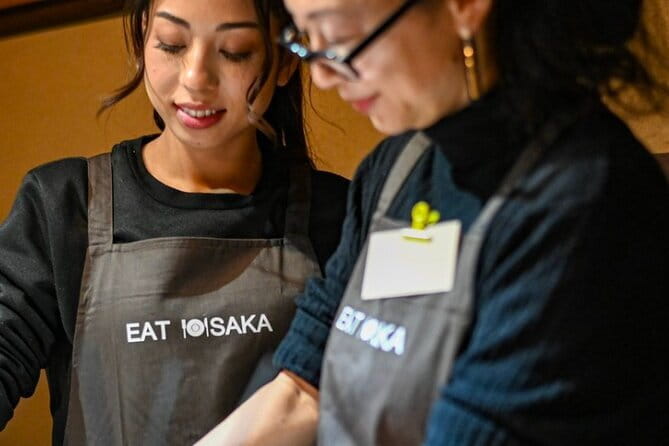
After the dough work, the chef cooks your noodles and serves them hot or cold. This is an important detail. You are not expected to manage the final cooking step yourself, so the focus stays on the handmade dough and the meal that follows.
The broth uses all-natural, additive-free ingredients: kombu, shiitake mushrooms, and katsuobushi, also known as bonito stock. These ingredients provide the savory base associated with many Japanese soups. The broth is served in attractive bowls, giving the final stage a more polished restaurant feel.
You can choose hot or cold udon, which gives the meal some flexibility. Hot noodles with broth offer a comforting finish, while cold udon can highlight the noodles’ texture more directly. The available information does not specify a fixed seasonal choice, so you may want to ask the instructor about the options when you arrive.
Tempura and extra udon can be ordered separately. Beer and Japanese sake are also available, but drinks are not part of the $52.85 fee. If you want to turn the class into a longer meal, budget for these additions.
I see the tasting as a genuine part of the value, not an afterthought. You have worked with the dough, then get to taste the result while the method is still fresh in your mind. The meal also gives you a useful reference point when you try the recipe at home.
How much value do you get for $52.85?
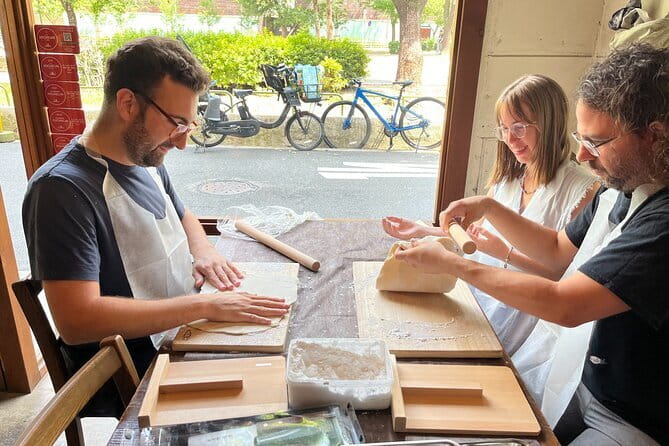
At $52.85 per person, this is not the cheapest bowl of udon in Osaka. You could order noodles for far less. The price makes more sense when you count the instruction, the hands-on activity, the cooked tasting, the recipe, the photographs, and the restaurant setting.
The 90-minute length is also practical. It is long enough to feel like a proper activity, but short enough to fit beside sightseeing, shopping, or another meal. If you have only a few days in Osaka, that compact schedule is useful.
The value is strongest for families, couples, and small groups who want to do something together rather than simply eat. Children can participate from age 2, and the shared format can make the activity social. If you are mainly looking for the lowest-cost food option, the price will be harder to justify.
You should also remember the extra costs. Alcohol, tempura, and additional udon are not included. The basic fee covers the handmade udon lesson, one udon tasting, the recipe, free photographs, and local taxes.
Who will enjoy the shared format most?

I would recommend this class to families with children, especially those looking for an activity that keeps everyone involved. The foot-kneading is easy to understand, visually funny, and connected to the meal. The past class mix of adults and children suggests that different ages can take part together.
It also suits food-focused visitors who want a local activity with a clear result. You do not just watch someone else cook. You learn one method, eat the noodles, and take the recipe with you.
Couples and friends should enjoy it if they are comfortable sharing a class. The restaurant can accommodate groups, but privacy is not the main point. You might work alongside people you have never met, which can be part of the fun but may not suit someone seeking a quiet date activity.
Solo participants need to contact the provider before booking. Classes require at least two participants, and a single adult with children should also check in advance for a suitable session. This rule is important, since an individual booking may not work automatically.
Dietary needs, clothing, and practical limits
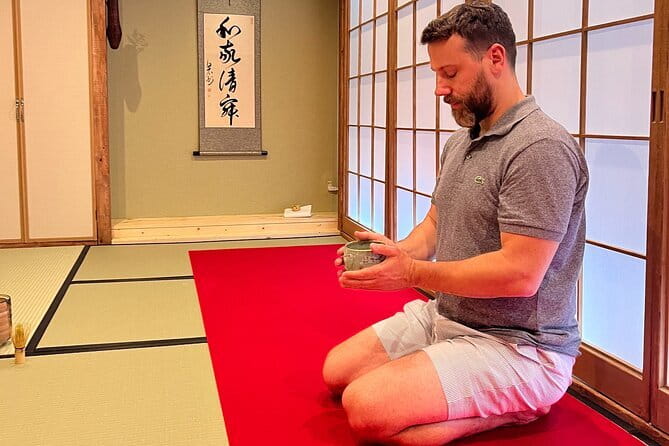
Vegetarian participation is available, but you need to mention dietary restrictions in advance. The information does not promise every type of special diet, so you should explain your needs clearly before the class begins.
This activity is not recommended for people with a wheat allergy. Udon is a wheat-based food, and the class involves direct contact with the dough. If you have a serious allergy, this is not the place to test your luck.
Wear clothes you do not mind getting messy. That advice is especially useful for children, who may enjoy the process with more enthusiasm than precision. The class is near public transportation, ends at the restaurant, and uses a mobile ticket.
The maximum group size is 20 people. That is large enough for a shared session, although the restaurant is described as small and cozy. If you prefer a quieter setting, ask about the expected group size before choosing a date.
Cancellation and booking details
You receive confirmation at the time of booking. Free cancellation is available if you cancel at least 24 hours before the local start time. Cancellations or changes made less than 24 hours in advance are not refundable or accepted.
The class needs a minimum number of participants. If the provider cancels because that minimum is not reached, you are offered another date or experience, or a full refund. Keep that condition in mind if your Osaka schedule is tightly packed.
Should you book this udon experience?
Book it if you want a short, sociable Osaka activity that combines food, hands-on work, and a meal. The strongest reasons are the foot-kneaded Sanuki udon, the warm teaching style associated with Keiko and Nozomi, the recipe for home cooking, and the free class photographs.
I would be more cautious if you want a private lesson, need a wheat-free meal, or dislike shared activities. You should also contact the provider first if you are alone, traveling with one adult and children, or managing dietary restrictions.
For families, food lovers, and anyone curious about how udon gets its texture, the $52.85 price is reasonable because you are paying for far more than lunch. You leave with a full stomach, a new cooking method, and a story about making noodles with your feet.
FAQ
Where does the handmade udon class take place?
The class takes place at UDONZIN美糸, located at 1-chōme-16-17 Shinmachi, Nishi Ward, Osaka, 550-0013, Japan.
How long does the udon experience last?
The experience lasts approximately 90 minutes.
What type of udon do you learn to make?
You learn to make Sanuki udon, a style known for a smooth texture with a firm yet soft bite.
Do I really knead the udon dough with my feet?
Yes. Foot-kneading is part of the Sanuki udon-making method taught during the class.
Is the udon tasting included in the price?
Yes. The fee includes a tasting of the udon you help make, served hot or cold.
Are drinks included?
No. Japanese sake and beer can be ordered separately, but alcoholic beverages are not included.
Can vegetarians join the class?
Yes. A vegetarian option is available, but you should notify the provider in advance about dietary restrictions.
Can children participate?
Yes. Children aged 2 and above can participate. The listed child fee is ¥5,000.
Is the class suitable for someone with a wheat allergy?
No. The activity is not recommended for people with a wheat allergy.
What happens if I need to cancel?
You can receive a full refund if you cancel at least 24 hours before the local start time. Cancellations made less than 24 hours in advance are not refundable.
Just added in Japan
- A One-of-a-Kind Sushi Experience in a Special Place of Japan★ 5.0 · 15 reviews
- Tokyo Cute Bento Cooking Class – Make a Kawaii Character Lunchbox★ 5.0 · 126 reviews
- Japanese Home Cooking Class & Walk in Todoroki Temple Tokyo★ 5.0 · 88 reviews
- Japan Tokyo Tower Observatory Deck E-Ticket★ 4.0 · 34 reviews
- Catch a Baseball Game in Tokyo with a Local – Tickets Included★ 5.0 · 24 reviews
- JDM Experience with Fast&Furious RX-7 (English speaking Driver)★ 5.0 · 57 reviews
- Tokyo Private Day Tour by Car with English speaking Driver Guide★ 4.0 · 29 reviews
- Japan Classic 10 Day – One Life Adventures★ 5.0 · 129 reviews
Osaka Tours, compared.






Umeda Sky Building & Kuchu Teien Observatory Ticket in Osaka
Read our review →