
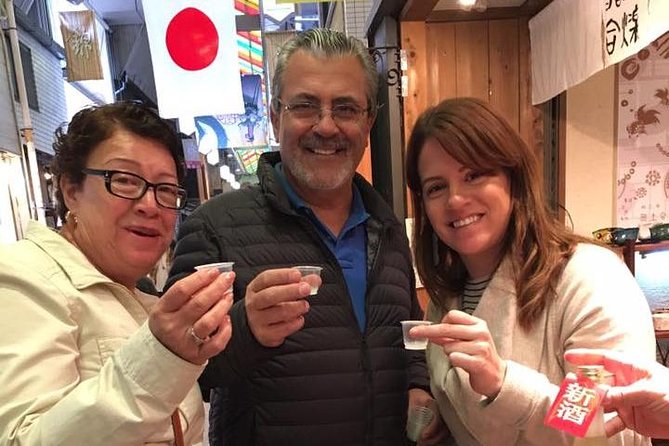
Reviewed · FOOD TOURS
Absolute Osaka Food Tour
Osaka tastes best after dark. This three-hour outing mixes takoyaki and kushikatsu with tucked-away lanes, a small shrine, and the bright signs of Dotonbori. I like the way it moves beyond the obvious restaurant rows, and I like that a local English-speaking guide adds stories about Osaka food and customs instead of simply pointing at menus.
The main consideration is the price: $231 per person is a serious spend for four food stops, one drink, and dessert. You also pay for transportation and any extra food or drinks. Still, a maximum group of 10 keeps the outing personal, and the 4.8 rating from 309 reviews, with 96 percent recommending it, suggests that the guide-led format works well for many people.
In This Review
- Key things to know before you book
- Starting beneath the Glico sign at 5:00 pm
- Reading Dotonbori beyond the giant signs
- Osaka street food at four food stops
- Hozenji Yokocho and a quieter side of Minami
- Doguyasuji, Kuromon, and Misono Building
- What the guide adds to the meal
- Is $231 a fair price?
- Who will get the most from this tour?
- Timing, group size, and practical details
- Should you book the Absolute Osaka Food Tour?
- FAQ
- How long does the Absolute Osaka Food Tour last?
- What time does the tour start?
- Where does the tour begin?
- Where does the tour finish?
- How many food stops are included?
- Is a drink included?
- Is dessert included?
- Is hotel pickup included?
- Is the tour suitable for vegetarians?
- Is the tour suitable for gluten-free diners?
Key things to know before you book
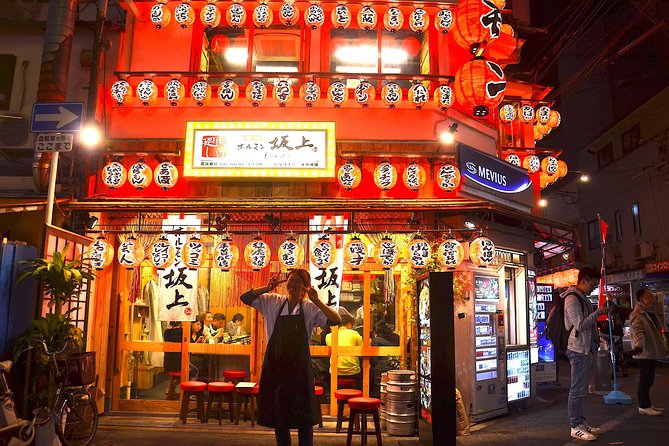
- Glico Man gets a surprising origin story: The famous Dotonbori runner was inspired by Filipino sprinter Fortunato Catalon, not a random advertising design.
- Four food stops are built into the three-hour route: You get a broad taste of Osaka rather than one large meal in a single restaurant.
- The route moves beyond the main signs: Hozenji Yokocho, Doguyasuji, Kuromon Market, and Misono Building add different sides of Minami.
- A guide can make unfamiliar foods easier: Vegetarian and pescetarian options are possible, but gluten-free diners should be cautious.
- The evening timing suits Osaka: The 5:00 pm start leads into Dotonbori after dark, when the area is at its most theatrical.
- The small group matters: With no more than 10 people, it should be easier to hear the guide and ask questions.
Starting beneath the Glico sign at 5:00 pm
The tour begins in Dotonbori at 5:00 pm, near 1-chome in Chuo Ward. This is a practical meeting point if you are already exploring Namba, though you should allow time to find the exact building address in the busy streets.
Your first stop is the famous Dotonbori Glico sign. The runner crossing the finish line has become one of Osaka’s best-known images, and the guide explains the real person behind the design. Fortunato Catalon, a Filipino sprinter, helped inspire the sign and the company connected to it. That small detail gives the photo stop more meaning than a quick selfie and move-on moment.
You only spend about five minutes here, so do not expect a full lesson in advertising history. It is an efficient opening that places you in the heart of Osaka’s entertainment and food district.
More Food Tours in Osaka
- Osaka: Shinsekai Food Tour with 13-15 Dishes at 5 Eateries
★ 4.8 · 2,204 reviews - Osaka Food Tour: 13 Dishes at 5 Local Eateries
★ 5.0 · 2,149 reviews - Hungry Osaka Street Food Tour:15 Tastings & 3 Drinks with a Local
★ 5.0 · 1,727 reviews
Reading Dotonbori beyond the giant signs
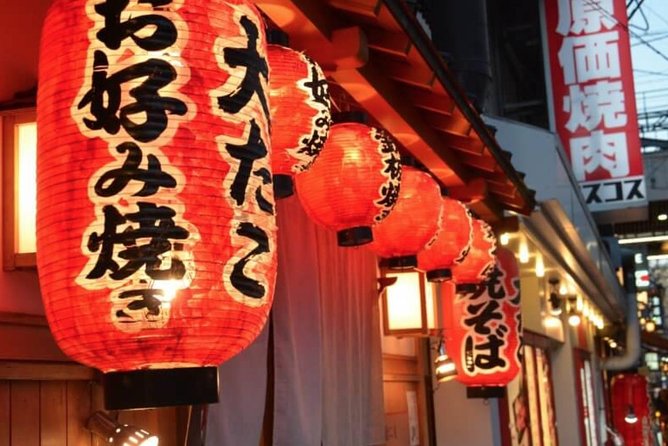
Dotonbori can be thrilling, but it can also send you toward the most commercial restaurants, especially if you follow the biggest signs and the longest queues. The route is designed to help you see past that first layer.
You spend roughly 15 minutes looking at the district and learning how its bright streets shape Osaka’s public food culture. Dotonbori is often compared with Shibuya in Tokyo because of its lights, crowds, and constant motion. The comparison is useful, but the food focus gives this walk its own character.
I like this part because it gives you a filter for the rest of your Osaka stay. Instead of assuming that the restaurant with the largest crab sign is the best choice, you can ask your guide how local dining works, which areas are aimed at visitors, and where a more focused food stop might be found.
The drawback is that Dotonbori is not quiet or slow. If you prefer a calm food lesson, the first part may feel noisy and crowded. The evening setting is part of the appeal, but you should be comfortable walking through a busy entertainment district.
Osaka street food at four food stops
The central promise is a tasting route through Osaka’s famous street foods. The tour includes four food stops, a drink, and a traditional Japanese dessert. Extra food and drinks are available for purchase, but they are not included in the listed price.
Takoyaki is one of the essential tastes. These hot batter balls, usually prepared with octopus, are strongly linked with Osaka. They are served very hot, so your guide can help you understand how to eat them without burning your mouth. This is exactly the kind of food that can be awkward to order alone if you are unsure about the menu or portion.
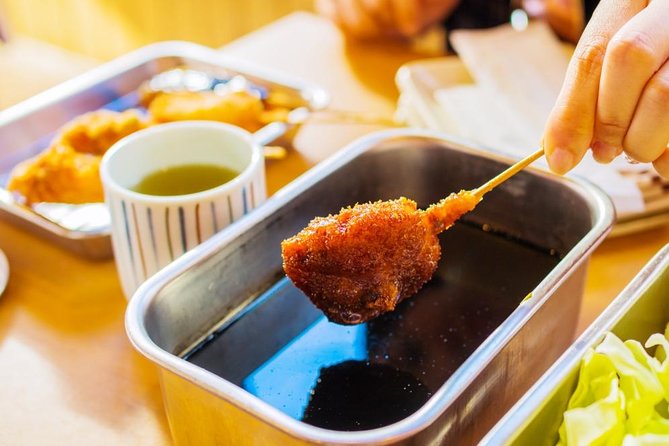
Kushikatsu gives the route a different texture. These skewers are coated and fried, and the mixed selection lets you try more than one flavor in a single stop. They are a good fit for a tasting tour because you can sample rather than commit to a large plate of one dish.
The food is not presented as a formal dinner. Think of it as a guided sequence of small tastes, with enough variety to introduce you to Osaka’s food culture. If you arrive very hungry, you may want to budget for an extra purchase, especially since the exact dishes can change with season and availability.
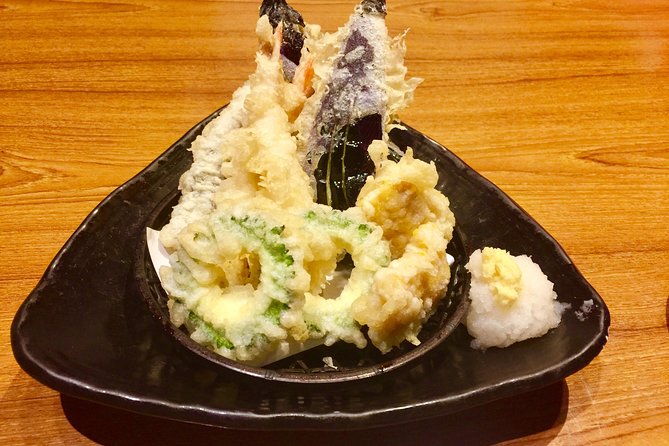
A traditional Japanese dessert is also included. The exact dessert is not specified, so you should expect a seasonal or restaurant-selected sweet rather than one fixed item. That flexibility allows substitutions when menus or restaurant schedules change.
Hozenji Yokocho and a quieter side of Minami
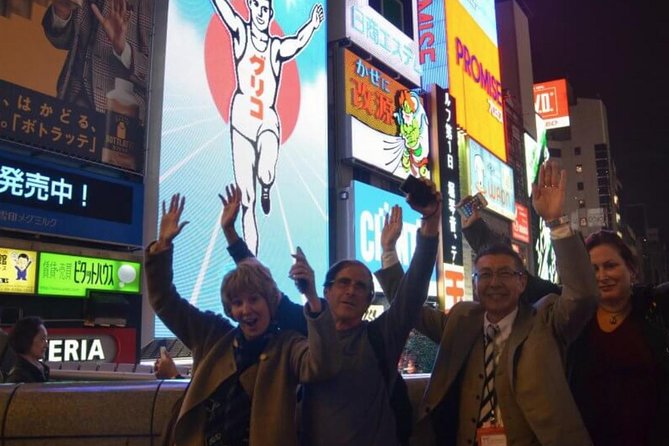
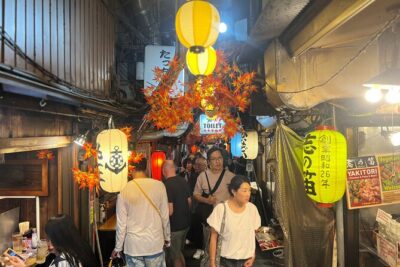
Hozenji Yokocho provides a useful change of pace from the bright signs. Its narrow lanes offer a more intimate setting and help show that Minami is not only neon, giant advertisements, and packed restaurant fronts.
The route also includes a visit to a secret shrine away from the busiest streets. The supplied details do not name the shrine, so do not book this expecting a particular landmark. The value is in the contrast: after Dotonbori’s commercial energy, a small religious site gives you a quieter look at local tradition.
This is one of the strongest reasons to choose a guide. You can walk through Dotonbori on your own, but it is harder to know which side lanes have cultural meaning and which are simply shortcuts between restaurants. The guide’s local stories help connect food, neighborhood life, and custom.
The walk does require a moderate level of fitness. You should expect to remain on your feet, move through crowded streets, and cover several areas in three hours. Comfortable shoes are a sensible choice, although the tour does not list any special equipment or difficult hiking.
More Food Tours in Japan:
- Tokyo: Shinjuku Food Tour (13 Dishes at 4 Local Eateries)
★ 5.0 · 6,603 reviews - Tokyo: Shinjuku Food Tour (15 Dishes and 4 Eateries)
★ 4.9 · 2,033 reviews - Best of Shinjuku: Izakaya Food Tour (4 Stops, 14+ Tastings)
★ 5.0 · 1,863 reviews - Kyoto Night Foodie Tour in Gion (9+ dishes + 6 Sake tastings)
★ 5.0 · 1,762 reviews
Doguyasuji, Kuromon, and Misono Building
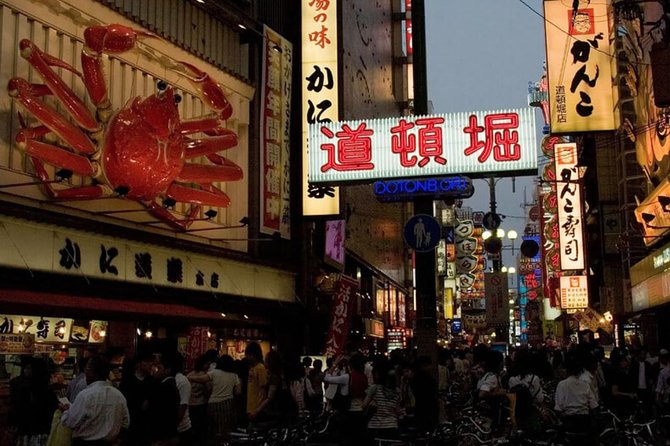
Sennichimae Doguyasuji Shotengai is associated with kitchenware and restaurant supplies. Including it gives the tour a useful food-business angle. Osaka’s food culture is not only about eating dishes. It also involves the tools, displays, and practical equipment used to prepare and serve them.
Kuromon Market adds another food-focused setting. Market streets can be a good place to understand how ingredients and prepared foods fit into everyday life. The schedule does not specify a particular vendor or tasting at Kuromon, so the guide may use the area for context as well as food.
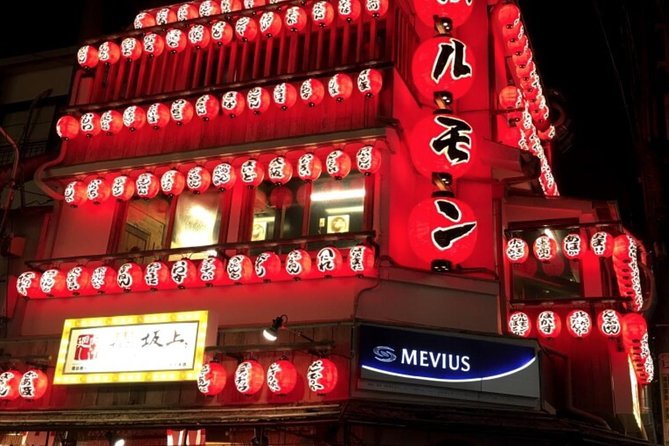
Misono Building is another distinctive stop on the route. The information provided does not promise a specific restaurant, dish, or activity there, so you should treat it as part of the neighborhood walk rather than a guaranteed standalone attraction. The guide may adjust the order or substitute a location because of restaurant schedules, public holidays, weather, or other practical issues.
The tour ends in the Sennichimae area. That is useful if you want to keep eating or exploring Namba afterward, but it is not a hotel drop-off. You will need to arrange your own return transportation, and transportation costs are not part of the tour price.
What the guide adds to the meal
Food tours work or fail on the guide. Here, the guide is expected to explain local dishes, traditions, and the stories behind the neighborhoods. Several named guides receive especially warm praise in the supplied feedback: Asli led one particularly well-received outing, Melissa helped find vegetarian choices at every stop for one couple, and Marie helped coordinate a strong group experience. Another comment simply praised the guide’s food knowledge and friendly manner.
Those details point to the most important benefit of the tour: help with decisions. You may know that Osaka is associated with takoyaki and kushikatsu, but a guide can explain how the dishes fit into local dining, what to try first, and how to handle a menu that is not written for English speakers.
The food choices are not fixed. Seasonal availability and restaurant schedules can change the route. That is worth accepting as part of a small local food outing, but it means you should not treat the listed stops as a guaranteed checklist.
Is $231 a fair price?
At $231, this is expensive if you measure the tour only by the cost of the food. Four tastings, one drink, and dessert would rarely justify that amount on their own. The price also covers the guide’s time, route planning, explanations, and the convenience of being taken to selected places without having to research them yourself.
I see the value most clearly for a first evening in Osaka. You get a three-hour orientation to Dotonbori and Minami, learn what foods matter, and finish near Sennichimae with ideas for later meals. A small group of up to 10 is another part of the value, since a guide can usually respond to individual questions more easily than on a large coach-style outing.
The price is harder to defend if you already know Osaka well, speak Japanese comfortably, or mainly want the cheapest way to eat. Independent diners can explore Dotonbori, Kuromon, and Namba at their own pace for far less.
I would also budget for optional purchases. The package includes one drink, but additional drinks and food cost extra. That can be useful if a particular dish catches your eye, but it means the final bill may rise above the advertised price.
Who will get the most from this tour?
I would recommend it most strongly to first-time Osaka visitors who want a guided introduction to local food without spending several days researching restaurants. It also suits solo visitors, since single bookings are accepted and a small group can make an evening meal feel more social.
Families can book, and children must be accompanied by an adult. Children aged 10 and above require a copy of passport information, so families should prepare that detail before the outing. The minimum drinking age is 21, although the tour includes food and a drink rather than promising an alcohol-centered program.
Vegetarian and pescetarian diners can be accommodated according to the supplied information. Melissa’s ability to find vegetarian options at each stop is encouraging. Still, tell the provider about your needs before booking, because the route changes with availability.
I would not choose this tour if you need a strictly gluten-free menu. It is specifically listed as not recommended for gluten-free diners. The same advice applies to anyone with serious allergies: ask before paying and confirm what substitutions are possible.
Timing, group size, and practical details
The 5:00 pm start is one of the route’s better choices. You begin with enough daylight to orient yourself, then see Dotonbori’s signs and restaurant streets after dark. The three-hour length is long enough for several tastes but short enough to fit around other evening plans.
The tour uses a mobile ticket and operates near public transportation. Hotel pickup is not included, although it can be arranged for an extra charge. Since the start and end points are different, make sure you are comfortable reaching Dotonbori at the start and leaving from Sennichimae at the finish.
The group maximum is 10 people. That is small enough for direct questions, though the actual feel will depend on how many people book your date. You should have moderate physical fitness and be ready to walk and stand through the evening.
The experience requires good weather and a minimum number of participants. If poor weather cancels it, you receive a choice of another date or a full refund. If the minimum is not met, the provider offers another date or experience, or a full refund.
Free cancellation is available until 24 hours before the local start time. After that point, the payment is not refunded, and changes made within 24 hours are not accepted.
Should you book the Absolute Osaka Food Tour?
Book it if you want a guided first taste of Osaka, value local explanation, and like the idea of moving through several neighborhoods instead of sitting in one restaurant. The strongest parts are the four-stop format, the contrast between Dotonbori and quieter lanes, and the chance to ask a guide about foods that might otherwise feel unfamiliar.
Skip it if $231 feels too high for a tasting menu, if you want a long sit-down dinner, or if you need strict gluten-free arrangements. For the best fit, book early if possible, though same-day booking is available, and contact the provider about dietary needs before you go.
The tour is best understood as a food-and-neighborhood introduction, not a bargain meal. If that sounds useful on your first Osaka evening, the price may be worthwhile.
FAQ
How long does the Absolute Osaka Food Tour last?
The tour lasts approximately three hours.
What time does the tour start?
The tour starts at 5:00 pm local time.
Where does the tour begin?
It begins at Japan, 542-0071 Osaka, Chuo Ward, Dōtonbori, 1-chome 8-19, near the Dotonbori area.
Where does the tour finish?
The tour ends in the Sennichimae area of Osaka.
How many food stops are included?
Four food stops are included.
Is a drink included?
Yes. One drink is included. Additional drinks and food can be purchased at your own expense.
Is dessert included?
Yes. A traditional Japanese dessert is included.
Is hotel pickup included?
No. Hotel pickup is not included, but it can be arranged for an additional charge.
Is the tour suitable for vegetarians?
The tour is listed as vegetarian and pescetarian friendly. Food can change with the season and availability, so you should share your dietary needs before booking.
Is the tour suitable for gluten-free diners?
The tour is not recommended for gluten-free diners.
Just added in Japan
- A One-of-a-Kind Sushi Experience in a Special Place of Japan★ 5.0 · 15 reviews
- Tokyo Cute Bento Cooking Class – Make a Kawaii Character Lunchbox★ 5.0 · 126 reviews
- Japanese Home Cooking Class & Walk in Todoroki Temple Tokyo★ 5.0 · 88 reviews
- Catch a Baseball Game in Tokyo with a Local – Tickets Included★ 5.0 · 24 reviews
- Japan Tokyo Tower Observatory Deck E-Ticket★ 4.0 · 34 reviews
- JDM Experience with Fast&Furious RX-7 (English speaking Driver)★ 5.0 · 57 reviews
- Tokyo Private Day Tour by Car with English speaking Driver Guide★ 4.0 · 29 reviews
- Japan Classic 10 Day – One Life Adventures★ 5.0 · 129 reviews
Food Tours, compared.
Shinjuku Food Tour (13 Dishes at 4 Local Eateries)
Read our review →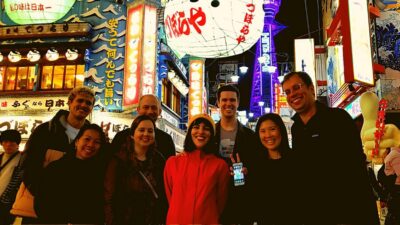
Shinsekai Food Tour with 13-15 Dishes at 5 Eateries
Read our review →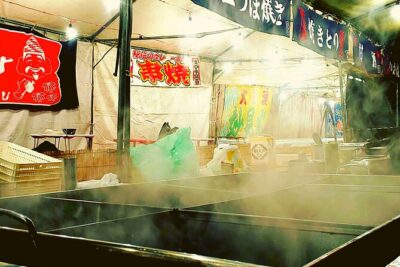
Osaka Food Tour: 13 Dishes at 5 Local Eateries
Read our review →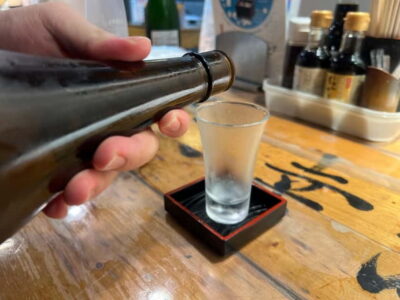
Shinjuku Food Tour (15 Dishes and 4 Eateries)
Read our review →
Best of Shinjuku: Izakaya Food Tour (4 Stops, 14+ Tastings)
Read our review →
Kyoto Night Foodie Tour in Gion (9+ dishes + 6 Sake tastings)
Read our review →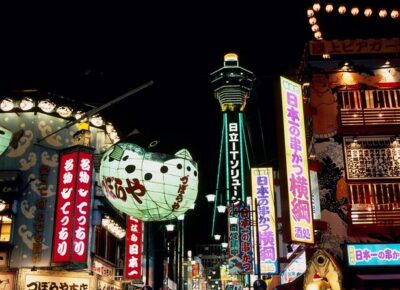
Hungry Osaka Street Food Tour:15 Tastings & 3 Drinks with a Local
Read our review →
Tokyo Night Foodie Tour in Shinjuku – Seasonal Sushi, Wagyu Beef
Read our review →Browse the lists this tour appears in