Reviewed · TOURS
Asakusa: Tokyo Skytree Exploration and History Tour
Old Tokyo makes the tower look taller. This small-group walking tour links Asakusa’s temples, riverfront, and shopping streets to Japan’s shift from a closed feudal society to a modern nation. I especially like the way the guide explains why each landmark matters, and I like that the experience continues to both Tokyo Skytree observation decks rather than stopping at the lower view. The main consideration is physical: you walk for much of the 210 minutes, with stairs and crowded streets along the way.
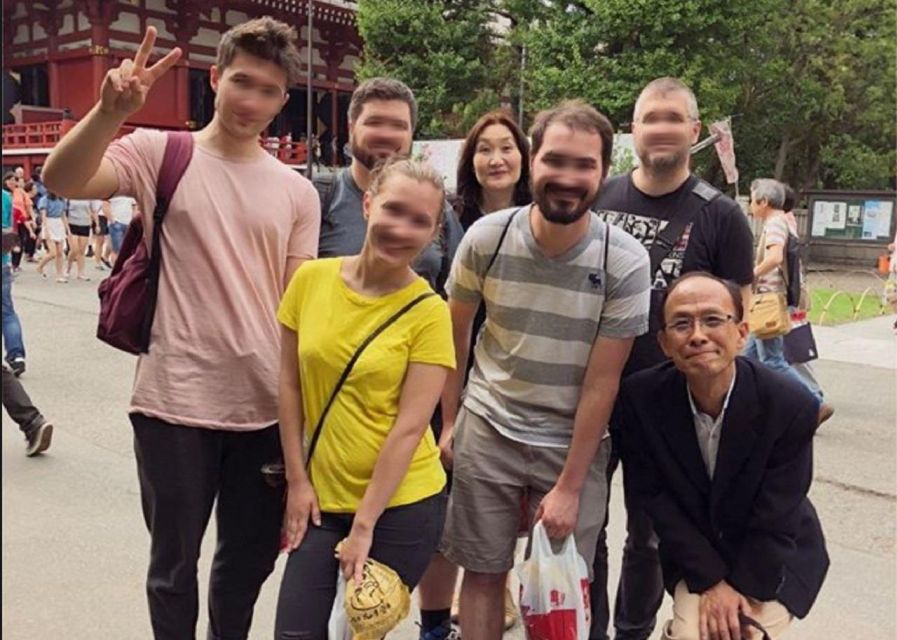
The group is limited to eight people, which gives guides such as Machiko, Keiko, Aki, and Yasu room to answer questions, take photos, and adjust the pace. On a hot 30 C day, Machiko made time for water and rest, while Aki kept a rain-soaked group moving with good humor. Still, one visitor found a guide’s voice hard to hear, so staying close and using the included English audio support may matter.
In This Review
- Key points at a glance
- Why this route works better than a tower visit alone
- Meeting at Asakusa Station and reaching the Sumida River
- Kaminarimon and the first lesson in Asakusa
- Nakamise Street, snacks, and the long approach to Senso-ji
- Hōzōmon, Senso-ji, and Asakusa Shrine
- The two-minute train ride from old Tokyo to Skytree
- Tokyo Skytree at 350 meters
- Tokyo Skytree at 450 meters and the Tembo Galleria
- What $116 buys you, and what it does not
- The guides and the feel of a small group
- Who should book this Asakusa and Skytree experience
- FAQ
- How long does the Asakusa and Tokyo Skytree tour last?
- Where does the tour begin?
- What language is the tour conducted in?
- Are Tokyo Skytree tickets included?
- Is the train fare included?
- How large is the group?
- Should you book it?
Key points at a glance
- History first, views second: The Asakusa walk gives context to Senso-ji, Kaminarimon, Nakamise Street, and the Sumida River before you reach the tower.
- Two Skytree levels included: Your ticket covers the Tembo Deck at 350 meters and the Tembo Galleria at 450 meters.
- A compact group: With no more than eight participants, you get more chances to ask questions and request help with photos.
- A useful old-to-new route: A short train ride across the Sumida River connects temple-town Asakusa with modern Tokyo Skytree.
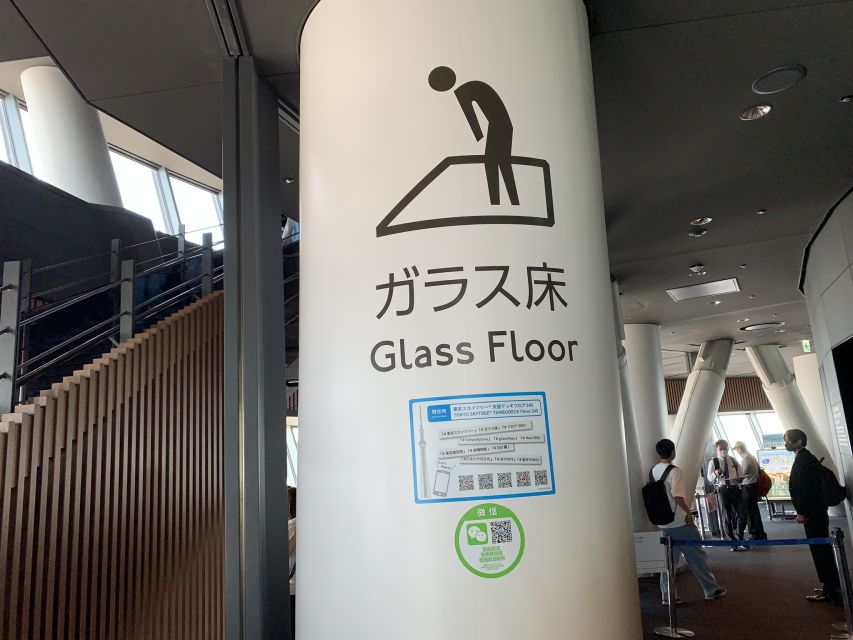
- Small extras at the tower: You can try the glass floor, arrange a commemorative photo, and send a Skytree postcard.
- Plan for walking: The tour lasts three and a half hours and does not include the 160 yen train fare.
Why this route works better than a tower visit alone
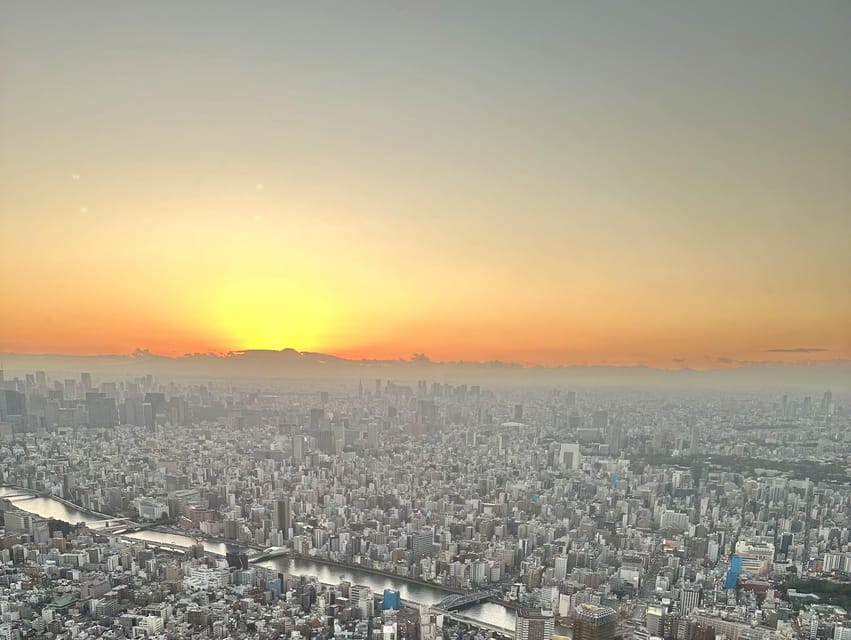
Tokyo Skytree is easy to admire and easy to misunderstand. You rise hundreds of meters, see an enormous city, take a photo, and go back down. That can be fun, but the view has more meaning after you have walked through the older city below.
This experience begins beside the Sumida River and moves through the central sights of Asakusa. You hear how Japan once limited contact with the outside world, then learn how pressure from abroad helped force the country to reopen. The tour does not treat that history as a classroom lecture. It uses gates, temples, streets, and the river as evidence.
That order is the tour’s best idea. First, you get the story. Then you get the bird’s-eye view. By the time you are looking over Tokyo from 350 meters, you have a better sense of how old neighborhoods and modern development fit together.
You also get a practical advantage. Skytree tickets are included, and the experience is designed to avoid the main ticket queue. Demand can be high, so advance booking is useful if the tower is a priority for you.
Other trips worth a look in Japan:
- Tokyo Disney Resort – Tokyo Disneyland & Tokyo DisneySea Park Tickets
★ 4.8 · 99,488 reviews - Universal Studios Japan Studio Pass
★ 4.8 · 89,883 reviews - Universal Studios Japan Express Pass
★ 4.7 · 53,138 reviews
Meeting at Asakusa Station and reaching the Sumida River
Your starting point is in front of the Burger King beside Exit 4 of Asakusa subway station, on the Ginza Line, station G19. Step outside the exit rather than waiting inside the station. This is a simple meeting point, but Asakusa has several rail lines and station buildings, so check the correct exit before you set off.
The first walk heads toward the Tokyo Cruise Asakusa Pier. This opening stretch gives the guide a chance to orient you around the Sumida River and explain why the waterway mattered to the growth of Tokyo. It also sets up the larger history theme: Asakusa was not merely a collection of photogenic buildings, but part of the city’s religious, commercial, and transport life.
You are on your feet from the start. Wear shoes that handle pavement well, and keep water handy. The walk can feel easy in cool weather, but heat, rain, crowds, and the repeated stops can change the effort quickly.
Kaminarimon and the first lesson in Asakusa
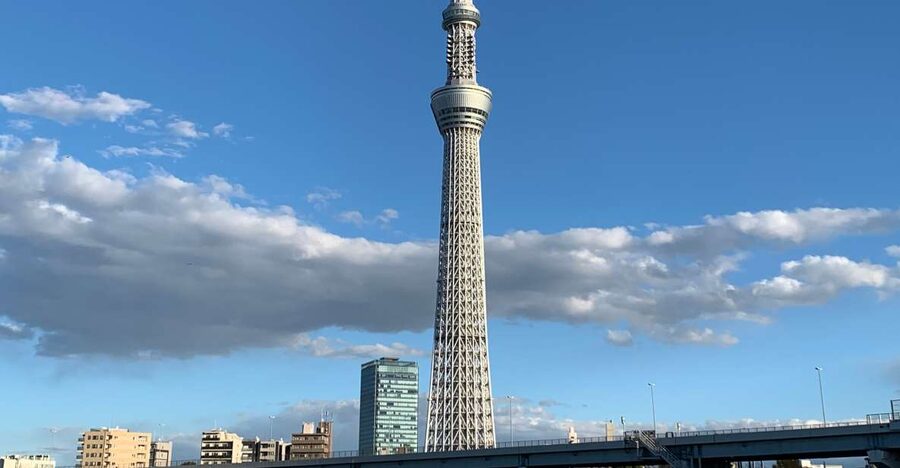
The Asakusa Culture Tourist Information Center is an early stop. It helps place the district in context and gives you a useful orientation before you enter the most famous part of the route.
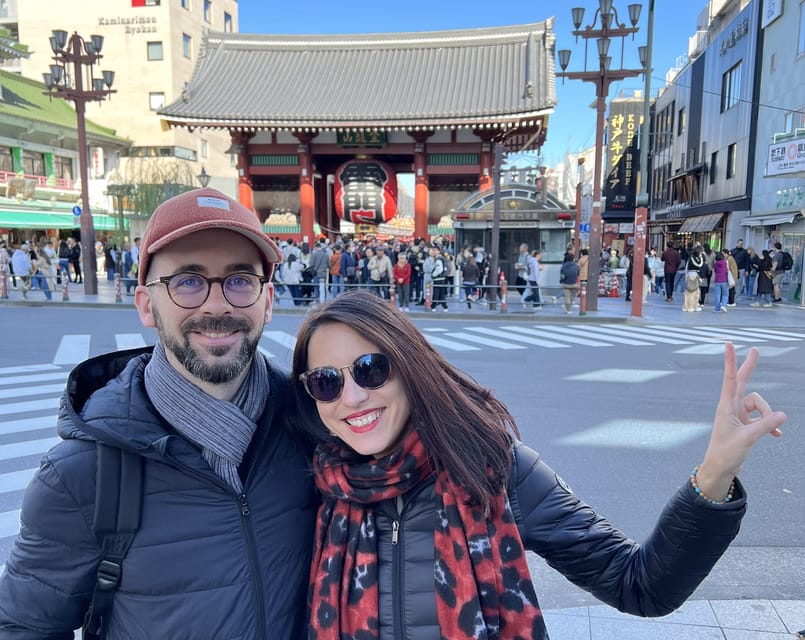
Then comes Kaminarimon, or the Thunder Gate. Its giant lantern makes it one of Tokyo’s most recognizable photo stops, but the guide’s explanation is more useful than a quick snapshot. You learn how the gate introduces the approach to Senso-ji and why its symbols matter within the temple district.
This is where a guide adds real value. On your own, you can see the enormous lantern and move on. With a good explanation, you understand that the entrance is part of a religious approach, not just a decorative archway. A small group also helps here because the area can be packed, making it easier to regroup without losing the guide.
Nakamise Street, snacks, and the long approach to Senso-ji
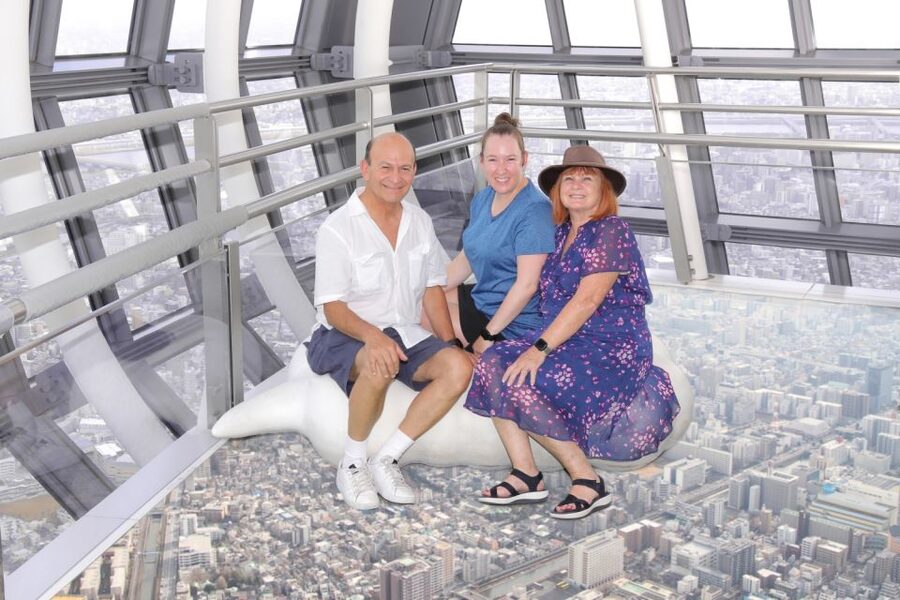
From Kaminarimon, you walk along Nakamise Shopping Street. The route takes about 30 minutes, making this one of the longer sections of the tour. Shops line the approach with souvenirs, snacks, and traditional goods, giving you a look at the commercial side of a major temple precinct.
You have some time to browse and ask about local treats. One group even had opportunities to sample snacks along the way. Do not expect a dedicated shopping tour, though. The guide needs to keep the route moving, and the street is often crowded.
Nakamise is valuable because it shows how religion and commerce meet in everyday Tokyo. It is also a place where a little patience helps. You may be walking slowly through a dense crowd, stopping often for photos, and sharing the path with people heading to the temple.
A completely different kind of day out:
- SHIBUYA SKY Ticket
★ 4.7 · 46,509 reviews - Mt. Fuji Instagram-Worthy Spots Day Tour: Ladder Town, Oshino Hakkai, Lake Kawaguchi, Lawson Convenience Store (Departing from Tokyo Station or Shinjuku Station)
★ 4.8 · 35,467 reviews - JR Whole Japan Rail Pass
★ 4.8 · 29,150 reviews - Mt Fuji and Hakone 1-Day Bus Tour Return by Bullet Train
★ 5.0 · 26,383 reviews
Hōzōmon, Senso-ji, and Asakusa Shrine
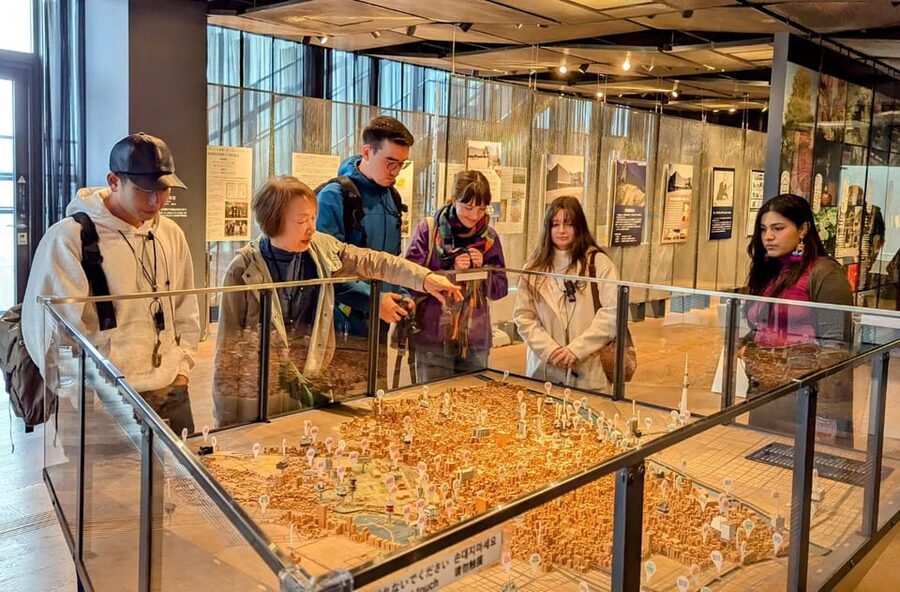
The next major gateway is Hōzōmon. It is larger and more imposing than the first gate, and it brings you closer to the main temple buildings. Your guide explains the role of the gate and helps you read the site in the right order, from outer entrance to inner worship space.
At Senso-ji, the focus shifts to religion, symbolism, and the continuing importance of the temple. You have time to look around and ask questions rather than simply pass through for a photograph. The historical explanation is especially helpful if you are unfamiliar with Japanese Buddhist and Shinto traditions.
The stop at Asakusa Shrine adds another layer. Here, the guide can explain the distinction between the Buddhist temple and Shinto shrine next door. That contrast is one of the more useful cultural lessons on the route because the two sites sit close together but represent different religious traditions.
This part of the walk is also where the tour can become physically demanding. You may encounter stairs, uneven movement through crowds, and plenty of standing. Wendy, who was in her 60s, felt a short seated drink break would have helped. Machiko did make a point of offering rest and water on a hot day, but you should still tell the guide early if you need a slower pace.
The two-minute train ride from old Tokyo to Skytree
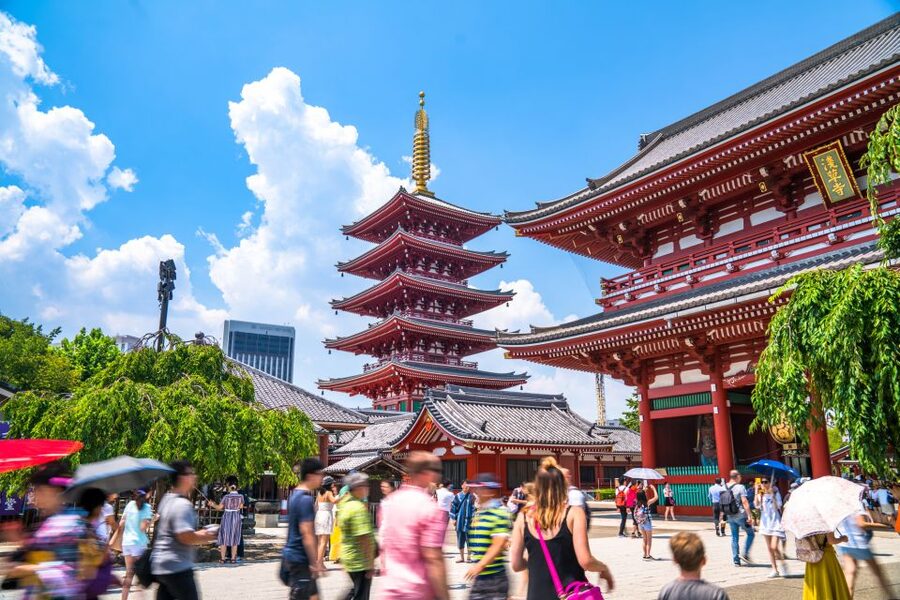
After the Asakusa section, you take a short train ride across the Sumida River to Tokyo Skytree Station. The fare is not included, so bring or budget 160 yen.
The ride itself is brief, but it gives the tour a strong change of scene. One moment you are among temple gates, incense, souvenir stalls, and old religious precincts. Soon you are heading toward one of the most striking pieces of modern Tokyo.
That contrast is not accidental. The route makes the train a visual and historical bridge between two versions of the city. You do not spend a long time in transit, and you avoid wasting the day on a complicated transfer.
Tokyo Skytree at 350 meters
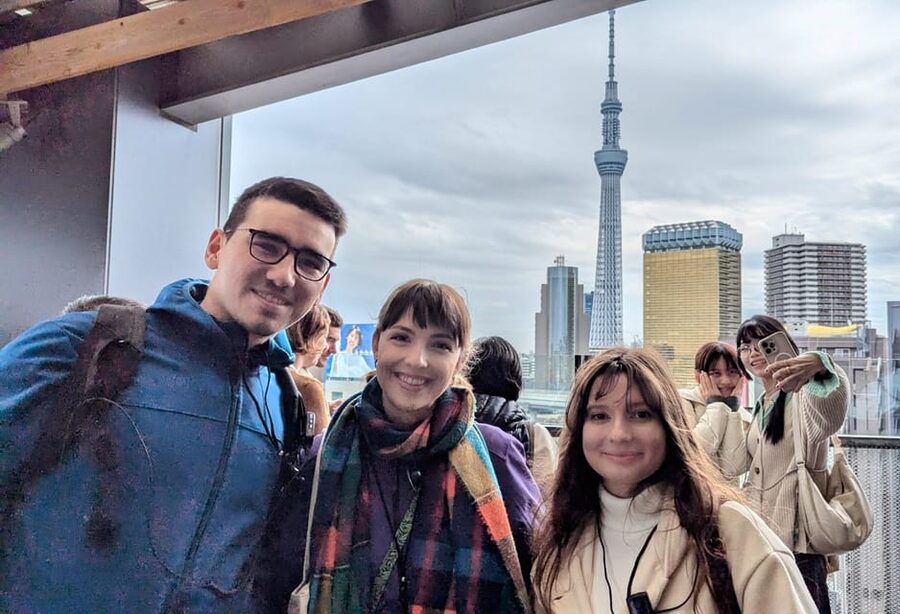
At Tokyo Skytree, your included ticket takes you to the Tembo Deck at 350 meters. The first view is wide and immediate. Tokyo spreads out in every direction, and a guide can help you identify major landmarks across the city rather than leaving you to guess at distant shapes.
That guidance matters. From this height, the city can look like a wall of buildings with no clear center. A guide’s help gives the view structure and helps connect what you saw on the ground with what lies beyond Asakusa.
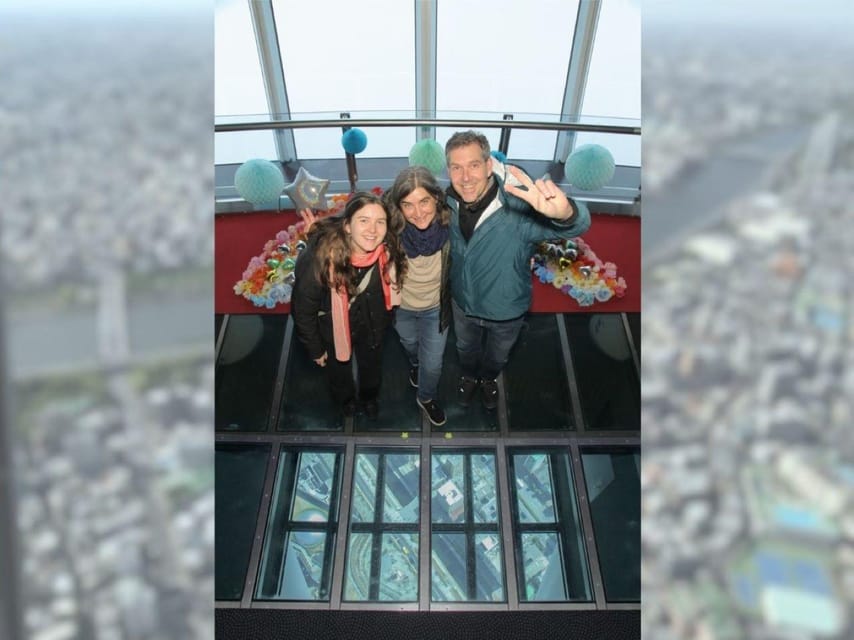
You also have a chance to step onto the glass floor. It offers a direct look down to the streets below and adds a brief shot of nerves to an otherwise calm viewing experience. If heights make you uneasy, you can simply enjoy the regular windows and let others test the glass.
A commemorative photo is available, with a downloadable copy offered for purchase. This is optional, and the tour price does not say that the photo is included, so treat it as an extra rather than part of the package.
Tokyo Skytree at 450 meters and the Tembo Galleria
The second stage takes you to the Tembo Galleria at 450 meters. This upper level extends the view and gives you another chance to see Tokyo from above, now with even more distance between you and the streets.
The value here is simple: you are not paying for only one observation level and then being asked to add the higher deck later. Both the lower and upper observation decks are included. If Skytree is high on your Tokyo list, that makes the $116 price easier to justify.
The guide remains useful at this point, especially for identifying districts and major landmarks. You can also send a Skytree-exclusive postcard anywhere in the world. It is a small, old-fashioned travel touch in a very modern building, and it costs less space in your luggage than another souvenir.
After the guided portion ends at Tokyo Skytree, you have free time in the large shopping complex at the base. You can look for gifts, local snacks, or useful last-minute purchases without being hurried back to the group.
What $116 buys you, and what it does not
The price is $116 per person. Included are the guided English walking tour, the English audio guide, and admission to both Skytree observation levels. The group limit of eight is important because this route would feel less personal with a large crowd.
You pay the 160 yen train fare separately. Hotel pickup and drop-off are also not included, so you need to reach Asakusa Station on your own and arrange your return from Skytree.
For me, the price makes the most sense if you want both cultural context and the tower. Buying a Skytree ticket separately would still leave you needing to plan the Asakusa walk, understand the temple district, and manage the transfer. Here, the pieces are connected by one guide.
The value is weaker if you only want a quick tower visit or if you prefer to explore temples at your own pace. You are paying for the interpretation and the route, not just admission. If you already know Asakusa well, the historical walking section may feel less necessary.
There is one booking point to read carefully. Skytree tickets are purchased in advance and are non-refundable and date-specific. The operator explains that tickets may be bought after the free cancellation period, or earlier if you agree to waive that option. If you cancel during the free cancellation period after giving that commitment, a charge equal to half the tour cost may apply. Read the current booking terms before confirming.
The guides and the feel of a small group
The strongest part of the experience is the human side. Machiko has been praised for noticing comfort needs, including bringing vegan restaurant guides after hearing about a guest’s diet. She also offered rest and water during hot weather.
Keiko is a good fit for people who want history explained in detail, with time for questions and photographs. Aki has handled wet, cold conditions and crowded streets with patience, and Yasu has been appreciated for his clear explanations of Asakusa’s historic sites. Guides may differ in personality, but the small group gives each one room to help.
English is the live tour language, and an English audio guide is included. One practical warning: a softly spoken guide can be difficult to hear in a noisy street. Stay near the guide, use the audio support, and speak up early if you are missing words.
Who should book this Asakusa and Skytree experience
I would recommend this tour to a first-time Tokyo visitor who wants a strong introduction to both traditional and modern Japan. It suits you especially well if you enjoy asking questions, want the meaning behind famous sights, and prefer having Skytree tickets arranged in advance.
It is also a good choice for families and mixed-age groups, provided everyone can manage several hours of walking. The guide can help with photos and adjust attention to individual needs, but you should not treat the route as a fully seated or low-effort outing.
You may want a different plan if you need a flexible schedule, dislike fixed meeting times, or want to linger at every temple and shop. The non-refundable tower tickets also make this less forgiving when your plans are uncertain.
FAQ
How long does the Asakusa and Tokyo Skytree tour last?
The experience lasts 210 minutes, or three and a half hours.
Where does the tour begin?
It begins in front of the Burger King next to Exit 4 of Asakusa subway station, G19 on the Ginza Line.
What language is the tour conducted in?
The live tour guide speaks English, and an English audio guide is included.
Are Tokyo Skytree tickets included?
Yes. Admission to the Tembo Deck at 350 meters and the Tembo Galleria at 450 meters is included.
Is the train fare included?
No. You pay the 160 yen fare from Asakusa Station to Tokyo Skytree Station separately.
How large is the group?
The group is limited to eight participants.
Should you book it?
Book this experience if you want Asakusa explained, not simply photographed, and you also want both Skytree decks in one organized outing. The strongest reason to choose it is the sequence: Sumida River history, Kaminarimon, Nakamise, Senso-ji, Asakusa Shrine, then Tokyo from 350 and 450 meters.
Skip it if you want a short tower stop, need a fully flexible day, or find several hours of walking difficult. For most first visits, though, the $116 cost is reasonable because it combines a small English-speaking group, detailed site interpretation, Skytree entry, and a clean connection between old Tokyo and new.
Just added in Japan
- Tokyo Cute Bento Cooking Class – Make a Kawaii Character Lunchbox★ 5.0 · 126 reviews
- Japanese Home Cooking Class & Walk in Todoroki Temple Tokyo★ 5.0 · 88 reviews
- A One-of-a-Kind Sushi Experience in a Special Place of Japan★ 5.0 · 15 reviews
- Japan Tokyo Tower Observatory Deck E-Ticket★ 4.0 · 34 reviews
- Catch a Baseball Game in Tokyo with a Local – Tickets Included★ 5.0 · 24 reviews
- JDM Experience with Fast&Furious RX-7 (English speaking Driver)★ 5.0 · 57 reviews
- Tokyo Private Day Tour by Car with English speaking Driver Guide★ 4.0 · 29 reviews
- Japan Classic 10 Day – One Life Adventures★ 5.0 · 129 reviews
Tours, compared.
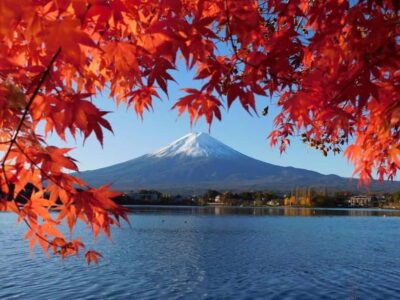
Mt Fuji and Hakone 1-Day Bus Tour Return by Bullet Train
Read our review →
![[Kyoto & Nara Day Tour] Sagano Scenic Railway & Nara Park & Fushimi Inari Taisha Thousand Torii Gates & Togetsukyo Bridge & Bamboo Grove & Kimono Forest (Departing from Osaka)](https://media.japanvisits.com/wp-content/uploads/kyoto-nara-day-tour-sagano-scenic-railway-nara-park-fushimi-inari-taisha-thousand-torii-gates-togetsukyo-bridge-bamboo-grove-kimono-forest-departing-from-osaka-k110001-400x257.jpg)