
Reviewed · OSAKA TOURS
Cooking Ramen&Gyoza/KatsuCurry/Bento/Okonomiyaki+Store Tour@Osaka
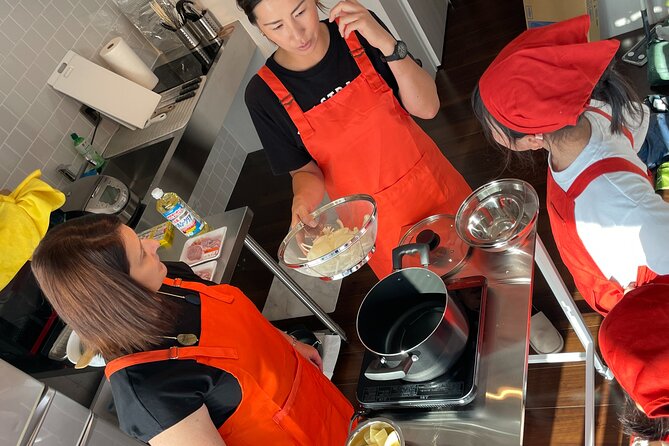
Food is the best way into Osaka. This three-hour experience combines a walk through traditional shops near Osaka Tenmangu Shrine with a hands-on class where you choose ramen and gyoza, katsu curry, bento, or okonomiyaki. I like the personal teaching, especially the patient guidance praised for instructors such as Rie, and I like that the recipes are meant for home kitchens, not just professional chefs. The main consideration is that the shop visit may be more of a cultural walk than a full ingredient-shopping trip, so clarify what you will see before booking.
The class costs about $85.89 per person and is designed as a private activity for your own group. That price is fair if you value instruction, food, neighborhood context, and a meal in one outing, but it is more than you would spend simply eating these dishes in Osaka. Families, couples, and curious eaters who want to understand the food on their plate will get the most from it.
In This Review
- Key points to know before you book
- Why this Osaka cooking class feels different
- Walking near Osaka Tenmangu Shrine
- Choosing between four Japanese dishes
- Cooking with patient English-speaking instructors
- What the meal adds to the experience
- Why families and teenagers fit the class
- Timing, meeting point, and cancellation details
- What the strong praise gets right
- Who should book this experience?
- Should you book Osaka Cooking Base?
- FAQ
- Where does the Osaka cooking experience begin?
- Where does the activity end?
- How long does the experience last?
- Which dishes can I learn to cook?
- Is the cooking class taught in English?
- Can I cancel for a refund?
Key points to know before you book
- A local-shop walk comes first: You explore small food shops near Osaka Tenmangu Shrine and learn how local people buy ingredients.
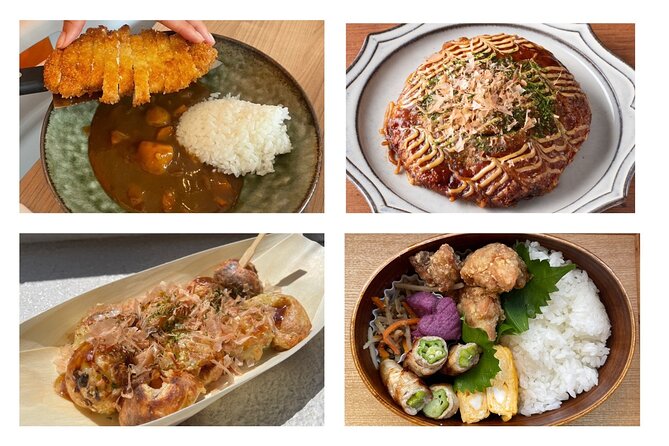
- You choose the main dish: Pick from ramen and gyoza, katsu curry, bento, or okonomiyaki. One part of the description also mentions takoyaki, so confirm the current menu when booking.
- The recipes are home-friendly: The cooking focuses on techniques you can repeat after returning home.
- Rie receives special praise: Her patient, personal teaching style helped participants feel confident with okonomiyaki, yakisoba, and katsu.
- Families fit well here: A nine-year-old participant enjoyed making katsu curry, and teenagers were engaged by the culture and cooking.
- It is easy to reach: The meeting point is near public transportation at 1-chōme-17-10 Tenjinbashi, Kita Ward.
Why this Osaka cooking class feels different
Osaka is famous for eating, but restaurant meals only tell you part of the story. You see the finished dish, take a bite, and move on. This experience gives you the missing steps: where ingredients come from, how locals shop, and how a familiar dish comes together in a Japanese kitchen.
The outing begins with a guided walk near Osaka Tenmangu Shrine. You visit traditional neighborhood shops that many visitors would not find without help. The focus is not on grand sights. It is on ordinary food culture, seasonal ingredients, and the small businesses that supply daily meals.
That setting gives the class useful context. Okonomiyaki, curry, bento, ramen, and gyoza are not museum pieces. They are practical foods made at home, bought from local shops, and adapted to family routines. Seeing the shopping side before cooking helps you understand why certain ingredients matter.
I especially like the chance to ask questions along the way. The shop visits are described as an interaction with shop owners, not simply a passing look through a market. You may taste something, discuss seasonal produce, or learn how people in Osaka choose ingredients. The exact stops can vary, so you should not expect a fixed list of famous food stores.
A few more options to weigh up in Osaka
- Osaka Go Karting Tour with Funny Costume
★ 5.0 · 2,658 reviews - Osaka Castle: Museum and Tower Entry Ticket
★ 4.5 · 2,380 reviews - Osaka: Shinsekai Food Tour with 13-15 Dishes at 5 Eateries
★ 4.8 · 2,204 reviews
Walking near Osaka Tenmangu Shrine
The meeting point is at 1-chōme-17-10 Tenjinbashi in Osaka’s Kita Ward. The area is near public transportation, which makes the outing practical even if you are still learning Osaka’s rail and subway system.
The first section is intentionally short and local. Instead of spending most of the three hours on sightseeing, you use the walk to understand the food you will later prepare. The connection between the neighborhood shops and the kitchen is the point.
You should keep your expectations clear here. The description presents the walk as a chance to visit traditional shops and learn about ingredients, but one participant expected to shop for all the ingredients used in the class and found that this was not the case. If hands-on market shopping is important to you, ask the provider exactly how the walk works before committing.
That small warning does not make the walk pointless. It simply means you should see it as a guided introduction to local food life, not necessarily as a grocery excursion where you select every onion, cabbage, or cut of meat for your recipe.
Choosing between four Japanese dishes
The strongest feature is the menu choice. Many cooking classes decide what everyone will make before you arrive. Here, you can choose a dish that matches your appetite and your interest.
Okonomiyaki is a natural choice in Osaka. This savory pancake is mixed and cooked in a way that makes it social and approachable. It also gives you a useful lesson in texture, portioning, and toppings. One participant had already enjoyed okonomiyaki and yakisoba in Osaka and wanted to learn how to make the meal at home. That is exactly the kind of reason to choose this class.
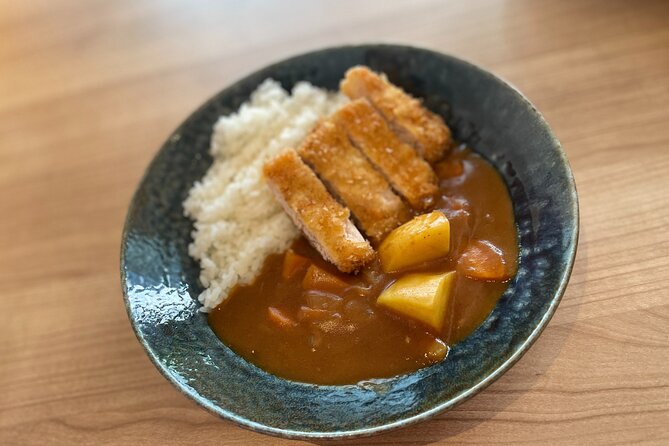
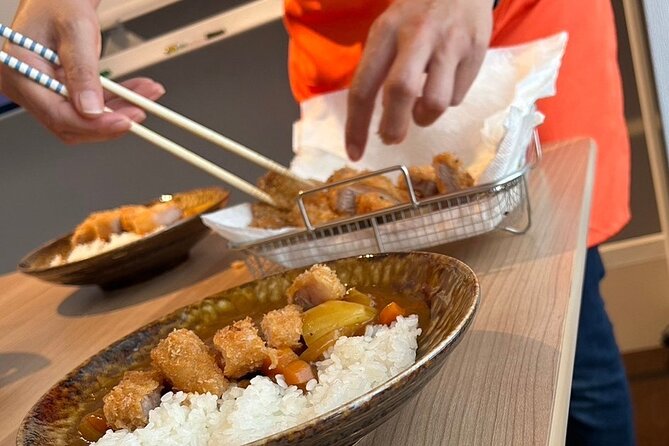
Katsu curry is another good pick, especially for families. The combination of crisp cutlet, Japanese curry, and rice is filling and familiar enough for younger eaters. A nine-year-old enjoyed making the dish and left interested in trying it again at home. The lesson appears to focus on making the food achievable, not on showing off difficult restaurant tricks.
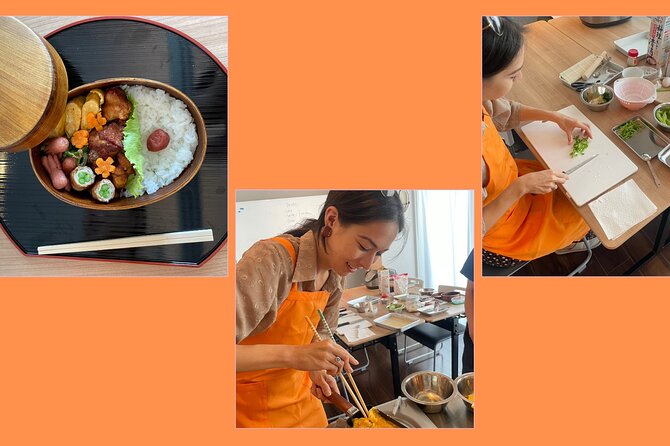
Bento offers a look at the careful arrangement of a Japanese packed meal. It is a useful option if you want ideas for lunches, picnics, or simple meals with several small components. Because the food is organized into a compact box, the class can also teach you how presentation and balance matter in Japanese cooking.
Ramen and gyoza gives you two well-known favorites in one session. This is likely the best choice if you want a meal with several steps and enjoy the contrast between noodles in broth and pan-cooked dumplings. The dishes can also be recreated at home, which adds value after your trip.
There is one menu detail worth checking. The main description names ramen and gyoza, katsu curry, bento, and okonomiyaki. A separate highlight mentions takoyaki instead. Since the information is not fully consistent, confirm the available choices and any menu changes before booking.
Cooking with patient English-speaking instructors
The teaching is in English, and the strongest praise centers on personal attention. Rie is singled out for being an excellent teacher who helped make an okonomiyaki and yakisoba lesson enjoyable from start to finish. Other feedback describes instructors as welcoming and willing to take time with each participant.
That matters in a cooking class. The useful part is not just receiving a recipe card. You need someone to show you how a mixture should look, when food is ready to turn, and how to handle a technique that feels unfamiliar. A small group makes it easier to ask for help instead of watching from the back of a crowded room.
The activity is described as private, meaning only your group participates. That is a major advantage for families, couples, and friends who want to set their own pace. Larger private groups can also be accommodated for an additional cost, which may suit a reunion or school group.
Do not confuse private participation with a completely custom culinary school. The class is beginner-friendly and built around accessible home recipes. You are signing up for a warm cultural activity, not an advanced certification course.
A completely different kind of day out:
- Osaka Food Tour: 13 Dishes at 5 Local Eateries
★ 5.0 · 2,149 reviews - Hungry Osaka Street Food Tour:15 Tastings & 3 Drinks with a Local
★ 5.0 · 1,727 reviews - Osaka: Tea Ceremony Experience
★ 4.9 · 1,426 reviews - Osaka Kickstart: Hotspots & Hidden Gems Tour
★ 5.0 · 1,306 reviews
What the meal adds to the experience
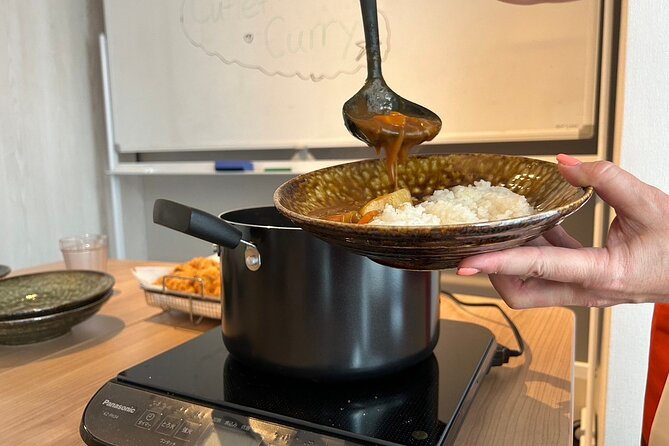
The food you prepare becomes your meal, so the class is both instruction and lunch or dinner. That makes the $85.89 price easier to judge. You are not paying only for a demonstration. You are paying for a guided neighborhood visit, an English-language lesson, individual help, ingredients, and the chance to eat what you make.
The meal also gives the class a satisfying finish. Several people found the food filling, and one participant described the katsu as excellent and practical to reproduce at home. That home connection is important. A dish can taste wonderful during a holiday and still be too complicated to make again. These recipes are presented as realistic for ordinary kitchens.
The value is strongest if you take notes, ask questions, and pay attention to technique. If you simply want to eat Osaka specialties, a restaurant will cost less and take less time. If you want to understand the food and gain a skill, the class earns its higher price.
Dietary needs require advance discussion. The provider asks you to consult ahead of time about allergies or restrictions. Do not wait until you arrive, since the class involves prepared ingredients and shared cooking plans.
Why families and teenagers fit the class
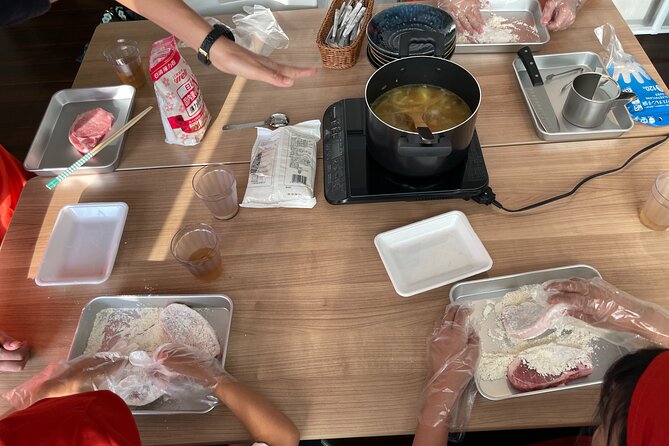
This is one of the better Osaka food activities for a mixed-age group. The cooking is active, the dishes are familiar, and the finished meal provides a clear reward. Children can take part in making their own food instead of sitting through a long explanation.
The experience also gives teenagers more cultural context than a standard restaurant stop. They can see local shops, talk with instructors, and learn why Japanese home meals are arranged and prepared in certain ways. Families have enough privacy to ask simple questions without worrying about holding up a large class.
You should still consider the three-hour duration. Young children who dislike cooking or cannot focus for long may find the session slow. The available information specifically supports families and teenagers, but it does not promise special childcare arrangements or a separate children’s program.
Adults will find plenty to enjoy too. The food is not watered down for children, and the instruction has practical value for anyone who wants to repeat the dishes at home. Couples can also use the private format for a more relaxed shared activity.
Timing, meeting point, and cancellation details
The total experience lasts about three hours, with the walk and cooking lesson together taking roughly two and a half to three hours. Plan for the full block rather than treating it as a quick meal.
You start and finish at the same meeting point. Since the activity is near public transportation, it should fit neatly into a day in Osaka, especially if you are visiting Osaka Tenmangu Shrine or exploring the Tenjinbashi area before or after the class.
A mobile ticket is provided, and booking confirmation arrives at the time of booking. The activity requires good weather because part of it takes place outdoors. If poor weather causes cancellation, you are offered another date or a full refund.
You can cancel for a full refund up to 24 hours before the local start time. Cancellations or changes made inside that 24-hour window are not refunded or accepted, so leave room in your schedule if your Osaka plans are still uncertain.
What the strong praise gets right
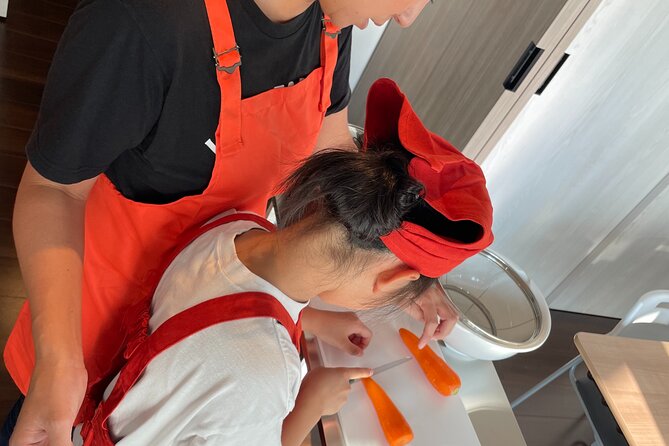
The most consistent strength is the personal welcome. The instructors are described as friendly, patient, and comfortable speaking English. That tone matters because cooking can feel awkward when you are handling unfamiliar ingredients or trying to follow instructions in another country.
The second strong point is the sense of local connection. The class may include time with an instructor’s obachan, or grandmother, which one participant found especially meaningful. That kind of family connection can make the food feel less like a staged lesson and more like a shared look at everyday cooking.
The third is repeatability. People enjoyed learning dishes they could make again at home, including katsu curry and local-style dishes. I would choose this experience over a purely decorative food demonstration if you want a skill to carry home.
The rating is 5 out of 5 from 138 reviews, with 99 percent recommending it. Those numbers point to a reliable experience, but they do not erase the one practical caution: the shop walk may not involve buying all the recipe ingredients. Ask about that detail and choose your expectations wisely.
Who should book this experience?
I would recommend it to you if you meet one or more of these descriptions:
- You want to cook instead of only eating.
- You prefer a small, private setting.
- You are traveling with teenagers or a food-curious child.
- You want English-language instruction.
- You like learning recipes that can be repeated at home.
- You want a neighborhood food experience near Osaka Tenmangu Shrine.
I would think twice if your main goal is a full market tour, a professional-level cooking course, or the lowest-cost way to sample Osaka food. The class is friendly and practical, but it is not designed as an advanced culinary workshop or a guaranteed ingredient-shopping expedition.
Should you book Osaka Cooking Base?
Book this class if you want your Osaka food experience to last beyond one restaurant meal. The combination of local shops, a private cooking lesson, and a filling meal gives you both a cultural memory and a usable recipe.
Choose your dish carefully, confirm the menu because of the takoyaki reference, and ask what the shop walk includes if shopping is important to you. With those points clear, the experience offers strong value for families, couples, and small groups who want a personal introduction to Osaka cooking.
FAQ
Where does the Osaka cooking experience begin?
It begins at 1-chōme-17-10 Tenjinbashi, Kita Ward, Osaka, 530-0041, Japan. The meeting point is near public transportation.
Where does the activity end?
The experience ends back at the same meeting point where it begins.
How long does the experience last?
The activity lasts approximately three hours. The walk and cooking session together take about two and a half to three hours.
Which dishes can I learn to cook?
The listed choices are ramen and gyoza, katsu curry, bento, and okonomiyaki. One part of the information also mentions takoyaki, so confirm the current menu with Osaka Cooking Base before booking.
Is the cooking class taught in English?
Yes. The classes are taught in English.
Can I cancel for a refund?
Yes. You can cancel at least 24 hours before the local start time for a full refund. Cancellations or changes made less than 24 hours before the start time are not refunded or accepted.
Just added in Osaka
- Osaka: 2-Hour Nightlife District Walking & Local Food Culture★ 5.0 · 199 reviews
- Osaka Japanese Cooking And Matcha Class near Osaka Castle★ 5.0 · 22 reviews
- Osaka Dotonbori Daytime Food Tour★ 5.0 · 24 reviews
- Osaka Dotonbori Wonder Cruise★ 4.0 · 28 reviews
- Osaka Food Walking Tour with Market Visit★ 4.5 · 14 reviews
- Osaka Private Pop Culture Tour: Historic Tenma to Dotonbori★ 4.5 · 13 reviews
- Half day Osaka Bay Area Cycling with E-Assist Bicycle Tour★ 5.0 · 15 reviews
- Osaka Cooking Class and Sake Tasting with Local Supermarket Visit★ 5.0 · 79 reviews
Osaka Tours, compared.


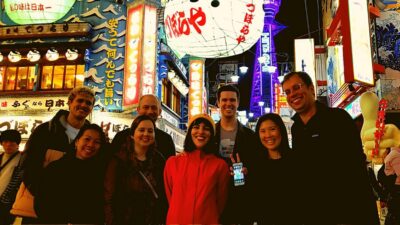
Shinsekai Food Tour with 13-15 Dishes at 5 Eateries
Read our review →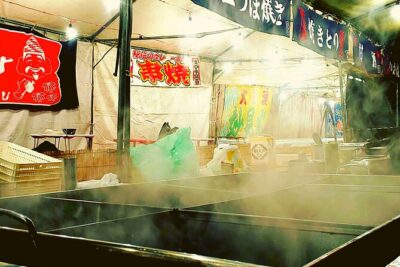
Osaka Food Tour: 13 Dishes at 5 Local Eateries
Read our review →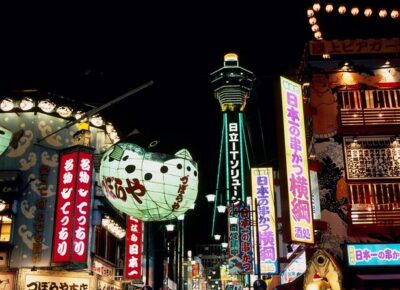
Hungry Osaka Street Food Tour:15 Tastings & 3 Drinks with a Local
Read our review →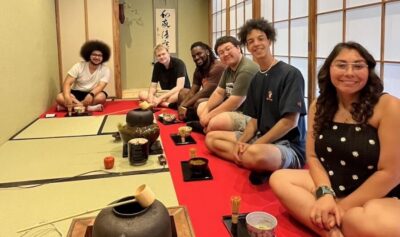
Hotspots & Hidden Gems Walking Tour Private or Group
Read our review →Browse the lists this tour appears in