
Reviewed · TRAIN EXPERIENCES
From Tokyo 1-Day Kyoto English-guided Tour by Bullet Train
Kyoto is worth the long ride. This tightly planned day trip gives you a smooth round-trip Shinkansen journey, a hotel lunch, and three famous sights without making you solve Japan’s rail system alone. I especially like the careful handoffs between English-speaking staff and the chance to see Mt. Fuji from the train on a clear day. The catch is simple: you spend much of the day traveling, then see Kyoto at a brisk pace.
The tour works best for a first visit or a short Japan trip when an overnight in Kyoto is not possible. Fushimi Inari Taisha and Kiyomizu-dera are memorable, but crowds and traffic can eat into your time. At $452.45 per person, this is convenient rather than cheap, so the value depends on how much you prize organization and a guided introduction.
In This Review
- What makes this Tokyo to Kyoto day trip useful
- Tokyo Station: an easy start, if you arrive prepared
- Kyoto Station and hotel lunch
- Fushimi Inari Taisha and the red torii gates
- Sanjusangen-do Hall and 1,001 Kannon figures
- Kiyomizu-dera and Kyoto from the hillside
- Guides and the tag-team system
- Crowds, traffic, and the real pace of the day
- Is $452.45 a fair price?
- Who should book this experience?
- Should you book the Tokyo to Kyoto day trip?
- FAQ
- How long does the tour last?
- Where does the tour start?
- Is the bullet train fare included?
- Do guides ride the Shinkansen with participants?
- Is lunch included?
- Can I request a vegetarian meal?
- Which Kyoto sights are included?
- Can I bring large luggage?
- What happens if I need to cancel?
What makes this Tokyo to Kyoto day trip useful
- A two-way ride on the Nozomi Shinkansen: You cover the Tokyo to Kyoto route quickly and enjoy one of Japan’s signature experiences.
- Three major Kyoto sights in one afternoon: Fushimi Inari Taisha, Sanjusangen-do Hall, and Kiyomizu-dera each show a different side of the city.
- Staff at both ends of the train journey: You are escorted to the correct platform in Tokyo and met at Kyoto Station.
- Lunch at Miyako Hotel Kyoto Hachijo: The 2025 meal is a Western-style semi-buffet, with a vegetarian request available when booking.
- English guidance throughout the sightseeing portion: Guides such as Yumi, Tammy, KC, Momo, and Yumi have been praised for clear explanations, energy, and care.
- A maximum group size of 40: This is not a private outing, but the group is limited enough for a guide to keep people together.
Tokyo Station: an easy start, if you arrive prepared
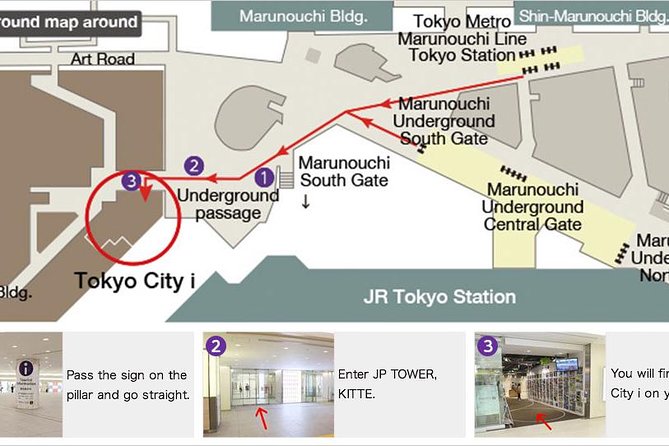
Your morning begins at Tokyo City i, inside KITTE on the basement level at Marunouchi 2-chome 7-2. The meeting time is 9:20 a.m., and the tour ends back in the Tokyo area between about 8:30 and 9:30 p.m., depending on the train schedule and traffic.
Tokyo Station can feel like a small city underground. That is why the opening escort is one of the strongest parts of this experience. An English-speaking tour conductor takes you from the meeting point to the Shinkansen platform, helps with the train connection, and stays until you board.
The staff do not ride with you. Once you are on the train, you manage the journey yourself, but the key instructions and meeting details are provided before departure. If you are new to Japan, that early handoff removes a real source of stress.
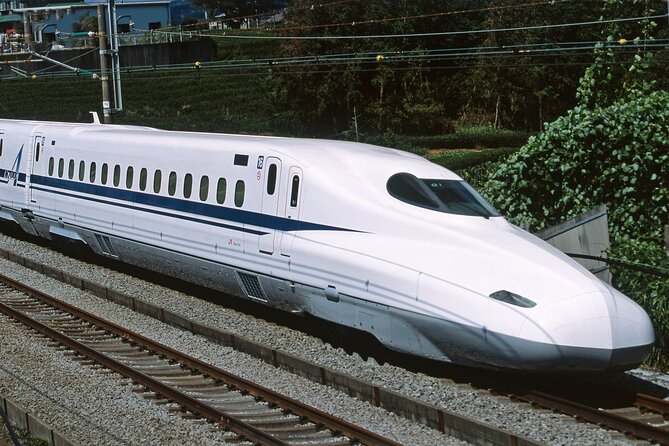
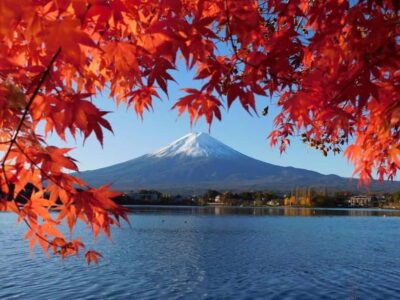
Your train ride takes about 2 hours and 20 minutes. On a clear day, keep an eye out for Mt. Fuji through the window. Train seats may not be designated, so do not assume you can choose a particular seat or sit beside a specific companion unless your booking information confirms it.
The bullet train is more than transport here. For many people, it is one of the day’s main pleasures. The ride is smooth, fast, and a practical way to connect two of Japan’s most important cities. The downside is the time: the round trip takes roughly 4 hours and 40 minutes, a large share of a 12-hour outing.
A few more options to weigh up in Tokyo
- Mt Fuji and Hakone 1-Day Bus Tour Return by Bullet Train
★ 5.0 · 26,383 reviews - Mt Fuji & Hakone Cruise, Drum Show Bullet Train 1 Day from Tokyo
★ 4.0 · 7,413 reviews - Tokyo Mt Fuji 5th St & Hakone Cruise Bus Tour w/Bullet Train
★ 4.4 · 5,024 reviews
Kyoto Station and hotel lunch
At Kyoto Station, an English-speaking staff member waits on the platform and escorts you to lunch. This is another well-run handoff, especially useful in a large station where it is easy to lose time looking for the right exit or meeting point.
Lunch takes place at Miyako Hotel Kyoto Hachijo, close to the station. In 2025, the meal is a Western-style semi-buffet. The food has received strong praise, with fresh seafood, pastries, desserts, and a main dish included in the meal setup.
This is a comfortable and efficient lunch, but you should set your expectations correctly. It is a hotel restaurant meal, not a small neighborhood restaurant or a traditional Kyoto dining experience. If your main goal is local food culture, this part may feel generic. If you want a reliable meal near the station before sightseeing, it does the job well.
Vegetarian guests need to request the option when booking. For the 2025 format, only the main dish can be changed to a vegetarian dish, and same-day changes are not accepted. The 2026 version is described as a vegetarian-friendly Western-style set menu.
After lunch, staff escort you to the JTB Sunrise Tours Desk at Kyoto Avanti. You may meet other people joining different tours there, then board the coach for the afternoon sightseeing route. This extra gathering time can feel slow, particularly if you arrive before the rest of the group, so do not expect the tour to move directly from lunch to the first temple.
Fushimi Inari Taisha and the red torii gates
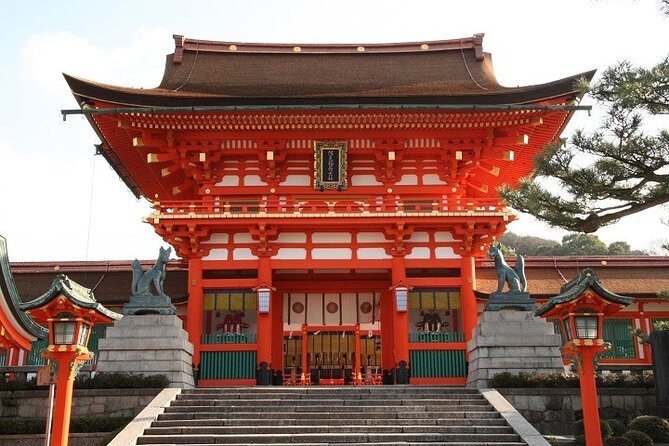
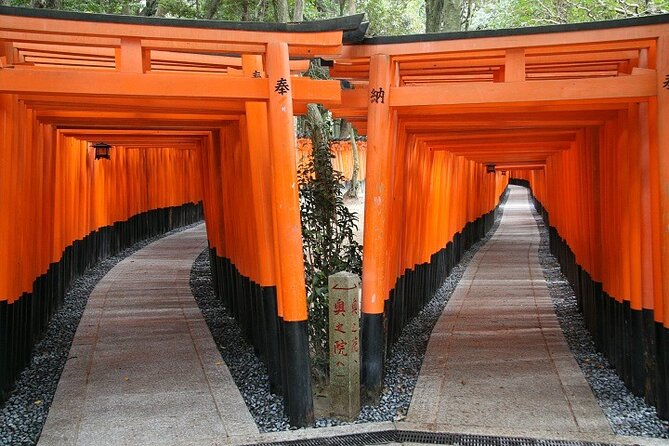
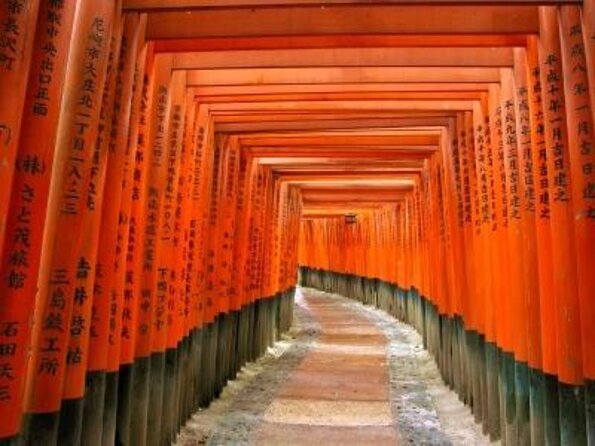
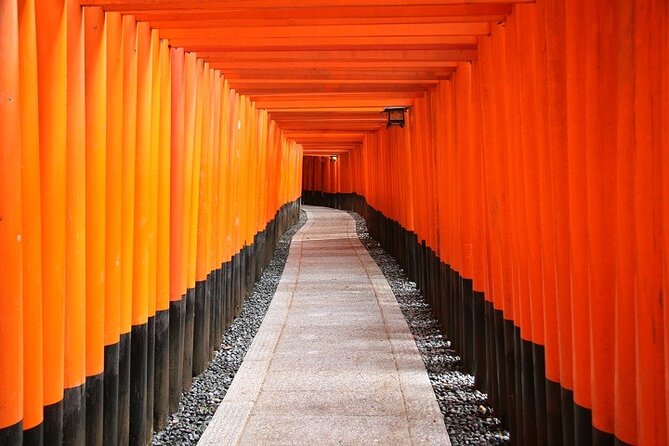
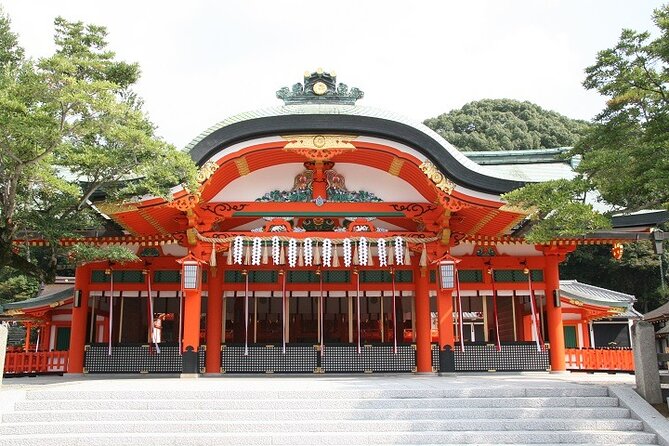
Fushimi Inari Taisha is the head shrine for roughly 40,000 Inari shrines across Japan. Its famous Senbon Torii, or thousands of bright orange-red gates, climb the lower slopes of Mt. Inari.
The visit begins after a walk from the coach parking area. The scheduled stop is about 30 minutes, which tells you what kind of visit this is: a quick introduction, not a full climb through the mountain shrine complex.
You will have time to see the opening stretch of gates, take photographs, and hear about Inari worship from your guide. The first gates are the most crowded area, and several people have found the time too short for more than a few photos before returning to the bus.
That limitation matters. Fushimi Inari is not just a photo stop. The gates continue far beyond the first section, and the experience changes as you walk farther uphill. On this tour, you should treat the visit as a taste of the site, not a complete exploration.
The crowds can be intense. At popular times, the paths and sidewalks around the shrine may be packed, making the 30-minute stop feel even shorter. Still, the gates are one of Kyoto’s most recognizable sights, and this tour gives you a practical first look without requiring you to plan transport from Tokyo.
Sanjusangen-do Hall and 1,001 Kannon figures
Sanjusangen-do, also called Rengeo-in, offers a very different mood. The temple occupies one of Japan’s longest wooden structures and houses 1,001 life-size statues of the Buddhist deity Kannon, dating from the 13th century.
The scheduled visit lasts about 30 minutes. Inside, you can take a quiet break from the open-air crowds and focus on the remarkable scale of the hall and its figures. The colossal Thousand-Armed Kannon is the central work, surrounded by rows of statues that create a powerful visual effect.
Photography is not allowed inside, so this stop asks you to put the camera away and pay attention. That is a welcome change on a day built around famous photo locations. The guide also explains Buddhist ideas and the connection with traditional archery held at the temple.
Thirty minutes is enough for the main hall and a guided explanation, but not enough for a slow visit. If you prefer to linger over details, the schedule may feel tight. The benefit is that Sanjusangen-do adds substance to the day. You are not seeing only scenic gates and viewpoints. You also get an important religious and architectural site with a calm interior.
A completely different kind of day out:
- Tokyo Disney Resort – Tokyo Disneyland & Tokyo DisneySea Park Tickets
★ 4.8 · 99,488 reviews - SHIBUYA SKY Ticket
★ 4.7 · 46,509 reviews - JR Whole Japan Rail Pass
★ 4.8 · 29,150 reviews - TOKYO SKYTREE® Ticket
★ 4.7 · 25,136 reviews
Kiyomizu-dera and Kyoto from the hillside
Kiyomizu-dera is the final major stop and the one with the strongest city views. The temple sits on a hillside, giving you a broad look over Kyoto from its famous wooden stage and surrounding grounds.
The allotted time is about 1 hour and 10 minutes, longer than at the first two sites. Even so, traffic, walking time, and crowds can reduce the time available at the temple itself. The route includes the historic shopping lane leading toward Kiyomizu-dera, where you can look for souvenirs and snacks.
This is the stop where the schedule can feel most pressured. The approach is uphill, and the area can be extremely crowded. One visitor had only a short time at the opening torii gates at Fushimi Inari and about 40 minutes at Kiyomizu-dera, which was not enough to browse the shops and enjoy the temple at an easy pace.
Try to stay aware of the meeting time. The return train will not wait for late arrivals, and the group must get back to Kyoto Station after the sightseeing route. Traffic can also delay the coach, so the final part of the day is not the place for a relaxed, unplanned wander.
Still, Kiyomizu-dera is a strong closing stop. The hillside setting, the old shopping lane, and the view across Kyoto give you a memorable sense of the city. If you have never visited Kyoto, this may be the point when the day feels most worthwhile.
Guides and the tag-team system
The guiding system is unusual but practical. One staff member handles the Tokyo departure. Another meets you at Kyoto Station and takes you to lunch. A local guide leads the sightseeing, and another staff member helps with the return train.
That can feel like a relay race. Some people appreciate the care and clear handoffs, while others find the repeated changes of staff impersonal. The system is designed to prevent missed trains and lost participants, not to create one continuous personal relationship with a guide.
The individual guides can make a big difference. Yumi has been praised for detailed explanations at the temples. Tammy was described as energetic and engaging, while KC received high marks for keeping spirits up in crowded areas. Momo was singled out for strong local knowledge and helpful English.
English ability may vary by guide. One person found a guide difficult to understand and wanted more detailed explanations. That is worth keeping in mind if temple history is your main reason for booking. The tour does provide an English-speaking, nationally licensed guide interpreter, but the style and clarity may not be identical on every departure.
Crowds, traffic, and the real pace of the day
The route is well organized, but Kyoto is not always cooperative. Fushimi Inari and Kiyomizu-dera are among the city’s busiest sights, and traffic can slow the coach. Several parts of the afternoon may involve waiting for the full group to gather or for people joining from another tour.
This is the central tradeoff. You get a polished route through famous places, but you do not get much unscheduled time. Some people find the pace just right, while others describe it as a rushed half-day in Kyoto rather than a full day in the city.
That description is fair. The total experience lasts about 12 hours, but nearly five hours go to the train. Lunch, transfers, gathering time, and coach travel take more of the clock. The actual temple visits total about 2 hours and 10 minutes.
I would not book this expecting to understand Kyoto in one day. I would book it to sample three major sights while based in Tokyo. If you have two or more nights available, staying in Kyoto will give you a much better chance to see quieter areas and visit at your own pace.
Is $452.45 a fair price?
At $452.45 per person, this is a premium day trip. The price includes round-trip Shinkansen fare, the afternoon coach tour, an English guide interpreter, and lunch. It may also be available with a choice between standard and first-class, or Green Car, train seating.
The value comes from the coordination. You do not have to work out the Tokyo Station departure, Kyoto meeting point, lunch location, coach connection, temple admissions, or return train on your own. For a first Japan visit, that can be worth paying for.
The value is weaker if you are comfortable buying rail tickets, navigating stations, and arranging Kyoto sightseeing independently. You could then spend more time at each site and choose a lunch that feels more local. The tour also does not include anything beyond the listed inclusions, so snacks, personal purchases, and other expenses are extra.
If you choose first class, the added comfort may help on a journey that lasts more than four hours in total. One particularly useful tip is to reserve your train seat carefully. There are limited non-reserved seats, and relying on them creates an unnecessary risk on the return trip.
Who should book this experience?
I would recommend this tour to:
- First-time visitors who feel unsure about Japanese train stations
- People staying in Tokyo who cannot add a Kyoto overnight
- Visitors who want major temples with an English explanation
- Anyone who values a fixed schedule and staff assistance
- Families and older visitors who prefer not to plan every transfer
I would hesitate to recommend it to:
- Anyone seeking a slow, quiet Kyoto experience
- Visitors who want a traditional local lunch
- Independent rail users who can plan the route themselves
- Photographers who need long periods at Fushimi Inari
- People who dislike crowds, coach transfers, or fixed departure times
Children up to age five may join free, but they do not receive a Shinkansen seat, coach seat, or lunch unless booked at the child rate. Anyone under eighteen needs written parental permission, and children under fifteen, or those not yet in middle school, must travel with a parent or guardian.
Large luggage also needs planning. Bags whose combined height, width, and length exceed 160 centimeters cannot be brought onto the Shinkansen, so you would need to arrange luggage delivery yourself.
Should you book the Tokyo to Kyoto day trip?
Book it if your Japan schedule is Tokyo-heavy and Kyoto is a must-see. The bullet train ride, reliable station escorts, good hotel lunch, and three famous sites make this a sensible way to get a first glimpse of Kyoto in one demanding day.
Do not book it if you can spend several nights in Kyoto. You will see more, wait less, and have time for the city beyond its most crowded landmarks. The tour is best understood as a carefully managed introduction, not a complete Kyoto visit.
The overall rating is 4 out of 5 from 376 ratings, which fits the experience well. The organization and guides receive the warmest praise, while the main complaints concern time, crowds, waiting, and price. If you accept those limits, this is an efficient and memorable day. If you want depth, stay overnight.
FAQ
How long does the tour last?
The tour lasts approximately 12 hours. It begins at 9:20 a.m. and usually ends at Tokyo Station, Shinagawa Station, or Shin-Yokohama Station between about 8:30 and 9:30 p.m.
Where does the tour start?
The meeting point is Tokyo City i in the basement of KITTE, at 2-chome 7-2 Marunouchi, Chiyoda City, Tokyo.
Is the bullet train fare included?
Yes. Round-trip bullet train fare between Tokyo and Kyoto is included, with standard or first-class seating options available.
Do guides ride the Shinkansen with participants?
No. The Tokyo escort guides you to the train and provides the necessary information, but tour staff do not ride on the Shinkansen with participants.
Is lunch included?
Yes. Lunch is included at Miyako Hotel Kyoto Hachijo. The 2025 meal is a Western-style semi-buffet, and the 2026 meal is described as a vegetarian-friendly Western-style set menu.
Can I request a vegetarian meal?
Yes. For the 2025 meal, you must request a vegetarian option when booking, and only the main dish can be changed. Same-day changes are not accepted.
Which Kyoto sights are included?
The tour visits Fushimi Inari Taisha, Sanjusangen-do Temple, and Kiyomizu-dera Temple.
Can I bring large luggage?
Luggage with combined height, width, and length exceeding 160 centimeters cannot be brought onto the Shinkansen. You would need to arrange a delivery service yourself.
What happens if I need to cancel?
You can cancel for a full refund if you do so at least 24 hours before the experience start time. Cancellations or changes made less than 24 hours ahead are not accepted for a refund.
Just added in Tokyo
- MT. FUJI/ Private Tour delivered and guided by a top-tier driver★ 5.0 · 27 reviews
- Mt fuji & Hakone customizable day tour w/ English speaking driver★ 5.0 · 45 reviews
- Fuji Speedway Self Drive & Mt. Fuji Private Tour pickup & dropoff★ 5.0 · 14 reviews
- Mt.Fuji Trekking 1 Day Tour up to the summit★ 5.0 · 14 reviews
- Seasonal Mt. Fuji Scenic Views, Fruit Picking and Ropeway Ride!★ 4.5 · 35 reviews
- Customisable Mt.Fuji Private Day Trip, English Speaking Driver★ 5.0 · 22 reviews
- Private Mt Fuji Tour from Tokyo: Scenic BBQ and Hidden Gems★ 5.0 · 146 reviews
- Private Mount Fuji Tour in Luxury Vehicle with English Guide★ 4.5 · 39 reviews
Train Experiences, compared.
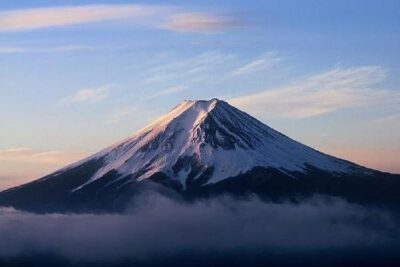
Mt Fuji and Hakone 1-Day Bus Tour Return by Bullet Train
Read our review →![[Kyoto & Nara Day Tour] Sagano Scenic Railway & Nara Park & Fushimi Inari Taisha Thousand Torii Gates & Togetsukyo Bridge & Bamboo Grove & Kimono Forest (Departing from Osaka)](https://media.japanvisits.com/wp-content/uploads/kyoto-nara-day-tour-sagano-scenic-railway-nara-park-fushimi-inari-taisha-thousand-torii-gates-togetsukyo-bridge-bamboo-grove-kimono-forest-departing-from-osaka-k110001-400x257.jpg)
Mt Fuji & Hakone Cruise, Drum Show Bullet Train 1 Day from Tokyo
Read our review →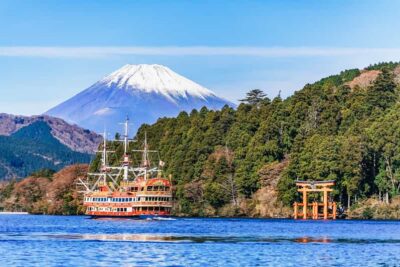
Tokyo Mt Fuji 5th St & Hakone Cruise Bus Tour w/Bullet Train
Read our review →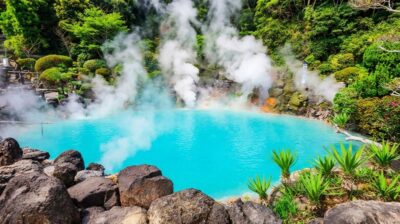
Kyushu One-Day Tour: Yufuin no Mori Train & Yufuin Town & Nyoirin-ji Temple & Dazaifu & Hell Hot Springs (Departing from Fukuoka)
Read our review →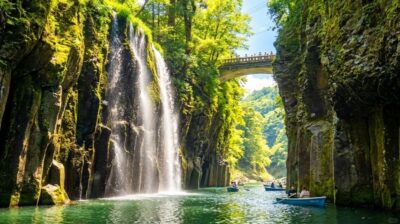
Mt. Fuji & Hakone Tour w/ Return by Bullet Train
Read our review →
Kyoto Arashiyama Scenic Train & Hozugawa River Boat Ride Day Trip (From Osaka / Kyoto)
Read our review →Browse the lists this tour appears in