
Reviewed · DAY TRIPS
From Tokyo: Mount Fuji Sightseeing One Day Trip
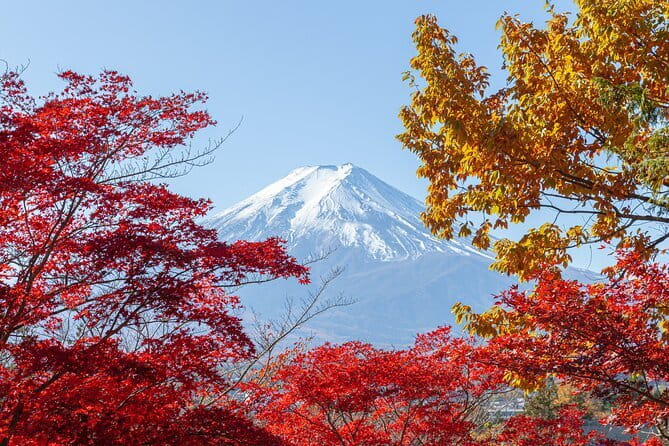
Fuji is never a sure bet. This $58.90 day trip makes seeing the mountain area simple, with round-trip transport from Tokyo or Shinjuku and seven well-chosen photo stops. I especially like the mix of classic views, including Chureito Pagoda and Lake Kawaguchi, plus the quieter cultural stops at Arakura Fuji Sengen Shrine and Oshino Hakkai. The main catch is time: the schedule is tight, and clouds may hide Mount Fuji for much of the day.
I also like the practical help from the guides. Joey, Jay, Keiko, Ann, Kevin, and others receive repeated praise for keeping the group organized, explaining local customs, and adjusting the order when weather changes. You should still check the forecast before booking, since the scenery depends heavily on clear skies and some stops can feel rushed.
In This Review
- Key points to know before booking
- Why this Mount Fuji day trip works from Tokyo
- Chureito Pagoda and the first Fuji photo
- Arakura Fuji Sengen Shrine in 15 minutes
- Lake Kawaguchiko and Oishi Park
- Oshino Hakkai’s clear spring ponds
- Hikawa Clock Shop and the classic street scene
- Lawson Fujikawaguchiko Town Hall
- The guides are a major part of the value
- Weather, seasons, and your chances of seeing Fuji
- How rushed is the schedule?
- What to bring and how to prepare
- Is $58.90 good value?
- Should you book this Mount Fuji tour?
- FAQ
- How long does the Mount Fuji tour last?
- How much does the tour cost?
- Is transportation included?
- Is lunch included?
- What locations does the tour visit?
- Can I be sure I will see Mount Fuji?
- Can I cancel for a full refund?
Key points to know before booking
- Seven stops in about 10 hours: You cover the area’s best-known viewpoints without planning train connections, buses, or driving routes yourself.
- Chureito Pagoda delivers the classic view: Expect a famous composition of red pagoda, Fujiyoshida City, and Mount Fuji, provided clouds cooperate.
- The day moves quickly: Most stops last between 15 and 60 minutes, so bring a camera and keep an eye on the time.
- Guides make a real difference: Joey, Jay, Keiko, Wennie, Ann, and others are praised for clear instructions, humor, and careful timekeeping.
- Weather controls the payoff: Clear days can be spectacular, but fog and cloud cover have hidden Fuji completely for some departures.
- Lunch is your responsibility: Food is not included, and crowded stops may leave little time for a leisurely meal.
Why this Mount Fuji day trip works from Tokyo
Getting from Tokyo to the Fuji Five Lakes area on your own is possible, but it takes planning. You need to match a train or bus with local connections, keep an eye on return times, and account for traffic. This excursion removes most of that work with an air-conditioned vehicle and a guide who manages the route.
That matters because the Mount Fuji area is spread out. Chureito Pagoda is in Fujiyoshida, while Lake Kawaguchi, Oshino Hakkai, and the smaller photo stops are elsewhere. A private car would give you more freedom, but at $58.90 per person, this group tour offers a strong price for a full day of transport and sightseeing.
The vehicle can hold up to 45 people. That is a sizable group, so do not expect the pace of a private tour. The benefit is cost. The tradeoff is that every stop has a firm departure time, and delays caused by traffic or slow boarding can reduce time later in the day.
The bus ride itself is part of the experience. One review praised the route through the mountains, and several people found the drive smooth and comfortable. One person found the bus less comfortable and the air conditioning too low, so comfort may depend on the particular vehicle and your own tolerance for a long day on the road.
More Day Trips in Tokyo
- Mt Fuji Top 5 Spots Day Tour: Arakurayama Park,Oshino Hakkai
★ 4.7 · 2,066 reviews - Tokyo: Mt. Fuji, Kamakura, Big Buddha, & Lake Ashi Day Trip
★ 4.5 · 867 reviews - Mt. Fuji & Hakone Private Day Tour with English-Speaking Driver
★ 4.5 · 824 reviews
Chureito Pagoda and the first Fuji photo
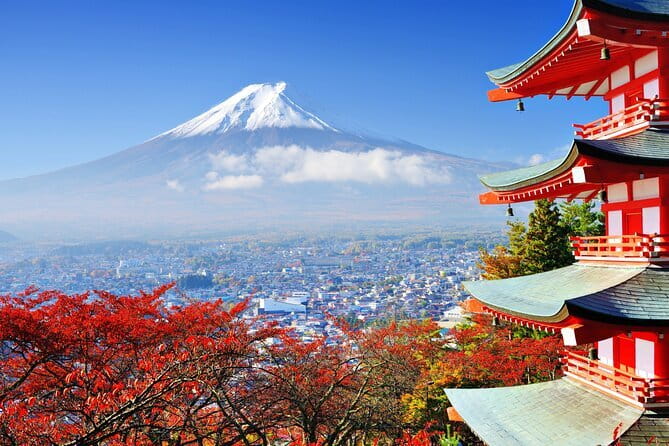
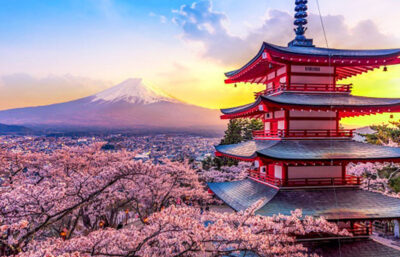
The first stop is Chureito Pagoda in Arakurayama Sengen Park, usually the image people have in mind when they picture Mount Fuji sightseeing. The red pagoda sits above Fujiyoshida City, with the mountain rising behind it on a clear day.
You have about an hour here, and admission is free. That sounds generous, but the stop includes getting around the park and reaching the viewpoint, so you should not treat the full hour as relaxed sitting time. Wear shoes suitable for steps and walking, and keep your camera ready.
This is one of the strongest parts of the day because it gives you a high viewpoint and several subjects in one frame. The pagoda, city, and mountain create a distinctly Japanese scene. If Fuji is hidden, the pagoda and city view still give you something to see, but the famous composition loses its main ingredient.
The guide may help with photos, and this is one area where several guides earned praise. Augustine was singled out for taking especially good pictures, while Joey and others were praised for helping people get organized at each stop. If you want a group photo, ask early rather than waiting until the last minute.
Arakura Fuji Sengen Shrine in 15 minutes
A short stop follows at Arakura Fuji Sengen Shrine. The shrine was built in 705 and has served as the guardian shrine of Arakura Village for more than 1,300 years. It is connected with prayers for protection, good fortune, and harmony.
You get only about 15 minutes here. That is enough to look around and take a few photographs, but not enough for a slow visit or detailed study. I see this stop as a useful cultural pause rather than a major sightseeing block.
The shrine gives the day some balance. Without it, the trip could feel like a chain of photo locations. Here, you get a glimpse of the religious setting behind the area’s name and traditions. Listen to the guide’s explanation, since the short visit does not leave much time to work out the context on your own.
Lake Kawaguchiko and Oishi Park
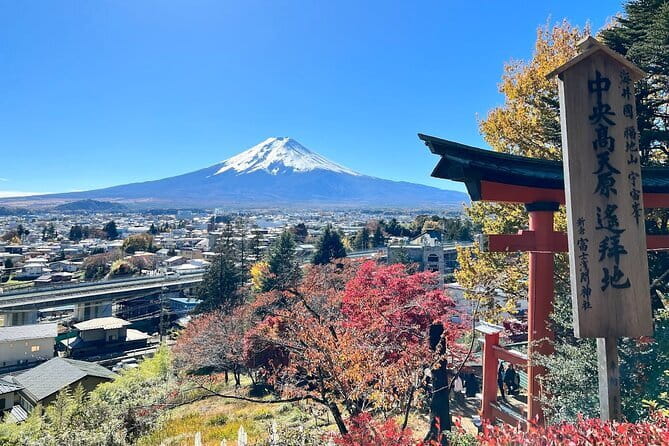
Lake Kawaguchiko is the most popular of the Fuji Five Lakes and has the longest shoreline among them. The scheduled lake stop lasts about 20 minutes, followed by 30 minutes at Oishi Park.
That half-hour combination is useful but brief. At the lake, you can take in the broad view and photograph Fuji from the shore. At Oishi Park, flowers, water, and the mountain come together in one scene. The flowers change with the season, so the park will not look exactly the same throughout the year.
These stops are highly dependent on visibility. On a clear day, the lake provides one of the best wide views of Fuji. On a cloudy day, you still have the water, flowers, and open space, but the mountain may be reduced to a faint outline or disappear completely.
The schedule also means you may have to choose between photographs, a short walk, and buying something to eat. One person suggested shifting time from the Lawson stop to a location such as this, where lines for ice cream and other treats can eat into the visit. That is useful advice: do not expect enough time here for a long café stop and a full walk.
A completely different kind of day out:
- Tokyo Disney Resort – Tokyo Disneyland & Tokyo DisneySea Park Tickets
★ 4.8 · 99,488 reviews - SHIBUYA SKY Ticket
★ 4.7 · 46,509 reviews - JR Whole Japan Rail Pass
★ 4.8 · 29,150 reviews - Mt Fuji and Hakone 1-Day Bus Tour Return by Bullet Train
★ 5.0 · 26,383 reviews
Oshino Hakkai’s clear spring ponds
Oshino Hakkai receives about an hour, making it one of the more substantial stops. This village is known for eight clear spring ponds, recognized among Japan’s Top 100 Famous Waters. The site is also classified as a Natural Monument and forms part of the Mount Fuji World Heritage area.
This is more than another mountain viewpoint. The ponds and village setting give you a closer look at how water from the Fuji area shapes local life and scenery. You can photograph the clear water, traditional surroundings, and mountain views when conditions allow.
An hour sounds comfortable, but the area can be crowded. You may want to use the first few minutes to find the main ponds and understand the layout before browsing food stalls or souvenirs. If you stop for lunch here, watch the clock carefully. Lunch is not included, and queues can take away from your sightseeing time.
Oshino Hakkai is also a good fallback when Fuji is covered. The ponds remain the focus, so the stop does not depend entirely on one mountain view. This makes it one of the more worthwhile parts of the route on a cloudy day.
Hikawa Clock Shop and the classic street scene
The Hikawa Clock Shop stop lasts about 20 minutes and offers a different kind of Fuji photograph. You see an ordinary Japanese street with the mountain framed at the end of the road, creating a simple contrast between daily town life and a huge natural landmark.
This stop is not about entering a major attraction. It is about composition and atmosphere. The street feels removed from central Tokyo, and the view gives you a sense of how Fuji appears in the background of local communities.
Because the stop is short, follow the guide’s instructions and move promptly. You will have time for photographs, but not for a long wander through the town. It is a small stop, yet it adds variety to a day otherwise centered on parks, lakes, and formal sights.
Lawson Fujikawaguchiko Town Hall
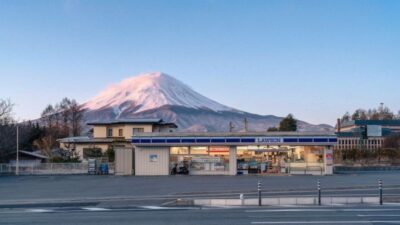
The final photo stop is a convenience store with a bright blue facade and Mount Fuji behind it. The contrast between a familiar modern store and Japan’s tallest mountain has made this location popular on social media.
You get about 15 minutes. That is enough for the well-known photograph and perhaps a quick purchase, but it is not a meaningful stop for shopping. One person felt this time would have been better added to another location, and I understand the criticism. If you have already photographed Fuji from lakes, parks, and village streets, this can feel repetitive.
Still, the stop is easy to understand. It offers a distinctly modern Japanese image and a quick final chance to photograph Fuji before the return journey. Treat it as a bonus photo opportunity, not a major attraction.
The guides are a major part of the value
A good guide matters on this tour because the day is tightly timed. You need clear meeting instructions, reminders about departure, and useful explanations during long stretches on the bus.
Several guides receive strong praise. Keiko is described as organized, friendly, and clear, with helpful tips during the drive. Jay is praised for keeping everyone informed and on schedule. Joey receives repeated approval for humor and explanations about Fuji’s history and culture. Wennie, Ann, Kevin, Jimmy Lee, Blair, Tim, and Augustine are also singled out for friendliness, energy, or practical help.
Guiding quality may vary. One dissatisfied person found the guide’s English difficult to understand and felt the explanations did not add much. That is an important limitation for anyone choosing a tour mainly for detailed storytelling. Most of the feedback is very positive, but you should view the guide as a helpful bonus rather than assume a specialist lecture.
The guides also appear willing to respond to conditions. On one departure, the order changed so the group could see Fuji later after morning clouds cleared. That kind of adjustment can help, although traffic and weather cannot always be overcome.
Weather, seasons, and your chances of seeing Fuji
Mount Fuji is the star of the day, but it is not guaranteed to appear. Fog and cloud cover have hidden it completely on some departures. Other groups have had clear views for most of the day, only to lose the summit behind clouds in the afternoon.
Check the forecast before you book. A clear morning gives you the best chance, but conditions can change while you are on the road. The tour still has value in poor weather because of the shrine, ponds, villages, and lake area, but you should not pay for this trip expecting a guaranteed postcard.
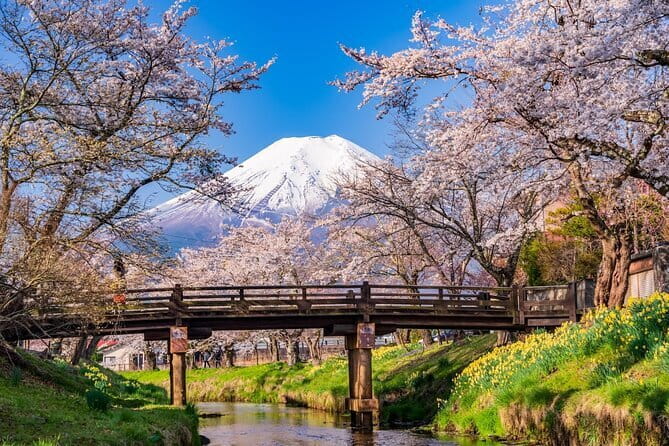
Season matters, too. Autumn received especially warm praise, and spring was recommended over the less attractive January conditions by one person. Winter can provide crisp air and snow or ice near the summit, but the parks and flowers may feel less colorful. During Golden Week, crowds can be heavy even when the weather is good.
Bring layers and an umbrella. One person specifically warned that rain can become heavy. Since you move between outdoor viewpoints and the bus, simple weather protection can make the difference between an enjoyable day and a damp, uncomfortable one.
How rushed is the schedule?
The listed stops total about three hours and 40 minutes, leaving the rest of the 10-hour day for driving, traffic, boarding, and breaks. That is a sensible structure for covering a wide area, but it is not a slow regional tour.
You should be ready to leave exactly when the guide says. One review praised the punctuality but warned that the schedule is intensive. Another said the tour reached many appealing places but felt a little rushed. That is the central tradeoff: you see more locations, but you do not have much time to linger.
The route can also run longer than the advertised estimate if Tokyo traffic is heavy. A Saturday departure was badly affected by traffic, and the trip lasted about 11 hours for one group. Build some flexibility into your evening plans, especially if you have a dinner reservation or a train to catch.
What to bring and how to prepare
The tour includes the air-conditioned vehicle and all admission fees listed for the stops. You need to budget separately for lunch, drinks, snacks, souvenirs, and personal purchases.
I would bring:
- Comfortable shoes for the park and village stops
- An umbrella or rain jacket
- A phone with enough battery for photographs
- A small amount of time discipline, since late departures affect everyone
- A mobile ticket and the meeting details ready before departure
Tell the operator when booking if you have a stroller or large luggage. If you book separately from relatives or friends, notify the operator at least one day ahead so you have a better chance of being placed in the same vehicle.
The confirmation arrives at booking, and the tour is near public transportation. Most people can participate, but the walking and quick changes between stops may not suit everyone equally.
Is $58.90 good value?
At $58.90, this is a strong-value option if your priority is seeing many Fuji-area highlights in one day. You receive round-trip transport, an air-conditioned vehicle, a guide, and admission fees without having to assemble the route yourself.
The value is strongest for a first visit, a short Tokyo stay, or anyone uncomfortable driving in Japan. You also get several different views of Fuji rather than spending the entire day at one lake or one pagoda.
The value is weaker if you want quiet time, long walks, detailed shrine visits, or a flexible lunch. A private trip would cost more but give you control. Public transport may cost less in some cases, but you would take on the planning and risk of missed connections.
The rating is 4.7 from 42 ratings, with 95 percent recommending the experience. That matches the main pattern: excellent guides, good organization, smooth transport, and strong scenery on clear days, balanced by crowds, tight timing, traffic, and uncertain mountain visibility.
Should you book this Mount Fuji tour?
Book it if you want a practical first look at the Mount Fuji area without renting a car or managing several connections. The route covers the classic pagoda, lake, park, shrine, spring ponds, town street, and convenience-store photo in one long day. At this price, that is a lot of ground.
Skip it if a hidden Fuji would ruin the day, or if you prefer to spend an hour or two at one place rather than collect short visits. Check the forecast, avoid locking in a tight evening plan, and choose autumn or spring if your schedule allows.
For many people, this is a sensible Tokyo side trip. Just remember the bargain comes with a group schedule, and Mount Fuji gets the final vote.
FAQ
How long does the Mount Fuji tour last?
The tour lasts approximately 10 hours. Traffic can make the day longer, with one departure taking about 11 hours.
How much does the tour cost?
The listed price is $58.90 per person.
Is transportation included?
Yes. Round-trip transportation in an air-conditioned vehicle is included.
Is lunch included?
No. Lunch and other personal expenses are not included.
What locations does the tour visit?
The stops include Chureito Pagoda, Arakura Fuji Sengen Shrine, Lake Kawaguchiko, Oishi Park, Oshino Hakkai, Hikawa Clock Shop, and Lawson Fujikawaguchiko Town Hall.
Can I be sure I will see Mount Fuji?
No. Cloud, fog, and weather can hide Mount Fuji. The tour may change the order of stops when conditions improve, but visibility is not guaranteed.
Can I cancel for a full refund?
Yes, if you cancel at least 24 hours before the experience starts. Cancellations or changes made less than 24 hours ahead are not accepted for a refund.
Just added in Tokyo
- Very popular in Harajuku♡Animal petting zoo★ 4.6 · 39 reviews
- Yokohama Port: Private Customizable Tour with Transfer★ 5.0 · 19 reviews
- Wagyu & Sake 8 Course Tasting Dinner in Shinjuku★ 4.9 · 20 reviews
- Warner Bros. Studio Tour Tokyo – The Making of Harry Potter★ 4.8 · 181 reviews
- Yanaka District: Historical Walking Tour in Tokyo’s Old Town★ 4.8 · 117 reviews
- Tokyo: Classic Tsukiji Food Tour★ 4.9 · 78 reviews
- Tokyo: Tsukiji Fish Market Tour with 6 Stops & Seafood Lunch★ 4.5 · 165 reviews
- Tokyo Wagyu & Sake Pairing Tasting Experience with Local Flavors★ 5.0 · 108 reviews
Day Trips, compared.
Kyoto Amanohashidate & Ine Funaya & Ine Bay Scenic Day Trip (Departing from Osaka or Kyoto)
Read our review →
Kyushu: Mount Aso, Kusasenri & Takachiho Gorge Day Tour (Optional Takachiho Boat Ride Experience)
Read our review →
Kyushu One-Day Tour: Yufuin no Mori Train & Yufuin Town & Nyoirin-ji Temple & Dazaifu & Hell Hot Springs (Departing from Fukuoka)
Read our review →
Browse the lists this tour appears in