
Reviewed · DAY TRIPS
From Tokyo: Must-Visit Mount Fuji Highlight Full-Day Tour
Fuji views are never guaranteed, but the day can still deliver. This $69 Mount Fuji tour from Tokyo visits famous viewpoints, quiet lakes, waterfalls, spring-fed ponds, and tea fields without asking you to rent a car or decode rural bus schedules. I like the wide range of scenery and the fact that you see Fuji from several sides, not just one postcard angle.
I also like the helpful guides. Kei, Goldie, Yui, Jun, and others are praised for clear directions, friendly care, photo help, and keeping large groups moving. The main drawback is time: traffic can turn the advertised 11-hour outing into a 12-hour or longer day, and stops may feel short when the mountain finally appears.
In This Review
- Key points before you book
- Why this Mount Fuji day trip works
- Starting from central Tokyo
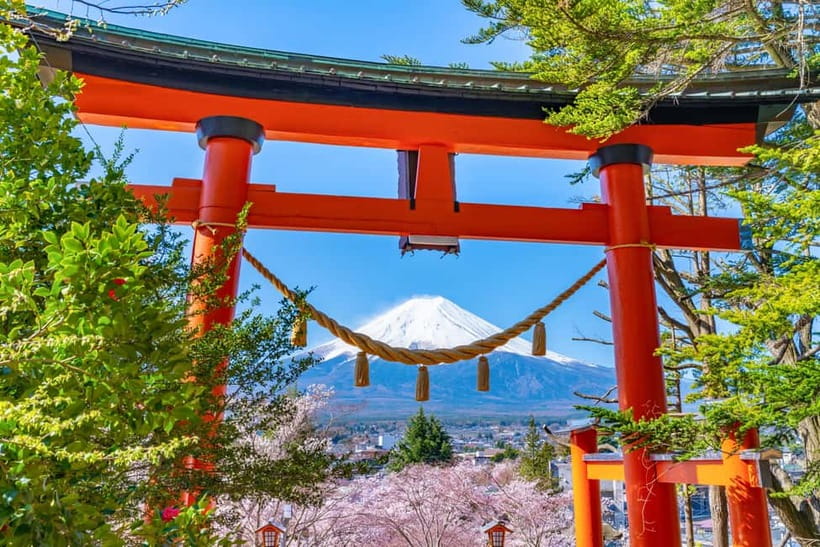
- Arakurayama Sengen Park and the Chureito Pagoda
- Shimoyoshida Honcho Street and the famous convenience store
- Lake Kawaguchi and Oishi Park
- Shiraito Waterfall and the missing lunch plan
- Obuchi Sasaba and Japan’s tea country
- Oshino Hakkai and its clear spring ponds
- The Fuji museum or a matcha break
- Lake Yamanaka and Hirano Beach
- How the two routes differ
- The guide and coach experience
- Weather, walking, and what to pack
- Is $69 good value?
- Should you book this Mount Fuji tour?
- FAQ
- How long is the Mount Fuji tour from Tokyo?
- Where can I meet the tour?
- Is lunch included?
- Can I choose between different routes?
- Is the tour wheelchair-accessible?
- What languages are available?
Key points before you book
- Two sightseeing styles: Choose a photo-focused route with Lake Kawaguchi, Shiraito Waterfall, and Obuchi Sasaba, or a scenic route with Oshino Hakkai, the Fuji museum, and Lake Yamanaka.
- Chureito Pagoda requires stairs: The view at Arakurayama Sengen Park is superb, but reaching the pagoda involves roughly 400 steps.
- Fuji is weather-dependent: Clear skies can produce views all day. Clouds may hide the mountain completely, though the other stops remain worthwhile.
- A large coach, not a small van: Groups can reach 49 people, but the coach is reported to be comfortable and spacious enough for the long drive.
- Bring food and good shoes: Lunch is not included, and several stops involve walking or stairs.
- Good value at $69: Transport to difficult-to-reach sites, a guide, and a full day around Fuji make this an economical choice for a first visit.
Why this Mount Fuji day trip works
The great strength here is variety. In one day, you can move from Tokyo’s high-rise center to a red-and-white pagoda, a traditional village, flower gardens, a waterfall, a museum, lakeside paths, and tea plantations.
That variety matters because Mount Fuji is a shy subject. Clouds can gather around the summit without warning. If your entire day depends on one viewing platform, bad weather can ruin the plan. Here, the guide may change the order of stops to chase clearer conditions, and you have plenty of other sights to enjoy if Fuji disappears.
The price is also hard to ignore. At $69 per person, round-trip transport from central Tokyo and a live guide are included. You still pay for food and personal purchases, but the basic cost is lower than many private or small-group Fuji excursions.
The tradeoff is scale. A group may contain as many as 49 people. That means a proper coach, set meeting points, and careful attention to the clock. You gain coverage and low cost, but not the relaxed pace of a private outing.
More Day Trips in Tokyo
- Mt Fuji Top 5 Spots Day Tour: Arakurayama Park,Oshino Hakkai
★ 4.7 · 2,066 reviews - Tokyo: Mt. Fuji, Kamakura, Big Buddha, & Lake Ashi Day Trip
★ 4.5 · 867 reviews - Mt. Fuji & Hakone Private Day Tour with English-Speaking Driver
★ 4.5 · 824 reviews
Starting from central Tokyo
You choose between two pickup points: Starbucks Coffee at Shinjuku L Tower or the Marunouchi North Exit area near Tokyo Station. Check the exact meeting point attached to your booking, since it can vary by option.
The first drive toward the Fuji region can take about two and a half hours in normal conditions. That sounds long, and it is. Tokyo traffic can add much more, with one badly congested day taking about five hours on the way out and forcing the group to miss two stops.
I would treat the drive as part of the bargain. You are covering a large area around Mount Fuji in one day, and the coach removes the stress of changing trains or finding parking. Still, do not schedule a tight evening reservation in Tokyo. The return ride may take around three hours, and road conditions control the finish time.
A group chat may be created before departure with photos and directions to the meeting point. That is useful in a city where one wrong station exit can cost you valuable time.
Arakurayama Sengen Park and the Chureito Pagoda
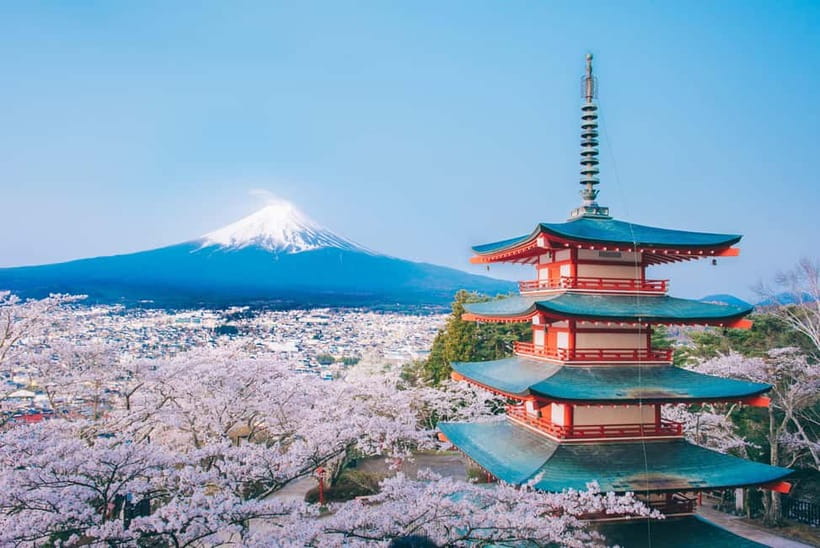
For many people, this is the main event. Arakurayama Sengen Park offers the familiar composition of Mount Fuji behind the five-story Chureito Pagoda. The view combines Japanese architecture, forested slopes, and the snow-capped peak when the weather cooperates.
You should allow for a climb. The pagoda viewpoint requires roughly 400 steps, and the route is short but steep enough to matter if you have walking difficulties. Comfortable shoes are essential. The activity is stroller-friendly if you notify the operator, but it is not wheelchair-accessible.
The stop usually gives you about 45 minutes at the park, with additional time around nearby Honcho Street depending on the chosen course. That is enough for photographs and a quick look, but not a long, unhurried visit. One useful tip is to have your camera ready before reaching the top, since the best view can become crowded and the group must leave on time.
Guides such as Kei and Hooni have helped visitors with photographs and directions. Solo visitors may also be able to ask the guide for a picture when time allows. Do not count on a long portrait session, but the support can make a real difference at a place built for photographs.
Shimoyoshida Honcho Street and the famous convenience store
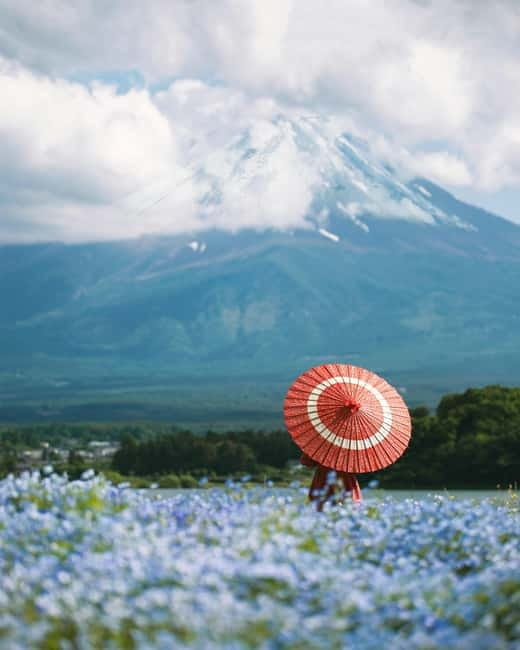
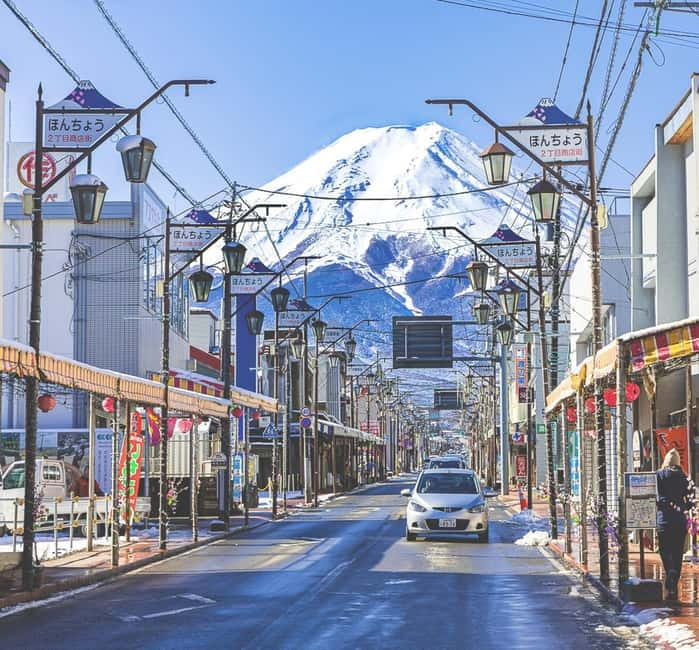
Honcho Street has a retro local feel, with shops, eateries, utility poles, and Fuji rising behind the town when the angle is right. It offers a different picture from the pagoda. Instead of looking at Fuji from a park, you see how the mountain fits into an ordinary Japanese neighborhood.
The stop is brief, usually around 45 minutes when paired with Arakurayama Sengen Park. Keep an eye on traffic and crossing points. This is a public street, not a closed photo set, so follow your guide’s instructions and stay aware of vehicles.
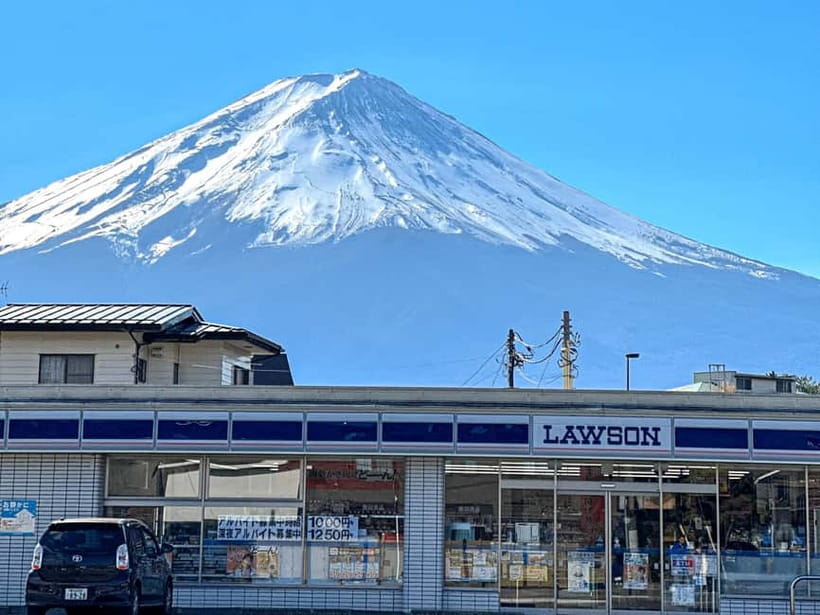
The Lawson Fujikawaguchiko Town Hall stop lasts about 15 to 30 minutes, depending on the route. It has become a popular Fuji photo point because the convenience-store sign and the mountain line up in a striking way.
I understand the appeal, especially if you want a recognizable social-media image. I also understand the criticism: a convenience store is still a convenience store, and some people would prefer more time in Fujiyoshida or at a cultural site. Think of this as a quick novelty stop, not a major attraction.
A completely different kind of day out:
- Mt Fuji and Hakone 1-Day Bus Tour Return by Bullet Train
★ 5.0 · 26,383 reviews - 1-Day Tokyo Bus Tour
★ 5.0 · 14,250 reviews - Tokyo: teamLab Planets TOKYO Digital Art Museum Entry Ticket
★ 4.6 · 9,779 reviews - Mt Fuji & Hakone Cruise, Drum Show Bullet Train 1 Day from Tokyo
★ 4.0 · 7,413 reviews
Lake Kawaguchi and Oishi Park
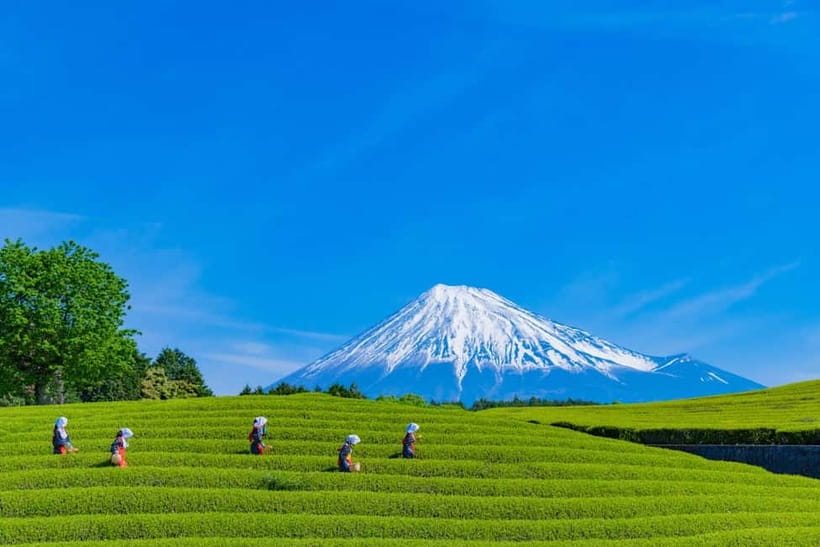
Lake Kawaguchi gives you one of the classic water-and-mountain views. On a clear day, Fuji rises beyond the lake, and the reflection can be especially attractive when the water is calm.
Oishi Park adds flowers and seasonal color. Its gardens frame Fuji in a softer way than the pagoda or town street, and the view changes with the time of year. In autumn, nearby foliage can add strong color. In warmer months, flowers provide the foreground.
The scheduled time is generally divided between Lake Kawaguchi and Oishi Park, with about 20 minutes listed for the lake and another 20 minutes at the park. That is enough to step off the bus, take pictures, and stretch your legs. You may want more time if you enjoy gardens, local snacks, or slow photography.
The weather can change the experience quickly. On a cloudy day, you may see only a partial summit or no Fuji at all. The lake and park remain pleasant places to walk, but you should book this trip for the wider region, not as a guaranteed mountain sighting.
Shiraito Waterfall and the missing lunch plan
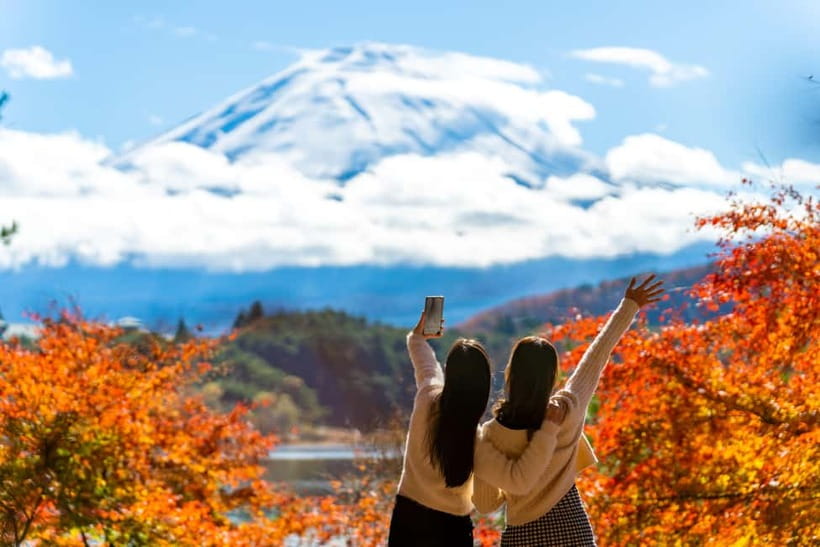
Shiraito Waterfall is one of the day’s strongest stops even when Fuji is hidden. Water streams over a broad rock face in thin white curtains, creating a cool, misty setting. The waterfall feels different from the open lake views and gives the schedule a welcome nature break.
You have about 50 minutes here, including a simple lunch break. Food is not included, so bring snacks or a light lunch. You can also buy food and drinks at designated stops, but you should not assume you will have time for a full restaurant meal.
This is one place where a packed snack bag helps. A sandwich, fruit, and water let you spend your break looking around instead of standing in a queue. Ice cream and noodles are available at some stops, and local flavors such as lavender ice cream near Fuji have earned strong praise.
The waterfall may be especially appealing if the mountain is covered by clouds. It gives the day a worthwhile focal point that does not depend on a clear summit.
Obuchi Sasaba and Japan’s tea country
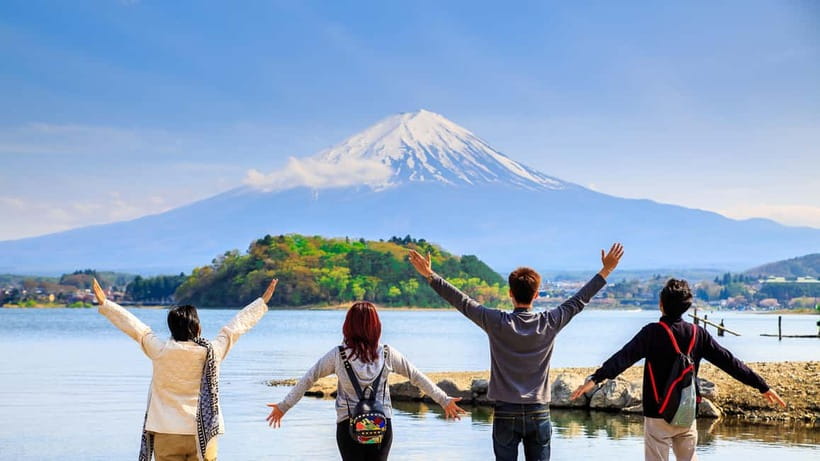
Obuchi Sasaba offers rolling tea fields with Mount Fuji in the distance. The green rows create a strong contrast with the mountain’s pale summit, and the stop shows a working rural side of Japan that you will not find in central Tokyo.
You get about 40 minutes here on the photo-focused route. The stop is mainly about the view and photographs, not a long tea-making demonstration or tasting program. Keep that distinction in mind. If you want a quiet rural setting and a fresh angle on Fuji, it is a fine addition. If you expect a detailed tea experience, the stop may feel limited.
This is also a good example of why the tour is useful without a car. The tea fields are not part of the standard Tokyo sightseeing circuit, and reaching several scattered sites by public transport in one day would be difficult.
Oshino Hakkai and its clear spring ponds
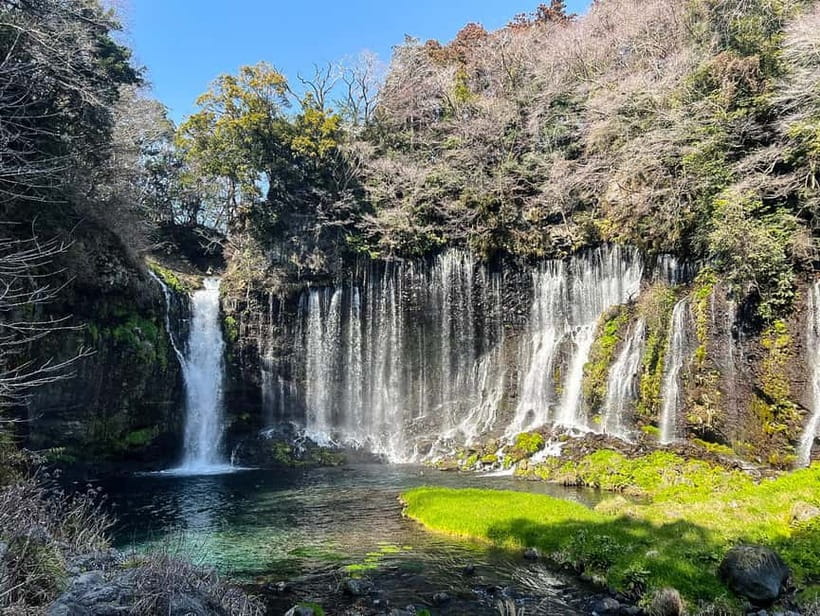
Oshino Hakkai is a traditional village area known for eight clear spring ponds. The water comes from Mount Fuji’s underground sources, and the ponds, watermills, small bridges, and old-style buildings give the stop a more rooted cultural feel.
You have around an hour to explore. That is a comfortable amount of time for photographs, a short walk, and food. Guides can point you toward local snacks and simple meals, which helps when the schedule does not include lunch.
Oshino Hakkai works well for visitors who want more than mountain photographs. You can look at the water, notice the old agricultural details, and see how Fuji shapes the surrounding communities. It can get busy, so stay aware of the meeting time and keep your group location handy.
The spring ponds are also a good backup when cloud blocks the summit. The water and village details remain interesting on their own.
The Fuji museum or a matcha break
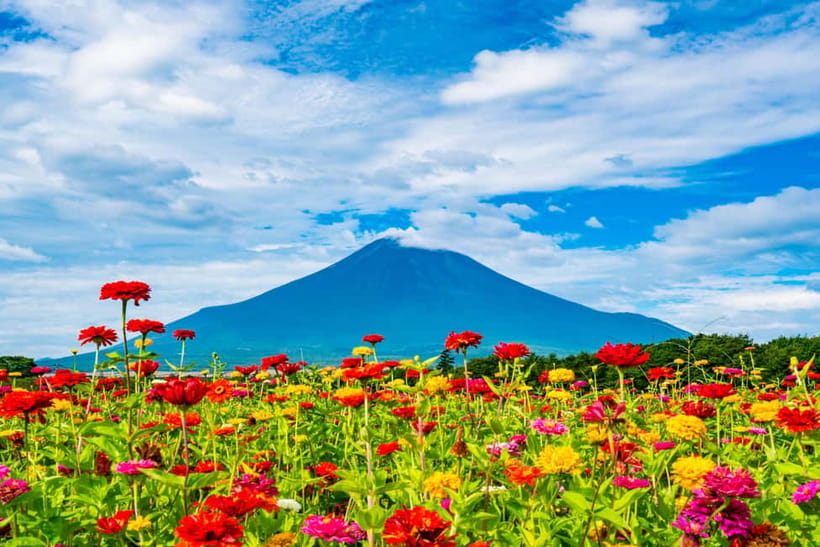
One route includes the Mt. Fuji World Heritage Centre, also described as the Mt. Fuji Museum. The facility offers information about Fuji’s geology, culture, and place in Japanese life. You get about an hour, which is enough for a useful introduction rather than an exhaustive museum visit.
Some departures may offer an optional matcha café visit instead of the museum. This choice suits different moods. Pick the museum if you want context about the mountain. Choose the café if you would rather rest with a traditional drink and keep the day lighter.
Confirm the exact option when booking. The supplied route descriptions use different combinations of stops, and real-time weather, traffic, season, and on-site conditions can alter the order or length of visits.
Lake Yamanaka and Hirano Beach
Lake Yamanaka is the highest and largest of the Fuji Five Lakes, according to the tour’s route description, and it gives you broad open views. Hirano Beach is a quieter place for a lakeside walk, with Fuji reflected in the water when conditions are calm and clear.
The stop lasts about 50 minutes to an hour. That is enough for a relaxed walk, fresh air, and photographs. It is less about a single famous viewpoint and more about seeing the mountain in a wide, spacious setting.
After several busy photo stops, Lake Yamanaka can feel like a useful pause. You have room to walk rather than cluster around one camera angle. On cloudy days, the lake still provides a pleasant rural stop, but the mountain view is the reason it is included.
How the two routes differ
The photo-focused route is the better match for you if your priority is the classic Fuji picture. It combines Arakurayama Sengen Park, Honcho Street, Lake Kawaguchi, Oishi Park, Shiraito Waterfall, and Obuchi Sasaba.
The second route leans toward signature scenic and cultural stops. It includes the pagoda and Honcho Street, the Lawson viewpoint, the Fuji museum or matcha café, Oshino Hakkai, Lake Yamanaka, and Hirano Beach.
Both routes share the most important photo opportunity at Arakurayama. The real choice is between more lake, waterfall, flower, and tea-field scenery, or more village, museum, and lakeside time.
Because traffic and weather can change the running order, I would not choose based on a minute-by-minute promise. Choose based on the type of day you want, then accept that the guide may make practical changes.
The guide and coach experience
The guide can make or break a large group outing. Here, the strongest pattern is personal attention. Guides named Kei, Goldie, Yui, Jun, Jeffrey, and Yuichi are praised for humor, clear instructions, positive energy, and care for individual passengers.
Yuichi is especially praised for explaining Fuji’s formation, lakes, and waterfalls in clear English. Yui has shared meeting-point addresses through a group chat and helped with food suggestions. Kei has helped solo passengers with pictures, small gifts, and route changes based on the weather.
The guide may speak English, Korean, or Chinese, depending on the departure. The included guide information specifically notes English- and Korean-speaking support, so check the language attached to your selected option if communication is important.
Transport is by coach, sometimes with a full group of around 40 to 49 people. That sounds crowded, but the coach has been described as comfortable with good legroom. Several rest and food stops help break up the long rides.
Weather, walking, and what to pack
Mount Fuji often hides behind clouds, particularly later in the day. Clear winter and autumn days can be spectacular, while cloudy or rainy days may leave you with only brief glimpses. The guide can adjust the order to improve your chances, but no operator can control the weather.
Pack comfortable shoes, water, snacks, and a light lunch. You will walk at several stops, and the pagoda climb is the main physical challenge. Bring clothing suitable for changing conditions around the lakes and waterfall.
The tour is stroller-friendly if you notify the operator in advance. It is not wheelchair-accessible, and the steps at Arakurayama make this especially important to consider.
Free cancellation is available up to 24 hours before departure, and you can reserve now and pay later. Insurance and personal expenses are not included.
Is $69 good value?
I think the price is strong for the amount of ground covered. You receive round-trip transport from central Tokyo, a guide, and access to several places that would be awkward to combine independently.
The value is highest if you have only one day for Fuji or do not want to drive. You see famous viewpoints plus rural places such as Oshino Hakkai and Obuchi Sasaba. The coach also removes the worry of parking, route planning, and finding the next bus.
The price is less attractive if you dislike fixed schedules, large groups, or long road journeys. You may also feel rushed at Arakurayama, Lake Kawaguchi, or Oishi Park. A private tour would offer more freedom, but it would cost much more.
Should you book this Mount Fuji tour?
Book it if you want a broad first look at Mount Fuji, reliable transport, several photo stops, and a low upfront price. It suits first-time visitors, solo visitors, couples, families who can manage a long day, and anyone who wants to see rural Japan without renting a car.
Skip it if you need wheelchair access, want a slow day, or require a guaranteed Fuji view. The mountain may vanish behind clouds, and traffic can stretch the schedule well beyond 11 hours.
For the best chance of a memorable day, bring food, wear shoes suited to stairs, keep your camera ready, and choose the route that matches your interests. Sit on the left side of the bus if you want better chances for roadside views on the way out. At $69, this is a practical and well-liked way to trade some flexibility for a lot of scenery.
FAQ
How long is the Mount Fuji tour from Tokyo?
The advertised duration is 11 hours. Traffic and weather can affect the schedule, and some outings may run to 12 hours or longer.
Where can I meet the tour?
The two listed starting points are Starbucks Coffee at Shinjuku L Tower and the Marunouchi North Exit area near Tokyo Station. The exact meeting point may depend on the option booked.
Is lunch included?
No. Meals are not included. Bring snacks or a light lunch, and use the food opportunities available at some tour stops.
Can I choose between different routes?
Yes. The tour offers two scenic route styles. One focuses on major photo locations, Lake Kawaguchi, Oishi Park, Shiraito Waterfall, and Obuchi Sasaba. The other includes the Fuji museum or a matcha café, Oshino Hakkai, Lake Yamanaka, and Hirano Beach.
Is the tour wheelchair-accessible?
No, the activity is not wheelchair-accessible. It is stroller-friendly if you inform the operator in advance.
What languages are available?
Live guide options include English, Korean, and Chinese. The included guide information specifies English- and Korean-speaking support, so check your selected departure for the exact language arrangement.
Just added in Tokyo
- Small Town in the Big City: Tasting Tokyo’s Kichijoji★ 5.0 · 195 reviews
- The 10 Tastings of Tokyo With Locals: Private Street Food Tour★ 5.0 · 48 reviews
- Explore Kichijoji: Walk Through One of Tokyo’s Beloved Districts★ 5.0 · 21 reviews
- Small Town in the Big City: Tasting Tokyo’s Kichijoji★ 5.0 · 16 reviews
- EXCLUSIVE Tokyo Secret: Kichijoji Small-Group Food & Bar Hopping★ 5.0 · 29 reviews
- Tokyo:Mt Fuji & Hakone Day Tour with English Speaking Driver★ 5.0 · 26 reviews
- 【R34】Tokyo:Private Daikoku tour in Modified R34★ 4.9 · 92 reviews
- :Tokyo,Shibuya/ Pro Photography in Kimono / English-Friendly★ 5.0 · 26 reviews
Day Trips, compared.
Hiroshima and Miyajima UNESCO Sites 1-Day Tour
Read our review →
Mt Fuji Top 5 Spots Day Tour: Arakurayama Park,Oshino Hakkai
Read our review →
Kamakura & Enoshima Day Trip including Temple Tickets
Read our review →
One-Day Tour of Kyoto’s Highlights from Osaka/Kyoto
Read our review →
Nara Half Day Trip Walking Tour (Private Option Available)
Read our review →
Mt. Fuji, Kamakura, Big Buddha, & Lake Ashi Day Trip
Read our review →
Nagano: Snow Monkeys, Zenkoji Temple & Sake Day Trip
Read our review →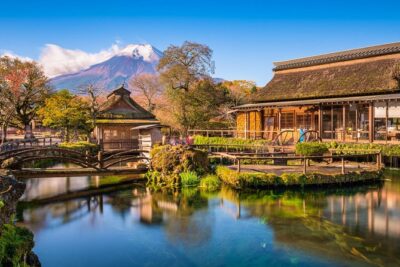
Mt. Fuji & Hakone Private Day Tour with English-Speaking Driver
Read our review →Browse the lists this tour appears in