
Reviewed · FOOD TOURS
Kawagoe Japanese Food Tour : Unagi Kaiseki and Sake near Tokyo
Eel is Kawagoe’s great dinner secret. This 2.5-hour evening experience brings you close to a master chef with more than 40 years of eel expertise, then serves the results as a Japanese course meal. I especially like the live preparation and the hands-on fresh wasabi grinding. The main drawback is the price: at $181.19 per person, it is a special-occasion meal rather than a casual food stop.
I also like the small group, capped at eight people, and the lively English guidance, including explanations, quizzes, and storytelling from guide Mr. Kusuda. You should know that sake costs extra, public transport is not included, and the fixed 5 p.m. start leaves little room for a late afternoon in Kawagoe.
In This Review
- Key points to know before booking
- Why eel makes this Kawagoe meal different
- Meeting the chef at 5 p.m.
- Seeing live eel become dinner
- First taste: appetizer and shirayaki
- Unajū over rice brings the meal together
- Adding Saitama sake to the evening
- What the price really covers
- Fitting the dinner into a Kawagoe day
- Who will enjoy this most
- Useful details before you commit
- Should you book the Kawagoe unagi experience?
- FAQ
- Where does the Kawagoe Japanese food tour meet?
- What time does the experience start?
- How long does the tour last?
- What food is included?
- Is sake included in the price?
- Is fresh wasabi part of the experience?
- How large is the group?
- Can I cancel for a full refund?
Key points to know before booking
- A 40-year eel master cooks in front of you: You see the preparation rather than receiving an unexplained plate of food.
- You may hold the live eel: This makes the meal unusually direct and memorable, though it may not suit everyone.
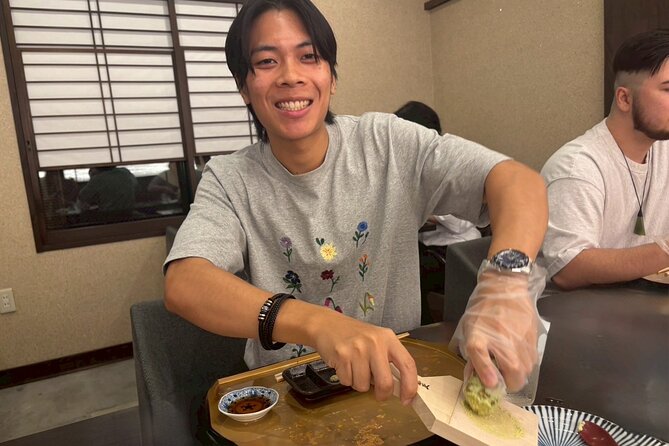
- Fresh wasabi is part of the meal: You grate it yourself, and your technique affects the heat.
- Three key eel dishes are included: Expect an appetizer, plain grilled eel called shirayaki, and unajū over rice.
- The group is limited to eight: That gives the guide and chef room to explain the process.
- Sake is optional and costs extra: A three-variety pairing is available for an additional fee.
Why eel makes this Kawagoe meal different
Tokyo offers endless sushi, ramen, tempura, and soba. This meal takes another route. Eel, or unagi, is treated as a luxury ingredient in Japan and is often associated with celebrations and special meals. That gives the evening a more focused character than a standard food walk.
The point is not simply to eat eel. You learn how the ingredient is handled, prepared, grilled, and served. That process gives meaning to the food on your plate. Instead of wondering why eel costs more than an ordinary restaurant dish, you get to see the labor and care involved.
Kawagoe is a fitting place for this kind of dinner. The town is about a 30-minute train ride from central Tokyo and is known for its old-fashioned streets and buildings linked to Japan’s samurai-era past. It is a popular day trip, but it generally feels less crowded than Tokyo, Kyoto, Osaka, or the Mt. Fuji area.
The tour does not include a sightseeing walk through Kawagoe. Still, the setting matters. You meet at Eccola Resona Koedoterrace, at 41 Saiwaicho, Kawagoe, Saitama 350-0063, then stay at the same meeting point for the meal and demonstration.
More Food Tours in Japan:
- Tokyo: Shinjuku Food Tour (13 Dishes at 4 Local Eateries)
★ 5.0 · 6,603 reviews - Osaka: Shinsekai Food Tour with 13-15 Dishes at 5 Eateries
★ 4.8 · 2,204 reviews - Osaka Food Tour: 13 Dishes at 5 Local Eateries
★ 5.0 · 2,149 reviews
Meeting the chef at 5 p.m.
The experience begins at 5 p.m., so plan to arrive with time to find Eccola Resona Koedoterrace. The meeting point is near public transportation, but the cost of getting there is your responsibility. A mobile ticket is provided, and confirmation arrives when you book.
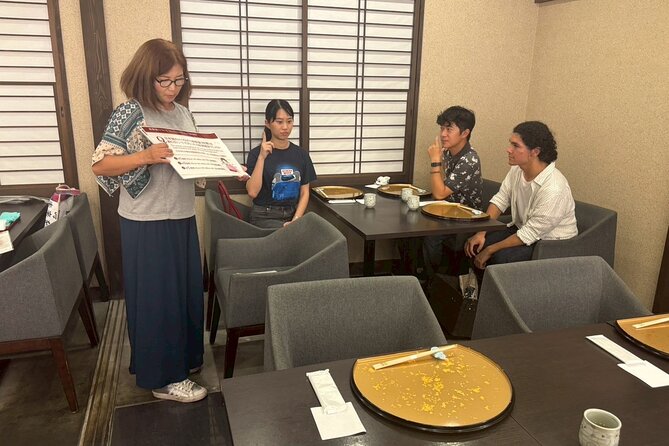
The small size is one of the practical strengths here. With no more than eight people, you are not watching the demonstration from the back of a large room. The chef can explain what he is doing, and the guide can keep the discussion lively.
The English support is important. Eel preparation has its own vocabulary and customs, and the guide helps turn the cooking process into a story you can follow. Mr. Kusuda has been praised for his candid humor and lively translation, which helps prevent the meal from feeling like a silent demonstration.
This is not a formal lecture. The format includes fun quizzes and questions about eel, its place in Japanese food, and the local connection. That makes the evening a good choice if you want cultural context but do not want a long academic talk.
Seeing live eel become dinner
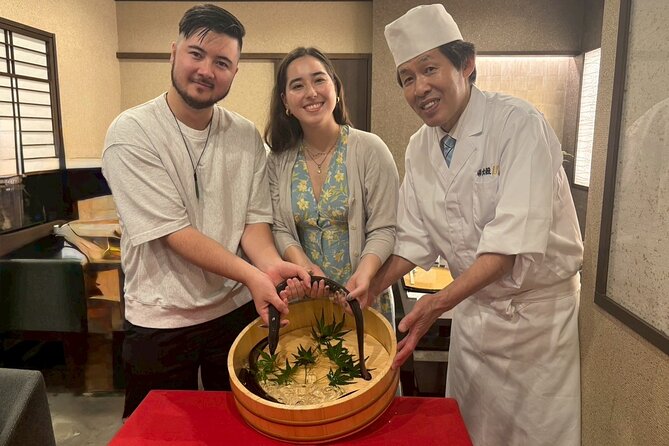
The most unusual part comes before the first bite. You can see the eel alive and, according to the experience details, may have the chance to hold it before the chef begins. You then watch the preparation step by step.
That direct contact is what separates this from ordering unagi at an ordinary restaurant. Many diners know eel only as a glossy piece over rice. Here, you see the ingredient before it becomes a polished dish.
I would think about your comfort level before booking. Holding a live eel is part of the appeal for some people, while others may prefer to watch from a little distance. You are not required to pretend that every part of food preparation is pleasant. The value is in seeing the full process honestly.
The chef has more than 40 years of experience with eel. That matters because the cooking method is not treated as a quick kitchen task. His technique, timing, and explanations give the dinner a sense of craft. Several parts of the preparation are shown close up, so you can connect the chef’s movements with the flavors that follow.
The presentation also helps answer a useful question: why is eel considered a special food in Japan? You see that the dish involves more than placing a sauce-covered fillet on rice. The preparation itself is part of the tradition.
First taste: appetizer and shirayaki
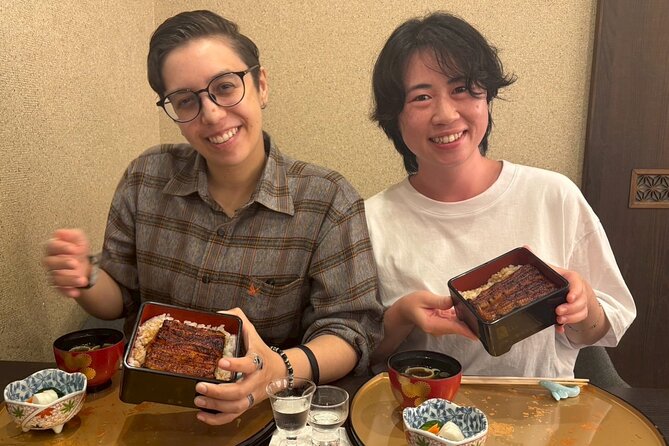
The included course begins with an appetizer, followed by shirayaki. Shirayaki is eel grilled without the usual sweet sauce. This is an important taste because it lets you focus on the eel itself.
If you have only eaten unagi with sauce, shirayaki may seem like a different dish. The flavor is cleaner and less dominated by seasoning. It gives you a chance to notice the texture and the chef’s grilling work before the richer rice course arrives.
The meal is described as including traditional Japanese cuisine and kaiseki-style dishes. Do not picture a long formal banquet with many courses. The listed meal centers on the appetizer, shirayaki, and unajū, with the cooking performance and explanations providing much of the evening’s substance.
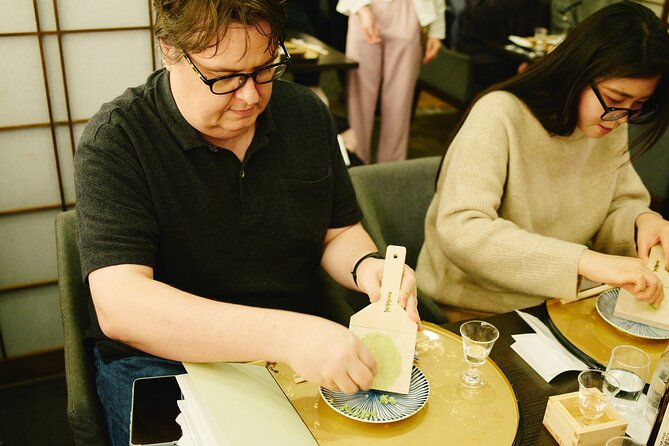
Fresh wasabi adds another useful comparison. Rather than handing you a small mound of prepared paste, the experience lets you grate wasabi yourself. Your technique changes the level of heat, so this is not just a decorative kitchen lesson.
That small task gives you a better sense of how fresh wasabi behaves. It also adds a welcome pause between watching and eating. You have something to do, not just something to photograph.
A completely different kind of day out:
- Tokyo Disney Resort – Tokyo Disneyland & Tokyo DisneySea Park Tickets
★ 4.8 · 99,488 reviews - Universal Studios Japan Studio Pass
★ 4.8 · 89,883 reviews - Universal Studios Japan Express Pass
★ 4.7 · 53,138 reviews - SHIBUYA SKY Ticket
★ 4.7 · 46,509 reviews
Unajū over rice brings the meal together
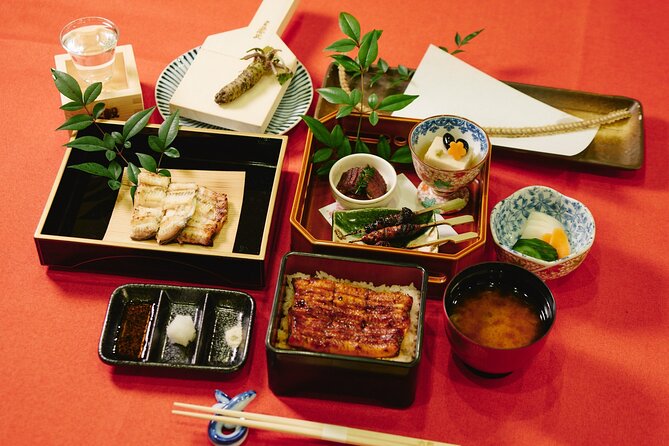
The final main dish is unajū, grilled eel served over rice. This is the familiar Japanese eel presentation, but it carries more weight after you have watched the ingredient being prepared.
The combination is filling and satisfying, yet the meal remains centered on one ingredient. If you are looking for a broad tasting tour with many unrelated snacks, this is not that. You are here to understand eel from several angles and taste it in more than one form.
The contrast between shirayaki and unajū is especially useful. One shows the eel with little interference. The other pairs it with rice and the style of seasoning most people associate with unagi. Together, they show why the ingredient can be both delicate and hearty.
The wasabi can change the experience again. You control how much to use and how strongly it comes through. That makes the meal more interactive without turning it into a gimmick.
Adding Saitama sake to the evening
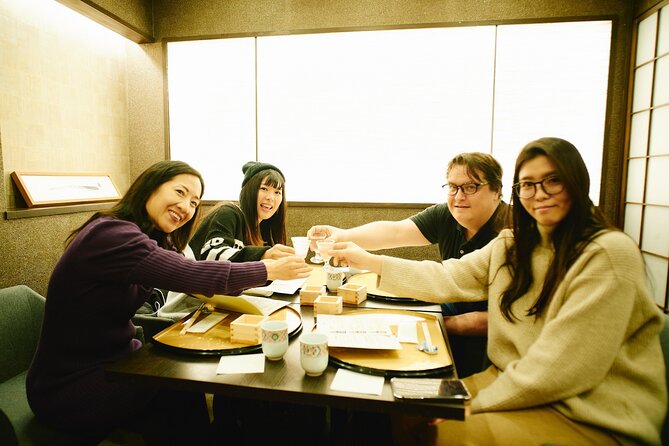
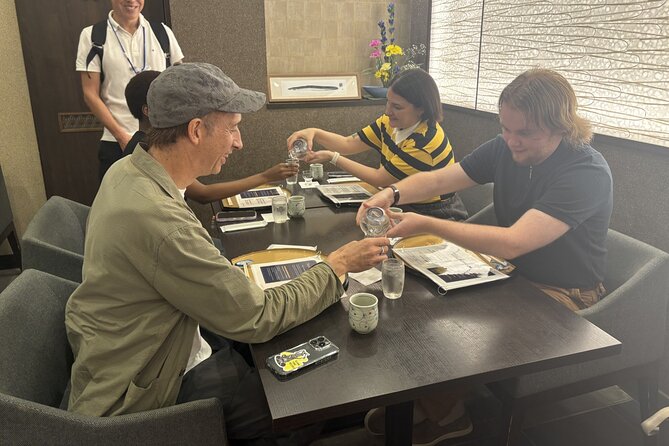
Alcohol is not included in the base price. You can add a sake pairing with three different varieties, selected for this experience. Some of the meal’s strongest combinations involve the eel, fresh wasabi, and local sake, so the pairing may be worth considering if you enjoy Japanese drinks.
The extra fee is also a reason to check your final cost before booking. At $181.19 already, this is not a bargain dinner. Adding sake pushes it further into special-event territory.
I would choose the pairing if you want the full food lesson and are comfortable with the added charge. If your priority is the chef demonstration and the meal itself, skip the alcohol and keep the cost under control. The central experience does not depend on drinking.
Because the tour lasts about two and a half hours, the sake pairing is likely to make the evening feel more leisurely rather than rushed. Still, pace and serving details can vary, so do not treat the listed duration as a promise of a set number of tasting pours.
What the price really covers
The $181.19 price buys more than a restaurant dinner. You are paying for a small group, an English-speaking guide, a live preparation demonstration, an experienced chef, hands-on wasabi grinding, and a meal built around premium eel.
That can be good value if you would otherwise struggle to understand what you are eating or how it is prepared. It is also useful for a first visit to Japan, since the evening combines food, local culture, and a look at a traditional craft.
The calculation is less favorable if you mainly want a large amount of food. The meal is focused, not an all-you-can-eat event, and sake is extra. You should also add the train fare or other public transport costs when planning your budget.
Solo diners are welcome, which is helpful for people who do not want to skip a special meal just because they are traveling alone. The group limit also makes it easier to ask questions than at a large organized food tour.
Fitting the dinner into a Kawagoe day
The 5 p.m. start works best as the final part of a full day. You can explore Kawagoe earlier, return to the historic streets in the late afternoon, and then head to the meeting point for dinner.
The tour information also suggests combining it with Chichibu or Moominvalley Park earlier in the day, then strolling through Kawagoe in a kimono before the meal. Those are optional planning ideas, not included parts of this activity, so you will need to arrange and pay for them separately.
A kimono walk could make the evening feel wonderfully tied to the town’s old streets, but do not pack the day too tightly. Chichibu, Moominvalley Park, and Kawagoe are separate destinations, and the fixed dinner time leaves little room for delays.
If you are coming from central Tokyo, the roughly 30-minute train ride makes Kawagoe practical. You still need to allow time for the journey, finding the meeting point, and returning to Tokyo after the tour. Since the activity ends back at Eccola Resona Koedoterrace, you are responsible for your own onward travel.
Who will enjoy this most
I would recommend this for people who want a close look at Japanese food traditions rather than another quick meal. It suits curious eaters, solo visitors, couples, and small groups who enjoy asking questions and watching skilled preparation.
It is particularly good for anyone who thinks they already know unagi. The chef demonstrates ways to enjoy eel that you might not encounter at an izakaya or on a typical food tour. Even someone who has lived in Japan may find the preparation and serving style new.
The experience also suits visitors who prefer a quieter destination outside central Tokyo. Kawagoe gives the evening a local setting, while the guide helps explain the food in English.
You may want to skip it if you dislike seeing whole animals prepared, do not eat eel, or want alcohol included in the advertised price. It is also not the right pick for a rushed evening, since the demonstration and explanations are a major part of the value.
Useful details before you commit
You can cancel for a full refund if you do so at least 24 hours before the 5 p.m. start time. Changes or cancellations inside that window are not accepted for a refund, and the cut-off follows local time.
Most people can participate, and solo booking is allowed. The activity is near public transportation, but transport costs and tips are not included.
The high satisfaction level is supported by specific elements rather than vague praise. The chef’s long experience, the chance to watch the entire preparation, the fresh wasabi activity, the guide’s humor, and the contrast between several eel dishes are the parts most likely to make the evening memorable.
Should you book the Kawagoe unagi experience?
Book it if you want a premium, hands-on food lesson with a real sense of place. The combination of live eel preparation, shirayaki, unajū, fresh wasabi, and an English-speaking guide gives you much more context than a normal restaurant reservation.
Skip it if $181.19 feels too high for one focused meal, or if you want a broader food crawl. Also remember that sake and transport cost extra.
For the right person, this is one of the more distinctive food experiences near Tokyo. It does not try to serve everything. It takes one treasured Japanese ingredient and shows you why it matters.
FAQ
Where does the Kawagoe Japanese food tour meet?
The tour meets at Eccola Resona Koedoterrace, 41 Saiwaicho, Kawagoe, Saitama 350-0063, Japan.
What time does the experience start?
The start time is 5 p.m.
How long does the tour last?
The experience lasts approximately 2 hours and 30 minutes.
What food is included?
The course includes an appetizer, plain grilled eel called shirayaki, and unajū, which is grilled eel served over rice.
Is sake included in the price?
No. Alcoholic beverages are not included. An optional pairing with three different sake varieties is available for an additional fee.
Is fresh wasabi part of the experience?
Yes. You grind the wasabi yourself as part of the meal, and the heat can vary according to your grating technique.
How large is the group?
The activity has a maximum of eight participants.
Can I cancel for a full refund?
Yes, if you cancel at least 24 hours before the experience start time. Cancellations or changes made less than 24 hours before the start are not accepted for a refund.
Just added in Japan
- A One-of-a-Kind Sushi Experience in a Special Place of Japan★ 5.0 · 15 reviews
- Tokyo Cute Bento Cooking Class – Make a Kawaii Character Lunchbox★ 5.0 · 126 reviews
- Japanese Home Cooking Class & Walk in Todoroki Temple Tokyo★ 5.0 · 88 reviews
- Japan Tokyo Tower Observatory Deck E-Ticket★ 4.0 · 34 reviews
- Catch a Baseball Game in Tokyo with a Local – Tickets Included★ 5.0 · 24 reviews
- JDM Experience with Fast&Furious RX-7 (English speaking Driver)★ 5.0 · 57 reviews
- Tokyo Private Day Tour by Car with English speaking Driver Guide★ 4.0 · 29 reviews
- Japan Classic 10 Day – One Life Adventures★ 5.0 · 129 reviews
Food Tours, compared.
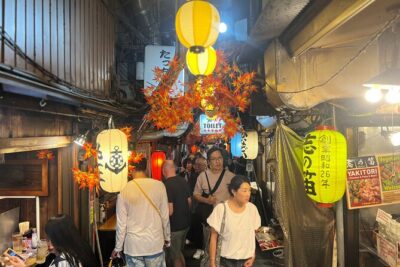
Shinjuku Food Tour (13 Dishes at 4 Local Eateries)
Read our review →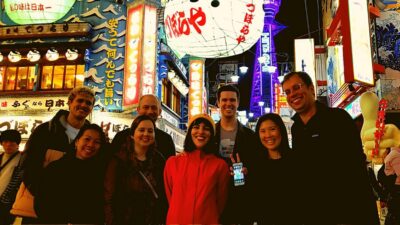
Shinsekai Food Tour with 13-15 Dishes at 5 Eateries
Read our review →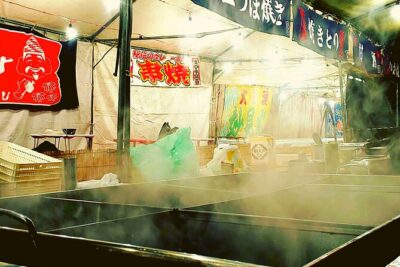
Osaka Food Tour: 13 Dishes at 5 Local Eateries
Read our review →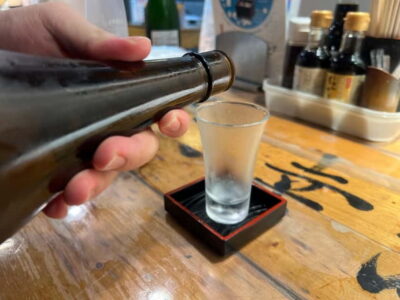
Shinjuku Food Tour (15 Dishes and 4 Eateries)
Read our review →
Best of Shinjuku: Izakaya Food Tour (4 Stops, 14+ Tastings)
Read our review →
Kyoto Night Foodie Tour in Gion (9+ dishes + 6 Sake tastings)
Read our review →
Hungry Osaka Street Food Tour:15 Tastings & 3 Drinks with a Local
Read our review →
Tokyo Night Foodie Tour in Shinjuku – Seasonal Sushi, Wagyu Beef
Read our review →Browse the lists this tour appears in