
Reviewed · JAPAN
Kyoto Amanohashidate,Ine Bay Trip with Optional boat/Ropeway
Sea views reward the long ride north. This 10-hour day trip links two of northern Kyoto’s most unusual sights: the old boat houses of Ine Bay and the sandy pine-covered bar of Amanohashidate. I especially like the chance to see a quieter side of Japan, far from Kyoto’s crowded temple streets, and the easy transport by air-conditioned coach. The boat ride and ropeway add real fun, too, but the day includes roughly five hours on the bus, and time in Ine can feel short.
You can join from Kyoto Station or Nipponbashi in Osaka, then return to either Kyoto or Osaka. The tour costs $63 per person, which is strong value if you want both places without arranging long-distance transport yourself. Just remember that food, drinks, and optional activities cost extra, and weekend traffic can make the return late.
In This Review
- Key points to know before booking
- Why this northern Kyoto day trip is worth your time
- The long coach ride from Kyoto or Osaka
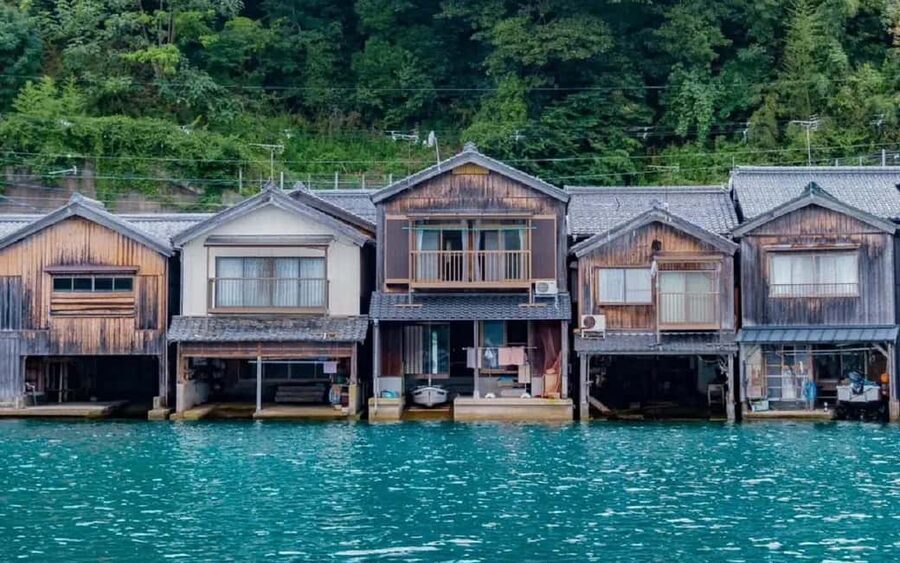
- Ine Bay and its working funaya houses
- The optional boat ride, with birds at close range
- The 30-minute transfer to Amanohashidate
- Amanohashidate Viewland and the upside-down view
- Chionji Temple and its fan-shaped fortune
- Walking across the sandbar
- How the tour is guided
- What the $63 price really buys you
- Who should book this trip?
- Final verdict: a strong coastal day trip with one big tradeoff
- FAQ
- How long is the Kyoto Amanohashidate and Ine Bay trip?
- Where can I join the tour?
- Where does the tour finish?
- Is the sightseeing boat included?
- Is the cable car or ropeway included?
- How much free time do I get in Ine?
- How much time is allowed at Amanohashidate?
- What languages does the guide speak?
- Can I cancel the booking?
Key points to know before booking
- Ine’s boat houses are the star: Traditional funaya buildings place working boat garages on the lower floor and homes above the water.
- The ride is long but useful: Expect about 2.5 hours by coach each way, with a shorter 30-minute road transfer between Ine and Amanohashidate.
- The boat cruise adds a different view: You may see seagulls and falcons close to the boat, but keep an eye out for seabirds.
- Amanohashidate offers flexible exploring: You get about 2.5 hours for the view, temple, sandbar, and optional ropeway.
- This is partly guided and partly independent: Your guide handles transport and explanations, then gives you free time to explore.
- Pack lunch, water, and cash: Food is not included, the convenience store is small, and some places may not take cards.
Why this northern Kyoto day trip is worth your time
Kyoto is famous for shrines, gardens, and wooden lanes. This excursion gives you something quite different: fishing villages, open sea, mountain-backed bays, and a long sandy path beside the water.
I like the contrast between the two stops. Ine Bay feels intimate and old-fashioned, with wooden funaya houses packed along a calm shoreline. Amanohashidate is more open, offering sea air, a long walk, a temple, and a high viewpoint.
The tour’s 4.5 rating from 87 reviews reflects its strongest quality: it gets you to difficult places without forcing you to manage several train and bus connections. Guides such as Jay, Matthew, Maxey, Liu, and others have been praised for keeping the day organized and adding friendly commentary. The guiding style can vary, though. One guide may explain a great deal, while another may mainly organize transport and meeting times.
That difference matters. This is not a private, fully guided sightseeing experience where someone walks beside you at every stop. It is better understood as a shared coach trip with a multilingual guide, scheduled visits, and free time.
Other trips worth a look in Japan:
- Tokyo Disney Resort – Tokyo Disneyland & Tokyo DisneySea Park Tickets
★ 4.8 · 99,488 reviews - Universal Studios Japan Studio Pass
★ 4.8 · 89,883 reviews - Universal Studios Japan Express Pass
★ 4.7 · 53,138 reviews
The long coach ride from Kyoto or Osaka
You begin at one of two designated points: Kyoto Station’s Hachijoguchi area or Nipponbashi Station Exit 2 in Osaka. The precise meeting arrangement depends on the option booked, so check the message sent the evening before. It includes the guide, driver, and meeting point details, and it is worth checking your spam folder as well.
The first coach section takes about 2.5 hours. That is the main tradeoff of the day. You are reaching Japan’s northern coast, not visiting a nearby Kyoto suburb, so the distance takes time.
The air-conditioned bus, fuel, highway tolls, parking, and professional driver are included. That makes the $63 price attractive, especially compared with arranging regional transport on your own. You also avoid worrying about parking or finding the right rural bus connection.
Still, this is a full day. Bring water and food for the coach. One recent assessment found the food options at the destination merely acceptable, and the convenience store was quite small. I would not plan this outing around a memorable lunch.
The vehicle depends on group size and cannot be selected in advance. One useful point from the feedback is that the bus can feel tight at first, although the group managed it. If personal space matters greatly to you, a shared coach trip may not be your ideal way to reach the coast.
Ine Bay and its working funaya houses
The first main stop is Ine Bay, where the water is calm and clear and the mountains rise behind the village. The setting feels peaceful rather than showy. You come here for the relationship between sea, homes, and fishing life.
The funaya houses are the defining sight. These two-story wooden buildings traditionally have a boat garage on the first floor and living space on the second. Their doors open toward the water, making the bay part of daily life rather than just a view from a promenade.
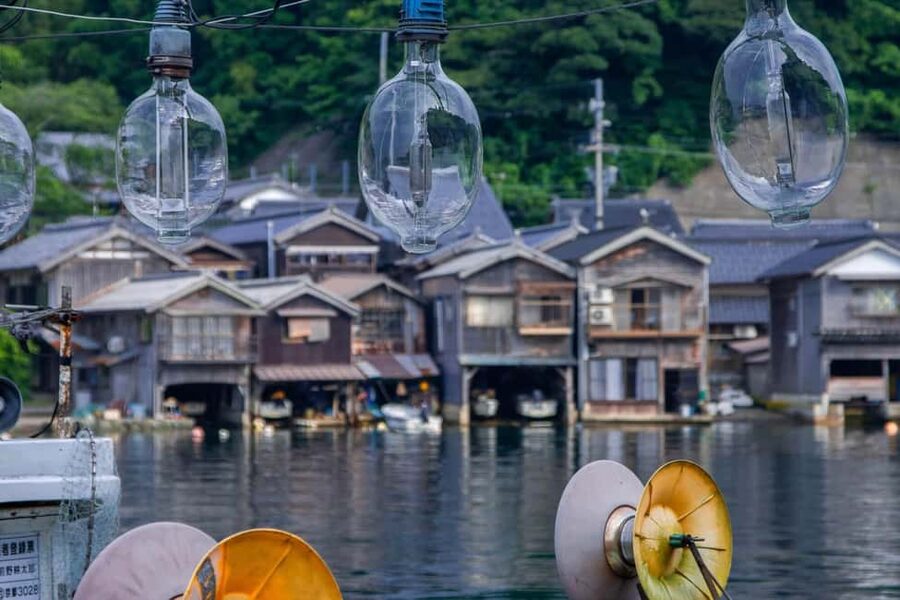
Ineura Park gives you a close look at this unusual architecture. It is a good place for photographs and for understanding why Ine feels different from a standard seaside town. The homes line the shore in a way that makes the village look almost like a painted scene, but the buildings are tied to work, boats, and local life.
You get about one hour for the village and photo stop. That is enough to see the main waterfront and get a feel for the place, but it is not a long, slow village visit. One review found that the shorter time was sufficient, while another felt that roughly 40 minutes left little room for sitting down with a coffee. Both points are fair.
I recommend using this stop with a simple plan:
- Walk along the waterfront and look closely at the boat-house construction.
- Take your main photos before spending time at a shop or café.
- Keep an eye on the meeting time, since the coach will not wait for late arrivals.
- Bring cash, as not every location accepts credit cards.
Ine rewards attention to detail more than a packed schedule. Look at the boat openings, the wooden façades, and the way the houses sit directly beside the bay. You do not need a long list of sights here. The setting itself is the point.
The optional boat ride, with birds at close range
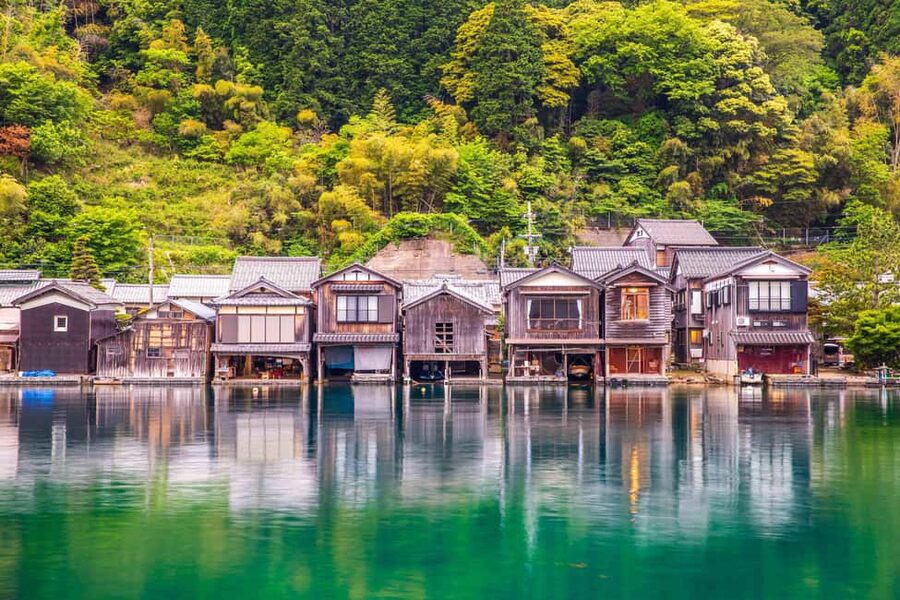
A sightseeing boat gives you the best view of the funaya houses as a group. From the road, you see one section of the waterfront. From the water, the buildings form a long line between the sea and the mountains.
The cruise is optional, so confirm the price and arrangements for your selected departure. The boat moves gently around the bay, and you may be able to feed the seagulls. Some passengers have also seen falcons following the boat, which adds an unexpected bit of drama to a quiet cruise.
The birds can come very close. That is amusing for many people, but it is also why the safety advice matters. Be cautious around eagles and other seabirds, and follow instructions from the crew or guide.
I would choose the boat if the weather is reasonable and you enjoy seeing places from the water. It is one of the most distinctive parts of the day, not just an extra ride. One memorable description compared the flocking birds to a scene from a suspense film, which tells you both how entertaining and how intense the bird activity can be.
If you dislike feeding birds, you can simply watch the bay and houses from the boat. The cruise still gives you a perspective that walking cannot.
A completely different kind of day out:
- SHIBUYA SKY Ticket
★ 4.7 · 46,509 reviews - Mt. Fuji Instagram-Worthy Spots Day Tour: Ladder Town, Oshino Hakkai, Lake Kawaguchi, Lawson Convenience Store (Departing from Tokyo Station or Shinjuku Station)
★ 4.8 · 35,467 reviews - JR Whole Japan Rail Pass
★ 4.8 · 29,150 reviews - Mt Fuji and Hakone 1-Day Bus Tour Return by Bullet Train
★ 5.0 · 26,383 reviews
The 30-minute transfer to Amanohashidate
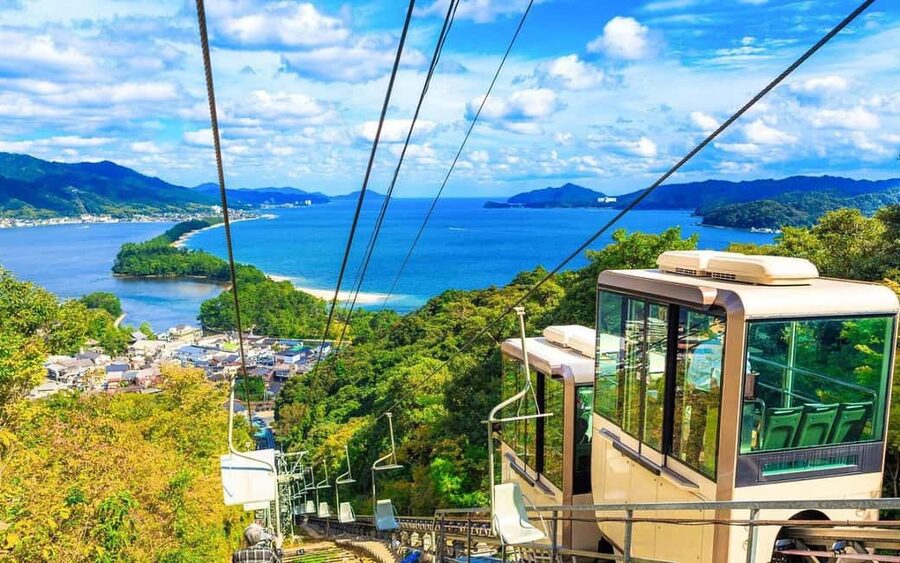
After Ine, the coach takes about 30 minutes to Amanohashidate. This shorter road section breaks up the long travel day and moves you from a compact fishing village to a much larger coastal recreation area.
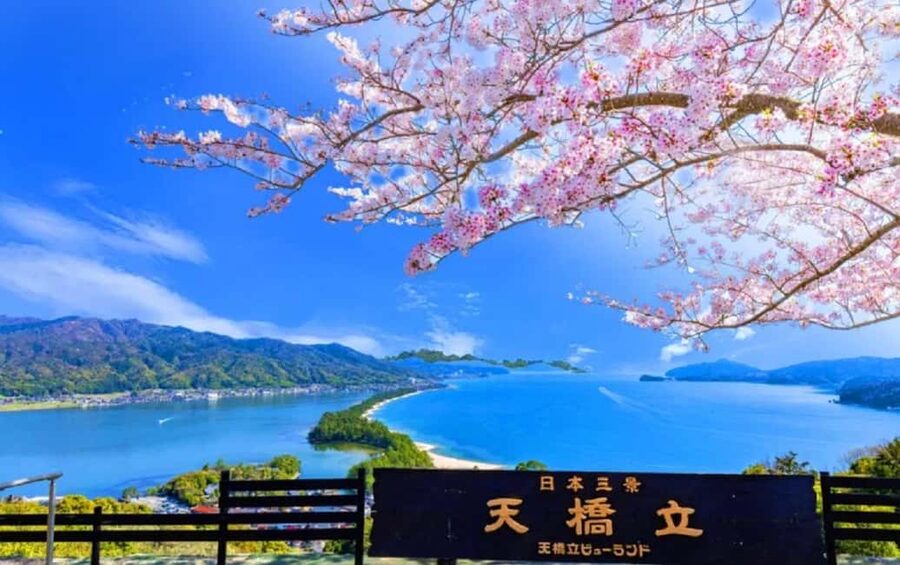
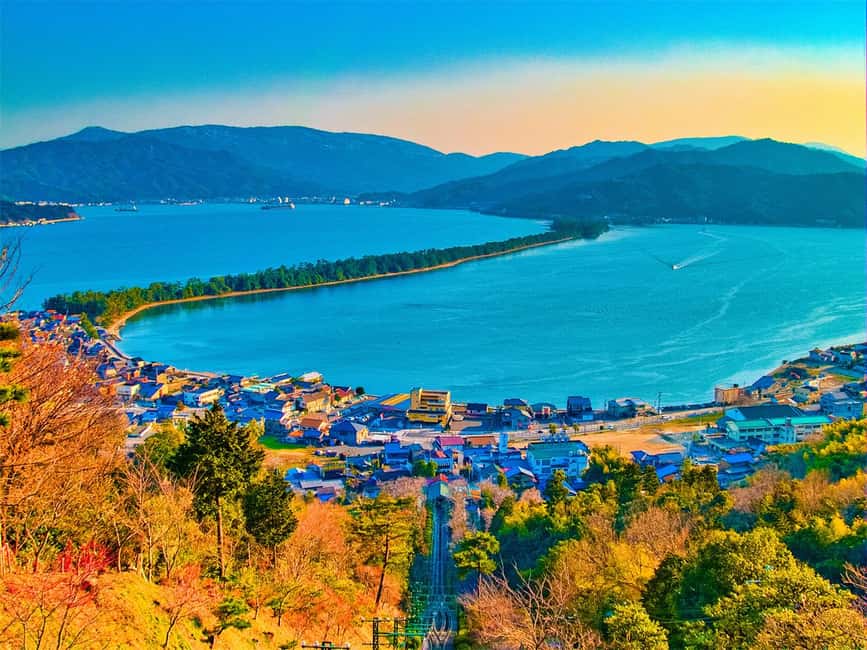
Amanohashidate is known for its long sandbar, which stretches across the water with pine trees along its route. From above, its shape has been compared to a dragon crossing the sky. You get both a high viewpoint and time near the sandbar itself.
The tour allows around 2.5 hours here. That is the most generous sightseeing block of the day, and it gives you room to choose what matters most.
Amanohashidate Viewland and the upside-down view
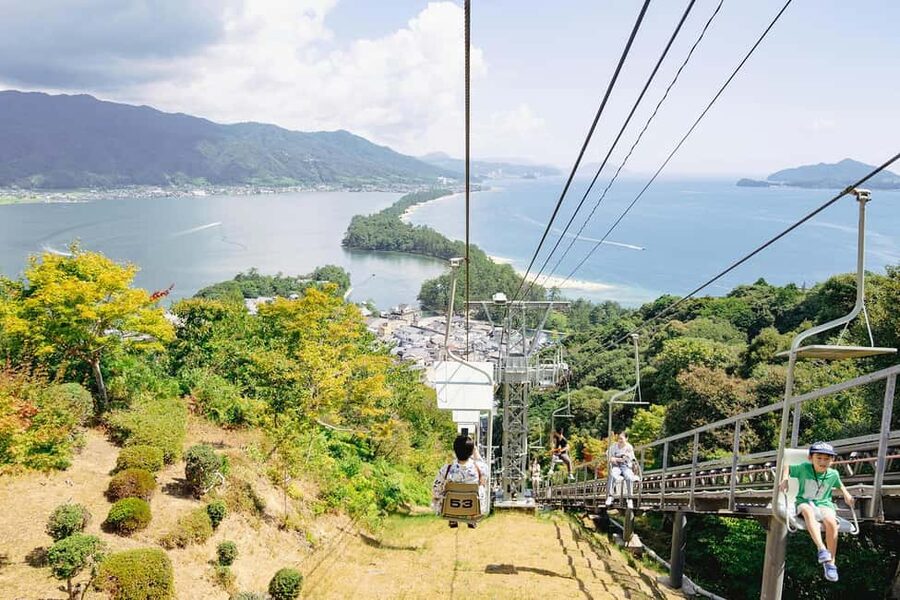
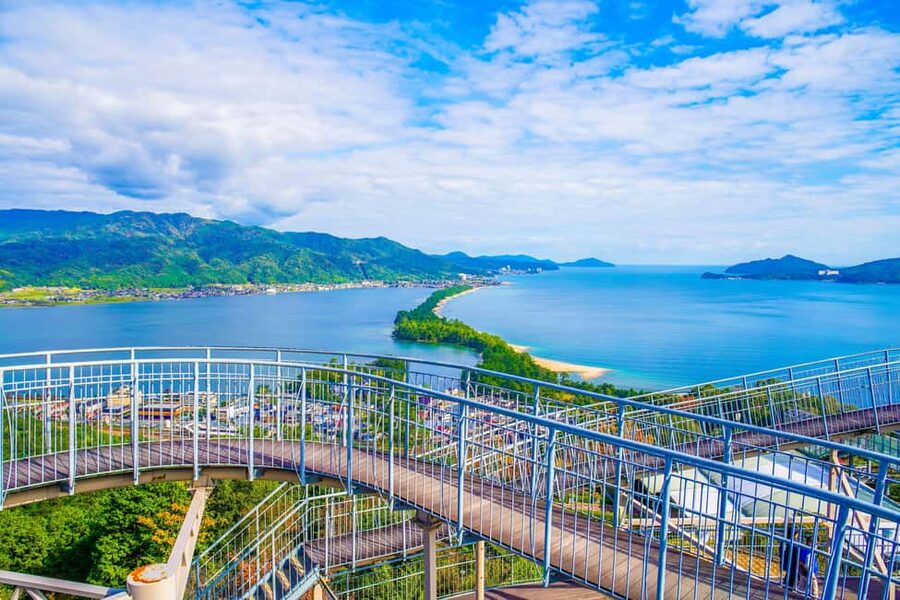
The optional cable car or ropeway carries you up to Amanohashidate Viewland. The ride itself is part of the pleasure, especially for anyone who likes a slow ascent and wide views rather than a quick enclosed lift.
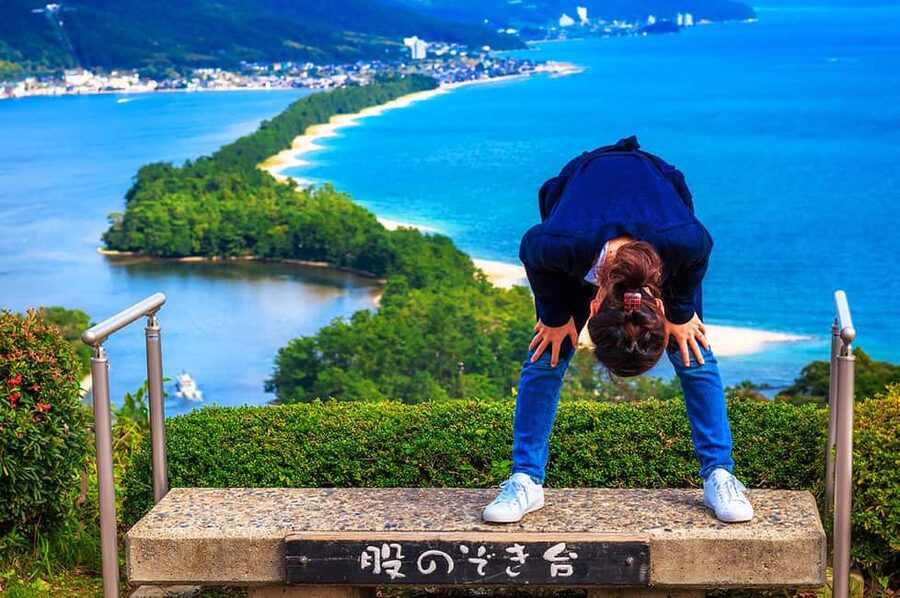
From the observatory, you can see the sandbar laid across the bay. The famous viewing trick is to bend over and look between your legs, turning the sandbar upside down. In that position, it is said to resemble a dragon flying through the sky.
It is a playful photo moment, but do not treat the viewpoint as a quick photo stop only. The high view explains the shape of Amanohashidate better than ground-level walking does. If you are deciding between the optional activities, I would give the ropeway serious consideration because it provides the clearest overall picture of the area.
The exact optional pricing is not provided here, so budget separately for it. The tour lets you decide during the day, which is useful if the weather is uncertain or you are not sure how energetic you will feel after the coach ride.
Chionji Temple and its fan-shaped fortune
Chionji Temple is a short walk from the sandbar area and is dedicated to Monju Bosatsu, the Bodhisattva associated with wisdom. People visit to pray for academic success, career progress, and a clearer mind.
The temple adds cultural weight to the Amanohashidate stop. Without it, the visit might feel mainly like a scenic walk and viewpoint. With Chionji, you get a small but meaningful connection to Japanese religious practice.
Look for the fan-shaped omikuji, or fortune paper. Its shape makes it a memorable keepsake and fits the temple’s connection with wisdom and good fortune. Drawing one is a simple activity, but it gives you something personal to do rather than merely taking photographs.
The visit is not presented as a long formal temple tour. Your guide may offer explanations, then you will have time to look around at your own pace. Bring cash for small purchases or offerings, since some locations may not accept cards.
Walking across the sandbar
The best part of Amanohashidate may be the simplest: walking near the sea. After crossing the rotating bridge, you reach a soft sandy route with waves nearby and a steady sea breeze.
You do not need to walk the entire length to enjoy it. Use your free time for a gentle stroll, photographs, or a quiet break beneath the pine trees. The sand and coastal air create a welcome change after the coach ride.
Comfortable shoes are important. The schedule includes walking at both Ine and Amanohashidate, and you may also use the ropeway and explore around Chionji Temple. The tour is not described as strenuous, but it is not a sit-down sightseeing day either.
Weather will shape this part of the experience. On a clear day, the sea views should be the main reward. In rain, the scenery can still be beautiful, but visibility from the observatory may be less impressive. The guides have been praised for keeping the schedule moving even in poor weather, although the weather itself is beyond anyone’s control.
How the tour is guided
The tour operates in English, Japanese, and Traditional Chinese. Because it is a shared group trip, explanations are given in multiple languages and may not be as detailed as a private tour.
That said, the guide can make a big difference. Jay has been praised for his energy, useful explanations, and follow-up messages through WhatsApp. Matthew was described as a reliable organizer who clearly explained how much time was available, then let people explore independently. Maxey received praise for interacting with the whole group and noticing individual interests.
Those examples suggest a friendly, people-focused style, but you should not expect the same guide every time. One person described the trip as mostly transportation rather than a traditional guided tour. That is not necessarily a flaw. If you want freedom at each stop, the format works well. If you want a detailed lecture at every site, it may feel light.
What the $63 price really buys you
At $63, the strongest value comes from transport. You receive round-trip coach travel from Kyoto or Osaka, an air-conditioned vehicle, a professional driver, road tolls, fuel, parking, and a multilingual guide.
You are also getting access to two coastal locations that are not especially convenient to combine without planning. The price is particularly fair if you would otherwise need separate regional tickets, local buses, and parking arrangements.
The value is less clear if you mainly want a slow village day or a long meal. The schedule is fixed, Ine is brief, and food is not included. Optional boat and ropeway activities also require separate payment, though the ability to add them during the day gives you some flexibility.
I would think of the tour as a practical access pass to northern Kyoto. You pay for convenience and coverage, not luxury or complete independence.
Who should book this trip?
I would recommend it to you if you want:
- A break from Kyoto’s temples and crowded central streets
- Sea views and traditional coastal architecture
- A simple way to combine Ine and Amanohashidate
- Some guided context, followed by free time
- The option to add a boat cruise or ropeway ride
- A good-value day trip from either Kyoto or Osaka
I would be more cautious if you dislike long bus rides, need a guaranteed return time, or want to spend half a day slowly exploring one village. Weekend and holiday traffic can change the order of stops, shorten visits, or delay the return, so do not schedule another important activity immediately afterward.
Also arrive early. There are no refunds for late arrival or a no-show, and one person felt stressed when the bus was late without clear communication. The evening message is your best source for the final meeting instructions, so read it carefully.
Final verdict: a strong coastal day trip with one big tradeoff
This is a smart way to reach Ine Bay and Amanohashidate without building your own complicated transport plan. The funaya houses, bird-filled boat ride, Chionji Temple, sandbar walk, and high viewpoint give the day plenty of variety.
The catch is the distance. With about five hours of total coach travel, you need to accept that much of the day happens on the road. Still, at $63, the transport and range of sights make the trip good value.
Book it if you want northern Kyoto scenery, traditional fishing architecture, and a flexible day with optional activities. Skip it if your ideal holiday day means lingering over lunch, moving at a very slow pace, or returning at a precise hour.
FAQ
How long is the Kyoto Amanohashidate and Ine Bay trip?
The trip lasts about 10 hours. The coach ride takes roughly 2.5 hours each way, with an additional transfer of about 30 minutes between Ine and Amanohashidate.
Where can I join the tour?
The two stated starting points are Nipponbashi Station Exit 2 in Osaka and Kyoto Station’s Hachijoguchi area. The exact meeting point depends on the option booked and is confirmed in the message sent the evening before.
Where does the tour finish?
Drop-off is available at Kyoto Station’s Hachijoguchi area or Nipponbashi Station Exit 2, depending on the selected option.
Is the sightseeing boat included?
The boat activity is optional. The provided information does not state its separate price, so check the booking details or confirm with the guide.
Is the cable car or ropeway included?
The cable car or ropeway at Amanohashidate Viewland is also optional. Confirm the additional cost when booking or during the tour.
How much free time do I get in Ine?
The planned Ine visit is about one hour, including sightseeing, photographs, and walking. Actual time can change because of traffic, weather, or group conditions.
How much time is allowed at Amanohashidate?
The Amanohashidate portion is scheduled for about 2.5 hours. This includes time for the viewpoint, Chionji Temple, the sandbar area, and independent sightseeing.
What languages does the guide speak?
The tour offers live guidance in English, Japanese, and Traditional Chinese. Explanations are given in multiple languages because this is a shared group tour.
Can I cancel the booking?
You can cancel up to 24 hours in advance for a full refund. The tour also offers reserve-now, pay-later booking, but late arrivals and no-shows are not eligible for refunds.
Just added in Japan
- A One-of-a-Kind Sushi Experience in a Special Place of Japan★ 5.0 · 15 reviews
- Tokyo Cute Bento Cooking Class – Make a Kawaii Character Lunchbox★ 5.0 · 126 reviews
- Japanese Home Cooking Class & Walk in Todoroki Temple Tokyo★ 5.0 · 88 reviews
- Japan Tokyo Tower Observatory Deck E-Ticket★ 4.0 · 34 reviews
- Catch a Baseball Game in Tokyo with a Local – Tickets Included★ 5.0 · 24 reviews
- JDM Experience with Fast&Furious RX-7 (English speaking Driver)★ 5.0 · 57 reviews
- Tokyo Private Day Tour by Car with English speaking Driver Guide★ 4.0 · 29 reviews
- Japan Classic 10 Day – One Life Adventures★ 5.0 · 129 reviews