
Reviewed · FOOD TOURS
Osaka Dotonbori Daytime Food Tour
Dotonbori tastes better away from the neon. This three-hour food walk gives you a useful first look at Osaka’s street food, guiding you through Dotonbori, Namba, Kuromon Market, and small local eating spots. I like the efficient route and the chance to try four local dishes without spending your day guessing which restaurant deserves your time.
I also like the cultural side, from the story behind the Glico sign to tales about baseball fans and a KFC statue. The main drawback is the price: at $209 per person, this is costly for a three-hour outing, especially since transportation, extra food, and additional drinks are not included.
In This Review
- Key points to know before booking
- Why this tour works in Osaka’s Minami district
- Meeting the Glico Man in Dotonbori
- Walking past the bright side of Dotonbori
- Namba, Minami, and the local food focus
- Hozenji Yokocho and its quiet Buddha
- Sennichimae Doguyasuji and Osaka’s kitchen tools
- Kuromon Market, with a practical warning
- Misono Building and the older side of Namba
- The guides are a major part of the value
- Price, group size, and what you actually receive
- Who should book this daytime food walk
- Booking, weather, and cancellation advice
- Should you book the Osaka Dotonbori Daytime Food Tour?
- FAQ
- How long does the Osaka Dotonbori Daytime Food Tour last?
- What time does the tour start?
- Where does the tour begin?
- Where does the tour end?
- What food and drinks are included?
- Is hotel pickup included?
- Can dietary requirements be accommodated?
- What is the cancellation policy?
Key points to know before booking
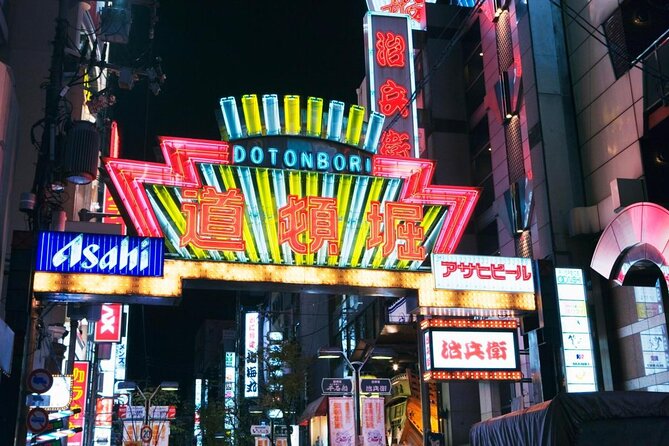
- Four food stops in three hours: You sample local dishes, one drink, and a traditional Japanese dessert without committing to a full restaurant meal at every stop.
- A useful route through Minami: The walk links Dotonbori, Hozenji Yokocho, Sennichimae Doguyasuji, Kuromon Market, and the Misono Building area.
- Takoyaki is a highlight: Several accounts single out the takoyaki, including one especially memorable serving described as very special.
- Small groups matter: The maximum group size is 10, so the guide can usually keep the conversation personal and answer dining questions.
- Good for first-day orientation: The tour covers food, local customs, narrow lanes, shrines, and neighborhood stories, making it a sensible early Osaka activity.
- Dietary needs can be discussed: Vegetarian, vegan, pescetarian, shellfish-free, and pork-meat-free options are listed as available, though food can change with supply and season.
Why this tour works in Osaka’s Minami district
Osaka is often called Japan’s Kitchen, but that nickname does not make the city easy to eat in. Dotonbori is packed with signs, menus, queues, and restaurants competing for your attention. You can certainly eat well on your own, but choosing wisely takes time.
I like the way this tour cuts through that noise. Instead of spending half an hour deciding where to eat, you follow a local English-speaking guide to four food stops. You get a taste of several specialties, then you can return later to the places or styles you enjoyed most.
The route also gives you more than a meal. Dotonbori and Namba are central Osaka districts where commercial entertainment sits beside old lanes, markets, shrines, and small food businesses. That contrast is the point. You see the giant signs, but you also step into quieter corners that are easy to miss when you are focused on the main canal street.
The tour begins at 11:00 am, a useful time for a daytime food walk. You avoid the late-night crowds and get a substantial introduction before the rest of your afternoon. Since the route ends in the Sennichimae area, you can continue exploring without returning to the starting point.
More Food Tours in Osaka
- Osaka: Shinsekai Food Tour with 13-15 Dishes at 5 Eateries
★ 4.8 · 2,204 reviews - Osaka Food Tour: 13 Dishes at 5 Local Eateries
★ 5.0 · 2,149 reviews - Hungry Osaka Street Food Tour:15 Tastings & 3 Drinks with a Local
★ 5.0 · 1,727 reviews
Meeting the Glico Man in Dotonbori
The meeting point is the Starbucks Coffee at Tsutaya Ebisubashi, at 1 Chome-8-19 Dotonbori. The first stop is the famous Dotombori Glico Sign, where the guide explains the smiling runner and the company behind the sign.
The story has a surprising international detail. The image was inspired by Fortunato Catalon, a Filipino sprinter whose success became meaningful to a nation and later helped inspire Glico’s famous advertising image. That gives the usual photo stop a little more substance.
You get only about five minutes here, so do not expect a long lecture. The purpose is to orient you to the area, take the classic photo, and begin understanding why this particular crossing became one of Osaka’s best-known symbols.
A practical tip: the starting point is in a very busy part of Dotonbori. Arrive early enough to identify the correct Starbucks and keep your mobile ticket ready. The meeting location is near public transportation, but the crowds can make a last-minute arrival stressful.
Walking past the bright side of Dotonbori
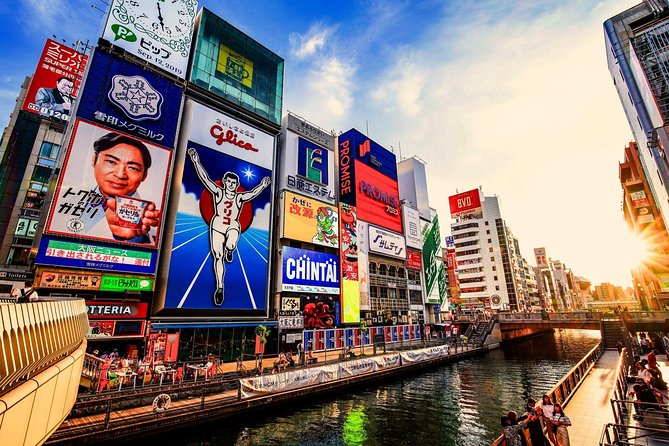
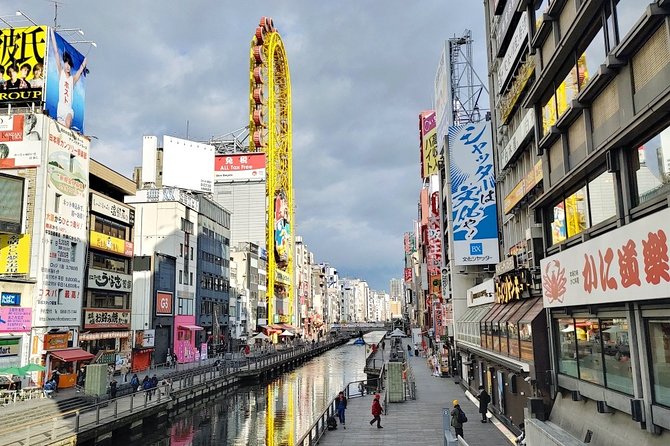
From the Glico sign, the tour moves into Dotonbori itself. This is the part of Osaka most people picture first: oversized signs, restaurant displays, canal views, and a constant stream of people moving between shops and eateries.
The guide’s role is especially useful here. The area can pull you toward the largest signs and longest queues, but the most famous restaurant is not always the best use of your time. This tour aims to steer you away from places built mainly for passing crowds and toward restaurants or stalls used by local residents.
The Dotonbori portion lasts roughly 15 minutes as a listed stop, though the overall pace includes walking and food visits. You should expect a moving tour rather than a seated lesson. Wear comfortable shoes and be ready to stand while eating.
I appreciate that the guides add small cultural stories along the way. One account recalls the famous story of baseball fans throwing a KFC statue into the river, a piece of Osaka sports culture that helps explain the city’s playful relationship with food, advertising, and public celebration.
Namba, Minami, and the local food focus
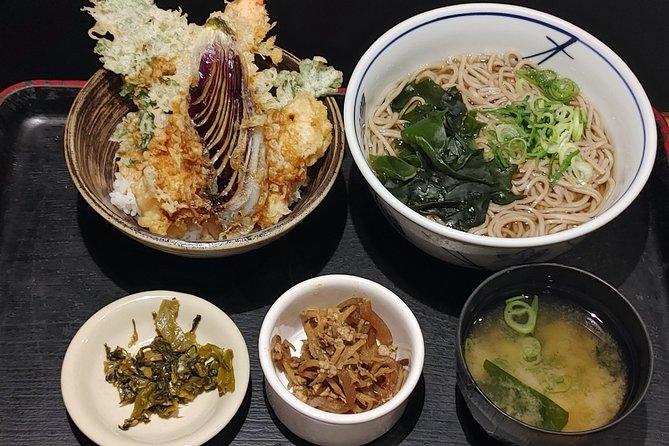
The broader Minami, or Namba, area is where the tour becomes more than a Dotonbori photo walk. The guides use the neighborhood to explain Osaka food habits and introduce dishes that you might not order confidently on your own.
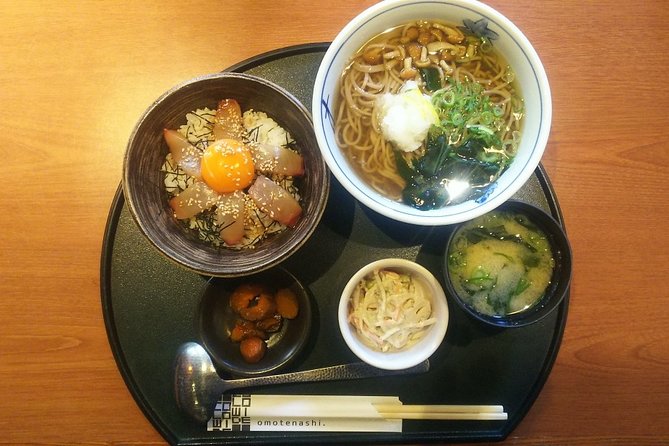
The package includes four food stops, one drink, and a traditional Japanese dessert. The exact food can change because of season, availability, restaurant schedules, public holidays, weather, or other unexpected changes. That flexibility is practical, but it means you should not book expecting a fixed menu.
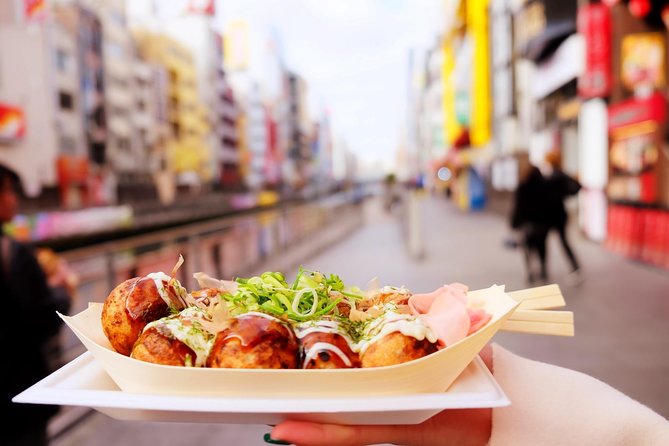
Takoyaki is one of the clearest highlights. These small octopus-filled snack balls are closely linked with Osaka, and the food accounts repeatedly praise the quality of the serving included here. You may also encounter other local specialties, but the supplied details do not promise a complete dish-by-dish menu.
That uncertainty is not necessarily a weakness. It means the tour can use places that are open and serving well on the day. Still, if you have your heart set on a particular dish, ask the guide at the start what is planned and what substitutions may be possible.
The drink is included, but extra drinks and additional food cost more. At $209, I would treat the included tastings as a guided introduction rather than a full day of eating. You may want a snack before the tour if you tend to get hungry, though the four stops should provide a meaningful midday sample.
A completely different kind of day out:
- Osaka Go Karting Tour with Funny Costume
★ 5.0 · 2,658 reviews - Osaka Castle: Museum and Tower Entry Ticket
★ 4.5 · 2,380 reviews - Osaka: Tea Ceremony Experience
★ 4.9 · 1,426 reviews - Osaka Kickstart: Hotspots & Hidden Gems Tour
★ 5.0 · 1,306 reviews
Hozenji Yokocho and its quiet Buddha
Hozenji Yokocho offers a sharp change from the large signs of Dotonbori. The narrow lanes and traditional atmosphere make this one of the more memorable parts of the walk, especially if you are interested in old Osaka settings rather than only modern entertainment streets.
A special Buddha statue is part of the experience, and the guides may also show you nearby shrines. The exact order and time spent here can vary, but this stop gives the food tour a cultural pause.
I like this kind of detour because it helps you understand the neighborhood as more than a dining district. You can see how a few quiet lanes and religious sites sit close to some of Osaka’s most commercial streets. It is also a good place for photographs that look very different from the Glico sign.
The lanes can be narrow, and you will be walking rather than browsing at a slow shopping pace. Keep your group together and follow the guide’s directions around entrances, worshippers, and small businesses.
Sennichimae Doguyasuji and Osaka’s kitchen tools
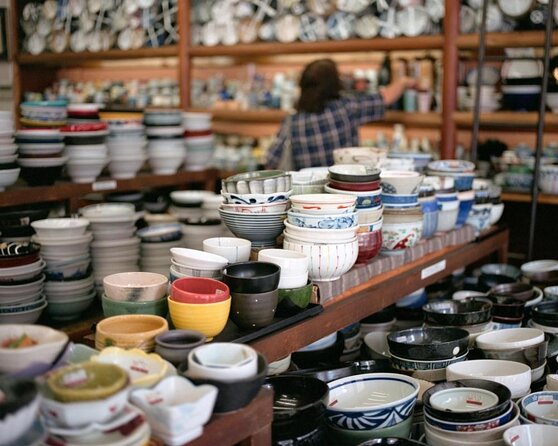
Sennichimae Doguyasuji Shotengai is known for shops connected to restaurant equipment and cooking supplies. Even if you are not planning to open a restaurant, this area can be fun because it shows the practical side of Osaka’s food culture.
You may find cooking tools, tableware, food displays, and other items used by restaurants. The supplied details do not guarantee specific shopping time or purchases, so think of this as a neighborhood stop rather than a dedicated retail excursion.
For me, this is the sort of place that adds value to a food tour. Eating a dish tells you what it tastes like. Seeing the equipment and presentation culture around it gives you a better sense of how food is prepared and sold in Japan.
If you spot something you want to buy, ask the guide about timing before stopping for a long look. The group has four food stops to reach, and the tour runs for about three hours.
Kuromon Market, with a practical warning
Kuromon Market is another major food setting on the route. The market gives you a chance to see stalls and local food businesses in a more concentrated setting, and one of the accounts describes enjoying small shops in the open market.
The guide can help you understand what you are seeing and direct you toward suitable food stops. That matters because markets can be confusing when labels are unfamiliar or when several stalls sell similar items.
Do not assume every market item is included. The tour covers four planned food stops, one drink, and dessert. Anything beyond that is at your own expense.
Kuromon can also be crowded and active, so this is not a slow, empty-market experience. Keep personal belongings close, stay aware of the group, and expect to move through busy passages. The reward is a more grounded look at Osaka’s food trade than you get from restaurant signs alone.
Misono Building and the older side of Namba
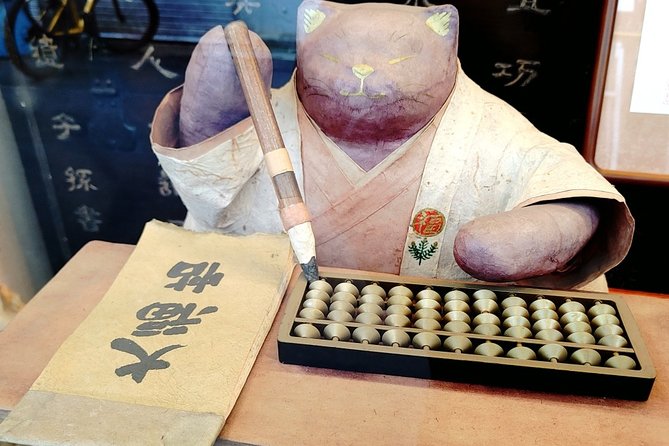
The Misono Building is included as one of the route points, adding another layer to the Namba experience. The supplied information does not specify a guaranteed restaurant or exact activity inside the building, so you should see it as part of the area walk rather than a promise of a particular venue.
That is one reason a guide makes a difference. A local can explain why a building or lane matters, point out places you could return to, and help you separate a worthwhile stop from a restaurant aimed mainly at passing sightseers.
The tour ends in the Sennichimae area, not back at the Starbucks starting point. This is convenient if you want to continue in Minami, but it means you should plan your next destination from Sennichimae rather than Dotonbori.
The guides are a major part of the value
The food is the obvious reason to book, but the guide can determine whether the $209 price feels justified. The strongest accounts praise the personal style, cultural stories, and willingness to recommend other places to eat in Osaka.
Guides named in the supplied feedback include Ron, Russ, Natsumi, Chiyoe, Miki, and Kevin. Ron is praised for taking people to places they were unlikely to find alone. Russ is noted for combining food stops with ongoing lessons about Japanese culture. Natsumi added side stories and shrine visits during one of her first solo tours.
Chiyoe is described as warm and personal, with a route through narrow lanes, a Buddha statue, excellent lunch food, special takoyaki, and Japanese cakes. Kevin is praised for making a small group feel especially personal while discussing both food and culture.
The names do not guarantee which guide you will receive. They do show the kind of experience the company aims to provide. I would use the guide’s local advice well: ask where to eat later, which dishes to try, and which parts of Osaka suit your remaining plans.
Price, group size, and what you actually receive
At $209 per person, this is not a budget food crawl. You are paying for a three-hour guided route, four food stops, one drink, a traditional dessert, English-language guidance, local recommendations, and the convenience of avoiding poor restaurant choices and long queues.
The small maximum of 10 people helps. A group of that size is large enough to keep the tour social, but small enough for questions and conversation. Some departures may be much smaller, creating a more personal experience, though that cannot be guaranteed.
Transportation costs are not included, and hotel pickup is also excluded unless arranged for an additional charge. Extra food, drinks, and gratuity are separate. These costs matter when you compare the tour with simply eating around Dotonbori on your own.
I would consider the price reasonable only if you value the guidance and cultural context as much as the food. If you mainly want a large quantity of inexpensive street food, you can spend less independently. If you want a fast orientation, help choosing places, and a route through several different parts of Minami, the fee makes more sense.
Who should book this daytime food walk
This tour suits you best if you are visiting Osaka for the first time, want help getting oriented, or feel unsure about ordering in busy food districts. It also works well for solo visitors, couples, families, and small groups who want a structured first taste of local food.
I especially like it for the first day or two of an Osaka stay. The guide can help you understand Dotonbori and Namba, and the dining advice may improve the rest of your trip.
Families are welcome, but children must be accompanied by an adult. Passport information copy is required for children aged 10 and above. The tour requires a moderate fitness level, so you should be comfortable walking and standing for about three hours.
Vegetarian, vegan, pescetarian, shellfish-free, and pork-meat-free diets are listed as possible. Contact the provider before booking if your needs are strict, since the food changes with availability and substitutions may occur.
Booking, weather, and cancellation advice
Confirmation is provided when you book, and same-day booking is available. The tour accepts single participants and uses a mobile ticket.
Free cancellation is available until 24 hours before the 11:00 am start time. Canceling or changing the booking inside that window does not qualify for a refund. The experience requires good weather, and a weather cancellation may result in another date or a full refund.
The tour also requires a minimum number of participants. If that minimum is not met, you can be offered another date or experience, or receive a full refund. Since changes can happen because of restaurant schedules, holidays, weather, and food supply, keep a little flexibility in your Osaka plans.
Should you book the Osaka Dotonbori Daytime Food Tour?
Book it if you want a guided introduction to Osaka’s food culture, not simply a cheap meal. The best reasons are the four-stop format, the route through Dotonbori and Namba, the quieter Hozenji Yokocho lanes, the market visit, and the chance to ask an English-speaking local where to eat next.
I would skip it if your main goal is quantity or if $209 feels too high for three hours. You will still need to pay for transport, extra food, drinks, and gratuity, and the exact menu can change.
For first-time visitors who want food, local stories, and a fast sense of place, this is a strong choice. Try to schedule it early in your stay, arrive at the Starbucks meeting point before 11:00 am, and bring an appetite rather than a strict list of dishes. The tour is at its best when you let the guide show you how Osaka eats.
FAQ
How long does the Osaka Dotonbori Daytime Food Tour last?
The tour lasts approximately three hours.
What time does the tour start?
The tour starts at 11:00 am.
Where does the tour begin?
It begins at Starbucks Coffee, Tsutaya Ebisubashi, 1 Chome-8-19 Dotonbori, Chuo Ward, Osaka.
Where does the tour end?
The tour ends in the Sennichimae area of Chuo Ward, Osaka.
What food and drinks are included?
The tour includes local dishes at four food stops, one drink, and a traditional Japanese dessert.
Is hotel pickup included?
No. Hotel pickup is not included, but it can be arranged for an additional charge.
Can dietary requirements be accommodated?
Vegetarian, vegan, pescetarian, shellfish-free, and pork-meat-free options are listed as available. Food can change because of season and availability.
What is the cancellation policy?
You can cancel for a full refund up to 24 hours before the experience start time. Changes or cancellations made less than 24 hours before the start are not accepted for a refund.
Just added in Osaka
- Osaka Japanese Cooking And Matcha Class near Osaka Castle★ 5.0 · 22 reviews
- Osaka: 2-Hour Nightlife District Walking & Local Food Culture★ 5.0 · 199 reviews
- Osaka Dotonbori Wonder Cruise★ 4.0 · 28 reviews
- Osaka Food Walking Tour with Market Visit★ 4.5 · 14 reviews
- Cooking Ramen&Gyoza/KatsuCurry/Bento/Okonomiyaki+Store Tour@Osaka★ 5.0 · 138 reviews
- Osaka Private Pop Culture Tour: Historic Tenma to Dotonbori★ 4.5 · 13 reviews
- Osaka Cooking Class and Sake Tasting with Local Supermarket Visit★ 5.0 · 79 reviews
- Osaka Castle and a visit to the longest shopping street in Japan★ 5.0 · 12 reviews
Food Tours, compared.
Shinjuku Food Tour (13 Dishes at 4 Local Eateries)
Read our review →
Shinsekai Food Tour with 13-15 Dishes at 5 Eateries
Read our review →
Osaka Food Tour: 13 Dishes at 5 Local Eateries
Read our review →
Shinjuku Food Tour (15 Dishes and 4 Eateries)
Read our review →
Best of Shinjuku: Izakaya Food Tour (4 Stops, 14+ Tastings)
Read our review →
Kyoto Night Foodie Tour in Gion (9+ dishes + 6 Sake tastings)
Read our review →
Hungry Osaka Street Food Tour:15 Tastings & 3 Drinks with a Local
Read our review →
Tokyo Night Foodie Tour in Shinjuku – Seasonal Sushi, Wagyu Beef
Read our review →Browse the lists this tour appears in