Reviewed · OSAKA TOURS
Osaka Dotonbori: Hand Roll Sushi Experience
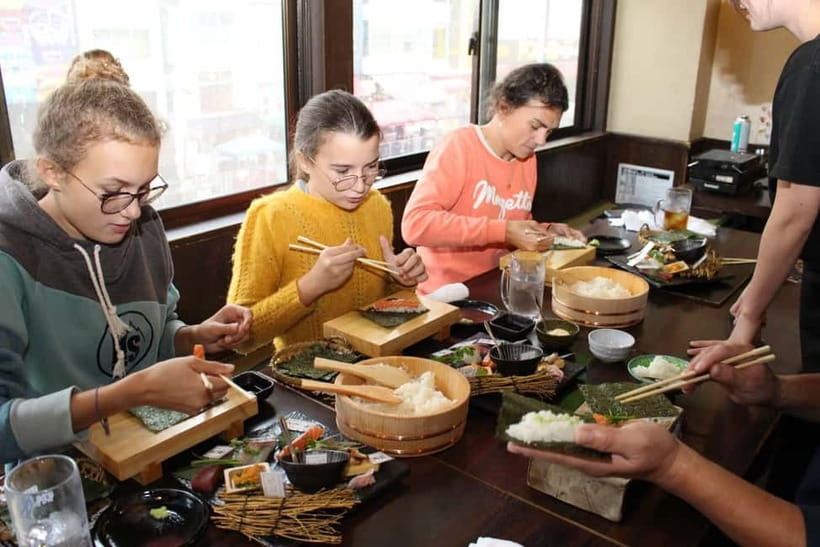
Sushi tastes better when you make it. I like the hands-on sushi lesson and the chance to taste fresh seasonal seafood, and the tatami room overlooking the Dotonbori River adds a pleasant local touch. The main drawback is that you cannot choose every fish, so an ingredient you dislike may be served and left unfinished.
This two-hour activity takes place inside Kaisen Monogatari Dotonbori, on the second floor of Nico Building. I also like that it includes a drink, all cooking tools, and plenty of food to eat as you work. Just allow extra time to find the entrance, since the first floor is a game arcade and the restaurant entrance is on the main street.
In This Review
- Key points to know before you book
- Making sushi beside the Dotonbori River
- Starting with sushi and seasonal seafood
- Why the sushi rice lesson matters
- The real wasabi tasting
- Rolling your own sushi by hand
- What you actually eat and drink
- Timing the experience in Dotonbori
- Who will enjoy this sushi lesson most
- Practical details that affect your decision
- Should you book the Dotonbori sushi experience?
- FAQ
- Where does the sushi experience take place?
- How long does the activity last?
- What is included in the price?
- Is the experience offered in English?
- Do I need to arrange transportation?
- What is the cancellation policy?
Key points to know before you book
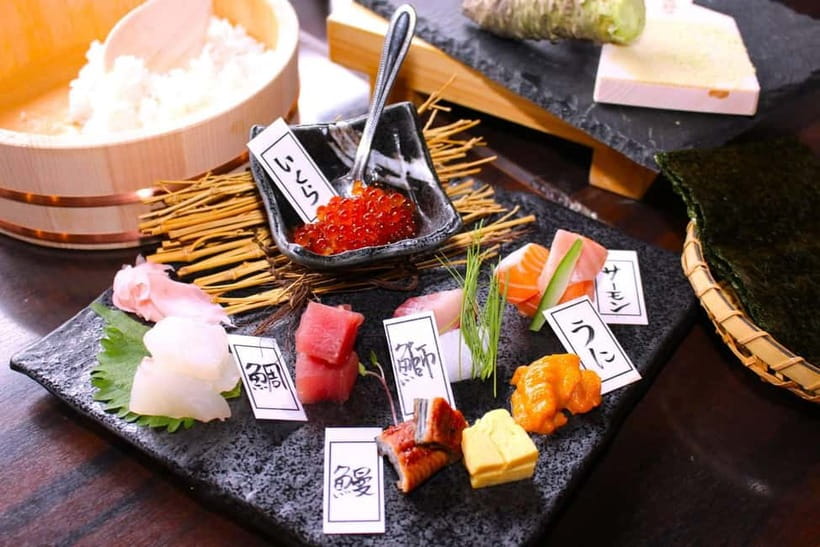
- Real wasabi tasting: You taste authentic Japanese wasabi and notice how its fresh aroma and heat differ from the familiar green paste served with many meals.
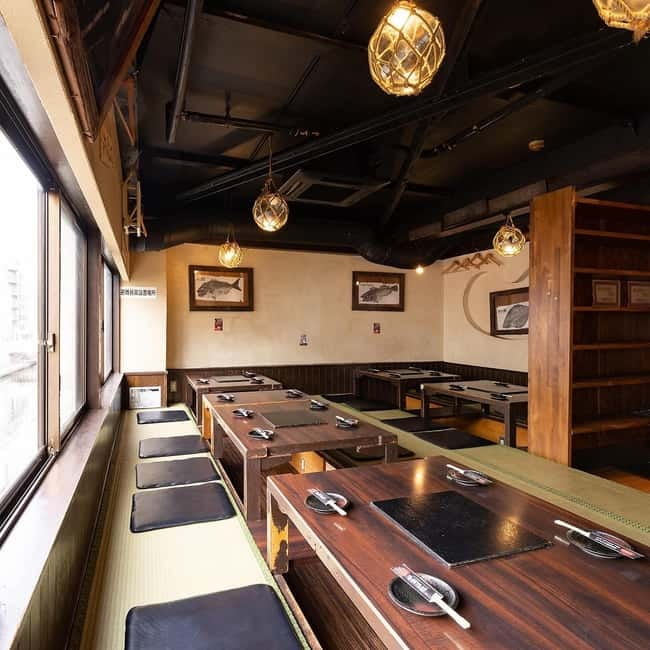
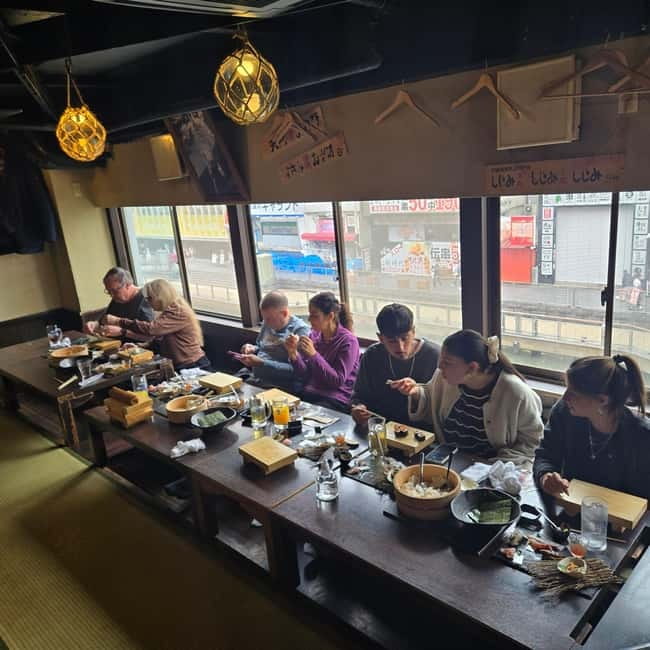
- Tatami room by the river: The setting gives you a calm place to sit while Dotonbori’s famous canal flows just outside.
- Two-hour lesson: Sessions begin at noon and 2 pm, making this easy to fit around other plans in central Osaka.
- Food is part of the lesson: You prepare sushi rice, make hand-rolled sushi, and eat your creations as you go.
- Friendly English-speaking staff: The chef and assistant provide help throughout, with an especially warm and family-friendly approach.
- Good value at 8,000 yen: The fee includes instruction, ingredients, equipment, a wasabi tasting, and one soft drink.
Making sushi beside the Dotonbori River
Dotonbori is Osaka at its most energetic, with bright signs, busy streets, food stalls, restaurants, and the canal cutting through the district. Kaisen Monogatari Dotonbori gives you a useful change of pace: you step into a Japanese-style tatami room and look out toward the river while learning a food skill you can remember after the trip.
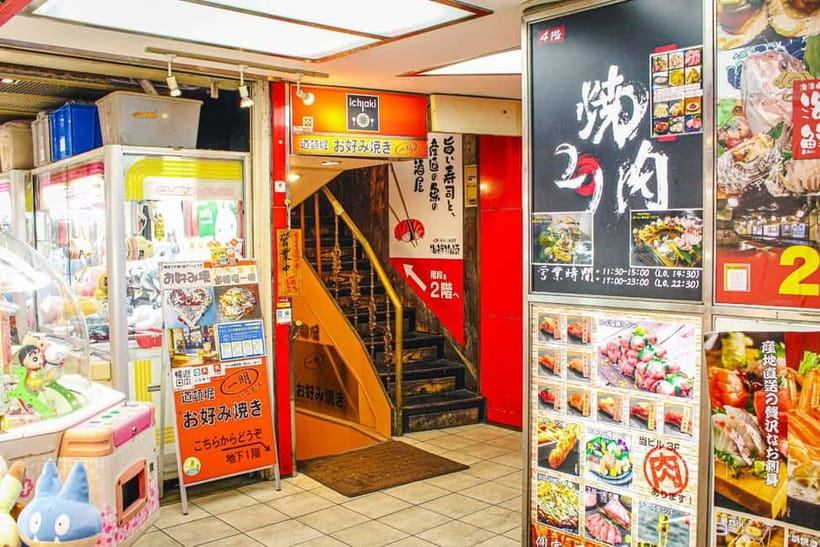
The setting matters. This is not a cooking school in an isolated suburb, where you need to spend half a day getting there. It sits at 1-6-12 Dotonbori, Chuo-ku, on the second floor of the Nico Building. The first floor contains a game arcade, and the entrance is on the main street. That detail is worth noting because the arcade can make the building look more like an entertainment venue than a restaurant.
Once inside, you can settle into a more traditional dining room. The tatami seating gives the session a distinctly Japanese feel without requiring you to leave the center of Osaka. You should wear comfortable clothes, and bringing a camera is sensible if you want pictures of the food and river view.
The activity is offered in English. The staff’s friendly manner is one of its strongest points. The chef and assistant are described as helpful and attentive, and the assistant is particularly good at answering questions and helping families through each stage.
A few more options to weigh up in Japan
- Universal Studios Japan Studio Pass
★ 4.8 · 89,883 reviews - Universal Studios Japan Express Pass
★ 4.7 · 53,138 reviews - Osaka Amazing Pass
★ 4.7 · 21,697 reviews
Starting with sushi and seasonal seafood
The lesson begins with an introduction to sushi. This gives you some context before you handle the ingredients, including an explanation of the flavors associated with Japan’s seasonal seafood.
The word seasonal is important here. Japanese cooking places great value on eating ingredients at their best time of year, and seafood can change in flavor, texture, and availability with the seasons. You may not leave with a full lesson in Japan’s fishing regions, but you do gain a better sense of why sushi is about more than raw fish placed on rice.
The experience is suited to beginners. You do not need prior sushi-making ability, and the staff show you what to do before expecting you to make your own rolls. The emphasis is on trying the technique, asking questions, and eating the result, rather than producing restaurant-perfect sushi.
One limitation deserves attention. You are not free to select every piece of fish yourself. If you have strong food preferences, or know that you dislike certain seafood, ask the staff about the ingredients as early as possible. The fixed selection keeps the lesson practical, but it can also lead to food waste if you receive something you will not eat.
Why the sushi rice lesson matters
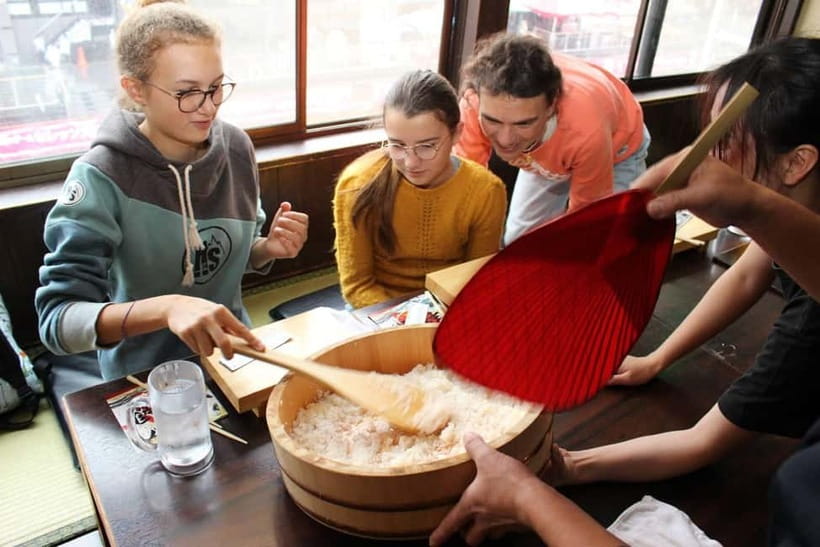
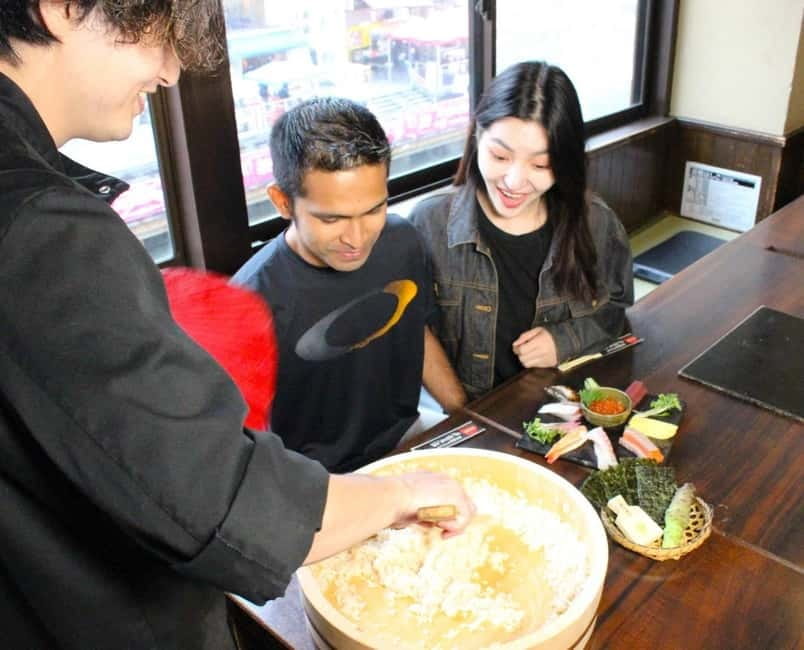
Rice is the base of sushi, and this part of the session helps explain why the finished food tastes the way it does. You learn about Japanese rice and how to mix it with vinegar, a small step that has a large effect on the flavor and texture of the roll.
This is one of the more useful parts of the experience because sushi rice is not simply plain rice with fish added. The balance of rice, vinegar, and other ingredients determines whether a hand roll tastes light and clean or heavy and dull. The lesson gives you a chance to see that balance being made rather than treating it as a mystery.
You also get to handle the rice yourself. That makes the activity more memorable than watching a chef work behind a counter. If you are traveling with children, this stage gives them a clear task before the more delicate rolling work begins.
Do not expect a long professional sushi apprenticeship. This is a short cultural and food activity, not training for restaurant work. The value lies in understanding the basic method and gaining enough confidence to try hand-rolled sushi on your own.
The real wasabi tasting
The wasabi tasting is one of the most distinctive parts of the session. Many people know wasabi mainly as a sharp green paste served with sushi, but authentic Japanese wasabi has a different aroma and a more refined kind of heat.
You taste it directly and learn to notice its fragrance and spiciness. For many people, this is a fresh discovery because the product commonly served outside Japan is often a substitute rather than freshly prepared wasabi.
The tasting also gives you a better way to think about condiments. Wasabi is not only there to make your nose burn. Its aroma and heat affect the seafood, rice, and soy sauce, so the amount you use can change the whole bite.
If you are sensitive to spicy food, start with a small amount. The session is designed as a tasting, not a challenge. You can pay attention to the flavor without loading your sushi with more wasabi than you enjoy.
A completely different kind of day out:
- Tokyo Disney Resort – Tokyo Disneyland & Tokyo DisneySea Park Tickets
★ 4.8 · 99,488 reviews - SHIBUYA SKY Ticket
★ 4.7 · 46,509 reviews - Mt. Fuji Instagram-Worthy Spots Day Tour: Ladder Town, Oshino Hakkai, Lake Kawaguchi, Lawson Convenience Store (Departing from Tokyo Station or Shinjuku Station)
★ 4.8 · 35,467 reviews - JR Whole Japan Rail Pass
★ 4.8 · 29,150 reviews
Rolling your own sushi by hand
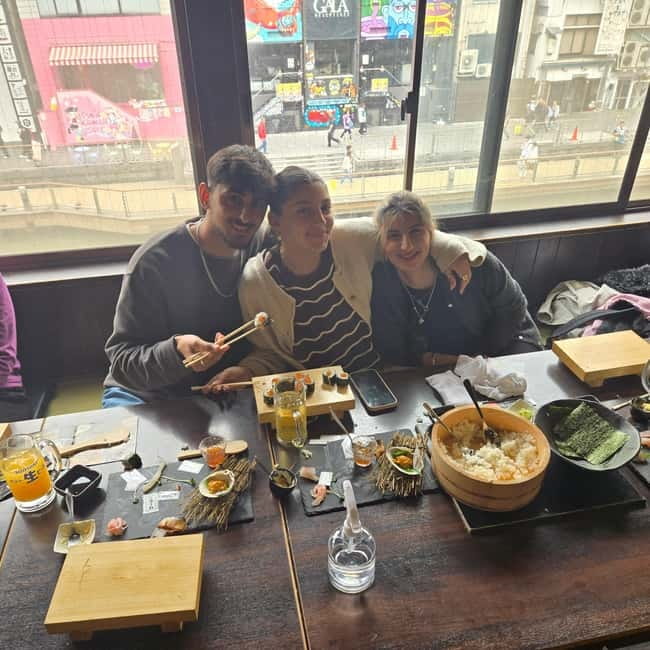
The main practical section is the hand-rolled sushi lesson. You receive the ingredients and tools, then build your own rolls with guidance from the chef and assistant.
Hand rolls are a sensible format for beginners. You can see the ingredients as you assemble them, and the process is less formal than shaping small pieces of nigiri. The point is not to copy a professional chef perfectly. It is to learn how rice, seafood, fillings, and nori come together in one bite.
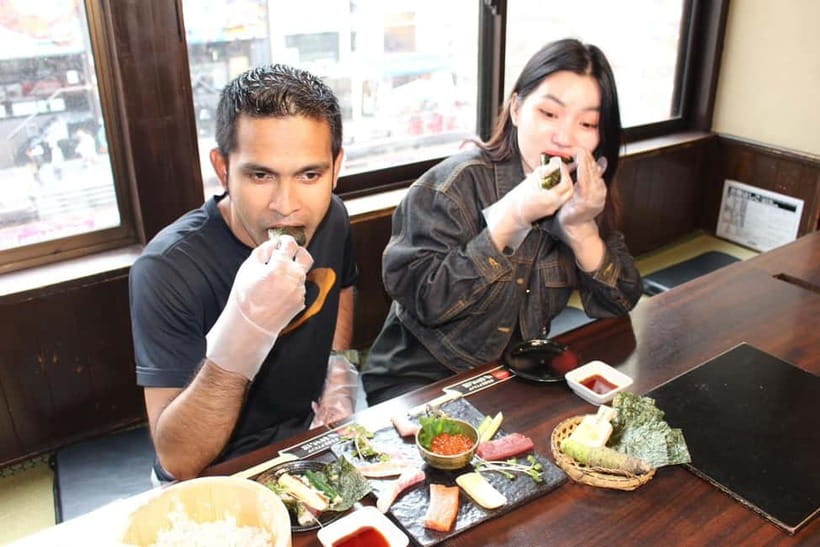
The ingredient selection offers variety, giving you different combinations to try. One useful feature is that you eat the food during the session rather than waiting for a final presentation. That keeps the activity relaxed and means you can taste each roll while the rice and seafood are fresh.
There is a small trade-off. If you hoped to arrange every creation on a large final platter and compare your first roll with your last, this format may disappoint. The food is generally eaten as it is made. You get more immediate tasting and less of a photographic finale.
Still, eating your work as you go has its own advantage. You can adjust your next roll after noticing that the first one was too full, too loose, or not balanced to your taste. The lesson becomes a series of small experiments rather than one high-pressure final exam.
What you actually eat and drink
The price includes all materials and tools, the sushi instruction, the wasabi tasting, and one soft drink. The food is substantial enough that you should arrive hungry. You are not just paying to watch a demonstration and receive one sample at the end.
The ingredients are fresh, and the meal gives you a good chance to try several hand-rolled combinations. A homemade soy sauce made by the chef is also used with the sushi, adding a personal touch to the tasting.
The included drink is nonalcoholic. Any extra food or drinks not specifically included are your responsibility, so do not assume that the 8,000 yen fee covers a full restaurant menu beyond the activity.
At about $54 per person, the cost is not the cheapest way to eat sushi in Osaka. You can find less expensive meals elsewhere in Dotonbori. The value comes from combining a meal with instruction, a wasabi tasting, a traditional room, and a central location. If you only want to fill up on sushi, this is not the best deal. If you want a food activity that teaches you something and provides lunch, the price is easier to justify.
Timing the experience in Dotonbori
The session lasts two hours and begins at either noon or 2 pm. The noon start works well as a planned lunch, while the 2 pm session can fit between sightseeing and an evening meal.
Because the activity ends back at the meeting point, you do not need to arrange a separate return transfer. Transportation to the restaurant is not included, so you should make your own way to Nico Building in Dotonbori.
The central location is particularly useful if you are already exploring the district. You can combine the lesson with a walk along the canal, nearby shopping, or other Osaka food stops. Just be careful not to schedule another meal immediately afterward. The sushi portion is generous, and the activity is meant to be eaten, not merely observed.
Arrive with enough time to locate the building. The first-floor arcade can be distracting, and the restaurant is upstairs. The stated meeting point is Kaisen Monogatari Dotonbori, so checking the address before you set out will save time.
Who will enjoy this sushi lesson most
I would recommend this experience to families, couples, first-time visitors to Japan, and anyone who likes food with a cultural explanation attached. It is also a good choice if you want a short activity in central Osaka rather than a full-day excursion.
Children can take part in the simple preparation steps, though the information provided does not specify a minimum age. Families should ask about the seafood selection if anyone has allergies, dislikes, or dietary restrictions.
You will get the most from the session if you enjoy trying unfamiliar ingredients. The wasabi tasting and seasonal seafood are central features, so this is not the right pick for someone who wants complete control over every item on the plate.
It also suits people who prefer a friendly, intimate setting to a large group demonstration. The chef and assistant offer hands-on help, and the tatami room creates a more personal atmosphere than a standard restaurant meal.
Practical details that affect your decision
The experience is provided in English and costs 8,000 yen per person, including tax. The advertised dollar price is $54 per person, but the yen price is the more useful figure when planning your Japan budget because exchange rates change.
You need to bring your own transportation, a camera if desired, water, and comfortable clothing. A hat is also listed among the recommended items. There is no separate transportation service attached to the activity.
You can reserve now and pay later, which helps if your Osaka schedule is still changing. Cancellation is allowed up to 24 hours before the start time for a full refund. Those terms are useful, but you should still check your reservation details before making final plans.
The activity runs only twice daily, at noon and 2 pm. If you miss the available time, there is no indication of an evening option, so plan around those fixed departures.
Should you book the Dotonbori sushi experience?
I would book this if you want to do more than sit down and order sushi. The strongest reasons are the friendly English-speaking staff, the fresh ingredients, the real wasabi tasting, and the chance to make and eat your own rolls in a tatami room beside the Dotonbori River.
I would think twice if you have strict seafood preferences or expect a polished chef’s-counter performance. You cannot choose every fish, and the food is eaten as you prepare it, so you will not necessarily leave with a grand platter of finished sushi.
For most food-loving visitors, the 8,000 yen price offers fair value because it covers both a meal and a two-hour activity. Book it when you want a relaxed introduction to sushi, especially if you are traveling with family or have never made hand rolls before.
FAQ
Where does the sushi experience take place?
It takes place at Kaisen Monogatari Dotonbori, on the second floor of Nico Building at 1-6-12 Dotonbori, Chuo-ku, Osaka. The entrance is on the main street, and a game arcade occupies the first floor.
How long does the activity last?
Each session lasts two hours. Start times are 12 pm and 2 pm.
What is included in the price?
The fee includes an introduction to sushi, a sushi rice-making session, a real wasabi tasting, hands-on hand-rolled sushi preparation, all materials and tools, and one soft drink.
Is the experience offered in English?
Yes. English is listed as the available language.
Do I need to arrange transportation?
Yes. Transportation to and from the activity location is not included. The activity ends back at the meeting point.
What is the cancellation policy?
You can cancel up to 24 hours before the activity for a full refund.
Just added in Japan
- Manga Lesson with a Professional Japanese Manga Artist in Nakano★ 5.0 · 77 reviews
- Making a bento box with cute character look in Japan★ 5.0 · 15 reviews
- Tokyo/Ikebukuro Manga drawing workshop by pro-Manga artists★ 5.0 · 65 reviews
- Luxury Tokyo Sake, Cocktail, Whisky and Pairing Tour★ 5.0 · 18 reviews
- Tokyo Ueno Food & Nature & Localtown Tour: 10Dishes+ Drinks★ 5.0 · 34 reviews
- Make Your Own Bonsai with a Professional Bonsai Artist in Tokyo★ 4.5 · 18 reviews
- Make Traditional Nerikiri Sweets & Matcha experience in Shibuya★ 5.0 · 130 reviews
- Daikoku Parking Tokyo Drift & APIT Car Meet JDM Culture Tour★ 5.0 · 79 reviews
Osaka Tours, compared.


Umeda Sky Building & Kuchu Teien Observatory Ticket in Osaka
Read our review →