
Reviewed · FOOD TOURS
Osaka: Local Foodie Tour in Dotonbori and Shinsekai
Come hungry, leave happily stuffed. This three-hour Osaka food tour links the old-school streets of Shinsekai with the neon-soaked lanes of Dotonbori, giving you a useful mix of eating, walking, local stories, and city orientation. I especially like the six kushikatsu skewers in Shinsekai and the chance to cook your own okonomiyaki at the table. I also like that the route includes a narrow food alley, a small temple, and quieter side streets rather than keeping you only on Osaka’s main tourist strip.
The main thing to consider is the food volume. With kushikatsu, okonomiyaki, takoyaki, and three drinks included, this is not a light tasting walk. Vegetans need to arrange their option in advance, and the tour cannot accommodate vegans or gluten-free diets.
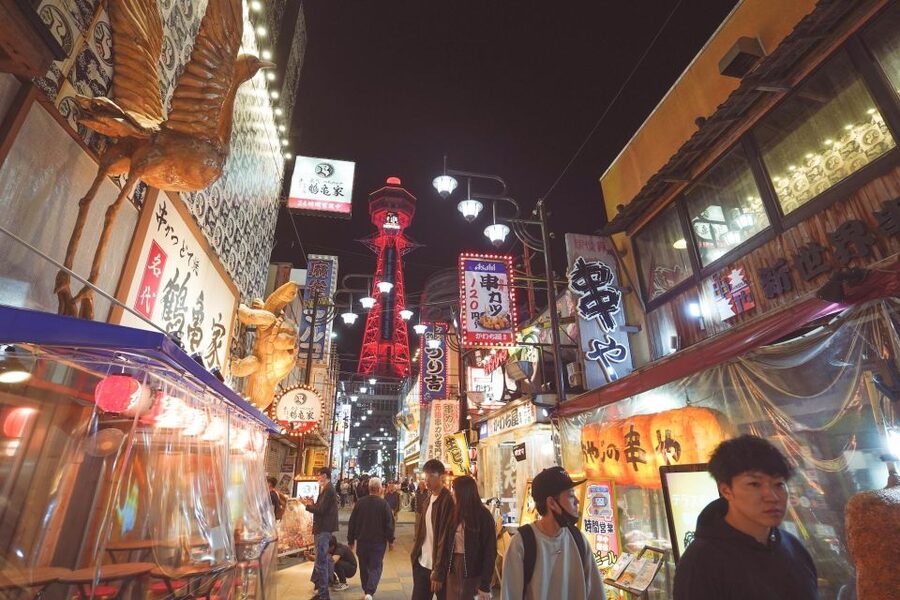
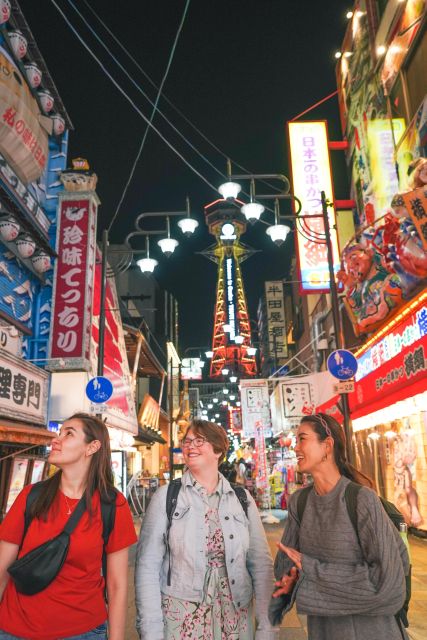
- Shinsekai after dark: Walk beneath Tsutenkaku Tower, through Jan-Jan Yokocho, and past retro arcades before eating kushikatsu.
- Six kushikatsu skewers: Try Osaka’s famous deep-fried skewers in their home district.
- A 1.2-meter-wide food alley: See artwork designed to recall central Osaka from more than 80 years ago.
- A quiet temple stop: Pause between Namba’s signs and shopping streets for a short look at local religious customs.
- Three Osaka classics: The included meal covers kushikatsu, okonomiyaki, and takoyaki.
- Small-group feel: Private and small-group options are available, with English-speaking guides such as Taku, Yuma, Alice, and Tea praised for their warmth and local tips.
In This Review
- Starting beneath Tsutenkaku in Shinsekai
- Kushikatsu in its home neighborhood
- A time capsule in a 1.2-meter alley
- A quiet temple between Namba’s bright signs
- Okonomiyaki, Osaka’s savory tabletop favorite
- Takoyaki under the Dotonbori lights
- What the $108 price really covers
- Group size, guides, and the overall feel
- Who should book this Osaka food tour?
- Should you book it?
- FAQ
- How long does the Osaka food tour last?
- Where does the tour meet?
- How will I recognize the guide?
- What food is included?
- Are alcoholic and non-alcoholic drinks available?
- Is transportation between Shinsekai and Dotonbori included?
- Can vegetarians join the tour?
- Can vegans or people with gluten intolerance join?
- What happens if I arrive late?
Starting beneath Tsutenkaku in Shinsekai
The meeting point is in front of FamilyMart Sanno Dobutsuen-mae, right outside Exit 1 of Dobutsuen-mae Station. Your guide holds a MagicalTrip sign. This is worth getting right, since the tour begins on time and late arrivals cannot join, reschedule, or receive a refund.
Shinsekai gives you a different first look at Osaka than Dotonbori. The neighborhood has an old-fashioned, slightly scruffy charm, with bright signs, shuttered arcades, small shops, and Tsutenkaku Tower looking over it all. It feels tied to an earlier Osaka, when entertainment districts were more local and less polished.
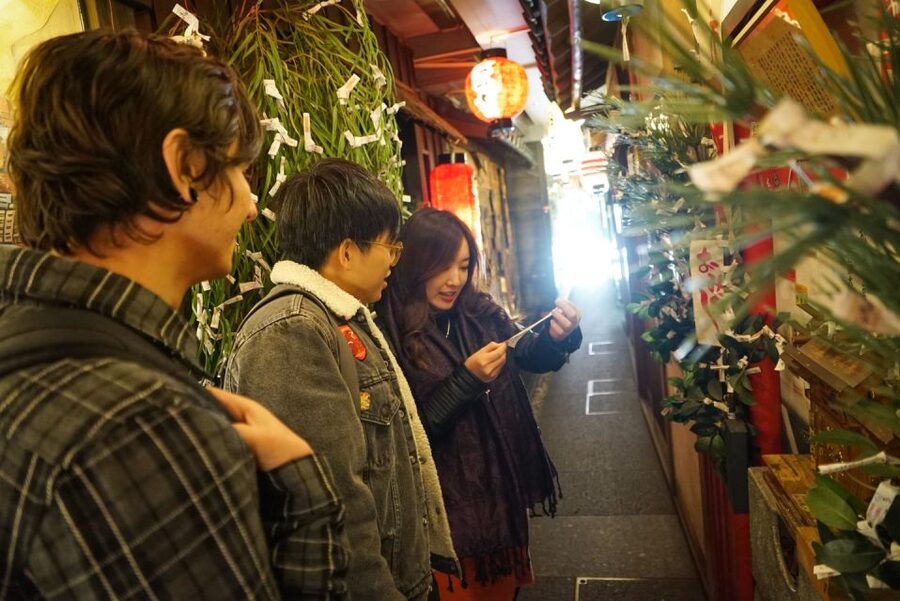
Your guide leads you through Jan-Jan Yokocho alley, where the narrow passage and old storefronts help set the mood. You also pass the famous Billiken statue, a good place to learn about one of Osaka’s most recognizable local symbols. The route is not only about taking photographs. It gives you a sense of how the district works and why it remains linked with kushikatsu.
The walking pace appears to be comfortable rather than rushed. That matters because Shinsekai is best enjoyed by looking around: old signs, small lanes, tower views, and the contrast between fading arcades and modern Osaka nearby. Guides including Shinya, Yoshi, Peco, and Taku have been praised for helping people find places they would likely miss alone.
Kushikatsu in its home neighborhood
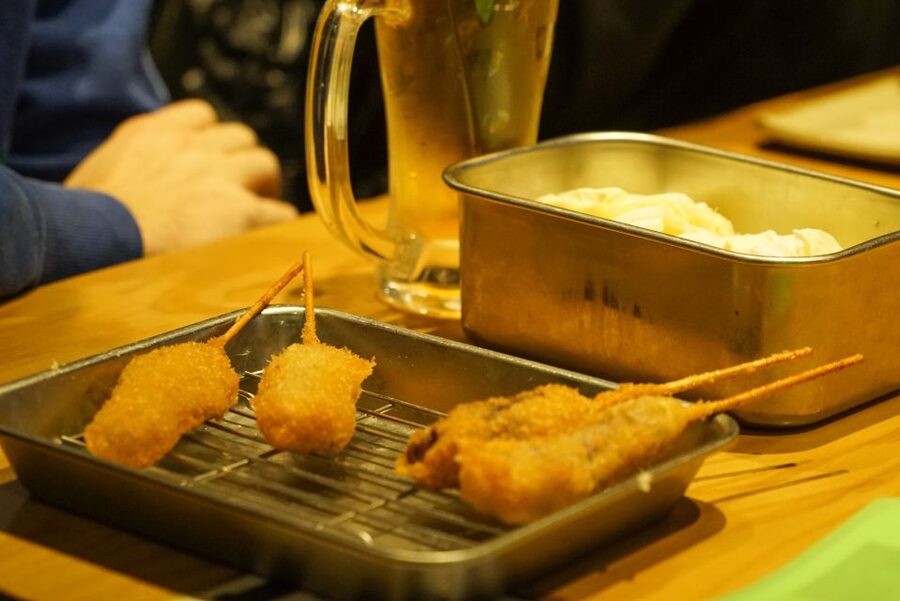
The first major food stop is kushikatsu, Osaka’s classic deep-fried skewer dish. You receive six pieces, giving you a proper serving rather than one token bite. The appeal is simple: skewered ingredients are coated, fried, and served hot, with a crisp outside and savory center.
Eating kushikatsu in Shinsekai adds context. This is not just a dish selected because it is famous. It belongs to the character of the district, where casual food shops and old entertainment streets developed side by side. Your guide can explain how to approach the dish and help you understand local dining customs.
The tour includes one drink at this stage, with alcohol and non-alcohol choices available. Three drinks are included across the full experience. If you want extra food or more drinks, you pay separately, so keep that in mind when judging the $108 price.
Vegetarian arrangements must be made before the tour. The vegetarian kushikatsu still uses dashi made with pork broth, so you need to say in advance if you cannot have dashi. Same-day requests cannot be handled. The operator also warns that it cannot guarantee allergy-free meals or provide every possible substitution, since the food is prepared in kitchens it does not operate.
More Food Tours in Osaka
- Osaka: Shinsekai Food Tour with 13-15 Dishes at 5 Eateries
★ 4.8 · 2,204 reviews - Osaka Food Tour: 13 Dishes at 5 Local Eateries
★ 5.0 · 2,149 reviews - Hungry Osaka Street Food Tour:15 Tastings & 3 Drinks with a Local
★ 5.0 · 1,727 reviews
A time capsule in a 1.2-meter alley
After Shinsekai, the tour moves toward Dotonbori. The transport fee between the two districts is not included and costs ¥190. That small extra charge is easy to overlook, but it is the only required transport cost specifically listed, so carry a little Japanese currency or be ready to pay it as directed.
One of the more unusual parts of the route is a food alley only 1.2 meters wide. Artwork along its walls creates a museum-like scene based on Osaka’s center more than 80 years ago. You do not need a long stop here to appreciate the idea. The narrow space itself makes the city feel compressed, almost like walking through a preserved stage set.
This stop gives the tour some needed variety. Without it, the experience could feel like a sequence of restaurant visits. Instead, you get a short lesson in Osaka’s past while moving between two major food areas. The alley is also a useful reminder that Osaka’s food culture developed in tight urban spaces, where shops, homes, temples, and entertainment venues often sat close together.
A quiet temple between Namba’s bright signs
The next pause comes at a small temple tucked between Namba’s shopping streets and Dotonbori’s glowing signs. The contrast is the point. One moment you are surrounded by commercial energy, and the next you are in a calm religious space.
You can learn basic etiquette for temples and shrines here, including how to behave respectfully during a visit. That practical guidance is one of the tour’s stronger features. It helps you do more than look at a temple from the outside, and it gives you confidence for the rest of your time in Japan.
This is also a good break before the final food stops. Three hours of eating and walking can become tiring, especially in a crowded entertainment district. The temple pause slows the pace and gives your guide room to explain a little about Osaka’s past and culture.
Okonomiyaki, Osaka’s savory tabletop favorite
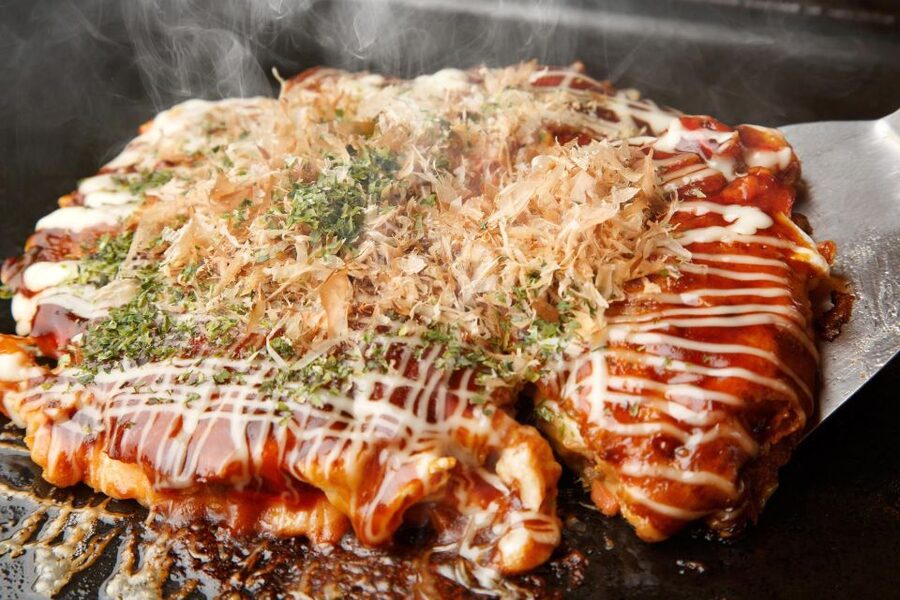
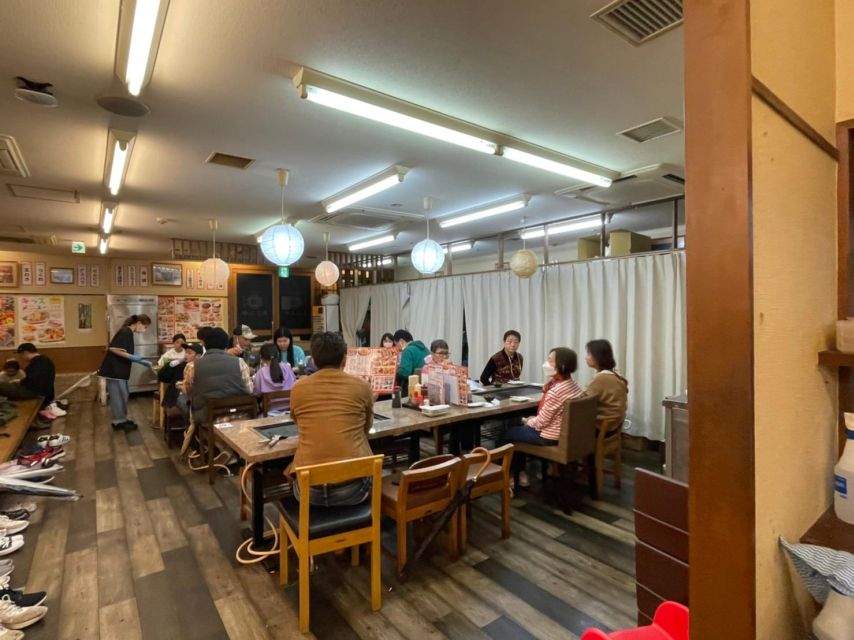
The tour then settles in at a local okonomiyaki restaurant in the Dotonbori area. One portion is included, along with another drink. The exact cooking arrangement can vary, but several experiences specifically highlight cooking the okonomiyaki at the table.
That hands-on part is a real advantage. Okonomiyaki is often translated as Japanese savory pancake, but the experience is more social than that description suggests. You watch the dish come together, learn how it is handled, and eat it fresh rather than receiving a finished plate with no explanation.
The dish is filling, so do not treat this stop as a minor sample. One family group was surprised by how substantial the food was, even with a strong eater at the table. That is useful advice for planning the day: a very large lunch shortly before this tour may leave you struggling by the end.
The guide’s role matters here. A good guide can explain what you are eating, help with the cooking process, and keep the table conversation moving. Tea was praised for explaining transport and suggesting nearby restaurants, while Alice was remembered for her warmth and knowledge of local food and customs. Those small touches can turn a standard meal into a more relaxed evening.
More Food Tours in Japan:
- Tokyo: Shinjuku Food Tour (13 Dishes at 4 Local Eateries)
★ 5.0 · 6,603 reviews - Tokyo: Shinjuku Food Tour (15 Dishes and 4 Eateries)
★ 4.9 · 2,033 reviews - Best of Shinjuku: Izakaya Food Tour (4 Stops, 14+ Tastings)
★ 5.0 · 1,863 reviews - Kyoto Night Foodie Tour in Gion (9+ dishes + 6 Sake tastings)
★ 5.0 · 1,762 reviews
Takoyaki under the Dotonbori lights
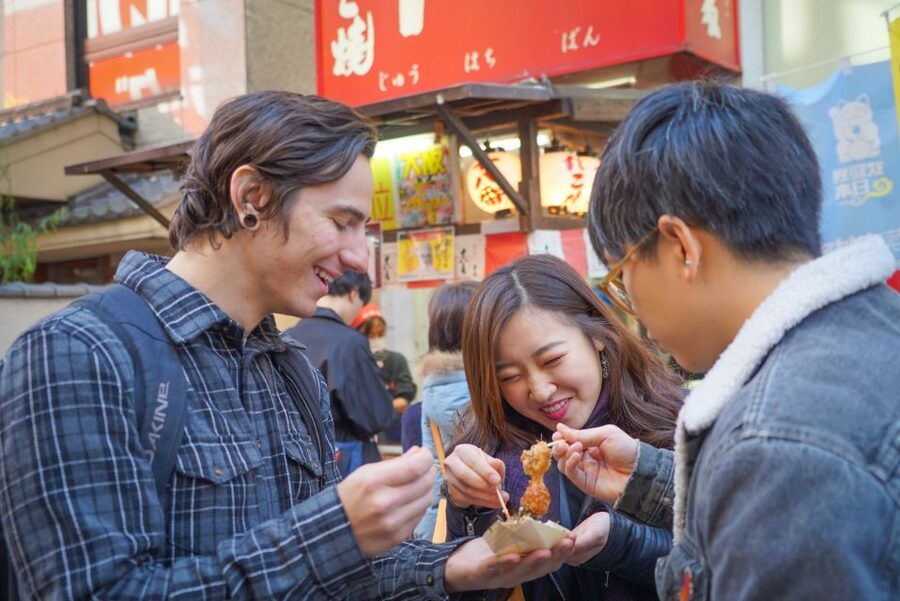
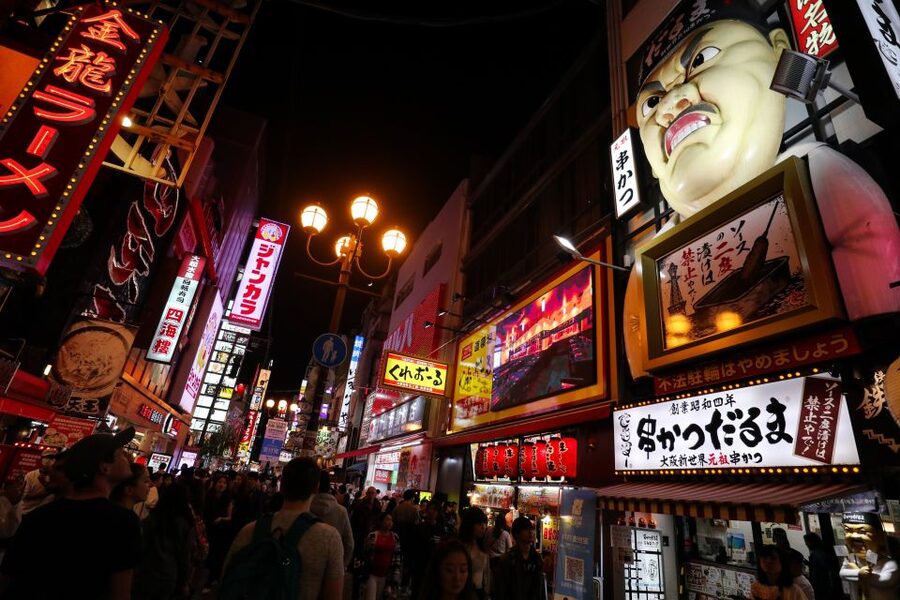
The final food stop brings you to takoyaki, another Osaka staple. You receive one box, along with the last included drink. These round octopus-filled pieces are hot, soft inside, and often covered with sauce and other toppings.
Takoyaki is closely linked with Dotonbori’s food identity, and eating it here completes the district-to-district story. Shinsekai gives you kushikatsu in a retro neighborhood. Dotonbori provides the louder, brighter setting for okonomiyaki and takoyaki.
Dotonbori has long been tied to Osaka’s role as a merchant city and to its Edo-period importance in the rice trade. That background explains the nickname the nation’s kitchen. Today, the canal-side area is packed with restaurant signs, shopping streets, and food counters. Your guide helps you move through that intensity without having to decide where to turn at every corner.
The tour is particularly useful after dark. Dotonbori can be confusing when you first arrive, with many similar-looking lanes and an overload of signs. A local guide can lead you to recommended spots and point out places to return to later. Taku, Yuma, Michael, and Jimmy were all praised for giving food suggestions beyond the scheduled stops.
What the $108 price really covers
At $108 per person, this is not the cheapest way to eat three Osaka dishes. You are paying for more than the food itself, though. The fee covers six kushikatsu pieces, one okonomiyaki, one box of takoyaki, three drinks, an English-speaking guide, and three hours of guided movement through two major districts.
The value is strongest if you want help with the city’s food culture. You receive several Osaka specialties in one outing, avoid the stress of picking restaurants, and get a local explanation of what you are eating. You also gain a useful first-night orientation, with guides sharing restaurant suggestions and helping people understand the transport system.
The value is weaker if you already know Dotonbori and Shinsekai well, prefer to choose every restaurant yourself, or eat only small portions. Additional food and drinks cost extra, and the ¥190 transfer between districts is separate.
For many people, the best use of this tour is early in an Osaka stay. You can use the guide’s recommendations later, return to a favorite area, and order dishes with more confidence. Several people found the mix of walking, sitting, eating, and learning especially well suited to a first evening.
Group size, guides, and the overall feel
Private and small-group options are available. The group can sometimes be as small as a family or individual booking, while one experience had seven people. A small group makes a difference in crowded food districts because it is easier to hear the guide, ask questions, and stay together.
The guides are one of the experience’s most praised features. Taku was described as attentive and good with children. Yuma was praised for explaining local dishes and making the evening fun. Alice received strong praise for her hospitality, while Peco led people through less touristy places, temples, and even a supermarket.
The English level is described positively throughout the feedback, but guide style will naturally vary. Some guides focus more on food, some on transport and history, and some on conversation. If you receive a private or very small group, you may get more room to shape the discussion around your interests.
This is a social tour, not a formal lecture. You will walk through busy areas, stop to eat, and talk with the guide and other people in the group. It suits teenagers and families, and it can work for people who are interested in food as well as those who mainly want a better introduction to Osaka.
Who should book this Osaka food tour?
I would recommend it to first-time visitors who want a gentle introduction to Osaka’s best-known food districts. It is also a strong choice for anyone nervous about ordering unfamiliar dishes, navigating crowded streets, or understanding local restaurant customs.
Food fans will appreciate the range, but you do not need to be an expert eater. The meal is substantial enough for most appetites, and the guide explains the dishes as you go. Families may like the variety and the informal mood, while solo visitors can benefit from the company of a small group.
You should think twice if you are vegan, gluten-free, or have serious allergies. Vegetarians may be accommodated only with advance notice, and the dashi issue is important. You should also avoid booking it after a large meal, since the included food is plentiful.
Wear comfortable shoes and arrive early at the FamilyMart meeting point. You will be walking through streets and alleys, riding between Shinsekai and Dotonbori, and eating several filling dishes. Do not arrive at the last minute, since late arrivals cannot join.
Should you book it?
Book this tour if you want Osaka explained through its food, not just photographed from the canal. The route gives you kushikatsu in Shinsekai, a quiet temple, a historic-style alley, tabletop okonomiyaki, and takoyaki in Dotonbori. That is a lot to fit into three hours, but the mix keeps the evening moving.
Skip it if you need strict dietary control or prefer independent restaurant hunting. For everyone else, the strongest reason to book is the combination of local guidance and a very full meal. You get a practical introduction to two Osaka districts, several classic dishes, and useful ideas for where to eat next.
FAQ
How long does the Osaka food tour last?
The tour lasts three hours.
Where does the tour meet?
It meets in front of FamilyMart Sanno Dobutsuen-mae, right outside Exit 1 of Dobutsuen-mae Station.
How will I recognize the guide?
The guide will be holding a sign saying MagicalTrip.
What food is included?
The tour includes six pieces of kushikatsu, one piece of okonomiyaki, one box of takoyaki, and three drinks.
Are alcoholic and non-alcoholic drinks available?
Yes. The included drinks can be alcoholic or non-alcoholic.
Is transportation between Shinsekai and Dotonbori included?
No. The transportation fee is separate and is listed as ¥190.
Can vegetarians join the tour?
Vegetarians may join if they select the vegetarian option when booking or request it at least one day in advance. Vegetarian kushikatsu still uses dashi made with pork broth, so you must mention this restriction ahead of time.
Can vegans or people with gluten intolerance join?
The tour cannot accommodate vegans or people with gluten intolerance.
What happens if I arrive late?
The tour starts on time. If you arrive late and miss the group, you cannot join, receive a refund, or reschedule.
Just added in Japan
- A One-of-a-Kind Sushi Experience in a Special Place of Japan★ 5.0 · 15 reviews
- Tokyo Cute Bento Cooking Class – Make a Kawaii Character Lunchbox★ 5.0 · 126 reviews
- Japanese Home Cooking Class & Walk in Todoroki Temple Tokyo★ 5.0 · 88 reviews
- Japan Tokyo Tower Observatory Deck E-Ticket★ 4.0 · 34 reviews
- Catch a Baseball Game in Tokyo with a Local – Tickets Included★ 5.0 · 24 reviews
- JDM Experience with Fast&Furious RX-7 (English speaking Driver)★ 5.0 · 57 reviews
- Tokyo Private Day Tour by Car with English speaking Driver Guide★ 4.0 · 29 reviews
- Japan Classic 10 Day – One Life Adventures★ 5.0 · 129 reviews
Food Tours, compared.
Shinjuku Food Tour (13 Dishes at 4 Local Eateries)
Read our review →
Shinsekai Food Tour with 13-15 Dishes at 5 Eateries
Read our review →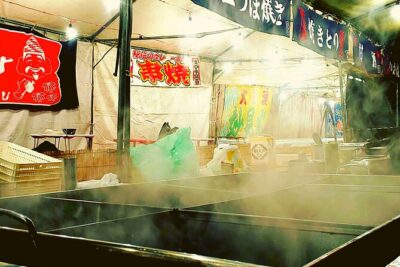
Osaka Food Tour: 13 Dishes at 5 Local Eateries
Read our review →
Shinjuku Food Tour (15 Dishes and 4 Eateries)
Read our review →
Best of Shinjuku: Izakaya Food Tour (4 Stops, 14+ Tastings)
Read our review →
Kyoto Night Foodie Tour in Gion (9+ dishes + 6 Sake tastings)
Read our review →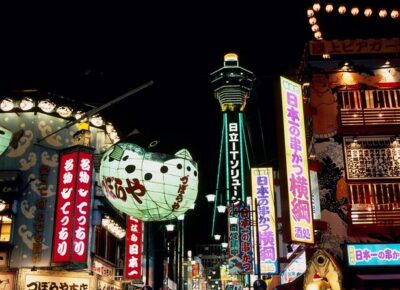
Hungry Osaka Street Food Tour:15 Tastings & 3 Drinks with a Local
Read our review →
Tokyo Night Foodie Tour in Shinjuku – Seasonal Sushi, Wagyu Beef
Read our review →Browse the lists this tour appears in