Reviewed · OSAKA TOURS
Osaka: Private Japanese Calligraphy Experience
Brushes turn names into art. This private 90-minute Japanese calligraphy class in Namba gives you a calm, personal way to connect with Japanese culture. I especially like the custom kanji based on your personality and the chance to take home finished artwork. The instructor, Wa No Ma, is praised for patient guidance and clear English.
I also like the flexible private format. You can ask for extra photos, slow the pace for children, or adjust the session to suit your group. The main consideration is practical: you need to remove your shoes and wear socks, and the studio is not suitable for wheelchair users.
In This Review
- Key points to know before you book
- Why this Osaka calligraphy class is worth your time
- Finding the studio in central Namba
- Choosing a theme and finding your kanji
- Learning the brush movements before the final artwork
- Selecting colored paper for a personal keepsake
- Why families and couples fit this class well
- The instructor makes the biggest difference
- How the 90 minutes usually unfold
- What the $51 price really includes
- Small drawbacks to consider before booking
- Who should book this experience
- Should you book this Osaka calligraphy class?
- FAQ
- Where does the Osaka calligraphy experience meet?
- How early does the instructor arrive?
- How long does the calligraphy class last?
- Is the experience private?
- What languages does the instructor speak?
- What does the class price include?
- Do I need to bring anything?
- Can children take part?
- Is a tea ceremony included?
Key points to know before you book
- Your name becomes a custom kanji design: The instructor suggests Japanese characters that reflect your personality and preferred meaning.
- Private groups keep the class calm: You get close attention instead of sharing the room with a large class.
- You practice before making the final piece: The lesson covers basic brush movements before you choose paper and create your artwork.
- Children can use water calligraphy: This option helps prevent ink from getting on hands and clothes.
- The studio is easy to reach in Namba: It is about a 30-second walk west from the entrance of New Osaka Hotel Shinsaibashi.
- The finished artwork makes a useful souvenir: You leave with a personal piece rather than a shop-bought trinket.
Why this Osaka calligraphy class is worth your time
Osaka offers plenty of food, shopping, neon, and noise. A calligraphy lesson gives you a different side of the city. For 90 minutes, you slow down, pay attention to each brush movement, and learn why a Japanese character is more than a simple translation.
The $51 price per person is fair because this is a private class with an instructor, materials, and all fees included. You are not paying only for a short demonstration. You receive personal help, time to practice, colored paper for the final work, and a souvenir you make yourself.
That private setup matters most for couples and families. If your child needs extra time, you can ask the instructor to slow down. If you want photographs while you work, you can request plenty of them. A shared class often has to keep one pace for everyone. Here, the session can respond to your group.
The class has earned a perfect rating from 66 bookings, and the praise is remarkably consistent. The strongest point is the instructor’s manner. People repeatedly describe Wa No Ma as kind, patient, encouraging, and easy to understand. That combination is important because calligraphy looks simple until your hand tries to control the brush.
A few more options to weigh up in Japan
- Universal Studios Japan Studio Pass
★ 4.8 · 89,883 reviews - Universal Studios Japan Express Pass
★ 4.7 · 53,138 reviews - Osaka Amazing Pass
★ 4.7 · 21,697 reviews
Finding the studio in central Namba
The meeting point is outside the main entrance of New Osaka Hotel Shinsaibashi. Walk west for about 30 seconds, and look for a blue vending machine near the entrance.
The instructor waits outside five minutes before your scheduled time and wears a kimono, making the meeting fairly easy. The location is also close to Shinsaibashi-suji shopping street, so you can pair the class with shopping, lunch, or an evening walk around Namba.
Give yourself enough time to find the hotel. The short final walk is simple, but Osaka’s streets and station exits can be confusing if you are rushing. I would arrive in the Shinsaibashi area early, then use the extra minutes to get oriented.
You will remove your shoes, so bring socks. Smoking is not allowed. The activity is not suitable for wheelchair users, which is an important limitation to check before booking.
Choosing a theme and finding your kanji
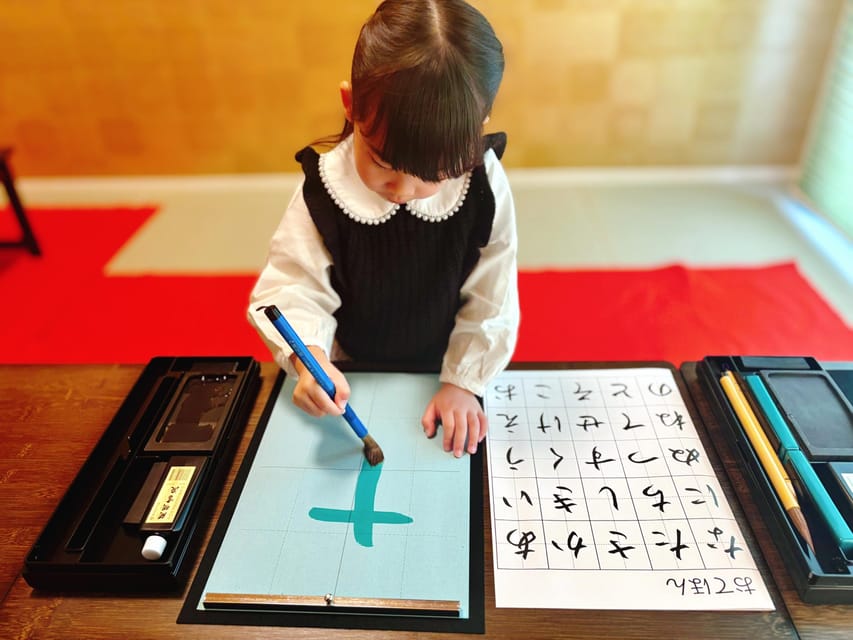
The lesson begins with a conversation about what you want to write. You can choose a favorite letter, word, or idea, and the instructor can suggest kanji that express it.
This part gives the class a personal purpose. You are not simply copying a character selected for every participant. Your word may connect with happiness, strength, connection, family, or another quality that matters to you. The instructor also converts your name into Japanese characters based on your personality.
Keep in mind that this is not always a direct letter-for-letter translation. Japanese writing systems and kanji meanings work differently from the Roman alphabet. Your name is treated as a creative character design with meaning, rather than a simple spelling exercise.
That explanation is one of the most valuable parts of the session. You get a little context about Japanese writing before picking up the brush, and you can ask questions in English or Japanese. The instructor has been praised for explaining the meaning behind individual strokes and for discussing the background of calligraphy in clear English.
Learning the brush movements before the final artwork
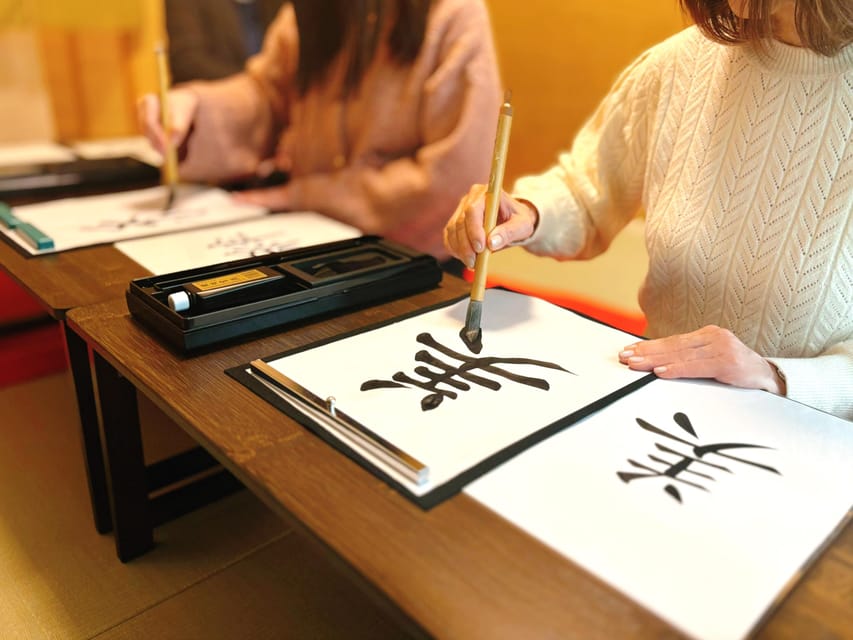
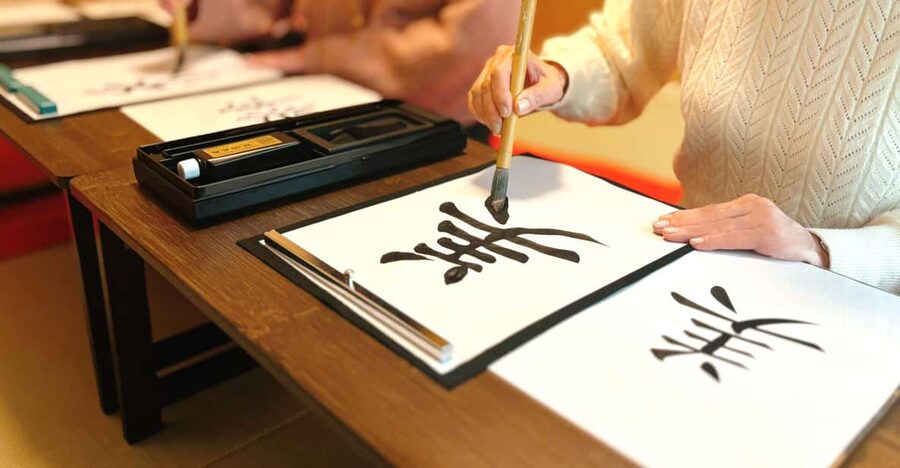
After choosing your theme, you receive an introduction to basic calligraphy practice. You learn how to hold and guide the brush, then work on the movements needed to form the characters.
Do not expect instant perfection. One participant warned that your hand may shake, while another noted that calligraphy is harder than it looks. That is part of the appeal. The exercise asks you to control pressure, direction, and speed at the same time.
The instructor watches your work and gives corrections as you practice. If a stroke feels awkward, you can receive hands-on guidance. If you are already comfortable with brushwork, you can ask questions about technique or culture rather than simply repeating the basics.
I like that the lesson gives you a chance to make mistakes on practice paper. Your final sheet comes after instruction and rehearsal, so it feels like a finished piece, not a rushed first attempt.
The class can also feel meditative. One participant described learning to breathe and move with the brush. You should not expect a formal meditation session, but the quiet concentration can be a welcome change after a day among Osaka’s shops and busy streets.
A completely different kind of day out:
- Tokyo Disney Resort – Tokyo Disneyland & Tokyo DisneySea Park Tickets
★ 4.8 · 99,488 reviews - SHIBUYA SKY Ticket
★ 4.7 · 46,509 reviews - Mt. Fuji Instagram-Worthy Spots Day Tour: Ladder Town, Oshino Hakkai, Lake Kawaguchi, Lawson Convenience Store (Departing from Tokyo Station or Shinjuku Station)
★ 4.8 · 35,467 reviews - JR Whole Japan Rail Pass
★ 4.8 · 29,150 reviews
Selecting colored paper for a personal keepsake
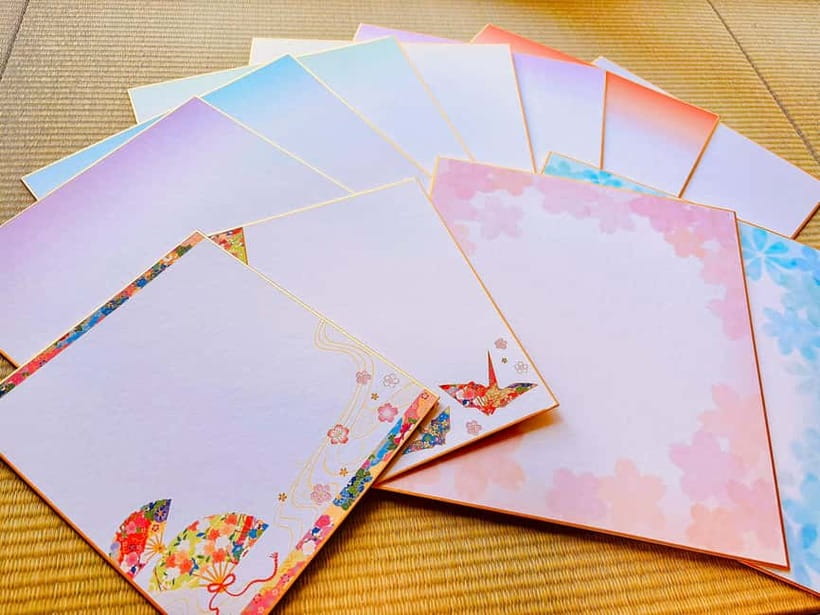
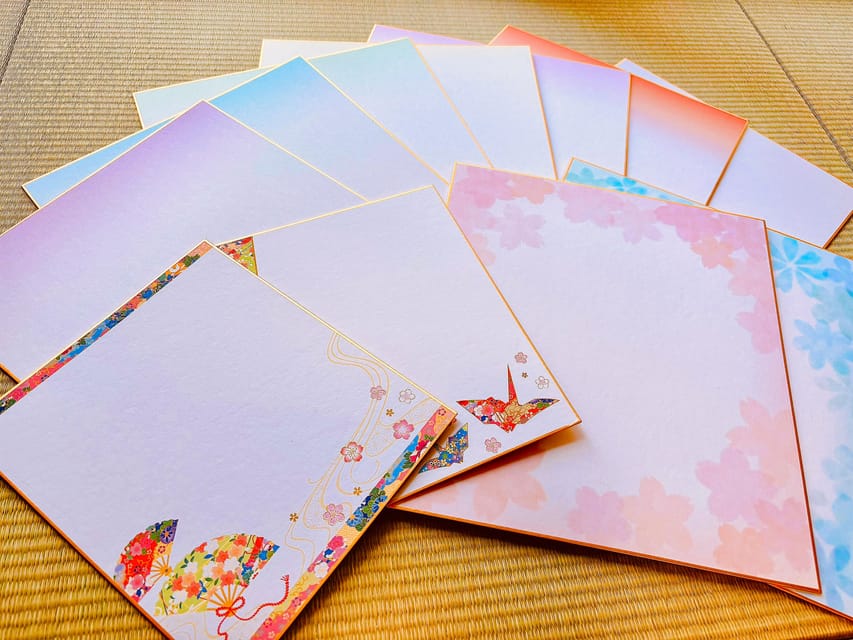
Once you have practiced, you choose a favorite piece of colored paper from several options. This small choice helps your work feel like your own. The paper becomes part of the presentation, not just a surface for ink.
You then print your chosen kanji. The instructor guides you through the process, but the goal is for you to create the work yourself. That balance is important. You receive help when needed, yet the finished artwork still carries your own brush marks.
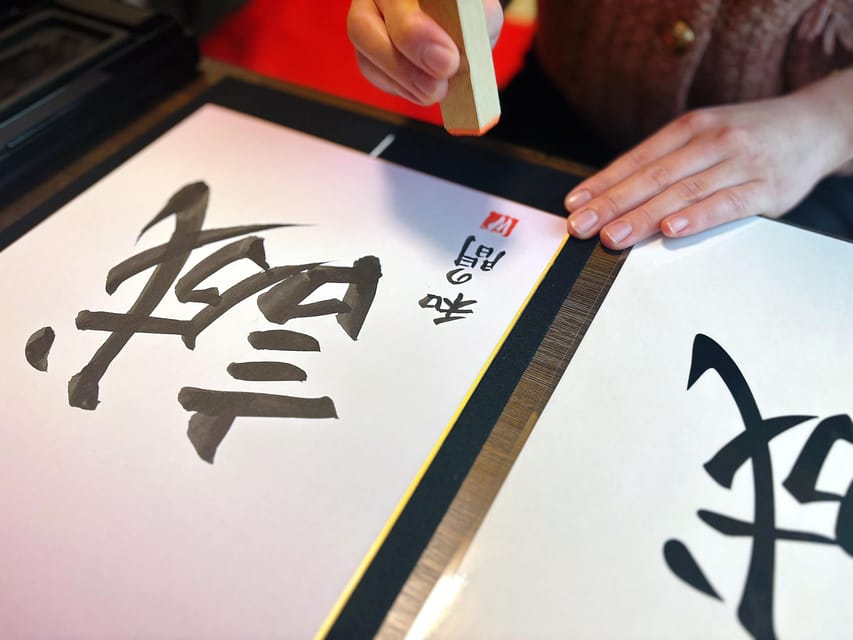
The final design includes your name in Japanese characters. You also add a stamp with your initials, giving the work a traditional finishing touch. You leave with an original piece of artwork that can remind you of Osaka long after the trip.
The supplied colored paper is included in the price, along with all fees and taxes. You do not need to budget for a separate materials charge.
Why families and couples fit this class well
This activity suits couples who want a shared souvenir with more meaning than a standard purchase. You can choose different themes, compare your brushwork, and leave with two personal pieces.
Families also seem well matched to the format. Children aged seven and ten were reported to have enjoyed the class, and a 13-year-old described it as a favorite part of a Japan trip. The private arrangement lets the instructor respond to different ages and abilities.
Young children can use water calligraphy. This method helps avoid dirty hands and clothing, which makes the class less stressful for parents. You should still bring socks and expect children to need patience while learning the basic movements.
The activity is not designed as a loud, fast entertainment stop. It rewards careful attention. If your family wants a hands-on cultural activity and can sit quietly for periods of time, it is a strong choice. If your children need constant movement, the 90-minute lesson may feel long.
The instructor makes the biggest difference
The most praised part of this experience is the teaching. Wa No Ma is described as warm, professional, patient, and encouraging. Those qualities matter more here than fancy equipment or a large studio.
The instructor answers questions, explains the strokes, offers corrections, and shares cultural information. Several people highlighted the friendly atmosphere, while others appreciated the personal attention given to children and less confident participants.
English and Japanese are available. You do not need to arrive with Japanese language skills. Still, learning a simple greeting or thanking the instructor in Japanese would be a thoughtful touch.
The private format also allows the instructor to take photographs during your final work. You can request lots of photos while you create the kanji. This is useful if you want a record of the process, not only a picture of the finished sheet.
How the 90 minutes usually unfold
The schedule can be adjusted to your requests, but the usual order is clear:
- You meet the instructor outside the hotel and walk to the studio.
- You discuss the word, letter, or theme you want to write.
- The instructor suggests suitable kanji and explains their meaning.
- You learn the basic calligraphy practices and brush movements.
- You practice the characters and receive corrections.
- You choose colored paper for the final piece.
- You write your selected kanji and your name in Japanese characters.
- You add your initials with a stamp and finish the artwork.
This sequence gives the session a satisfying beginning, middle, and end. You start with an idea, learn the skills needed to express it, and finish with something tangible.
The timetable is not rigid. You can ask the instructor to proceed more slowly, particularly if you are attending with children. You can also request photography during the activity. It is worth stating these preferences at the start so the instructor can plan the pace.
What the $51 price really includes
At $51 per person, the class is not the cheapest cultural activity in Osaka. The value comes from the private instruction rather than the length alone.
Your fee includes all taxes and fees, colored paper, and the instructor. You also receive the use of the studio and a personalized activity centered on your own name or chosen theme. For a private booking of two people, this compares well with many short craft workshops that offer less individual attention.
The artwork has practical value as a souvenir. You made it, selected its meaning, chose its paper, and added your initials. That gives it a personal connection that a mass-produced souvenir cannot match.
Tea ceremony is not included. If you want both activities, you need to reserve the separate private tea ceremony and calligraphy plan. This is worth noting if you are trying to combine several Japanese cultural activities into one booking.
Small drawbacks to consider before booking
The class is not wheelchair accessible, so check the physical setup before reserving. The requirement to wear socks may also catch some people by surprise, though it is easy to manage.
Calligraphy can be more demanding than expected. Your first strokes may wobble, and your final work may not look like the instructor’s example. The teacher’s guidance helps, but this is a hands-on class, not a service where someone creates a perfect piece for you.
The meeting point is central and convenient, but you still need to follow the directions carefully. Look for the blue vending machine and the instructor in a kimono outside the hotel. Arriving five minutes early is sensible.
Finally, this is a focused 90-minute activity. You will not cover every Japanese writing system or receive a full academic course on calligraphy. You will get a friendly introduction, practice the essentials, and create a personal work of art.
Who should book this experience
I would recommend it to couples, families, and small private groups who want a quieter cultural activity in Osaka. It is especially good for people who enjoy making something with their hands and want a souvenir connected to a personal story.
It also suits first-time visitors who find large cultural attractions tiring. You learn about Japanese writing without needing a full day or complicated transport. The Namba location makes it easy to add before or after shopping in Shinsaibashi.
You may want to skip it if you dislike seated craft activities, have strict wheelchair access needs, or want a formal tea ceremony included. You should also accept that your calligraphy will look like your calligraphy. The charm is in the attempt, not professional perfection.
Should you book this Osaka calligraphy class?
Yes, if you want a personal, well-guided introduction to Japanese culture. The private format, patient instruction, custom kanji, child-friendly water calligraphy, and finished artwork make the $51 price reasonable.
I would book it early if you have a tight Osaka schedule, then request any special needs at the time of booking. Bring socks, arrive at the hotel entrance a few minutes early, and decide in advance what quality, word, or name you might like to express.
For a calm break from Namba’s shopping streets, this is a thoughtful choice. You leave with more than a souvenir. You leave with a small piece of Japanese writing that carries your own meaning.
FAQ
Where does the Osaka calligraphy experience meet?
Meet outside the main entrance of New Osaka Hotel Shinsaibashi. Walk west for about 30 seconds and look for a blue vending machine near the entrance.
How early does the instructor arrive?
The instructor waits outside the building, in front of the main entrance, five minutes before the scheduled booking time. The instructor wears a kimono.
How long does the calligraphy class last?
The standard duration is 90 minutes. Starting times depend on availability, and the schedule can be adjusted according to your request.
Is the experience private?
Yes. The booking is for a private group, and the instructor closely attends all participants in your group.
What languages does the instructor speak?
Instruction is available in English and Japanese.
What does the class price include?
The price includes all fees and taxes, colored paper for your calligraphy artwork, and the instructor.
Do I need to bring anything?
You need to bring socks because shoes are removed for the activity.
Can children take part?
Yes. The activity can be adjusted to suit children, and water calligraphy is available for young children to help prevent ink from getting on their hands and clothes.
Is a tea ceremony included?
No. Tea ceremony is not included in this plan. A separate private tea ceremony and calligraphy experience is available if you want both activities.
Just added in Japan
- Manga Lesson with a Professional Japanese Manga Artist in Nakano★ 5.0 · 77 reviews
- Making a bento box with cute character look in Japan★ 5.0 · 15 reviews
- Tokyo/Ikebukuro Manga drawing workshop by pro-Manga artists★ 5.0 · 65 reviews
- Luxury Tokyo Sake, Cocktail, Whisky and Pairing Tour★ 5.0 · 18 reviews
- Tokyo Ueno Food & Nature & Localtown Tour: 10Dishes+ Drinks★ 5.0 · 34 reviews
- Make Your Own Bonsai with a Professional Bonsai Artist in Tokyo★ 4.5 · 18 reviews
- Make Traditional Nerikiri Sweets & Matcha experience in Shibuya★ 5.0 · 130 reviews
- Daikoku Parking Tokyo Drift & APIT Car Meet JDM Culture Tour★ 5.0 · 79 reviews
Osaka Tours, compared.



Umeda Sky Building & Kuchu Teien Observatory Ticket in Osaka
Read our review →