Reviewed · OSAKA TOURS
Osaka Sushi Miso soup Adventure: A Journey of Exotic Flavors
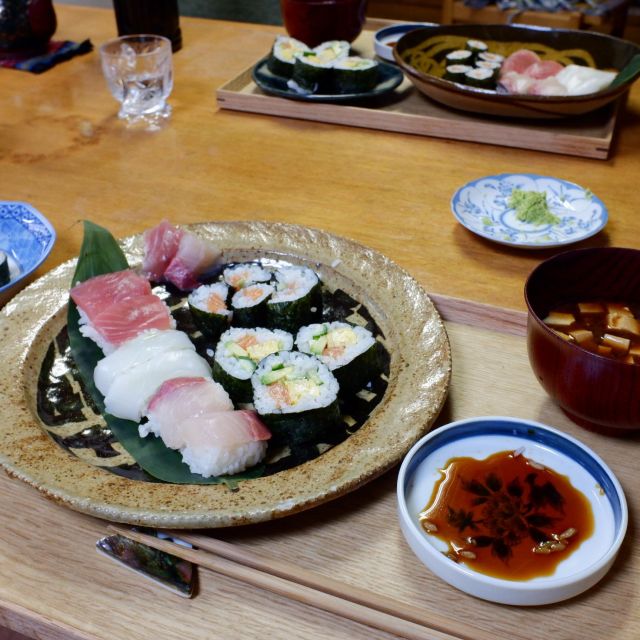
Sushi tastes better when you make it. This three-hour Osaka cooking class with Chef Yuki combines hands-on sushi making, miso soup, and practical Japanese cooking skills in a small group of no more than six people. You prepare several dishes yourself, then sit down to eat what you made.
I like the personal teaching style and the useful methods, especially tuna zuke and kombu-jime salmon. These are not just showy dishes for one afternoon. The marinades can help keep fish fresh for three or four days, which makes homemade sushi more realistic once you return home. The main point to consider is location: you’ll need about 30 minutes on the Kintetsu Nara Line from Namba, followed by a short walk in Nukata.
In This Review
- Key points at a glance
- What happens during the three-hour class
- Getting from Namba to Nukata
- Starting with sushi rice and Japanese basics
- Tuna zuke and kombu-jime salmon
- Making Nigiri by hand
- Rolling Hosomaki without losing the filling
- Tamagoyaki and the square-pan challenge
- Finishing with homemade miso soup
- Chef Yuki’s teaching style
- Is $96 per person good value?
- Who should book this Osaka cooking class?
- Should you book it?
- FAQ
- How long does the sushi and miso soup class last?
- How much does the class cost?
- Where does the class meet?
- How do I reach the class from Namba?
- What language is the class taught in?
- What sushi and Japanese dishes will I make?
Key points at a glance
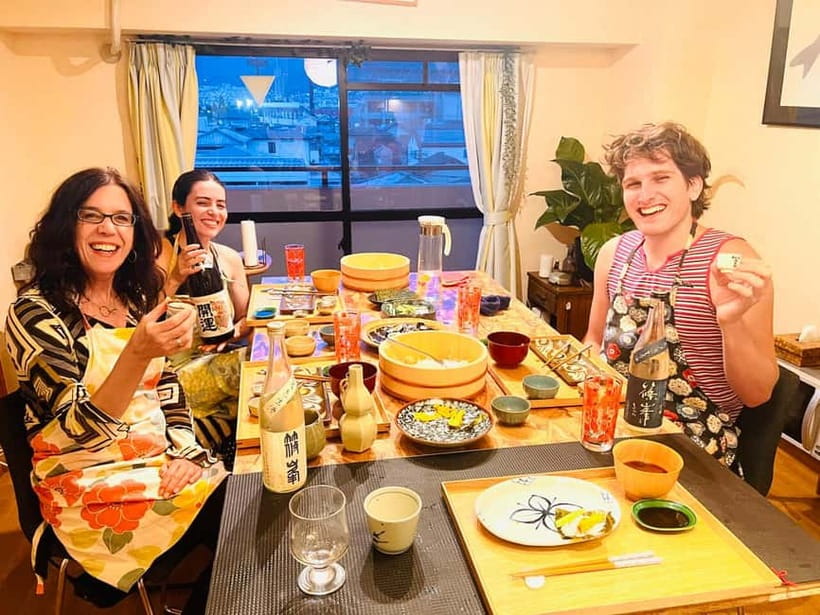
- Small class of six or fewer: You get direct help from Chef Yuki instead of watching from the back of a crowded room.
- Three styles of sushi: Prepare Nigiri, Hosomaki, and marinated or cured fish toppings by hand.
- Traditional foundations: Learn sushi rice, dashi broth, wasabi paste, miso soup, and tamagoyaki.
- Useful home cooking skills: Tuna zuke and kombu-jime salmon can help you work with fish when very fresh seafood is not available.
- Personal Osaka setting: The class takes place near Nukata Station, with local cooking advice and everyday insight from Yuki.
- Strong value for a half-day activity: At $96 per person, the price includes ingredients, seasonings, instruction, and a meal you prepare yourself.
What happens during the three-hour class
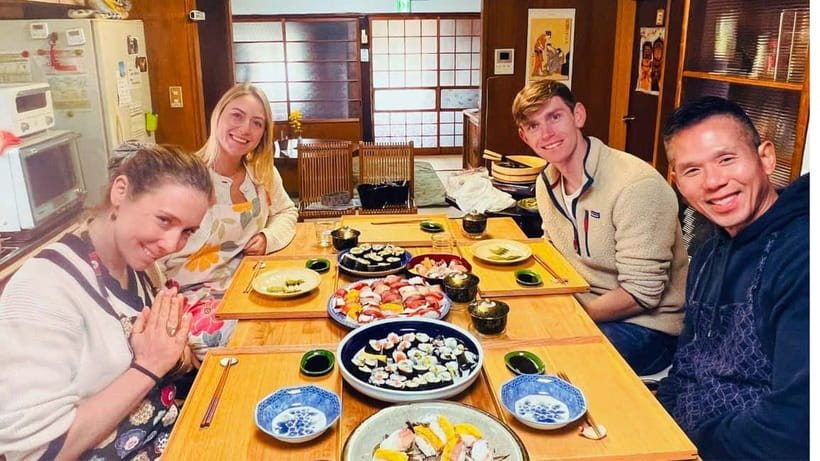
The class begins at Chef Yuki’s cooking space at 4-19 Nukata-cho, near Nukata Station. The meeting point is a white building about five minutes from the station. You should arrive 10 minutes early, since the class moves through several preparations and you won’t want to begin in a rush.
The setting is personal rather than theatrical. Past participants describe being welcomed into Yuki’s home or apartment, where the group can ask questions freely. That matters here. Sushi has many small steps, and a quiet room makes it easier to watch the rice, handle the fish, and get help with a roll before it turns into a loose cylinder.
Yuki has more than a decade of cooking experience and trained under a sushi master with over 40 years in the craft. Her teaching is aimed at ordinary cooks, not only people with restaurant ambitions. You’ll get clear instruction in English and plenty of chances to work with your own hands.
The class usually builds from basic ingredients toward finished dishes. You learn how the rice should be prepared, how the broth begins, and how each sushi style uses a different balance of rice, fish, egg, or seaweed. At the end, you eat the food together.
A few more options to weigh up in Japan
- Universal Studios Japan Studio Pass
★ 4.8 · 89,883 reviews - Universal Studios Japan Express Pass
★ 4.7 · 53,138 reviews - Osaka Amazing Pass
★ 4.7 · 21,697 reviews
Getting from Namba to Nukata
From Osaka Namba Station, take the Kintetsu Nara Line toward Kintetsu Nara. Nukata is about 30 minutes away, and the fare is listed as ¥430. From the station, walk roughly five minutes northeast along Route 308 to 4-19 Nukata-cho.
The transport is simple, but the class is not in central Namba or near Osaka’s best-known food streets. I would allow extra time for finding the right building, particularly if you are unfamiliar with Japanese addresses. The white building near Nukata Station is the key visual clue.
Some arrangements have included meeting participants near a convenience store by the station and walking together to the class. Since the directions refer to both a FamilyMart and a 7-Eleven in different experiences, confirm the exact meeting instruction before you leave Namba.
This short train ride is part of the trade-off. You spend time getting out of the center, but you also leave the busiest tourist circuit behind. If you have already spent the day around Dotonbori and Osaka Castle, the quieter setting can feel like a welcome change.
Starting with sushi rice and Japanese basics
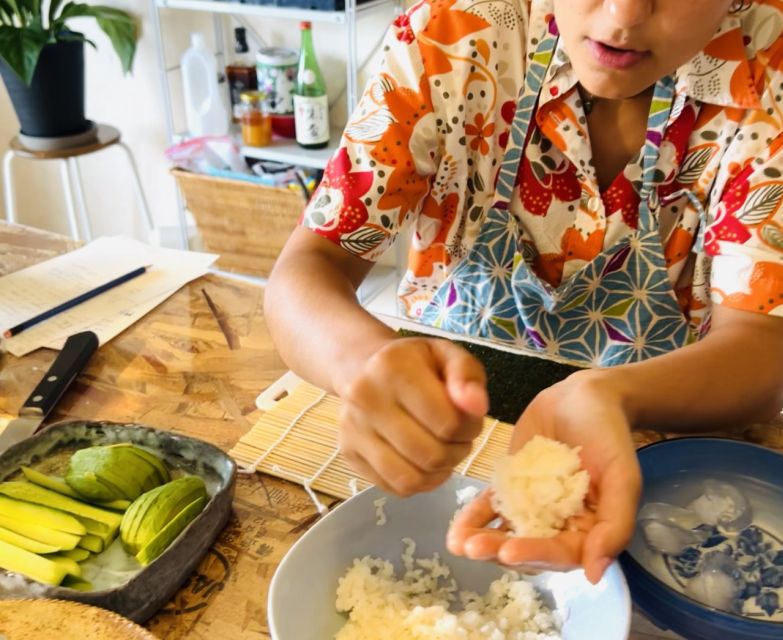
Good sushi begins with rice, and this class gives that foundation proper attention. You learn how to select and prepare the rice, season it correctly, and treat it in a traditional pot. That may sound basic, but it is one of the most useful parts of the lesson.
Rice that is too wet, too dry, too warm, or poorly seasoned can spoil an otherwise good piece of fish. Yuki shows how the texture should feel and how it should support the topping without becoming a heavy block.
You also work with dashi broth and miso soup. Dashi provides the savory base found in many Japanese dishes, while miso adds body and a salty, fermented flavor. The point is not simply to follow a recipe. You begin to understand why Japanese cooking often depends on a few carefully handled ingredients rather than a long list of spices.
The preparation may also include making wasabi paste and learning more about traditional seasonings. These small details help connect the sushi to the wider Japanese meal, rather than treating it as only fish and rice.
Tuna zuke and kombu-jime salmon
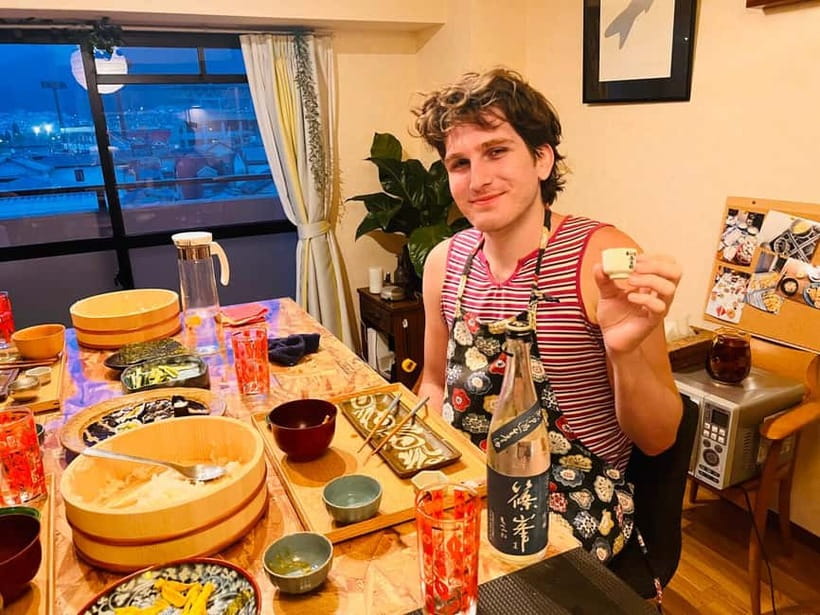
The most practical part of the class is the work with marinated tuna and kelp-cured salmon. Tuna zuke uses a traditional soy-based marinade to add flavor to the fish. Kombu-jime salmon uses kelp to season and cure the salmon while helping it stay fresh for three to four days.
These methods have a clear benefit for home cooks. You may not have access to the same fish market found in Osaka or Tokyo, and you may not plan to eat sushi immediately after buying seafood. Marinating or curing gives you a little more flexibility while adding depth to the topping.
The technique also teaches restraint. The fish should still taste like fish, not like a sauce. Yuki’s guidance helps you see how Japanese cooking uses time, salt, soy, and kelp to change texture and flavor without covering the main ingredient.
I especially like that these recipes fit daily life. A cooking class can be fun and still leave you with skills that never get used. Here, the fish preparation has a reason beyond presentation. You can use it for a sushi meal at home, provided you follow appropriate food safety practices and use ingredients suitable for raw or cured preparation.
A completely different kind of day out:
- Tokyo Disney Resort – Tokyo Disneyland & Tokyo DisneySea Park Tickets
★ 4.8 · 99,488 reviews - SHIBUYA SKY Ticket
★ 4.7 · 46,509 reviews - Mt. Fuji Instagram-Worthy Spots Day Tour: Ladder Town, Oshino Hakkai, Lake Kawaguchi, Lawson Convenience Store (Departing from Tokyo Station or Shinjuku Station)
★ 4.8 · 35,467 reviews - JR Whole Japan Rail Pass
★ 4.8 · 29,150 reviews
Making Nigiri by hand
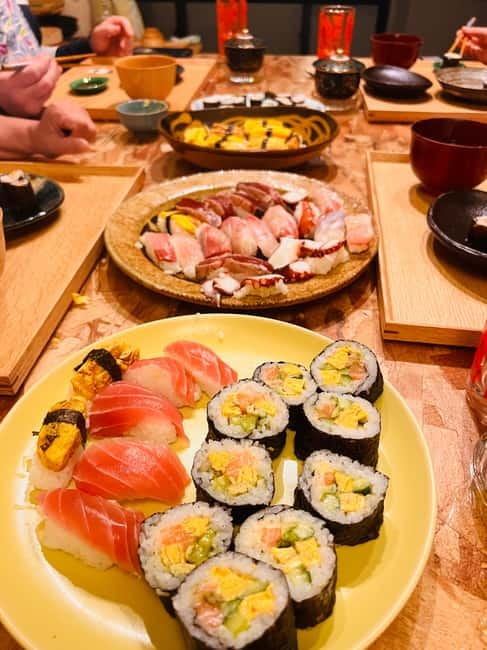
Nigiri is the sushi style many people picture first: a small mound of seasoned rice topped with fish. It looks simple, but shaping the rice takes a light touch.
Press too hard and the rice becomes dense. Use too little pressure and it falls apart before it reaches your mouth. Yuki guides you through the balance between structure and delicacy, then helps you place the fish neatly on top.
This is one of the moments where a small class makes a real difference. With only a few participants, you can ask for help with the size, shape, and handling of each piece. The class is suitable for beginners, but people who already make sushi can still pick up better rice habits and more traditional preparation methods.
You are not simply assembling food from prepared parts. You take part in the steps that give Nigiri its character. That makes the final meal more satisfying, even if your first pieces look less tidy than the chef’s.
Rolling Hosomaki without losing the filling
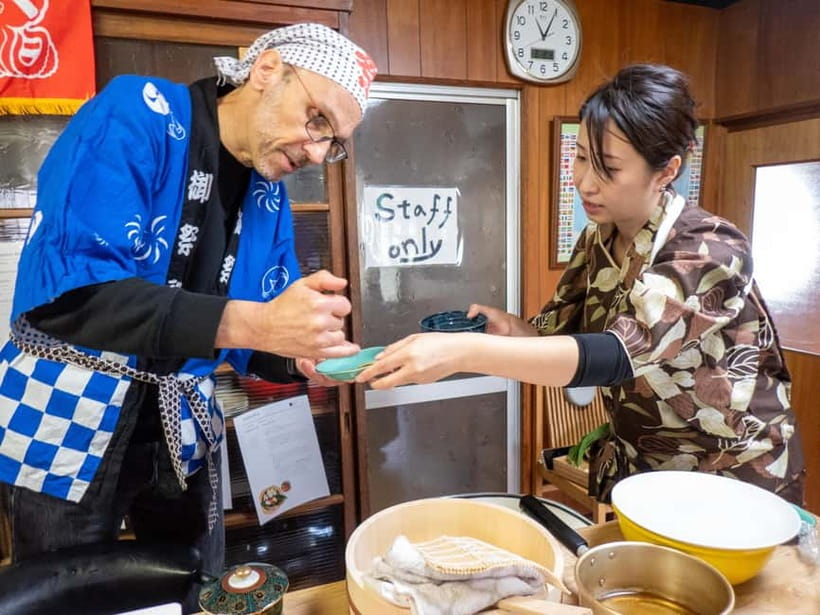
Hosomaki are thin rolls, often built around a single main ingredient. They require control because there is less rice and less room to hide mistakes.
You learn how to spread the rice, position the filling, and roll the seaweed into a firm cylinder. The challenge is to use enough pressure to hold everything together without crushing the rice or pushing the filling out the sides.
Hosomaki are also a good format to practice at home. The ingredients are straightforward, the pieces are easy to share, and the method does not require the same precision as restaurant-style decorative sushi. You leave with a technique that works well for a small dinner or a sushi night with friends.
The class does not promise instant perfection, and that is part of its appeal. You learn by doing, then eat the results together rather than being judged on appearance.
Tamagoyaki and the square-pan challenge
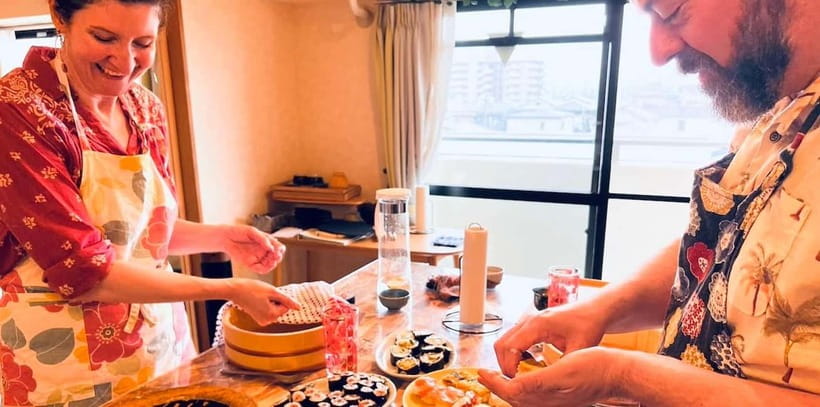
Tamagoyaki is the Japanese rolled omelet often served with sushi. It has a soft, layered texture and a gentle sweetness, and it looks far more difficult than a standard omelet.
The square pan is important because it helps form the neat rectangular shape. You add and roll layers in stages, building the omelet as you go. Timing and heat control matter, so this is another task where direct help from Yuki is valuable.
Tamagoyaki adds variety to the class. Not every dish depends on raw fish, and the omelet is a useful choice for people who want more cooked food or who have dietary needs. One participant forgot to mention being vegetarian before the class and still received suitable help, but you should tell Yuki about dietary requirements in advance whenever possible.
Finishing with homemade miso soup
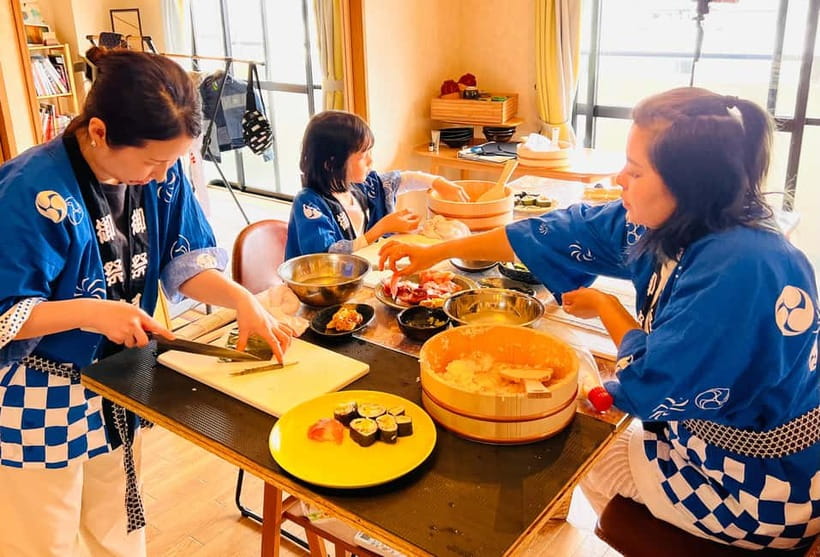
The miso soup ties the meal together. You prepare it from scratch rather than opening a packet, using dashi and miso to create a simple but layered broth.
For many people, this may be the most immediately useful recipe in the class. Sushi takes some planning, but miso soup is easy to add to an ordinary home meal. Learning the base also helps you understand how Japanese cooks build flavor with broth, fermented paste, and a few supporting ingredients.
The finished meal includes the sushi and other dishes you prepared during the class. Eating together gives the afternoon a natural ending and lets you taste how the individual parts work as a meal.
Chef Yuki’s teaching style
Yuki’s strongest quality is her personal approach. She explains each step clearly, answers questions, and shares tips about Japanese cooking and Osaka. The class has been especially flexible for families, with babies welcomed when arranged in advance.
That personal setting can also lead to local conversation beyond recipes. You may hear about Yuki’s life, her passion for traditional Japanese cuisine, and practical food advice that you would not get from a standard demonstration.
The class is in English, which makes the technical parts easier to follow. You should still expect to participate actively. This is not a sit-back cooking show. You handle ingredients, shape sushi, work with the omelet, and prepare soup.
A few people have attended alone and found themselves as the only participant or part of a very small group. That can be excellent if you want close instruction. It may feel less social than a large cooking event, but the trade-off is much more help from the chef.
Is $96 per person good value?
The price is $96 per person for three hours. That is more than the cost of simply eating sushi in Osaka, but the comparison is not quite fair. You are paying for fresh ingredients, traditional seasonings, instruction, a meal, cultural context, and recipes or cooking guidance you can use later.
The value is strongest if you want to learn. Yuki covers several distinct preparations: sushi rice, Nigiri, Hosomaki, tuna zuke, kombu-jime salmon, tamagoyaki, dashi, wasabi, and miso soup. A restaurant meal might be cheaper, but it would not teach you how to repeat it at home.
The price is also easier to justify for a small group. With no more than six participants, you are not lost in a crowd. If you are traveling as a couple, family, or small party, the class gives you a shared activity and a full meal.
I would not choose it if your only goal is the lowest-cost lunch or a quick stop between major sights. The trip to Nukata and the three-hour schedule require a real time commitment. For anyone who values practical instruction and a personal setting, though, the cost is reasonable.
Who should book this Osaka cooking class?
This class suits first-time sushi makers, home cooks, couples, families, and solo visitors who enjoy learning by doing. It also works for people with some cooking experience, since the rice preparation, dashi, and curing methods offer more than the usual roll-and-eat lesson.
It is a good choice if you want to bring part of Japan home with you. Yuki provides recipes afterward, and one participant bought her cookbook for further practice. You can use the class as preparation for a sushi meal with friends once you return home.
Vegetarians should contact Yuki before booking so she can plan appropriately. Families with a baby can also ask in advance about bringing the child.
I would skip it if you want a class in central Osaka, a large social group, or a market visit. This is a focused cooking session in Nukata, not a guided food walk through Dotonbori or a restaurant tasting.
Should you book it?
I would book this class if you want to understand how sushi is made, not just eat it. Chef Yuki’s patient instruction, small groups, and broad menu make the experience useful beyond the afternoon itself.
The main caution is the location outside central Osaka. Allow time for the Kintetsu train and walk, and confirm the exact station meeting details. If that small journey fits your schedule, the class offers a personal look at Japanese cooking, a satisfying meal, and several techniques you can use at home.
FAQ
How long does the sushi and miso soup class last?
The experience lasts three hours.
How much does the class cost?
The price is $96 per person.
Where does the class meet?
The class meets at 4-19 Nukata-cho, Osaka, in a white building near Nukata Station. It is about a five-minute walk from the station.
How do I reach the class from Namba?
Take the Kintetsu Nara Line from Osaka Namba Station toward Kintetsu Nara. Get off at Nukata Station, which takes about 30 minutes and costs approximately ¥430, then walk about five minutes.
What language is the class taught in?
The instructor teaches the class in English.
What sushi and Japanese dishes will I make?
You will prepare Nigiri sushi, Hosomaki, tuna zuke, kombu-jime salmon, tamagoyaki, and homemade miso soup. The class also covers sushi rice, dashi broth, traditional seasonings, and wasabi paste.
Just added in Japan
- Manga Lesson with a Professional Japanese Manga Artist in Nakano★ 5.0 · 77 reviews
- Making a bento box with cute character look in Japan★ 5.0 · 15 reviews
- Tokyo/Ikebukuro Manga drawing workshop by pro-Manga artists★ 5.0 · 65 reviews
- Luxury Tokyo Sake, Cocktail, Whisky and Pairing Tour★ 5.0 · 18 reviews
- Tokyo Ueno Food & Nature & Localtown Tour: 10Dishes+ Drinks★ 5.0 · 34 reviews
- Make Your Own Bonsai with a Professional Bonsai Artist in Tokyo★ 4.5 · 18 reviews
- Official Sumo Tournament Ticket with Guided Experience★ 4.5 · 19 reviews
- Make Traditional Nerikiri Sweets & Matcha experience in Shibuya★ 5.0 · 130 reviews
Osaka Tours, compared.





Umeda Sky Building & Kuchu Teien Observatory Ticket in Osaka
Read our review →