Reviewed · OSAKA TOURS
Osaka: Traditional Mochi Pounding Experience with Tasting
Mochi tastes better when you help make it. This one-hour Osaka activity turns a familiar Japanese sweet into a hands-on lesson, giving you a chance to steam glutinous rice, pound it with traditional tools, shape the finished mochi, and eat it with classic toppings. I especially like the small group of up to four people and the friendly instruction in English or Chinese. The main caution is that the room is small, the activity takes some physical effort, and the entrance can be tricky to find.
The experience costs $31 per person, which is fair for a guided activity that includes ingredients, equipment, instruction, and a generous tasting session. I also like the balance of a short cultural introduction and plenty of practical work. You get about 10 minutes of background before the fun begins, rather than sitting through a long lecture.
This is a particularly good choice for families, solo visitors, and anyone who wants something beyond Osaka’s usual food stops. Children can take part in the family plan, while participants aged 13 and up can choose the adult experience. Just avoid booking it immediately after a large meal. Fresh mochi with several toppings can leave you surprisingly full.
In This Review
- The experience in five useful points
- Why mochi pounding matters in Japan
- Starting with steamed glutinous rice
- Taking turns with the mortar and pestle
- Shaping your own fresh mochi
- Tasting with kinako, red bean, nori, and soy
- A small group makes the difference
- Finding the entrance near Dotonbori
- Adult or family plan?
- Is $31 a good value?
- The most useful preparation tips
- Who will enjoy this most?
- Should you book the Osaka mochi experience?
- FAQ
- How long does the mochi pounding experience last?
- How much does the activity cost?
- What languages are available?
- How many people can join the group?
- What happens during the experience?
- Which toppings are included?
- Can children participate?
- What is the adult age requirement?
- Is transportation included?
- Can I cancel for a full refund?
- Can I reserve now and pay later?
The experience in five useful points
- You pound steamed rice with traditional tools: The central activity uses a mortar and pestle to turn sticky rice into mochi.
- The group is limited to four participants: That keeps the session personal and gives each person time to take part.
- You taste several Japanese flavors: Kinako, sweet red bean paste, nori, and sweet soy sauce are included.
- The introduction lasts about 10 minutes: You learn why mochi matters before handling the ingredients.
- The setting is central but the entrance needs care: Several participants found the location easy to reach but noted that the entrance is along the river or canal side, not directly from Dotonbori Street.
- The activity suits both solo visitors and families: Guides help people join in, take photos, and feel part of the group.
Why mochi pounding matters in Japan
Mochi is made from glutinous rice that becomes soft, stretchy, and sticky when prepared correctly. The pounding process is not just a way to make dessert. It connects food with seasonal customs, celebrations, family gatherings, and older Japanese cooking methods.
The session begins with roughly 10 minutes of explanation about the origins and cultural importance of mochi pounding. That short introduction gives the physical work some context. You learn what you are making and why the traditional method matters before you pick up the tools.
I like this format because it respects your time. The history is long enough to make the activity meaningful, but short enough that you do not spend the hour watching someone else talk. The emphasis quickly shifts to doing.
A few more options to weigh up in Japan
- Universal Studios Japan Studio Pass
★ 4.8 · 89,883 reviews - Universal Studios Japan Express Pass
★ 4.7 · 53,138 reviews - Osaka Amazing Pass
★ 4.7 · 21,697 reviews
Starting with steamed glutinous rice
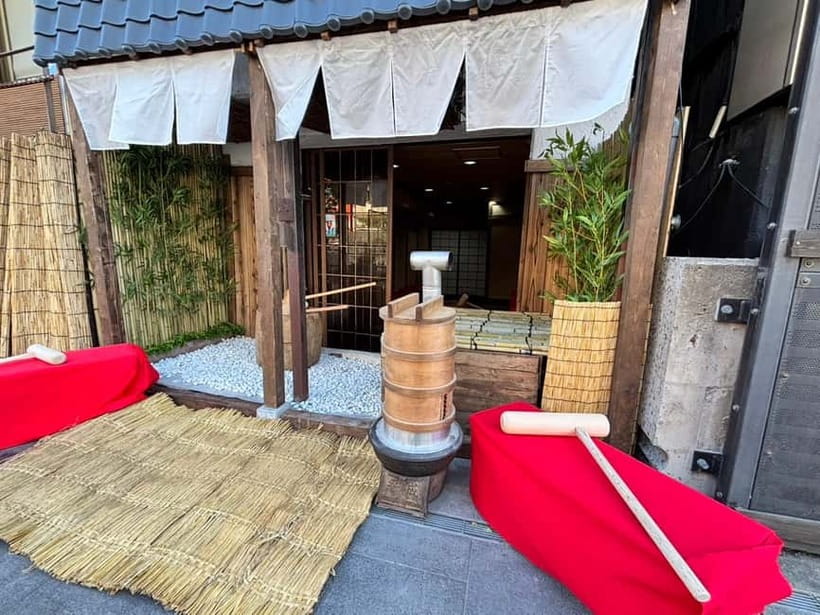
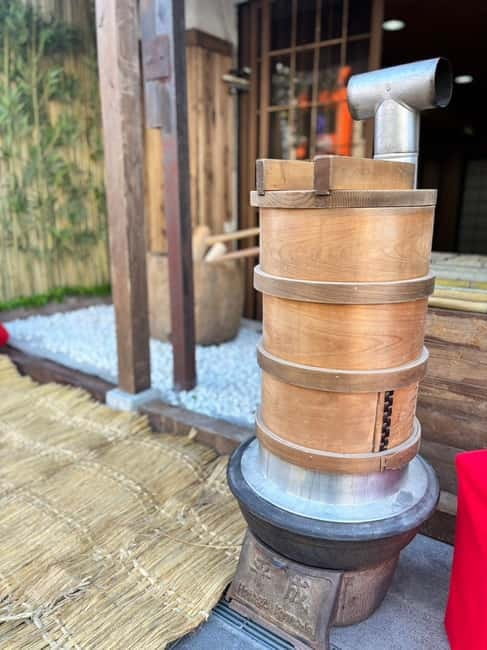
The process begins with glutinous rice, the ingredient that gives mochi its famous chew. You take part in the preparation, including steaming the rice, before it is worked into a smooth, sticky mass.
The first stage can look simple, but it shows why mochi is different from an ordinary rice dessert. The cooked grains need to be worked until they lose their separate shape and become one elastic mixture. This is where the traditional mortar and pestle come in.
You do not need previous cooking experience. The guides explain what to do and help keep the pace moving. The small group size matters here because participants can watch closely and then take a turn without waiting behind a large crowd.
Taking turns with the mortar and pestle
The pounding is the memorable part. You use a traditional wooden tool to work the rice while the mixture is turned and folded between strikes. It has a clear rhythm, and the guides help you find it.
This is not a staged demonstration where you stand at the edge of the room. You get involved. Adults, teenagers, and children in the family plan can each take part in mashing, pounding, and forming the mochi.
The work does require some stamina. One participant specifically warned not to underestimate the effort needed to create mochi. You will not need athletic training, but repeated pounding can make the activity more tiring than expected, especially in a warm room or after a busy day of sightseeing.
The physical work is also part of the charm. You see the rice change in front of you, and the finished food feels connected to the effort that produced it. That makes the tasting more satisfying than simply buying a packaged mochi from a shop.
Shaping your own fresh mochi
Once the rice has reached the right texture, you help form it into individual pieces. This is a practical lesson in how sticky the mixture really is. Fresh mochi is soft and elastic, with a texture that differs from many commercially packaged versions.
The guides keep the activity cheerful and inclusive. People who came alone were offered help with photographs, and families with young children were given chances to participate at a comfortable pace. If you are visiting solo, you should not worry about being left out while other people work with their own companions.
The forming stage also gives you a chance to see how much control is needed. Mochi can cling to your hands, and neat shapes take practice. That slight messiness is part of the experience, not a flaw. Wear comfortable clothing suitable for hands-on food preparation.
A completely different kind of day out:
- Tokyo Disney Resort – Tokyo Disneyland & Tokyo DisneySea Park Tickets
★ 4.8 · 99,488 reviews - SHIBUYA SKY Ticket
★ 4.7 · 46,509 reviews - Mt. Fuji Instagram-Worthy Spots Day Tour: Ladder Town, Oshino Hakkai, Lake Kawaguchi, Lawson Convenience Store (Departing from Tokyo Station or Shinjuku Station)
★ 4.8 · 35,467 reviews - JR Whole Japan Rail Pass
★ 4.8 · 29,150 reviews
Tasting with kinako, red bean, nori, and soy
The final tasting is where the activity pays off. You eat the mochi you helped make with several traditional Japanese seasonings and toppings.
The options include:
- Kinako, a roasted soybean flour with a nutty flavor
- Sweet red bean paste
- Nori, which adds a savory seaweed note
- Sweet soy sauce
- Tea to drink alongside the tasting
The variety keeps the food from becoming repetitive. Kinako gives you a dry, gently sweet coating, while red bean paste offers the familiar Japanese dessert flavor. Nori and sweet soy sauce move the tasting in a more savory direction.
If red bean is not your favorite, try it with another topping rather than dismissing it. One participant discovered that the flavor worked better with cream, although cream is not specifically listed as an included topping, so you should not expect it as part of the standard session.
You also get a useful lesson in texture. Freshly made mochi is especially sticky and soft. That can be delightful, but it is worth eating carefully and following the guides’ instructions. The tasting is substantial enough that you may want to plan a lighter meal beforehand.
A small group makes the difference
With a maximum of four participants, the class has a personal feel. You can ask questions, get direct help, and take your turn more than once without feeling rushed by a large crowd.
The compact format also works well for mixed groups. Families with children, couples, adults, and solo participants can share the activity. The guides make an effort to ensure that everyone gets a role, rather than allowing one confident person to do all the pounding.
The room itself is small but described as comfortable and clean. That limited space is worth keeping in mind if you prefer large, open cooking studios. On the other hand, a smaller room keeps you close to the action and makes instruction easier to hear.
The staff receive especially strong praise for being cheerful, attentive, and willing to help. Guides named in participant feedback include Seina, Taka, Misaki, Moe, Grace, Pari, and Aiko. The exact staff members may vary, but English and Chinese instruction is available.
Finding the entrance near Dotonbori
The activity is centrally located in the Dotonbori area, which makes it easy to combine with sightseeing, food, and an evening walk. Several people liked the riverfront setting and found the location convenient.
The important practical detail is the entrance. It may be along the river or canal side rather than on Dotonbori Street. One participant found the entrance after noticing a handwritten sign near the entrance of a hotel on the parallel street.
Give yourself extra time to locate the door. The meeting point may vary according to the plan you book, so check the exact instructions before setting out. Do not rely only on the bright Dotonbori signs or assume that the entrance faces the main street.
Transportation to and from the activity is not included. You arrange your own way there, but the central location should make it practical to fit into an Osaka day.
Adult or family plan?
The adult experience is for ages 13 and up and is intended for participants who want a fuller cultural explanation alongside the practical work. The family experience welcomes all ages and is designed to keep children and adults involved.
For families, the one-hour length is a strong point. It is long enough to feel like a real activity, but short enough to fit between other Osaka plans. Children get to handle ingredients and tools instead of simply watching an adult cook.
The activity also works well for several generations. Teenagers, parents, and grandparents can share the same process, with each person taking a turn at the rice, the pounding, and the shaping.
For an adult couple or solo visitor, the adult plan may be the better fit. You can focus more on the cultural background and the details of the traditional method. Still, the activity remains lighthearted rather than formal, so do not expect a serious cooking school.
Is $31 a good value?
At $31 per person, this is not the cheapest way to eat mochi in Osaka. You can buy prepared sweets for far less. The value comes from the instruction, the tools, the ingredients, the cultural explanation, and the chance to make the food yourself.
The small group improves the value. You are not paying for a crowded demonstration with limited participation. You have a real chance to pound, shape, taste, and ask questions.
The one-hour schedule also helps justify the price. You do not lose half a day of sightseeing, and the experience gives you something a shop visit cannot. If you want a quick food activity with a clear beginning, middle, and end, the price is reasonable.
I would be less enthusiastic if your main goal is a full cooking class with several dishes. This session is focused on one food, and most of the time goes into pounding and tasting mochi. That focused approach is its strength, but it may feel limited if you want a broad Japanese cuisine lesson.
The most useful preparation tips
Wear comfortable clothing that you do not mind using during a hands-on food activity. You may be moving, handling sticky rice, and taking turns with the pounding tool.
Plan your meal timing carefully. The tasting includes enough mochi to fill you, especially when you try several toppings. A large lunch immediately before the session may make the final part less enjoyable.
Arrive with the entrance details open on your phone. The activity is central, but the riverfront or canal-side entry can be easy to miss. A handwritten sign or hotel entrance may be part of the route.
If you are traveling alone, bring your phone or camera and accept the staff’s help with photos. The guides regularly offer to take pictures and videos, which is useful when both hands are busy.
If you are booking for children, select the family plan rather than assuming the adult option will fit your group. The family session is designed to include young children.
The activity runs year-round. Starting times vary, so check availability when choosing your date.
Who will enjoy this most?
I would recommend this to you if you want an activity that is:
- Short enough for a packed Osaka schedule
- Hands-on rather than observation-only
- Suitable for children and adults together
- Focused on one traditional food
- Friendly for solo visitors
- Easy to combine with Dotonbori sightseeing
It is also a good choice if you have lived in Japan for years but never tried the traditional pounding method. One participant had spent 24 years in Japan before finally taking part.
You may want to skip it if you dislike sticky textures, have little interest in Japanese food customs, or want a quiet, seated tasting. The pounding takes effort, and the room is compact. You should also be comfortable with the possibility of a lively, social session rather than a private lesson.
Should you book the Osaka mochi experience?
I would book this if you want a compact cultural activity that gives you something to do, taste, and remember. The strongest reasons are the four-person limit, the warm instruction, the chance for every participant to take a turn, and the range of toppings at the end.
The $31 price is fair when you treat it as a food workshop rather than a dessert purchase. Choose the family plan for children, allow time to find the canal-side entrance, and avoid scheduling it after a heavy meal.
For a first visit to Osaka, this makes a pleasant break from streets, signs, and restaurant queues. You leave with a better sense of how mochi is made, a full stomach, and possibly a new opinion about red bean paste.
FAQ
How long does the mochi pounding experience last?
The experience lasts one hour.
How much does the activity cost?
The listed price is $31 per person.
What languages are available?
Instruction is available in English and Chinese.
How many people can join the group?
The group is limited to four participants.
What happens during the experience?
You receive a short introduction to mochi, take part in steaming glutinous rice, pound it with traditional tools, shape the mochi, and taste it with Japanese toppings and tea.
Which toppings are included?
The listed toppings include kinako, sweet red bean paste, nori, and sweet soy sauce.
Can children participate?
Yes. The family experience welcomes all ages and is designed for children and adults.
What is the adult age requirement?
The adult experience is for participants aged 13 and up.
Is transportation included?
No. Transportation to and from the activity is not included.
Can I cancel for a full refund?
Yes. You can cancel up to 24 hours in advance for a full refund.
Can I reserve now and pay later?
Yes. The activity offers a reserve now and pay later option, so you do not need to pay at the time of booking.
Just added in Japan
- A One-of-a-Kind Sushi Experience in a Special Place of Japan★ 5.0 · 15 reviews
- Tokyo Cute Bento Cooking Class – Make a Kawaii Character Lunchbox★ 5.0 · 126 reviews
- Japanese Home Cooking Class & Walk in Todoroki Temple Tokyo★ 5.0 · 88 reviews
- Japan Tokyo Tower Observatory Deck E-Ticket★ 4.0 · 34 reviews
- Catch a Baseball Game in Tokyo with a Local – Tickets Included★ 5.0 · 24 reviews
- JDM Experience with Fast&Furious RX-7 (English speaking Driver)★ 5.0 · 57 reviews
- Tokyo Private Day Tour by Car with English speaking Driver Guide★ 4.0 · 29 reviews
- Japan Classic 10 Day – One Life Adventures★ 5.0 · 129 reviews
Osaka Tours, compared.






Umeda Sky Building & Kuchu Teien Observatory Ticket in Osaka
Read our review →