Reviewed · TOKYO TOURS
Premium 14-Piece Sushi & Cultural Discovery with Chef Interaction
Sushi becomes more interesting when you see the work behind it. This small-group experience in central Tokyo combines a 14-piece omakase meal with chef demonstrations, ingredient comparisons, and a close look at the tools and methods that shape Edomae sushi. I like the direct chef interaction, and I like that the tasting is built into the lesson rather than added as an afterthought. The main drawback is the price, $171.73 per person, which is a serious meal budget even in Tokyo.
You meet an English-speaking guide at an authentic sushi restaurant and sit at an exclusive counter for about two hours. The group is capped at five people, so you should get a much closer look than you would in a large food tour. Still, this is not the right pick for anyone with allergies or dietary restrictions involving seafood, soy, or rice.
In This Review
- Key things to know before booking
- Starting in Kanda Surugadai
- What happens at the sushi counter
- Why the comparison tastings matter
- The Kanda, Ochanomizu, and Akihabara setting
- The behind-the-counter visit
- Drinks, children, and dietary limits
- Is $171.73 good value?
- Who will enjoy this most
- Booking and cancellation details
- Should you book this sushi experience?
- FAQ
- Where does the sushi experience begin?
- Where does the experience end?
- How long does the experience last?
- How many people can join?
- Is an English-speaking guide included?
- How many pieces of sushi are included?
- Are drinks included?
- Can children join the experience?
- Can a child sit at the sushi counter?
- Can the restaurant accommodate food allergies or dietary restrictions?
Key things to know before booking
- Fourteen sushi pieces are part of the lesson: You get a full premium omakase course, not just a small sample.
- The chef demonstrates real Edomae methods: Watch techniques such as simmering, searing, marinating, and wrapping.
- Comparative tastings make the details easier to notice: You compare premium and standard ingredients, rice preparation, wasabi, and other elements.
- The group is very small: A maximum of five people gives the session an intimate counter setting.
- Children have a separate arrangement: The kids’ plan includes a child-friendly meal and Kids’ Room access, not the adult sushi course.
- You can visit behind the counter: A short look at the chef’s workspace includes a chance to take photos.
Starting in Kanda Surugadai
The meeting point is at 3-chōme-3-6 Kanda Surugadai, Chiyoda City, Tokyo 101-0062. Your activity begins and ends at this same meeting point, which makes the two-hour schedule easy to fit into a day of sightseeing.
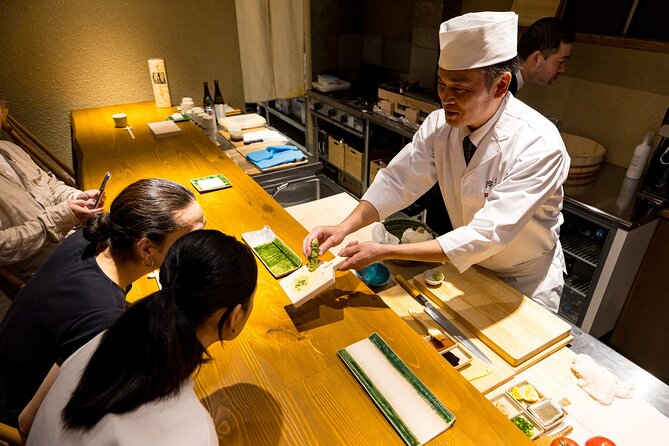
An English-speaking guide welcomes you at the restaurant, explains how the session will run, and seats you at the chef’s counter. That seating matters. Sushi is best understood at close range, where you can watch each piece being prepared and ask about the ingredients as they appear.
The setting also gives you a taste of Tokyo beyond the major sightseeing loop. Chiyoda includes the Imperial Palace area and several central neighborhoods, while Kanda has a long connection with old Tokyo food culture and everyday city life. The experience itself takes place in the restaurant, but the surrounding area gives you useful options before or after the meal.
Because the group holds no more than five people, this is not a crowded demonstration where you sit at the back and watch a screen. You should have a clear view of the counter and a reasonable chance to interact with the chef. The small size is one of the strongest reasons to consider the price.
A few more options to weigh up in Tokyo
- Tokyo Disney Resort – Tokyo Disneyland & Tokyo DisneySea Park Tickets
★ 4.8 · 99,488 reviews - SHIBUYA SKY Ticket
★ 4.7 · 46,509 reviews - JR Whole Japan Rail Pass
★ 4.8 · 29,150 reviews
What happens at the sushi counter
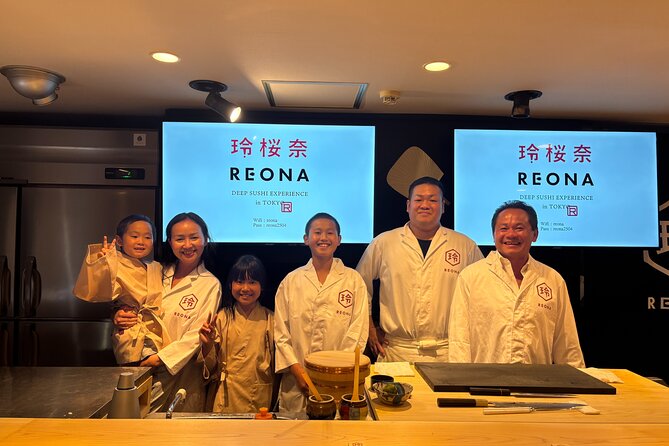
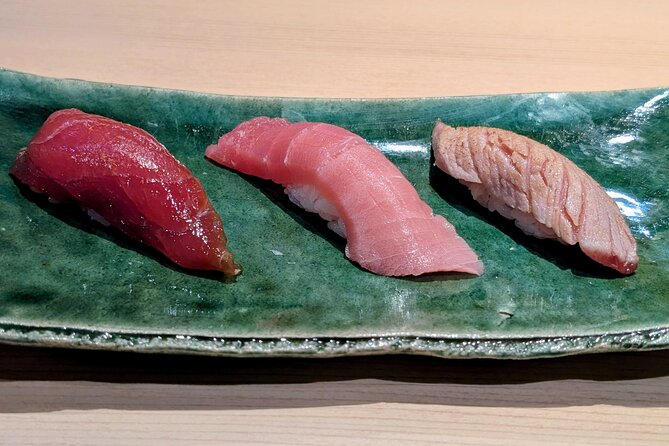
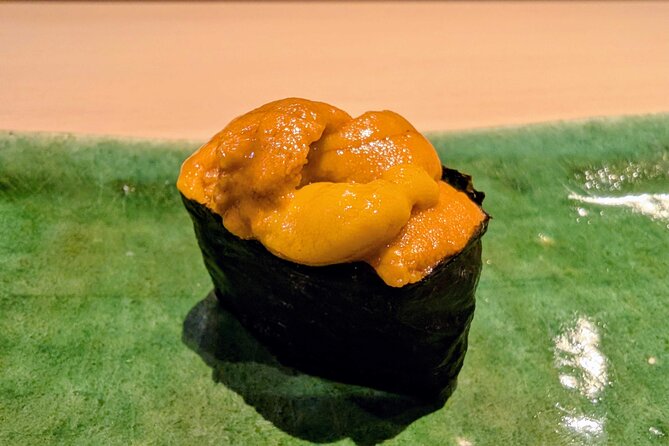
The meal follows an omakase format, meaning the chef selects and serves the course. You receive 14 pieces of premium sushi during a standard session of about two hours, with the total time allowed to reach two and a half hours.
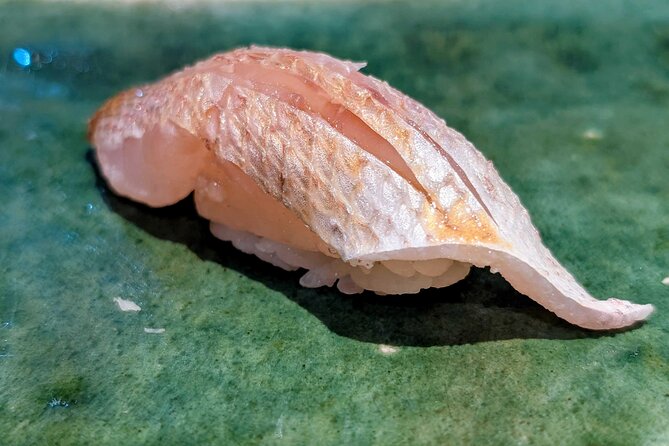
The pace is important. This is not a quick lunch where the food arrives all at once. The chef prepares and presents the sushi while explaining the choices and methods involved. You can pay attention to the shape of each piece, the balance of rice and topping, and the small finishing steps that are easy to miss at a regular restaurant meal.
The demonstrations cover several Edomae techniques:
- Simmering, which can soften and season ingredients before they are served.
- Searing, which changes aroma and texture while adding a cooked surface.
- Marinating, which seasons fish and can alter its flavor and mouthfeel.
- Wrapping, a preparation method that shows how sushi is handled and finished.
You are not simply watching food being made. The chef also explains the tools used at the counter and how those tools support precision. For someone who usually sees sushi only after it reaches the plate, this provides useful context without turning the meal into a formal cooking class.
The experience focuses on sushi culture and technique rather than on sending you home with a recipe book or a set of kitchen skills. You will learn by watching, tasting, comparing, and asking questions. That makes it a good fit if you want to understand why sushi tastes the way it does, even if you have no plan to prepare it yourself.
Why the comparison tastings matter
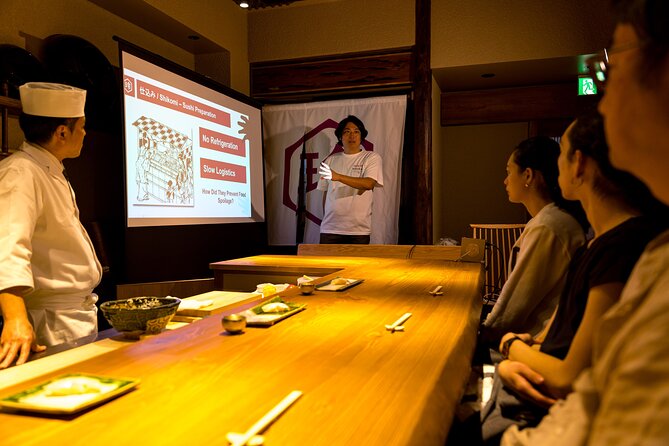
The most useful part of the session may be the side-by-side comparisons. Sushi can look simple, but the quality of the rice, seasoning, wasabi, and fish changes the final bite. By tasting differences directly, you do not have to rely on abstract explanations.
You compare sushi made with premium and standard ingredients. This helps you notice what the extra cost can change, and it also keeps the experience honest. Premium ingredients do not automatically make every difference dramatic, but tasting them in the same setting gives you a fairer basis for judging.
Rice preparation receives special attention. Sushi rice is not just a neutral base. Its seasoning, temperature, texture, and firmness affect how the topping tastes. A small change in the rice can alter the balance of the entire piece, and this experience makes that point through tasting rather than lecture.
You also compare freshly grated wasabi with standard wasabi pastes. These are often treated as interchangeable outside Japan, but the flavor and sensation can be quite different. This is the sort of detail you may remember when you order sushi again, especially if you have previously assumed that all wasabi tastes alike.
Visual aids and videos may be used to explain sushi history and preparation. They add support to the live demonstration, especially if you are unfamiliar with Japanese culinary terms. The mix of visuals, explanation, and tasting should help you follow the session without needing specialist knowledge.
The Kanda, Ochanomizu, and Akihabara setting
The route information includes Chiyoda, Ochanomizu, Akihabara, Kanda, and the Kanda Jimbocho Bookstore Area. These are best understood as the central Tokyo districts connected with the meeting point and activity area, not as a sightseeing bus route with a series of long stops.
Ochanomizu is known as a central transport area with a strong student and music-shop presence. Akihabara is famous for electronics, games, anime, and pop culture. Kanda offers a more traditional central Tokyo feel, while Kanda Jimbocho is associated with bookstores and old book shops.
You should not book this experience expecting guided sightseeing in each neighborhood. The main event is the sushi session at the restaurant. Still, the location makes it easy to pair the meal with nearby activities. You could browse the book area, visit Akihabara, or use the central train connections to continue elsewhere in Tokyo.
The practical point is that you need to arrive at the stated meeting point rather than expecting pickup from your hotel. A mobile ticket is provided, and the site is near public transportation. Since the activity ends where it begins, you can plan your onward route without arranging a separate return transfer.
A completely different kind of day out:
- Mt Fuji and Hakone 1-Day Bus Tour Return by Bullet Train
★ 5.0 · 26,383 reviews - TOKYO SKYTREE® Ticket
★ 4.7 · 25,136 reviews - teamLab Borderless Tickets: MORI Building DIGITAL ART MUSEUM
★ 4.7 · 24,126 reviews - teamLab Planets TOKYO Ticket
★ 4.7 · 21,663 reviews
The behind-the-counter visit
Near the end, you get an opportunity to step into the chef’s workspace behind the counter. This is a small touch, but it gives the experience a stronger sense of access than a standard restaurant meal.
You can see where the chef works and take photos to remember the session. The visit is not described as a full kitchen tour, so I would keep expectations focused: this is a short, exclusive look at the counter workspace, not a chance to inspect every part of the restaurant.
The photo opportunity may be especially useful if you want a record of the experience beyond the meal itself. You should still follow the guide’s instructions about where to stand and when to take pictures. Sushi counters are compact work areas, and the chef’s preparation remains the priority.
Drinks, children, and dietary limits
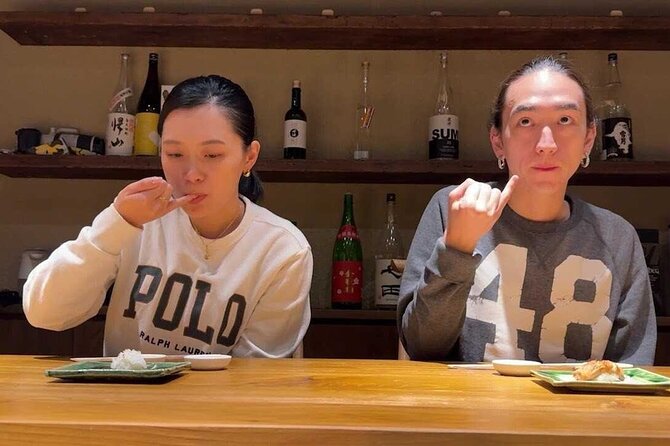
The 14-piece course does not include beverages. You can order sake pairings or soft drinks after arriving at the restaurant. Sake can add to the cost, so the advertised price should be treated as the meal and teaching experience, not as a complete food-and-drink package.
The sake option may appeal to you if you want to explore how different drinks work with sushi. If you do not drink alcohol, soft drinks are available. Nothing requires you to add a pairing, so you can keep the total closer to the listed price.
Families need to read the child policy carefully. A child booking includes a kids’ meal and access to a Kids’ Room for children up to 12 years old. Childcare is not provided, and children do not receive the 14-piece adult sushi course under the child plan.
Children using the kids’ plan sit in the Kids’ Room or in a child-designated seat rather than at the sushi counter. If your child wants the full sushi course beside the adults, the booking must be made under the adult plan. This is a useful distinction because the word family-friendly can otherwise create the wrong expectation.
The restaurant cannot accommodate allergies or dietary restrictions involving rice, soy, or seafood. If any of those ingredients are a concern, do not book this experience. The limitation affects the central meal, not just an optional garnish.
Is $171.73 good value?
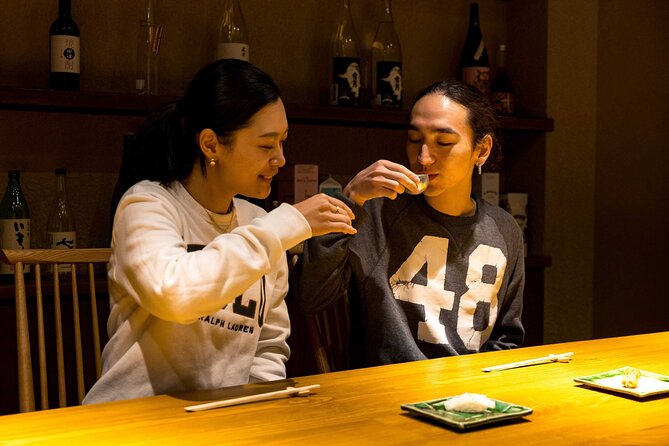
At $171.73 per person, this is not a budget sushi lunch. You are paying for more than 14 pieces. The price includes an English-speaking guide, chef interaction, demonstrations, ingredient comparisons, cultural explanation, tool instruction, and the behind-the-counter visit.
I think the value depends on what you want from sushi in Tokyo. If you only want a filling meal, you can find less expensive options. If you want to understand the craft and eat a premium course in a group of no more than five, the cost is easier to justify.
The strongest value comes from the tasting comparisons. You can spend a lot on sushi without learning why one piece differs from another. Here, the premium and standard ingredients, rice preparations, and wasabi styles give you a way to connect the price with specific changes in flavor and texture.
The meal also solves a common problem with food tours: small portions. Fourteen pieces should leave you properly fed, and the session lasts long enough to feel like an event rather than a quick sample. One particularly useful point is that even people who do not usually care for fish may find the format approachable because the chef explains the preparation and the meal includes more than a single unfamiliar bite.
The high 4.9 rating from 57 reviews and 98 percent recommendation figure suggest strong satisfaction, especially with the welcoming tone, clear teaching, visual aids, and the sense that the experience is worth its cost. I would still treat those numbers as a sign of consistency, not a guarantee that every dish will suit every palate.
Who will enjoy this most
I would choose this experience for:
- First-time visitors who want a structured introduction to serious sushi.
- Sushi fans who want to understand rice, wasabi, tools, and preparation methods.
- Couples or small groups who prefer close interaction over a large guided tour.
- People who want a substantial tasting rather than a single demonstration.
- Families who understand that children receive a separate meal and seating arrangement.
I would hesitate if you dislike seafood, cannot eat rice or soy, or need strict accommodation for food allergies. I would also skip it if your main goal is neighborhood sightseeing, since the sushi restaurant and chef interaction take up the scheduled time.
You should also allow for up to two and a half hours, even though the standard duration is two hours. That small buffer helps if the demonstrations or meal move at a relaxed pace.
Booking and cancellation details
Confirmation is provided when you book, and the experience accepts mobile tickets. The restaurant is near public transportation, but hotel pickup is not included, so plan your route to Kanda Surugadai in advance.
Free cancellation is available if you cancel at least 24 hours before the local start time. Changes or cancellations made inside that window are not accepted for a refund. This is worth noting because the activity is usually booked well ahead, on average about 39 days in advance.
Service animals are allowed. The Kids’ Room is available for children up to 12, but it is not a childcare service, so an adult remains responsible for the child.
Should you book this sushi experience?
Book it if you want a carefully explained sushi meal, a small group, and direct access to a professional chef. The 14 pieces, comparison tastings, and behind-counter visit give the experience more substance than a standard restaurant reservation.
Skip it if you need a low-cost meal, have seafood, soy, or rice restrictions, or want a walking tour of Akihabara and Kanda. For everyone else, this is a strong choice for turning sushi from something you simply eat into something you can better understand.
FAQ
Where does the sushi experience begin?
It begins at 3-chōme-3-6 Kanda Surugadai, Chiyoda City, Tokyo 101-0062, Japan.
Where does the experience end?
The activity ends back at the meeting point.
How long does the experience last?
The standard duration is about two hours, with the total time able to reach two and a half hours.
How many people can join?
The maximum group size is five people.
Is an English-speaking guide included?
Yes. An English-speaking guide welcomes you, introduces the session, and supports the experience.
How many pieces of sushi are included?
The adult plan includes a 14-piece premium omakase sushi course.
Are drinks included?
No. Sake pairings and soft drinks can be ordered after you arrive at the restaurant.
Can children join the experience?
Yes. Children can use the Kids’ Room and receive a child-friendly meal, but the child plan does not include the adult 14-piece sushi course.
Can a child sit at the sushi counter?
Not under the child plan. Children sit in the Kids’ Room or in a child-designated seat. To receive the full sushi course at the counter, book the adult plan.
Can the restaurant accommodate food allergies or dietary restrictions?
The experience cannot accommodate allergies or dietary restrictions related to rice, soy, or seafood.
Just added in Tokyo
- Tokyo Sunset Boat Party with Music Drinks and Vibes★ 5.0 · 15 reviews
- 【SUMO FESTIVAL】Tokyo Ginza: Sumo Show & Photo Experience★ 4.5 · 41 reviews
- Tokyo Sumo Experience with Live Show & Audience Challenge★ 5.0 · 38 reviews
- Tokyo Street Food Tour – 7 Japanese Foods★ 5.0 · 16 reviews
- Tokyo Sumo Morning Training/ Sumo Practice with Wrestlers★ 5.0 · 135 reviews
- Tokyo Morning Tour : Meiji Shrine, Asakusa and Fish Market★ 5.0 · 102 reviews
- Tokyo: Visit Sumo Morning Practice with English Guide★ 4.5 · 22 reviews
- Christmas Magic in Tokyo! Private & Family-Friendly Walking Tour★ 5.0 · 26 reviews
Tokyo Tours, compared.

Tokyo Disney Resort – Tokyo Disneyland & Tokyo DisneySea Park Tickets
Read our review →
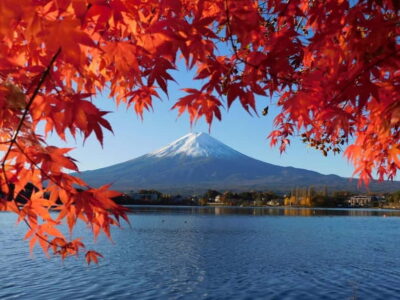
Mt Fuji and Hakone 1-Day Bus Tour Return by Bullet Train
Read our review →

teamLab Borderless Tickets: MORI Building DIGITAL ART MUSEUM
Read our review →