Reviewed · OSAKA TOURS
Seasonal Japanese Culture Osaka Paint and Wine Experience
Paint Osaka, one brushstroke at a time. This three-hour Shinsaibashi experience gives you a calm, creative break from sightseeing, with two drinks, all art supplies, and a seasonal Japanese theme. I especially like that beginners are welcome and that you take your finished canvas home.
I also like the social setup. You can chat with locals and people from other countries while painting, and host Miyuki has earned praise for her friendly manner, English skills, and practical art advice. The main consideration is that this is not a tightly scripted paint-by-numbers class, so you may want a more structured lesson if you expect everyone to copy one picture step by step.
In This Review
- Key points at a glance
- What this Osaka paint-and-sip experience is really like
- Arriving for the 1:30 pm start
- The first lesson is built for beginners
- Painting Japan through monthly seasonal themes
- A flexible painting session, not a forced copy
- Miyuki’s role makes a difference
- Is $63.93 a fair price?
- Who should book this experience?
- Practical details before you go
- Should you book the Shinsaibashi paint-and-wine session?
- FAQ
- Where does the Osaka paint and wine experience meet?
- What time does the activity start?
- Are drinks included?
- Do I need painting experience?
- Can I take my painting home?
- Is food included?
- What happens if I need to cancel?
Key points at a glance

- Seasonal Japanese subjects: Monthly themes include cherry blossoms, fireworks, autumn in Kyoto, Halloween, snow monkeys, and Christmas.
- Two included drinks: Choose wine or soft drinks, with non-alcoholic drinks provided to anyone under 20.
- Beginner-friendly instruction: You receive guidance on painting and drawing techniques, even if you have never held a brush before.
- A small social group: The maximum is 20 people, giving the event a friendly workshop feel rather than a large class.
- Take-home artwork: Your own canvas becomes a personal Osaka souvenir, not just another photograph on your phone.
- Central Shinsaibashi setting: The meeting point is near public transportation, at Cafe&Bar go garageGallery.
What this Osaka paint-and-sip experience is really like
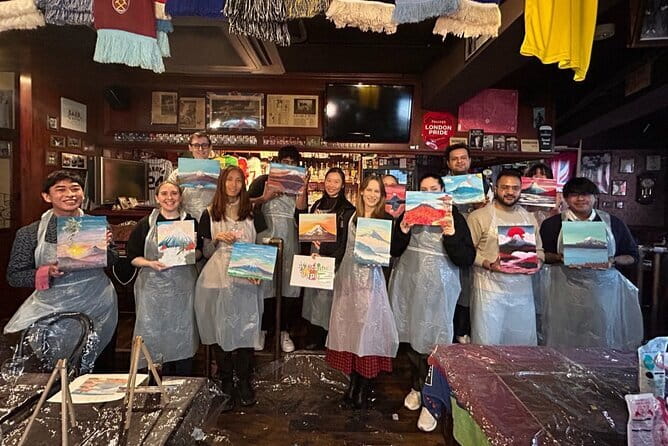
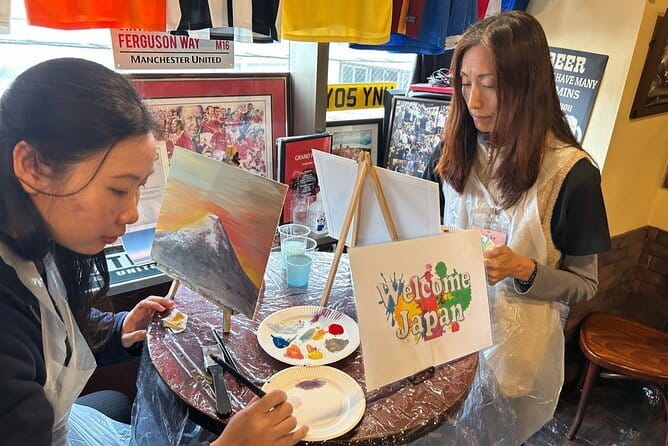
This is less about producing a perfect painting and more about giving yourself three unhurried hours to make something. You sit with paints, a canvas, and a drink, then work through a Japanese seasonal idea at your own pace.
That distinction matters. Some paint-and-sip events ask the whole room to reproduce the same image. Here, you have more freedom to interpret the subject. The result may be less uniform, but your artwork should feel more personal.
The event is held at Cafe&Bar go garageGallery in Higashishinsaibashi, a central Osaka area known for nightlife, restaurants, and shopping. The address is 1-chōme-18-6 Higashishinsaibashi, Chuo Ward. You return to the same place at the end, so there is no complicated transfer during the activity.
The building exterior may look a little rough or uncertain when you first arrive. That point came up in the feedback, but the room itself has been described as relaxed and comfortable. Give yourself a little time to locate the venue, especially if you are coming straight from a crowded Shinsaibashi street.
A few more options to weigh up in Japan
- Universal Studios Japan Studio Pass
★ 4.8 · 89,883 reviews - Universal Studios Japan Express Pass
★ 4.7 · 53,138 reviews - Osaka Amazing Pass
★ 4.7 · 21,697 reviews
Arriving for the 1:30 pm start
The class begins at 1:30 pm. That afternoon timing works well with an Osaka sightseeing day. You can spend the morning at a market, temple, museum, or shopping district, then settle into an indoor activity when your feet need a rest.
Bring your mobile ticket and arrive ready to paint. The experience supplies the apron, gloves, high-quality paints, and other painting materials. You do not need to pack brushes or art equipment, which is useful if you are traveling light.
The group can include up to 20 people. That is large enough to bring some energy to the room, but still small enough for the instructor to offer individual help. If you are shy about joining a group activity alone, the painting gives you an easy opening line. Asking about someone’s colors or subject is more natural than forcing small talk at a table.
Two drinks are included. You can choose wine or soft drinks, but food is not included. Plan to eat before or after if you need a proper meal, rather than expecting a full café-style session.
The first lesson is built for beginners
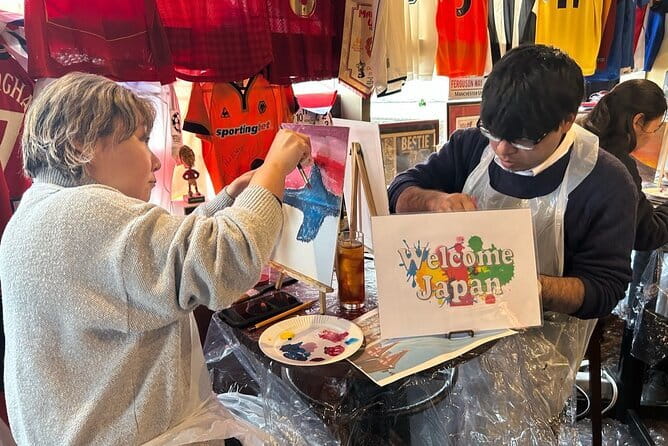
Beginners receive an introduction at 1:30 pm, and then the full group starts painting together. You get help with basic drawing and painting techniques, so lack of experience should not keep you from booking.
This is one of the strongest reasons to choose the event. The guidance seems aimed at helping you improve rather than simply keeping the class moving. Miyuki has been praised for giving advice on both drawing and painting, and for making first-timers feel comfortable.
You should not expect an academic art course. The goal is a pleasant creative afternoon, not formal training in perspective, color theory, or art history. Still, the instruction can help you make better choices about shapes, color, and brushwork.
The tone is friendly and informal. You can ask questions, paint quietly, or talk while you work. One person described the atmosphere as chill and open to random conversation, which gives you a good sense of the mood. It is social without requiring you to be the most outgoing person in the room.
Painting Japan through monthly seasonal themes
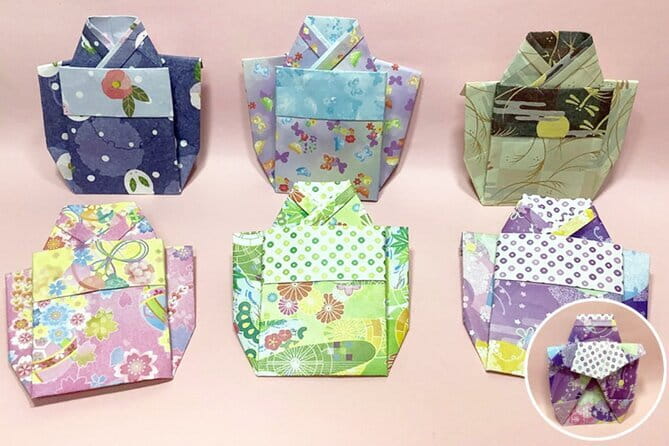
The subject changes through the year, giving repeat visitors a reason to return. The annual themes are:
- January: Hatsumode, the first shrine visit of the year
- February: Sky lanterns
- March: Cherry blossoms
- April: Easter
- May: Osaka
- June: Umbrella Street
- July: Fireworks
- August: Ocean
- September: Autumn in Kyoto
- October: Halloween
- November: Snow Monkeys
- December: Christmas
If you visit in March, the theme is cherry blossoms. You might create a scene of flowers in full bloom or a more atmospheric night-sakura image. The description also points to summer ideas such as wind bells and fireworks, showing that the monthly subject is meant as a starting point rather than a strict template.
The seasonal plan connects the activity to Japan without turning it into a lecture. You are not just painting a generic still life. You are working with images tied to Japanese holidays, weather, travel, and local culture.
The May Osaka theme is especially fitting if you want a souvenir linked to the city you are visiting. September’s autumn in Kyoto theme may appeal to people who are spending time in both cities. In October, the Halloween session adds a playful option for couples, friends, or anyone who likes a lighter subject.
Because the themes change by month, check the date carefully before booking. The schedule is supplied as an annual guide, but themes may be subject to change.
A completely different kind of day out:
- Tokyo Disney Resort – Tokyo Disneyland & Tokyo DisneySea Park Tickets
★ 4.8 · 99,488 reviews - SHIBUYA SKY Ticket
★ 4.7 · 46,509 reviews - Mt. Fuji Instagram-Worthy Spots Day Tour: Ladder Town, Oshino Hakkai, Lake Kawaguchi, Lawson Convenience Store (Departing from Tokyo Station or Shinjuku Station)
★ 4.8 · 35,467 reviews - JR Whole Japan Rail Pass
★ 4.8 · 29,150 reviews
A flexible painting session, not a forced copy
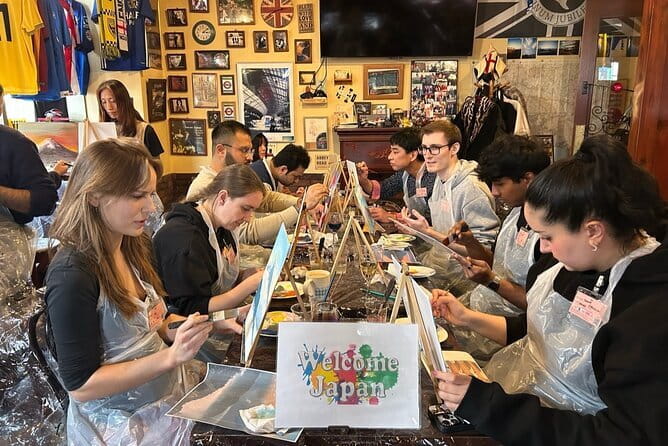
After the opening guidance, you continue with your own canvas. The structure allows you to paint your interpretation of the seasonal subject rather than forcing every person to make an identical image.
I see this as a major advantage for creative people and a possible drawback for anyone seeking a very clear demonstration. If you want the instructor to paint one image while you copy each stage, ask about the exact format before you go. The available information points to a freer session.
The gallery element adds another layer. Later in the activity, you explore the gallery, talk with others, and continue painting before sharing the finished works. That break can help you look at your canvas with fresh eyes instead of staring at the same patch of color for three hours.
The group sharing at the end gives the activity a pleasant finish. You see how different people interpret the same theme, and the final artworks should vary in style. You do not need to compare yourself with anyone else. The point is to leave with something that reflects your own choices.
Miyuki’s role makes a difference
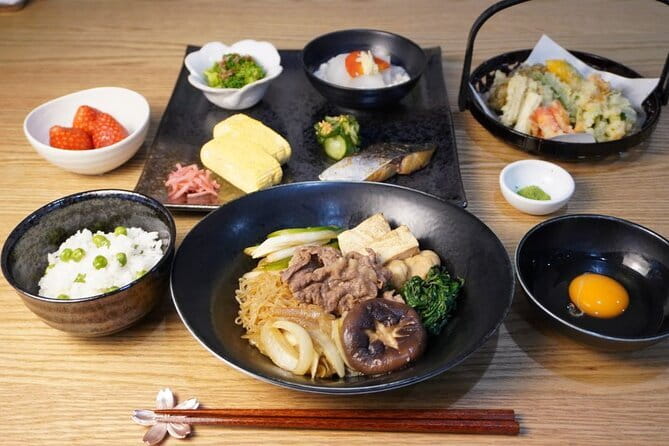
The instructor can make or break an art workshop, and Miyuki receives the clearest praise here. She has been described as bubbly, welcoming, funny, and helpful, with strong English skills in at least one session.
That combination matters if you are visiting Osaka from abroad. You can ask for advice without worrying that a language barrier will make the class confusing. Her help is also useful for complete beginners who may not know how much paint to use or where to begin.
Several comments point to her art ability and willingness to offer technique tips. One first-time painter left feeling satisfied with the result, while another said the session helped improve painting skills. That suggests you get more than a table, a glass, and a stack of supplies.
The exact instructor experience can vary by date, so it is best to see Miyuki’s involvement as a strong feature of the current offering rather than a guarantee of every future session. Still, her presence gives this activity a more personal feel than a self-guided craft stop.
Is $63.93 a fair price?
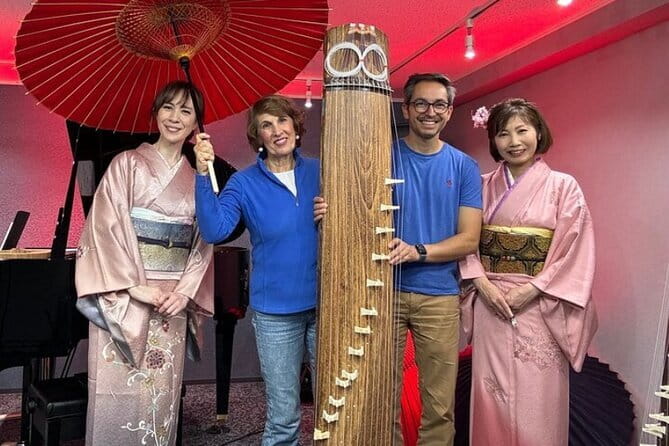
At $63.93 per person, this is not the cheapest way to spend an afternoon in Osaka. The value depends on what you want from the experience.
You receive about three hours of instruction and studio time, two drinks, painting supplies, protective gear, and a finished canvas to take home. You also get a social activity in a central part of Osaka, which can be useful when you want something beyond sightseeing.
The price makes more sense if you would otherwise pay for drinks, an art class, and a souvenir separately. A handmade canvas has more personal meaning than a standard shop purchase, especially if you paint a scene tied to the month of your visit.
It is less compelling if you are only looking for a cheap drink or a quick craft activity. Food costs extra, and the event occupies a good part of the afternoon. For a short Osaka stay, consider whether three hours of painting fits your priorities.
For couples, friends, and solo visitors who enjoy making things, I think the price is reasonable. The two drinks and all-inclusive art setup remove the hassle of buying supplies. You pay for time, guidance, materials, and the chance to meet people, not just for a canvas.
Who should book this experience?
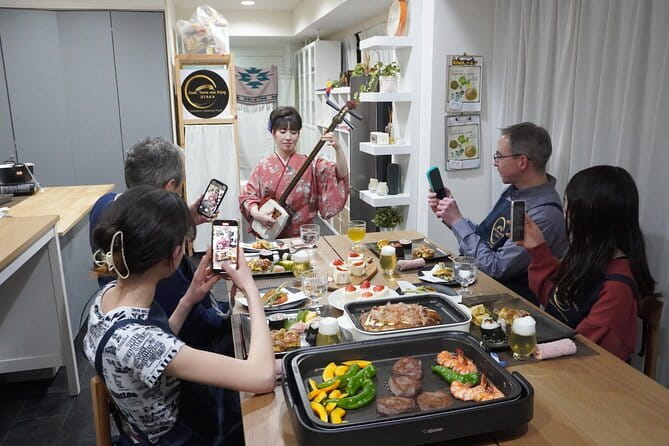
I would point this activity toward several kinds of visitors:
- First-time painters: You receive an introduction and individual advice, so you do not need previous skill.
- Creative couples: A shared seasonal canvas session is a more active date than simply visiting another bar.
- Solo visitors: The group format makes it easy to meet people without signing up for a formal walking tour.
- Repeat visitors to Osaka: The changing monthly themes offer a new reason to return.
- People wanting a useful souvenir: You leave with art you made yourself, tied to the season and place.
- Visitors needing an indoor break: The three-hour afternoon slot gives your feet a rest from Osaka sightseeing.
You may want to skip it if you dislike group activities, do not enjoy alcohol or soft drinks, or want a strict step-by-step art lesson. It is also not a food experience, so do not book it as a substitute for lunch.
Most people can participate, and the activity is near public transportation. The maximum group size is 20, but the provided information does not give specific details about wheelchair access or other special arrangements. If you need those services, contact the provider before booking.
Practical details before you go
The experience starts and ends at Cafe&Bar go garageGallery in Higashishinsaibashi. Since the event returns to the meeting point, you can plan a nearby dinner, shopping stop, or evening walk without arranging a second pickup location.
The booking includes a mobile ticket and confirmation at the time of booking. You can cancel for a full refund if you do so at least 24 hours before the local start time. Changes or cancellations made within 24 hours are not accepted for a refund.
Japanese law prohibits alcohol for anyone under 20. Minors receive non-alcoholic drinks instead, so the activity remains available to them, though the mood is still built around a paint-and-drink format.
Wear something you do not mind protecting with an apron. Gloves and an apron are supplied, but painting is still a hands-on activity. You also might want to leave enough room in your luggage for the finished canvas, since the artwork is part of the experience you take away.
Should you book the Shinsaibashi paint-and-wine session?
Book it if you want a relaxed, social afternoon with a real souvenir at the end. The best parts are the free approach to the artwork, the seasonal Japanese themes, and Miyuki’s warm, practical help for beginners.
I would not book it expecting a formal art school lesson or a full meal. The venue’s outside appearance may give you pause, and the free-form style may not suit anyone who wants every brushstroke demonstrated.
For most visitors who enjoy trying something new, $63.93 buys a pleasant change of pace in central Osaka. You get two drinks, supplies, instruction, and a canvas that carries your own version of Japan’s seasons. That is a fair trade for three hours, especially on a rainy afternoon or after several days of temples and train stations.
FAQ
Where does the Osaka paint and wine experience meet?
It meets at Cafe&Bar go garageGallery, Gallery Bldg., 1-chōme-18-6 Higashishinsaibashi, Chuo Ward, Osaka, 542-0083, Japan.
What time does the activity start?
The experience starts at 1:30 pm and lasts approximately three hours.
Are drinks included?
Yes. Two drinks are included, with a choice of wine or soft drinks. Anyone under 20 receives non-alcoholic drinks because Japanese law prohibits alcohol for people under that age.
Do I need painting experience?
No. The activity is designed to welcome beginners, and an introduction is provided at the start. You also receive painting and drawing guidance during the session.
Can I take my painting home?
Yes. You can take your finished artwork home as your own canvas souvenir.
Is food included?
No. Food is not included in the price, so plan a meal separately if you need one.
What happens if I need to cancel?
You can receive a full refund by canceling at least 24 hours before the experience start time. Cancellations or changes made less than 24 hours before the start are not accepted for a refund.
Just added in Japan
- A One-of-a-Kind Sushi Experience in a Special Place of Japan★ 5.0 · 15 reviews
- Tokyo Cute Bento Cooking Class – Make a Kawaii Character Lunchbox★ 5.0 · 126 reviews
- Japanese Home Cooking Class & Walk in Todoroki Temple Tokyo★ 5.0 · 88 reviews
- Japan Tokyo Tower Observatory Deck E-Ticket★ 4.0 · 34 reviews
- Catch a Baseball Game in Tokyo with a Local – Tickets Included★ 5.0 · 24 reviews
- JDM Experience with Fast&Furious RX-7 (English speaking Driver)★ 5.0 · 57 reviews
- Tokyo Private Day Tour by Car with English speaking Driver Guide★ 4.0 · 29 reviews
- Japan Classic 10 Day – One Life Adventures★ 5.0 · 129 reviews
Osaka Tours, compared.



Umeda Sky Building & Kuchu Teien Observatory Ticket in Osaka
Read our review →