Reviewed · FULL-DAY
Sendai / Matsushima Full-Day Private Tour with Government-Licensed Guide
Two destinations, one carefully shaped day. This private six-hour tour gives you a practical way to pair Sendai’s samurai sights with Matsushima Bay, one of Japan’s famous scenic views. You choose three or four places from a long menu of sites, then explore with a government-licensed English-speaking guide.
I especially like the custom itinerary, which lets you focus on temples, museums, food, scenery, or a mix of all four. I also like the chance to see Matsushima with guides such as Riko or Yumi, who have been praised for adjusting the pace, explaining local customs, and adding useful suggestions. The main drawback is clear: transportation, admission fees, lunch, and private vehicles are not included, so the advertised price is only part of your final cost.
The tour costs $154.37 per person and is private, so your group does not share the guide with strangers. That can be good value for families or small groups who want a personal day rather than a fixed coach excursion. It is less attractive if you want to visit many sites quickly or prefer to manage every train, bus, and entrance ticket yourself.
In This Review
- Key points to know before booking
- Why the private format matters in Sendai
- Starting with Sendai’s Date Masamune sights
- Choosing museums and shrines for a quieter day
- Matsushima Bay brings the day into focus
- Temples and tea houses around the bay
- Shiogama adds seafood and local life
- The Nikka Whisky option
- Guides, pace, and the human side of the day
- Is $154.37 per person good value?
- Who should book this Sendai and Matsushima day?
- FAQ
- How long does the tour last?
- How many sites can I visit?
- Is the tour private?
- Is transportation included?
- Where do I meet the guide?
- Is lunch included?
- Are entrance fees included?
- Can I visit Matsushima Bay?
- Can I cancel for a full refund?
- Should you book it?
Key points to know before booking
- Pick three or four sites: The tour offers 19 possible stops, but six hours is not enough for all of them.
- Matsushima is the main visual reward: Pine-covered islands, short walks, bridges, temples, and bay views give the day its strongest sense of place.
- The guide shapes the experience: Riko, Yumi, and Mikiko have received praise for friendly explanations, flexible pacing, and personal recommendations.
- You pay local costs separately: Transportation, lunch, entry tickets, and some bridge fees are outside the tour price.
- It is a walking pickup: You meet the guide on foot within the designated Sendai area, and private transportation is not supplied.
- The format suits a private group: Only your party joins the activity, with group discounts available.
Why the private format matters in Sendai
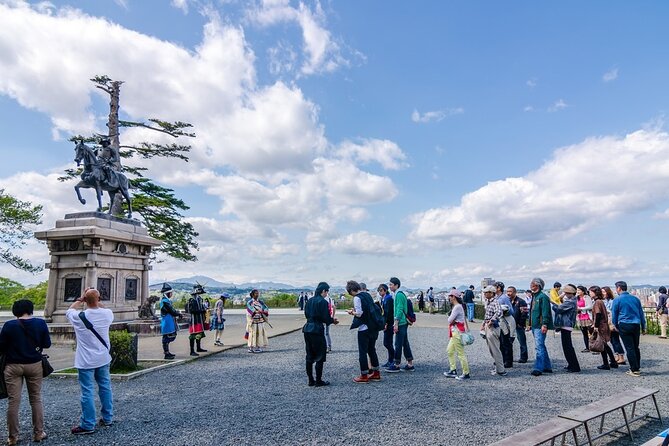
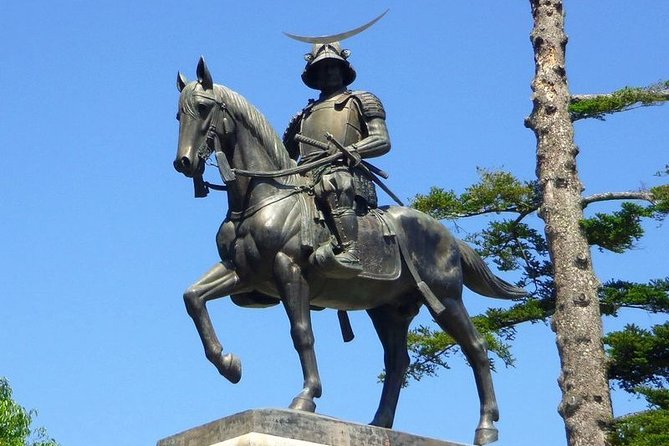
Sendai is easy to underestimate. It is a modern regional city, but its identity is tied closely to Date Masamune, the warlord who founded the Sendai domain. Beyond the city, Miyagi Prefecture offers shrines, coastal scenery, museums, food markets, and small islands.
A fixed tour could easily spend too much time on one subject. This experience gives you a choice. You might build a culture-focused day around Zuihoden, Sendai Castle, and Osaki Hachiman Shrine. Or you might make Matsushima the center of the day and add one Sendai sight at the start.
The six-hour limit is both useful and restrictive. It forces you to choose, which helps keep the day manageable. But you should decide your priorities before meeting the guide. If you arrive hoping to see everything on the list, you will be disappointed.
The private setup is valuable if your group has a particular pace or interest. Families can avoid being rushed through a temple. History fans can spend more time with Date Masamune sites. Food-focused visitors can ask to include Shiogama Fish Wholesale Market. The experience is also a good fit if you want explanations in English rather than simply following a guidebook.
More Private Tours in Japan:
- Tokyo 6hr Private Tour with Government-Licensed Guide
★ 5.0 · 3,902 reviews - Private Tour to Mt. Fuji and Hakone (Fully Licenced Operator)
★ 5.0 · 1,910 reviews - Tokyo Customized Private Tour (Must See Places in 1 Day)
★ 5.0 · 1,499 reviews
Starting with Sendai’s Date Masamune sights
Zuihoden is the mausoleum of Date Masamune, the first lord of the Sendai domain. The building is known for its ornate design, and Masamune himself was also associated with architecture. It gives you an immediate introduction to the local ruler whose influence appears throughout Sendai and Matsushima.
The site is a strong choice if you want history with a clear human story. Ask the guide to explain Masamune’s role in Sendai and how his family shaped the area. Admission is not included, so confirm the current ticket cost before you arrive.
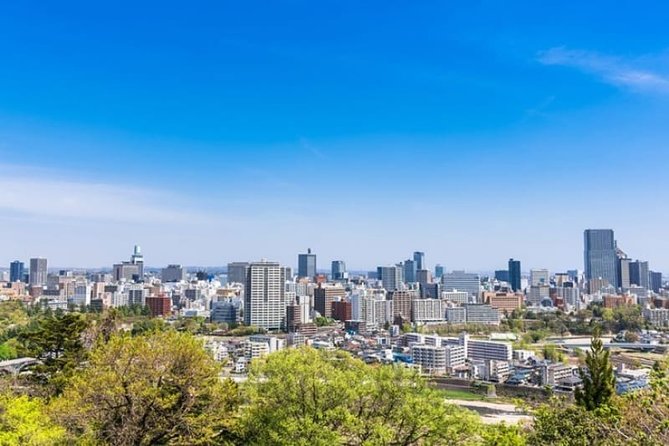
Sendai Castle, represented here by the Sendai Castle Guidance House and castle ruins, offers a different kind of history. The original stronghold is largely gone, and the site is more about the location, views, and memory of the castle than intact buildings. A famous poem about the moon over a desolate castle captures the mood rather well.
I would not choose this stop expecting a grand surviving fortress. Choose it for the setting and for the chance to understand Sendai’s former power center. The guidance house can help put the ruins into context, but entrance fees are extra.
For a city view, SS30 offers observation decks in an office building. There is not much to see inside the building itself, yet the height gives you a useful look across Sendai. This is a practical stop if you want a quick orientation or a broad view without spending much time.
The Sendai City Museum is a better choice for a fuller look at the Date family and regional culture. It occupies part of the former castle grounds and preserves cultural materials donated by the Date family. Since admission is not included, it makes most sense for people who genuinely enjoy museums rather than anyone trying to squeeze in a quick photo stop.
Choosing museums and shrines for a quieter day
Sendai offers several alternatives to the usual castle and mausoleum route. The Chiteinomori Museum, also called the Museum of the Forest of Depths of the Earth, focuses on the Stone Age in Japan. It can be a good pick if archaeology interests you or if you want a subject far removed from samurai stories.
The Tohoku History Museum in Tagajo covers the region from the Paleolithic era through modern times. It gives you a wider regional frame than the Sendai City Museum, although admission is not included. You should choose one museum, not both, unless museum time is your main purpose.
Osaki Hachiman Shrine is one of Sendai’s most important architectural sights. Built by Date Masamune in 1607, it is a National Treasure with Momoyama-style details, rich lacquer, and intricate wood carving. This is one of the strongest city choices for anyone who wants to see an active religious site rather than a museum display.
Mitakisan Fudoin offers another religious stop, with a more personal story. The Buddhist temple was founded in 1865 by the nun Kato Tane, who prayed for healing eye diseases. Fudo Myo-o, a protective Buddhist deity, is enshrined there. It may appeal to you if you prefer smaller, less formal places with a focused local tradition.
The guide can help you avoid building a day that feels repetitive. Three major religious sites may be too much for some people. One shrine, one museum, and Matsushima usually creates more variety.
Matsushima Bay brings the day into focus
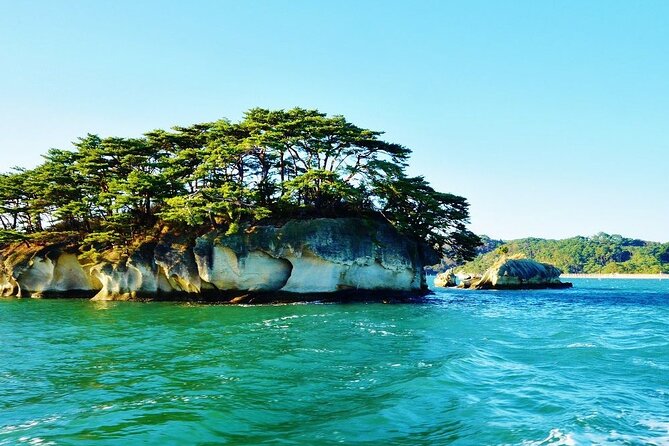
Matsushima lies about half an hour outside Sendai and is famous for a bay dotted with pine-covered islets. It has long been counted among Japan’s three most scenic views. The appeal is not one single monument. It is the combination of water, islands, bridges, temple roofs, and short walks close to the town center.
The bay itself is free to see, making it an easy anchor for the day. The area is compact enough to explore on foot, but the number of temples and islands can make a guide helpful. You will get more from the scenery when someone explains why particular islands, shrines, and temples matter.
Oshima is a small pine-covered island near the pier. A short bridge connects it to the mainland at no charge, and the island has pleasant walking paths. It is a particularly good choice if you want a break from formal buildings and a little quiet near the water.
Riko has been praised for including Oshima and for adjusting the day around seasonal conditions. A winter visit can bring a calm atmosphere and different views, while cherry blossom season changes the character of the area. The guide may also suggest nearby places for the following day, as Riko did with Funaoka for cherry blossoms.
Fukuurajima gives you another island walk, reached by a 252-meter red bridge. The bridge costs 200 yen, and that fee is not included. This is a good choice for people who want more time outdoors, but you should allow enough time for the island rather than treating it as a quick photo stop.
A few more options to weigh up in Japan
- (Okinawa’s No. 1 Popular Northern Day Trip) Chinese-speaking guide · Includes admission tickets · 1 person can book: Churaumi Aquarium · Cape Manzamo · Kouri Island · American Village
★ 4.7 · 1,846 reviews - Shiraito Falls & Forest Cafe & Handmade Flower Salt Pudding & Grilled Seafood & Totoro Forest & Sakurai Futamigaura & Angel’s Wings & Coconut Tree Swing Day Tour (Departing from Hakata Station, with Mandarin, English, and Cantonese speaking guide)
★ 4.9 · 1,840 reviews - Tokyo: Shinjuku Local Bar and Izakaya Guided Walking Tour
★ 4.9 · 1,794 reviews - Tokyo: Private City Highlights Tour with Local Guide
★ 4.8 · 1,433 reviews
Temples and tea houses around the bay
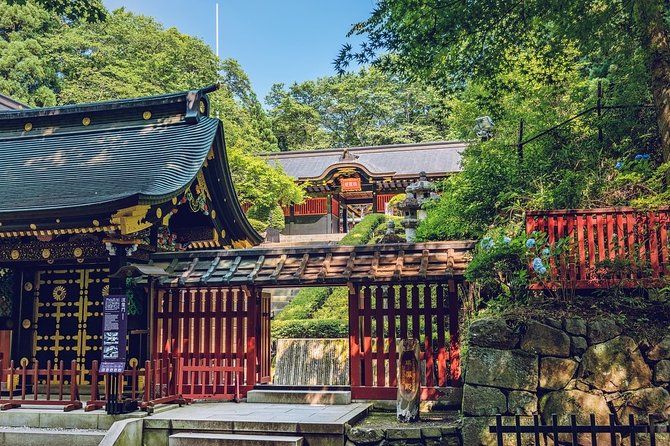
Zuiganji is one of the major Zen temples in the Tohoku region. It is known for gilded and painted sliding doors, and it was originally founded in 828. The temple adds a serious cultural layer to Matsushima, balancing the bright scenery with religious and historical depth.
Admission is extra, and you should expect the temple to take more time than a brief viewpoint. I would choose Zuiganji if you want a proper cultural visit. If your priority is simply seeing the bay, Oshima and Godaido may offer more scenery for less time and money.
Entsuin Temple was built in 1647 beside Zuiganji. It houses the mausoleum of Date Mitsumune, the son of local ruler Date Terumune. The temple gives you another look at the Date family, but its close location to Zuiganji means you should think about how much temple time you want in one afternoon.
Kanrantei is a small Momoyama-style tea house overlooking Matsushima. It was originally built in Kyoto by Toyotomi Hideyoshi and later given to Date Masamune. The building’s location matters as much as its history, since it provides a composed view over the bay.
Godaido is one of Matsushima’s symbols. The small temple hall sits on an islet beside the pier, reached by bridges, and dates to 807. Its five statues give the building its name. Because it is close to the main pier, it is an efficient stop and a sensible choice if your time is tight.
A good Matsushima plan might combine Godaido, Oshima, and Zuiganji. That gives you a quick scenic walk, an island, and a major temple. Add Kanrantei if you prefer architecture and views over a longer island walk.
Shiogama adds seafood and local life
Shiogama offers a different side of Miyagi. The city sits about 16 kilometers from Sendai around Shiogama Bay, and it is known for its shrine and fish market.
Shiogama Shrine is a major Shinto site with roots reaching back to the ninth century. Fifteen of its buildings have been designated Important Cultural Properties. The shrine is free to enter, making it one of the more affordable choices on the menu.
The Shiogama City Fish Market was established at its current site in 1965. The large building contains more than 100 shops, giving you a chance to see the working food culture of the area. This is an especially useful choice if you want the tour to include something beyond temples and scenery.
Lunch is not included, so the market can help shape a food-focused day, but you should budget separately. One of the most appealing details from the guiding experience is the use of local restaurant suggestions. Riko has been praised for recommending places to eat and for helping create an authentic meal stop.
Shiogama works well as an alternative to some Matsushima temples. You could pair the shrine and market with Matsushima Bay for a day that includes religion, food, and scenery. The challenge is time. The more you add to the route, the less time you have for each stop.
The Nikka Whisky option
The Nikka Whisky Sendai Factory at Miyagikyo Distillery offers a change of pace. Its free tour takes about 45 minutes and explains the stages and buildings involved in production. It is a useful choice if you enjoy whisky, industrial places, or seeing how a Japanese product is made.
The factory is not the obvious partner for Matsushima, so think carefully before selecting it. It may work better as the main focus of a Sendai-area day than as an add-on to several coastal sights. You should also confirm the practical route with the guide because transportation is not supplied.
This stop shows why the private format can be useful. You are not locked into a standard sightseeing pattern. If a distillery matters more to you than another temple, you can shape the day around that interest.
Guides, pace, and the human side of the day
The guide is the main reason to consider this experience instead of planning independently. Riko has been praised for energy, warmth, local suggestions, and adapting to different walking speeds. Yumi has received strong praise for arranging stops around personal interests and explaining Matsushima’s history. Mikiko was appreciated for finding special natural places and unusual stops.
Those details matter. A guide can help you decide between two similar temples, explain manners at a shrine, point out a better sequence, and keep the day from becoming a string of disconnected photos.
You should still communicate clearly before the tour. Send your must-see places and tell the guide if you care most about food, history, nature, architecture, or easy walking. The activity is private, but it is not a private car tour. You meet on foot within the designated Sendai area, and transportation fees remain your responsibility.
The walking requirement deserves attention. Most people can participate, and service animals are allowed, but the experience includes temples, bridges, islands, and city walking. If you need a slower pace, say so in advance. Riko has shown flexibility with pace and barrier-free travel, which is encouraging, but specific route arrangements should still be discussed before booking.
Is $154.37 per person good value?
At $154.37 per person, this is not the cheapest way to see Sendai or Matsushima. You still pay for trains or other transportation, lunch, and entrance tickets. The 200-yen bridge to Fukuurajima is a small example of the extra costs that can appear during the day.
The value comes from the private guide and the planning help. For a couple or small family, the price can make sense if you want cultural explanation and a day built around your interests. A group discount may improve the calculation for a larger party.
Independent planning will cost less, especially if you are comfortable using public transportation and reading about each site yourself. The tour earns its price when you want to make the most of limited time, avoid planning mistakes, or understand what you are seeing.
The current rating is 4.9 from 18 ratings, with 100 percent recommending the experience. That is a strong signal, but the small sample means you should still pay attention to the practical limits: six hours, three or four selected sites, walking pickup, and separate costs.
Who should book this Sendai and Matsushima day?
I would recommend this tour to first-time visitors who want a guided introduction to both Sendai and Matsushima without joining a large group. It is also well suited to couples, families, and small groups with different interests.
You should consider it if you value:
- A guide who can explain Japanese history and cultural customs in English
- A flexible route rather than a fixed schedule
- Matsushima scenery combined with at least one Sendai sight
- Local food suggestions and help choosing restaurants
- A private experience at your own pace
I would be more cautious if you want a full sightseeing checklist. Nineteen possible stops can look generous, but the six-hour format means you select only three or four. I would also think twice if you want a private vehicle or dislike paying site fees separately.
Free cancellation is available until 24 hours before the start time. Changes or cancellations made later do not qualify for a refund, so keep that deadline in mind.
FAQ
How long does the tour last?
The tour lasts approximately six hours.
How many sites can I visit?
The tour includes a customizable itinerary of three to four sites selected from the available list.
Is the tour private?
Yes. Only your group participates in the activity, and multiple tour groups cannot be combined.
Is transportation included?
No. Transportation fees are not included, and private transportation is not provided.
Where do I meet the guide?
You meet the licensed guide on foot within the designated area of Sendai.
Is lunch included?
No. Lunch and other personal expenses are separate.
Are entrance fees included?
Entrance fees are generally not included. Guide entry fees are covered only for sights listed under the tour’s stated expectations.
Can I visit Matsushima Bay?
Yes. Matsushima Bay is one of the available stops, and the bay itself has no admission fee.
Can I cancel for a full refund?
Yes, if you cancel at least 24 hours before the experience start time. Cancellations made less than 24 hours in advance are not refunded.
Should you book it?
Book this tour if you want a flexible private day with real historical and local context, and you are happy to pay transportation and admission costs separately. Sendai and Matsushima make a strong pairing, especially when your guide helps you choose between temples, islands, museums, shrines, and food stops.
Before booking, decide on your top three priorities. Ask for Matsushima if the bay scenery matters most, add Zuihoden or Osaki Hachiman Shrine for Sendai’s Date Masamune story, or choose Shiogama if seafood and local life appeal to you. With sensible expectations, this is a well-paced introduction to two very different sides of Miyagi.
Just added in Japan
- A One-of-a-Kind Sushi Experience in a Special Place of Japan★ 5.0 · 15 reviews
- Tokyo Cute Bento Cooking Class – Make a Kawaii Character Lunchbox★ 5.0 · 126 reviews
- Japanese Home Cooking Class & Walk in Todoroki Temple Tokyo★ 5.0 · 88 reviews
- Japan Tokyo Tower Observatory Deck E-Ticket★ 4.0 · 34 reviews
- Catch a Baseball Game in Tokyo with a Local – Tickets Included★ 5.0 · 24 reviews
- Tokyo Private Day Tour by Car with English speaking Driver Guide★ 4.0 · 29 reviews
- Japan Classic 10 Day – One Life Adventures★ 5.0 · 129 reviews
- JDM Experience with Fast&Furious RX-7 (English speaking Driver)★ 5.0 · 57 reviews
Full-Day, compared.

Mount Fuji Full-Day Private Tour from Tokyo (Customizable)
Read our review →
Hiroshima / Miyajima Full-day Private Tour with Government Licensed Guide
Read our review →
Mount Fuji Full-Day Small Group driver-guide tour (with Pick-up option)
Read our review →

5 Top Highlights of Kyoto Full Day Bike Tour (E-bike option)
Read our review →