Reviewed · FULL-DAY
Aomori Full-Day Private Trip with Government-Licensed Guide
Aomori rewards curious eyes. I like the private format, which lets you shape six hours around art, archaeology, food, or local customs, and I like the chance to visit both the Nebuta Museum Wa Rasse and Sannai-Maruyama. The main catch is that this is a walking tour with extra costs, and three or four stops are realistic, not all six.
You meet your licensed English-speaking guide on foot within the designated Aomori area. Guides such as Kaz, Rocky Tanaka, Tomohiko Kudo, Tomi, and Fuji have led this experience, so your day may feel quite different depending on the person assigned. Most feedback is highly positive, but the guide’s planning and communication matter a great deal.
In This Review
- Key points before you book
- Why a private guide helps in Aomori
- Starting at Wa Rasse and meeting the Nebuta monsters
- Sannai-Maruyama, where Aomori reaches far back
- Aomori Museum of Art and Tadao Ando’s design
- Munakata Shiko’s prints and a local artistic voice
- The Kyodokan and Aomori’s folk past
- Aomori Contemporary Art Center and the forest setting
- What the six-hour walking format really means
- Guides can make or break the day
- Is $154.84 per person good value?
- Who should book this Aomori day?
- Should you book it?
- FAQ
- How long is the Aomori private tour?
- How many sights can I visit?
- Is transportation included?
- Are entrance fees included?
- Can I visit Hirosaki on this tour?
- Can I cancel for a full refund?
Key points before you book
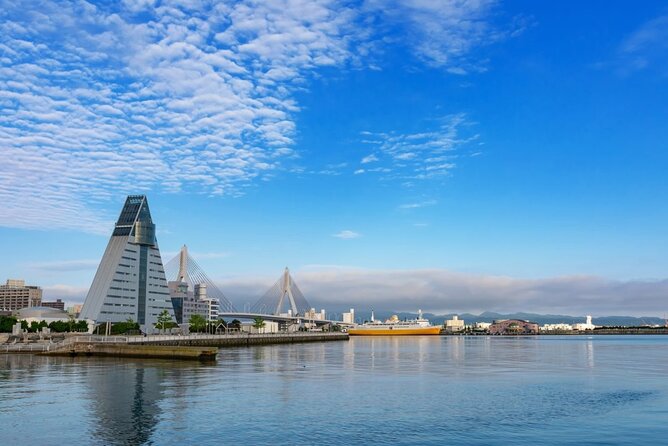
- See giant Nebuta floats up close: Wa Rasse displays five full-size floats from the previous festival, with video, sound, and photographs.
- Visit Japan’s Jomon past: Sannai-Maruyama offers reconstructed settlement foundations and a look at an ancient community discovered only in 1992.
- Choose three or four stops: The six-hour schedule is customizable, but entrance fees, lunch, and transport are extra.
- Expect a walking day: Pickup means meeting your guide on foot, not riding in a private vehicle.
- Ask for a clear plan: Some guides have arranged local food, apple tastings, temple visits, and special festival seating.
- Do not plan Hirosaki: Hirosaki is specifically excluded, despite some past tour descriptions and guide comments referring to it.
Why a private guide helps in Aomori
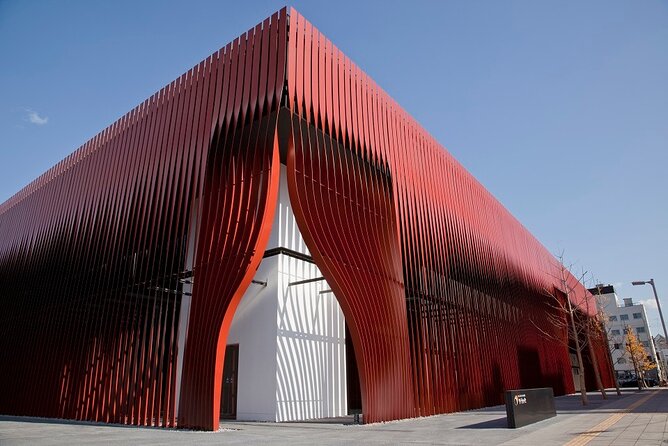
Aomori is not a city you can judge from one quick stroll near the station. Its center follows an Edo Period grid, but much of the city was destroyed during World War II. Many of the buildings you see today are modern, including several striking museums and cultural centers.
That mix makes a guide useful. You are not simply ticking off old buildings. You are connecting a famous summer festival with local art, ancient archaeology, public design, and everyday northern Japanese life.
The private setup is the strongest feature. Your group has the guide to itself, so you can ask questions without waiting for a busload of people to catch up. If you care most about Nebuta, you can give it more time. If Munakata Shiko’s prints are not your thing, you can ask to focus on the Jomon site or contemporary art instead.
The six-hour limit still matters. The advertised choices include six possible stops, each listed at about one hour. Since the tour includes only three or four sites, you need to choose. If you try to squeeze everything in, you risk spending the day watching the clock.
More Private Tours in Japan:
- Tokyo 6hr Private Tour with Government-Licensed Guide
★ 5.0 · 3,902 reviews - Private Tour to Mt. Fuji and Hakone (Fully Licenced Operator)
★ 5.0 · 1,910 reviews - Tokyo Customized Private Tour (Must See Places in 1 Day)
★ 5.0 · 1,499 reviews
Starting at Wa Rasse and meeting the Nebuta monsters
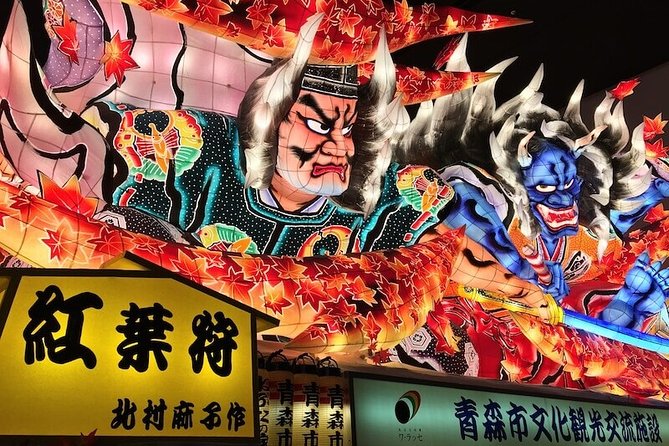
Nebuta Museum Wa Rasse is the natural first choice for many people. The museum is devoted to Aomori’s famous Nebuta Festival, held from August 2 through 7. Its main attraction is simple and powerful: five large floats from the previous festival are displayed indoors.
These are not small decorative models. Their size helps explain why the festival feels so important in Aomori. Video installations, festival sounds, and photographs add the missing movement and noise. A guide can also help you understand what you are seeing rather than leaving you to admire the colors without context.
This is one of the best stops for a short visit because it gives you a clear sense of Aomori before you explore more specialized museums. It also makes the tour worthwhile outside festival season, when you cannot see the floats rolling through the streets.
Allow about an hour. Admission is not included in the tour price, so ask your guide or the operator which entrance costs apply. If the festival is taking place during your visit, confirm the parade schedule yourself as well. One serious complaint described incorrect information about a parade, which led to a missed event. That kind of mistake is avoidable with a quick check from the official festival source.
Sannai-Maruyama, where Aomori reaches far back
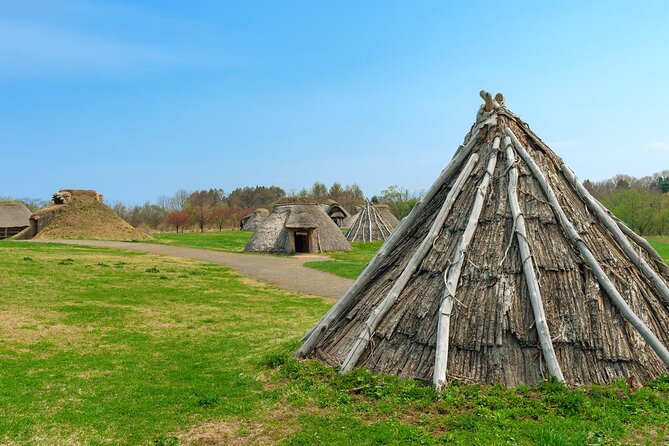
Sannai-Maruyama is the most important stop for anyone interested in archaeology or early Japanese history. The site reveals the reconstructed foundations of a Jomon-era settlement. The settlement was first discovered in 1992 and later declared a special national historic landmark.
That recent discovery is part of the appeal. You are not looking at a polished medieval monument with centuries of tourism built around it. You are seeing the remains of a much older community, presented through reconstructed foundations and site interpretation.
The supplied tour information gives fewer details about individual structures than it does about the site’s age and status. That is another reason your guide matters. Ask Kaz, if he is assigned, to spend extra time here. He has been praised specifically for explaining the excavation, the culture, and the site’s place in Japan’s past.
Sannai-Maruyama pairs well with the Aomori Museum of Art because the two are close together. If you want both, make that request early. The archaeology site can easily become the day’s highlight, but you should not expect to fit every other museum in afterward.
Aomori Museum of Art and Tadao Ando’s design
The Aomori Museum of Art is housed in a white cubic building designed by Jun Aoki. Its form was planned to work with the historical surroundings of the nearby Sannai-Maruyama site.
The building itself is part of the visit. This is not simply a traditional collection placed in a neutral box. The modern structure gives you a second way to think about Aomori, a city where contemporary architecture often fills spaces that no longer contain older buildings.
The museum is a good pick if you want art but do not want to spend the whole day inside galleries. It also makes practical sense with Sannai-Maruyama, since the two sites are close. Still, both require admission, and those costs are not included.
You should tell the guide whether you prefer architecture, paintings, local culture, or archaeology. A private tour works best when you make that preference clear instead of waiting for the guide to guess.
A few more options to weigh up in Japan
- (Okinawa’s No. 1 Popular Northern Day Trip) Chinese-speaking guide · Includes admission tickets · 1 person can book: Churaumi Aquarium · Cape Manzamo · Kouri Island · American Village
★ 4.7 · 1,846 reviews - Shiraito Falls & Forest Cafe & Handmade Flower Salt Pudding & Grilled Seafood & Totoro Forest & Sakurai Futamigaura & Angel’s Wings & Coconut Tree Swing Day Tour (Departing from Hakata Station, with Mandarin, English, and Cantonese speaking guide)
★ 4.9 · 1,840 reviews - Tokyo: Shinjuku Local Bar and Izakaya Guided Walking Tour
★ 4.9 · 1,794 reviews - Tokyo: Private City Highlights Tour with Local Guide
★ 4.8 · 1,433 reviews
Munakata Shiko’s prints and a local artistic voice
The Munakata Shiko Memorial Museum of Art presents work by Aomori native Munakata Shiko, who lived from 1903 to 1975. He is often called the Vincent van Gogh of Aomori, and the museum includes his woodblock prints, including Ten Great Disciples.
This stop brings a personal local voice into the day. Wa Rasse shows the city’s public festival culture, while Munakata Shiko’s work offers a quieter, more focused look at an artist from the region.
You may want this museum if you already know you enjoy woodblock printing or Japanese art. If you do not, ask the guide for a short introduction before committing an hour. Since you can normally choose only three or four sites, each museum visit should match your interests.
The Kyodokan and Aomori’s folk past
Aomori Prefectural Kyodokan, also called the Aomori Prefectural Folk Museum, holds a large collection of Jomon-period pottery. It also includes miniature reconstructions of Jomon huts and tools from the period.
This is a useful choice if Sannai-Maruyama interests you but you want more objects and indoor interpretation. The site shows foundations and settlement remains. Kyodokan adds pottery, tools, and reconstructed domestic settings.
The two stops overlap in subject, so you may not need both on a short first visit. I would choose Sannai-Maruyama for the physical site, then add Kyodokan only if early Japanese culture is your main reason for booking.
Aomori Contemporary Art Center and the forest setting
The Aomori Contemporary Art Center sits on the grounds of Aomori Public College. Tadao Ando designed it, and its building and water feature are intended to work with the surrounding setting.
This is the most design-focused option in the group. It gives you a change of pace from festival floats, archaeology, and historic objects. If you like architecture, this may be worth choosing even if you know little about contemporary art.
The center is not an obvious fit for every group, though. A family primarily interested in Nebuta may prefer Wa Rasse, while someone focused on local history may get more from Sannai-Maruyama or Kyodokan. Tell your guide what kind of day you want.
What the six-hour walking format really means
The duration is about six hours, but the tour does not include private transportation. You meet the guide on foot within the designated Aomori area, and transportation fees are excluded.
That detail changes how you should plan. Do not assume a private car will carry you from museum to museum. Public transportation is nearby, but bus or train costs are yours to pay. Lunch is also extra, as are personal expenses and entrance fees.
The description says guide entrance fees are covered only for sights listed under the What to Expect section. The wording is not perfectly clear about every admission arrangement, so ask before the day begins. A simple question about which guide tickets are covered can prevent confusion at the entrance.
A practical plan is to choose one central cultural stop, one art or history museum, and one major site. Wa Rasse, Sannai-Maruyama, and the Aomori Museum of Art make a sensible trio. A fourth stop may be possible, but only if distances and visit lengths work in your favor.
Guides can make or break the day
The strongest praise has gone to guides who prepare in advance and adjust the day to the group. Kaz contacted one customer through WhatsApp before the tour and helped shape the itinerary around time, interests, and last-minute requests. He also helped a person with mobility issues obtain front-row accessible seating for the Nebuta Matsuri Festival.
Other guide experiences show the range of personal touches possible. Tomi found a shop selling used kimonos at a good price. Rocky was praised in one account for arranging local food and apple tasting. Fuji took a group to see a samurai master and students practicing swordsmanship, along with temples and shrines that survived the war.
Those examples are not guaranteed inclusions. They show what a flexible local guide might add when time and circumstances allow. Ask for special interests before the tour, and confirm what is actually possible.
There is also a warning. One customer described a guide who walked ahead, rushed lunch, changed the plan repeatedly, gave poor festival information, and failed to manage a late start. The operator explained that guides work independently and investigated the case. You should therefore confirm the meeting point, the chosen stops, and the timing directly before the day.
Is $154.84 per person good value?
At $154.84 per person, this is not a cheap way to see Aomori. You still pay for admissions, lunch, and transport, and the advertised price is per person rather than a single flat group fee.
The value improves with a larger private group, especially if the tour offers group discounts. You are paying for a licensed local English-speaking guide, planning help, and the ability to shape the day. For a couple or family with limited time, that can be worthwhile, particularly if Aomori is a port stop or a short part of a wider Japan trip.
The value is weaker if you want only a quick look at Wa Rasse and the station area. You could visit a small number of central sights independently for less. The tour earns its price when you want context, help choosing among museums, or a guide who can connect local food, art, festivals, and archaeology.
Who should book this Aomori day?
I would recommend it to first-time visitors who want more than a station-area walk. It suits families, couples, private groups, and anyone who prefers questions and conversation over a fixed group schedule.
It is especially useful for people interested in Aomori’s Nebuta Festival, Jomon archaeology, Japanese art, or local customs. The tour also makes sense for a cruise visitor who wants a planned day, but you must allow enough time for the ship’s arrival and return schedule.
You should think twice if you dislike walking, want private vehicle transport, or expect to see every listed location. You should also skip it if Hirosaki is your main goal. Hirosaki cannot be visited on this tour, despite some past guide comments describing Hirosaki Castle and gardens.
Free cancellation is available if you cancel at least 24 hours before the start time. Changes or cancellations made inside that window are not accepted for a refund.
Should you book it?
Book this tour if you want a private introduction to Aomori and are willing to choose three or four places carefully. I would prioritize Wa Rasse, Sannai-Maruyama, and either the Aomori Museum of Art or Munakata Shiko Memorial Museum, depending on your interests.
Before paying, request the meeting point, guide name, planned route, walking expectations, and a list of extra fees. If you receive a thoughtful plan from a guide such as Kaz, Tomohiko, Tomi, or Fuji, the experience may give you a far better sense of Aomori than a rushed independent visit. If the plan is vague, ask questions early. This tour has real flexibility, but it needs active planning from you.
FAQ
How long is the Aomori private tour?
The tour lasts approximately six hours.
How many sights can I visit?
The tour includes a customizable selection of three to four sites from the listed options. The six-hour period is not intended to cover every stop.
Is transportation included?
No. This is a walking tour, and pickup means meeting the guide on foot within the designated Aomori area. Transportation fees and private transportation are not included.
Are entrance fees included?
Entrance fees are not included in the tour price. Guide entrance fees are covered only for sights listed under the What to Expect section.
Can I visit Hirosaki on this tour?
No. Hirosaki cannot be visited as part of this experience.
Can I cancel for a full refund?
Yes, if you cancel at least 24 hours before the experience start time. Cancellations or changes made less than 24 hours in advance are not accepted for a refund.
Just added in Japan
- A One-of-a-Kind Sushi Experience in a Special Place of Japan★ 5.0 · 15 reviews
- Tokyo Cute Bento Cooking Class – Make a Kawaii Character Lunchbox★ 5.0 · 126 reviews
- Japanese Home Cooking Class & Walk in Todoroki Temple Tokyo★ 5.0 · 88 reviews
- Japan Tokyo Tower Observatory Deck E-Ticket★ 4.0 · 34 reviews
- Catch a Baseball Game in Tokyo with a Local – Tickets Included★ 5.0 · 24 reviews
- Japan Classic 10 Day – One Life Adventures★ 5.0 · 129 reviews
- JDM Experience with Fast&Furious RX-7 (English speaking Driver)★ 5.0 · 57 reviews
- Tokyo Private Day Tour by Car with English speaking Driver Guide★ 4.0 · 29 reviews
Full-Day, compared.

Mount Fuji Full-Day Private Tour from Tokyo (Customizable)
Read our review →
Hiroshima / Miyajima Full-day Private Tour with Government Licensed Guide
Read our review →
Mount Fuji Full-Day Small Group driver-guide tour (with Pick-up option)
Read our review →

5 Top Highlights of Kyoto Full Day Bike Tour (E-bike option)
Read our review →