Reviewed · FULL-DAY
Full Day Biking Tour Exploring the Best of Kyoto
Kyoto rewards movement. This full-day ride lets you cover far more ground than walking while still slipping through backstreets, temple grounds, river routes, and traditional neighborhoods. I especially like the mix of major sights and quieter corners, plus the chance to hear the stories behind each place from guides such as Karl, Jay, Indra, Paul, Juan, and Jamie.
I also like that the tour includes a Cannondale bicycle, helmet, bottled water, and lunch, so the $119.38 price covers more than simple guiding. The small group, capped at eight people, makes it easier to ask questions and keep the group together. The main caution is stamina: this is a serious day of riding, often around 18 to 20 miles, with plenty of walking at the sights.
In This Review
- Key points to know before you book
- Why a bicycle works so well in Kyoto
- Starting near Kyoto Station with a proper bike fitting
- Nishi Honganji: a quiet start with serious scale
- Kitano Tenmangu and the local side of Kyoto
- Kinkaku-ji: the Golden Pavilion without the usual confusion
- The Imperial Palace grounds and a change of pace
- Lunch: an important pause in a long day
- Gion: seeing the geisha district with respect
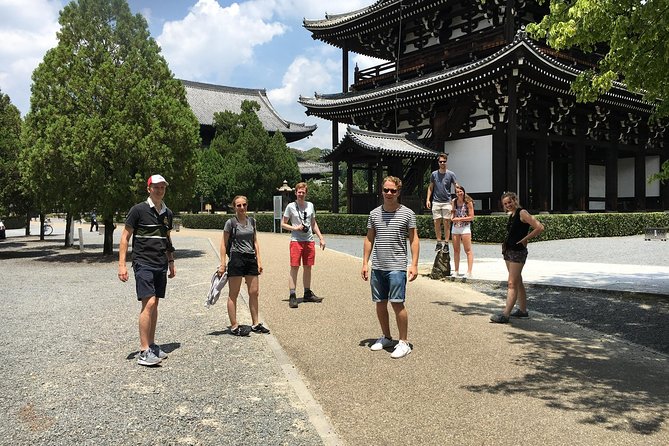
- Tofuku-ji: a short stop with a wide view
- Fushimi Inari: a smart route through Kyoto’s busiest shrine
- How difficult is the 18 to 20 mile ride?
- The guides make the biggest difference
- What the $119.38 price really buys you
- Who should book this Kyoto cycling tour?
- Should you book the full-day ride?
- FAQ
- How long does the Kyoto cycling tour last?
- Where does the tour start?
- Where does the tour end?
- Is bicycle use included?
- Is lunch included?
- How many people are in the group?
- What age must riders be?
- How physically difficult is the tour?
- Are dietary requirements accepted?
- What happens if the weather is bad?
- Can I cancel for a full refund?
Key points to know before you book
- You cover much of Kyoto in one day: The route links Nishi Honganji, Kitano Tenmangu, Kinkaku-ji, the Imperial Palace area, Gion, Tofuku-ji, and Fushimi Inari.
- The ride is mostly manageable but long: The route is generally flat and uses smaller roads, yet the distance and sightseeing on foot can leave you tired.
- Lunch is part of the value: A Japanese meal at a local-style noodle or family restaurant is included, along with bottled water.
- The guides shape the experience: Karl, Jay, Indra, Paul, Juan, Jamie, and others are praised for humor, cultural context, organization, and safe route-finding.
- You get more than temple snapshots: The ride includes traditional homes, quiet streets, rivers, neighborhood views, and stories about geisha, Buddhism, Shinto practice, and Japanese culture.
- The tour starts and ends near Kyoto Station: Meet at Cycle Kyoto, one block south of Kyoto Station, at 7 Higashikujō Nishisannōchō.
Why a bicycle works so well in Kyoto
Kyoto is spread across a broad plain, with famous sights scattered well beyond the central station area. Walking between them takes too long, and public transport can leave you waiting, transferring, and squeezing onto crowded vehicles. A bicycle gives you a useful middle ground.
You can travel farther than you would on foot, but you still see the city at street level. The route uses smaller roads and backstreets, allowing you to notice traditional houses, local neighborhoods, temple walls, rivers, and ordinary corners that a bus window would miss.
I also like the rhythm of this tour. You ride for a while, stop at a major sight, hear a focused explanation, and then get moving again. That pattern keeps a long day from becoming one endless lecture or a chain of rushed photo stops.
The route is generally flat and described as safe and easy to follow. Still, you ride on city streets, so you need to be comfortable on a bicycle and alert around traffic. You must be at least 13 years old and have a moderate level of physical fitness.
A few more options to weigh up in Kyoto
- PERFECT KYOTO 1-Day Bus Tour
★ 5.0 · 13,518 reviews - [Kyoto & Nara Day Tour] Sagano Scenic Railway & Nara Park & Fushimi Inari Taisha Thousand Torii Gates & Togetsukyo Bridge & Bamboo Grove & Kimono Forest (Departing from Osaka)
★ 4.9 · 10,942 reviews - Kyoto: Fushimi Inari, Kinkakuji, Bamboo Grove 1 Day Bus Tour
★ 4.8 · 4,316 reviews
Starting near Kyoto Station with a proper bike fitting
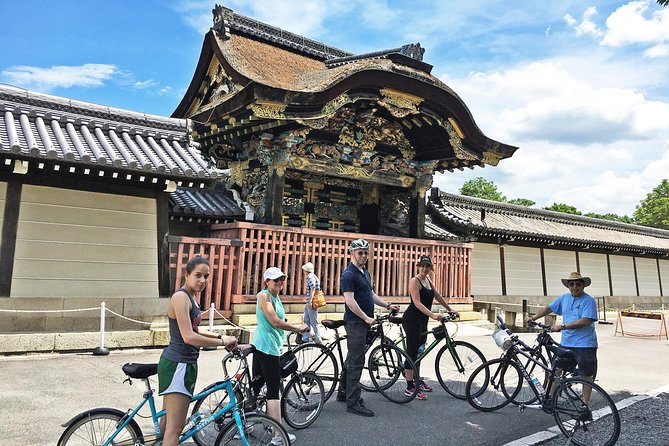
The day begins at Cycle Kyoto, located at 7 Higashikujō Nishisannōchō, about one block south of Kyoto Station. You meet the guide and the rest of the small group, receive a bicycle, get fitted, and collect a helmet.
The included bike is a high-quality Cannondale. One useful detail from the day is that the bicycle has only a small front pouch for essentials such as a phone and wallet. If you bring a backpack, you may need to carry it for the entire ride, so pack light.
You also receive bottled water, which matters in Kyoto’s warmer months. Dietary requirements should be provided ahead of time because lunch is included and the operator needs to know about restrictions before the day begins.
Nishi Honganji: a quiet start with serious scale
The first cultural stop is Nishi Honganji, one of Kyoto’s large Buddhist temples. The visit lasts about 15 minutes, which is enough to step inside and appreciate the enormous wooden buildings without using up too much time at the beginning.
This stop works well as an introduction because it is less crowded than Kyoto’s most famous sights. The scale of the wooden architecture gives you an immediate sense of the city’s religious importance, while the quieter setting lets you listen without fighting through a mass of people.
Your guide adds the context here. Indra, Karl, Paul, and others are praised for explaining not just dates and names, but also how religious places connect with daily life and Japanese culture. That human angle is one reason the tour feels more useful than simply following a route on a map.
Kitano Tenmangu and the local side of Kyoto
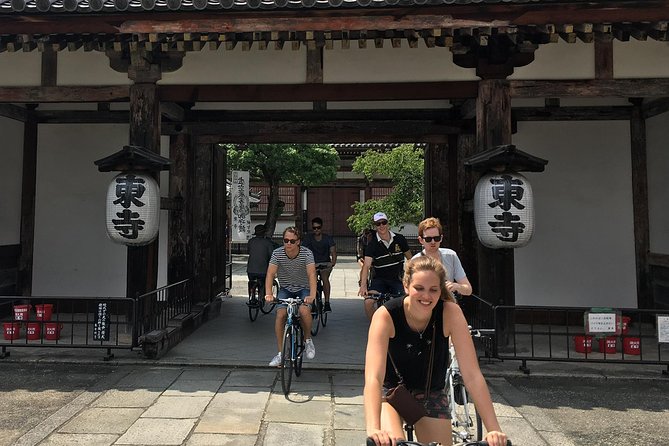
At Kitano Tenmangu Shrine, you spend about 20 minutes with local shrine goers and learn about the shrine’s past. The atmosphere is calmer than at the day’s biggest attractions, and the stop adds variety after Nishi Honganji.
I appreciate that this is not just a greatest-hits circuit. Kitano Tenmangu gives you time to watch ordinary shrine activity and see how a religious site functions beyond its famous photographs. The guide’s explanation helps connect Shinto customs with the setting around you.
The stop is fairly short, so you should not expect a detailed exploration of every corner. Instead, think of it as a focused visit that prepares you for the larger and more crowded places later in the day.
A completely different kind of day out:
- Kyoto: Tea Ceremony in a Traditional Tea House in Kiyomizu
★ 4.9 · 3,519 reviews - Kyoto: Gion Make Your Own Chopsticks with Engraving Option
★ 5.0 · 3,465 reviews - Kyoto Nara Day Trip │ Kiyomizu-dera Temple + Fushimi Inari-taisha Shrine + Nara Park (Departing from Osaka/Kyoto)
★ 4.7 · 3,408 reviews - Kyoto Geisha Walking Tour: Gion District & Hidden Gems
★ 4.7 · 3,273 reviews
Kinkaku-ji: the Golden Pavilion without the usual confusion
Kinkaku-ji, the Golden Pavilion, is one of Japan’s most visited sights. You have around 30 minutes here, including time for your guide’s explanation and a chance to enjoy the setting, take photographs, or buy an ice cream.
The pavilion itself is a major visual reward, but the site can feel busy and tightly managed. A guide helps you understand what you are seeing and keeps the stop from becoming a quick photograph followed by a confused search for the exit.
You should also keep expectations realistic. Thirty minutes is enough for the main route and the pavilion view, but not for a slow, wandering visit. If Kinkaku-ji is your top priority, you may want to return independently for more time.
The Imperial Palace grounds and a change of pace
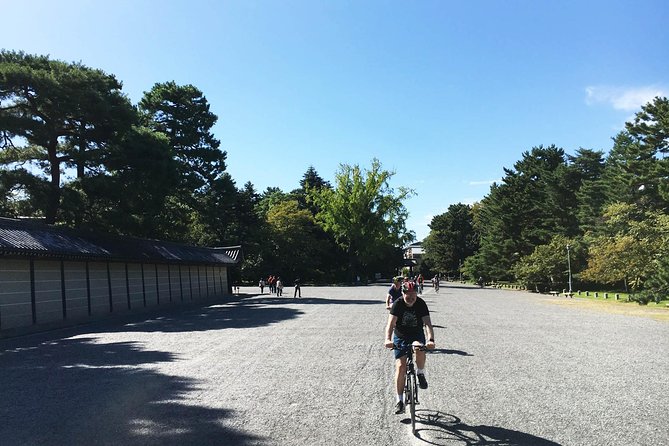
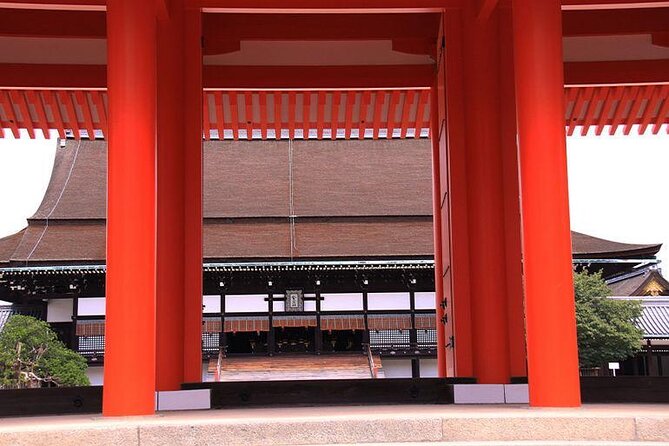
The ride through the former seat of Japan’s imperial family provides a welcome change from temple crowds. The tour uses the grounds as a place to talk about the imperial past while you continue moving through open space.
This is one of the places where a bicycle offers a clear advantage. The grounds cover a large area, and you can see more of them without spending most of the day walking. The exact stop timing is not specified, but it fits naturally into the route between the western sights and central Kyoto.
I like this section because it broadens the story of Kyoto. The day is not only about temples and shrines. You also get a look at the political side of Japan’s former capital and the spaces connected with the imperial family.
Lunch: an important pause in a long day
Lunch is included, and that makes a real difference. The meal is described as a hearty Japanese lunch, with past groups eating at a traditional noodle house or an out-of-the-way family restaurant with local patrons.
You should not expect a formal dining experience or a menu built around tourist preferences. The appeal is practical and cultural: you stop, eat a filling meal, and try something connected to everyday Japanese food.
The lunch also breaks up the physical effort. With a ride that can reach 18 to 20 miles, a proper midday meal is much better than trying to run on snacks. Tell Cycle Kyoto about dietary needs before the tour, not on the morning of departure.
Gion: seeing the geisha district with respect
The Gion stop lasts about 15 minutes and introduces you to Kyoto’s famous geisha district. Your guide explains the hidden world behind the streets and may help you understand the difference between the district’s public image and the lives of the entertainers who work there.
This is a brief orientation rather than a long neighborhood walk. You may catch a glimpse of a geisha or maiko, but that is never guaranteed, and you should treat any sighting with discretion. The value is in learning how the district works, not in chasing photographs.
Jay is praised for choosing a delicious lunch spot in Gion and for taking group photographs. Guides such as Jamie and Indra also add cultural explanations that make the area more than a postcard backdrop.
Tofuku-ji: a short stop with a wide view
Tofuku-ji receives only about five minutes on the published route, so this is a quick look rather than a full temple visit. The bridge offers striking views, and the spacious grounds give you a sense of why this is one of Kyoto’s major Zen temples.
That short timing is both useful and limiting. It lets you see another important site without sacrificing the rest of the route, but you will not have time for a detailed examination of the complex. If you already know you want a long visit here, plan a separate return.
The stop also works geographically. It leads toward Fushimi Inari and gives you a final temple setting before the day’s most recognizable torii gates.
Fushimi Inari: a smart route through Kyoto’s busiest shrine
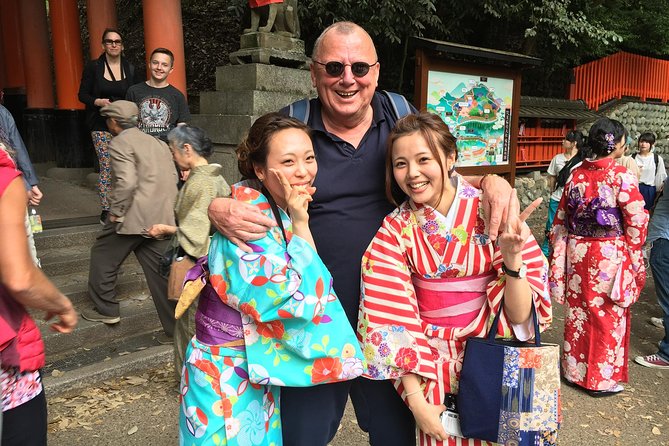
Fushimi Inari-taisha is the final major stop and one of Kyoto’s most visited attractions. Its thousands of vermilion torii gates stretch up the wooded hillside, creating one of the most recognizable scenes in Japan.
The full trail can take much longer than the 20-minute tour stop, especially if you want to climb high into the mountain. The guide’s role here is to choose a sensible path through the crowds, explain the shrine’s meaning, and help you make the most of limited time.
The tour does not promise a complete climb. You get an introduction and a chance to see the famous gates, then return to the bicycle route. That is efficient for a first overview, but you may want to come back early another day if walking the full trail is important to you.
How difficult is the 18 to 20 mile ride?
The route is generally flat, and several people describe the riding as easy or comfortable. Guides are praised for using small roads and keeping the group safe, which helps in a city that can look intimidating when you first arrive.
The distance remains real. One account describes roughly 18 miles of cycling, while another reaches 20 miles plus about 14,000 steps. You are not simply sitting on a bicycle all day. Every temple and shrine includes some walking, standing, and time on your feet.
I would rate the tour as moderate rather than gentle. Fit teens and active adults should find it manageable, but you should not book it if you dislike long rides or tire quickly in warm weather. One group finished exhausted even while calling the day excellent.
An electric bicycle upgrade may be available, according to one account, but it is not part of the stated inclusions. Ask Cycle Kyoto about current upgrade options and pricing before you rely on one.
The guides make the biggest difference
The strongest part of this experience is the guiding. Karl is praised for his depth of Japanese history, safe navigation, and ability to adjust the day when the group wanted to keep seeing more. Jay is described as funny, helpful, and attentive to group photographs.
Indra is praised for connecting Kyoto’s past with Japanese culture and for explaining topics such as Buddhist temples, Shinto shrines, Gion, and the economics behind Fushimi Inari’s many torii gates. Paul is praised for clear organization and for making a detour to a local street ceremony.
Juan receives credit for an engaging history presentation and a good lunch stop. Jamie adds cultural details, humor, simple Japanese phrases, and lessons such as counting and the months of the year.
That said, the experience can vary with the guide. One less positive account found the cycling enjoyable but the explanations unclear and the overall value weaker than similar tours elsewhere. That is a fair warning: the route is strong, but the guide’s personality and teaching style shape much of the day.
What the $119.38 price really buys you
At $119.38 per person, this is not the cheapest way to see Kyoto. You are paying for a full day, a quality bicycle, a helmet, bottled water, lunch, route planning, entrance to Kinkaku-ji, and a guide who handles navigation between widely separated sights.
The value improves if you have only one or two days in Kyoto. You can get a broad introduction to the city without spending hours figuring out train connections or choosing which temples fit together geographically.
The price is less attractive if you prefer slow visits at one or two temples. The short stops at Tofuku-ji, Gion, and Fushimi Inari mean you are buying breadth rather than depth.
The 4.9 rating from 498 reviews and 99 percent recommendation rate suggest very strong satisfaction, but I would still focus on your fitness and sightseeing style. The tour works best when you want a lively overview and enjoy learning while moving.
Who should book this Kyoto cycling tour?
I would recommend it to active visitors who want to see many sides of Kyoto in one day. It suits couples, small groups, and families with teens aged 13 or older who can ride confidently for several hours.
It is also a good first-day choice. The route gives you a useful map of Kyoto, and you can return later to spend more time at Kinkaku-ji, Fushimi Inari, Gion, or another temple that catches your interest.
I would hesitate if you have limited cycling experience, a physical condition that makes long rides difficult, or a strong preference for unhurried temple visits. Summer heat may also make the day harder, since you will ride and walk for hours.
The tour requires good weather. If poor weather forces cancellation, you receive the choice of another date or a full refund. You can cancel for a full refund up to 24 hours before the start time, but late cancellations and late changes are not accepted.
Should you book the full-day ride?
Book it if you want a broad, active introduction to Kyoto and are happy to trade long temple visits for more places in one day. The combination of backstreets, major sights, local lunch, and strong guide-led storytelling gives you a real feel for the city’s layout and culture.
Skip it if your ideal Kyoto day means moving slowly, avoiding city streets, or spending hours at Fushimi Inari alone. For most fit visitors with limited time, though, this is a well-planned and unusually efficient way to see Kyoto, with lunch and equipment already handled.
FAQ
How long does the Kyoto cycling tour last?
The tour lasts approximately seven to eight hours. Some groups may run longer if the guide and group choose to continue seeing more sights.
Where does the tour start?
The tour starts at Cycle Kyoto, located at 7 Higashikujō Nishisannōchō in Kyoto’s Minami Ward, near Kyoto Station.
Where does the tour end?
The activity ends back at the Cycle Kyoto meeting point.
Is bicycle use included?
Yes. The tour includes use of a high-quality Cannondale bicycle and a helmet.
Is lunch included?
Yes. A Japanese lunch and bottled water are included in the tour price.
How many people are in the group?
The activity has a maximum of eight participants. The tour overview also describes it as a small-group experience.
What age must riders be?
Riders must be at least 13 years old and comfortable riding a bicycle.
How physically difficult is the tour?
You need a moderate level of physical fitness. The route is generally flat, but the ride may cover about 18 to 20 miles and includes walking at temples and shrines.
Are dietary requirements accepted?
Yes, but you need to provide dietary requirements ahead of time.
What happens if the weather is bad?
The tour requires good weather. If it is canceled because of poor weather, you will be offered another date or a full refund.
Can I cancel for a full refund?
Yes. You can cancel at least 24 hours before the experience start time for a full refund. Cancellations or changes made less than 24 hours before the start time are not accepted.
Just added in Kyoto
- The “Golden Route” and Ancient Japan by DIAMIR Erlebnisreisen – 14-Day Tour★ 2.0 · 2 reviews
- Japan: Castles & Cuisine by G Adventures – 6-Day Kyoto to Osaka Tour★ 4.5 · 4 reviews
- Cycle Japan by Explore! – 13-Day Kyoto to Tokyo Tour★ 4.7 · 12 reviews
- Cycle Japan by Intrepid Travel – 11-Day Kyoto to Tokyo Tour★ 4.8 · 2 reviews
- Classic Japan by Intrepid Travel – 11-Day Kyoto to Tokyo Tour★ 4.4 · 14 reviews
- Ancient & Modern Japan 14-Day Tour by Exodus Adventure Travels★ 4.4 · 40 reviews
- 5 Day Cultural Adventure of Kyoto, Nara & Osaka by Tourist Journey★ 2.5 · 2 reviews
- 12 Days Kinosaki Onsen Escape: A Journey Through Japan’s Timeless Towns by UME Travel★ 4.8 · 5 reviews
Full-Day, compared.

Mount Fuji Full-Day Private Tour from Tokyo (Customizable)
Read our review →
Hiroshima / Miyajima Full-day Private Tour with Government Licensed Guide
Read our review →
Mount Fuji Full-Day Small Group driver-guide tour (with Pick-up option)
Read our review →

5 Top Highlights of Kyoto Full Day Bike Tour (E-bike option)
Read our review →