Reviewed · PRIVATE TOURS
Aizu 4hr Private Tour with Government-Licensed Guide
Aizu rewards curious walkers. This four-hour private tour lets you shape a visit around two or three major sights, with a government-licensed English-speaking guide to explain the region’s samurai past, religion, crafts, and daily life. I like the personal format and the chance to build an itinerary around your own interests. The main catch is that transport, admission fees, lunch, and other personal costs are extra.
At $107.78 per person, this is fair value for a private guide, especially for a family or small group that wants help making sense of Aizu’s complicated past. I also like the flexible pace: guides such as Masa, Yumi, Mitsuko, and Nobuko have been praised for adjusting stops, checking on breaks, helping with transport, and explaining history in clear English. Just remember that the experience is a walking tour, not a private-car sightseeing trip.
In This Review
- Key points to know before booking
- Why Aizuwakamatsu deserves a guided afternoon
- Tsuruga Castle: the best starting point for Aizu’s story
- Aizu Old Samurai Residences: daily life beyond the battlefield
- Higashiyama Onsen: a quieter change of pace
- Suehiro Sake Brewery: local flavor with a clear family story
- Fukushima Museum: the broadest historical view
- Iimoriyama: the emotional heart of Aizu
- Oyakuen Garden: a calm finish after heavy history
- What the $107.78 price really buys you
- Guide quality and the pace on foot
- Who should book this Aizu tour?
- Should you book it?
- FAQ
- How long is the Aizu private tour?
- How many sites can I visit?
- Is the tour private?
- Is transportation included?
- Where do I meet the guide?
- Are entrance fees included?
- Is an English-speaking guide provided?
- Can families with children join?
- Can I cancel for a full refund?
Key points to know before booking
- Choose two or three sites: You are not expected to squeeze all seven listed attractions into four hours.
- A licensed guide adds context: The government certification requires a strong grounding in Japanese culture and history.
- Aizu’s samurai story takes center stage: Tsuruga Castle and Iimoriyama are especially useful for understanding the Boshin War and the end of the shogunate.
- Transport is your responsibility: The guide meets you on foot, and private transportation is not included.
- Sake and gardens offer variety: Suehiro Brewery and Oyakuen give the tour a welcome break from military history.
- Good for families and private groups: Guides have helped children, arranged onward transport, and adapted the day to different energy levels.
Why Aizuwakamatsu deserves a guided afternoon
Aizuwakamatsu is a former feudal capital in Fukushima Prefecture. Its identity is closely tied to the Aizu domain, the samurai class, and the fighting that followed the fall of the shogunate in the late 1860s.
That story is not always easy to follow on your own. Names, loyalties, political changes, and religious traditions overlap. A licensed guide can connect a castle wall to the Boshin War, then explain why Iimoriyama carries such emotional weight.
I like that this tour does not force you through a fixed checklist. You select the places that matter most, then work with the guide to create a four-hour route. You may focus on samurai history, traditional gardens, local sake, museums, or a mixture of all three.
The private format also matters. Only your group participates, so you can ask direct questions, stop for a break, or spend more time on a subject that catches your attention. Guides have been praised for preparing notes and visual material, helping families use IC cards, and checking often to see if everyone is comfortable.
The tour description also mentions quiet streets, old-fashioned shops, local crafts, traditional villages, and countryside train lines. Those wider Aizu experiences may be possible only if your chosen plan allows them. The confirmed structure is a walking tour around designated areas of Aizuwakamatsu, with two or three selected sites.
More Private Tours in Japan:
- Tokyo 6hr Private Tour with Government-Licensed Guide
★ 5.0 · 3,902 reviews - Private Tour to Mt. Fuji and Hakone (Fully Licenced Operator)
★ 5.0 · 1,910 reviews - Tokyo Customized Private Tour (Must See Places in 1 Day)
★ 5.0 · 1,499 reviews
Tsuruga Castle: the best starting point for Aizu’s story
Tsuruga Castle is the natural choice if you want the broad political story. The castle was first built in 1384 and changed hands many times as different rulers controlled Aizu.
Its most important chapter came during the Boshin War of 1868, when forces loyal to the shogun fought the newly formed government. The castle was destroyed after the conflict, and its history helps explain the painful shift from Edo-period samurai rule to the Meiji era.
You receive about 30 minutes here, and admission is not included. That is enough time for a focused introduction, exterior views, and questions, but not a slow exploration of every display or room.
I would choose Tsuruga Castle if this is your first visit to Aizu. It gives the guide a clear starting point and helps you understand the other historical sites. If you already know the Boshin War well, you might prefer a garden, brewery, or museum instead.
One practical point: the tour does not include private transportation. The guide meets you on foot within the designated Aizuwakamatsu area, so confirm the meeting point and allow time to reach it before the tour begins.
Aizu Old Samurai Residences: daily life beyond the battlefield
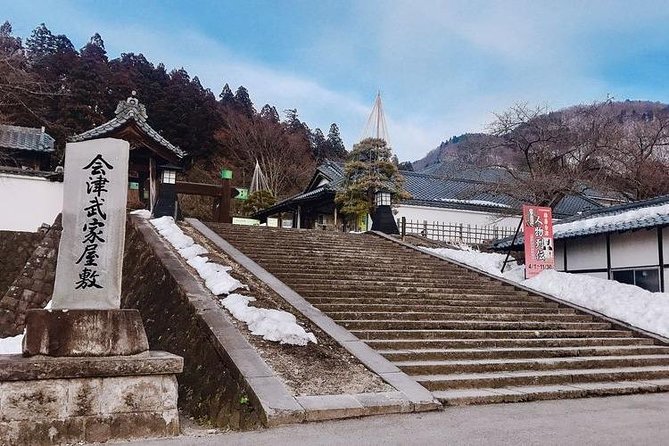
The Aizu Samurai Residence shows how the region’s highest-ranking samurai lived. This was not simply a family home. It served as quarters for an important samurai, his family, employees, and servants.
That makes it a useful companion to Tsuruga Castle. The castle explains power and war. The residence shows hierarchy, household life, work, and the practical structure behind the warrior class.
The scheduled visit lasts about 30 minutes, and admission is listed as free. A guide can help you notice details you might otherwise pass without understanding, particularly the difference between formal spaces and working areas.
I would pick this stop if you are interested in social history, architecture, or the lives of families connected to the samurai system. It may feel less dramatic than the castle or Iimoriyama, but it adds balance to a tour that could otherwise focus too heavily on battles and famous leaders.
For families, this stop can also provide a more concrete picture of history. Children may understand rooms, household roles, and daily routines more easily than a long explanation of political change.
Higashiyama Onsen: a quieter change of pace
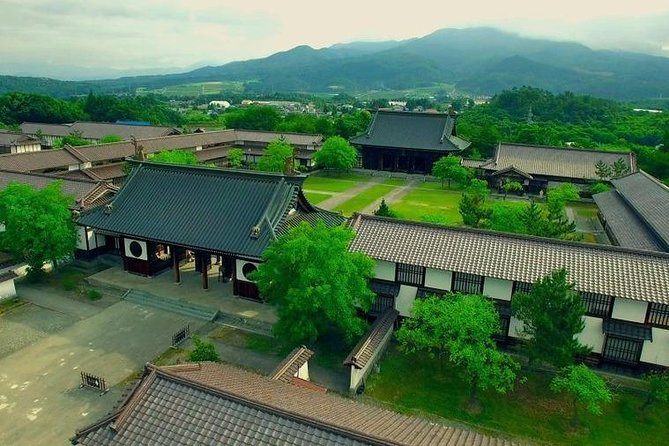
Higashiyama Onsen lies in a valley east of central Aizuwakamatsu. It is a hot spring resort with larger hotels and shops for visitors.
The planned stop is one hour, the longest allocation on the suggested route. Admission is not included, and the information provided does not promise a bath visit. Treat this as a scenic and cultural stop unless your guide confirms a specific bathing arrangement.
I like the contrast. After a castle and a samurai residence, a hot spring district shows another side of Aizu, one tied to relaxation, local tradition, and resort life. You can ask your guide how the area fits into the region’s culture rather than simply passing through for photographs.
Still, this is not the strongest choice if your main goal is a concentrated history tour. With only four hours, spending a full hour here means giving up another site. Pick Higashiyama Onsen if you want a slower rhythm or have already seen the main historical attractions.
A few more options to weigh up in Japan
- (Okinawa’s No. 1 Popular Northern Day Trip) Chinese-speaking guide · Includes admission tickets · 1 person can book: Churaumi Aquarium · Cape Manzamo · Kouri Island · American Village
★ 4.7 · 1,846 reviews - Shiraito Falls & Forest Cafe & Handmade Flower Salt Pudding & Grilled Seafood & Totoro Forest & Sakurai Futamigaura & Angel’s Wings & Coconut Tree Swing Day Tour (Departing from Hakata Station, with Mandarin, English, and Cantonese speaking guide)
★ 4.9 · 1,840 reviews - Tokyo: Shinjuku Local Bar and Izakaya Guided Walking Tour
★ 4.9 · 1,794 reviews - Tokyo: Private City Highlights Tour with Local Guide
★ 4.8 · 1,433 reviews
Suehiro Sake Brewery: local flavor with a clear family story
Suehiro Sake Brewery was founded in 1850 and has remained family-owned for eight generations. It is one of the best-known sake producers in the Tohoku region.
The visit lasts about 30 minutes, and admission is not included. This is a good way to add food and drink culture to a history-heavy itinerary. Rather than treating Aizu as only a samurai destination, you get a look at a long-running local business and one of the region’s traditional products.
I would choose Suehiro with Tsuruga Castle if you want a well-rounded first visit. The pairing moves from political history to living local culture without requiring a full-day commitment.
Do check the admission arrangement when planning. The general tour information says entrance fees are not included, while guide entry fees are covered only for sights listed under the What to Expect choices. In other words, budget for your own admission and confirm any details with the operator before arrival.
Fukushima Museum: the broadest historical view
The Fukushima Prefectural Museum has a permanent exhibition covering Japan’s history, from archaeological discoveries through later periods. The planned visit is about 30 minutes, and admission is not included.
This is the right choice if you want a wider frame than Aizu’s samurai era. The museum can place local events within the longer story of Japan, helping you understand what changed before and after the feudal period.
Thirty minutes is a short museum visit. You will need to rely on the guide to point out the most useful displays rather than attempting to see everything. That focused approach can work well, especially if you are not sure where to begin.
I would not combine the museum with every other historical stop. Choose it when you prefer a broad overview, archaeological material, and organized exhibits. If you want atmosphere and outdoor sights, Oyakuen or Iimoriyama may suit you better.
Iimoriyama: the emotional heart of Aizu
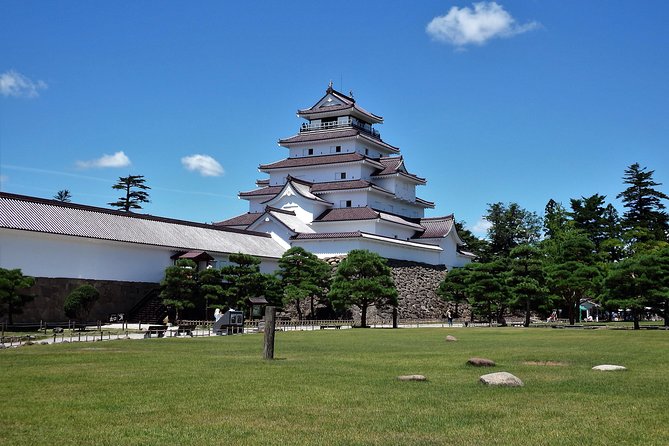
Iimoriyama is closely tied to the final years of the shogunate. After the shogunate fell in 1867, forces loyal to it gathered in northern Tohoku and fought the new government. Their defeat at Tsuruga Castle forms the background to this hill’s importance.
A 30-minute visit gives the guide time to explain the events and their meaning. This is one of the places where a good explanation matters most. The facts are memorable, but the human consequences are what make the site meaningful.
Choose Iimoriyama if you want the most serious and reflective stop on the tour. Pair it with Tsuruga Castle for a strong military and political narrative, or with Oyakuen to soften the pace afterward.
The site may be less suitable if your group wants only light sightseeing. Aizu’s past includes loyalty, defeat, and loss, and the guide may spend time on those subjects. That is a strength for history-minded visitors, but it is worth knowing before you choose the itinerary.
Oyakuen Garden: a calm finish after heavy history
Oyakuen means Medicinal Herb Garden. The name dates to the 18th century, when the garden was associated with medicinal plants.
Today, it is a Japanese landscape garden with a pond and quiet walking paths. The scheduled stop is about 30 minutes, and admission is not included.
I like Oyakuen as a counterweight to the castle and war sites. A short stroll here lets you absorb the day without another dense historical explanation. It also gives you a chance to ask your guide about Japanese garden design, traditional medicine, or the relationship between beauty and practical use.
Choose Oyakuen if you want a peaceful, visually pleasing stop. It is especially appealing for a mixed group in which not everyone wants a full schedule of castles and military history.
What the $107.78 price really buys you
The price is listed at $107.78 per person. For a private four-hour experience, that is reasonable if you value conversation, local interpretation, and a plan shaped around your group.
You are paying for the licensed English-speaking guide and the private format. You are not paying for private transport, meals, entrance fees, or personal expenses. Those extras can change the final cost, so the headline price is not the complete day’s budget.
The strongest value comes when you use the guide well. Tell the operator your must-see sites before the tour, then arrive with a few questions. A guide can explain the political transition from samurai rule to the modern state, compare Shinto and Buddhist ideas, or help you understand local crafts and sake production.
Group discounts are available, although the tour cannot combine separate tour groups. The private arrangement is best for families, couples, and friends who want a shared pace rather than a fixed public group.
The experience is often booked well in advance, with an average of 59 days. If your dates are fixed, it makes sense to plan early, particularly if you need a specific language or guide schedule.
Guide quality and the pace on foot
The government-issued National Government Licensed Guide Interpreter certification signals formal training in Japanese culture and history. That does not guarantee that every guide will match your personal style, but it gives you a useful baseline.
The named guides associated with Aizu assignments include Masa, Yumi, Mitsuko, and Nobuko. Their strengths include clear explanations, careful preparation, friendly conversation, good English, and a willingness to adjust the plan.
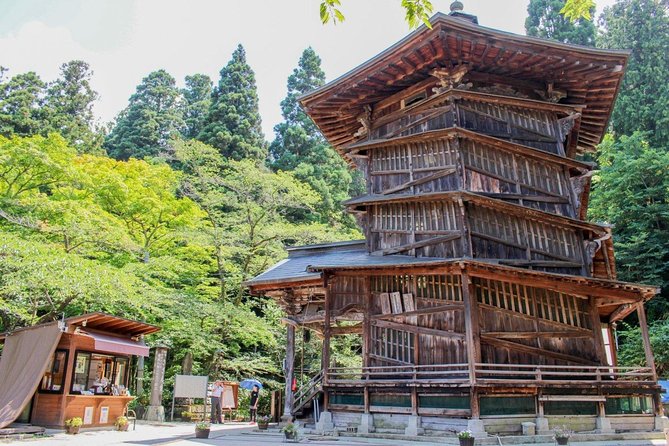
One guide, Yumi, prepared pages of charts and information for the visit. Mitsuko was praised for explaining Aizu’s past and for guiding a family through Sazaedo Temple, Tsuruga Castle, and a local craft activity. Nobuko helped arrange onward transportation and included folk-craft painting in a customized day.
The walking format keeps the tour personal, but it also requires realistic planning. Two or three sites in four hours is sensible. Trying to force in all seven would leave you with rushed visits and little time for questions.
Guides have checked on breaks and comfort, which is useful for families and older participants. Most people can take part, and service animals are allowed. Still, choose your sites with your group’s walking pace in mind.
Who should book this Aizu tour?
I would recommend it to you if you want:
- A private guide rather than a fixed group
- A clear explanation of Aizu’s samurai and Boshin War history
- Help choosing between castles, museums, gardens, sake, and hot springs
- A flexible visit for parents and children
- Support with local transport information before or after the tour
- A four-hour introduction rather than a full-day commitment
I would look elsewhere if you need a private vehicle, all admissions included, or a countryside railway excursion built into the price. This is also not the best fit if you prefer to wander alone and read every museum panel at your own pace.
The 92 percent recommendation rate and 4.8 rating point to a consistently strong experience, but the value depends on preparation. Decide which two or three sites matter most, tell the operator clearly, and ask what transport or admission costs you should expect.
Should you book it?
Book this tour if Aizuwakamatsu is new to you and you want its complicated past explained without wasting half a day finding your way between sights. I would choose Tsuruga Castle plus Iimoriyama for a serious history focus, or Tsuruga Castle plus Suehiro Brewery for a more varied introduction.
Families should consider the private format particularly useful. The guide can adjust the pace, explain difficult subjects in accessible language, and help with practical details such as IC cards or onward transport.
The tour is not a bargain package with everything covered. It is a focused guide service, and you will still pay for transport and most admissions. For a small group that values personal attention and a thoughtful route, that trade-off is worthwhile.
FAQ
How long is the Aizu private tour?
The tour lasts approximately four hours.
How many sites can I visit?
The tour includes a customizable itinerary of two or three sites selected from the listed attractions.
Is the tour private?
Yes. Only your group participates, and separate tour groups cannot be combined.
Is transportation included?
No. The tour is conducted on foot, and private transportation and transportation fees are not included.
Where do I meet the guide?
You meet the guide on foot within the designated area of Aizuwakamatsu.
Are entrance fees included?
No, entrance fees are generally not included. Guide entry fees are covered only for sights listed under the What to Expect choices.
Is an English-speaking guide provided?
Yes. The experience includes a licensed local English-speaking guide. The provider also offers multilingual guiding.
Can families with children join?
Yes. Most people can participate, and the private format allows the guide to adjust the pace. Service animals are allowed.
Can I cancel for a full refund?
Yes, if you cancel at least 24 hours before the experience start time. Cancellations or changes made less than 24 hours before the start time are not accepted for a refund.
Just added in Japan
- A One-of-a-Kind Sushi Experience in a Special Place of Japan★ 5.0 · 15 reviews
- Tokyo Cute Bento Cooking Class – Make a Kawaii Character Lunchbox★ 5.0 · 126 reviews
- Japanese Home Cooking Class & Walk in Todoroki Temple Tokyo★ 5.0 · 88 reviews
- Japan Tokyo Tower Observatory Deck E-Ticket★ 4.0 · 34 reviews
- Catch a Baseball Game in Tokyo with a Local – Tickets Included★ 5.0 · 24 reviews
- JDM Experience with Fast&Furious RX-7 (English speaking Driver)★ 5.0 · 57 reviews
- Tokyo Private Day Tour by Car with English speaking Driver Guide★ 4.0 · 29 reviews
- Japan Classic 10 Day – One Life Adventures★ 5.0 · 129 reviews
Private Tours, compared.
Tokyo 6hr Private Tour with Government-Licensed Guide
Read our review →
Private Tour to Mt. Fuji and Hakone (Fully Licenced Operator)
Read our review →
Tokyo Customized Private Tour (Must See Places in 1 Day)
Read our review →
Mount Fuji Full-Day Private Tour from Tokyo (Customizable)
Read our review →
Tokyo 4hr Private Tour with Government-Licensed Guide
Read our review →
Kyoto 6hr Private Tour with Government-Licensed Guide
Read our review →
Tokyo Customized Private Tour: See Top Attractions in 1 Day
Read our review →