
Reviewed · BAR HOPPING AND IZAKAYA TOURS
Shinjuku Golden Gai Food Tour
Shinjuku comes alive after dark. This three-hour walk links Omoide Yokocho, Kabukicho, Hanazono Shrine, and Golden Gai, giving you food, nightlife, and local context in one compact evening. I like the small-group limit of 10 and the fact that two drinks are included, since tiny bars can be tricky to enter without help. The chance to try yakitori, ramen, sushi, and other seasonal dishes is another strong point.
The main caution is price. At $217 per person, this is not a cheap dinner, and the food portions, seating arrangements, and exact venues can vary. You are paying as much for guidance and access to hard-to-find nightlife as for the meal itself. A few people have also found the restaurant planning less smooth than expected, so food-focused visitors should set their expectations carefully.
In This Review
- Key points at a glance
- Starting near Tajimaya Coffee at 5 p.m.
- Omoide Yokocho and Tokyo before the neon
- Kabukicho after dark
- Hanazono Shrine, a quieter pause
- Four food stops, with variety but no fixed menu
- Golden Gai and the tiny-bar challenge
- The guides can make or break the night
- What $217 really buys you
- Who should book this Shinjuku evening?
- Should you book it?
- FAQ
- How long is the Shinjuku Golden Gai Food Tour?
- What time does the tour begin?
- Where does the tour start?
- Where does the tour finish?
- How many food stops are included?
- Are drinks included?
- Is the tour suitable for vegetarians?
- How large is the group?
- Is karaoke part of the tour?
- Can I cancel for a refund?
Key points at a glance
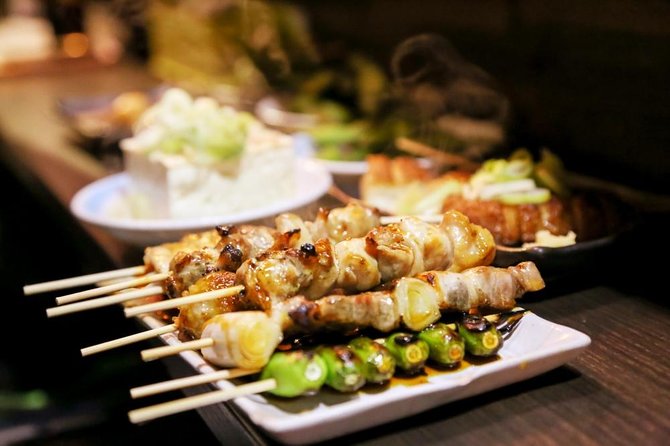
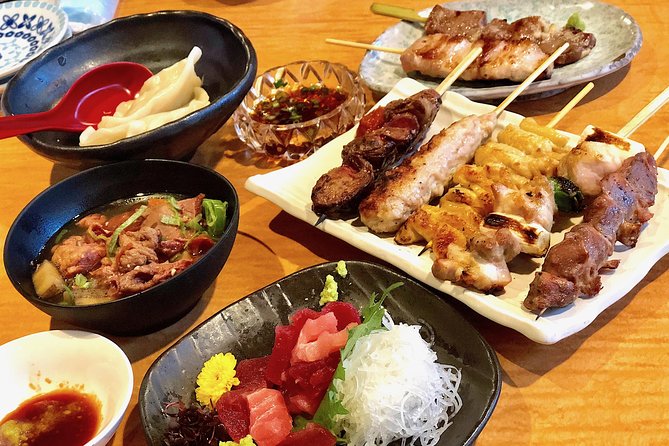
- Four food stops may include yakitori, ramen, sushi, and other local or seasonal dishes.
- Two drinks are included, with the evening ending at Araku Bar in Golden Gai.
- The route covers three very different areas: Omoide Yokocho, Kabukicho, and Golden Gai.
- The group is capped at 10 people, a useful size for narrow lanes and tiny venues.
- Guides make the difference: praised leaders have included Jacob, Giulia, Ray, Wesley, Alex, Sandra, Yoshi, Osmar, Daniel, and Tommy.
- Karaoke is available afterward, but it is an optional extra rather than the core tour.
Starting near Tajimaya Coffee at 5 p.m.
The meeting point is at Tajimaya Coffee, at 1-chōme 26, Shinjuku City, Nishishinjuku. The tour begins at 5 p.m., a smart time for this part of Tokyo. You get some daylight for the opening walk, then watch the streets change as dinner crowds and nightlife gather.
Your guide meets you here and sets the tone for the evening. The best guides on this experience do more than point toward the next restaurant. Jacob has been praised for his patience with people finding the meeting point, while guides such as Sandra, Alex, Wesley, and Ray have been singled out for making the group feel relaxed and included.
Arrive early. The starting address can be hard to interpret if you are rushing through a large commercial area, and the group cannot begin smoothly if one person is still searching. Your mobile ticket provides the booking confirmation, but it does not replace giving yourself time to find the exact building.
The physical demands are moderate. You will walk through busy streets and narrow lanes, and you may stand at some food stops. Wear comfortable shoes and avoid arriving after a large meal. Several menus are served across the evening, so you will want room for more than a token bite.
More Bar Hopping and Izakaya Tours in Tokyo
- Tokyo Bar Hopping Tour in Shinjuku (All-You-Can-Drink + Dinner)
★ 5.0 · 3,587 reviews - Best of Shinjuku: Izakaya Food Tour (4 Stops, 14+ Tastings)
★ 5.0 · 1,863 reviews - Tokyo: Shinjuku Local Bar and Izakaya Guided Walking Tour
★ 4.9 · 1,794 reviews
Omoide Yokocho and Tokyo before the neon
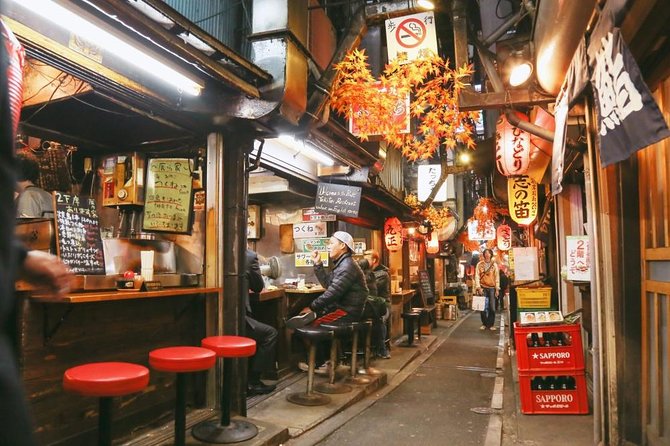
The first major area is Omoide Yokocho, whose name means Memory Lane. Its narrow passageways and compact food counters offer a sharp contrast to Shinjuku’s wide roads and tall buildings.
The area contains bars and eateries that have remained largely unchanged since around 1950. That detail matters because this is not simply a backdrop for photographs. It helps you see how older postwar eating and drinking spaces still fit into modern Tokyo.
The planned stop here is brief, listed at about five minutes, but the food route can add time. You may dine with local customers, watch dishes being prepared in close quarters, and learn how to behave in a small Japanese eating place. This is one of the tour’s best uses of a guide. A narrow counter can feel intimidating when you do not know the rules, the menu, or how ordering works.
Do not expect a long sit-down meal at every stop. The evening is designed around tastings in several places, not one extended dinner. That format gives you variety, though it can also mean quick visits and limited seating.
Kabukicho after dark
From Omoide Yokocho, the walk continues into Kabukicho, Tokyo’s famous entertainment district. The area is often described as the largest and safest red-light district in Asia, but that label does not explain the whole experience. Kabukicho also contains restaurants, bars, karaoke venues, theaters, and ordinary city traffic.
The guide provides the useful middle ground. You can pass through an area that may look confusing or overly theatrical to a first-time visitor, while hearing about how it developed and how its nightlife works today. The strongest guides connect the streets to Japanese food habits, social customs, and modern culture rather than giving only a list of names.
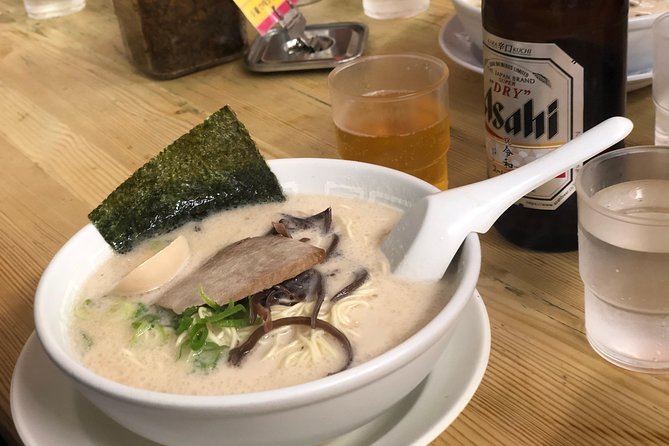
Food is served at several points along the route. Yakitori, grilled chicken or other skewered items, is one of the expected highlights. Ramen is another, and it received especially strong praise from several people who considered it the best bowl they had in Tokyo. Sushi or sashimi may also appear, along with local and seasonal dishes.
The exact balance is not fixed. Restaurant schedules, holidays, weather, and other conditions can force a change of venue. Substitutions are promised, but you should not book this expecting one specific ramen shop or sushi counter.
Hanazono Shrine, a quieter pause
Hanazono Shrine appears as a stop during the walk, offering a useful change of pace from the signs and crowds of Kabukicho. The supplied schedule does not give a detailed visit length, so think of it as a cultural pause rather than a full shrine tour.
This stop helps explain why Shinjuku is more than nightlife. A shrine beside entertainment streets shows how religious places, neighborhood life, restaurants, and late-night businesses share the same city blocks.
Your guide may explain customs and local context here. Guide quality matters. Ray has been praised for explaining Japanese etiquette, while Wesley and Osmar were noted for connecting food with wider cultural stories. Those details are valuable because they help you understand what you are seeing instead of simply moving from one meal to the next.
More Food Tours in Tokyo
- Tokyo: Shinjuku Food Tour (13 Dishes at 4 Local Eateries)
★ 5.0 · 6,603 reviews - Tokyo: Shinjuku Food Tour (15 Dishes and 4 Eateries)
★ 4.9 · 2,033 reviews - Tokyo Night Foodie Tour in Shinjuku – Seasonal Sushi, Wagyu Beef
★ 5.0 · 1,161 reviews - Eat and Drink Like a Local: Tokyo Ueno Food Tour-Taverns&Ramen
★ 5.0 · 957 reviews
Four food stops, with variety but no fixed menu
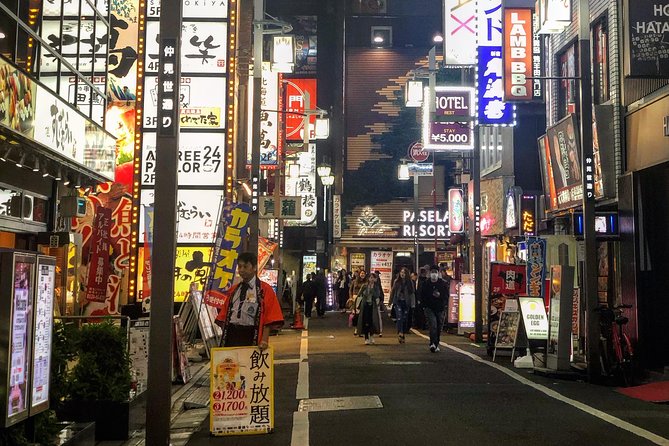
The experience includes four food stops, with examples such as yakitori, ramen, sushi, and other seasonal dishes. That spread is its main appeal. You can sample several familiar Japanese foods in one night and compare different settings rather than committing to one expensive restaurant.
The food portion is also where the tour’s value becomes harder to judge. The price includes tastings, but the wording around food and drink can be read in different ways, and portions are not specified. Some schedules have felt like three restaurant visits plus a bar, while the advertised format describes four food stops. Ask for clarification if you need a full dinner rather than a tasting meal.
Food quality can vary. Many people found the selections delicious, with sashimi, ramen, and yakitori receiving particular praise. One person felt the sushi was poor and the yakitori dry, while another felt that the meal did not justify the price compared with a high-end sushi or kaiseki dinner.
That split is useful. If you are a serious food enthusiast seeking carefully chosen, top-level cooking, this may disappoint. If you want a broad introduction to Japanese dishes while someone else handles the route, it makes more sense.
The tour is listed as pescetarian and vegetarian friendly. A gluten-free vegetarian experience has also been arranged successfully, but you should state your needs when booking and confirm them with the provider. Do not assume every stop will offer a wide range of substitutions.
Golden Gai and the tiny-bar challenge
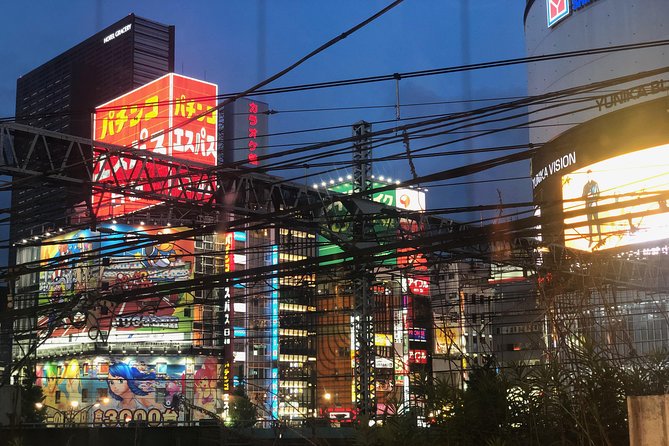
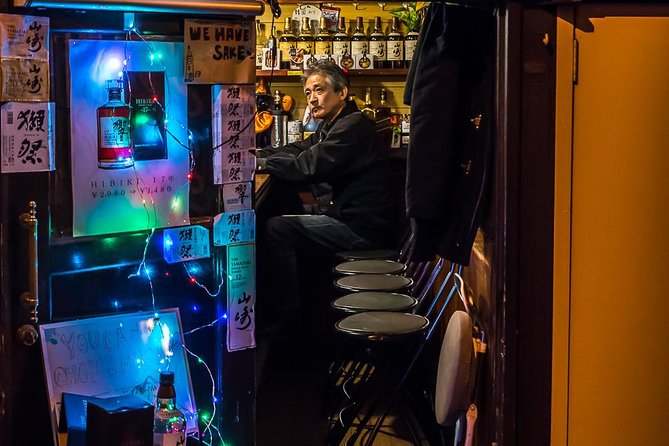
The evening ends in Shinjuku Golden Gai, a compact nightlife quarter known for more than 200 small pubs, stalls, and karaoke bars. The lanes are famously tight, and many venues have only a handful of seats. This is exactly why a guide can be useful.
Finding a place is one problem. Understanding which bars welcome visitors, how charges work, and when a group is too large is another. A group of no more than 10 is helpful, but it does not guarantee that every venue can seat everyone comfortably.
The ending point is Araku Bar in Golden Gai. One cool drink is included here, and the itinerary also provides a second included drink during the experience. The bar stop can be the social high point, especially when the group gets along. Karaoke after the tour is available for those who want to continue, and some evenings have included singing with the group.
There is a practical catch: seating is not always assured. One account described being turned away from a couple of restaurants because the group could not be accommodated, followed by standing room at the final venue. At this price, guaranteed seats would be reasonable to expect, but the tiny size of Golden Gai bars makes that difficult.
You should also remember that the tour ends in Golden Gai, not back at your hotel. The final address is in Kabukichō, so plan your onward route before the evening begins.
The guides can make or break the night
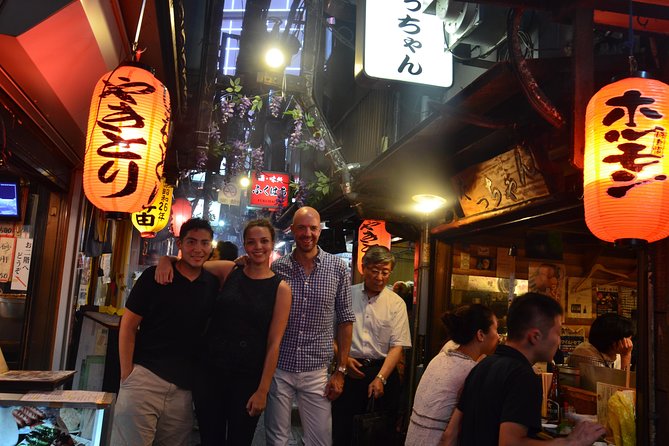
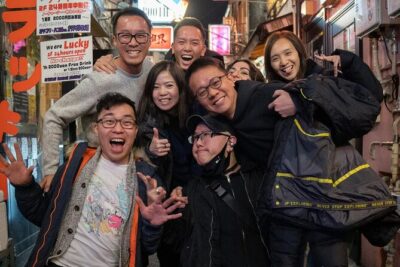
The most consistent strength is the human side of the experience. Guides including Sandra, Alex, Wesley, Ray, Giulia, Yoshi, Jacob, Osmar, Daniel, and Tommy have been praised for humor, patience, cultural explanation, and their ability to bring strangers together.
Sandra received especially warm praise for handling dietary needs, keeping people informed in noisy venues, and making first-time visitors feel comfortable. Tommy was described as an educator and karaoke expert, while Osmar was praised for balancing food, neighborhood stories, and fun.
There is some inconsistency. One person was disappointed that the guide was not local and felt that cultural explanations were inaccurate. That concern is worth taking seriously. The tour provider uses English-speaking guides, but the level of personal connection to Shinjuku and Japanese customs may differ from one departure to another.
I would book this for the guide-led access, not because the guide guarantees a scholarly history lesson. A good leader turns confusing streets into an enjoyable evening. A weaker match can leave you feeling that you paid a high fee for ordinary dishes and basic commentary.
What $217 really buys you
At $217, this is a premium food walk. You receive roughly three hours with a local English-speaking guide, four food stops, and two drinks. You also avoid researching venues, testing whether tiny bars accept visitors, and working out how to order in places where English may be limited.
That convenience has real value in Golden Gai. The district is easy to wander through, but it is not always easy to use well. A guide can get you through the awkward first door and explain the etiquette once you are inside.
Still, the price does not compare favorably with a single excellent restaurant meal if your only goal is food quality. The strongest case for booking is the combination of food, history, neighborhood orientation, and company. You are buying an evening with a route and a social structure, not just four plates.
The group limit of 10 helps. Smaller groups are easier to hear in loud bars, easier to move through narrow streets, and less likely to overwhelm a tiny counter. Even so, a full group can still be uncomfortable if seating has not been arranged in advance.
Who should book this Shinjuku evening?
I would recommend it to a first-time Tokyo visitor who wants an introduction to Shinjuku after dark without spending an afternoon researching restaurants. It also suits people who enjoy trying several dishes, meeting other English-speaking visitors, and learning how to handle small Japanese eateries.
It is a good first or early-Tokyo activity. You can return to Golden Gai later with more confidence, and the neighborhood information may help you choose where to go on another night.
I would be more cautious if you are a dedicated food lover with a high standard for sushi, ramen, or kaiseki. The food can be very good, but it is not presented as a guaranteed fine-dining selection. I would also reconsider if you dislike standing, noisy venues, or flexible plans.
Wear walking shoes, arrive early, come hungry, and mention dietary restrictions in advance. If you want karaoke, treat it as a possible after-party, not a guaranteed part of the three-hour core tour.
Should you book it?
Book this tour if you want an easy, social way into Shinjuku’s food lanes and late-night bars. The mix of Omoide Yokocho, Kabukicho, Hanazono Shrine, and Golden Gai gives you far more than a meal, and a strong guide can make the night memorable.
Skip it if $217 feels high for tastings or if your priority is the best possible food in Tokyo. You can spend that money more precisely at a restaurant. For everyone else, the tour earns its price through access, context, and the simple relief of not having to guess which tiny door to open.
FAQ
How long is the Shinjuku Golden Gai Food Tour?
The tour lasts approximately three hours.
What time does the tour begin?
The stated start time is 5 p.m.
Where does the tour start?
It starts at Tajimaya Coffee, at 1-chōme 26, Shinjuku City, Nishishinjuku, Tokyo 160-0023.
Where does the tour finish?
The tour ends at Araku Bar in the Golden Gai area of Kabukichō, Tokyo 160-0021.
How many food stops are included?
Four food stops are included. Examples listed for the route include yakitori, ramen, sushi, and other local or seasonal dishes.
Are drinks included?
Yes. Two drinks are included in the experience.
Is the tour suitable for vegetarians?
The tour is described as pescetarian and vegetarian friendly. A gluten-free vegetarian arrangement has also been made, but you should provide your dietary information when booking.
How large is the group?
The maximum group size is 10 people.
Is karaoke part of the tour?
Karaoke after the tour is available, but it is an optional after-party rather than a stated part of the main tour.
Can I cancel for a refund?
You can cancel at least 24 hours before the local start time for a full refund. Cancellations or changes made less than 24 hours before the start are not accepted for a refund. Weather or minimum group issues may lead to another date or a full refund.
Just added in Tokyo
- A One-of-a-Kind Sushi Experience in a Special Place of Japan★ 5.0 · 15 reviews
- Tokyo Cute Bento Cooking Class – Make a Kawaii Character Lunchbox★ 5.0 · 126 reviews
- Japanese Home Cooking Class & Walk in Todoroki Temple Tokyo★ 5.0 · 88 reviews
- Japan Tokyo Tower Observatory Deck E-Ticket★ 4.0 · 34 reviews
- Catch a Baseball Game in Tokyo with a Local – Tickets Included★ 5.0 · 24 reviews
- JDM Experience with Fast&Furious RX-7 (English speaking Driver)★ 5.0 · 57 reviews
- Tokyo Private Day Tour by Car with English speaking Driver Guide★ 4.0 · 29 reviews
- Japan Classic 10 Day – One Life Adventures★ 5.0 · 129 reviews
Bar Hopping and Izakaya Tours, compared.
Tokyo Bar Hopping Tour in Shinjuku (All-You-Can-Drink + Dinner)
Read our review →
Best of Shinjuku: Izakaya Food Tour (4 Stops, 14+ Tastings)
Read our review →
Shinjuku Local Bar and Izakaya Guided Walking Tour
Read our review →
Shibuya Meltdown Nightlife Tour: All-You-Can-Drink Bar Hopping
Read our review →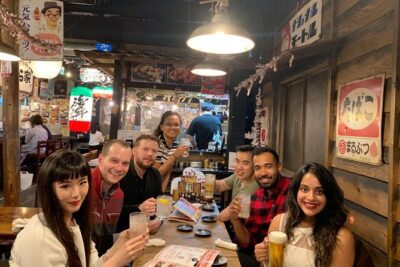
Osaka Bar Hopping Night Walking Tour in Namba (3 bars, 6 tastes)
Read our review →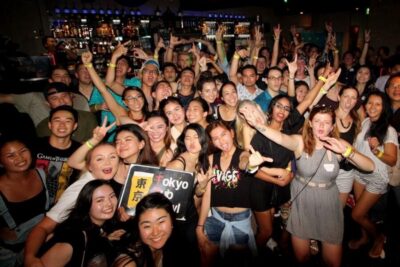
Browse the lists this tour appears in