
Reviewed · SUNSET AND EVENING TOURS
Tokyo After 5: Authentic Japanese Food & Drink Night Tour
Tokyo tastes better after dark. This small-group walking tour links Ginza, Tsukishima, and Yurakucho through local food, subway rides, and casual neighborhood bars. I like the chance to cook monjayaki at the table, and I like the way the guide handles menus and public transport for you. The main catch is that the experience may feel lighter on food than the price suggests.
I also like the small maximum of eight people, which makes it easier to ask questions and keep together in busy Tokyo. Guides such as Yuko, Yuki, Mizuki, and Shoehi have earned warm praise for making the evening fun and easy to follow. Still, you should know that the tour may include only two full eating venues, with wagashi bought earlier at a department store, and vegetarian, vegan, or gluten-free meals are not available.
In This Review
- Key points to know before booking
- What the $122 price really buys you
- Meeting the guide beneath the Ginza Lion
- Ginza after five, with a few surprises
- Cooking monjayaki on Tsukishima Monja Street
- The long walk and subway transfer
- Yakitori Alley in Yurakucho
- Two drinks and the sake-pour ritual
- How much explanation should you expect?
- Food limits you need to understand
- Who will enjoy this Tokyo night tour?
- Practical timing and cancellation advice
- Should you book Tokyo After 5?
- FAQ
- Where does the tour start?
- Where does the tour end?
- How long does the experience last?
- How many people can join?
- What food is included?
- How many drinks are included?
- Can children join the tour?
- Are vegetarian, vegan, or gluten-free options available?
Key points to know before booking
- Monjayaki is the star food experience: You cook this soft, savory Tokyo specialty on a hot grill at your table in Tsukishima.
- The evening uses two subway rides: Your guide leads the way, and two subway tickets are included in the price.
- The final stop is a genuine local-style alley: Yurakucho’s small izakaya bars serve yakitori, drinks, and simple side dishes.
- The tour is small but not private: Up to eight people can join, so the guide can usually give personal help without offering a fully customized route.
- The food count needs careful reading: The included foods are listed as wagashi, monjayaki, and yakitori, but the wagashi may be a sweet purchased in Ginza rather than a stop at a third restaurant.
- This is not suitable for every diet: The venues cannot provide vegetarian, vegan, or gluten-free options.
What the $122 price really buys you
The tour costs $122.33 per person and lasts about three and a half hours. That is a serious price for a food outing in Tokyo, where you can eat well for much less if you choose restaurants yourself.
The value comes from the guidance rather than the quantity of food. You get two local drinks, two subway tickets, three listed food items, and an English-speaking guide who explains customs, translates menus, and takes you into places you may not feel ready to enter alone.
I see this as a gentle introduction to Tokyo’s after-work food culture, not a feast. The meal portions can be modest, and the first part of the evening may include more walking and sightseeing than eating. If you arrive very hungry, you may want to eat a small snack beforehand.
The price makes more sense for a first evening in Tokyo, especially if you are nervous about ordering in Japanese or using the subway. It is less attractive if your main goal is a large dinner or a long tasting menu.
More Sunset Tours in Tokyo
- Shibuya Meltdown Nightlife Tour: All-You-Can-Drink Bar Hopping
★ 5.0 · 1,058 reviews - Shibuya Meltdown Night Tour: All-You-Can-Drink Bar Hopping
★ 4.8 · 183 reviews - Private Tokyo Night Tour
★ 5.0 · 115 reviews
Meeting the guide beneath the Ginza Lion
The tour starts at Mitsukoshi Ginza, in front of the famous Lion statue facing Chuo Street. The meeting time matters because the group is expected to leave promptly after the scheduled start, and waiting for late arrivals can affect the rest of the evening.
Ginza gives you an interesting opening scene. This is Tokyo at its polished, high-end best, with department stores, bright signs, and wide streets. It is a useful contrast to the tiny food alleys that come later.
You may visit the Mitsukoshi food department and receive wagashi, a traditional Japanese sweet. Depending on the guide and timing, the group may also stop at Itoya, the well-known stationery shop. These details give the opening a cultural angle, but they are not the same as sitting down for a full food tasting.
One low-rated experience described a long wait for missing participants and an extended department-store stop. That kind of delay can make the tour feel slow at the start, especially when you are expecting food. A good guide keeps the pace moving, but the Ginza portion is best understood as a short city introduction, not the main meal.
Ginza after five, with a few surprises
Ginza changes character in the evening. The department stores and luxury shops provide a bright, modern setting, while the tour points you toward older food customs and less formal eating places.
The wagashi sample may be one of your first tastes of traditional Japanese sweets. These are often delicate and less sugary than Western desserts, so you may find the texture more interesting than the sweetness. The exact item can vary, and the information provided does not promise a particular wagashi.
A possible stop at Itoya is pleasant for anyone who likes design, paper, or Japanese stationery. If you are mainly interested in food, though, you may feel that this portion takes time away from eating. That is one reason the tour can seem misnamed to people expecting nonstop culinary stops.
The guide’s role is important here. A strong guide can turn a quick walk through Ginza into useful context about Japanese food, department-store culture, and evening routines. Guides named Yuko, Yuki, Mizuki, and Shoehi received especially warm praise for their friendliness and explanations. Still, the quality of the evening depends heavily on who leads your group. One poor experience involved a guide whose English was difficult to understand and who offered little explanation.
Cooking monjayaki on Tsukishima Monja Street
The first substantial food stop is Tsukishima Monja Street, reached by subway from Ginza. Two subway tickets are included, and having the guide lead you through the system is a real advantage. Tokyo’s rail network is efficient but can look confusing when you are trying to match lines, exits, and platforms.
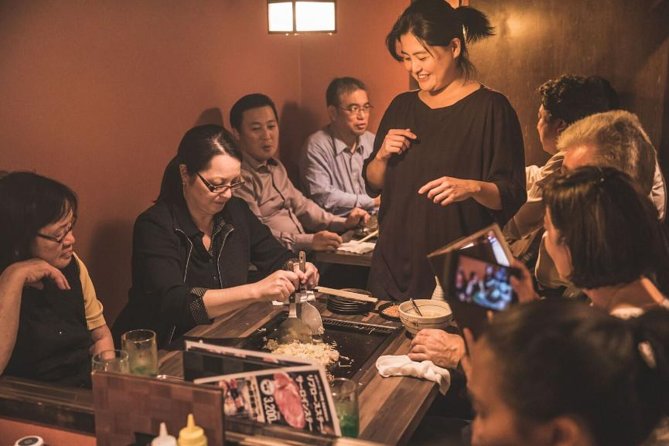
Tsukishima is known for monjayaki, a Tokyo original that resembles a very loose, soft pancake. The mixture is cooked on a hot griddle at the table, usually with cabbage and other ingredients mixed into a savory batter. You do not receive a neat pancake that can be lifted onto a plate. Instead, you use a small spatula to scrape and eat the cooked mixture directly from the grill.
That cooking process is the point. You hear the batter sizzle, watch the ingredients change, and learn how the dish is handled. Some guides let you do much of the cooking, while others may help with the first attempt. It is a social food rather than a polished restaurant presentation.
The flavor and contents may not suit everyone. The supplied information describes cabbage with small amounts of shrimp and mussels in at least one serving. One person was disappointed by the modest quantity, while another found the dish a fun new taste. If you dislike cabbage, seafood, or soft textures, monjayaki may be the least familiar part of the night.
This stop usually takes about an hour and a half, making it the longest food segment. That gives you time to talk with the guide and cook at an unhurried pace. It also means that the tour can feel stretched if the group spends too long waiting for food or getting settled.
A completely different kind of day out:
- Tokyo Disney Resort – Tokyo Disneyland & Tokyo DisneySea Park Tickets
★ 4.8 · 99,488 reviews - SHIBUYA SKY Ticket
★ 4.7 · 46,509 reviews - JR Whole Japan Rail Pass
★ 4.8 · 29,150 reviews - Mt Fuji and Hakone 1-Day Bus Tour Return by Bullet Train
★ 5.0 · 26,383 reviews
The long walk and subway transfer
The route involves a moderate amount of walking, including the walk to and from the subway and movement between venues. Several accounts praised the route as a way to reach places they would not have found alone, but some found the walk to the first food stop too long.
Wear comfortable walking shoes. The tour is not a strenuous hike, but the combination of sidewalks, station passages, stairs, and quick movement can be tiring. One account specifically mentioned a surprising number of stairs.
Group pace also matters. A small group of eight is helpful, yet everyone still needs to stay alert at crossings and stations. If you tend to walk slowly, tell the guide early. If you have trouble with stairs, ask about the route at the start, since the supplied details do not promise a step-free experience.
The subway rides add value because they show you how Tokyo residents move between districts. They also take time from the eating schedule. The tour is best for you if you enjoy a moving evening with food along the way, rather than a fixed dinner in one neighborhood.
Yakitori Alley in Yurakucho
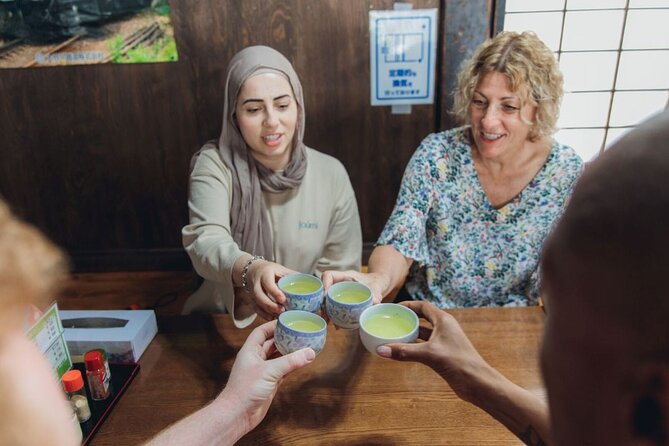
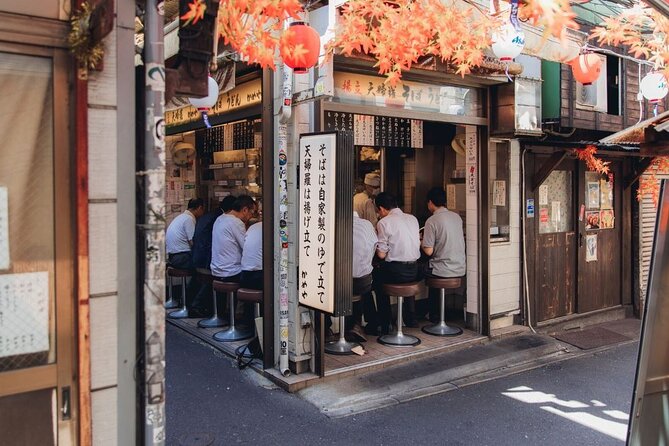
The final stop is Yurakucho Sanchoku Inshokugai, also known as Yurakucho Farm to Table Dining Alley. This area is made up of small bars and izakaya-style restaurants beneath and around the railway corridor. The atmosphere is more casual and local than Ginza’s department stores.
Here you receive yakitori and one of the included drinks, such as beer or sake. Yakitori means grilled skewers, and the sauce, called tare, can differ from one shop to another. The final bar may offer chicken pieces, vegetables, or less familiar cuts. One person expected standard chicken skewers but received chicken cartilage instead, so ask what each skewer is before eating if texture matters to you.
The alley is a strong finish because it gives you a taste of Tokyo’s after-work drinking culture. Office workers often use small bars like these to unwind, and the close tables create a lively, informal setting. You are not getting a formal restaurant meal. You are getting a short visit to a compact drinking place where food and conversation share the same small space.
The yakitori portion can be modest. One account found the meat undercooked for personal taste, while others praised the food and sake. If you prefer meat cooked thoroughly, say so clearly to the guide or restaurant staff.
The tour finishes after roughly one hour and fifteen minutes here. You can stay in the bar after the official end if the group and venue allow, or you can continue elsewhere in Yurakucho or Ginza. This flexibility is useful because the tour ends near Ginza Station rather than sending you across the city late at night.
Two drinks and the sake-pour ritual
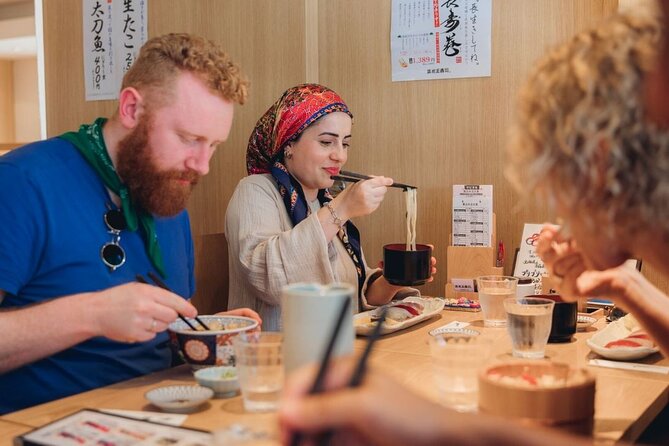
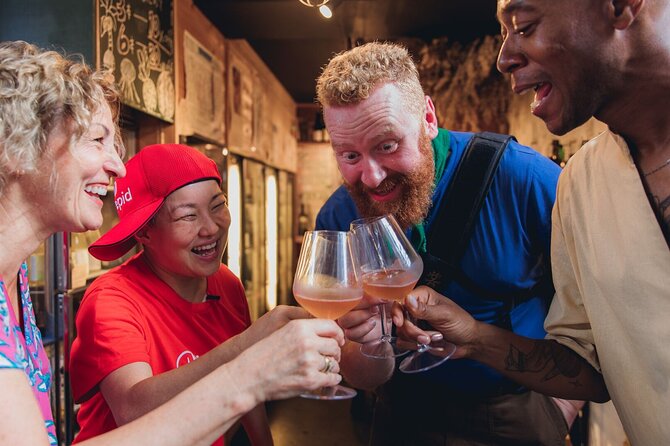
Two drinks are included, with choices such as sake, beer, or a soft drink. Alcohol is available only to people aged 20 or older, which is Japan’s legal drinking age. Anyone under 20 receives non-alcoholic drinks.
The sake serving can be part of the fun. One account described a glass placed inside a small wooden box, with sake poured until the glass overflows into the box. It is a simple ritual, but it gives the drink a social quality and makes the tasting more memorable.
You can buy additional drinks, but they are not included. Keep this in mind when judging the price. The tour fee covers two drinks, not an open bar or a full evening of drinking.
If you do not drink alcohol, you can still join, since soft drinks are available. The food and restaurant setting remain the main reason to book.
How much explanation should you expect?
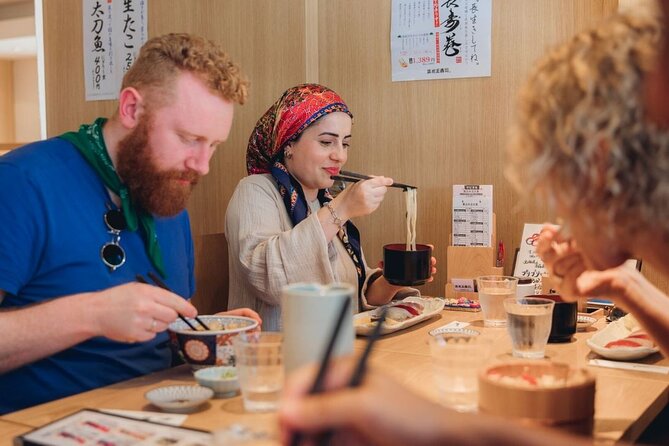
The strongest part of this experience is often the guide. A good guide explains how to cook monjayaki, helps you read menus, handles subway directions, and describes local food customs without making the evening feel like a lecture.
Yuko was praised for guiding the group through the underground system and explaining unfamiliar dishes. Mizuki was described as courteous, funny, and helpful. Yuki and Shoehi also received warm comments for making the group feel comfortable and for pointing out food that would be easy to miss alone.
But you should keep expectations realistic. English ability and guiding style can vary. Some people found the explanations too brief, and one person said the guide was hard to understand. The tour provider assigns the guide, so you cannot count on receiving a particular person unless that is confirmed separately.
The small group helps. With no more than eight people, you have a better chance to ask how to eat the dish, what an ingredient is, or which drink to choose. It also reduces the chance of being lost in a station, though you still need to keep up.
Food limits you need to understand
This tour does not offer vegetarian, vegan, or gluten-free options. The venues cannot cater to all dietary requirements, and the listed dishes may include seafood, meat, wheat-based batter, or sauces with unclear ingredients.
Food allergies deserve careful thought. The guide may ask about allergies at the beginning, but you should not assume that every venue can prevent cross-contact or alter a dish. If your diet is strict, this is not a safe choice.
The advertised food lineup is wagashi, monjayaki, and yakitori. In practice, you may visit the department store for wagashi and eat full portions at the monja restaurant and yakitori bar. That distinction matters. Some people consider this a three-food tour, while others expect three separate eateries and feel shortchanged.
Read the experience as two restaurant stops plus a traditional sweet in Ginza. That description is more likely to match your evening.
Who will enjoy this Tokyo night tour?
I would recommend it most to first-time visitors who want help with Tokyo’s subway, menus, and small local restaurants. It is also a good fit if you like trying foods you may not recognize and do not need a large meal.
You will probably enjoy it if you:
- Like hands-on cooking at the table
- Want to try monjayaki and yakitori
- Prefer small bars to polished restaurants
- Want an English-speaking guide for the subway
- Enjoy meeting a few people from different countries
- Are comfortable eating meat and seafood
- Want to end near Ginza Station
I would think twice if you want a food tour built around generous portions, three restaurant visits, or detailed culinary instruction at every stop. It is also a poor match for vegetarian, vegan, or gluten-free diets.
The tour requires a minimum age of 12. Most people can participate, but the walking, station stairs, and quick transfers may not suit everyone.
Practical timing and cancellation advice
The evening lasts about three and a half hours and starts after 5 pm. Since the tour begins at Mitsukoshi Ginza and ends at Ginza Station, it is easy to pair with an afternoon in Ginza or nearby central Tokyo.
Arrive early at the Lion statue. The tour starts on time, and a late arrival can mean missing the group.
Mobile tickets are accepted, and confirmation is provided when you book. You can cancel for a full refund up to 24 hours before the start time. Changes or cancellations inside that 24-hour window are not accepted, and poor weather may lead to a different date or a full refund.
Should you book Tokyo After 5?
Book it if you want a guided introduction to Tokyo’s informal food culture, especially monjayaki, yakitori, sake, and the practical challenge of moving through the subway at night. The best guides turn a simple meal into a friendly cultural evening, and the small group makes the experience easier to manage.
Do not book it expecting a lavish dinner or three substantial restaurant visits. The price is high for the amount of food, and the first Ginza section may feel like shopping and sightseeing before the meal begins.
My advice is simple: arrive with moderate expectations and a light appetite, not an empty stomach. If you accept the tour as a guided taste of three Japanese foods, two local areas, and two casual drinking stops, it can be a memorable first step into Tokyo after dark.
FAQ
Where does the tour start?
It starts at Mitsukoshi Ginza, in front of the Lion statue facing Chuo Street at 4-chōme-6-16 Ginza, Chuo City, Tokyo.
Where does the tour end?
It ends at Ginza Station, at 4-chōme-1-2 Ginza, Chuo City, Tokyo.
How long does the experience last?
The tour lasts approximately three hours and 30 minutes.
How many people can join?
The maximum group size is eight people.
What food is included?
The included foods are wagashi, monja-yaki, and yakitori. The experience includes visits to Tsukishima Monja Street and Yurakucho’s dining alley, while wagashi may be obtained during the Ginza portion.
How many drinks are included?
Two local drinks are included. Options may include sake, beer, or a soft drink. Additional drinks cost extra.
Can children join the tour?
The minimum age is 12. People under 20 cannot be served alcohol and will receive non-alcoholic drinks.
Are vegetarian, vegan, or gluten-free options available?
No. The venues cannot provide vegetarian, vegan, or gluten-free options for this experience.
Just added in Tokyo
- MT. FUJI/ Private Tour delivered and guided by a top-tier driver★ 5.0 · 27 reviews
- Mt fuji & Hakone customizable day tour w/ English speaking driver★ 5.0 · 45 reviews
- Fuji Speedway Self Drive & Mt. Fuji Private Tour pickup & dropoff★ 5.0 · 14 reviews
- Mt.Fuji Trekking 1 Day Tour up to the summit★ 5.0 · 14 reviews
- Seasonal Mt. Fuji Scenic Views, Fruit Picking and Ropeway Ride!★ 4.5 · 35 reviews
- Customisable Mt.Fuji Private Day Trip, English Speaking Driver★ 5.0 · 22 reviews
- Private Mt Fuji Tour from Tokyo: Scenic BBQ and Hidden Gems★ 5.0 · 146 reviews
- Private Mount Fuji Tour in Luxury Vehicle with English Guide★ 4.5 · 39 reviews
Sunset and Evening Tours, compared.
Shibuya Meltdown Nightlife Tour: All-You-Can-Drink Bar Hopping
Read our review →

Osaka After Dark: Small-Group Night Food Tour (Max 6)
Read our review →
Shibuya Meltdown Night Tour: All-You-Can-Drink Bar Hopping
Read our review →Browse the lists this tour appears in