
Reviewed · DAY TRIPS
Tokyo City Attractive One Day Tour
Tokyo rewards a plan. This private day tour gives you one. I like the air-conditioned private vehicle, which saves time between far-flung districts, and I like the broad mix of temples, food, gardens, towers, and youth culture. The chance to adjust the day is another strong point.
The main catch is pace. Nine hours sounds generous, but nine stops leave little room for lingering. Tower admission costs extra, lunch and dinner are not included, and one account found the day had the right sights but not always the right order. You will see a lot, but this is a highlights tour rather than a slow look at Tokyo.
In This Review
- Key points at a glance
- A big Tokyo day without wrestling the train map
- Asakusa starts with old Tokyo
- Tokyo Skytree reaches above Sumida
- Tokyo Tower tells a postwar story
- Tsukiji brings food into the plan
- Shinjuku Gyoen gives the city room to breathe
- Meiji Jingu explains modern Japan
- Shibuya Crossing is Tokyo in motion
- Hachiko adds a small human story
- Harajuku closes with youth culture
- What the guide arrangement means
- Is $500 good value for your group?
- Who should book this day?
- Final call: a useful first-day framework
- FAQ
- How long does the Tokyo City Attractive One Day Tour last?
- Where does the tour start and end?
- How many people can join the private tour?
- Are Tokyo Skytree and Tokyo Tower tickets included?
- Are meals included?
- What is included in the tour price?
Key points at a glance
- Private transport for up to five people: The $500 group price makes more sense when shared, especially for a family or small group.
- Nine major stops in about nine hours: You move from old Asakusa to modern Shibuya, with little wasted time between districts.
- Two observation towers, two different views: Tokyo Skytree and Tokyo Tower both cost extra, so choose carefully if time or budget is tight.
- Hotel transfer convenience: Pickup is offered, while the stated meeting point is The Tokyo Station Hotel.
- A useful first-day introduction: The route covers temples, a market, a garden, a shrine, youth fashion, and famous city streets.
- Driver and guide role combined: Hiroyuki Sato explained that the company driver serves as the guide, an important detail if you expect a separate professional guide.
A big Tokyo day without wrestling the train map
Tokyo is huge. Asakusa, Sumida, Minato, Tsukiji, Shinjuku, Harajuku, and Shibuya are not next-door neighbors, even when they look close on a map. A private vehicle gives you a simple way to connect them without repeatedly finding platforms, changing trains, or hauling luggage through busy stations.
The vehicle is air-conditioned, private, and fitted with a hotspot. Only your group participates, with up to five people covered by the $500 price. Split five ways, that is $100 per person before any tower tickets or meals. For two people, the cost feels much steeper. For a family or small group that values time and door-to-door movement, it can be reasonable.
The stated start point is The Tokyo Station Hotel at 1-9-1 Marunouchi. Pickup is also offered, so confirm the exact pickup arrangement before booking. The activity ends back at the meeting point, which is useful if you want a dependable finish near Tokyo Station.
The tour lasts about nine hours. That is enough for a strong first look, not enough for full visits at every stop. The listed timing adds up to roughly eight hours, leaving some room for driving, traffic, meals, and small itinerary changes. Tokyo traffic can affect the order, so treat the schedule as a framework rather than a railway timetable.
More Day Trips in Tokyo
- Mt Fuji Top 5 Spots Day Tour: Arakurayama Park,Oshino Hakkai
★ 4.7 · 2,066 reviews - Tokyo: Mt. Fuji, Kamakura, Big Buddha, & Lake Ashi Day Trip
★ 4.5 · 867 reviews - Mt. Fuji & Hakone Private Day Tour with English-Speaking Driver
★ 4.5 · 824 reviews
Asakusa starts with old Tokyo
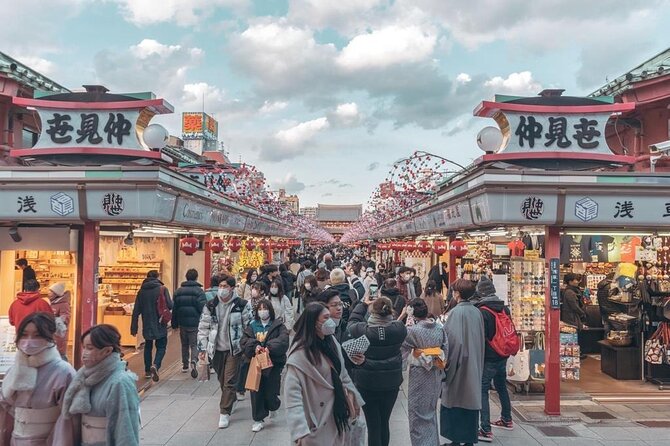
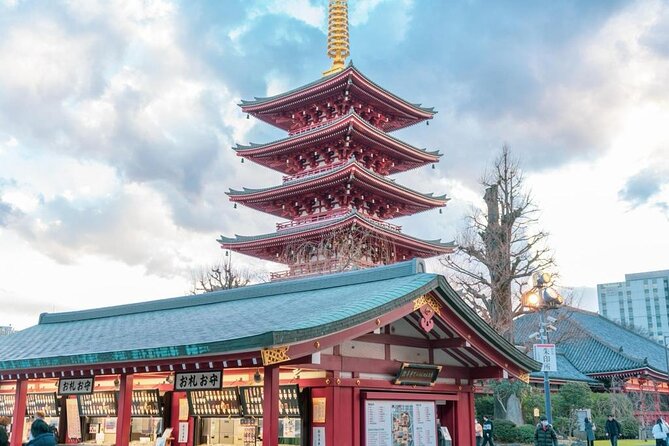
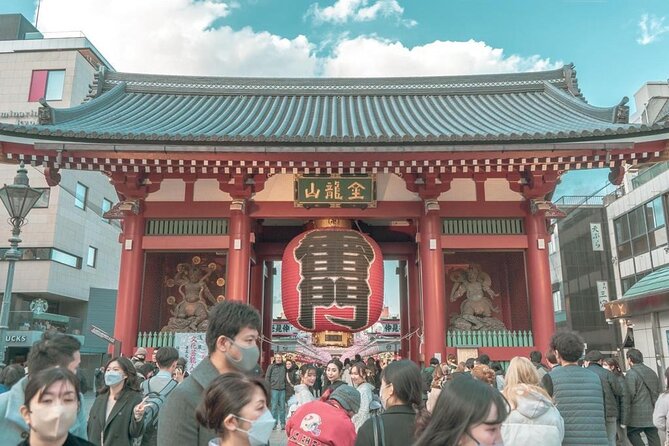
Sensoji, described here as Asakusa Shrine, is the day’s clearest introduction to traditional Tokyo. This Buddhist temple is also called Asakusa Kannon Temple, and it is regarded as Tokyo’s oldest temple, with its completion dated to 645.
The story behind it is memorable. In 628, two brothers fishing in the Sumida River found a statue of Kannon, the goddess of mercy. They returned it to the river, but it kept coming back. Sensoji was built near the spot for that reason.
Give yourself the full hour here. The approach runs along Nakamise, a shopping street more than 200 meters long, leading from the outer gate toward Hozomon and the temple. You can browse Japanese souvenirs and reach the main temple area without paying an entry fee.
This is one of the better stops for a first visit because it gives you ceremony, legend, architecture, and street life in one compact area. The drawback is that it can feel crowded, especially around the shopping approach. Your private guide can help explain what you are seeing, but you may need to keep moving to protect the rest of the day.
Tokyo Skytree reaches above Sumida
Tokyo Skytree is the modern counterpoint to Sensoji. At 634 meters, it is described as the world’s highest free-standing broadcast tower, with observation decks at 350 and 450 meters.
The lower observation level also has a restaurant, cafe, and souvenir shop. The tower forms part of Tokyo Skytree Town, alongside the Solamachi shopping complex, which contains 312 restaurants and retail shops. You will also find a large display of local craft work, a robot technology exhibition space, Sumida Aquarium, and the Postal Museum.
The tour allows about an hour here, but admission is not included. The listed price is about $12 per person, and one person specifically noted long lines and wished the timing had been provided earlier so an advance ticket could be selected. That is useful advice: ask your provider when Skytree is planned before buying a timed ticket.
You should also decide if you need both observation towers. Skytree offers height and broad views, while Tokyo Tower later gives you a closer look at central Tokyo from a landmark with a different character. Paying for both may be worthwhile for tower enthusiasts, but it is not essential to understand the city.
Tokyo Tower tells a postwar story
Tokyo Tower rises 333 meters in central Tokyo. It was completed in 1958 and served as Japan’s tallest structure until Skytree surpassed it in 2012. The tower remains a broadcast antenna and a familiar symbol of Japan’s postwar economic rise.
The comparison with the Eiffel Tower is part of the appeal: Tokyo Tower is three meters taller than its Paris model and was built as a self-supported steel tower. Its red and white frame makes it instantly recognizable, especially from the surrounding city.
The visit lasts about an hour, with admission again excluded. The listed entry cost is about $7. If you already paid for Skytree and prefer gardens, markets, or neighborhood time, this is the easiest stop to shorten. If you enjoy city landmarks, the two towers complement each other well.
One practical issue is repetition. Two tower visits in a single day can consume two hours, plus queues and transport. I would ask the guide whether both are important to your group, particularly if you want more time at Tsukiji or Shinjuku Gyoen.
A completely different kind of day out:
- Tokyo Disney Resort – Tokyo Disneyland & Tokyo DisneySea Park Tickets
★ 4.8 · 99,488 reviews - SHIBUYA SKY Ticket
★ 4.7 · 46,509 reviews - JR Whole Japan Rail Pass
★ 4.8 · 29,150 reviews - Mt Fuji and Hakone 1-Day Bus Tour Return by Bullet Train
★ 5.0 · 26,383 reviews
Tsukiji brings food into the plan
Tsukiji Outer Market is the food stop, and the one-hour visit is a welcome change from observation decks. The area mixes wholesale and retail shops with restaurants, offering traditional Japanese foods and ready-to-eat portions.
Tsukiji once served mainly professionals, so products were often too large for a small household. Some wholesale shops now sell to the public, including smaller sushi meals and bite-sized egg rolls. That makes the market easier to enjoy even if you are not planning a large meal.
Lunch is not included, so budget for food here if the timing works. You can sample something, eat a proper meal, or simply browse. Because the market is made up of many shops rather than one single attraction, the guide’s help can be useful for deciding where to spend your limited time.
The tradeoff is that one hour passes quickly. This is a taste of Tsukiji, not a full food crawl. If eating is your main interest, ask whether you can reduce one tower visit and extend the market stop.
Shinjuku Gyoen gives the city room to breathe
Shinjuku Gyoen National Garden offers a needed pause. Its lawns, walking paths, and quiet scenery sit a short walk from Shinjuku Station, one of Tokyo’s busiest areas. The garden is especially appealing during cherry blossom season.
The hour here is not about checking off a monument. It is about walking, resting, and seeing how Tokyo protects open space amid its dense city center. After markets and towers, the change in pace matters.
Spring is the obvious draw, but the garden remains useful outside blossom season because it gives you a calm setting and a chance to stretch your legs. The listed admission is free. You should not expect a long garden walk in one hour, though. If cherry blossoms are at their peak, you may want to ask for extra time here.
One account praised the luck of visiting during peak cherry blossom but also felt the route did not always flow in the best order. That is a fair warning. Seasonal highlights can change the value of each stop, so tell the guide your priorities before departure.
Meiji Jingu explains modern Japan
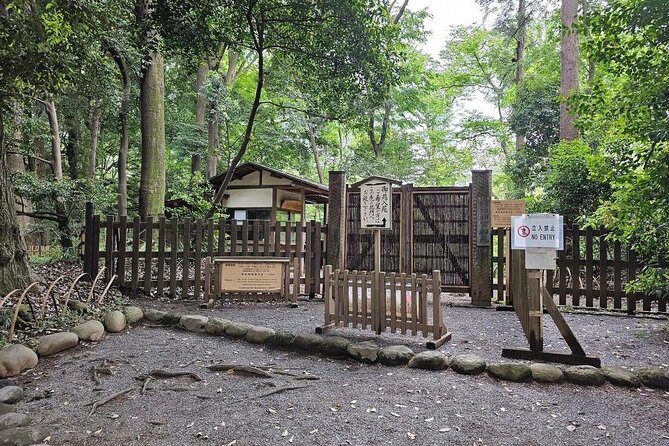
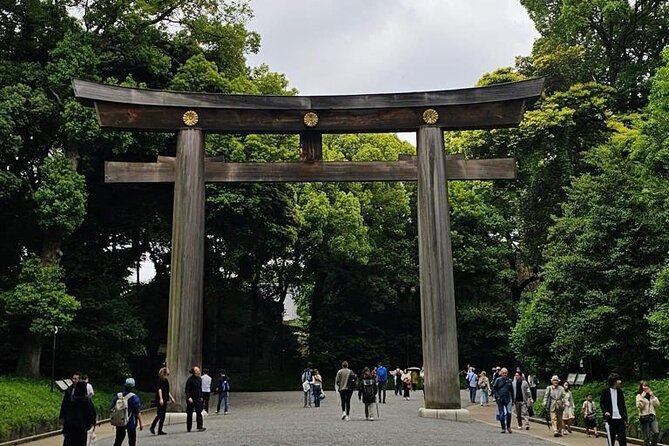
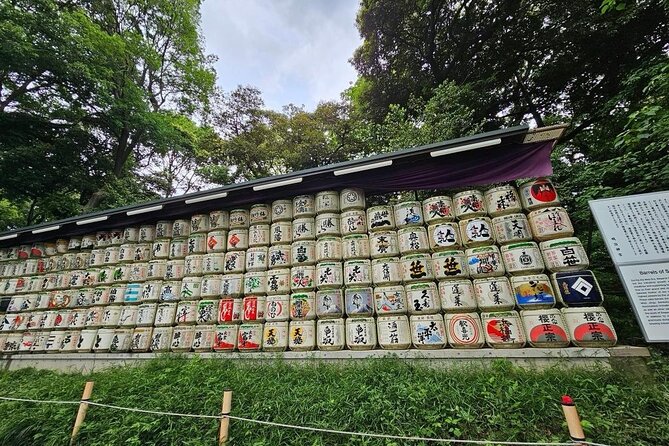
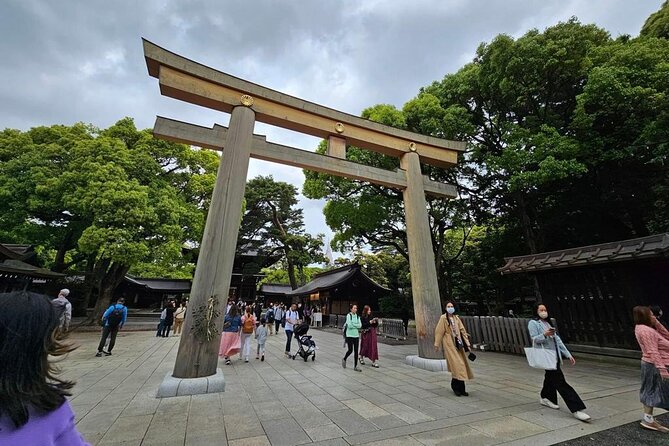
Meiji Jingu Shrine sits in a wooded setting near Harajuku and offers another quiet break from Tokyo’s hard edges. It was completed in 1920 for Emperor Meiji and Empress Shoken, then destroyed during the war and rebuilt soon after.
The story of Emperor Meiji gives this stop real context. Born in 1852, he became emperor in 1867, at the height of the Meiji Restoration. Japan moved away from its feudal system and worked to become a modern world power during his reign.
The shrine visit is free and planned for about an hour. It is worth listening to the explanation here rather than treating the stop as a quick photo break. Without the historical background, a shrine can seem like a forest path and a set of buildings. With it, you see a link between Japan’s imperial past and its rapid modernization.
The site also pairs well with nearby Harajuku. You get a quiet shrine first, then youth fashion and crowded shopping streets later. That contrast is one of the smartest elements in the route.
Shibuya Crossing is Tokyo in motion
Shibuya Scramble is a short, 30-minute stop. Five major crosswalks and ten lanes of traffic meet among tall, brightly lit buildings. When the signals change, the crossing becomes a carefully managed rush of people moving in every direction.
Half an hour is enough to see the crossing, take in the surrounding streets, and visit the area near Shibuya Scramble Square. It is not enough for a detailed look at Shibuya’s shops or nightlife, and that is fine. This stop works as a quick dose of present-day Tokyo.
The crossing is also linked with major New Year’s Eve countdowns and Halloween gatherings. You do not need to visit during either event to understand its fame. The ordinary daily crossing is the point: the city’s apparent chaos works because the signals and movement are highly organized.
Hachiko adds a small human story
The Hachiko stop lasts 30 minutes and is close to the Shibuya area. Hachiko was born in Odate, Akita Prefecture, in November 1923 and was adopted by Hidesaburo Ueno, a university professor living in Shibuya.
Hachiko became loved across Japan for returning to Shibuya Station each day to await Ueno, even after Ueno died in 1925. Hachiko died in 1935, and the story later inspired the 2009 film Hachi: A Dog’s Tale, starring Richard Gere.
This is a small stop, but it gives the day an emotional point. After the scale of Skytree and the movement of the crossing, Hachiko’s story is simple and personal. Thirty minutes should be enough for the statue area and a short explanation.
Harajuku closes with youth culture
Harajuku brings fashion, desserts, cafes, and Japanese youth culture into the final part of the day. Takeshita Street begins near Harajuku Station, with shops selling clothing, accessories, unusual souvenirs, and sweet treats.
The entrance sits at the top of a hill, and weekends and holidays can draw large crowds. You may see groups of high school students and many people heading toward the street. The area is famous for bold fashion, but you can also find reasonably priced accessories. Paris Kids is noted as one of the first accessory shops along the street.
The hour gives you time to walk part of Takeshita Street and browse. It will not cover every shop, and you should watch your pace if you want to buy something. This is a good final stop because it is informal. You can look, snack, shop, or simply observe a side of Tokyo that feels far removed from Meiji Jingu.
What the guide arrangement means
This experience uses a driver who also acts as the guide. Hiroyuki Sato explained that the driver shows the group around and discusses the history of each place. That arrangement can work well because you receive transport and commentary from one person, but it is important to know what you are booking.
One person expected a separate guide and felt the experience suffered because that expectation was not clear. The company later explained that the driver was the guide included in the chosen tour. I would settle this point before paying if you want detailed historical interpretation or a formally licensed guide.
The private format gives you more control than a large coach excursion. You can ask to spend longer at a market, shorten a tower visit, or focus on cherry blossoms, food, temples, or architecture. Still, changes depend on traffic and the day’s fixed time. Private does not mean unlimited.
Is $500 good value for your group?
At $500 per group, the price is easiest to justify when four or five people share it. The vehicle, private arrangement, and hotel transfer convenience remove much of the friction from a nine-hour day. You also cover a wide area without buying separate transport between each district.
For two people, the price is less attractive. Public transport in Tokyo is usually the cheaper way to move around, and many stops have free admission. The tour’s value comes from time, simplicity, and having one person organize the route, not from included tickets.
Remember the extra costs. Skytree and Tokyo Tower admission are not included, with listed prices of about $12 and $7. Lunch and dinner are also separate. A five-person group can keep the per-person cost sensible, but a couple who skips both towers may feel they are paying mainly for the vehicle and convenience.
The rating is 4.9 from 13 reviews, with 92 percent recommending the experience. That is a strong signal, though the sample is small. The most useful praise centers on seeing most of Tokyo’s main attractions in one full day. The main caution is route order, guide expectations, and the risk of spending too much time in lines.
Who should book this day?
I would recommend it to first-time visitors with limited time, families who want private transport, and small groups that prefer a planned day. It also suits anyone who finds Tokyo’s size intimidating or wants hotel transfer help.
You should think twice if you prefer slow neighborhood walks, long meals, detailed museum visits, or independent train travel. Nine stops create variety, but they also create movement. This is a sampler, not a relaxed study of one district.
Before booking, ask three practical questions:
- What time will you reach Skytree and Tokyo Tower?
- Can the route be adjusted around cherry blossoms, food, or shopping?
- Will the driver-guide provide the level of historical explanation you want?
Free cancellation is available when you cancel at least 24 hours before the local start time. Changes or cancellations inside that window are not accepted for a refund.
Final call: a useful first-day framework
Book this tour if you want Tokyo’s major contrasts in one day: Sensoji’s old temple traditions, Skytree’s height, Tsukiji’s food, Shinjuku Gyoen’s calm, Meiji Jingu’s imperial story, and the energy of Shibuya and Harajuku.
I would not book it expecting deep time at every place. The best use of the private format is to set your priorities early. If your group shares the cost and values comfort, the tour offers a practical way to get oriented fast. If you are staying several days and enjoy trains, you can likely explore these areas more slowly and cheaply on your own.
FAQ
How long does the Tokyo City Attractive One Day Tour last?
The tour lasts approximately nine hours. The listed sightseeing times total about eight hours, leaving time for driving, traffic, meals, and adjustments.
Where does the tour start and end?
The stated meeting point is The Tokyo Station Hotel in Marunouchi. The activity ends back at the meeting point, and pickup is offered.
How many people can join the private tour?
The $500 price covers one private group of up to five people. Only your group participates.
Are Tokyo Skytree and Tokyo Tower tickets included?
No. Entry tickets are separate. The listed prices are about $12 for Tokyo Skytree and $7 for Tokyo Tower.
Are meals included?
No. Lunch and dinner are not included. Tsukiji Outer Market provides a convenient place to buy food during the day.
What is included in the tour price?
The price includes an air-conditioned vehicle, private transportation, and a hotspot on board. Temple, garden, shrine, Shibuya, Hachiko, and Harajuku stops have no listed admission charge.
Just added in Tokyo
- Tokyo: Shinjuku Bar Hopping & Night Walking Tour★ 5.0 · 53 reviews
- Tokyo:Samurai sword and archery class from a samurai descendant★ 5.0 · 121 reviews
- Tokyo Ultimate Daikoku & JDM Experience (R35 GTR Private Tour)★ 5.0 · 27 reviews
- Authentic Geisha Performance with Dinner in Tokyo★ 4.5 · 101 reviews
- Tokyo: Asakusa Walking Tour with Japanese Comedian★ 5.0 · 43 reviews
- Asakusa: 1400-year history exploration★ 5.0 · 155 reviews
- Tokyo Asakusa Temple & Shrine Walking Tour with Local Guide★ 5.0 · 52 reviews
- Asakusa Night Evening Walking Tour with English-Speaking Guide★ 5.0 · 16 reviews
Day Trips, compared.
![[Kyoto & Nara Day Tour] Sagano Scenic Railway & Nara Park & Fushimi Inari Taisha Thousand Torii Gates & Togetsukyo Bridge & Bamboo Grove & Kimono Forest (Departing from Osaka)](https://media.japanvisits.com/wp-content/uploads/kyoto-nara-day-tour-sagano-scenic-railway-nara-park-fushimi-inari-taisha-thousand-torii-gates-togetsukyo-bridge-bamboo-grove-kimono-forest-departing-from-osaka-k110001-400x257.jpg)
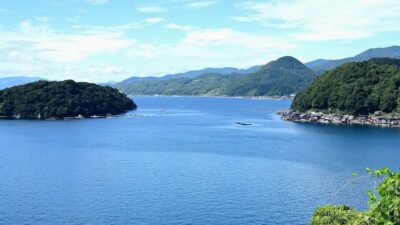
Kyoto Amanohashidate & Ine Funaya & Ine Bay Scenic Day Trip (Departing from Osaka or Kyoto)
Read our review →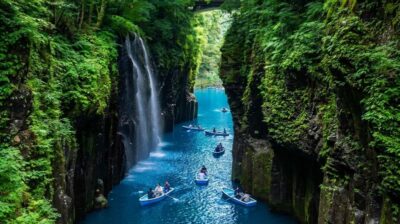
Kyushu: Mount Aso, Kusasenri & Takachiho Gorge Day Tour (Optional Takachiho Boat Ride Experience)
Read our review →
Kyushu One-Day Tour: Yufuin no Mori Train & Yufuin Town & Nyoirin-ji Temple & Dazaifu & Hell Hot Springs (Departing from Fukuoka)
Read our review →
Browse the lists this tour appears in