
Reviewed · DAY TRIPS
Tokyo: Full-Day Tour of the Six Majestic Spots of Mt Fuji
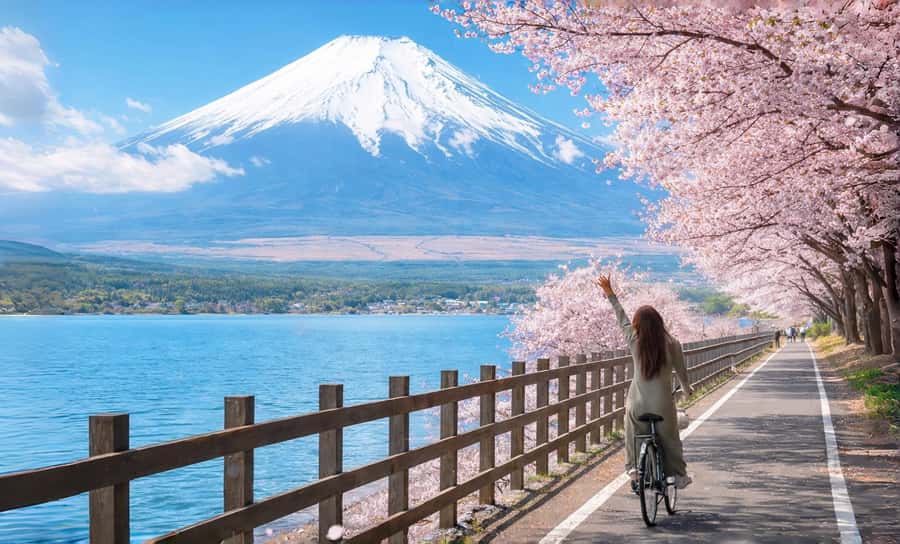
Fuji is best seen from many angles. This full-day trip takes you from Tokyo to six of the mountain’s most photogenic spots, from the quiet shoreline of Lake Yamanaka to the flower fields of Lake Kawaguchi. I like the early stop at Hirano Beach, where morning light can produce a reflection of Fuji on the lake beside resident swans. I also like the range of the day: you get classic photographs, a traditional village, a pagoda, a convenience-store photo stop, and seasonal flowers rather than six versions of the same viewpoint.
The main consideration is the mountain itself. Fuji may hide behind clouds, even on a clear-looking day, and this tour cannot change that. Traffic can also alter the schedule on weekends and holidays. Still, guides such as Tim, Sakuragi, Agnes, and Will have earned praise for being attentive, friendly, and helpful, which matters on a long day with several stops.
In This Review
- Six useful things to know before booking
- Why this route gives you more than one Fuji photograph
- Hirano Beach and the morning mirror of Mount Fuji
- Higashikawa Clock Shop and the road that points at Fuji
- Arakurayama Sengen Park and the famous pagoda climb
- Oshino Hakkai, eight springs in a traditional village
- The Lawson Store photo stop
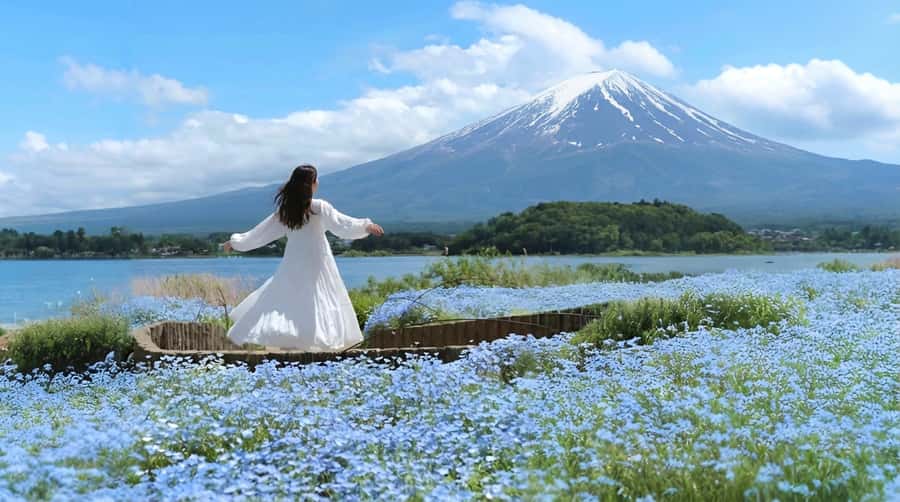
- Oishi Park at Lake Kawaguchi
- Transport, guides, and the pace of a long day
- What the $45 price really covers
- Who should book this Fuji day trip
- Should you book it?
- FAQ
- Where does the tour start and finish?
- Is Mount Fuji guaranteed to be visible?
- Why is a morning departure recommended?
- What is included in the $45 price?
- Are food and drinks included?
- Is hotel pickup available?
- Is the tour wheelchair accessible?
- Which languages are available?
- Can I cancel for a refund?
Six useful things to know before booking
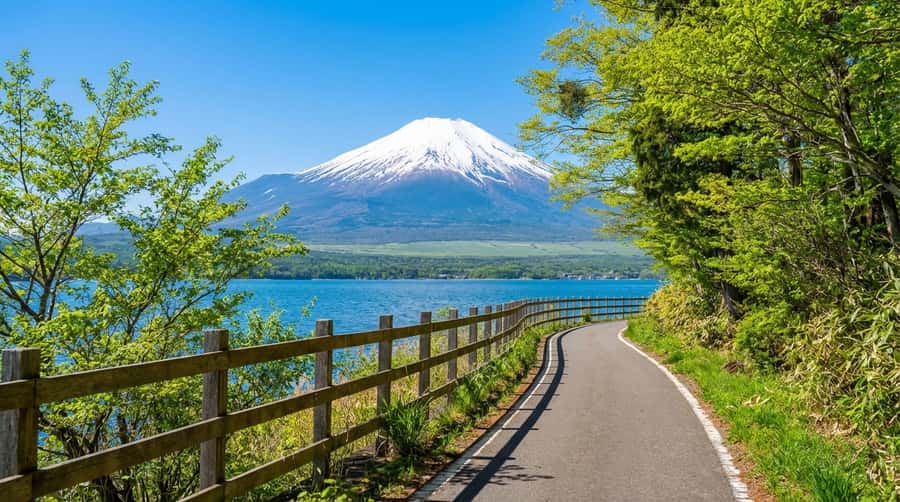
- Hirano Beach works best early: Morning light gives you the best chance of seeing Fuji reflected on Lake Yamanaka.
- You get several very different Fuji views: The route includes a lake, a street, a pagoda, springs, a convenience store, and flower gardens.
- Arakurayama Sengen Park requires stairs: The pagoda view is reached by climbing stone steps, so this stop is not suitable for every visitor.
- Oishi Park changes with the calendar: Tulips, moss phlox, lavender, begonias, and autumn maple color appear at different times.
- The $45 price is strong value: Transport, a driver, and a guide are included, while food, drinks, insurance, and hotel transfers are not.
- Build in extra time after the tour: The day returns to its meeting point, but traffic can make a same-day flight, Shinkansen, or evening booking risky.
Why this route gives you more than one Fuji photograph
A Mount Fuji day trip can easily become a drive to one lookout, followed by a long ride back to Tokyo. This route is better planned in one important way: it shows how the mountain changes when you see it beside water, buildings, village houses, flowers, and a historic-looking pagoda.
That variety gives you a fuller sense of the Fuji area. At Hirano Beach, the mountain feels calm and distant. At Higashikawa Clock Shop, it appears to sit at the end of a road. At Arakurayama Sengen Park, Fuji becomes the background to one of Japan’s most recognizable postcard scenes.
You also get time around Oshino Hakkai and Lake Kawaguchi, where the day is not only about taking pictures. The springs and traditional village offer a closer look at local scenery and Japanese rural design. For $45 per person, including an air-conditioned vehicle, driver, and guide, this is a practical way to cover a large area without arranging several separate train and bus connections.
The price does not include lunch, snacks, drinks, hotel pickup, or personal insurance. That keeps the headline cost low, but you should bring money for food and personal purchases. One guide recommended an authentic lunch and a kimono experience, so you may receive useful local suggestions, but those extras are not part of the advertised price.
More Day Trips in Tokyo
- Mt Fuji Top 5 Spots Day Tour: Arakurayama Park,Oshino Hakkai
★ 4.7 · 2,066 reviews - Tokyo: Mt. Fuji, Kamakura, Big Buddha, & Lake Ashi Day Trip
★ 4.5 · 867 reviews - Mt. Fuji & Hakone Private Day Tour with English-Speaking Driver
★ 4.5 · 824 reviews
Hirano Beach and the morning mirror of Mount Fuji
Hirano Beach sits on the northeastern side of Lake Yamanaka. Its shore is made of gravel, and the view is open across the water toward Fuji. The special feature here is the possibility of seeing the mountain reflected on the lake’s surface, creating a double image that looks far more polished than a normal viewpoint photograph.
Timing matters. The reflection is described as a morning-only opportunity, so an early departure is not an inconvenience here. It is the reason this stop comes first. Wind, cloud, and water conditions can still spoil the mirror effect, but an early visit gives you the right chance.
The resident swans add another pleasant touch. You can watch them near the shore and sometimes frame them with the lake and mountain. This is a quieter beginning than the more famous photo stops later in the day, and I like that it gives you a few minutes to enjoy nature rather than immediately joining a crowd around a landmark.
Bring comfortable shoes because the gravel shore is less forgiving than a paved promenade. Also bring a phone or camera with enough battery. The reflection, if it appears, may be one of the most memorable photographs of the day.
Higashikawa Clock Shop and the road that points at Fuji
The Higashikawa Clock Shop stop is built around a simple visual trick. A straight, quiet road leads toward Mount Fuji, creating the impression that the mountain is directly at the end of the street. It is sometimes described as the Sky Ladder Town view because of the way the road seems to rise toward the sky and mountain.
This is not a major attraction with a long visit. Its value is visual. The clean road, modest buildings, and Fuji backdrop create a calm Japanese street scene that feels different from a formal observation deck.
You will want to pay attention to positioning. The road is the subject as much as the mountain, so a quick snapshot from the wrong angle may lose the effect. Your guide can help point out the best place to stand, and several guides on this route have been praised for taking photographs for visitors.
The view depends entirely on visibility. If clouds cover Fuji, you will still see the street and local setting, but the main reason for the stop is gone. That is a recurring truth of this excursion: the sights remain worthwhile, but the mountain is never guaranteed.
Arakurayama Sengen Park and the famous pagoda climb
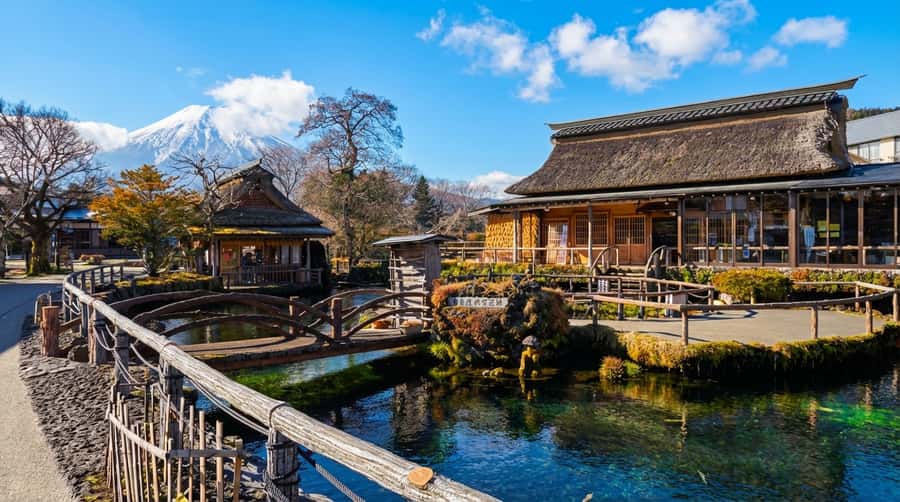
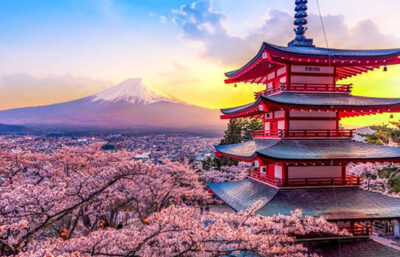
Arakurayama Sengen Park is the stop most closely tied to the classic Fuji photograph. From the upper area, a red five-story pagoda sits in front of Mount Fuji, with cherry blossoms in spring or autumn leaves later in the year. The composition is almost too perfect, which explains its popularity.
The pagoda view is not effortless. You reach it by climbing stone steps from the area near Shimoyoshida Station. Take your time, especially after sitting in the vehicle for part of the morning. The climb is the one clear physical challenge in an otherwise manageable sightseeing day.
This stop is not suitable for wheelchair users because of the pagoda steps. The wider route is described as accessible at the other stops, but the tour information also lists the experience as unsuitable for wheelchair users. If mobility is a concern, ask the operator for a precise stop-by-stop explanation before booking.
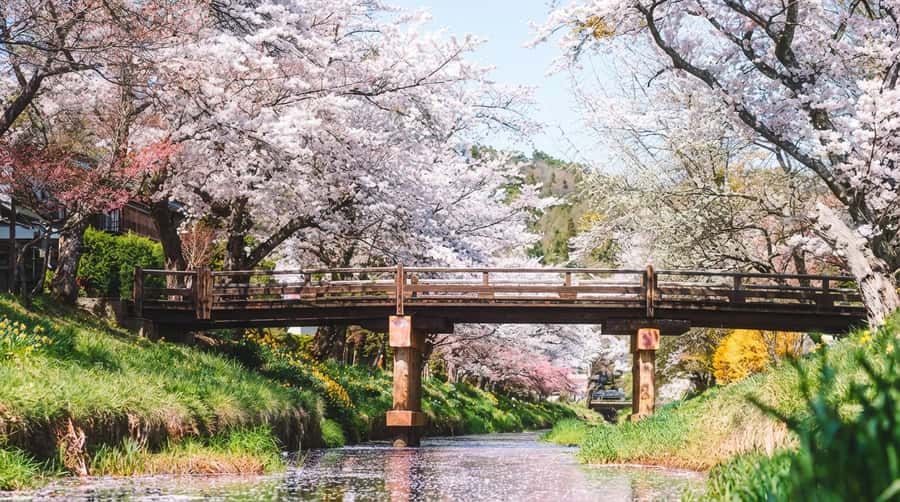
The season changes the mood. Spring cherry blossoms soften the scene with pale color, while autumn leaves give it a stronger contrast against the red pagoda. The view is still appealing outside those periods, but you should not book solely for blossoms or autumn color unless your dates match the season.
After the climb, the village below offers a chance to pause for coffee. That small break helps make the stop feel less like a rushed photo assignment. It also gives you a different angle on the local town before returning to the vehicle.
A completely different kind of day out:
- Tokyo Disney Resort – Tokyo Disneyland & Tokyo DisneySea Park Tickets
★ 4.8 · 99,488 reviews - SHIBUYA SKY Ticket
★ 4.7 · 46,509 reviews - JR Whole Japan Rail Pass
★ 4.8 · 29,150 reviews - Mt Fuji and Hakone 1-Day Bus Tour Return by Bullet Train
★ 5.0 · 26,383 reviews
Oshino Hakkai, eight springs in a traditional village
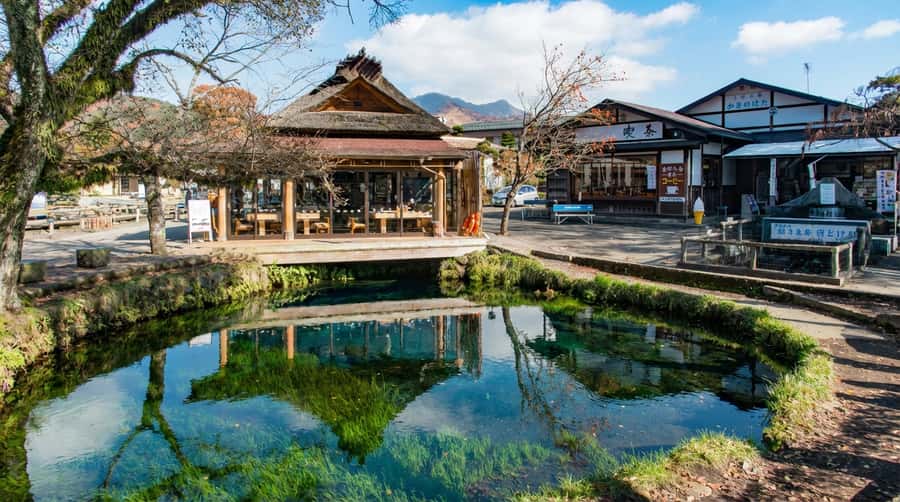
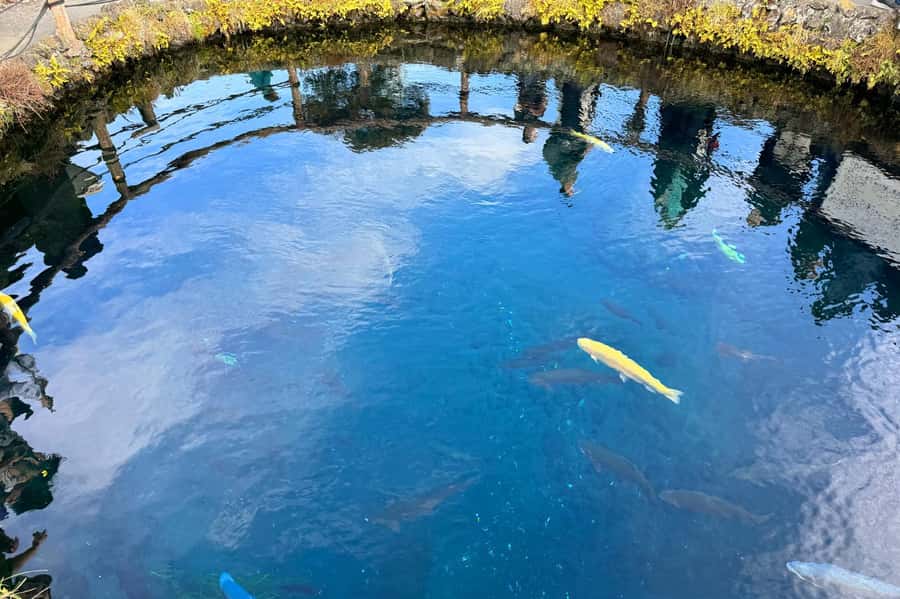
Oshino Hakkai is the most culturally textured stop on the route. The site has eight clear springs fed by snowmelt from Mount Fuji. Their water is known for its transparency, and the springs sit among thatched-roof buildings, wooden bridges, and paths that give the area a traditional village feel.
The blue-green water is striking, but the larger appeal is the setting around it. You can cross small bridges, look into the springs, and see how water shapes the village. This makes Oshino Hakkai a good counterpoint to the wide lake views and carefully framed photo spots.
It can also be crowded, especially during popular seasons. Give yourself room to look rather than trying to photograph every pool immediately. The stop is more enjoyable when you slow down and notice the old-style buildings and water channels.
Oshino Hakkai is described as a UNESCO-designated natural monument. That status reflects the importance of the springs and their connection to Mount Fuji’s snowmelt. You do not need a long lecture to appreciate the place, but a guide who explains the water source and village layout can add useful context.
Food may be available to purchase during the day, but meals are not included. Since you cannot eat or drink in the vehicle, use designated breaks for lunch and snacks. Bring a drink for the walking portions, then follow the group’s vehicle rules when you board again.
The Lawson Store photo stop
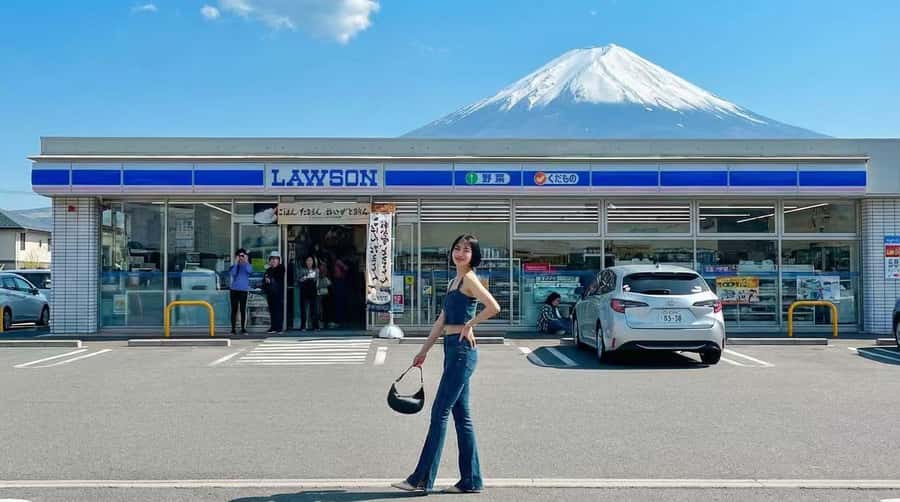
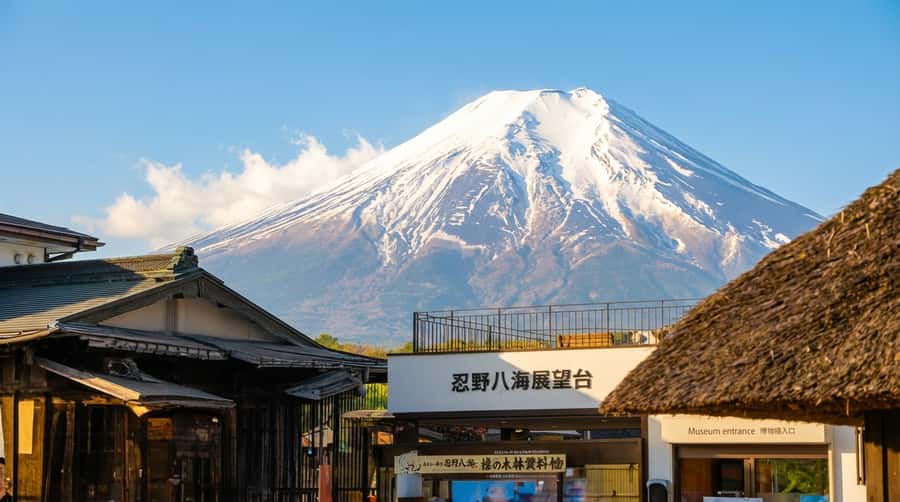
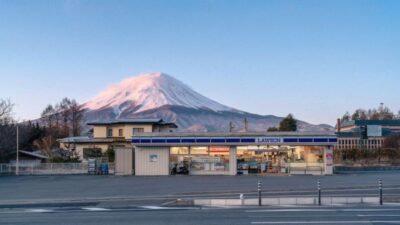
The Fuji-facing Lawson Store is a short, modern contrast to Oshino Hakkai. The store itself is ordinary, but its position and clean design create a popular photograph with Mount Fuji behind it. The appeal is the collision of everyday Japan and a world-famous mountain.
This is a quick stop, not a shopping excursion. You can buy a snack or drink, then take a photograph from the appropriate public area. Be respectful of traffic, pedestrians, and the store’s normal business. A clever picture is not worth blocking the pavement or interfering with customers.
I like this stop because it shows how Fuji appears in daily life. You are not standing at a grand monument. You are looking at a convenience store that happens to sit in front of one of the world’s most recognizable peaks.
Again, clouds can turn the stop into a simple Lawson visit. If the mountain is visible, the photograph is easy and memorable. If not, you still have a practical chance to pick up a snack before continuing.
Oishi Park at Lake Kawaguchi
Oishi Park is the floral finish to the route. It sits beside Lake Kawaguchi and offers broad views toward Fuji, with flower beds that change through the year. The seasonal calendar is one of the most useful things to understand before you book.
- April: Tulips, daffodils, and rapeseed flowers
- May: Moss phlox, forming a low carpet of color
- June and July: Lavender, including the period of the Kawaguchiko Herb Festival
- August through October: Begonias
- November: Scarlet maple leaves
Flower timing can shift slightly, so check current conditions if a particular bloom is important to you. Do not assume that a date listed for a flower means every bed will be at its best.
Oishi Park works well as a final stop because it is open and restful. After the springs, stairs, and roadside photographs, you can walk beside the lake and take in a wider view. The mountain may appear behind the flowers, across the water, or not at all if clouds settle in.
This is also one of the best places to appreciate the value of a seasonal trip. The route is not exactly the same in April as it is in July or November. Cherry blossoms favor Arakurayama Sengen Park, lavender favors Oishi Park, and autumn color can improve both stops. If your schedule is fixed, treat the flowers as a bonus rather than a promise.
Transport, guides, and the pace of a long day
The tour uses an air-conditioned vehicle and returns you to the meeting point at the end. Hotel pickup and drop-off are not included, and the meeting point can vary according to the option you book. Confirm that location carefully because the departure-day meeting point cannot be changed.
On small daily groups, the driver may also act as the guide. English commentary is limited in that setup, and there is no commentary while the vehicle is moving. The service may include multiple languages, including English and Chinese, rather than a single-language format.
Guide quality can shape the day. Tim has been praised for useful information and energy, Sakuragi for clear explanations in English and Chinese, Agnes for making the schedule enjoyable, and Will for his kindness. One passenger also received prompt help with serious stomach pain, including assistance finding medicine. That does not turn the tour into a medical service, but it does show why an attentive guide matters on a long outing.
There are a few practical comfort points. One report praised the clean, punctual transport, while another noted that the vehicle air-conditioning did not work properly. A separate comment found the speaker volume too loud at times. These are isolated details, but they are worth knowing if you are sensitive to heat or sound.
Traffic is the larger unavoidable issue. Weekends and holidays can bring jams, early attraction closures, or schedule changes. The route may be adjusted because of weather or traffic, and there is no refund for changes caused by those conditions. Do not pair this tour with a same-day flight, Shinkansen, or fixed evening activity.
What the $45 price really covers
At $45, this is a low-cost way to reach six Fuji-area locations from Tokyo. The strongest value comes from the transportation. Booking each place independently would require planning several regional connections, and the route covers a wide area in one day.
The guide and driver are also included, which gives you help with meeting points, timing, and photo locations. You are paying for access and coordination, not a private tour. Expect a shared vehicle and a day shaped by group timing.
Plan for additional spending on lunch, drinks, snacks, coffee, personal purchases, and any optional experiences suggested during the day. Luggage may require advance notice and an extra payment, so this is best treated as a sightseeing day rather than a transfer service.
For a first visit to the Fuji area, I think the price is especially appealing. You trade some flexibility for a broad itinerary and simple transport. If you want to linger at one lake, hike at length, or set your own pace, a private arrangement would suit you better.
Who should book this Fuji day trip
I would recommend this excursion to you if you want a photo-focused introduction to the Mount Fuji region without managing several train and bus connections. It suits first-time visitors, couples, families who can handle a full day, and anyone who values variety over a slow visit to one place.
It is also a good choice if you want more than a mountain lookout. Oshino Hakkai adds village scenery, Lawson adds a modern Japanese visual, and Oishi Park brings seasonal flowers. The route has enough range to stay interesting even if Fuji disappears behind clouds.
I would hesitate if you need full wheelchair access, have difficulty with stone steps, or are pregnant, over 70, or managing high blood pressure, since the activity is specifically listed as unsuitable for those groups. Comfortable clothing and shoes are important, and you should be ready for walking, gravel, stairs, crowds, and a long day outside the city.
Cancel up to 24 hours in advance for a full refund. If you are late or miss the departure, there is no refund. For a flexible plan, the reserve-and-pay-later option lets you hold a place without paying immediately.
Should you book it?
Book this tour if you want six distinct Fuji viewpoints for $45, with transport and a guide handled for you. The early start is worth accepting for Hirano Beach, and the route gives you several chances to see the mountain from different settings.
Do not book it expecting a guaranteed Fuji photograph or a relaxed private day. Weather and traffic can change the plan, and Arakurayama’s pagoda requires a stair climb. For most first-time visitors based in Tokyo, though, this is a sensible and well-priced way to reach the Fuji area, especially when seasonal flowers or clear morning reflections are high on your list.
FAQ
Where does the tour start and finish?
The tour starts and ends at a meeting point. The exact starting point may vary depending on the option booked, and hotel pickup and drop-off are not included.
Is Mount Fuji guaranteed to be visible?
No. Cloudy weather can hide Mount Fuji, and the schedule may change if weather affects an attraction. The tour may switch to other spots in those conditions.
Why is a morning departure recommended?
Hirano Beach offers the best chance of seeing Mount Fuji reflected on Lake Yamanaka in the morning. The reflection is described as a morning-only opportunity.
What is included in the $45 price?
Transportation in an air-conditioned vehicle, a tour guide, and a driver are included.
Are food and drinks included?
No. Food, drinks, and personal expenses are not included. Eating and drinking are not permitted in the vehicle.
Is hotel pickup available?
No. Hotel pickup and drop-off are not included. You must travel to the assigned meeting point.
Is the tour wheelchair accessible?
The tour information lists the activity as unsuitable for wheelchair users. Most stops are described as accessible, but Arakurayama Sengen Park’s pagoda requires climbing stone steps.
Which languages are available?
English and Chinese are listed. On small daily groups, the driver may also serve as the guide, with limited English commentary. Multilingual service may be provided for international groups.
Can I cancel for a refund?
You can cancel up to 24 hours in advance for a full refund. No refund is provided for no-shows or late arrivals.
Just added in Tokyo
- Japanese Home Cooking Class & Walk in Todoroki Temple Tokyo★ 5.0 · 88 reviews
- A One-of-a-Kind Sushi Experience in a Special Place of Japan★ 5.0 · 15 reviews
- Tokyo Cute Bento Cooking Class – Make a Kawaii Character Lunchbox★ 5.0 · 126 reviews
- Japan Tokyo Tower Observatory Deck E-Ticket★ 4.0 · 34 reviews
- Catch a Baseball Game in Tokyo with a Local – Tickets Included★ 5.0 · 24 reviews
- JDM Experience with Fast&Furious RX-7 (English speaking Driver)★ 5.0 · 57 reviews
- Tokyo Private Day Tour by Car with English speaking Driver Guide★ 4.0 · 29 reviews
- Japan Classic 10 Day – One Life Adventures★ 5.0 · 129 reviews
Day Trips, compared.
![[Kyoto & Nara Day Tour] Sagano Scenic Railway & Nara Park & Fushimi Inari Taisha Thousand Torii Gates & Togetsukyo Bridge & Bamboo Grove & Kimono Forest (Departing from Osaka)](https://media.japanvisits.com/wp-content/uploads/kyoto-nara-day-tour-sagano-scenic-railway-nara-park-fushimi-inari-taisha-thousand-torii-gates-togetsukyo-bridge-bamboo-grove-kimono-forest-departing-from-osaka-k110001-400x257.jpg)
Kyoto Amanohashidate & Ine Funaya & Ine Bay Scenic Day Trip (Departing from Osaka or Kyoto)
Read our review →
Kyushu: Mount Aso, Kusasenri & Takachiho Gorge Day Tour (Optional Takachiho Boat Ride Experience)
Read our review →
Kyushu One-Day Tour: Yufuin no Mori Train & Yufuin Town & Nyoirin-ji Temple & Dazaifu & Hell Hot Springs (Departing from Fukuoka)
Read our review →
Browse the lists this tour appears in