
Reviewed · DAY TRIPS
Tokyo: Instagram-Worthy Mt Fuji & Lake Kawaguchiko Day Trip
Fuji does not wait for your camera. This 10-hour trip gives you several chances to catch Japan’s most famous mountain from different angles, without making you piece together buses, trains, and rural connections yourself. I like the easy 8:00 am meeting at Tokyo Station and the smart mix of famous viewpoints, quiet springs, flower fields, and local streets.
I also like the photography focus. Arakurayama Sengen Park, Oshino Hakkai, the Lawson convenience store, and Lake Kawaguchi each offer a different Fuji picture. The drawback is the pace: some people find the stops rushed, and the guide’s explanations can vary. At $161, you are paying mainly for transport, coordination, and access to several difficult-to-link sights in one day.
In This Review
- What Makes This Fuji Tour Worth Considering
- Why a Day Trip From Tokyo Makes Sense
- Climbing to Chureito Pagoda at Arakurayama Sengen Park
- Hikawa Clock Shop and the Classic Street View
- Oshino Hakkai’s Eight Springs
- The Lawson Kawaguchiko Photo Stop
- Lake Kawaguchi, Oishi Park, and the Seasonal Swap
- How Much Guide Commentary Should You Expect?
- The Real Value of the $161 Price
- What to Pack and How to Pace Yourself
- Who Will Enjoy This Best?
- Should You Book This Mount Fuji Day Trip?
- FAQ
- Where does the tour start?
- Where does the tour end?
- How long does the tour last?
- What places are included?
- Does the tour always visit Oishi Park?
- Is Hikawa Clock Shop always included?
- Are meals included?
- Are admission tickets included?
- Can children under three join for free?
- How many people can join the tour?
- Can I cancel for a full refund?
What Makes This Fuji Tour Worth Considering
- Chureito Pagoda and Mount Fuji in one frame: Climb the steps at Arakurayama Sengen Park for Japan’s classic pagoda, mountain, and seasonal color view.
- Eight clear springs at Oshino Hakkai: See water fed by Mount Fuji snowmelt and enjoy a calmer village stop away from Tokyo’s crowds.
- Several photo angles in one day: The itinerary changes viewpoints instead of relying on one risky mountain lookout.
- Seasonal scenery changes the final stop: Oishi Park is used for flowers during most of the year, while Maple Corridor replaces it in late October and November.
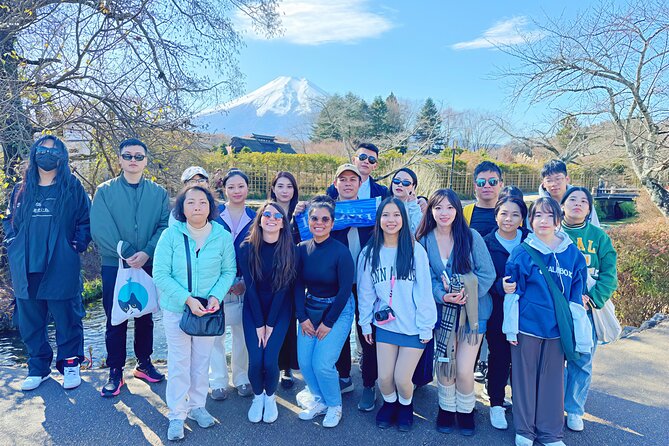
- A guide can improve the pictures: Guides such as Hikari have helped with camera angles, timing, local information, and keeping the group moving.
- A practical group size: The vehicle can carry up to 21 people, making this more personal than a giant sightseeing coach, though still too large for a quiet private outing.
Why a Day Trip From Tokyo Makes Sense
Mount Fuji’s northern side is easy to reach in theory, but the best stops are spread across the Fuji Five Lakes area. Public transport can get you there, yet linking Arakurayama, Oshino Hakkai, Lawson Kawaguchiko, and the lake in one day takes careful planning.
This tour removes that work. You meet at Tokyo Station at 8:00 am, ride between the sites, and return to the same general meeting point. Parking fees and the driver and guide service are included, which matters in a region where rural transfers can take time and money.
The trip lasts about 10 hours, including the driving. That is a full day, not a quick side trip. Traffic around Mount Fuji can add time, and one reported outing lasted about 11 hours. Do not book a tight dinner reservation for early evening unless you are comfortable changing it.
The minibus or coach format is best for you if you want the sights more than the journey. You will not get the freedom to linger at every viewpoint, but you will see several places without changing trains or figuring out local buses.
More Day Trips in Tokyo
- Mt Fuji Top 5 Spots Day Tour: Arakurayama Park,Oshino Hakkai
★ 4.7 · 2,066 reviews - Tokyo: Mt. Fuji, Kamakura, Big Buddha, & Lake Ashi Day Trip
★ 4.5 · 867 reviews - Mt. Fuji & Hakone Private Day Tour with English-Speaking Driver
★ 4.5 · 824 reviews
Climbing to Chureito Pagoda at Arakurayama Sengen Park
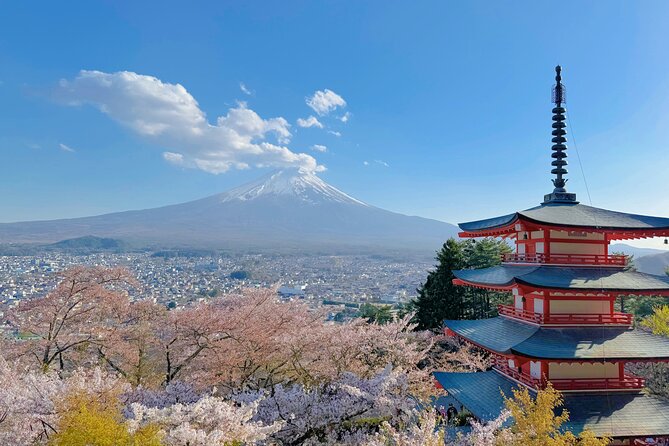
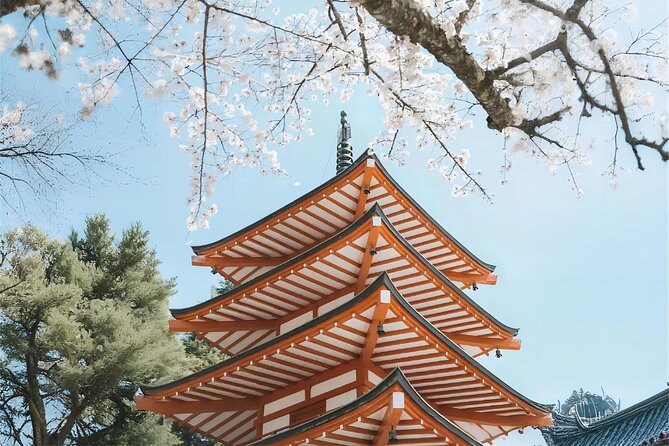
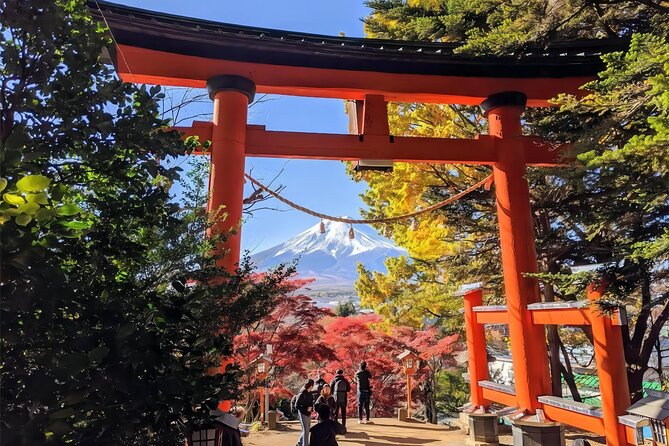
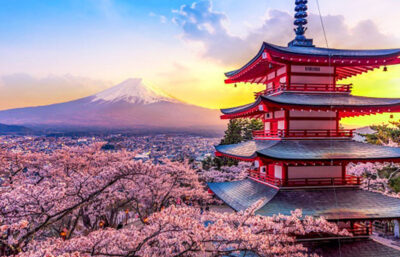
This is the visual centerpiece. Arakurayama Sengen Park is home to the five-story Chureito Pagoda, with Mount Fuji rising behind it when the weather cooperates.
The famous view requires a climb of roughly 400 steps. It is manageable for many people, but it is not a flat stroll. Set your pace early, wear comfortable shoes, and keep some energy for the descent and the rest of the day.
The reward is one of Japan’s most recognizable compositions: pagoda in the foreground, Fuji behind it, and seasonal trees framing the view. Cherry blossoms usually make this stop especially attractive around mid-April. Autumn color is strongest around November.
This stop receives about one hour. That can be enough to climb, take pictures, enjoy the shrine area, and return to the meeting point. It can also feel short if the stairs slow you down or the viewing platform is crowded.
The timing is particularly important during cherry blossom season. From April 1 to April 18, traffic controls mean the tour may skip Hikawa Clock Shop and give more time to Arakurayama Park instead. That is a sensible trade. The clock shop is a popular street photo, but the pagoda viewpoint is the stronger attraction.
Clouds are the great Fuji wildcard. Several outings have had only brief views of the mountain, while others enjoyed clear skies and the full snow-capped peak. The tour’s advantage is that you get more than one chance later in the day.
Hikawa Clock Shop and the Classic Street View
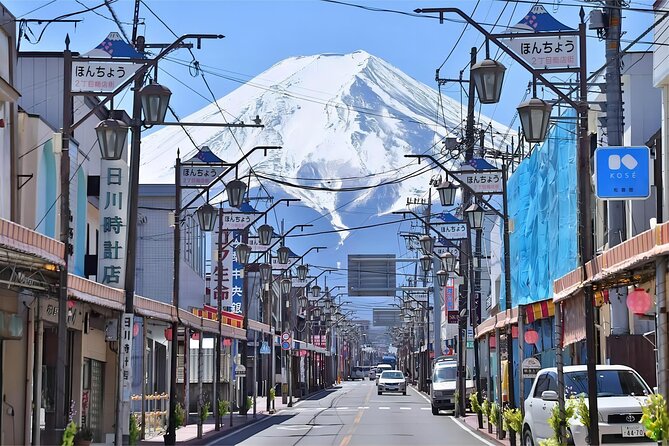
Under the regular schedule, Hikawa Clock Shop receives about 20 minutes. The appeal is simple: a Japanese street leading toward Mount Fuji, with the mountain appearing at the end of the view.
It is a quick photo stop rather than a full sightseeing visit. You may have just enough time to frame the street, take a few pictures, and move on. During the April 1 to April 18 traffic period, this stop is skipped because the walk from the parking area can consume too much time.
That change makes sense for a photography tour. You are better off getting a proper visit at Arakurayama than spending much of the morning walking to a short street view. If the clock shop is important to you, check the exact date-specific schedule before booking.
Oshino Hakkai’s Eight Springs
Oshino Hakkai shifts the mood from dramatic mountain photography to water, village scenery, and local food stalls. The area is known for eight clear springs formed by snowmelt from Mount Fuji.
The water is the star here. On a clear day, it reflects the mountain and gives the stop a cool, peaceful feel. You have around one hour and 20 minutes, the longest scheduled stop on the day.
This is a good place to slow down after the climb at Arakurayama. You can walk around the spring area, take photographs, and see a traditional-looking rural setting. The tour information describes it as a natural monument, so this stop offers more than another Fuji postcard.
You should still watch the clock. The wider area includes food and shopping opportunities, but lunch and personal purchases are not included. One account described a meal costing 1,500 yen per person for a simple serving of nuggets and rice. Food prices around major Fuji sights can be high, so keep cash or a payment method ready and do not assume a meal is part of the tour price.
A completely different kind of day out:
- Tokyo Disney Resort – Tokyo Disneyland & Tokyo DisneySea Park Tickets
★ 4.8 · 99,488 reviews - SHIBUYA SKY Ticket
★ 4.7 · 46,509 reviews - JR Whole Japan Rail Pass
★ 4.8 · 29,150 reviews - Mt Fuji and Hakone 1-Day Bus Tour Return by Bullet Train
★ 5.0 · 26,383 reviews
The Lawson Kawaguchiko Photo Stop
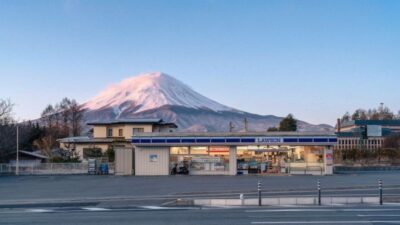
The Lawson Kawaguchiko Station stop is one of the strangest and most modern Fuji photo opportunities. You photograph Mount Fuji above a familiar Japanese convenience store near Kawaguchiko Station.
The contrast is the point. Instead of a shrine, lake, or flower field, you get an everyday Japanese storefront with an extraordinary mountain behind it. The stop lasts about 20 minutes, so it is designed for quick pictures rather than shopping or a long break.
Follow the guide’s advice about where to stand and how to frame the shot. A good guide can save you from wasting the short visit on trial and error. Hikari was especially praised for showing the best angles and helping people get the picture they wanted.
This stop also shows the tour’s character. It is not a deep cultural program. It is a carefully arranged series of memorable visual scenes, with just enough time at each place to capture them.
Lake Kawaguchi, Oishi Park, and the Seasonal Swap
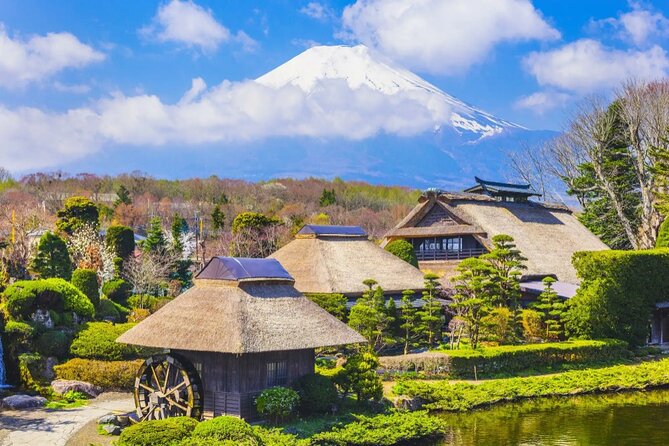
The final lake area gives you a broader view and, often, the best last chance to see Fuji. The regular itinerary uses Oishi Park for about 50 minutes.
Oishi Park is known for flower displays, including lavender, begonia, cosmos, and Japanese blood grass. The flowers change through the year, so the feel of the stop depends heavily on your travel date. The park also offers open views toward Lake Kawaguchi and Mount Fuji.
This can be the moment when the mountain finally appears. Fuji often hides behind cloud for much of the day, then shows itself for a few minutes near the lake. Several people have found the final stop especially rewarding for that reason.
From approximately October 30 to November 20, the tour visits the Kawaguchiko Maple Corridor instead of Oishi Park. The maple leaves create a strong autumn setting, especially when snow is visible on Fuji. The published schedule contains slightly different seasonal dates in places, so confirm the exact substitution for your departure date.
The Maple Corridor stop also lasts about 50 minutes. It is a good choice if you are visiting during peak autumn color, but it means you will not see Oishi Park’s flower displays on that outing.
How Much Guide Commentary Should You Expect?
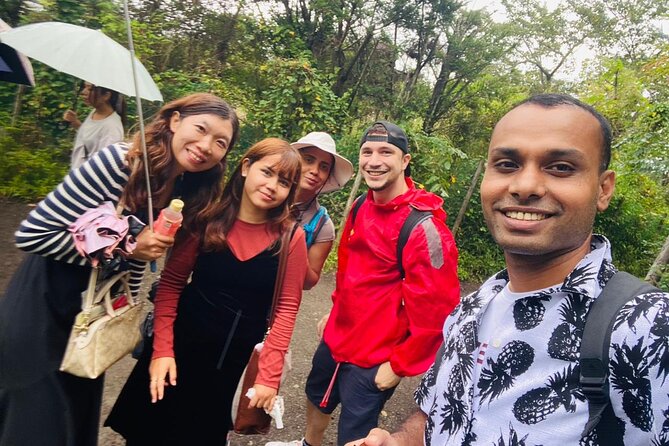
The strongest guide feedback centers on Hikari. He has been praised for humor, clear explanations, patience, attention to the group, and practical help with photographs. Sakura also received praise for good English, a sense of humor, and helpful service.
That said, the experience depends on who leads your departure. Some people have found the commentary brief, with the day feeling more like transport between photo stops than a cultural tour. One bilingual group also reported that the English explanations were much shorter than the Chinese commentary, creating frustration.
You should book this with the right expectation. The guide is there to manage time, explain the stops, help with group movement, and sometimes improve your photos. You should not expect a full lecture on Fuji-area history, religion, or Japanese culture at every location.
If Hikari is assigned to your group, the day may feel more personal and informative. But a specific guide cannot be guaranteed from the supplied booking details, so treat the guide quality as a possible bonus rather than part of the promise.
The Real Value of the $161 Price
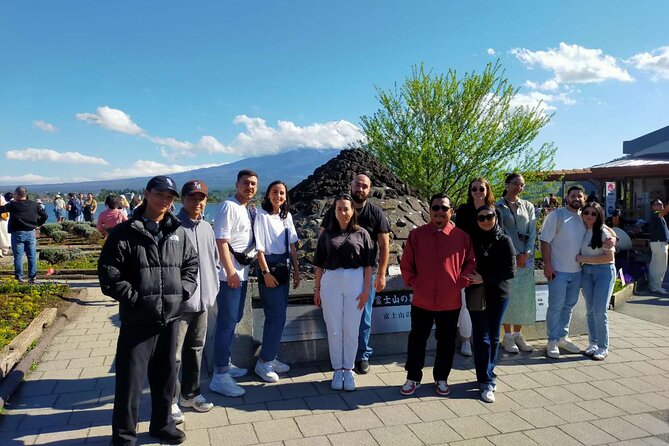
At $161, this is not the cheapest way to see Mount Fuji. You are paying for a full-day group vehicle, parking, a driver, a guide, and a route that covers several locations in one outing.
The value is strongest if you have only a few days in Tokyo. In one day, you can visit the pagoda, springs, lake, flower park or maple corridor, and the Lawson viewpoint. Recreating that route independently would require several transport connections and close attention to departure times.
The value is weaker if you prefer long visits, quiet walks, or detailed cultural talks. You may feel hurried, especially at the 20-minute stops. A private car or overnight stay would give you more control, but it would also cost more or require extra planning.
The mountain itself is never guaranteed to appear. A cloud-covered Fuji does not mean the tour failed, but it can affect your sense of value. The multiple stops improve your chances because the weather can change across the day, yet no itinerary can force the peak out of the clouds.
What to Pack and How to Pace Yourself
Wear shoes suitable for the 400-step climb at Arakurayama. Even if you are fit, the stairs can make the first stop more tiring than expected.
Bring water, a phone charger, and enough room on your phone for photographs. The tour is built around repeated stops, so your camera will get plenty of use.
Dress for the season rather than Tokyo’s city center. Fuji-area weather can feel different from central Tokyo, and clear mountain views often come with cooler conditions. In summer, heat can make the climb and waiting areas harder; one outing took place on a hot day when there was little snow on Fuji.
Leave flexibility in your evening schedule. The advertised duration is about 10 hours, but traffic can stretch the day. The activity ends back at the meeting point, and one outing returned to Tokyo Station around 4:30 pm, while another ran later because of road conditions.
Who Will Enjoy This Best?
I would choose this for a first visit to Japan, a short Tokyo stay, or anyone who wants strong Fuji photographs without planning a rural route. It also suits couples, families with older children, and people who prefer a guide and vehicle over independent transfers.
Photographers will appreciate the variety. You can capture Fuji with a pagoda, a street, clear springs, a convenience store, flowers, autumn leaves, and the lake. That variety helps if one viewpoint is cloudy or crowded.
You may want another type of outing if you dislike group schedules, need a slow pace, or want sustained cultural interpretation. The tour can feel rushed, and the experience is shaped by traffic, weather, group behavior, and guide style.
Children under three can join free without taking a seat. The activity is near public transport, and most people can participate, but the stair climb is a real physical consideration. The tour information also says it is not recommended for people requiring constant mental health supervision.
Should You Book This Mount Fuji Day Trip?
Book it if your priority is seeing many attractive Fuji-area spots in one day with very little planning. The route is well chosen, the seasonal changes are useful, and guides such as Hikari can add humor, care, and practical photo help.
Skip it if you want an unhurried day or a detailed cultural tour. At $161, you should think of it as a scenic transport and photography day, not a private guide experience.
My advice is to book with a clear weather strategy. Pick a date with free cancellation if possible, avoid a fixed dinner reservation afterward, and accept that Fuji may appear only in short breaks between clouds. If you can live with that uncertainty, the number of viewpoints gives this tour a fair chance to deliver a memorable day.
FAQ
Where does the tour start?
The tour starts at Tokyo Station at 8:00 am. The stated meeting address is 1 Chome-9 Marunouchi, Chiyoda City, Tokyo 100-0005, Japan.
Where does the tour end?
The activity ends back at the meeting point near Tokyo Station.
How long does the tour last?
The scheduled duration is approximately 10 hours, including travel time. Traffic can make the day longer, with one outing taking about 11 hours.
What places are included?
The route includes Arakurayama Sengen Park, Hikawa Clock Shop when operating on the regular schedule, Oshino Hakkai, Lawson Kawaguchiko Station, and the Lake Kawaguchi area.
Does the tour always visit Oishi Park?
No. From approximately October 30 to November 20, the tour visits Kawaguchiko Maple Corridor instead of Oishi Park for autumn color.
Is Hikawa Clock Shop always included?
No. During the 2025 cherry blossom traffic regulation period from April 1 to April 18, the tour skips Hikawa Clock Shop and allows more time at Arakurayama Park.
Are meals included?
No. Dinner and personal consumption are not included. Food purchased during the day must be paid for separately.
Are admission tickets included?
Parking fees and the driver and guide service fee are included. The listed information identifies admission at Arakurayama Sengen Park as included, while other admission tickets are not included.
Can children under three join for free?
Yes. Children under three are free when they do not occupy a seat.
How many people can join the tour?
The maximum group size is 21 people.
Can I cancel for a full refund?
Yes, if you cancel at least 24 hours before the experience’s start time. Cancellations made within 24 hours are not refunded, and changes within that period are not accepted.
Just added in Tokyo
- Tokyo Cute Bento Cooking Class – Make a Kawaii Character Lunchbox★ 5.0 · 126 reviews
- Japanese Home Cooking Class & Walk in Todoroki Temple Tokyo★ 5.0 · 88 reviews
- A One-of-a-Kind Sushi Experience in a Special Place of Japan★ 5.0 · 15 reviews
- Japan Tokyo Tower Observatory Deck E-Ticket★ 4.0 · 34 reviews
- Catch a Baseball Game in Tokyo with a Local – Tickets Included★ 5.0 · 24 reviews
- JDM Experience with Fast&Furious RX-7 (English speaking Driver)★ 5.0 · 57 reviews
- Tokyo Private Day Tour by Car with English speaking Driver Guide★ 4.0 · 29 reviews
- Japan Classic 10 Day – One Life Adventures★ 5.0 · 129 reviews
Day Trips, compared.
Kyoto Amanohashidate & Ine Funaya & Ine Bay Scenic Day Trip (Departing from Osaka or Kyoto)
Read our review →
Kyushu: Mount Aso, Kusasenri & Takachiho Gorge Day Tour (Optional Takachiho Boat Ride Experience)
Read our review →
Kyushu One-Day Tour: Yufuin no Mori Train & Yufuin Town & Nyoirin-ji Temple & Dazaifu & Hell Hot Springs (Departing from Fukuoka)
Read our review →
Browse the lists this tour appears in