Reviewed · TOKYO TOURS
Asakusa: 1400-year history exploration
Asakusa rewards curious walkers. This small-group tour links the Sumida River, Sensoji Temple, old shopping lanes, and the Rokku entertainment district while explaining how this corner of Tokyo grew from a riverside settlement into one of the city’s best-known historic areas. You’ll also sample Japanese sweets and get practical tips for eating and shopping.
I like the maximum group size of eight, which gives you a fair chance to ask questions and stay close to the guide. I also like the mix of temples, shrines, food, local streets, and modern Tokyo views, especially the SkyTree and Asahi Breweries building across the river. The main caution is the pace: three and a half hours is a serious walk, and crowds around Sensoji can make it hard to hear, even with the supplied earphone system.
In This Review
- Key points to know before booking
- Why Asakusa makes a good first history walk
- Starting across the Sumida River
- Tokyo views from the Asakusa Culture Tourist Information Center
- Kaminarimon Gate and the first big reveal
- Nakamise-dori, where shopping becomes part of the lesson
- Hozomon Gate and Sensoji’s central grounds
- Forty-five minutes inside Sensoji Temple
- Asakusa Shrine and the Buddhist-Shinto connection
- Denboin Street and Rokku after the temple
- Guides, group size, and sound quality
- Is $91.17 a fair price?
- Practical details for a smoother afternoon
- Who should book the Asakusa walk?
- FAQ
- How long does the Asakusa tour last?
- What time does the tour start?
- Where does the tour meet?
- Where does the tour end?
- What is included in the price?
- Is hotel pickup included?
- How large is the group?
- Can children join the tour?
Key points to know before booking
- A small group of eight or fewer makes it easier to ask about Japanese customs, food, religion, and daily life.
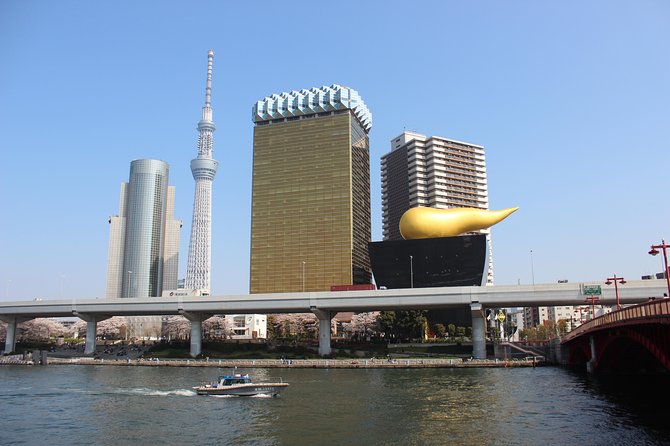
- The tour begins at the Sumida River, with views of Tokyo SkyTree and Asahi Breweries’ golden flame sculpture.
- Sensoji gets the full treatment, including Kaminarimon Gate, Nakamise-dori, Hozomon Gate, the pagoda, and the main hall.
- Included sweets may include melon pan, rice dumplings, rice crackers, and sweet puffed rice, giving you more than a sightseeing walk.
- The final stretch through Denboin Street and Rokku shifts attention from religion to Asakusa’s old entertainment culture.
- Comfortable shoes and water matter, since the tour operates in all weather and includes a moderate amount of walking.
Why Asakusa makes a good first history walk
Asakusa is one of the easiest places in Tokyo to feel the layers of the city. You can look across the Sumida River toward modern towers, then turn around and enter a temple precinct tied to a tradition dating back about 1,400 years.
The story begins with two fishermen who found a statue of Kannon in the river. That discovery led to the founding of Sensoji, now the oldest temple in Tokyo. The temple has been damaged and rebuilt many times by earthquakes, war, and air raids, so its present buildings are not ancient in the same way as the stories connected to them. The important point is continuity: ordinary people repeatedly helped restore the temple, keeping it at the center of Asakusa life.
I find that context useful because Sensoji can otherwise feel like a line of impressive gates, lanterns, and photo stops. This tour explains why the area matters, not just what each building is called. It also places Buddhism and Shinto side by side, something that can confuse visitors who assume the two traditions always occupy separate spaces.
The experience is designed for adults interested in culture and history, but families can join. Teenagers have responded well to the mix of food, streets, unusual facts, and big visual stops. If your ideal outing is a quick photo at the temple gate, this tour will probably feel too slow. If you want to understand what you are seeing, the longer format makes sense.
A few more options to weigh up in Tokyo
- Tokyo Disney Resort – Tokyo Disneyland & Tokyo DisneySea Park Tickets
★ 4.8 · 99,488 reviews - SHIBUYA SKY Ticket
★ 4.7 · 46,509 reviews - JR Whole Japan Rail Pass
★ 4.8 · 29,150 reviews
Starting across the Sumida River
The meeting point is outside Burger King Asakusa Azumabashi, near Kaminarimon in Taito City. The stated start time is 1:30 p.m., and the tour returns to this same meeting point at the end.
The opening stop is the Sumida River, where Asakusa’s story begins. From across Azumabashi Bridge, you’ll see Tokyo SkyTree and the headquarters of Asahi Breweries, marked by its famous golden flame object. The stop lasts about 15 minutes and costs nothing to enter.
This is a smart beginning. Instead of dropping you directly into the dense temple district, the guide gives you a sense of place first. The river helped Asakusa develop as a center of movement, trade, worship, and entertainment. It also gives you an early look at the contrast that defines modern Tokyo: old religious landmarks close to bold contemporary architecture.
The riverfront can be exposed to sun, rain, or wind. Bring water, especially in summer. Vending machines are available, but carrying a bottle is simpler.
Tokyo views from the Asakusa Culture Tourist Information Center
The group then walks to the Asakusa Culture Tourist Information Center, one of the newer architectural additions to the district. The scheduled visit lasts about 30 minutes and admission is included.
The center serves its obvious purpose by providing sightseeing information, but it is also treated as a viewpoint and an attraction in its own right. From here, you can better understand the layout of the area before heading into the temple approach.
This stop adds welcome balance to the old-town material. You are not only looking backward at Edo and earlier periods. You are also seeing how Tokyo presents and manages its historic districts today.
The building is close to busy streets, and the group may need to pause in a crowded setting. The earphone guide system helps keep the guide’s voice available from a short distance, though it is still sensible to stay near the group and signal the guide if you cannot hear clearly.
Kaminarimon Gate and the first big reveal
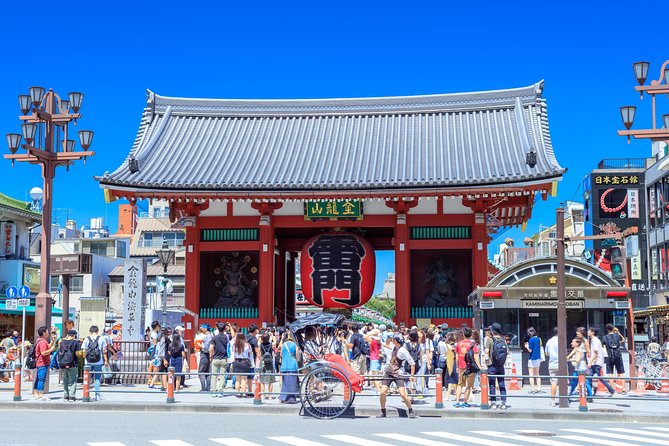
Kaminarimon means Thunder Gate. It is the outer gate leading toward Sensoji and one of Asakusa’s most recognizable sights, thanks to the huge red lantern hanging beneath the gate.
The stop itself takes about 15 minutes. That may sound short, but the area is often packed with people taking photos, meeting friends, and moving toward Nakamise-dori. A guide helps you notice the gate’s guardian figures and understand its role as an entrance rather than simply a backdrop.
This is also where the tour’s audio setup earns its keep. Crowds and traffic can make a normal conversation difficult. One less favorable experience described a guide speaking too softly or too quickly, while another found the noise overwhelming. Those problems are possible in Asakusa, particularly on weekends, so do not hesitate to ask for a repeat or move closer.
A completely different kind of day out:
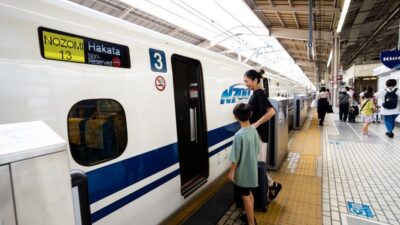
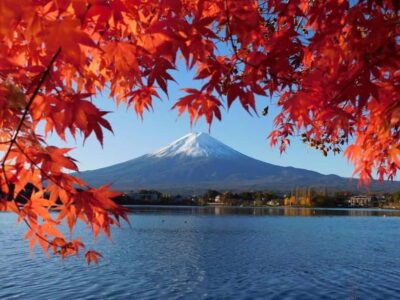
- Mt Fuji and Hakone 1-Day Bus Tour Return by Bullet Train
★ 5.0 · 26,383 reviews - TOKYO SKYTREE® Ticket
★ 4.7 · 25,136 reviews - teamLab Borderless Tickets: MORI Building DIGITAL ART MUSEUM
★ 4.7 · 24,126 reviews - teamLab Planets TOKYO Ticket
★ 4.7 · 21,663 reviews
Nakamise-dori, where shopping becomes part of the lesson
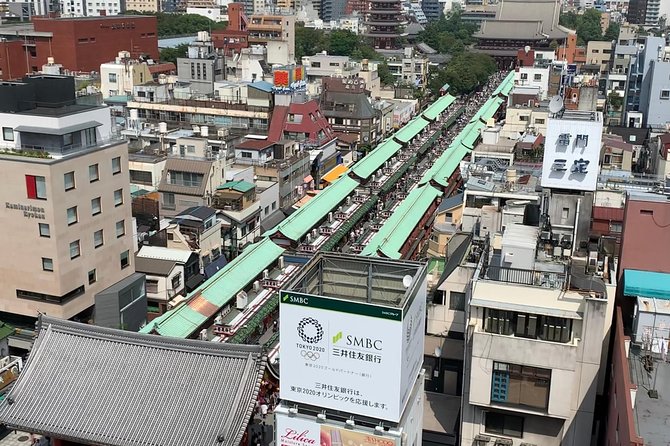
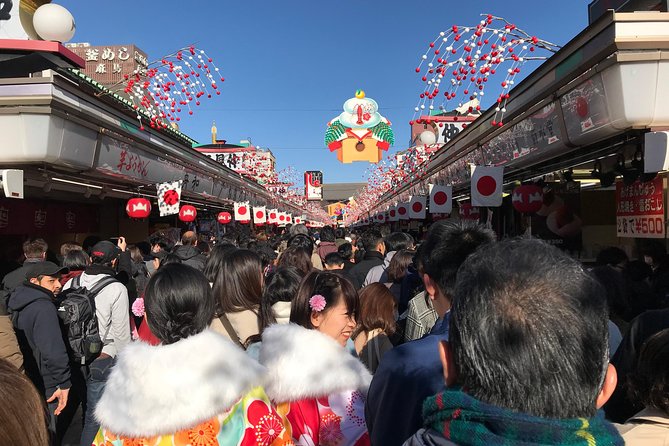
From Kaminarimon, you walk along Nakamise-dori, the roughly 250-meter shopping street leading toward Sensoji’s inner gate. Shops and food stalls line both sides, selling souvenirs, sweets, traditional items, and quick snacks.
The scheduled time here is about 30 minutes. The guide’s role is not simply to point out a souvenir shop. You’ll get help understanding what makes a useful purchase, what foods are worth trying, and how this approach has served temple visitors for generations.
The tour includes a selection of Japanese sweet snacks. Depending on the day, these may include melon pan, rice dumplings, rice crackers, or sweet puffed rice. This is a small but valuable part of the outing. Sampling something from the street gives you a physical connection to the district, and it breaks up the history talk.
Food and drinks beyond the included samples are not covered. If you want a more substantial snack or meal, ask the guide for suggestions. One of the tour’s stated benefits is advice on where to eat, drink, and shop, especially around Rokku.
Nakamise-dori is also the point where you need patience. It can be shoulder-to-shoulder, and browsing while keeping a group together takes time. If you dislike crowded shopping streets, this section may feel longer than necessary.
Hozomon Gate and Sensoji’s central grounds
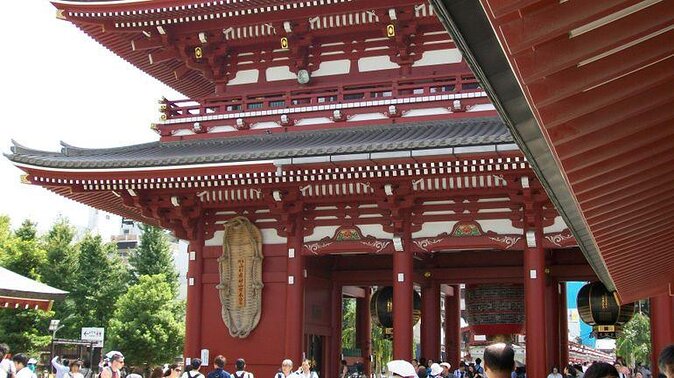
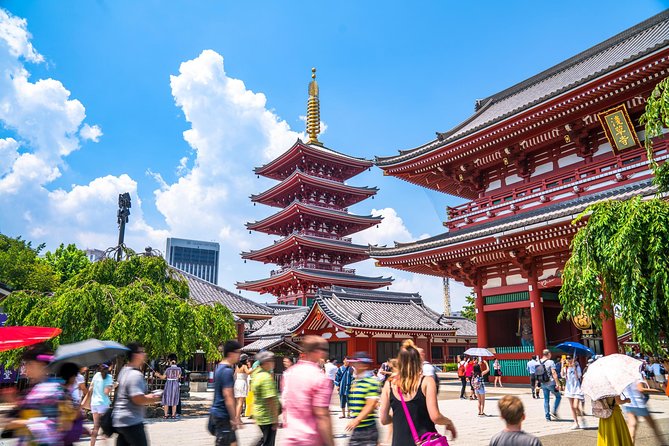
Hozomon is the inner gate of Sensoji. It is a two-story structure whose upper level houses important Buddhist treasures. The group spends about 15 minutes here before moving into the main temple grounds.
The contrast with Kaminarimon is useful. The outer gate introduces the temple complex to the city. Hozomon feels more like the threshold to the religious heart of Sensoji. Your guide can help explain the symbols, guardian figures, and architectural details that are easy to miss when you are focused on getting the perfect photograph.
From here, the five-story pagoda comes into view. The tour information identifies it as 53 meters high and traces its construction to 942, making it one of the oldest important features associated with the site. The current structure, like much of Sensoji, reflects rebuilding over time.
Forty-five minutes inside Sensoji Temple
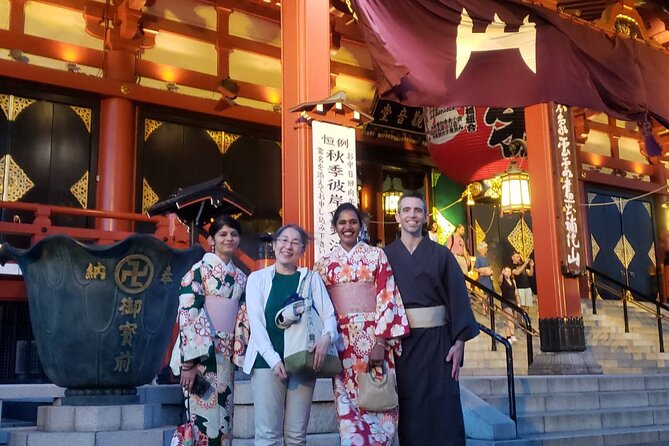
The main Sensoji section lasts about 45 minutes, giving you time to see the pagoda, the main hall, and the space between Hozomon and the temple building.
The guide explains the temple’s origin story and its role in the growth of Asakusa. You will also learn why the temple remains so central despite repeated destruction. Its survival is not only an architectural story. It is a story about public attachment, donations, and the ability of old customs to continue in changing surroundings.
This is the part of the tour most praised for teaching Buddhism and Japanese religious practice. Guides such as Sachi, Aki, Taka, and Yasu have been singled out for clear explanations, careful pacing, and answering many questions. A small group helps here. You can ask about prayer, temple etiquette, Japanese views of religion, or the difference between a Buddhist temple and a Shinto shrine without holding up a large crowd.
The experience is not a formal religious service, and it is not a ticketed temple attraction. The temple area itself has no admission charge. You are walking through an active place of worship, so respectful clothing and behavior are wise, even though no strict dress rule is provided.
Asakusa Shrine and the Buddhist-Shinto connection
Asakusa Shrine is scheduled for about 15 minutes. It shares the wider Sensoji setting but belongs to the Shinto tradition, making it a useful companion stop after the Buddhist temple.
The unusual part is not merely that both sites are close together. Their origins and communities are linked, which shows how Buddhism and Shinto have often existed alongside one another in Japan. The guide uses this stop to explain a religious relationship that is easy to oversimplify.
I consider this one of the most useful parts of the walk for first-time visitors. Many people can recognize a torii gate or a Buddhist statue, but fewer understand how the two traditions have shaped everyday Japanese life together.
Ceremonies may be taking place during your visit. One guest happened to see a wedding, which became a memorable part of the afternoon, but that is not a promised feature of the tour.
Denboin Street and Rokku after the temple
The final major section takes about 45 minutes and moves into Denboin Street and the Rokku district. After the formal scale of Sensoji, the mood changes. Rokku is Asakusa’s traditional entertainment quarter, with old buildings, restaurants, shops, and traces of the area’s long connection to popular amusement.
This section is important because it keeps Asakusa from becoming only a temple visit. The district’s identity was shaped by entertainment as well as worship. The guide describes how the area moved from the Meiji period into the present, pointing out details you might otherwise pass without a second glance.
You’ll also receive practical suggestions for food, drinks, and shopping. Some visitors value this greatly, while others have found the shopping discussion too long. Be clear about your interests early. If you want restaurant ideas, ask specific questions about izakaya food, local specialties, or the kind of evening you want. If shopping is not your priority, tell the guide so the conversation can be adjusted.
The tour ends back at the original meeting point. That makes it easier to continue exploring, though no hotel pickup or drop-off is included.
Guides, group size, and sound quality
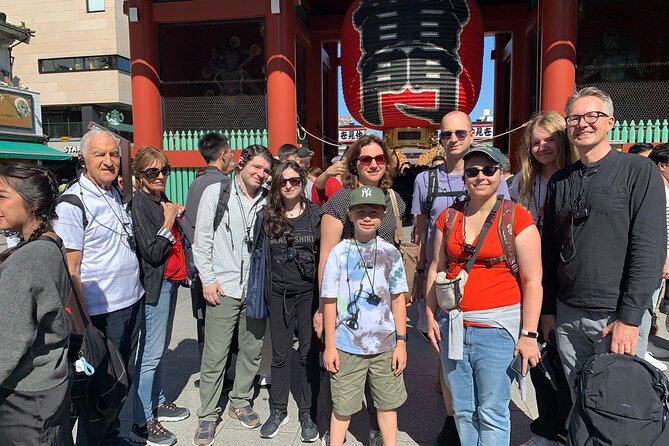
The maximum group size is eight. In practice, a smaller booking can feel close to a private tour, and one person described having only two participants. That format is especially useful in Asakusa, where the guide may need to stop in different places so everyone can see and hear.
Guide quality appears to be a major strength. Amy was praised for blending history, customs, and temple etiquette while making the group feel at ease. Emiko was described as friendly and engaging. Sachi has received repeated praise for detailed explanations, while Aki has been noted for patience, flexibility, photos, and help with traditional snacks.
Taka is described as an experienced, nationally licensed guide who handles wide-ranging questions, from garbage disposal and security to Japanese language, izakaya food, Edo Kiriko glass, and religion. Yasu and Yoko have also received strong praise for clear explanations and attentive help.
Still, the experience is not immune to an uneven guiding day. One person found the English difficult to follow, another felt the guide spoke too fast and softly, and a separate experience was criticized for a monotone delivery. The company says it retrained one guide after a poor experience, but you should still use the earphones, stay within range, and speak up if the volume or pace is not working for you.
Is $91.17 a fair price?
At $91.17 per person, this is not a cheap way to see Sensoji. You can enter the temple grounds, Kaminarimon, Nakamise-dori, Hozomon, and Asakusa Shrine without paying an admission fee.
The value comes from the time and interpretation. You are paying for three and a half hours with an English-speaking guide, a group capped at eight, included sweets, the earphone system, and advice that can shape the rest of your time in Asakusa. If you would otherwise walk through the district without knowing why the temple and shrine share the same area, the tour can earn its price.
If you already know Asakusa well, dislike long walks, or prefer to explore at your own speed, the cost may be harder to justify. One person felt the route could have been completed in two to two and a half hours, while another left early after finding the pace too slow. That is a fair warning: this is an in-depth history walk, not a quick orientation.
Practical details for a smoother afternoon
Wear shoes you can walk in for several hours. The route includes bridges, shopping streets, temple grounds, and old-town lanes, with opportunities to stand for explanations.
The tour runs in all weather. Dress for the forecast and bring water. Vending machines are available, but they are not a substitute for planning on a hot or rainy day.
Children under six can join without charge, but they do not receive the included snacks or other inclusions. The tour is aimed more at adults with an interest in history, though families with older children and teenagers can enjoy it.
The experience is near public transportation, and most people can participate. If you have dietary or accessibility needs, contact the provider in advance. Last-minute booking is accepted up to two hours before the start, subject to availability. Free cancellation is available up to 24 hours before the 1:30 p.m. start time.
Who should book the Asakusa walk?
I would choose this tour if you want a clear cultural introduction to Asakusa, prefer a small group, and enjoy asking questions. It is particularly useful early in a Tokyo visit, when you can use the restaurant and shopping advice later in your stay.
I would skip it if you want a fast temple stop, have limited walking stamina, or find crowded streets stressful. Weekend noise can be a real issue, and the long format requires patience.
For the right person, the $91.17 price buys more than a route through famous sights. It gives you a framework for understanding why Asakusa still matters, plus a few sweets and practical ideas for what to do after the tour ends.
FAQ
How long does the Asakusa tour last?
The tour lasts approximately three hours and 30 minutes.
What time does the tour start?
The tour starts at 1:30 p.m. local time.
Where does the tour meet?
The meeting point is Burger King Asakusa Azumabashi, near Kaminarimon in Taito City, Tokyo.
Where does the tour end?
The tour ends back at the original meeting point.
What is included in the price?
An English-speaking guide, a selection of Japanese sweet snacks, and an earphone guide system are included.
Is hotel pickup included?
No. Hotel pickup and drop-off are not included.
How large is the group?
The maximum group size is eight people.
Can children join the tour?
Children younger than six may join without charge, but they are not entitled to the included snacks or other inclusions. Families are welcome, although the tour is recommended mainly for adults interested in history.
Just added in Tokyo
- Tokyo: Shinjuku Bar Hopping & Night Walking Tour★ 5.0 · 53 reviews
- Tokyo:Samurai sword and archery class from a samurai descendant★ 5.0 · 121 reviews
- Tokyo Ultimate Daikoku & JDM Experience (R35 GTR Private Tour)★ 5.0 · 27 reviews
- Authentic Geisha Performance with Dinner in Tokyo★ 4.5 · 101 reviews
- Tokyo: Asakusa Walking Tour with Japanese Comedian★ 5.0 · 43 reviews
- Tokyo Asakusa Temple & Shrine Walking Tour with Local Guide★ 5.0 · 52 reviews
- Asakusa Night Evening Walking Tour with English-Speaking Guide★ 5.0 · 16 reviews
- Tokyo Anime Adventure: Studio Tour, Drawing Class & Museum Visit★ 4.5 · 18 reviews
Tokyo Tours, compared.
Tokyo Disney Resort – Tokyo Disneyland & Tokyo DisneySea Park Tickets
Read our review →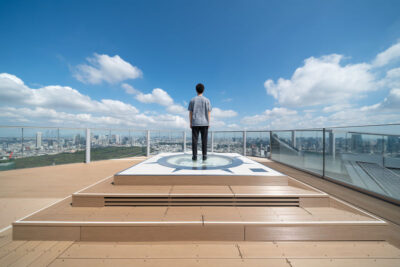
Mt Fuji and Hakone 1-Day Bus Tour Return by Bullet Train
Read our review →

teamLab Borderless Tickets: MORI Building DIGITAL ART MUSEUM
Read our review →