Reviewed · TOKYO TOURS
Asakusa: A Big-picture History Walk to Know Japan
Asakusa can explain Japan in two hours. This walking tour makes the neighborhood useful as a history lesson, linking the Sumida River, Senso-ji, Buddhism, Shinto, and Japan’s opening to the West. I especially like the clear comparison between Japanese and European ideas, plus the story of how ukiyo-e helped shape Western art.
I also like the way the tour turns familiar sights into meaningful stops. The guide explains why the dragons at Kaminarimon differ from Western dragons, how Japan’s religions share space, and why the river mattered when Japan was still closed to most foreign trade. The main drawback is pace: two hours is enough for a strong overview, but not enough for long visits or quiet reflection at every site.
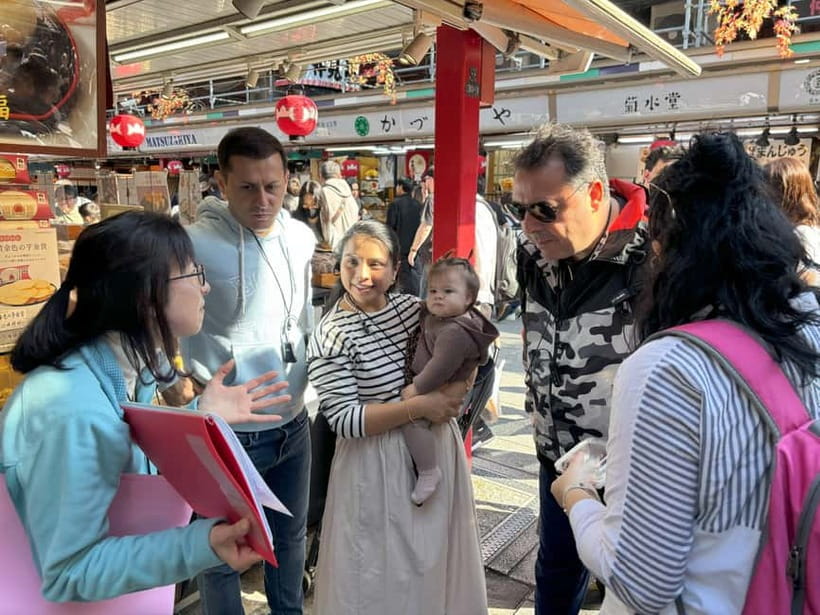
Guides such as Choco, Sachi, Amy, Yasu, Yoko, and Kay have been praised for warmth, clear explanations, and keeping children engaged. One useful warning: the headsets supplied for groups of three or more can occasionally produce an echo.
In This Review
- Key points to know before booking
- Why this short Asakusa walk works
- Starting beside the Sumida River
- Reading Tokyo from the Asakusa Culture Tourist Information Center
- Kaminarimon and the tale of two dragons
- Nakamise Shopping Street and the journey of ukiyo-e
- Hozomon Gate and a surprising medieval comparison
- Senso-ji, prayer, and Japan’s oldest Buddhist temple
- Asakusa Shrine and 1,000 years of shared worship
- Guide quality, headsets, and family appeal
- Is $58 a fair price for two hours?
- Who should book this Asakusa history walk?
- Should you book it?
- FAQ
- Where does the Asakusa history walk meet?
- How long does the tour last?
- What language is the tour conducted in?
- Which places are included on the walk?
- Are snacks included?
- Are headsets provided?
- Can children join the tour?
- Does the tour operate in bad weather?
- What happens if the tour is cancelled?
Key points to know before booking
- The tour covers seven stops in two hours, so expect a focused walk rather than a leisurely temple visit.
- Japan’s isolation and reopening are explained from the Sumida River, with links to Perry, Dutch trade, Odaiba’s gun batteries, and the Statue of Liberty replica.
- Buddhism and Shinto are explained side by side, making the religious sites easier to understand.
- Ukiyo-e gets a valuable global connection, including its influence on European Impressionist painters.
- Traditional snack tastings are included, along with an English-speaking certified guide.
- The tour costs $58 per person, a fair price if you want context and interpretation, but less appealing if you only want photographs of Asakusa’s famous gates.
Why this short Asakusa walk works
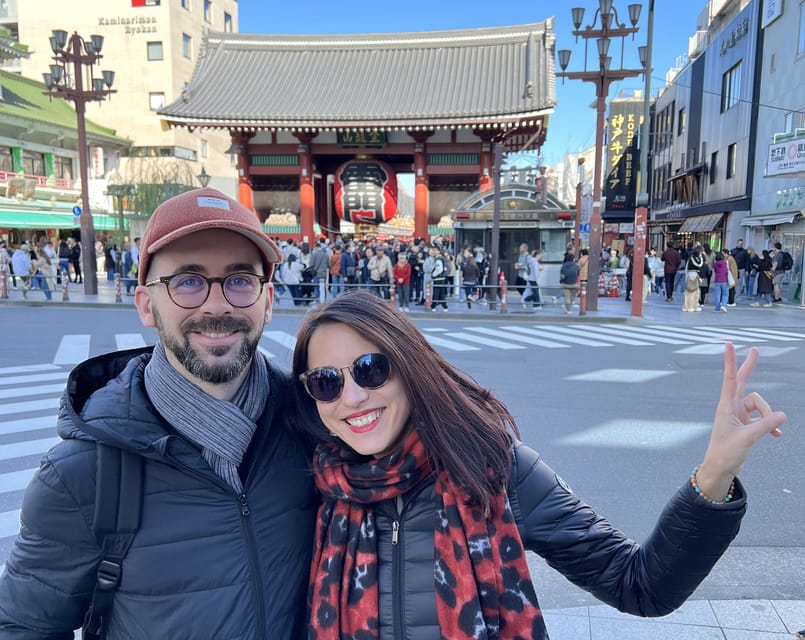
Asakusa is one of Tokyo’s easiest districts to visit on your own. You can walk from Kaminarimon to Nakamise Shopping Street and Senso-ji with little trouble. The challenge is knowing what you are looking at.
That is where this tour earns its price. Instead of treating each landmark as a separate photo stop, the guide builds one connected story. The river explains Japan’s contact with foreign powers. The information center introduces religion. The gates reveal symbolism. The temple and shrine show how those beliefs lived together.
The route covers a small area, but the subject is wide. You learn about medieval Japan, the Edo shogunate, the arrival of Admiral Perry, Japanese art, religious practice, and the relationship between Japan and Europe. This is not a full course in Japanese history. It is a useful framework that helps the rest of your Japan trip make more sense.
The English tour lasts two hours and involves a moderate amount of walking. You should wear comfortable shoes and bring water. Since the tour runs in rain or shine, weather-appropriate clothing matters, especially for the open-air sections along the river and shopping street.
A few more options to weigh up in Tokyo
- Tokyo Disney Resort – Tokyo Disneyland & Tokyo DisneySea Park Tickets
★ 4.8 · 99,488 reviews - SHIBUYA SKY Ticket
★ 4.7 · 46,509 reviews - JR Whole Japan Rail Pass
★ 4.8 · 29,150 reviews
Starting beside the Sumida River
The meeting point is in front of the Burger King beside Exit 4 of Asakusa subway station on the Ginza Line, station G19. You step outside Exit 4 and meet the guide there. This is a practical location, but check the directions before setting out because Asakusa has several stations and exits.
The first stop is the Tokyo Cruise Asakusa Pier, where you spend about 15 minutes. The river gives the opening history lesson a useful setting. Japan’s long period of restricted foreign contact is easier to picture when you are standing beside the water that connected Edo, the old name for Tokyo, with the wider world.
The guide explains why the Edo shogunate sealed Japan for more than 200 years and why the Netherlands was the one European country allowed to trade. You also hear how Admiral Perry’s arrival forced Japan to reopen.
The guide connects that earlier period with modern Tokyo. Odaiba’s former gun batteries show how the city prepared to defend itself from foreign ships. The Statue of Liberty replica facing the Pacific adds a curious modern detail to the same story.
This first section is not about scenic river cruising. You are looking at the river and using it as a stage for political history. If you want a long waterfront stroll, this stop may feel brief. If you want the main causes behind Japan’s opening in a compact explanation, it is a strong start.
Reading Tokyo from the Asakusa Culture Tourist Information Center
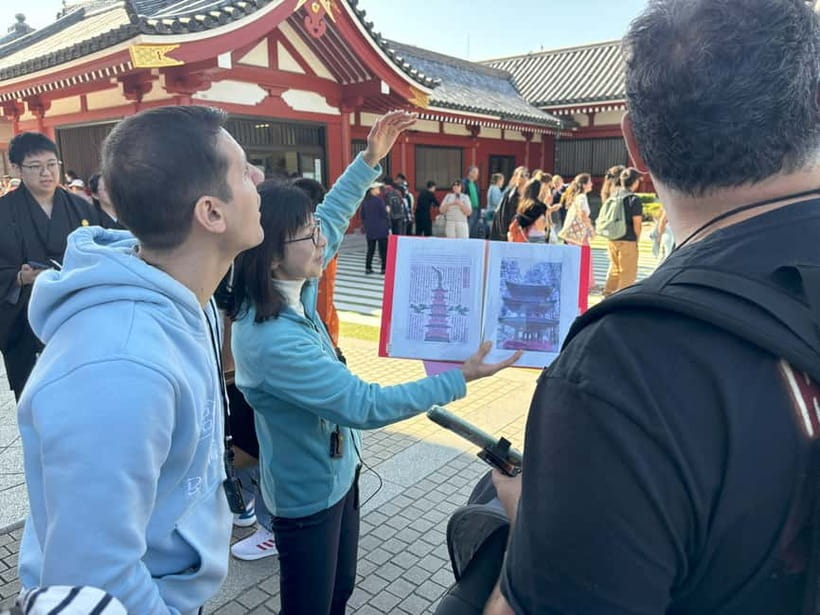
The next 15-minute stop is the Asakusa Culture Tourist Information Center. Here, the guide introduces Buddhism and Shinto before you enter the major religious sites.
That order matters. Many first-time visitors see a large gate, a temple, a shrine, incense, wooden plaques, and prayer gestures without knowing which tradition belongs to what. The guide gives you a basic map of the two faiths and explains how to recognize their roles in the places ahead.
You will not receive an academic lecture. The value is practical. Once the guide explains the difference between Buddhist and Shinto worship, the rest of the walk becomes easier to follow. You can look at the buildings and rituals with more than a camera-ready understanding.
This is also a good point to ask questions. Guides including Sachi, Kay, and Yoko have been praised for explaining local customs in a friendly way and showing visitors how to approach shrines respectfully.
Kaminarimon and the tale of two dragons
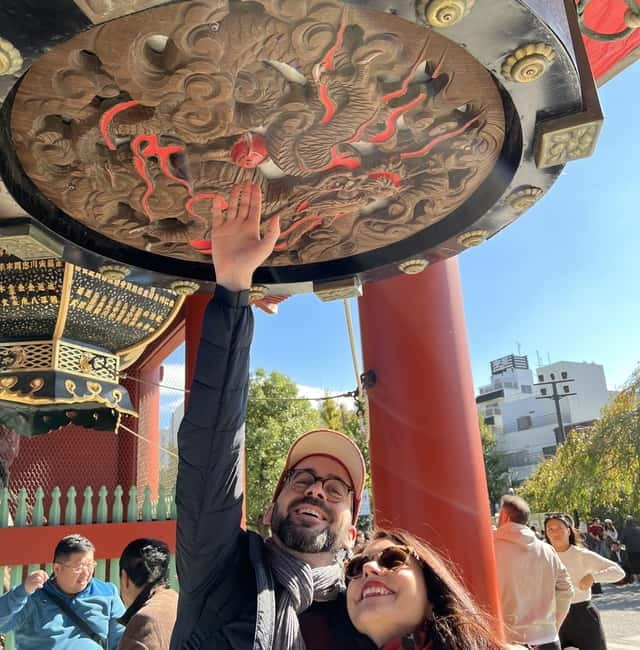
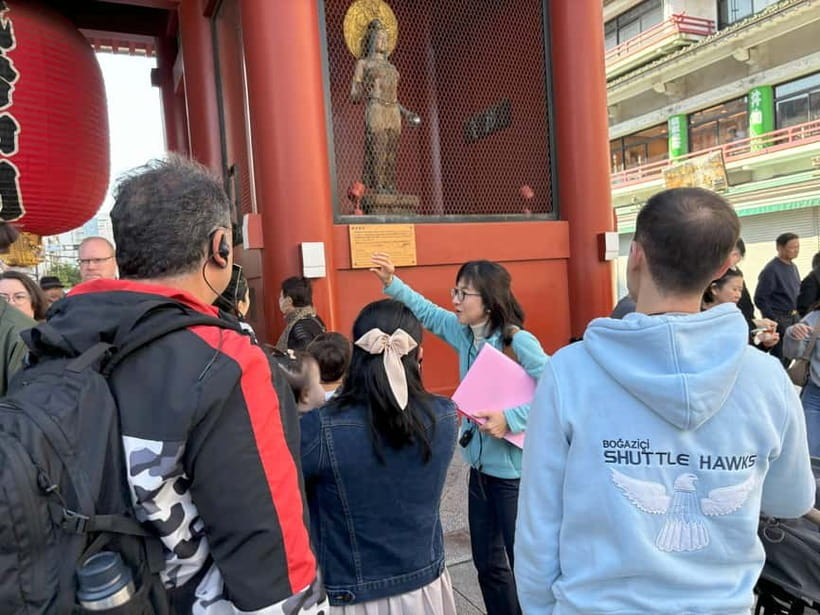
Kaminarimon, or Thunder Gate, is one of Asakusa’s most famous sights. The giant red lantern and guardian figures make it an obvious photo stop, but the tour spends its 15 minutes on an idea many people miss: the difference between Japanese and Western dragons.
In much of Western tradition, dragons are dangerous enemies that heroes must defeat. The Japanese dragon has a different role. The guide explains why it is associated with protection and other positive forces rather than serving simply as a monster.
That comparison is a small lesson with a wide reach. It shows how similar creatures can carry very different meanings in different cultures. It also gives you a way to look at Japanese art and architecture with more care.
Kaminarimon can be crowded, and a two-hour tour cannot wait for every camera angle. Your guide may need to keep the group moving. Still, the stop works well because the explanation adds something you would probably miss during an independent visit.
A completely different kind of day out:
- Mt Fuji and Hakone 1-Day Bus Tour Return by Bullet Train
★ 5.0 · 26,383 reviews - TOKYO SKYTREE® Ticket
★ 4.7 · 25,136 reviews - teamLab Borderless Tickets: MORI Building DIGITAL ART MUSEUM
★ 4.7 · 24,126 reviews - teamLab Planets TOKYO Ticket
★ 4.7 · 21,663 reviews
Nakamise Shopping Street and the journey of ukiyo-e
The longest stop is Nakamise Shopping Street, with about 30 minutes of walking and explanation. This is one of Japan’s oldest shopping streets, stretching toward Senso-ji and lined with shops selling snacks, souvenirs, crafts, and traditional goods.
It is easy to treat Nakamise as a shopping corridor. The tour gives it more depth by explaining Buddhist symbols, including the vajra, also called tokko. You learn how objects and images tied to Buddhist practice appear in Japanese culture.
The most memorable subject here is ukiyo-e woodblock printing. The guide explains how these Japanese prints reached Europe and influenced Western Impressionist painters. This is a valuable connection because it places Japanese art inside a global exchange rather than presenting it as an isolated tradition.
You may already recognize the bold lines, unusual viewpoints, and flat areas of color associated with ukiyo-e. The tour helps explain why those qualities mattered to European artists. This section is especially useful for anyone interested in art, design, or the way cultural influence travels through trade and collecting.
The street itself can be busy, so you should expect to walk at the guide’s pace rather than browse every shop. The included traditional snack tastings add a small food element, but this is not a food tour. Come for the setting and explanation, and treat the tasting as a pleasant extra.
Hozomon Gate and a surprising medieval comparison
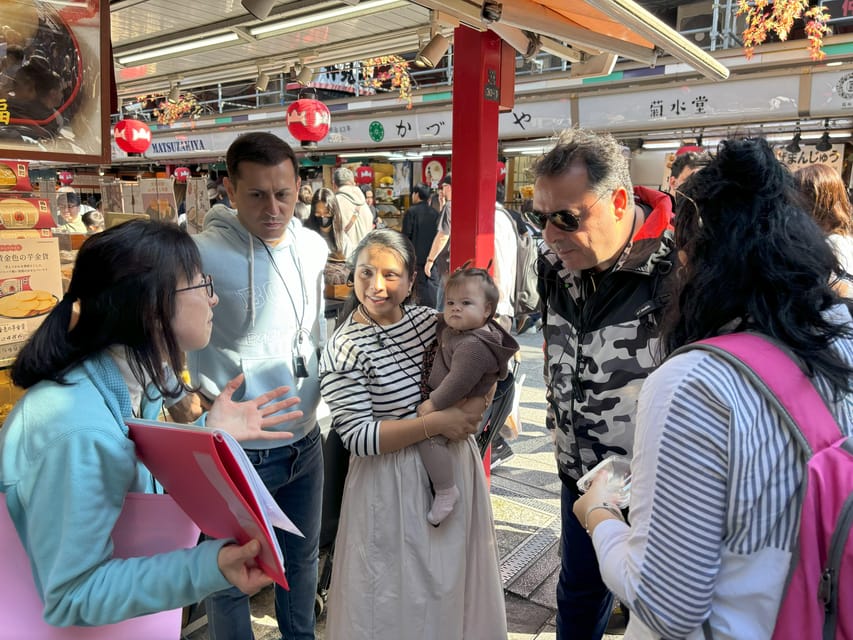
Hozomon Gate receives about 15 minutes. Here, the guide presents one of the tour’s more unusual ideas: people in Japan and the West shared surprisingly similar ways of thinking about 1,000 years ago.
This comparison helps correct a common mistake. It is tempting to imagine medieval Japan and medieval Europe as completely separate worlds with nothing in common. The guide instead points to similar human concerns and patterns of thought while still explaining the differences between the cultures.
The stop is brief, but the idea stays with you. It asks you to compare societies without reducing one to a copy of the other. That is the kind of broad context this experience handles best.
If you prefer detailed architectural study, 15 minutes may feel short. If you want a clear idea to carry into the rest of your sightseeing, it is enough.
Senso-ji, prayer, and Japan’s oldest Buddhist temple
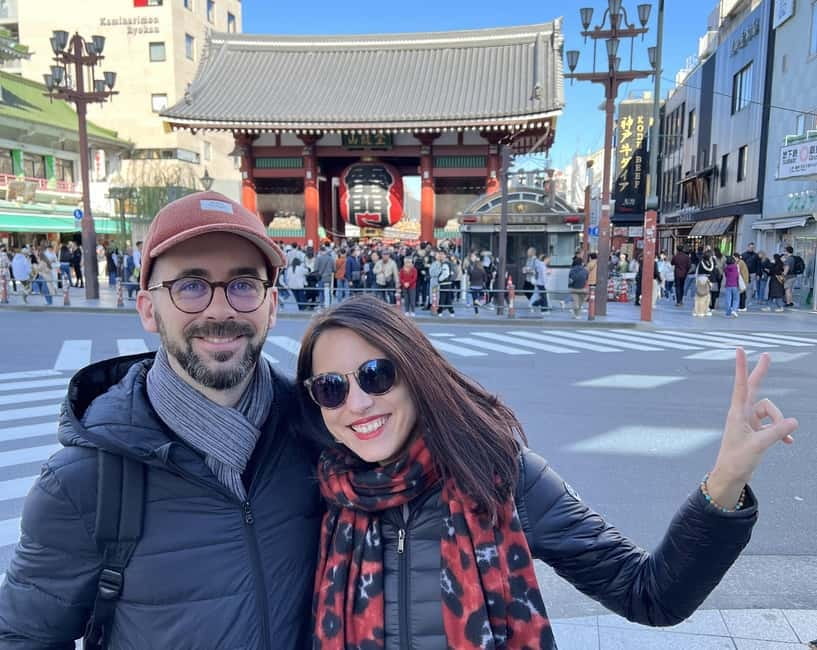
Senso-ji is the main historical and spiritual stop. The tour allows about 15 minutes here, although the guide’s explanation gives the site more weight than the timing suggests.
As Japan’s oldest Buddhist temple, Senso-ji provides a setting for another comparison between medieval Japan and Europe. The guide explains how the temple fits into the area’s history and uses it to clarify how prayer differs in Buddhism and Shinto.
That distinction is useful at once. The two traditions have shared space in Japan for centuries, and their practices can look similar to an outsider. A clear explanation helps you notice the difference between approaching a Buddhist temple and approaching a Shinto shrine.
You may also learn practical points about respectful behavior. A child on one tour especially enjoyed the fortune-telling activity at the temple entrance, showing that the historical material can work for families when the guide keeps it lively.
The limitation is that Senso-ji is a major destination, not a quiet museum. Crowds, ceremonies, and other visitors can affect how long you stand in one place. The tour gives you an informed introduction, but you may want to return later if you want photographs or a slower look.
Asakusa Shrine and 1,000 years of shared worship
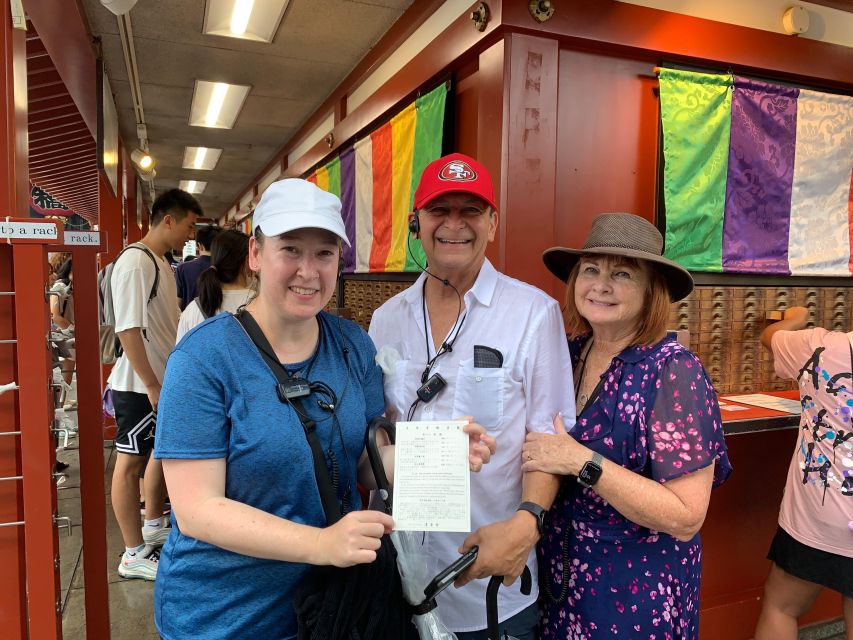
The final 15-minute stop is Asakusa Shrine. It sits on the same grounds as Senso-ji, which makes it the clearest example of the tour’s central religious theme.
Here, Buddhism and Shinto are not presented as sealed-off systems with no contact. The shrine and temple share a long local history, and worshippers have used the same area for more than 1,000 years. The guide explains why this coexistence developed and why it still matters.
For many people, this is the most surprising part of the walk. You finish with a practical understanding of something that can otherwise seem confusing: Japan’s religious life has often allowed different traditions to overlap rather than forcing a single choice.
The timing also means you end at a meaningful place instead of simply finishing on a shopping street. If you visit during a local event, the atmosphere can change. One tour took place during Sanja Matsuri, when the group saw a mikoshi parade. That kind of festival activity cannot be guaranteed, but the guide can help explain what you are seeing if something is happening.
Guide quality, headsets, and family appeal
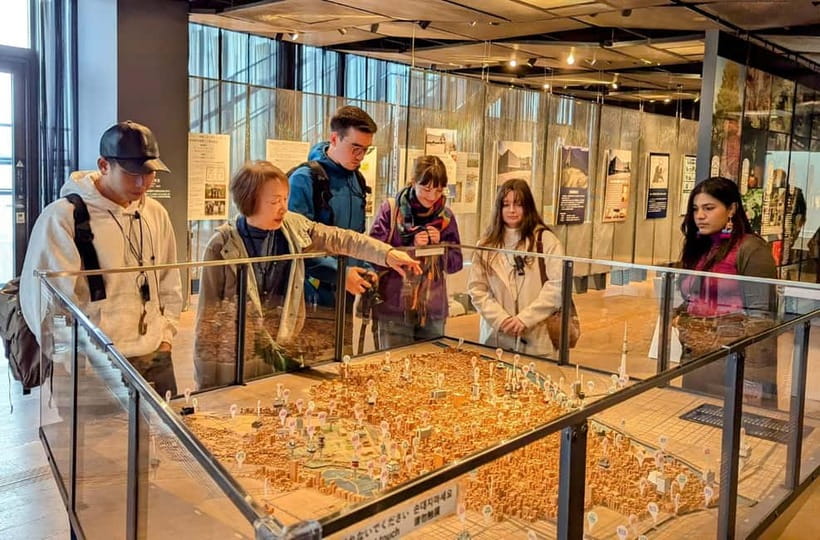
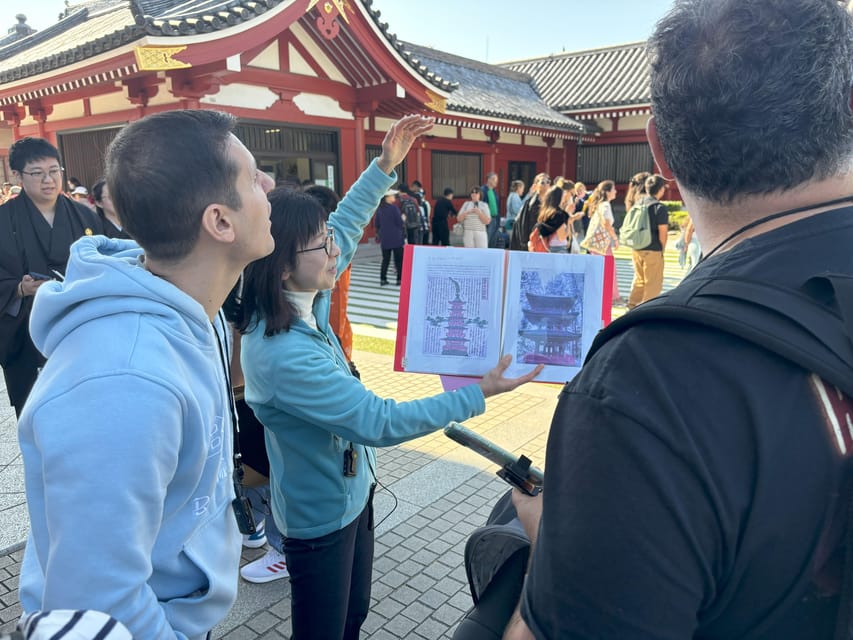
The strongest part of this experience is the guide. Choco has been praised for engaging both adults and children. Sachi and Sachiko are noted for friendly, clear explanations, while Amy used printed images to make difficult ideas easier to understand.
Yasu, Yoko, and Kay have also been praised for local insight and an approachable style. That range of guide feedback matters because this tour depends on explanation. The buildings are already there. The guide is what turns them into a connected lesson.
Groups of three or more receive headsets so you can hear while walking. This is helpful near busy streets and crowded gates. One person found that the equipment sometimes created an echo, making parts of the explanation harder to understand. It is a small risk, but worth knowing.
Families can bring children, and children under six may join free. The subject is aimed more at adults, but the positive response to guides who engage 8-year-olds and teenagers suggests that the experience can work for families when the guide adjusts the pace and examples.
Is $58 a fair price for two hours?
At $58 per person, this is not the cheapest way to see Asakusa. You can walk the route independently for little or no cost, and the gates, street, temple, and shrine are easy to reach.
You are paying for interpretation, structure, and time saved. The guide connects details that would otherwise remain separate: the river and foreign trade, Buddhist symbols and Japanese art, ukiyo-e and Impressionism, and the temple-shrine relationship.
The value is best for first-time visitors who want Japan explained in plain English. It is less convincing for someone who already knows Japanese religious history or wants a long, unhurried visit inside each site.
The 4.6 rating from 77 bookings reflects strong satisfaction, with repeated praise for friendly guides, clear history, and the well-chosen two-hour length. One lower rating still offers a useful reality check: the tour gives you a general view of Asakusa rather than an exhaustive study.
You can cancel up to 24 hours ahead for a full refund, and you can reserve now and pay later. The tour requires a minimum number of participants. If that number is not reached, the operator gives notice at least 24 hours before departure and provides a full refund.
Who should book this Asakusa history walk?
I would choose this tour early in a Tokyo visit if you want a framework for understanding Japan. It is especially useful for:
- First-time visitors who want more than landmark photographs
- People interested in Buddhism, Shinto, and Japanese customs
- Art lovers curious about ukiyo-e and European Impressionism
- Families who prefer short, guided walks over long museum visits
- Visitors who want local history explained in English
- Anyone who enjoys comparing Japanese and European history
I would skip it if you strongly prefer independent sightseeing, dislike fixed walking times, or need a slow route with very little walking. The activity is not suitable for people with mobility impairments, although the operator asks anyone with mobility concerns to contact them in advance and will try to help.
Should you book it?
Book this walk if you want Asakusa to make sense, not just look good. For $58, you get a certified English-speaking guide, a carefully connected route, traditional snack tastings, and a clear explanation of Japan’s religious and political past.
The best reason to go is the way the tour links ordinary sights to larger ideas. The Sumida River becomes part of the story of national isolation. Nakamise becomes a doorway into global art. Senso-ji and Asakusa Shrine show how Buddhism and Shinto shared one place for centuries.
Skip it if you only want free time for shopping and photographs. But if you want a compact history lesson with strong local focus, this is a smart two-hour introduction to Asakusa.
FAQ
Where does the Asakusa history walk meet?
The meeting point is in front of the Burger King restaurant beside Exit 4 of Asakusa subway station, G19, on the Ginza Line.
How long does the tour last?
The walking tour lasts two hours.
What language is the tour conducted in?
The live tour guide speaks English, and an English audio guide is included.
Which places are included on the walk?
The route includes Tokyo Cruise Asakusa Pier, Asakusa Culture Tourist Information Center, Kaminarimon, Nakamise Shopping Street, Hozomon Gate, Senso-ji Temple, and Asakusa Shrine.
Are snacks included?
Yes. Traditional snack tastings are included in the activity.
Are headsets provided?
Yes. Headsets are provided for groups of three or more so you can hear the guide clearly while walking.
Can children join the tour?
Yes. Children younger than six may join free of charge. The tour is recommended mainly for adults because of its historical focus, but families are welcome.
Does the tour operate in bad weather?
Yes. The tour operates rain or shine, so you should wear weather-appropriate clothing and comfortable shoes.
What happens if the tour is cancelled?
The tour may be cancelled if the minimum number of participants is not met. The operator will notify participants at least 24 hours before the tour, and cancelled bookings receive a full refund.
Just added in Tokyo
- Japanese Home Cooking Class & Walk in Todoroki Temple Tokyo★ 5.0 · 88 reviews
- A One-of-a-Kind Sushi Experience in a Special Place of Japan★ 5.0 · 15 reviews
- Tokyo Cute Bento Cooking Class – Make a Kawaii Character Lunchbox★ 5.0 · 126 reviews
- Japan Tokyo Tower Observatory Deck E-Ticket★ 4.0 · 34 reviews
- Catch a Baseball Game in Tokyo with a Local – Tickets Included★ 5.0 · 24 reviews
- JDM Experience with Fast&Furious RX-7 (English speaking Driver)★ 5.0 · 57 reviews
- Tokyo Private Day Tour by Car with English speaking Driver Guide★ 4.0 · 29 reviews
- Japan Classic 10 Day – One Life Adventures★ 5.0 · 129 reviews
Tokyo Tours, compared.
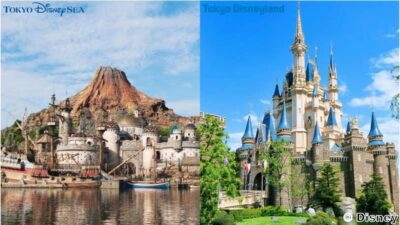
Tokyo Disney Resort – Tokyo Disneyland & Tokyo DisneySea Park Tickets
Read our review →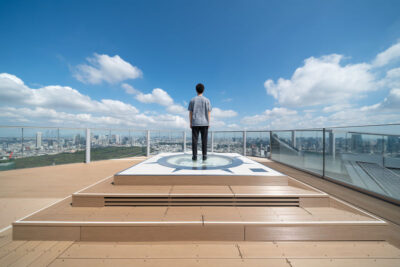
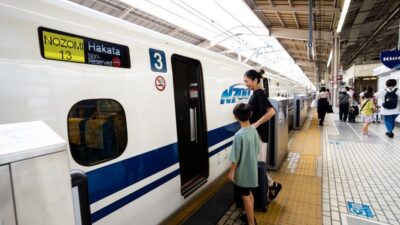
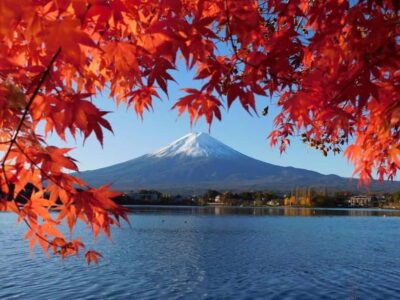
Mt Fuji and Hakone 1-Day Bus Tour Return by Bullet Train
Read our review →

teamLab Borderless Tickets: MORI Building DIGITAL ART MUSEUM
Read our review →