Reviewed · TOKYO TOURS
Daikoku Parking : going by this mini JDM – one customer only
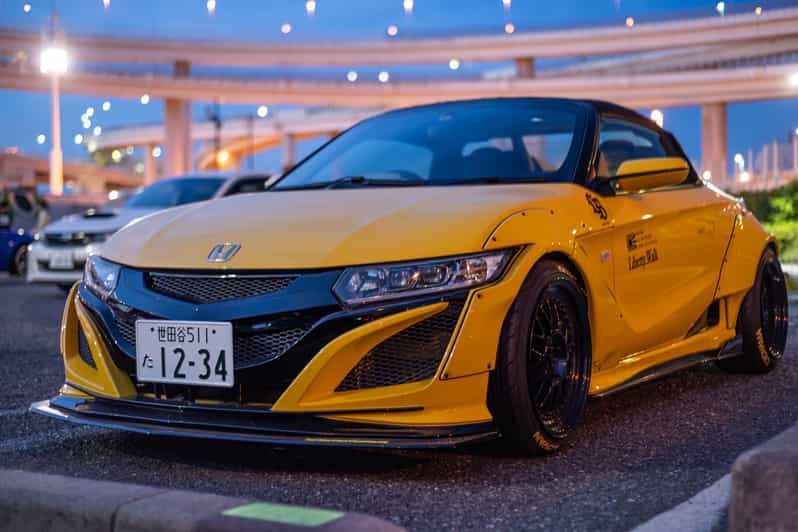
Tokyo’s car culture comes alive after dark. This private three-hour ride takes one passenger through Tokyo in a Liberty Walk modified Honda S660, a tiny mid-engine Japanese sports car built for attention. I like the one-customer format, which gives you the front seat, the driver’s full attention, and a more personal evening. I also like that the ride itself is part of the attraction, with expressways, the Bay Shore Route, Rainbow Bridge, Tokyo Tower, and Tokyo Skytree all folded into the route. The main drawback is simple: this is a very small car with a very small seat, and there is no luggage space.
The driver, Toshiro, serves as both local guide and chauffeur. You are not simply dropped at a car meet and collected later. You ride through Tokyo in the S660, with the road views and modified Japanese car culture forming one continuous experience. Just keep your expectations sensible: this is a legal sightseeing drive, not a street-racing game.
In This Review
- Key points to know before booking
- Why this ride feels different from a normal Tokyo car tour
- Meeting Toshiro in Ōba
- The Honda S660 is not just transportation
- Daikoku Parking Area: the famous first stop
- Tatsumi 1st Parking Area: more time to look around
- Tokyo’s expressways provide the main scenery
- Timing matters, especially on Friday and Saturday
- Is $192 good value for one person?
- Who should book this experience?
- Booking details that can affect your night
- Should you book the Daikoku S660 tour?
- FAQ
- How long does the Daikoku Parking experience last?
- How many customers can join the standard tour?
- What car will I ride in?
- Is this a shared minivan tour?
- Where does the tour start?
- Are hotel transfers included?
- Does the tour include Daikoku and Tatsumi?
- Can I drive the Honda S660 myself?
- What happens if it rains?
- Is there room for luggage?
Key points to know before booking
- One passenger and one Japanese driver: This is a private ride for a single customer in a Honda S660. It is not a shared van trip.
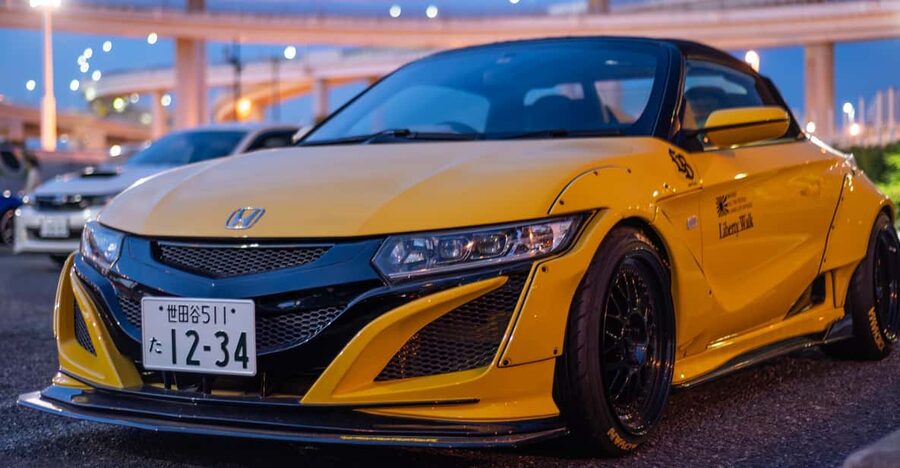
- The car is part of the attraction: The modified LBWK, or Liberty Walk, S660 is a rare domestic Japanese model with a very distinctive look.
- Daikoku and Tatsumi are the main stops: You get time for photos, a walk, and a look at the cars gathered at these famous expressway parking areas.
- The expressway route matters: The tour includes the Metropolitan Expressway, Bay Shore Route, Rainbow Bridge, and passing views of Tokyo Tower and Tokyo Skytree.
- Friday and Saturday timing can change: On some nights, the ride may run from 6:00 p.m. to 9:00 p.m. because parking access can be closed by around 8:30 p.m.
- Pack light and expect a tight seat: The car has no room for luggage, and the seat is compared to an economy airline seat in size.
Why this ride feels different from a normal Tokyo car tour
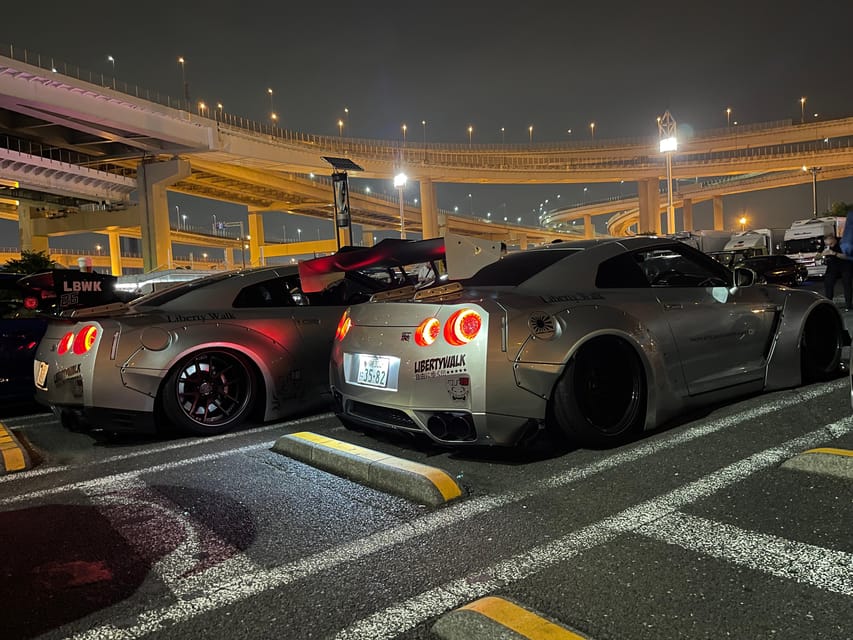
Most car-themed Tokyo outings focus on the destination. You arrive at Daikoku, look around, take a few photos, and leave. Here, the journey gets equal billing. From the moment you meet near the MOS Burger in Ōba, you are inside a compact Japanese sports car and moving through Tokyo’s road system.
That difference matters if you know Japanese car culture through games, films, manga, or internet videos. The Metropolitan Expressway and Bay Shore Route are not just ways to get somewhere. They are the setting for the night. You get real road views connected with the world of Wangan Midnight and Shuto Ko Battle, without pretending to recreate the racing.
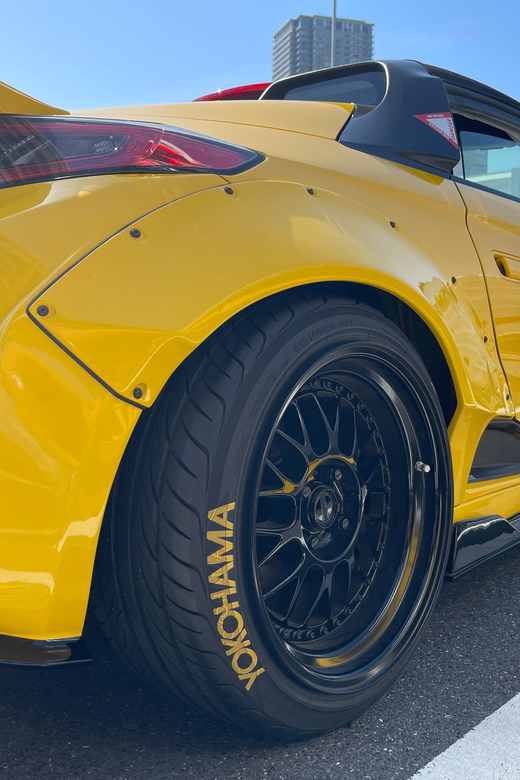
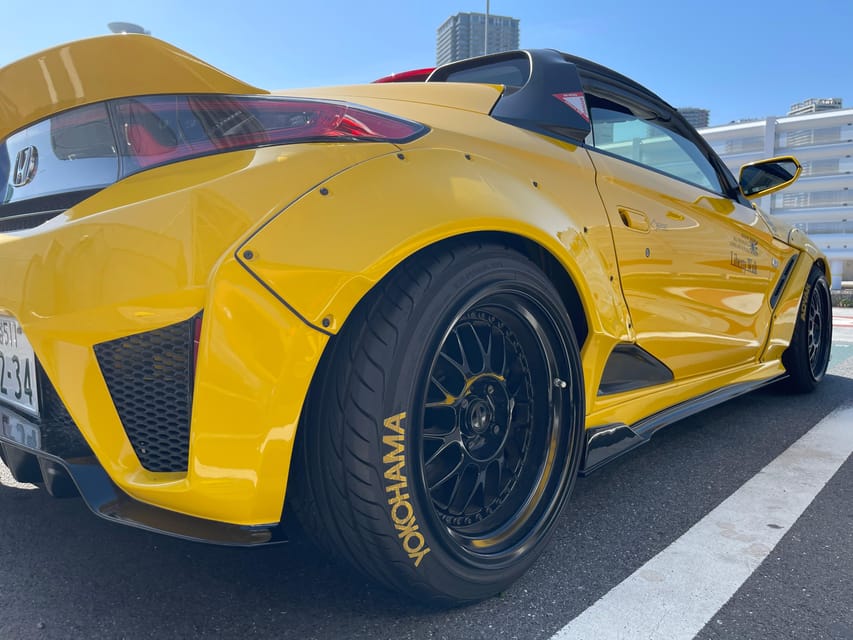
The S660 makes the ride memorable before you reach a parking area. It is a domestic Honda model with a mid-engine layout, and this example has a Liberty Walk modification. The car’s shape and styling draw attention, but the small size also affects comfort. You should be happy sitting low in a tight cabin for much of the three-hour outing.
The private setup is one of the strongest reasons to choose this activity. With one passenger, you do not have to share the seat, make small talk with a group, or wait for several hotel pickups. Toshiro can talk with you directly and shape the conversation around your interest in Japanese cars, Tokyo roads, and the places you pass.
A few more options to weigh up in Tokyo
- Tokyo Disney Resort – Tokyo Disneyland & Tokyo DisneySea Park Tickets
★ 4.8 · 99,488 reviews - SHIBUYA SKY Ticket
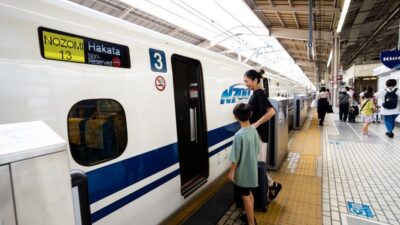
★ 4.7 · 46,509 reviews - JR Whole Japan Rail Pass
★ 4.8 · 29,150 reviews
Meeting Toshiro in Ōba
The starting point is in front of MOS Burger in Ōba. Hotel transportation is not included, so you need to make your own way to the meeting point. The same location is used when the ride returns.
This is worth planning carefully. The S660 has no luggage space, so arrive with only what you can keep with you comfortably. A small personal item may be manageable, but the supplied information is clear that this is not a car for suitcases, shopping bags, or large backpacks.
The tour is offered with an English-speaking local guide. Toshiro’s friendly manner is a major part of the appeal. His conversation helps turn the drive from a simple transfer into a personal introduction to Japanese car culture. The car is unusual enough to prompt interest, and the private format gives you time to ask questions instead of listening to a set speech.
The Honda S660 is not just transportation
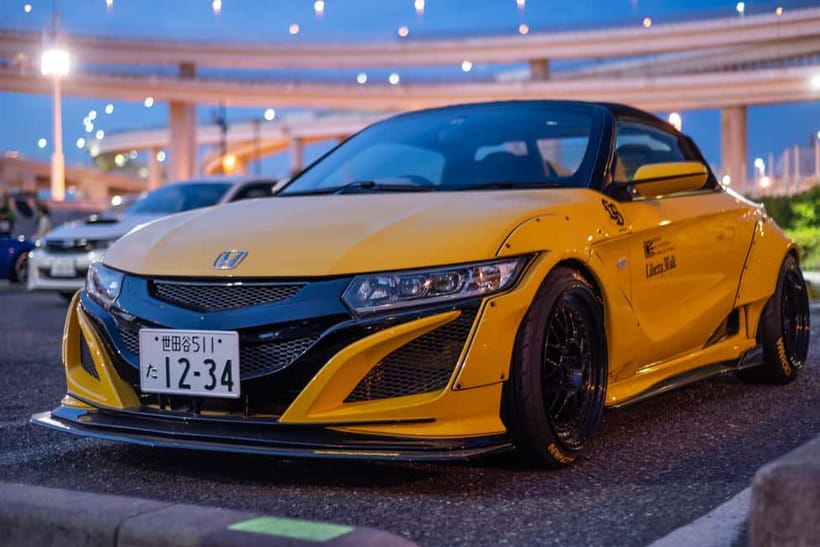
The Honda S660 is a tiny two-seat Japanese sports car, and that creates both the fun and the compromise. You are riding in a vehicle that feels very different from a standard tour van. The low seating position and compact cabin help you feel closer to the road, especially at night when the expressway lights and city views become part of the show.
The car is modified with LBWK styling, making it a one-of-a-kind machine for this tour. If you like Japanese domestic models, custom bodywork, or the visual side of car culture, the vehicle itself may be one of the evening’s highlights. One passenger specifically described the night ride as feeling like a Wangan Midnight game, while another praised the chance to cruise around Tokyo in such a striking sports car.
The practical side is less glamorous. The seat is compared to an economy-class airplane seat, and that is the right mental picture. Three hours in a small car may feel snug, particularly if you prefer room to stretch or are carrying bulky clothing. You also cannot drive the S660 yourself. This is a chauffeur-led ride, not a self-driving rental.
The driver follows traffic law. That point deserves emphasis because the imagery around expressway car culture can suggest something more reckless. You should expect a spirited setting, attractive cars, and a night ride through Tokyo, but not racing, drifting, or staged high-speed action.
Daikoku Parking Area: the famous first stop
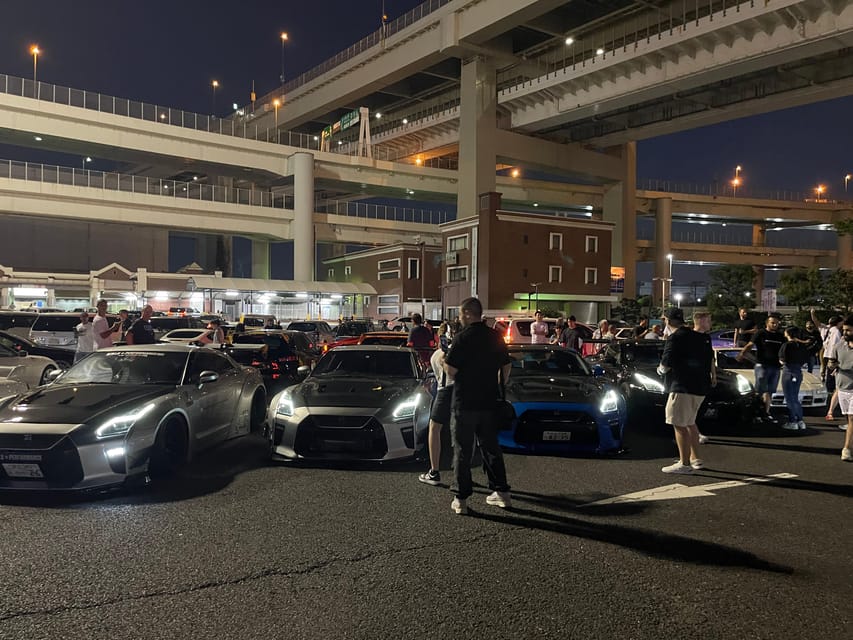
Daikoku Parking Area is the name most people recognize, and it is the first major stop. The planned visit includes a break, a photo stop, free time, sightseeing, and a short walk of about 15 minutes.
Daikoku is known for Japanese car gatherings, particularly modified domestic cars and sports models. The exact selection changes from night to night, so you should not book this expecting a guaranteed appearance by a particular car. What you can expect is the chance to see the meeting place that has become so strongly linked with Japanese car culture.
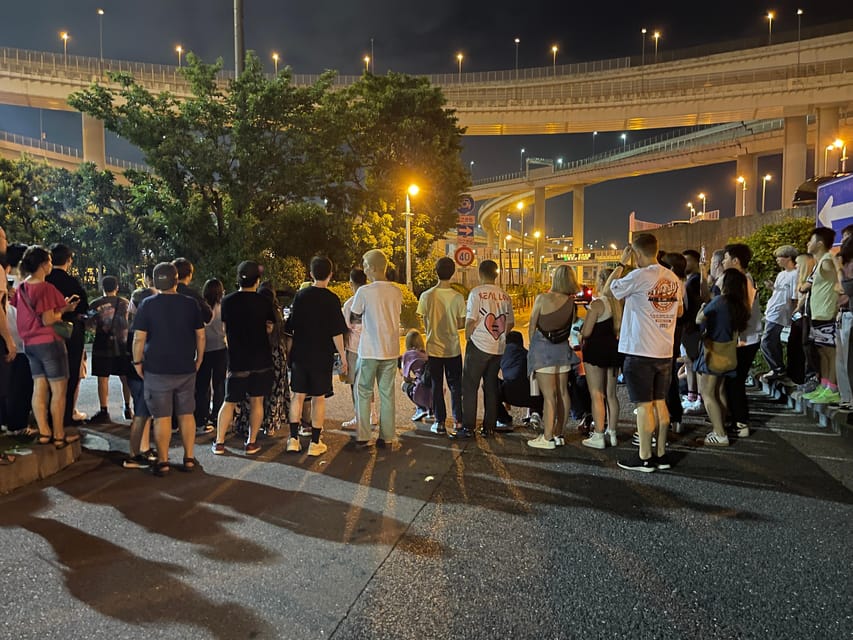
The short stop means you need to use your time well. Take photographs, look over the cars, and ask Toshiro about what you are seeing. If a large gathering is present, the atmosphere may be exciting. If the parking area is quieter, the S660 and the drive itself still provide much of the evening’s appeal.
Daikoku is reached by road rather than treated as an isolated attraction. That approach gives the visit more context. You are not simply looking at parked cars in a vacuum. You have just crossed Tokyo’s expressway system in a Japanese sports car, and you arrive already thinking about the roads, machines, and driving culture that connect the whole outing.
A completely different kind of day out:
- Mt Fuji and Hakone 1-Day Bus Tour Return by Bullet Train
★ 5.0 · 26,383 reviews - TOKYO SKYTREE® Ticket
★ 4.7 · 25,136 reviews - teamLab Borderless Tickets: MORI Building DIGITAL ART MUSEUM
★ 4.7 · 24,126 reviews - teamLab Planets TOKYO Ticket
★ 4.7 · 21,663 reviews
Tatsumi 1st Parking Area: more time to look around
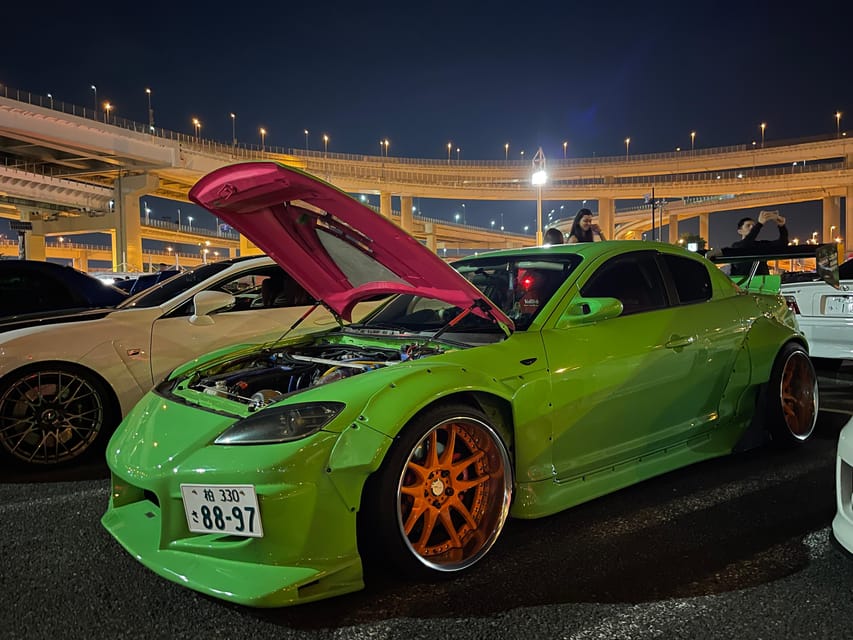
The longer stop is at Tatsumi 1st Parking Area, where the schedule allows about 1.5 hours. This is the part of the tour that gives you time to slow down, take photographs, walk, and talk.
Tatsumi is another important expressway meeting point for car enthusiasts. The long stop gives the evening a better rhythm. After the drive to Daikoku and the short visit there, you have more room here to enjoy the cars without feeling rushed.
This is also the best place to ask questions and compare what you see. Toshiro can explain details about modified Japanese cars and the local scene, while you can focus on the models or styling that interest you. The supplied comments repeatedly praise his friendly attitude and his ability to make the ride enjoyable through conversation.
The limitation is that Tatsumi, like Daikoku, is a working parking area rather than a formal museum or show. The cars present can change, and there may not be a major gathering on every visit. That uncertainty is part of the nature of car meets. If you want a guaranteed display of specific models, this is not the right format. If you enjoy seeing what happens to be there on a particular night, the open-ended quality works in your favor.
Tokyo’s expressways provide the main scenery
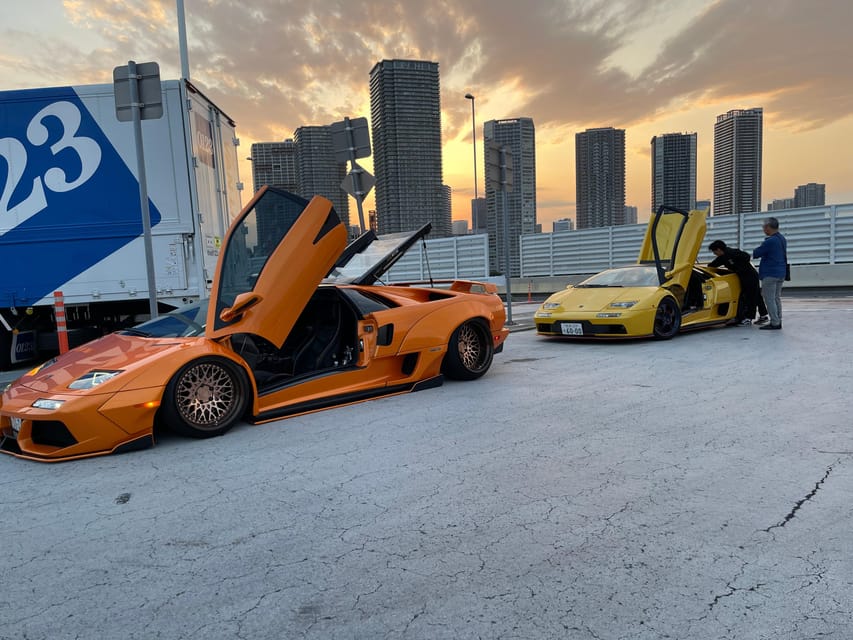
The route between the stops is not dead time. The Metropolitan Expressway and Bay Shore Route let you see Tokyo from angles that a standard city sightseeing bus cannot provide. You cross Rainbow Bridge and pass near Tokyo Tower and Tokyo Skytree.
The tower views are pass-by sights, not scheduled stops. You should think of them as moving city views rather than photo opportunities where you can get out and frame a shot. At night, that distinction matters. You may get a memorable glimpse from the road, but you should not expect time beside either landmark.
Rainbow Bridge is also crossed rather than visited. From the S660, the bridge becomes part of the route and the mood of the night drive. The combination of illuminated roads, elevated expressways, and Tokyo’s familiar landmarks gives the ride its film-like quality.
I especially like this structure because it avoids making the whole outing depend on one parking area. Even if Daikoku is quieter than expected, you still have the road journey, the bridge, the towers, the unusual car, and the longer Tatsumi stop.
Timing matters, especially on Friday and Saturday
The best days are Friday, Saturday, or Sunday, with the understanding that access conditions can change. On Friday and Saturday nights, the suggested schedule may be 6:00 p.m. to 9:00 p.m. because traffic police may close the parking area from about 8:30 p.m.
That early departure is not a flaw, but it does require flexibility. If you imagine a late-night cruise beginning at 9:00 p.m., this may not match your plan. The tour needs to work around access to the parking areas, so ask about the start time when you check availability.
Weekdays are possible, but the activity is better suited to Friday through Sunday if your main goal is to see Japanese cars gathered at the parking areas. More cars may be present on those nights, though no particular turnout is promised.
Rain can also change the plan. The provider allows the tour to be postponed to a mutually convenient day if it rains. That is useful for an outing built around outdoor stops and night road views. You should keep some flexibility in your Tokyo schedule rather than placing this on the final available evening.
Is $192 good value for one person?
The price is $192 per group, with the group limited to one customer. That sounds high beside a shared bus tour, but the comparison is not quite fair. You are paying for a private three-hour outing, a local English-speaking guide, fuel, toll roads, and the use of a rare modified Honda S660.
The one-person format is the key value. You get the entire passenger experience without sharing the car or dividing the guide’s attention. If you are a solo visitor who would otherwise pay for a private activity alone, the price is easier to justify.
The value is strongest for someone who cares about the vehicle and the road route as much as the parking areas. If you only want to see Daikoku for a few minutes, $192 may feel steep. If you want a personal ride through Tokyo’s expressway world in a distinctive Japanese car, the cost covers far more than a quick stop.
Fuel and toll roads are included, which removes two costs that can add up on an expressway-based outing. Hotel transport is not included, and you must arrange your own trip to Ōba. That is a small but important part of the budget and planning.
The provider says to message if you want to go with more than two customers. Since the standard setup is one passenger, do not assume that extra seats or a larger vehicle are available. Ask before booking if your party is larger.
Who should book this experience?
I would recommend it first to solo car enthusiasts who want something personal and unusual. You get the rare car, a local driver, two known car-meet locations, and a route that connects the city’s expressways with Japanese automotive culture.
It also suits a visitor who knows Wangan Midnight, Shuto Ko Battle, or similar Japanese driving media and wants to see the real roads associated with that style of imagery. You do not need to be an expert, though. The guide can help explain what you are looking at, and the bridge and tower views give the night wider appeal.
This is less suitable for anyone who dislikes confined seating, needs luggage storage, or expects a high-speed thrill ride. It is also not ideal if you want to stop at Tokyo Tower or Tokyo Skytree. Both are passing sights only.
The activity may work for a couple only if the provider confirms a different arrangement. The standard description is one customer and one driver in a very small car. Do not book on the assumption that two customers can comfortably fit.
Booking details that can affect your night
The tour lasts three hours, but the exact starting time depends on availability and parking-area conditions. Check the time carefully, especially if you want a Friday or Saturday evening.
Free cancellation is available up to 24 hours before the activity for a full refund. You can also reserve now and pay later, which helps if you need to watch the weather or coordinate the rest of your Tokyo plans.
Bring only what you need for the ride. There is no luggage space, and the compact seat is a real part of the experience. Wear clothing that lets you sit comfortably for several hours, and keep your phone ready for the photo stops.
The tour is private, English-speaking, and guided by Toshiro. Fuel and expressway tolls are included. Self-driving is not available.
Should you book the Daikoku S660 tour?
Book it if you want the car ride itself to be the attraction. The strongest parts are the private one-to-one setup, Toshiro’s friendly guidance, the unusual LBWK Honda S660, and the night route across Tokyo’s expressways. Daikoku and Tatsumi add the car-meet element, while Rainbow Bridge and the passing tower views keep the outing connected to Tokyo beyond the parking areas.
Skip it if you need a roomy vehicle, want guaranteed car models, or expect racing. Also think twice if $192 feels too high for a three-hour private ride. For the right person, especially a solo fan of Japanese cars, this is a focused and memorable way to see a side of Tokyo that is easy to miss from the usual sightseeing routes.
FAQ
How long does the Daikoku Parking experience last?
The experience lasts three hours.
How many customers can join the standard tour?
The standard tour is for one customer and one local driver. The price is listed per group up to one customer.
What car will I ride in?
You will ride in a modified Honda S660, a domestic Japanese mid-engine model with LBWK, or Liberty Walk, styling.
Is this a shared minivan tour?
No. The experience specifically uses a private Honda S660 and does not use a minivan or shared group vehicle.
Where does the tour start?
The meeting point is in front of MOS Burger in Ōba.
Are hotel transfers included?
No. Hotel transportation is not included, so you must arrange your own way to the meeting point.
Does the tour include Daikoku and Tatsumi?
Yes. The route includes Daikoku Parking Area and Tatsumi 1st Parking Area.
Can I drive the Honda S660 myself?
No. Self-driving is not included. Toshiro drives and guides the tour.
What happens if it rains?
The tour can be postponed to a mutually convenient day if it rains.
Is there room for luggage?
No. The car has no luggage space, and the seat is about the size of an economy-class airplane seat.
Just added in Tokyo
- A One-of-a-Kind Sushi Experience in a Special Place of Japan★ 5.0 · 15 reviews
- Tokyo Cute Bento Cooking Class – Make a Kawaii Character Lunchbox★ 5.0 · 126 reviews
- Japanese Home Cooking Class & Walk in Todoroki Temple Tokyo★ 5.0 · 88 reviews
- Japan Tokyo Tower Observatory Deck E-Ticket★ 4.0 · 34 reviews
- Catch a Baseball Game in Tokyo with a Local – Tickets Included★ 5.0 · 24 reviews
- Tokyo Private Day Tour by Car with English speaking Driver Guide★ 4.0 · 29 reviews
- Japan Classic 10 Day – One Life Adventures★ 5.0 · 129 reviews
- JDM Experience with Fast&Furious RX-7 (English speaking Driver)★ 5.0 · 57 reviews
Tokyo Tours, compared.
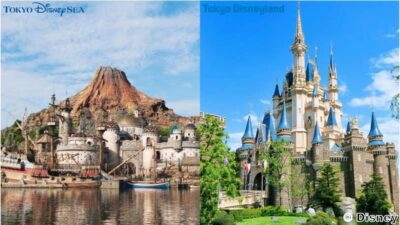
Tokyo Disney Resort – Tokyo Disneyland & Tokyo DisneySea Park Tickets
Read our review →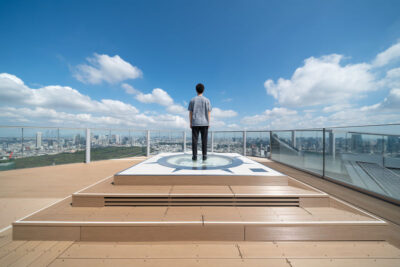
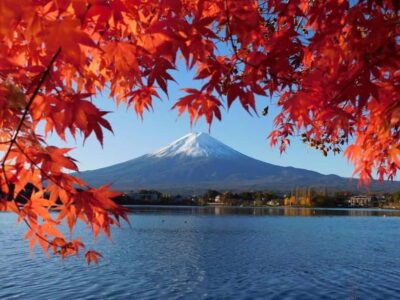
Mt Fuji and Hakone 1-Day Bus Tour Return by Bullet Train
Read our review →

teamLab Borderless Tickets: MORI Building DIGITAL ART MUSEUM
Read our review →