Reviewed · TOKYO TOURS
Exclusive Ramen Kitchen Experience
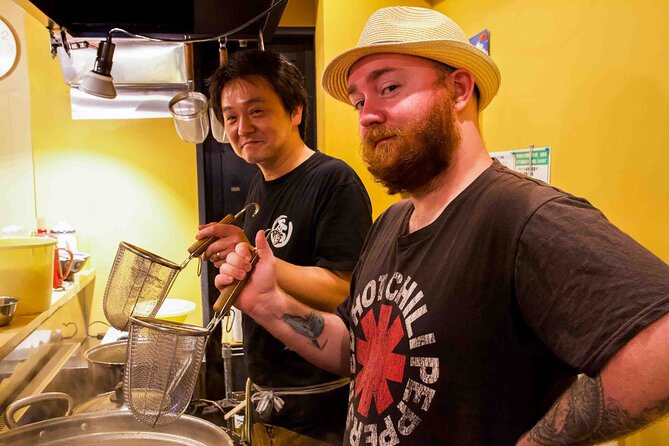
Ramen gets personal in this tiny kitchen. This one-hour experience gives you rare access to an award-winning Tokyo ramen shop, where you learn how the pros prepare noodles, build a bowl, and explain the purpose of each ingredient. You do not simply sit down for lunch. You take part in the work, then eat the result.
I like the small maximum of six people, which should make it easier to ask questions and get hands-on help. I also like the focus on real shop technique, especially temomi, the art of massaging noodles, and tebo, the quick shaking motion used to remove water. The main drawback is that this is not a full from-scratch cooking class, and the ramen contains chicken, pork, and fish, so it will not suit every diet.
In This Review
- Key things to know before booking
- What you are really paying for at $78.38
- Entering a real Tokyo ramen kitchen
- The shortened preparation process
- Temomi, the hands-on noodle technique
- Tebo and the final bowl
- Meeting point and one important location question
- What the one-hour schedule means for your day
- Food restrictions and who should skip it
- How the strongest praise helps set expectations
- Cancellation, booking timing, and group size
- Should you book this ramen experience?
- FAQ
- Where does the ramen experience take place?
- How long does the experience last?
- How much does it cost?
- How many people can join the experience?
- Is the ticket available on a mobile phone?
- Will I make the ramen completely from scratch?
- What noodle techniques will I learn?
- What meat and other ingredients does the ramen contain?
- Does the activity end at the meeting point?
- Can I cancel for a full refund?
Key things to know before booking
- You work inside a real award-winning ramen kitchen: This is not a classroom built for tourists. You get a look at the working methods of a respected Tokyo shop.
- The noodles are the main lesson: You practice temomi and tebo, two movements that help shape the texture of the finished noodles.
- The broth is prepared in advance: A full broth can take about 10 hours, so the experience shortens the process and concentrates on preparation, assembly, and technique.
- Your meal is part of the experience: After adding your preferred toppings, you eat the ramen you helped make.
- The group is limited to six people: That is a useful size for personal instruction and questions.
- Check the meeting details carefully: The information names Nakameguro Koukashita as a stop but gives a Nezu address as the meeting point. Confirm the exact location before setting out.
What you are really paying for at $78.38
At $78.38 per person, this is not the cheapest ramen meal in Tokyo. You can eat a fine bowl of ramen for far less. The price makes more sense if you see this as a short food workshop with a meal included, not as a simple restaurant visit.
The strongest value comes from the access. Most ramen shops let you see only the counter and the finished bowl. Here, you step into the kitchen and learn how the noodles are handled before they reach you. That behind-the-counter view is the part you cannot easily buy on your own.
The group size also helps justify the cost. With no more than six people, the guide and kitchen staff should have room to watch your technique and explain what you are doing. This matters most during the noodle work, when a small difference in pressure or timing can change the result.
Still, you should book with clear expectations. The class does not cover every stage of ramen production. The broth is already made, and the process has been shortened so you do not wait through hours of simmering. If you want to learn a complete recipe from raw ingredients, this is not that kind of class.
The price may suit you best if you already plan to eat ramen during your Tokyo visit and want one meal with a story behind it. It is less attractive if your main goal is simply to find the lowest-cost lunch or learn a complete home recipe.
A few more options to weigh up in Tokyo
- Tokyo Disney Resort – Tokyo Disneyland & Tokyo DisneySea Park Tickets
★ 4.8 · 99,488 reviews - SHIBUYA SKY Ticket
★ 4.7 · 46,509 reviews - JR Whole Japan Rail Pass
★ 4.8 · 29,150 reviews
Entering a real Tokyo ramen kitchen
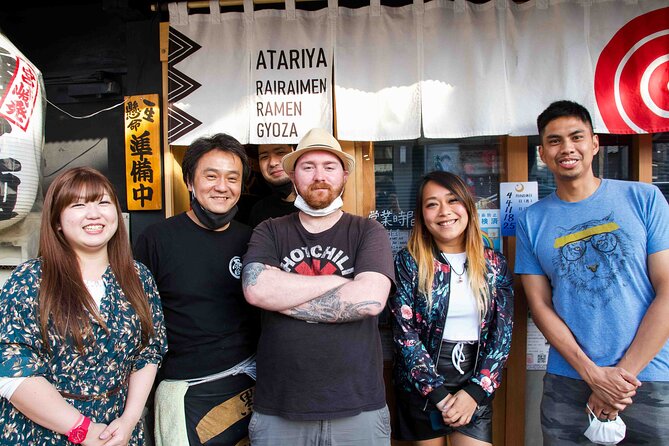
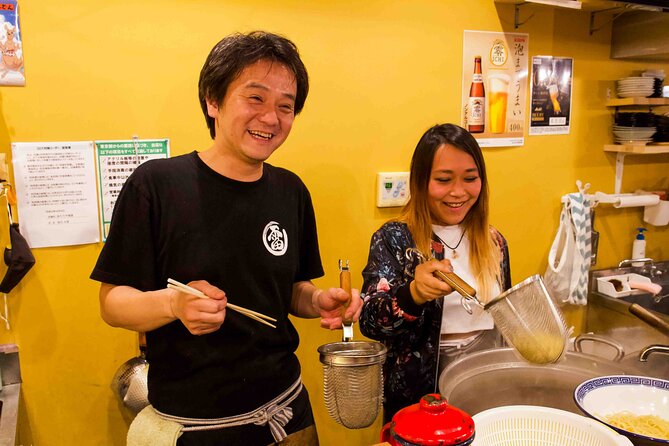
The central appeal is the setting. You are not practicing in a generic cooking studio with equipment arranged only for teaching. You get access to an actual ramen kitchen, one associated with several awards and described as one of Tokyo’s best.
That setting changes what you notice. You can take in the sounds, movements, and rhythm of a working shop. The experience is designed to make you feel like a ramen chef for a short time, but it also shows you that ramen is built from many small decisions.
You learn about the ingredients used in the bowl, what each one does, and where they come from. The supplied details do not name each ingredient or identify the shop, so you should not expect a detailed menu of every component in advance. The focus is on understanding the role of the parts rather than memorizing a fixed recipe.
The guide also provides context about ramen in Japanese cuisine. One especially strong point is the chance to ask questions about recipes and their history. That personal exchange can make the session more useful than a simple demonstration, particularly if you are curious about why one noodle, broth, or topping is chosen over another.
The shortened preparation process
It is important to understand the format before you arrive. The experience does not ask you to make every part of the dish from raw ingredients. That would take far longer than one hour, and the broth alone can require about 10 hours of cooking.
Instead, the session removes the long waiting periods and keeps the parts that give you a feel for ramen-shop work. You learn about preparation, handle the noodles, put the bowl together, and eat it soon afterward.
I see this as a sensible trade. A complete ramen course could become an all-day project, with much of that time spent waiting for broth or other ingredients to cook. This experience gives you a practical snapshot of the process without using up half your Tokyo day.
The tradeoff is educational depth. You will not leave having mastered a full ramen recipe from start to finish. You will leave with a better sense of how a professional bowl is assembled and why noodle handling matters.
Temomi, the hands-on noodle technique
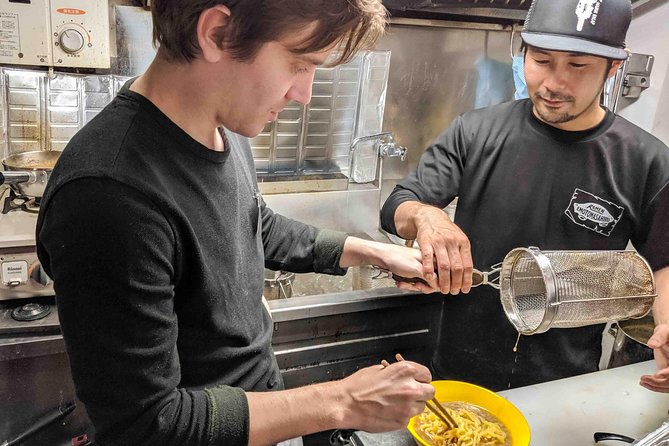
The first distinctive technique is temomi, or massaging the noodles. This is more than a theatrical motion for the camera. It lets you feel the noodles and see how they respond to handling before they are cooked.
The supplied information does not give a step-by-step sequence for the technique, so you should let the ramen professionals demonstrate the movement and correct you as needed. The value is in trying it yourself, not simply watching someone perform it.
This is also where the small group matters. In a large class, noodle work can become a quick demonstration followed by a turn at a crowded station. With six people or fewer, you should have a better chance to see the movement clearly and ask why it is done.
You may find that this is the most memorable part of the session because it is both simple and physical. Ramen can look effortless when placed in front of you. Handling the noodles gives you a quick lesson in the work behind that polished bowl.
A completely different kind of day out:
- Mt Fuji and Hakone 1-Day Bus Tour Return by Bullet Train
★ 5.0 · 26,383 reviews - TOKYO SKYTREE® Ticket
★ 4.7 · 25,136 reviews - teamLab Borderless Tickets: MORI Building DIGITAL ART MUSEUM
★ 4.7 · 24,126 reviews - teamLab Planets TOKYO Ticket
★ 4.7 · 21,663 reviews
Tebo and the final bowl
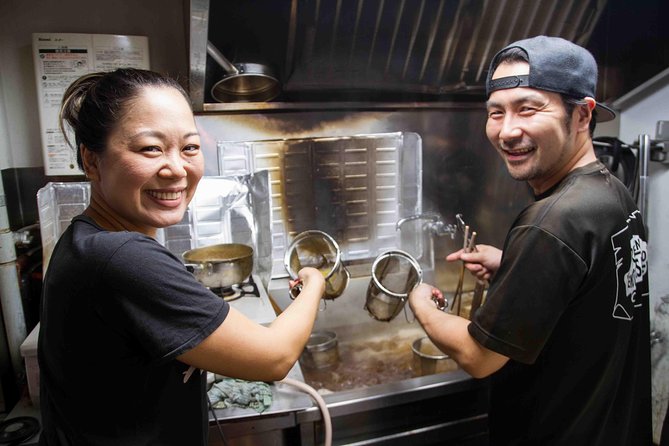
You also try tebo, the technique of shaking water from the noodles. The motion is part of the finishing process before the noodles meet the broth and toppings. Again, the point is not to become a professional cook in one hour. It is to understand the speed and control used in a ramen shop.
After the noodle work, you assemble your ramen with your preferred toppings. The exact topping choices are not specified, so the available selection may depend on the shop and the session. What is clear is that you have a role in putting together the final bowl rather than receiving an entirely finished meal.
Then you eat your own creation. That makes the meal feel earned, even if the broth and some preparation have already been completed by the kitchen. You can also judge the result with a little more attention because you have just handled the noodles yourself.
The food is not a side feature. It is the payoff for the work and explanation. One particularly positive account describes the ramen as absolutely delicious and praises the chef’s help and explanations about ramen’s place in Japanese cuisine.
Meeting point and one important location question
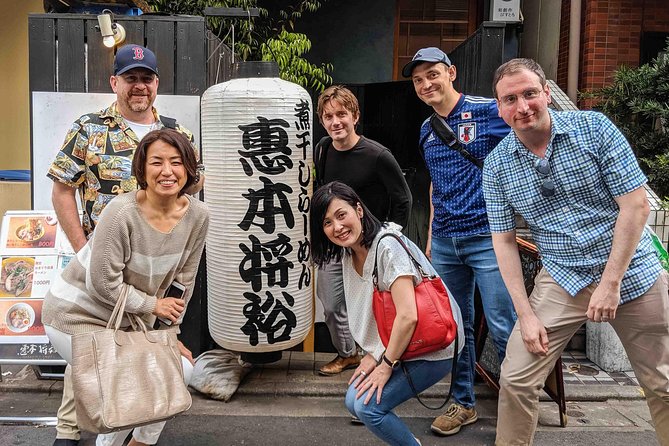
The activity information identifies Nakameguro Koukashita as Stop 1, but it lists the starting meeting point as 2-chōme-12-6 Nezu, Bunkyo City, Tokyo 113-0031. It also says the activity ends back at the meeting point.
Those details do not line up clearly on the page. Nakameguro and Nezu are different Tokyo areas, so you should not rely on a casual reading of the location information. Confirm the exact meeting address with Tokyo Ramen Tours before the day of your booking.
This is especially important because the experience lasts only about an hour. A wrong train ride or an extra transfer could take up much of the scheduled time. The activity is near public transportation, which helps, but the precise starting point still matters.
You receive confirmation at booking, and the ticket is mobile, so keep the confirmation available on your phone. The provider uses multiple guides, meaning the person leading your session may vary. No guide names are provided, so you should not book expecting a particular individual.
What the one-hour schedule means for your day

The short duration is a strength for a busy Tokyo itinerary. You can fit the experience between sightseeing plans without giving up an entire morning or afternoon. It also keeps the class focused, with little room for long waits.
At the same time, one hour passes quickly. You should expect a compact introduction rather than a slow, detailed cooking course. The session needs to cover ingredients, noodle preparation, the two techniques, assembly, and the meal in a tight window.
That pace may suit you if you like practical activities with a clear finish. It may feel rushed if you want long conversations about regional ramen styles or enough practice to repeat every technique several times.
The small group should help the timing. Six people or fewer is manageable, but the exact pace can still depend on the guide, kitchen, and number of questions. If you have a lot to ask, use the time well and focus on the parts you care about most.
Food restrictions and who should skip it
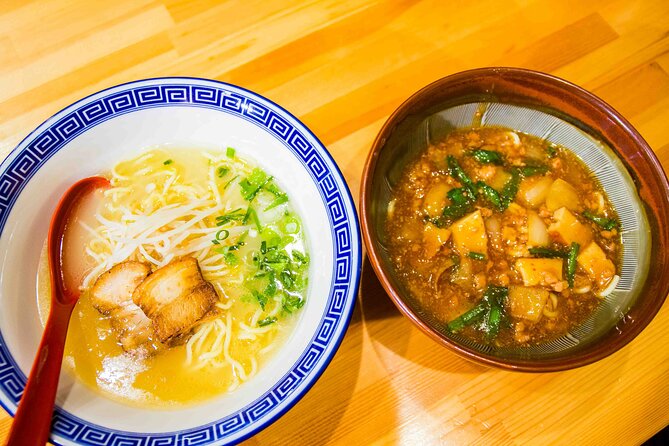
The ingredients are a firm consideration. The ramen contains chicken, pork, and fish. This rules out vegetarian and vegan diets and may also make the experience unsuitable for people avoiding one or more of those ingredients for religious, medical, or personal reasons.
No alternative broth or substitution is promised in the supplied details. If you have an allergy or strict dietary requirement, contact the provider before booking rather than assuming the kitchen can adapt the dish.
For everyone else, the food content is part of the appeal. You learn about ingredients while working with a bowl that reflects standard ramen-shop preparation. If you are open to chicken, pork, and fish, the meal should be straightforward to enjoy.
This experience suits couples, solo food fans, and small groups who want an activity rather than another restaurant stop. It should also work for people who enjoy asking questions and trying a new technique with their hands.
It is less suitable for anyone who wants a long culinary course, a vegetarian meal, or a completely private session. The maximum is six, but the experience is still a shared activity with multiple guides rather than a guaranteed one-to-one lesson.
How the strongest praise helps set expectations
The most positive feedback centers on the chef’s kindness, the clear help during the session, and the explanation of ramen’s role in Japanese cuisine. That combination is worth noting. Good food alone would make this a pleasant lunch, but patient instruction is what turns it into an experience.
The chef also answered questions about recipes and their history. You should use that opportunity. Ask about the ingredients in your bowl, the reason for the noodle techniques, and how the shop approaches ramen preparation.
The meal itself receives high praise, with the ramen described as delicious. The overall rating is 4.9 from 13 reviews, and the recommendation rate is 100 percent. That is an excellent early record, though the sample is small, so I would treat it as encouraging rather than final proof.
The phrase a very filling afternoon also gives you a useful practical clue. Even though the activity lasts about an hour, the bowl is substantial enough to count as a proper meal for many people. Plan your surrounding food stops accordingly.
Cancellation, booking timing, and group size
Free cancellation is available if you cancel at least 24 hours before the local start time. Cancellations made less than 24 hours ahead are not refunded, and changes inside that window are not accepted.
The experience requires a minimum number of people. If the provider cancels because that minimum is not met, you are offered another date or experience, or a full refund.
The activity is booked an average of 16 days ahead. That does not guarantee that every date fills early, but it suggests you should avoid leaving this until the last day if the timing matters to your itinerary.
I would also book early if you want to place it on a particular Tokyo food day. Once you have the confirmation, check the meeting location closely because of the Nezu and Nakameguro references.
Should you book this ramen experience?
I would book it if you want a short, hands-on food activity with real kitchen access and a meal at the end. The noodle techniques, small group, award-winning setting, and chance to ask questions give it more substance than a standard ramen lunch.
At $78.38, it is good value for access and instruction, but not for the food alone. You are paying for the setting and the guided participation. If you want to make every component from scratch, choose a longer cooking class instead.
Before paying, confirm the exact meeting point and make sure chicken, pork, and fish work for your diet. If both details are fine, this is a focused way to understand the craft behind one of Tokyo’s most familiar dishes without sacrificing half a day.
FAQ
Where does the ramen experience take place?
The experience takes place in Tokyo, inside an actual award-winning ramen kitchen. The information names Nakameguro Koukashita as a stop and gives 2-chōme-12-6 Nezu, Bunkyo City, Tokyo 113-0031, Japan as the starting meeting point.
How long does the experience last?
The experience lasts approximately one hour.
How much does it cost?
The listed price is $78.38 per person.
How many people can join the experience?
The maximum group size is six people.
Is the ticket available on a mobile phone?
Yes. The experience includes a mobile ticket.
Will I make the ramen completely from scratch?
No. The broth and some preparation are completed in advance. The session focuses on preparation, noodle techniques, assembly, toppings, and eating the finished ramen.
What noodle techniques will I learn?
You learn temomi, the process of massaging the noodles, and tebo, the technique of shaking water from the noodles.
What meat and other ingredients does the ramen contain?
The ramen contains chicken, pork, and fish.
Does the activity end at the meeting point?
Yes. The activity ends back at the meeting point.
Can I cancel for a full refund?
Yes, if you cancel at least 24 hours before the experience start time. Cancellations made less than 24 hours before the start time are not refunded.
Just added in Tokyo
- Tokyo – Grand Sumo Tournament★ 4.5 · 76 reviews
- Experience Award-Winning Spa Treatments in Downtown Tokyo★ 5.0 · 21 reviews
- Japanese Wine Omakase in Shibuya – Guided Tasting, Not Sake★ 5.0 · 15 reviews
- Enjoy plus size Kimono★ 4.5 · 14 reviews
- Tokyo’s Authentic and Finest Taiko Drumming Workshop★ 5.0 · 22 reviews
- Tokyo: Exclusive Geisha Dinner Experience★ 5.0 · 14 reviews
- Hands-on Japanese Cooking in a Shinjuku Home Kitchen with Satoru★ 5.0 · 19 reviews
- Calligraphy on T-shirt or lantern near Skytree Tokyo★ 5.0 · 43 reviews
Tokyo Tours, compared.

Tokyo Disney Resort – Tokyo Disneyland & Tokyo DisneySea Park Tickets
Read our review →

Mt Fuji and Hakone 1-Day Bus Tour Return by Bullet Train
Read our review →

teamLab Borderless Tickets: MORI Building DIGITAL ART MUSEUM
Read our review →