
Reviewed · DAY TRIPS
Kyoto Full Day Tour from Osaka with Licensed Guide and Vehicle
Kyoto rewards a well-planned day. This private tour makes the long Osaka to Kyoto run easier by pairing a licensed English-speaking guide with a private vehicle and a schedule built around your interests. You choose three or four places from a broad list, then your guide helps arrange the order.
I like the hotel pickup and drop-off, especially if you are traveling with children, older relatives, or luggage. I also like the flexibility: guides such as Tomy, Yuka, Kazuko, and Ichiro have adjusted routes around crowds, limited cruise-port time, walking ability, and even food needs. The main drawback is the price, $1,060.40 per group of up to four, before admission fees, lunch, and personal spending.
In This Review
- The most useful things to know before booking
- What the $1,060.40 group price buys
- Choosing your Kyoto route
- Fushimi Inari and Kyoto’s southeastern shrines
- Kiyomizu-dera, Higashiyama, and Gion
- Nijo Castle and Kyoto Imperial Palace
- Nishiki Market and Pontocho for food and atmosphere
- Kinkaku-ji, Ryoan-ji, and the northern temples
- Arashiyama’s bamboo, bridges, and temple gardens
- The northern mountains and imperial villas
- Guides, drivers, and the human side of the day
- Timing, tickets, weather, and what to pack
- Who should book this Kyoto day trip?
- Should you book it?
- FAQ
- How long does the Kyoto tour from Osaka last?
- How many people can join the private tour?
- Are entrance fees included?
- Can I choose which Kyoto attractions to visit?
- Is pickup available from an Osaka cruise port?
- What happens if the weather is poor?
The most useful things to know before booking
- Three or four stops is the realistic plan: The long list of Kyoto sights is a menu, not a promise to visit them all in eight hours.
- Private transport saves effort: You avoid changing trains between Osaka and Kyoto, and the driver can bring you close to many sights.
- Crowd control matters: Guides have changed the order of visits to make better use of quieter periods.
- The tour suits cruise passengers: Pickup from Osaka Port has worked for groups with only one day in Japan.
- Admission fees are extra: Bring a budget for temple, castle, garden, and villa tickets.
- The day can be tiring: Kyoto is spread out, and popular sites such as Fushimi Inari, Kiyomizu-dera, and Arashiyama require walking.
What the $1,060.40 group price buys
At first glance, this is an expensive day trip. For four people, the cost works out to about $265 per person before entrance fees and food. For two people, the per-person cost is much higher, so the value improves when you can fill the vehicle.
You are paying for more than a ride. The package includes a private vehicle, a licensed local English-speaking guide, and a customized day. Pickup and return at your Osaka hotel are included, and the tour is private to your group.
That arrangement can save time. Kyoto and Osaka are close on a map, but a full day of trains, station corridors, transfers, and crowded platforms can wear you down. A private car does not remove traffic, but it gives you a place to sit between sights and lets the guide adjust the route.
I would not book this expecting a luxury sightseeing sprint through every famous place in Kyoto. The experience is designed around three or four selected sites. If you try to force in eight or ten, you may spend much of the day looking through a car window.
The best value comes when you care about ease and personal attention. A family of four, a small group with older adults, or cruise passengers with a fixed return time can make a strong case for the cost.
More Day Trips in Osaka
- From Osaka: Himeji Castle, Arima Onsen & Mt. Rokko Day Tour
★ 4.6 · 339 reviews - Osaka Day Tour: Amanohashidate & Ine Bay
★ 5.0 · 280 reviews - Kyoto and Nara Day Trip from Osaka
★ 4.0 · 175 reviews
Choosing your Kyoto route
The available stops cover nearly every major part of Kyoto. That is useful, but it also requires discipline. Fushimi Inari and Kiyomizu-dera sit in the southeast. Arashiyama is on the western edge. Kinkaku-ji is in the north, while Ginkaku-ji and Nanzen-ji are farther east.
Trying to link all of them in one day means more driving and less time on foot. I would choose one compact area, then add one major sight elsewhere only if it is a top priority.
A good first-time route might combine Kiyomizu-dera, Gion, Nishiki Market, and Fushimi Inari. Another could focus on Arashiyama, including the Bamboo Forest Street, Togetsukyo Bridge, and Tenryu-ji. A temple-heavy day might pair Nijo Castle with Kinkaku-ji, Ryoan-ji, and Ginkaku-ji, though that route needs careful timing.
Your guide can help put the stops in a sensible order. Yuka arranged routes around traffic and crowds, while Tomy prepared an itinerary in advance and checked access at sites before taking a family around Kyoto. That kind of planning is particularly useful when you have only eight hours.
Fushimi Inari and Kyoto’s southeastern shrines
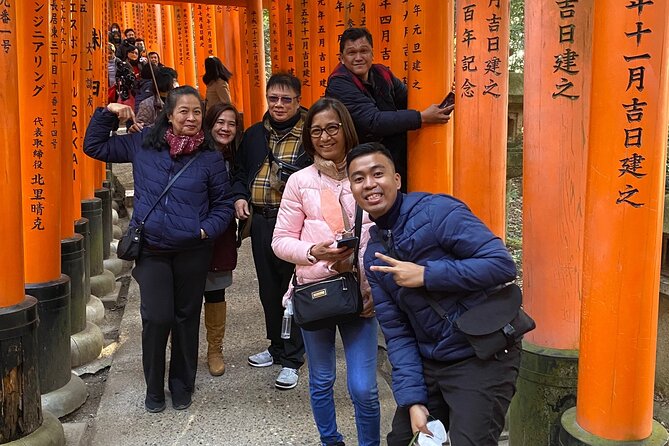
Fushimi Inari-taisha is famous for its long rows of orange torii gates climbing into the wooded hills. It is one of Kyoto’s most recognizable sights, but the approach can be very crowded.
The useful thing about a private guide is not that you can skip the shrine’s public crowds. You cannot simply bypass the people at the entrance. The value is in knowing how far to walk, where the atmosphere changes, and how much of the mountain you can reasonably see during a packed day.
One past group wisely did not attempt the entire mountain route. That is good advice for most visitors on this tour. Fushimi Inari can consume the day if you keep walking uphill.
Tofuku-ji offers a calmer counterpoint. It is a large Zen temple known for autumn color and its gardens. One visitor particularly appreciated its rock gardens because the site felt far less crowded than Fushimi Inari. If quiet garden time matters more to you than a famous photograph, ask about Tofuku-ji.
Toji, with its long connection to Kyoto’s early capital, is another southeastern option. It is easier to pair with Fushimi Inari than with many western Kyoto sights, though the exact route depends on traffic and your other choices.
Kiyomizu-dera, Higashiyama, and Gion
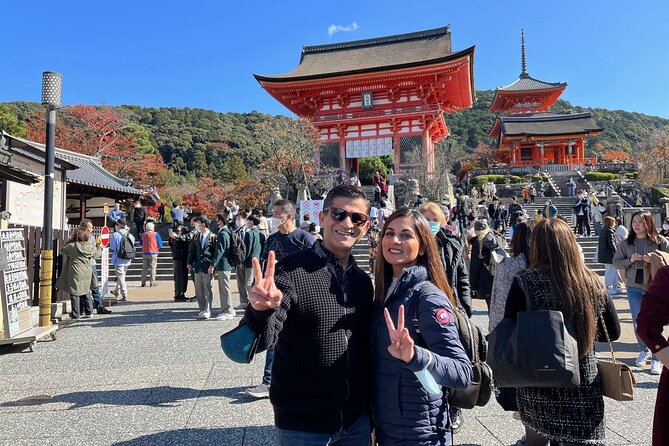
Kiyomizu-dera is one of Kyoto’s essential temple visits. Its broad grounds and hillside setting give you a strong sense of old Kyoto, but the access streets can be crowded and involve slopes.
A guide adds value here by explaining the temple’s religious details rather than leaving you with a quick photo stop. The supplied schedule shows short time blocks for each possible stop, but in practice you should ask for enough time at Kiyomizu-dera to see the grounds properly. A fifteen-minute visit would be rushed.
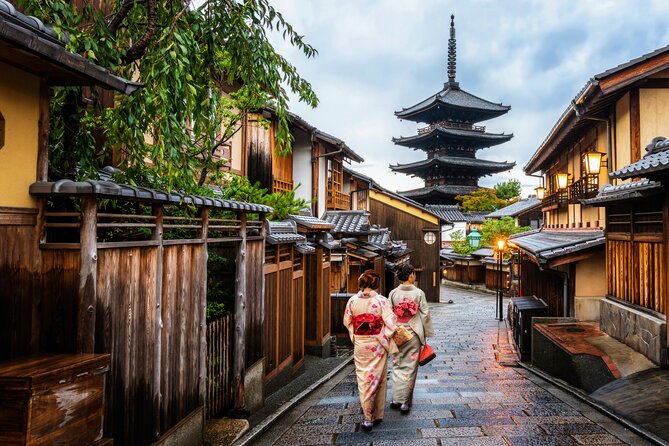
The surrounding Higashiyama Ward is one of the best places to walk through traditional Kyoto streets. The district preserves older buildings and connects naturally with Kiyomizu-dera, Gion, and Kennin-ji.
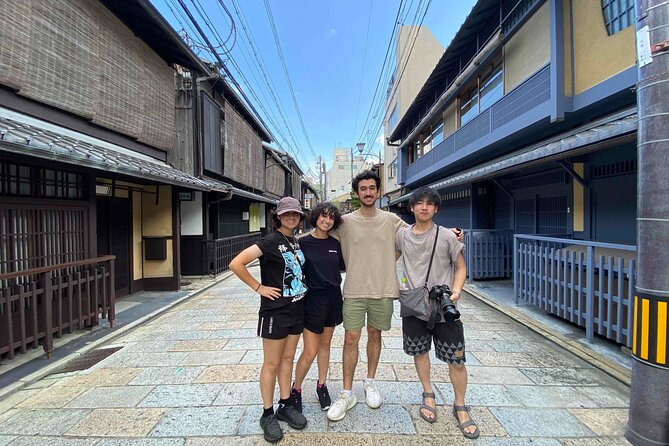
Gion can be confusing on a first visit. Its narrow lanes, old wooden buildings, and traditional entertainment houses reward slow walking, but the area is not a single attraction with one entrance. A guide such as Yuka has helped visitors find their way through Gion and arrange additional cultural activities, including a tea ceremony.
Please treat Gion as a residential and working district, not a stage set. Your guide can explain where to walk and how to behave respectfully. You will get more from the area if you look beyond the hope of spotting a geisha and pay attention to the architecture, lanes, and small shrines.
Kennin-ji is close to Gion and offers spacious temple grounds with dry gardens. It can be a useful substitute if you want a temple visit without adding a long cross-city drive.
More Private Tours in Osaka
- 9D Splendid Japan-Private 3 Star Hotels-Osaka to Tokyo by Stunning Tours
★ 4.5 · 393 reviews - Osaka 4hr Private Tour with Government-Licensed Guide
★ 5.0 · 359 reviews - 3/4/5 Hours Private Tour in Osaka with Local Guide
★ 5.0 · 189 reviews - Osaka 6hr Private Walking Tour with Government Licensed Guide
★ 5.0 · 174 reviews
Nijo Castle and Kyoto Imperial Palace
Nijo Castle gives the day a different flavor. Built in 1603 as Tokugawa Ieyasu’s Kyoto residence, it connects the city with the shogunate that ruled Japan during the Edo Period.
The castle is not only about grand gates and grounds. It helps explain the political side of Kyoto, a city often presented mainly through temples and gardens. If you want historical context, place Nijo Castle high on your list.
The Kyoto Imperial Palace offers a much larger open setting. It was the residence of Japan’s Imperial Family until 1868, when the emperor and capital moved to Tokyo. Its spacious grounds feel very different from the tight lanes of Gion or the wooded paths at Fushimi Inari.
I would not choose both Nijo Castle and the Imperial Palace unless you have a strong interest in political and imperial history. They are worthwhile, but they take time from Kyoto’s more intimate neighborhoods and temples.
Nishiki Market and Pontocho for food and atmosphere
Nishiki Market is a narrow, five-block shopping street known as Kyoto’s Kitchen. More than one hundred shops and restaurants sell food and local goods, making it a good place to sample small bites or look for gifts.
The market is not a formal tasting tour, and lunch is not included. You pay for food yourself, and you should tell your guide about dietary restrictions before the day begins. One group needed help with food choices, and the guide worked to find a suitable restaurant.
I like Nishiki Market as a midday stop because it gives you a break from temple grounds. It also lets you buy edible souvenirs, though the narrow passage can feel crowded and the best browsing takes longer than fifteen minutes.
Pontocho is another food-focused area, a narrow lane near the Kamogawa River. It is especially atmospheric around mealtime, with restaurants packed along the alley. The tour may show you the area, but a full meal requires time, and lunch remains your responsibility.
Kinkaku-ji, Ryoan-ji, and the northern temples
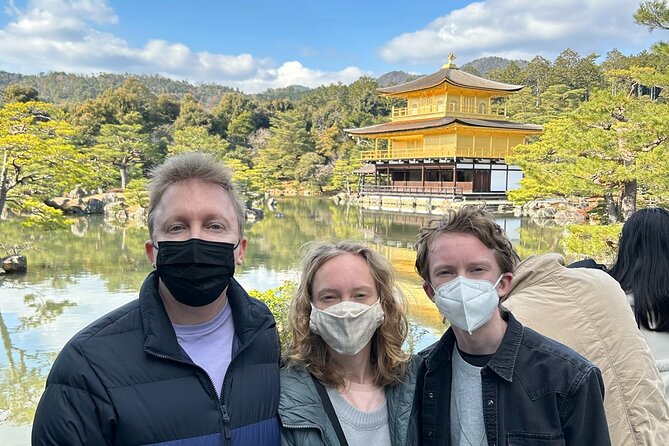
Kinkaku-ji, the Golden Pavilion, is the visual showstopper. The upper two floors are covered in gold leaf, and the building reflects in the pond in front of it.
It is also one of Kyoto’s busiest major sights. You will follow a set route through the grounds rather than wander freely, so I would choose it for the architecture and photograph, not for a quiet temple visit.
Nearby Ryoan-ji is home to Japan’s most famous rock garden. The simple arrangement of stones and gravel invites a slower look, though the crowds can make stillness difficult.
Ninna-ji offers another World Heritage temple and a broader religious setting. It is associated with the Omuro school of Shingon Buddhism and was founded in 888. These northern temples can work well as a group, but combining them with Fushimi Inari and Arashiyama may turn the day into a race.
Arashiyama’s bamboo, bridges, and temple gardens
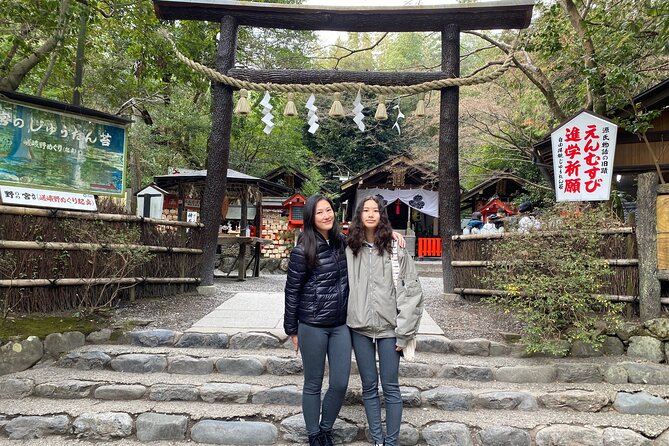
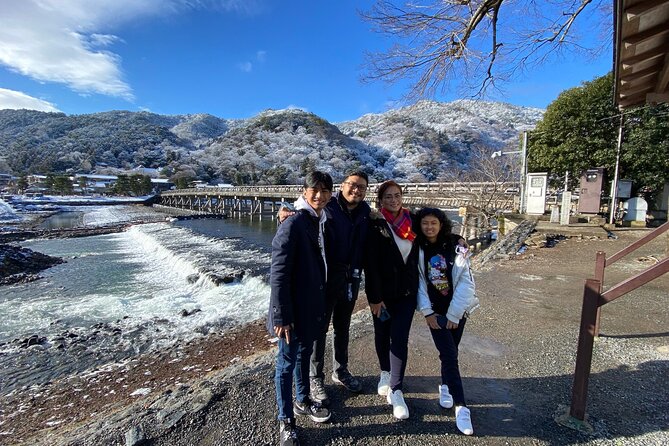
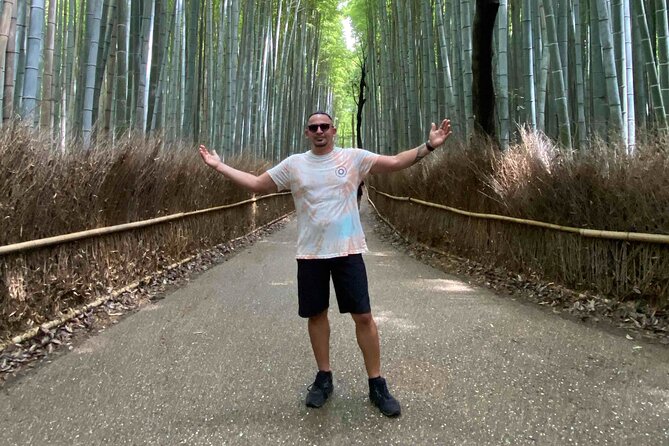
Arashiyama is one of Kyoto’s most popular districts, and for good reason. The area brings together the Bamboo Forest Street, Togetsukyo Bridge, Tenryu-ji, and several quieter hillside temples.
The bamboo path is attractive, but it is not a secluded woodland walk. It can be crowded, especially at popular times. Traffic around Arashiyama can also be difficult, so tell your guide if the bamboo grove is a must-see. One guide and driver worked hard to reach it despite unexpectedly heavy traffic.
Togetsukyo Bridge is Arashiyama’s best-known landmark. The bridge crosses the river and gives you a broad view of the surrounding hills. It is an easy photo stop and a pleasant change from temple interiors.
Tenryu-ji is the district’s major temple. Its garden and Zen setting make it a stronger choice than simply rushing through the bamboo path. The tour list includes Tenryu-ji more than once, so confirm exactly which visit is planned and how much time you will have.
Okochi Sanso Garden sits beyond the bamboo groves and was once the villa of actor Okochi Denjiro. It includes gardens and buildings, but admission is extra. Jojakko-ji, Nison-in, and Gio-ji offer smaller temple settings with moss, maple trees, and quieter paths.
Adashino Nenbutsu-ji and Otagi Nenbutsu-ji are farther along the preserved Saga-Toriimoto area. Otagi is known for its 1,200 stone statues, each with a different expression. These sites are better for a focused Arashiyama day than as quick additions to a route already packed with central Kyoto.
The northern mountains and imperial villas
Shugakuin Imperial Villa, Katsura Imperial Villa, Kibune, and Kurama-dera all offer a different Kyoto from the central temple circuit.
Katsura Imperial Villa is valued for its architecture and garden design. Shugakuin Imperial Villa was built in the seventeenth century and includes upper, middle, and lower villa areas. These are not casual roadside stops, so ask your guide about access and timing before selecting one.
Kibune is a small mountain town built around Kifune Shrine, while Kurama is a rural settlement known for Kurama-dera and its hot spring. Both require more travel from central Kyoto. I would choose them only if you have already seen Kyoto’s headline sights or specifically want a forested mountain setting.
Yoshimine-dera, in Kyoto’s western mountains, is another hillside temple. Its buildings and paths stretch along the slope, so it may not suit anyone trying to minimize walking.
Guides, drivers, and the human side of the day
The strongest part of this experience is the guide’s ability to shape the day around you. Haru helped a group move through crowded places efficiently. Noriko and her driver were praised for professional service and a comfortable car. Kazuko was patient with children and helped organize a cruise-port itinerary.
Older visitors can also benefit from the private setup. A guide coordinated with the driver to reduce walking for one visitor, and Ichiro helped a tired older family member with a wheelchair carried in the vehicle. Availability of equipment is not guaranteed, so contact the provider in advance if you need a car seat or booster seat. Rear-facing car seats are not available.
The vehicle is another practical advantage. It provides a private place to rest, though traffic still affects the schedule. The tour accepts only one reservation per group, and you cannot combine separate bookings. The stated capacity is up to four people.
Timing, tickets, weather, and what to pack
The tour lasts about eight hours. That includes the journey from Osaka to Kyoto and back, so your sightseeing time will be shorter if you are picked up far from central Osaka or encounter heavy traffic.
Admission fees, lunch, and personal expenses are not included. Guide entry fees are covered only for sights listed in the expected-stop menu, so confirm the details when planning unusual combinations.
The tour requires good weather. If poor weather causes cancellation, you are offered another date or a full refund. Otherwise, you can cancel for a full refund up to 24 hours before the start time. Changes or cancellations inside that window are not accepted.
I would wear comfortable shoes, carry water, and keep your sightseeing list short. Kyoto’s temples often include steps, slopes, gravel, and long walks between gates and gardens.
Who should book this Kyoto day trip?
I would recommend it most strongly to:
- Families who want a private schedule
- Groups of up to four sharing the cost
- Cruise passengers with one day in Osaka
- Older visitors who need help limiting walking
- First-time visitors who prefer a guide in English
- People who dislike managing Japanese train connections
I would hesitate if you are a solo visitor on a tight budget, or if you prefer to explore slowly and spontaneously. Kyoto rewards lingering, and an eight-hour Osaka day trip cannot give every district the time it deserves.
Should you book it?
Book this tour if your priority is seeing selected Kyoto highlights without handling transport, and if you can share the cost with three other people. The guides have shown real skill in arranging routes, handling traffic, helping with food concerns, and adapting to families and older relatives.
Before paying, decide on your top three or four sites. Ask about entrance costs, walking distances, pickup location, and the order of stops. If you do that homework, this can be a very effective first look at Kyoto from Osaka.
If you want a quiet, slow temple day, take the train and choose one Kyoto district instead. If you have one precious day and want personal help making every hour count, this private tour is worth serious consideration.
FAQ
How long does the Kyoto tour from Osaka last?
The tour lasts approximately eight hours, including pickup, sightseeing, and return to Osaka.
How many people can join the private tour?
The price covers one group of up to four people. Separate reservations cannot be combined into a larger group.
Are entrance fees included?
No. Entrance fees, lunch, and personal expenses are not included. Guide entry fees are covered only for sights listed in the tour’s expected-stop selection.
Can I choose which Kyoto attractions to visit?
Yes. The tour includes a customized itinerary with your choice of three or four sites from the available attraction list.
Is pickup available from an Osaka cruise port?
Pickup has been arranged for groups arriving at Osaka Port, as well as from Osaka hotels. Confirm your exact pickup location when booking.
What happens if the weather is poor?
The tour requires good weather. If it is canceled because of poor weather, you will be offered a different date or a full refund.
More Day Trips in Japan
- Mt. Fuji Instagram-Worthy Spots Day Tour: Ladder Town, Oshino Hakkai, Lake Kawaguchi, Lawson Convenience Store (Departing from Tokyo Station or Shinjuku Station)
★ 4.8 · 35,467 reviews - 【Mount Fuji Magnificent Scenery Exploration Day Tour】Arakurayama Sengen Park & Kawaguchiko Oishi Park & Oshino Hakkai & INS Famous Lawson & Hikawa Clock Shop (Departing from Tokyo)
★ 4.9 · 12,075 reviews - [Kyoto & Nara Day Tour] Sagano Scenic Railway & Nara Park & Fushimi Inari Taisha Thousand Torii Gates & Togetsukyo Bridge & Bamboo Grove & Kimono Forest (Departing from Osaka)
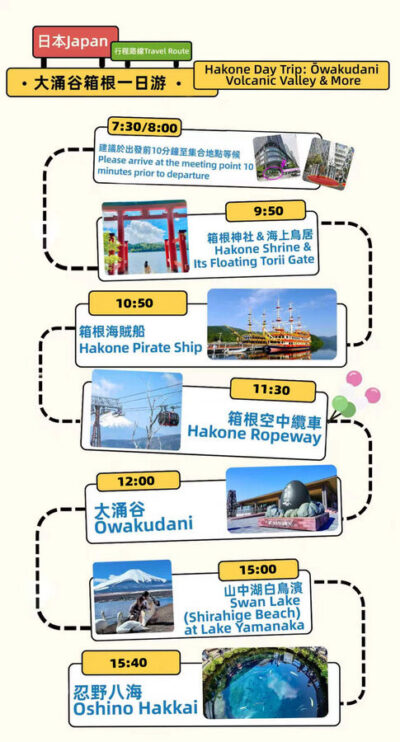
★ 4.9 · 10,942 reviews - Mount Fuji & Hakone – Lake Ashi Torii Gate, Hakone Shrine, Hakone Pirate Ship, Hakone Ropeway, Owakudani, Lake Yamanaka & Oshino Hakkai Day Trip: Sea, Land, and Air Panoramic Tour from Tokyo
★ 4.8 · 7,989 reviews
Just added in Japan
- A One-of-a-Kind Sushi Experience in a Special Place of Japan★ 5.0 · 15 reviews
- Tokyo Cute Bento Cooking Class – Make a Kawaii Character Lunchbox★ 5.0 · 126 reviews
- Japanese Home Cooking Class & Walk in Todoroki Temple Tokyo★ 5.0 · 88 reviews
- Japan Tokyo Tower Observatory Deck E-Ticket★ 4.0 · 34 reviews
- Catch a Baseball Game in Tokyo with a Local – Tickets Included★ 5.0 · 24 reviews
- JDM Experience with Fast&Furious RX-7 (English speaking Driver)★ 5.0 · 57 reviews
- Tokyo Private Day Tour by Car with English speaking Driver Guide★ 4.0 · 29 reviews
- Japan Classic 10 Day – One Life Adventures★ 5.0 · 129 reviews
Day Trips, compared.
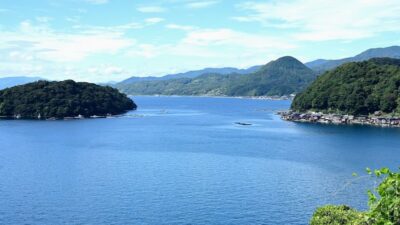
Kyoto Amanohashidate & Ine Funaya & Ine Bay Scenic Day Trip (Departing from Osaka or Kyoto)
Read our review →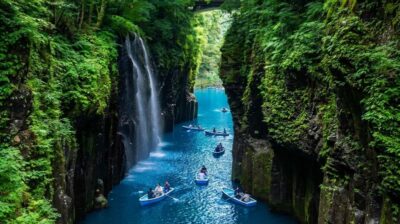
Kyushu: Mount Aso, Kusasenri & Takachiho Gorge Day Tour (Optional Takachiho Boat Ride Experience)
Read our review →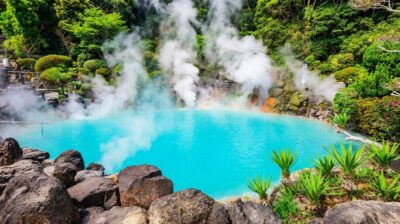
Kyushu One-Day Tour: Yufuin no Mori Train & Yufuin Town & Nyoirin-ji Temple & Dazaifu & Hell Hot Springs (Departing from Fukuoka)
Read our review →
Browse the lists this tour appears in