Reviewed · TOKYO TOURS
Make Sushi and Create Unforgettable Memories in Tokyo
Sushi is easier to eat than to make. This 1-hour-40-minute class near Sensoji Temple gives you a friendly introduction to maki rolls, nigiri, and other Japanese sushi styles without requiring any cooking skill. You learn by doing, then eat what you prepare.
I especially like the English-speaking instruction and the generous meal. You also get a small lesson in sushi history and technique, rather than simply assembling food from a kit. The main point to consider is group size: the class can include up to 30 people, so the atmosphere may feel more like a lively workshop than a private lesson.
The meeting point is at 2-chōme-17-9 Kaminarimon in Asakusa, a short walk from Sensoji Temple and close to public transportation. That location makes this an easy addition to a morning or afternoon around Tokyo’s traditional temple district.
In This Review
- Key points to know before booking
- Starting near Kaminarimon and Sensoji Temple
- A gentle introduction to sushi culture
- Making maki, nigiri, and temari sushi
- Eating the sushi you made yourself
- A good fit for children, teenagers, and solo visitors
- How the group size affects the experience
- The real value of the Asakusa setting
- What the high rating tells you, and what it does not
- Booking, cancellation, and practical details
- Should you book Sushi Making Tokyo?
- FAQ
- How long does the sushi-making class last?
- Where does the class meet?
- Does the class include the sushi I make?
- Is the class taught in English?
- Is cooking experience required?
- Are drinks such as sake included?
Key points to know before booking
- You make several kinds of sushi: The class covers maki rolls and authentic nigiri, with additional styles such as inside-out maki and temari sushi mentioned in the instruction.
- The food is part of the price: Ingredients and the sushi you prepare are included, and the portion can be substantial. One class combination produced eight maki pieces and eight nigiri pieces per person.
- English makes the class accessible: The instructors explain each step in English and add simple cultural background about sushi.
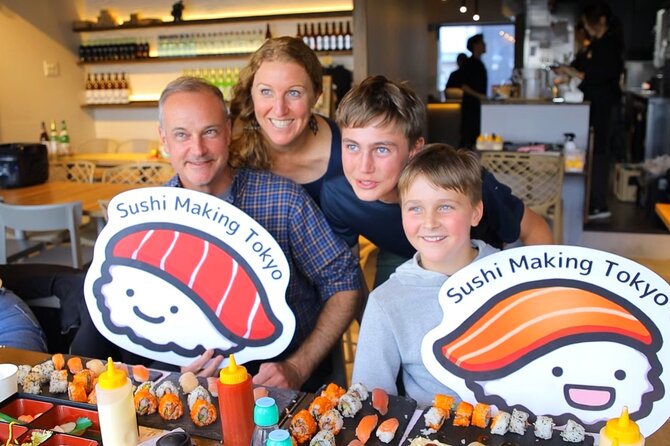
- Families and solo visitors fit well: Children, teenagers, couples, groups of friends, and solo participants have all found a place in the class.
- Asakusa adds value: You can pair the class with Sensoji Temple, Kaminarimon Gate, and the surrounding old Tokyo streets.
- Drinks may cost extra: Sake is available for an additional charge, so check the drink options before ordering.
Starting near Kaminarimon and Sensoji Temple
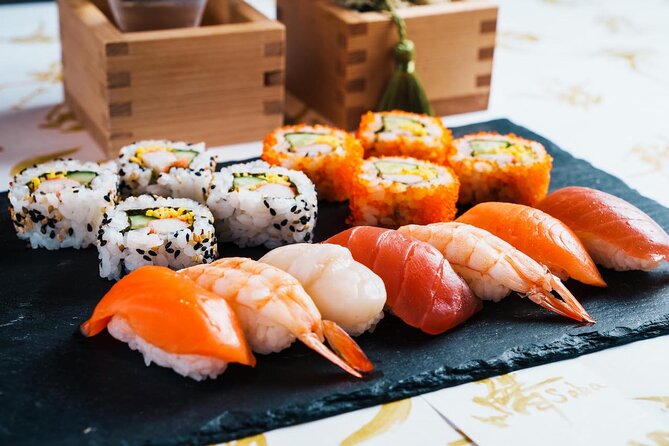
The class begins at 2-chōme-17-9 Kaminarimon, Taito City. This puts you in one of Tokyo’s most useful sightseeing areas, since Sensoji Temple is only steps away. If you arrive early, you can see the red Kaminarimon Gate, walk through Nakamise shopping street, and reach the temple before or after your lesson.
You do not need hotel pickup. That keeps the price lower, but you are responsible for reaching the meeting point. The area is near public transportation, and the central Asakusa location is much easier to combine with sightseeing than a cooking school far from the places you already want to visit.
I would allow extra time to find the building. Asakusa has busy streets, tourist shops, temple lanes, and plenty of signs competing for your attention. A few minutes of breathing room is wise, especially since one group was late and appreciated the staff’s kind response. Still, arriving on time is the safest plan because the class runs on a fixed schedule.
A few more options to weigh up in Tokyo
- Tokyo Disney Resort – Tokyo Disneyland & Tokyo DisneySea Park Tickets
★ 4.8 · 99,488 reviews - SHIBUYA SKY Ticket
★ 4.7 · 46,509 reviews - JR Whole Japan Rail Pass
★ 4.8 · 29,150 reviews
A gentle introduction to sushi culture
The class begins with an explanation of sushi’s background and the differences between the styles you will prepare. This is not a formal culinary course, but the historical notes give the food more meaning. You learn why sushi is shaped in different ways and how the pieces fit into Japanese food culture.
That short cultural layer is important. Without it, a sushi class can become a simple craft activity: place rice here, add fish there, roll, and eat. Here, the instructors connect the preparation to traditional Japanese sushi, while keeping the language simple enough for beginners.
Several instructors are praised by name in the class feedback, including Rino, Ken, Sato, Momo, Yuto, Yui, Ayu, Emi, Mikoki, Madoka, Yusuke, and Yuhi. Staff names may vary by session, but the repeated pattern is clear: the teaching style is warm, energetic, and informal.
One useful note is that spoken English can vary slightly by instructor. Most people found communication easy, though one participant suggested that Ken slow down a little. If you miss a step, do not worry. The class is built around demonstration and repetition, and staff members circulate to help.
Making maki, nigiri, and temari sushi
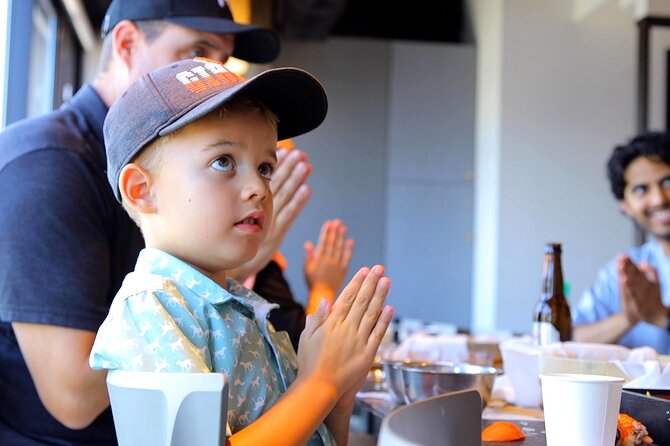
The strongest part of this experience is the hands-on work. Ingredients and utensils are prepared in advance, so you spend your time shaping sushi rather than chopping or waiting for equipment. That setup is efficient, especially during a short class.
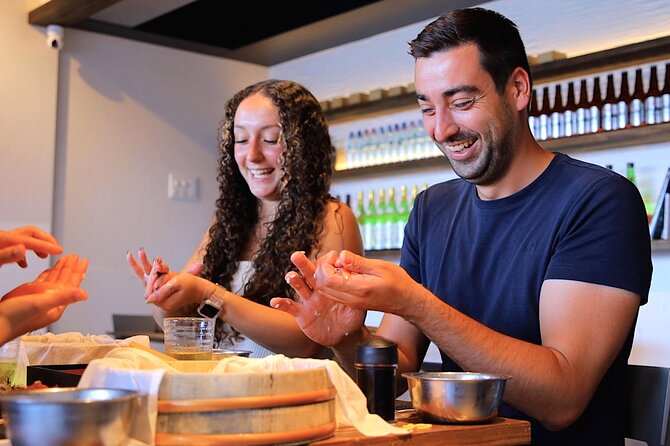
Maki sushi gives you the basic rhythm of spreading rice, placing fillings, and rolling with a bamboo mat or similar tool. One lesson includes eight maki pieces per person, though the exact menu may vary. Inside-out maki, where the rice sits on the outside, is also mentioned as part of the class instruction.
Nigiri is more difficult than it looks. The finished piece seems simple, but getting the rice to hold together while keeping the shape neat takes practice. The instructor breaks the process into small steps, showing how to form the rice and place the topping. You are not expected to produce sushi-shop perfection on your first attempt.
That is part of the fun. Your pieces may be uneven, and the rice may not cooperate. The class treats those small failures as part of learning, not as a problem. You leave with a better sense of why skilled sushi chefs make the work look so easy.
Temari sushi adds a playful touch. These rounded pieces can be decorated in a cute style and are especially appealing to families and younger participants. The class also includes a very easy sushi type before moving to rolled sushi that requires a little more practice and equipment.
The menu focuses on traditional Japanese styles rather than only novelty shapes. You get variety, but the class remains manageable within roughly 100 minutes.
Eating the sushi you made yourself
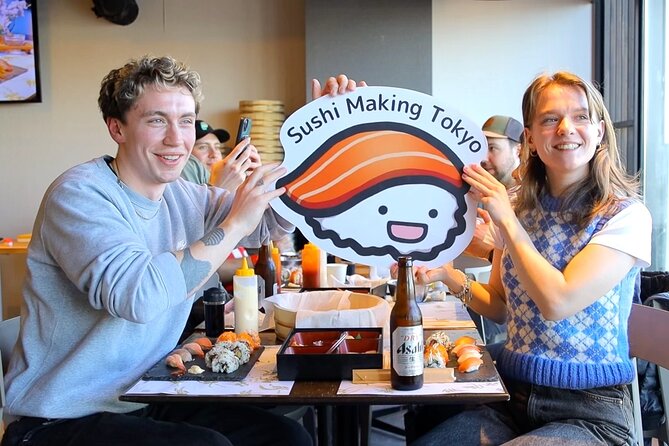
After the preparation, you sit down and eat your own sushi. This is where the class earns much of its appeal. The meal is not an afterthought or a tiny sample. One detailed account describes eight maki pieces and eight nigiri pieces per person, enough to serve as a filling lunch for many people.
The included price covers the ingredients and the meal. At $79.59 per person, that matters. You are paying for instruction, food, equipment, and a planned cultural activity in a central Tokyo location. It is not the cheapest meal you will find in Asakusa, but it is also not simply a restaurant bill. You receive an activity and lunch together.
Ingredient quality is praised often, with comments about fresh fish, good portions, and tasty results. I would still keep expectations sensible. This is a beginner class, not a high-end sushi counter or professional chef training session. The value comes from participation and guidance, not from luxury dining.
Drinks may be available during the class, including sake, but sake costs extra. Be careful with the word set on the drink menu. In Japan, it can mean a combination or meal-style package, not merely one beverage. One helpful tip from the class is to order a sake set only if you understand what it includes and actually want the full combination.
A completely different kind of day out:
- Mt Fuji and Hakone 1-Day Bus Tour Return by Bullet Train
★ 5.0 · 26,383 reviews - TOKYO SKYTREE® Ticket
★ 4.7 · 25,136 reviews - teamLab Borderless Tickets: MORI Building DIGITAL ART MUSEUM
★ 4.7 · 24,126 reviews - teamLab Planets TOKYO Ticket
★ 4.7 · 21,663 reviews
A good fit for children, teenagers, and solo visitors
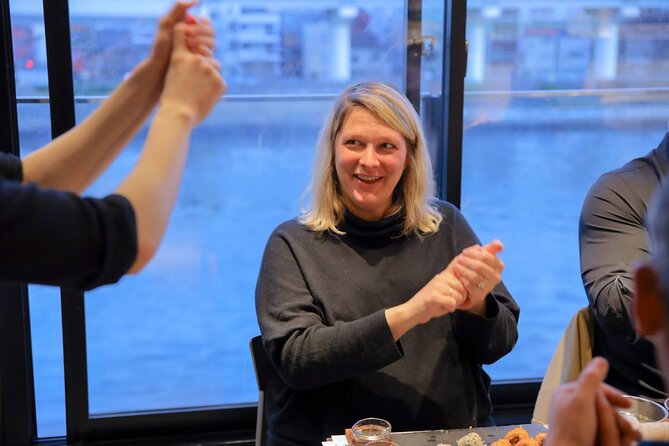
The class works well for families because the steps are visual and practical. Children around 10 or 11 can follow along, and teenagers have enough freedom to shape and decorate their own food. The activity also gives young people something more active to do than simply sitting through a restaurant meal.
Families should note that raw fish is not the only option. The class has provided non-raw choices, and substitutions have been made for shellfish allergies and gluten-free dietary needs. You should still communicate any allergy or dietary restriction when booking or before the class, since the available replacement depends on the ingredients that day.
Solo visitors are welcome too. The shared tables and group format make it easier to talk with other people, but you should not book this expecting quiet personal instruction. You will be part of a social class, with staff helping several people at once.
Couples and groups of friends get a clear shared activity and a meal at the end. It also works well for a rainy afternoon, a family break between sightseeing stops, or anyone who wants a Tokyo memory that does not come from buying another souvenir.
How the group size affects the experience
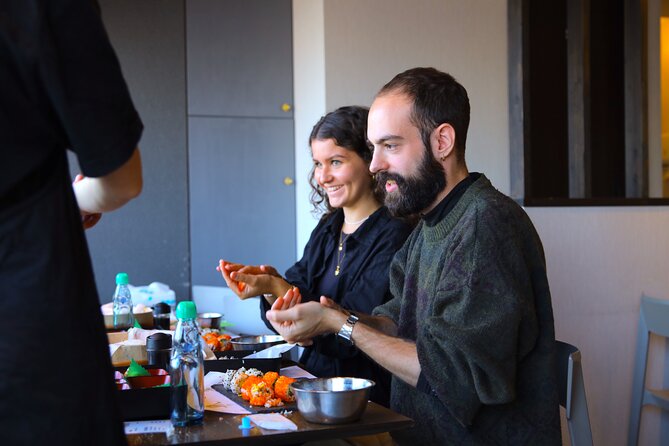
The maximum group size is 30 people. That is the main practical weakness of the class. A large session can feel lively and social, but it may also mean more waiting, more background conversation, and less individual attention.
The class may be divided into smaller working groups, which helps. Staff members appear to move around and provide assistance as people prepare their sushi. Still, if your goal is a quiet, highly technical lesson with detailed feedback on every piece, this may not be the right format.
A few people found the instruction less polished than expected, especially when comparing it with a professional master class. That criticism is fair. The experience is designed for first-timers and families, not for serious culinary students seeking chef-level knife work or advanced fish preparation.
For most visitors, the group format is a reasonable trade-off. You get friendly teaching, a social atmosphere, and a full meal without paying private-class prices.
The real value of the Asakusa setting
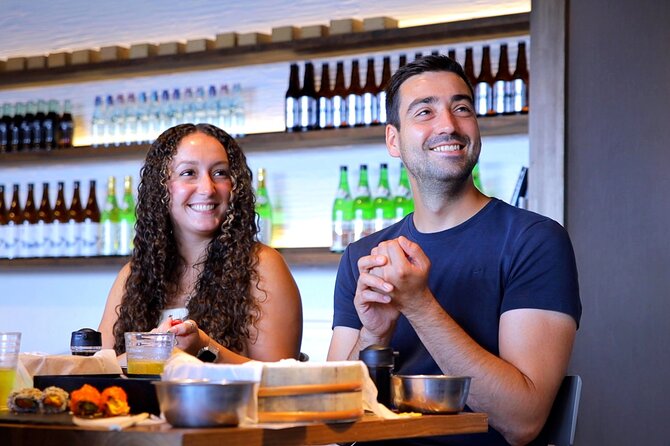
Location is one of the class’s best features. Asakusa offers a different feel from Tokyo’s modern shopping districts and office centers. Around Sensoji Temple, you can see one of the city’s oldest and most famous religious sites, browse traditional-style shops, and walk streets that feel more connected to old Edo-era Tokyo.
The cooking class fits naturally into that setting. You are not just learning a globally famous food in an anonymous commercial room. You are preparing Japanese sushi in a district strongly associated with traditional culture and food.
Plan the timing carefully. The activity lasts about 1 hour and 40 minutes and ends back at the meeting point. That makes it easy to continue sightseeing afterward, but do not schedule an attraction with a very tight entry time immediately after class. A lively group, photos, questions, and cleanup can affect the exact end time.
Because the end point is the same as the start point, you can continue directly toward Sensoji Temple or explore the nearby streets. The class does not include transportation to your hotel or another part of Tokyo.
What the high rating tells you, and what it does not
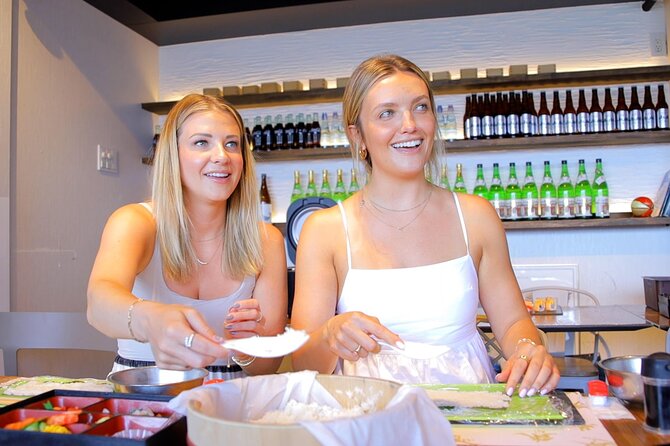
The experience has a 5.0 rating from 1,413 reviews, with 99 percent recommending it. The most praised points are consistent: friendly instructors, clear English, fresh ingredients, generous portions, useful sushi background, and the pleasure of eating what you made.
Names such as Rino, Yuto, Ken, Momo, Yui, and Ayu come up in especially warm comments, but the broader point is the staff’s tone. The instructors are described as funny, patient, attentive, and encouraging. That matters when your nigiri falls apart or your roll comes out crooked.
The rating does not mean every session feels identical. Staff members change, group size changes, and English delivery can vary. One person found the class too basic, while another felt the instructions could have been clearer. These are useful warnings for anyone expecting a serious professional course.
I would read the class as a cultural food activity with real instruction, not as a sushi apprenticeship. It teaches enough technique to give you confidence at home, but it does not attempt to cover advanced knife skills, fish sourcing, rice science, or professional kitchen work.
Booking, cancellation, and practical details
The price is $79.59 per person, and mobile tickets are accepted. Confirmation is provided at booking, and the activity requires a minimum number of participants. If that minimum is not reached and the class is canceled, you are offered another date or experience, or a full refund.
You can cancel for a full refund up to 24 hours before the start time. Cancellations or changes made less than 24 hours ahead are not accepted for a refund. The cut-off follows local Tokyo time, so check the clock carefully if you are booking from another country.
Service animals are allowed, and the meeting point is near public transportation. Since the class can accommodate up to 30 people, ask about any important dietary issue ahead of time rather than waiting until you sit down.
Should you book Sushi Making Tokyo?
I would book this class if you want a friendly, social introduction to Japanese food and like the idea of eating a meal you prepared yourself. It is particularly well suited to families, teenagers, couples, solo visitors, and anyone spending time around Sensoji Temple.
I would skip it if you want an advanced sushi course, a private chef-led lesson, or a polished fine-dining experience. The class can be busy, and the instruction is aimed at beginners.
For most people, the combination of English guidance, central Asakusa location, cultural background, fresh ingredients, and a generous meal makes the $79.59 price reasonable. You may not leave ready to run a sushi counter, but you should leave with better skills, a full stomach, and a story that is more personal than another Tokyo restaurant meal.
FAQ
How long does the sushi-making class last?
The experience lasts approximately 1 hour and 40 minutes.
Where does the class meet?
The meeting point is 2-chōme-17-9 Kaminarimon, Taito City, Tokyo 111-0034, Japan. It is near Sensoji Temple and public transportation.
Does the class include the sushi I make?
Yes. The price includes the cooking-class ingredients and the meal made during the activity.
Is the class taught in English?
Yes. An English-speaking instructor guides you through the sushi-making steps and explains sushi history and techniques.
Is cooking experience required?
No. The class is designed for beginners, and no previous cooking experience is required.
Are drinks such as sake included?
Sake is not included in the listed price and costs extra. Check the drink options carefully, since a sake set may include more than one beverage.
Just added in Tokyo
- A One-of-a-Kind Sushi Experience in a Special Place of Japan★ 5.0 · 15 reviews
- Tokyo Cute Bento Cooking Class – Make a Kawaii Character Lunchbox★ 5.0 · 126 reviews
- Japanese Home Cooking Class & Walk in Todoroki Temple Tokyo★ 5.0 · 88 reviews
- Japan Tokyo Tower Observatory Deck E-Ticket★ 4.0 · 34 reviews
- Catch a Baseball Game in Tokyo with a Local – Tickets Included★ 5.0 · 24 reviews
- JDM Experience with Fast&Furious RX-7 (English speaking Driver)★ 5.0 · 57 reviews
- Tokyo Private Day Tour by Car with English speaking Driver Guide★ 4.0 · 29 reviews
- Japan Classic 10 Day – One Life Adventures★ 5.0 · 129 reviews
Tokyo Tours, compared.

Tokyo Disney Resort – Tokyo Disneyland & Tokyo DisneySea Park Tickets
Read our review →
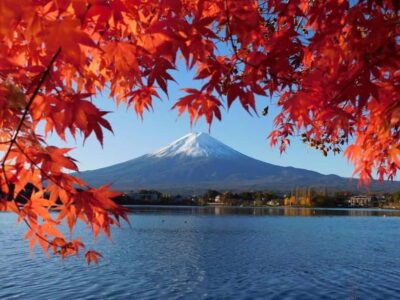
Mt Fuji and Hakone 1-Day Bus Tour Return by Bullet Train
Read our review →

teamLab Borderless Tickets: MORI Building DIGITAL ART MUSEUM
Read our review →