Reviewed · FULL-DAY
Mt. Koya Sacred Full-Day Private Tour (Osaka departure) with Licensed Guide
Sacred Japan is a train ride away. This private Mount Koya tour takes you from Osaka into the mountains, where Shingon Buddhism, ancient temples, forest paths, and a vast cemetery create a very different day from city sightseeing. Your licensed English-speaking guide meets you at your Osaka-area hotel and handles the complicated journey by train, cable car, and local transport.
I like the personal format and the chance to shape the day around three or four sites that matter most to you. I also like the guides’ care with the details. Yuki, Naka, Hiro, Emi, and other guides are praised for clear explanations, patient navigation, and warm company. The main drawback is the travel time: you can spend roughly two and a half hours each way getting to Koyasan, then walk up hills, stairs, and long paths once you arrive.
In This Review
- Five things to know before you book
- Why Mount Koya feels so different from Osaka
- The long ride from Osaka to Koyasan
- Kongobu-ji Temple and the heart of Shingon Buddhism
- Okunoin, where the forest becomes the attraction
- Danjo Garan and the place where Koyasan began
- Reihokan Museum and Koyasan’s religious art
- Daishi Kyokai and the living administration of Buddhism
- The Tokugawa Mausoleum and Japan’s ruling family
- Lunch and the value of a private guide
- Is $224.02 per person fair?
- Who should book this Mount Koya day trip?
- Should you book it?
- FAQ
- How long does the Mount Koya tour last?
- Where does the guide meet me?
- Is transportation included in the price?
- How many sites can I visit?
- Are entrance fees included?
- Is this a private tour?
Five things to know before you book
- The journey takes about 1.5 to 2.5 hours each way: Your guide leads you through Osaka stations, trains, and the cable car, but the long ride leaves limited time on the mountain.
- You choose three or four main sights: The day can focus on Okunoin, Kongobu-ji, Danjo Garan, the museum, or other listed sites rather than trying to rush through everything.
- Okunoin is the emotional center: The cemetery and Kobo Daishi’s mausoleum provide the quietest and most memorable part of the visit.
- The price covers guiding, not the whole day: At $224.02 per person, you still pay for transportation, some entrance fees, lunch, and personal costs.
- Expect real walking: This is not a vehicle tour. You meet your guide on foot and need to manage hills, stairs, and extended paths.
Why Mount Koya feels so different from Osaka
Mount Koya, also called Koyasan, is the center of Shingon Buddhism, a major Japanese Buddhist tradition founded by Kobo Daishi, also known as Kukai. The mountain settlement is home to important temples, religious institutions, cultural treasures, and Okunoin, where Kobo Daishi is believed to rest.
You are not simply visiting a group of old buildings. The religious setting remains important, and that changes the mood of the day. Your guide can explain how Buddhism developed in Japan, why Kobo Daishi matters, and how the temples and cemetery fit together.
I would choose this excursion if you have already seen Osaka’s main sights and want a slower day with more silence and ceremony. It gives you forests, stone monuments, old paintings, pagodas, and mountain air instead of another crowded shopping street.
The setting can change greatly with the season. Guides describe snowy visits as especially peaceful, while autumn brings colorful foliage and spring may offer blossoms around temple gates. Rain and cold are possible, so proper shoes and warm layers matter.
More Private Tours in Japan:
- Tokyo 6hr Private Tour with Government-Licensed Guide
★ 5.0 · 3,902 reviews - Private Tour to Mt. Fuji and Hakone (Fully Licenced Operator)
★ 5.0 · 1,910 reviews - Tokyo Customized Private Tour (Must See Places in 1 Day)
★ 5.0 · 1,499 reviews
The long ride from Osaka to Koyasan
The day begins with a meeting at your Osaka-area hotel. Pickup is on foot, so this is not a private-car transfer. You then travel with your guide through the public transport system toward Koyasan.
The journey is one reason this private format earns its keep. Osaka’s rail network can be confusing, and the route to the mountain involves more than one mode of transport. Emi is praised for helping with trains, tickets, and the cable car, while Yuki used the ride to explain Japanese history, culture, and customs.
That time is not dead time if you enjoy conversation. Your guide can prepare you for what you are about to see and help you understand the religious background before reaching the temples. Still, you should be realistic: this is a distant day trip, not a quick side trip from central Osaka.
Transportation is not included in the tour price. You pay your own fares, as well as your guide’s transportation costs. Ask for a clear estimate before departure so the final budget does not surprise you.
Kongobu-ji Temple and the heart of Shingon Buddhism
Kongobu-ji is the main headquarters of the Shingon sect, which has thousands of temples in Japan and millions of followers worldwide. A visit here gives you the broad institutional setting behind the mountain’s many religious buildings.
Inside, you can see religious objects and painted fusuma sliding doors. The temple is a good place to ask questions about ritual, Buddhist art, and the role of Kongobu-ji in Shingon practice.
Allow about an hour for this stop. That is enough for a guided visit, though you may want more time if you enjoy architectural details or religious art. Since the tour is private, you can tell your guide if you want the explanation to focus more on art, history, belief, or daily temple life.
Entrance arrangements can vary by site, and not every fee is included. The guide’s admission is covered only for sights listed under the expected stops, so check the day’s plan carefully.
Okunoin, where the forest becomes the attraction
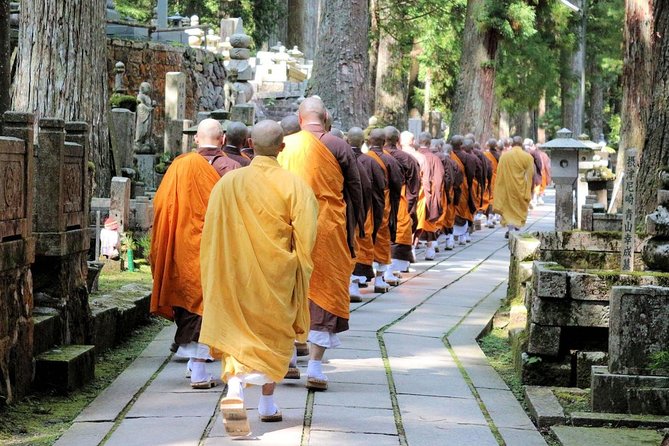
Okunoin is the strongest reason to visit Mount Koya. It is the mountain’s spiritual center and the location associated with Kobo Daishi’s mausoleum.
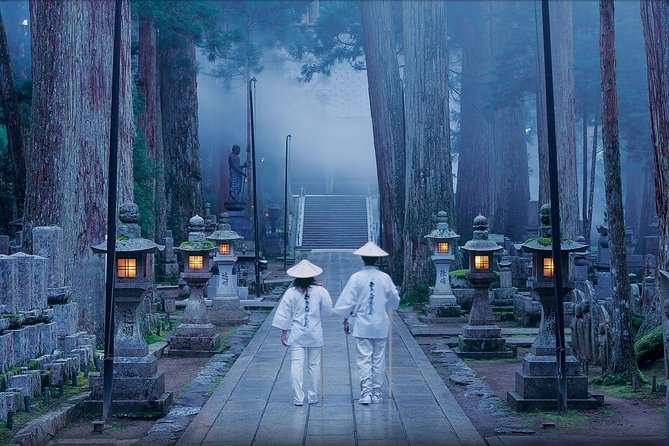
The approach leads through a large cemetery with the graves and memorials of prominent people. Stone markers line the route, and the long walk gives you time to notice the age, variety, and atmosphere of the site. This is not a quick photo stop. The setting rewards a slower pace and careful listening.
You can expect about 90 minutes here, though the amount of walking makes this section feel longer than the clock suggests. Guides such as Yuki and Emi have been praised for explaining the cemetery, the tombs of historic leaders, and the meaning of the inner sanctuary.
I would put Okunoin at the top of your priority list. It offers the clearest sense of why Koyasan is sacred, and it is also the part least likely to feel like a standard sightseeing stop.
You need comfortable walking shoes. The route includes extended paths, and the tour description warns that the day involves hills and stairs. The entrance fee for Okunoin is not included, so keep extra money available.
A few more options to weigh up in Japan
- (Okinawa’s No. 1 Popular Northern Day Trip) Chinese-speaking guide · Includes admission tickets · 1 person can book: Churaumi Aquarium · Cape Manzamo · Kouri Island · American Village
★ 4.7 · 1,846 reviews - Shiraito Falls & Forest Cafe & Handmade Flower Salt Pudding & Grilled Seafood & Totoro Forest & Sakurai Futamigaura & Angel’s Wings & Coconut Tree Swing Day Tour (Departing from Hakata Station, with Mandarin, English, and Cantonese speaking guide)
★ 4.9 · 1,840 reviews - Tokyo: Shinjuku Local Bar and Izakaya Guided Walking Tour
★ 4.9 · 1,794 reviews - Tokyo: Private City Highlights Tour with Local Guide
★ 4.8 · 1,433 reviews
Danjo Garan and the place where Koyasan began
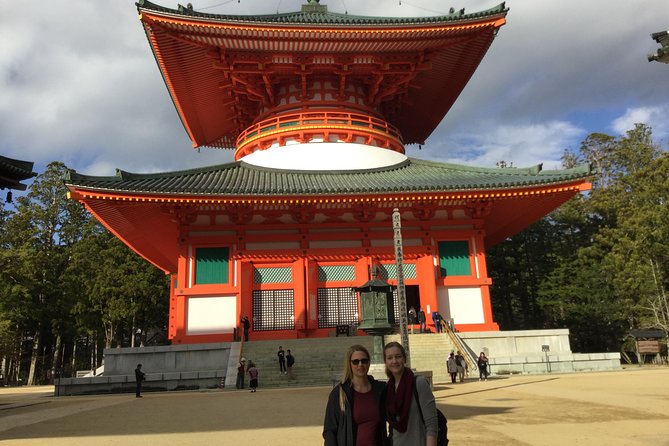
Danjo Garan is one of Mount Koya’s two most sacred areas. This is where Kobo Daishi carried out the founding ceremony in the ninth century and began developing the religious center.
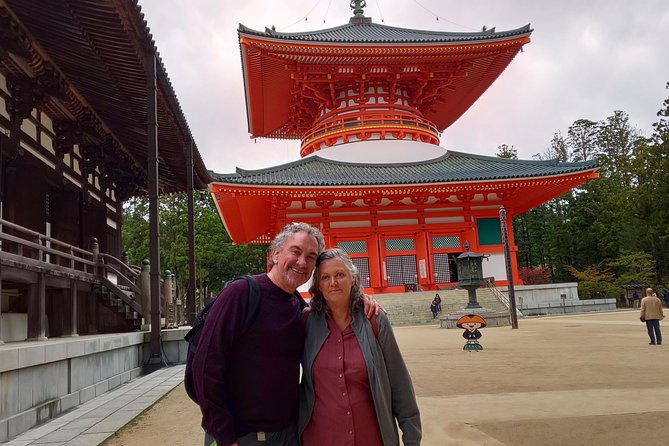
The complex helps you understand Koyasan as a planned sacred settlement rather than a random collection of temples. The red Konpon Daito Pagoda and Kondo Hall are among the important structures associated with this area, and guides can explain their place in Shingon Buddhism.
Plan on about an hour. This stop works especially well after Okunoin because the two sites show different sides of Koyasan. Okunoin is intimate and contemplative, while Danjo Garan gives you a broader view of the mountain’s religious design.
The tour can include three or four main sights, so you may need to choose between spending more time here and visiting the museum or Tokugawa Mausoleum. That choice is useful, not a flaw, provided you discuss your priorities at the start.
Reihokan Museum and Koyasan’s religious art
The Reihokan Museum was built to preserve Koyasan’s religious and cultural treasures. Its entrance hall takes design inspiration from Byodoin Temple in Uji, and the museum has several exhibition areas.
A 30-minute visit gives you a short look at objects that may not be easy to understand without guidance. This is a good choice if you care about Buddhist sculpture, painted works, manuscripts, or the material side of religious practice.
The museum may be less rewarding if your main goal is outdoor scenery and quiet paths. With limited time on the mountain, I would choose it when the weather is poor or when art and artifacts interest you more than another temple building.
Your guide can help connect the objects to the places you see elsewhere on the mountain. That context is one of the main advantages of a private tour.
Daishi Kyokai and the living administration of Buddhism
Daishi Kyokai is the administrative center for Shingon Buddhism and helps spread Kobo Daishi’s teachings. The complex includes two buildings and offers a look at the organization behind the faith.
This stop may not have the instant visual impact of a pagoda or cemetery. Its value is in understanding that Koyasan is still an active religious center with institutions, teaching, and administration.
Allow about an hour if it fits your interests. I would choose it if you want to learn how the tradition functions today, not only how it began centuries ago.
Because the tour is tailored, you can ask your guide to spend less time here if you prefer architecture, nature, or the cemetery. That flexibility is particularly helpful for families and small groups with different interests.
The Tokugawa Mausoleum and Japan’s ruling family
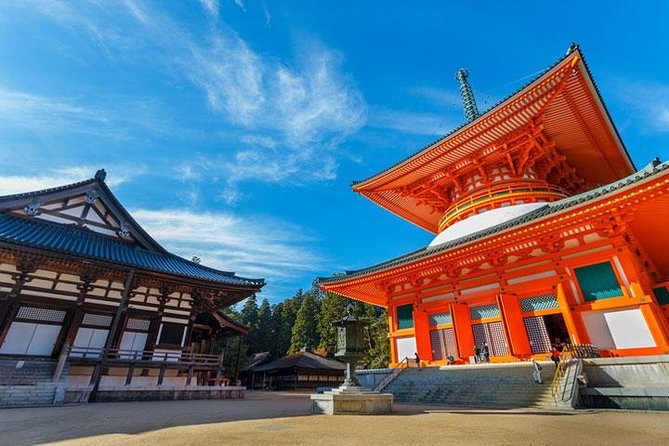
The Tokugawa Mausoleum was built in 1643 by Iemitsu, the third Tokugawa shogun. His family wanted a mausoleum close to Kobo Daishi’s mausoleum, linking Japan’s powerful ruling house with Koyasan’s most sacred site.
The stop adds political history to the religious story. You see how elite families used sacred places and how the Tokugawa name remains connected to Japanese history.
Expect about an hour if included. An entrance fee is not included, so budget for it separately. This is a worthwhile choice for anyone interested in samurai government, shoguns, and the relationship between political power and religion.
Lunch and the value of a private guide
Lunch is not included, but guides have helped visitors find suitable meals, including a memorable vegetarian lunch. Koyasan is associated with temple cuisine, so ask your guide what is available and how much time the meal will require.
A private guide does not mean a private vehicle. You walk and use public transport, and the group is limited to your own party. That makes the day easier to adjust, but it does not remove the physical demands.
The biggest benefit is navigation. A guide can show you which bus stop serves the cemetery and temples, help with train connections, and keep the day moving. Several guides are praised for being prompt at the hotel, fluent in English, friendly, and willing to adapt the pace.
The quality of religious explanation may depend on the individual guide. One visitor found a guide pleasant and helpful but less confident with the names and meaning of certain Buddhist statues. If detailed religious interpretation is important to you, mention that when booking or confirming the tour.
Is $224.02 per person fair?
At $224.02 per person, this is not the cheapest way to reach Koyasan. The cost covers a licensed local English-speaking guide and a private, customizable day, but you still pay for train and cable-car fares, some entrance fees, lunch, and personal expenses.
The value improves when you are sharing the tour with family or friends and want a guide focused only on your group. It also makes more sense if navigating Japanese rail stations feels stressful or if you want explanations instead of simply following signs.
For a solo visitor on a tight budget, the price may feel high once extra costs are added. For a group that wants help with a difficult route and a flexible schedule, it can be reasonable.
This experience is commonly reserved well ahead, with the average booking made about 68 days before the date. That suggests you should not leave it until the last minute if your Osaka schedule is fixed.
Who should book this Mount Koya day trip?
I would recommend it to you if you:
- Care about Japanese Buddhism, Kobo Daishi, or religious architecture
- Want a private guide rather than a large group
- Feel unsure about Osaka trains, the cable car, and local buses
- Can walk for much of the day
- Prefer a quiet mountain setting to another urban attraction
- Want to choose your priorities instead of following a fixed script
I would hesitate if you dislike long train journeys, have difficulty with hills or stairs, or want a relaxed visit with plenty of time at every site. In that case, a longer stay in Koyasan may suit you better than a nine-hour return trip from Osaka.
Free cancellation is available until 24 hours before the start time. After that point, the amount paid is not refunded, and late changes are not accepted.
Should you book it?
Book this tour if you want meaning as well as scenery. The most valuable parts are the private navigation, the guides’ personal explanations, and the time at Okunoin, where Koyasan feels quiet and serious.
Go in with open eyes about the distance and extra costs. You will spend many hours getting there and walking around, but if you choose your three or four priority sites carefully, the day can become one of the most memorable cultural experiences available from Osaka.
FAQ
How long does the Mount Koya tour last?
The experience lasts approximately nine hours, including the journey from Osaka to Koyasan and the return trip.
Where does the guide meet me?
The licensed guide meets you on foot within a designated area of Osaka, including at your Osaka-area hotel as arranged for the tour.
Is transportation included in the price?
No. Train, cable-car, and other transportation fees are not included. You are also responsible for your guide’s transportation costs.
How many sites can I visit?
The tour includes a customizable choice of three or four sites from the listed attractions. The exact combination should be discussed with your guide.
Are entrance fees included?
Some entrance fees are not included. Guide admission is covered only for sights listed under the expected stops, so check which sites and fees apply to your chosen route.
Is this a private tour?
Yes. Only your party participates, and you cannot combine your group with another tour group.
Just added in Japan
- A One-of-a-Kind Sushi Experience in a Special Place of Japan★ 5.0 · 15 reviews
- Tokyo Cute Bento Cooking Class – Make a Kawaii Character Lunchbox★ 5.0 · 126 reviews
- Japanese Home Cooking Class & Walk in Todoroki Temple Tokyo★ 5.0 · 88 reviews
- Japan Tokyo Tower Observatory Deck E-Ticket★ 4.0 · 34 reviews
- Catch a Baseball Game in Tokyo with a Local – Tickets Included★ 5.0 · 24 reviews
- JDM Experience with Fast&Furious RX-7 (English speaking Driver)★ 5.0 · 57 reviews
- Tokyo Private Day Tour by Car with English speaking Driver Guide★ 4.0 · 29 reviews
- Japan Classic 10 Day – One Life Adventures★ 5.0 · 129 reviews
Full-Day, compared.

Mount Fuji Full-Day Private Tour from Tokyo (Customizable)
Read our review →
Hiroshima / Miyajima Full-day Private Tour with Government Licensed Guide
Read our review →
Mount Fuji Full-Day Small Group driver-guide tour (with Pick-up option)
Read our review →

5 Top Highlights of Kyoto Full Day Bike Tour (E-bike option)
Read our review →