
Reviewed · MARKETS AND FOOD HALLS
Tuna Auction Market Guided Private Tour in Nachi-Katsuura
The auction starts before breakfast. This private Nachi-Katsuura tour turns a working fish market into a clear, human story about tuna, trade, and the sea. I like the close look at how experts judge quality, and I like the chance to ask questions without being folded into a large group. The guide can also lead you to a local tuna breakfast, though that meal costs extra.
I also appreciate the tour’s attention to long-line fishing and the meaning of fresh, never-frozen tuna. The main drawback is timing: the full visit lasts only about 40 minutes to 1 hour 15 minutes, so this is a focused introduction rather than a broad tour of the entire town.
In This Review
- Key points to know before booking
- Why Nachi-Katsuura’s tuna auction matters
- Stop one: the tuna auction at JF Katsuura Seafood Market
- How experts judge fresh tuna
- Long-line fishing and the port’s environmental story
- Stop two: the exhibition room and local explanations
- Stop three: a tuna breakfast at Katsuura Nigiwai Market
- What the $42.93 price gets you
- Meeting point, walking, and practical limits
- Who will get the most from this tour
- Should you book the Nachi-Katsuura tuna auction tour?
- FAQ
- Where does the tuna auction tour begin?
- Where does the tour end?
- How long does the experience last?
- Is the tour private?
- Is pickup available?
- Is breakfast included?
- What does the tour cover?
- Can I cancel for a full refund?
- Can most people participate?
Key points to know before booking
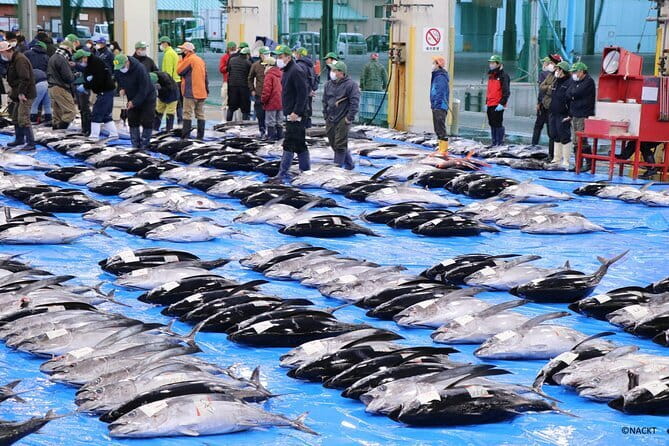
- Watch a real tuna auction at JF Katsuura Seafood Market, with the guide explaining the people, jobs, and buying process around you.
- Learn how fresh tuna is assessed, including why fish landed in Nachi-Katsuura can be sold fresh instead of frozen.
- Meet Stella or Chizuko, guides praised for clear English, warm service, and practical suggestions for the rest of your day.
- See the port from a local angle, including the surprising fact that tuna fishermen do not live in the town.
- Add a tuna breakfast at Katsuura Nigiwai Market, with food paid separately.
- Book it as a private experience, so only your own group participates.
Why Nachi-Katsuura’s tuna auction matters
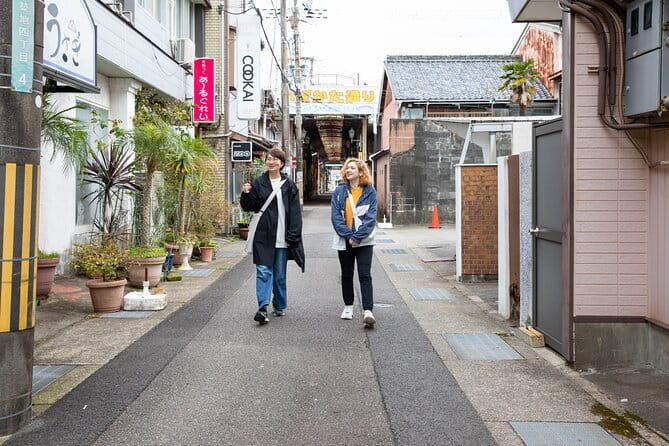
Nachi-Katsuura is in Wakayama Prefecture, on Japan’s Kii Peninsula. It is known as a major port for fresh tuna landings, and the market gives you a look at a trade that usually happens behind the scenes.
A tuna auction is more than fish changing hands. It links fishermen, buyers, market workers, restaurants, transport, and local businesses. Without some explanation, you may see rows of large tuna and a quick sale, then wonder what you were looking at. This tour supplies the missing pieces.
The guide explains the standards used to judge tuna quality and shows how the auction fits into the port’s daily work. That context is the real reason to pay for a guide. You can visit a market on your own, but it is harder to know what matters, who is doing what, and why one fish may be valued differently from another.
The human side is just as useful. The tour asks an unusual local question: if tuna fishermen do not live in Nachi-Katsuura, who does? You learn about the other occupations connected to the port, including the buyers and the people who support the tuna trade. That makes the market feel less like a photo stop and more like a working community.
More Private Tours in Japan:
- Tokyo 6hr Private Tour with Government-Licensed Guide
★ 5.0 · 3,902 reviews - Private Tour to Mt. Fuji and Hakone (Fully Licenced Operator)
★ 5.0 · 1,910 reviews - Tokyo Customized Private Tour (Must See Places in 1 Day)
★ 5.0 · 1,499 reviews
Stop one: the tuna auction at JF Katsuura Seafood Market
The tour begins at JF Katsuura Seafood Market, at 7-chōme-12-12 Tsukiji in Nachikatsuura. The auction portion lasts about 40 minutes, and admission is included.
This is the most visual part of the experience. You can see rows of tuna and watch the auction activity at close range. Photos and videos are allowed according to the tour description, which gives you a chance to record the scene without reducing the visit to picture-taking.
I like that the guide explains different roles while the market is in motion. You are not just looking at fish. You are learning to connect the auction floor with the wider business around it.
The timing of the auction matters. The exact starting hour is not provided, so you should confirm the schedule when you book and make sure your arrival time fits the day’s activity. A market tour can be less rewarding if you arrive after the most active part has finished.
The setting is practical rather than polished. This is a seafood market, not a museum built for tourists. You may find wet floors, working areas, strong smells, and active commercial traffic. Those are normal features of a port visit, and they are part of what makes the stop feel genuine. Still, wear sensible shoes and follow instructions from the guide.
The private format helps here. Your group can ask questions as the action unfolds, and the guide can adjust the explanation to your interests. The supplied information does not state a maximum group size, but only your party participates, which should make the experience more personal than a large shared tour.
How experts judge fresh tuna
The tour goes beyond the simple claim that the tuna is fresh. You learn the criteria used by professionals when they assess quality and how the auction process works.
The guide’s explanation is especially useful if you are curious about Japanese food culture. Tuna is not judged only by its size. The market also considers qualities that affect taste, texture, appearance, and value. The tour gives you a framework for understanding what buyers are looking for rather than asking you to accept a price or reputation without context.
One important lesson is the difference between fresh and frozen fish. Nachi-Katsuura’s tuna is presented as fresh, never frozen, and the guide explains how the local fishing method supports that result.
This does not mean every piece of tuna tastes identical, or that fresh is automatically best for every dish. It does mean you can better understand why the port’s product has a particular identity. After the tour, a tuna breakfast becomes more than a meal. You have just watched the route that brought the fish to market.
Long-line fishing and the port’s environmental story
The tour also explains long-line fishing, described here as a lower-impact method that helps protect the future of the ocean.
This is a useful part of the experience because it connects your meal with the method used to catch it. Sustainability can be a vague word on a menu. At the market, you get a local explanation of how one fishing method works and why it is regarded as less harmful.
The tour does not present the fishing industry as a simple story with no difficult questions. Tuna is a valuable resource, and any discussion of tuna should make you think about pressure on marine life and the need for responsible management. The provided description focuses on the environmental advantages of long-line fishing, so you should treat the tour as an introduction to the local approach rather than a full scientific course on fisheries.
For me, this is one of the strongest reasons to book with a guide. You get a connection between the auction, local jobs, fishing practices, and the food you may eat afterward. That is a lot of meaning packed into a short visit.
More Markets and Food Halls in Japan:
- Tokyo Tsukiji Fish Market Food and Culture Walking Tour
★ 5.0 · 3,184 reviews - Tokyo: Tsukiji Fish Market Food and Walking tour
★ 5.0 · 1,724 reviews - Senkyaku Banrai Toyosu Manyo Club Onsen Experience in Tokyo
★ 4.7 · 1,690 reviews - Tokyo: Tsukiji Fish Market Guided Walking Tour
★ 4.9 · 1,397 reviews
Stop two: the exhibition room and local explanations
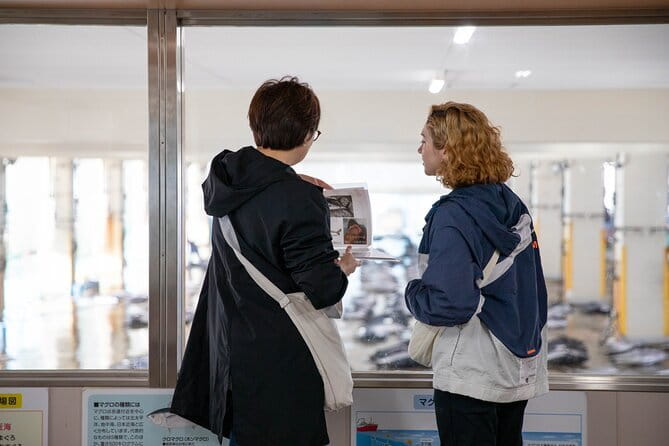
After the market, the group moves to a specialized exhibition room at JF Katsuura Seafood Market. This portion takes about 20 minutes, and admission is included.
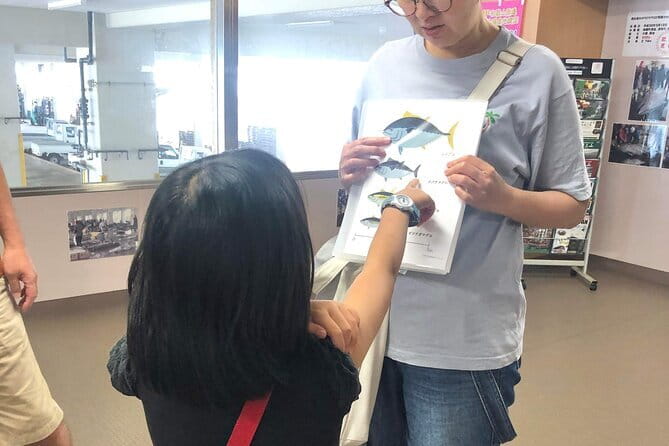
Maps, illustrations, and videos help explain material that may be difficult to understand on the auction floor. The market is fast and noisy. The exhibition room gives you a calmer place to pause and sort out what you have seen.
I would especially value this stop if you are not familiar with Japanese fishing ports. The guide can explain the route from fishing grounds to landing, from landing to buyers, and from buyers to the businesses that serve local customers. You also get more detail about the people who make the port work.
The exhibition room may feel less exciting than the live auction. That is a fair trade. The first stop gives you atmosphere and movement; the second gives you a clearer explanation. If you want nonstop action, the 20-minute presentation may seem slow. If you want to leave with a usable understanding of the industry, it is important.
Several guide names appear in the tour’s service history, including Stella and Chizuko. Stella is praised for excellent English, a warm manner, and the ability to answer detailed questions about tuna, fishing, and the local business. Chizuko is also described as friendly and helpful during the auction, exhibition room, and port walk. If language is a concern, request the guide who is available for your date and confirm the language when booking.
Stop three: a tuna breakfast at Katsuura Nigiwai Market
The final stop is an optional visit to Katsuura Nigiwai Market, lasting about 15 minutes. The guide can take you to a local favorite for breakfast, but the food is not included in the tour price.
This is a smart way to finish. You have just learned how tuna is caught, assessed, and sold. Now you can taste it in the same local setting. The guide’s role is to point you toward a restaurant, not to cover the cost of your meal.
Do not book this tour assuming breakfast is part of the $42.93 price. It is an optional add-on, and you should budget separately for food. The short time listed for this stop may cover guidance to the restaurant rather than a leisurely meal, so ask how the timing will work for your chosen start time.
The breakfast option also gives the tour a useful local touch. The guide can suggest places for coffee and later meals as well. Stella, in particular, has been praised for recommendations that helped shape the rest of a day in Katsuura. Those suggestions can be handy if you are in town for only one morning or are passing through after the Kumano Kodō.
What the $42.93 price gets you
At $42.93 per person, this tour is priced as a short private introduction, not as a full-day excursion. The fee includes one guide and transfers to and from your accommodation on foot. It does not include taxis, other transportation, or breakfast.
The value depends on what you want from the market. If you only need a quick look at tuna laid out in rows, you may decide to visit independently. If you want to understand quality checks, fishing methods, local jobs, and the auction’s flow, the guide adds real value.
Private tours usually make the cost easier to justify for families or small groups. Your own party can ask questions, move at a comfortable pace, and focus on subjects that interest you. A family group of six has been accommodated, and the guide’s patient explanations are a strong fit for mixed ages and different levels of curiosity.
The tour is also useful for people walking the Kumano Kodō. It gives you a compact local experience without taking over the day. At roughly 40 minutes to 1 hour 15 minutes, it can fit around other plans, though you should allow extra time if you choose breakfast or need paid transport.
Meeting point, walking, and practical limits
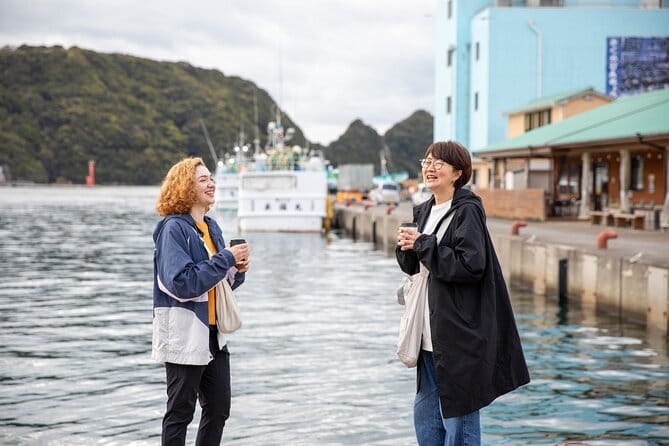
The listed start and end point is the same: JF Katsuura Seafood Market, 7-chōme-12-12 Tsukiji, Nachikatsuura, Higashimuro District, Wakayama 649-5335.
Pickup is offered on foot from your accommodation. That wording matters. Walking transfers are included, but taxis and other transport are not. If your lodging is far from the market, arrange and pay for your own ride.
The tour is near public transportation, and most people can participate. Service animals are allowed. The information does not list specific wheelchair details, floor conditions, or seating arrangements, so ask the provider if you have mobility needs or need a particular setup.
Confirmation is sent within 48 hours of booking, subject to availability. The tour is often booked about 78 days ahead, which suggests you should reserve early if your Kii Peninsula schedule is fixed.
You can cancel for a full refund up to 24 hours before the local start time. Changes or cancellations inside that window are not accepted for a refund. That policy is reasonable, but check the local time carefully if you are arranging several Japan activities from abroad.
Who will get the most from this tour
I would choose this tour if you like working markets, local food, and explanations that connect daily life with larger issues. It is also a good fit if you have tried tuna in Japan and want to understand why the fish is treated as such a valuable product.
Families can benefit from the private format, especially if children have questions or need a quicker pace. English-speaking visitors should find the guide support useful, with Stella receiving particular praise for her English and clear explanations.
This is less suitable if you want a long tour of Nachi-Katsuura, a scenic coastal outing, or a full meal included in the price. The focus stays on the seafood market and tuna culture. You will need to make separate plans for temples, hot springs, hiking, and other sights.
Bring a phone or camera if you want photos, but do not let the camera distract you from the auction. The best part is understanding the activity in front of you. Plan breakfast separately, wear practical shoes, and ask about the exact start time before you commit.
Should you book the Nachi-Katsuura tuna auction tour?
Book it if you want a short, personal look at the working heart of Katsuura. The auction, exhibition room, and optional breakfast form a sensible sequence: see the tuna, understand the trade, then taste the result.
The strongest reason to choose this experience is the guide. Stella and Chizuko are praised for warm service, strong English, detailed answers, and useful local suggestions. At $42.93 per person, the fee is fair for a private explanation that would be difficult to recreate on your own.
Skip it if your schedule cannot handle an early market visit, if you want a long sightseeing program, or if you are only looking for a cheap breakfast. For everyone else, this is a compact and worthwhile way to understand why Nachi-Katsuura’s tuna matters.
FAQ
Where does the tuna auction tour begin?
It begins at JF Katsuura Seafood Market, 7-chōme-12-12 Tsukiji, Nachikatsuura, Higashimuro District, Wakayama 649-5335, Japan.
Where does the tour end?
The listed end point is the same JF Katsuura Seafood Market address.
How long does the experience last?
The full experience lasts approximately 40 minutes to 1 hour 15 minutes. The listed stops total about 75 minutes if all parts are included.
Is the tour private?
Yes. Only your group participates in this private tour or activity.
Is pickup available?
Pickup and return transfers from your accommodation are offered on foot. Taxi and other transportation costs are not included.
Is breakfast included?
No. Breakfast at Katsuura Nigiwai Market is optional and must be paid for separately.
What does the tour cover?
It covers the live tuna auction, tuna quality assessment, the roles connected to the port, long-line fishing, the fresh never-frozen tuna process, and an exhibition room with maps, illustrations, and videos.
Can I cancel for a full refund?
Yes. You can cancel at least 24 hours before the local start time for a full refund. Cancellations or changes made less than 24 hours before the start are not accepted for a refund.
Can most people participate?
Most people can participate, service animals are allowed, and the tour is near public transportation. Specific mobility arrangements are not provided, so contact the provider if you need them.
Just added in Japan
- Yokohama and Kamakura 6hr Private Trip Government-Licensed Guide★ 5.0 · 25 reviews
- Yokohama Private Tour★ 5.0 · 21 reviews
- Yokohama Half Day Walking Tour with an Expert Local Guide★ 4.5 · 22 reviews
- Shuttle Van Transfer, Yokohama(Port)⇒Tokyo, Narita, Haneda, TDR★ 5.0 · 63 reviews
- Japanese Tea Ceremony at Private Home in Yokohama, suburban Tokyo★ 5.0 · 32 reviews
- Yokohama Ramen Adventure From a Local Noodle Factory to Home★ 5.0 · 60 reviews
- 【Tokyo】JDM Daikoku Parking Area & Nissan Facility Tour★ 5.0 · 87 reviews
- Yokohama Private Tour with a Local: Highlights & Hidden Gems★ 4.5 · 21 reviews
Markets and Food Halls, compared.
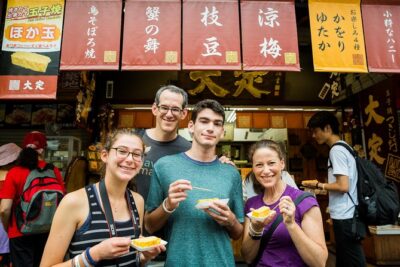
Tokyo Tsukiji Fish Market Food and Culture Walking Tour
Read our review →
Senkyaku Banrai Toyosu Manyo Club Onsen Experience in Tokyo
Read our review →
Nishiki Market Brunch Walking Tour (7 Tastings + Brunch)
Read our review →
Tokyo Sushi Making Class in Tsukiji with Professional Chef
Read our review →
Tsukiji Fish Market Guided Tour and Sushi Making with Pro Chef
Read our review →Browse the lists this tour appears in