
Reviewed · GO-KARTS
Official Japan Go-Kart Through Shibuya / Shinjuku
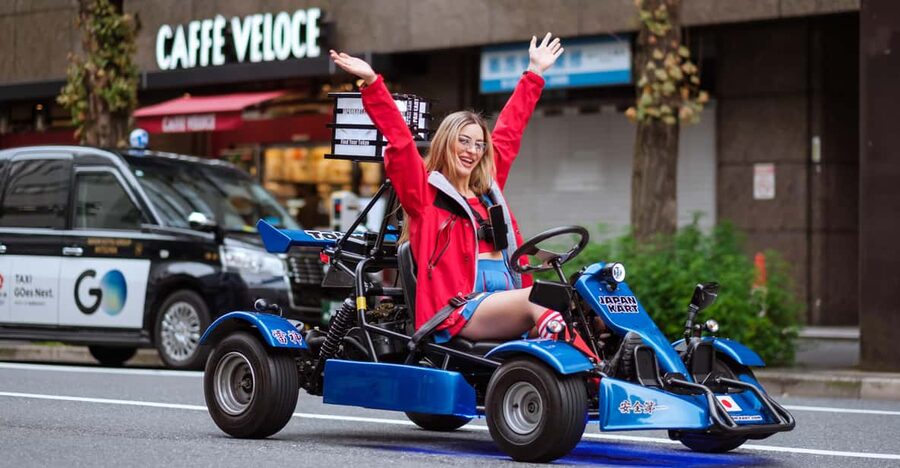
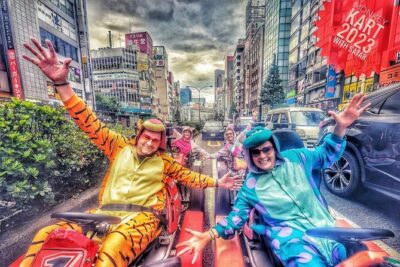
Tokyo looks different from a tiny open kart. I like the close-up city views and the chance to drive through Shibuya Scramble Crossing, where Tokyo’s famous pedestrian choreography becomes part of your route. I also like the friendly, careful support from the staff, including free photos and videos on many rides. The main drawback is traffic: at busy times, you may spend plenty of the tour waiting at lights.
You need to prepare seriously before booking. Japan accepts only specific driving documents, and arriving with the wrong permit means you cannot drive and cannot receive a refund. If your paperwork is correct, this is one of Tokyo’s most unusual city activities, especially if you enjoy being seen as much as seeing the sights.
In This Review
- Key things to know before you book
- What this Tokyo go-kart tour is really like
- Choosing between the 90-minute and two-hour routes
- Rolling through Shibuya Scramble Crossing
- Harajuku, Omotesando and Shinjuku Kabukicho
- Tokyo Tower, Roppongi and the Imperial Palace
- Tokyo Station and the changing city view
- Safety support and the pace of the ride
- Costumes, weather and what to wear
- The most important issue: Japanese driving documents
- Is $122 a fair price?
- Who will enjoy this most?
- Final verdict: book it if the paperwork is ready
- FAQ
- How long does the JAPANKART tour take?
- Where does the tour start and finish?
- Is Shibuya Scramble Crossing included?
- What driving documents do I need?
- Are Vienna Convention 1968 permits accepted?
- Can drivers from France, Germany or Switzerland participate?
- Are photos and costumes included?
- What happens if bad weather cancels the tour?
Key things to know before you book
- Shibuya Crossing is the star moment: You pass through one of Tokyo’s most famous intersections at street level, often more than once on some routes.
- The support team takes safety seriously: A lead vehicle and rear support, sometimes including a motorcycle, help keep the group together.
- The route depends on your chosen tour: The 90-minute option focuses on Shibuya, Harajuku, Omotesando and Shinjuku Kabukicho, while the two-hour route can include Tokyo Tower, the Imperial Palace and Tokyo Station.
- You drive real city streets: This is not a closed kart track. Traffic lights, congestion and other vehicles shape the pace.
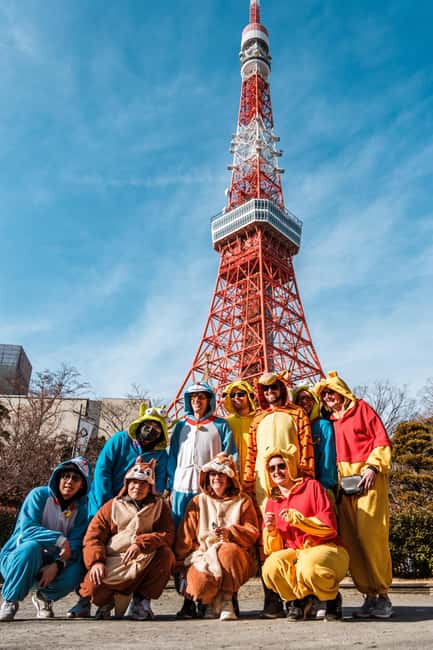
- Costumes are part of the fun: You can dress up, attract smiles and waves, and have photos and videos taken during the ride.
- Your documents matter more than your excitement: Bring your passport, home-country driving license and a hard-copy Geneva Convention 1949 international driving permit, unless you qualify under Japan’s special translation rules.
What this Tokyo go-kart tour is really like
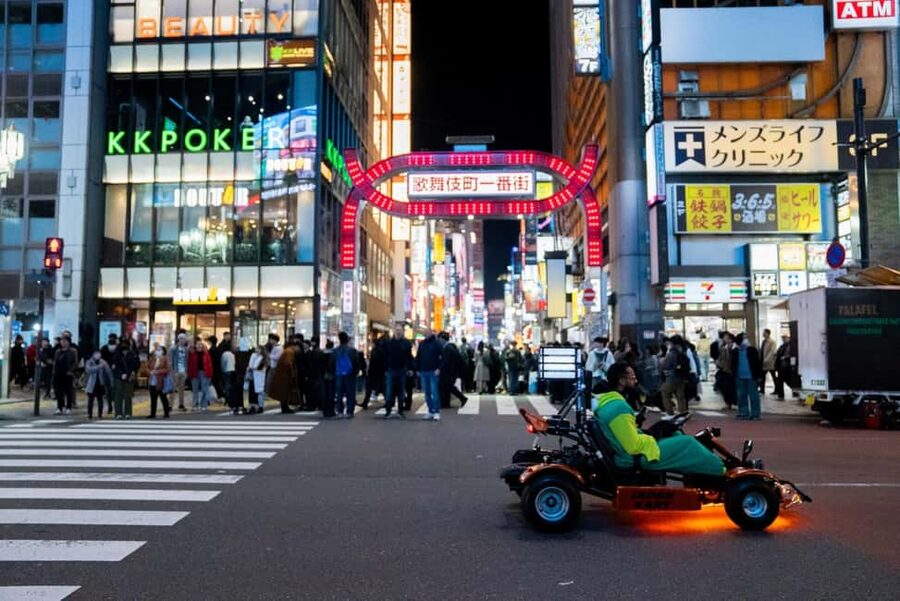
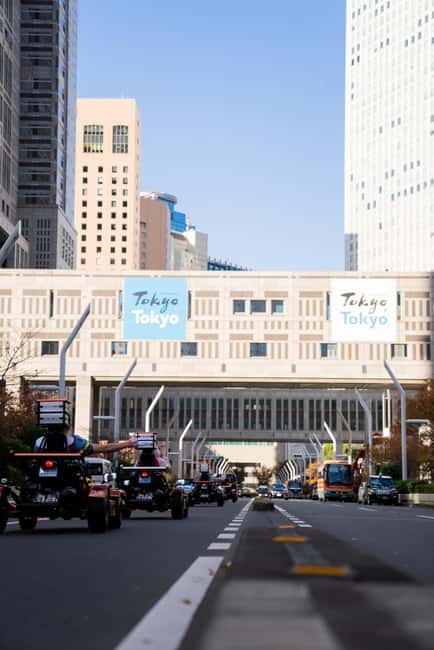
This is a guided road-driving experience through central Tokyo. The karts are designed for public-road use, and the tour begins with a safety briefing before you join the traffic.
That distinction matters. You are not racing, and you are not tearing around a private circuit. You are driving at city pace, stopping at signals and following the guide through major districts. The reward is the odd, memorable feeling of seeing Tokyo from a low, open seat while people on the sidewalks look over, smile and take pictures.
Tours last about two to three hours, depending on the option selected. Small groups are available, and the instruction is in English. The experience has a 4.7 rating from 141 bookings, with repeated praise for clear explanations, kind staff and strong safety support.
The company operates from JAPANKART branches in Kanda and Shinjuku. Your start and finish point depend on the booking you choose, so check the exact branch before setting out. Hotel pickup and drop-off are not included.
A few more options to weigh up in Tokyo
- Tokyo Disney Resort – Tokyo Disneyland & Tokyo DisneySea Park Tickets
★ 4.8 · 99,488 reviews - SHIBUYA SKY Ticket
★ 4.7 · 46,509 reviews - JR Whole Japan Rail Pass
★ 4.8 · 29,150 reviews
Choosing between the 90-minute and two-hour routes
The shorter 90-minute route is built around West Tokyo. It can include Shibuya Scramble Crossing, Harajuku, Omotesando and Shinjuku Kabukicho.
This option makes sense if you want the central thrill without giving up half a day. Harajuku brings youth fashion and colorful street culture, Omotesando offers broad, polished avenues and modern architecture, and Kabukicho gives you a look at Shinjuku’s neon entertainment district. The pace is likely to feel active, with several recognizable areas packed into one ride.
The two-hour route covers a wider sweep. It can include Tokyo Tower, Shibuya Crossing, the Imperial Palace and Tokyo Station. This version gives you more landmark variety and more time on the road, but it also leaves you more exposed to traffic delays.
The route descriptions show that stops can vary by option and branch. One listed plan also includes Roppongi and a photo stop near Tokyo Tower, followed by Tokyo Station. Ask the shop to confirm your exact route if a particular landmark is important to you.
Rolling through Shibuya Scramble Crossing
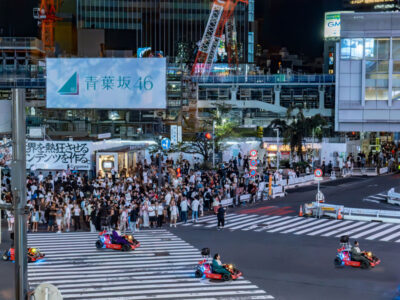
Shibuya is the emotional high point for most people booking this activity. The crossing is famous because large crowds move in several directions at once, yet the whole thing usually works with remarkable order.
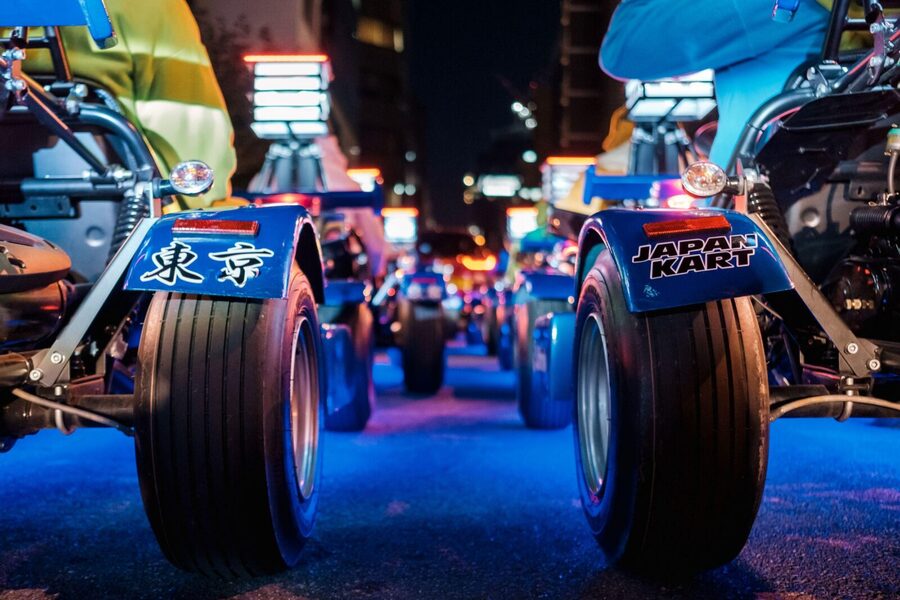
From a kart, you get a very different view than from a sidewalk or observation deck. You are down at street level, surrounded by traffic, tall screens and pedestrians. The crossing itself is brief, but the approach and the reaction from people nearby add to the fun.
Some routes pass through Shibuya twice. That can be useful because the first crossing may go by in a blur of nerves and excitement. On a second pass, you have more time to enjoy the scene and smile for the camera.
You should not expect a free run. Traffic lights and city vehicles control your movement. One afternoon group found the ride slow because of heavy traffic and spent a lot of time at signals. That is not a flaw unique to this company. It is simply the reality of driving in central Tokyo.
Harajuku, Omotesando and Shinjuku Kabukicho
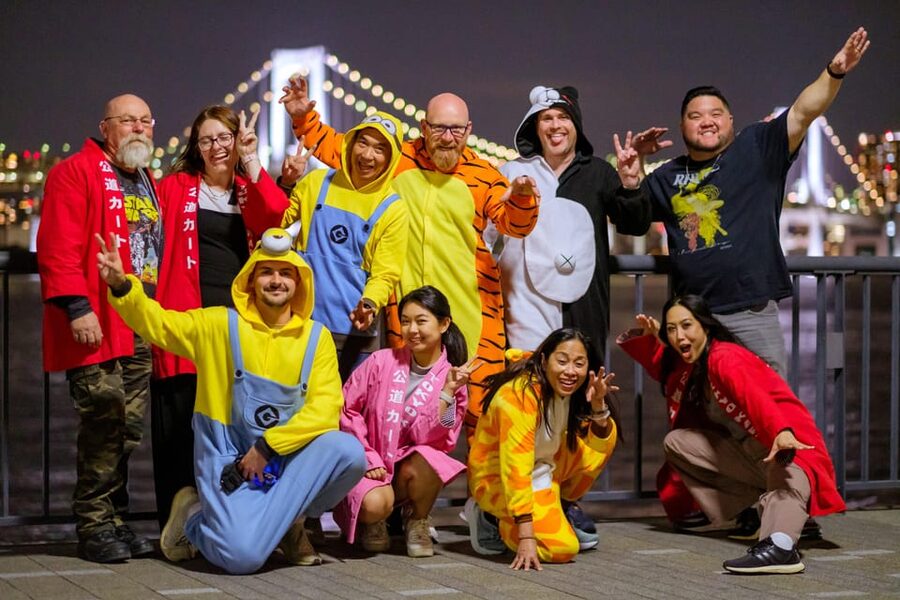
The West Tokyo route gives you a compact look at districts with very different personalities.
Harajuku is associated with youth style, fashion and creative street life. From the kart, you will not have time to browse shops or stop for snacks, but you will see the district as part of Tokyo’s daily flow.
Omotesando shifts the mood. Its wide avenue and modern storefronts feel more restrained and design-focused. This is a good stretch for watching Tokyo’s architecture pass by without the pressure of walking through a crowded shopping street.
Shinjuku Kabukicho brings a sharper contrast. It is known for entertainment, illuminated signs and late-night energy. A daytime ride will not show the district at its most dramatic, while an evening tour may give the signs more impact. Several people specifically liked the idea of returning for a night ride after trying a daytime outing.
Remember that this is a moving tour. You are passing through these districts, not touring them on foot. I see that as a strength if you want an overview, but a limitation if your goal is shopping, temple visits or detailed neighborhood exploration.
A completely different kind of day out:
- Mt Fuji and Hakone 1-Day Bus Tour Return by Bullet Train
★ 5.0 · 26,383 reviews - TOKYO SKYTREE® Ticket
★ 4.7 · 25,136 reviews - teamLab Borderless Tickets: MORI Building DIGITAL ART MUSEUM
★ 4.7 · 24,126 reviews - teamLab Planets TOKYO Ticket
★ 4.7 · 21,663 reviews
Tokyo Tower, Roppongi and the Imperial Palace
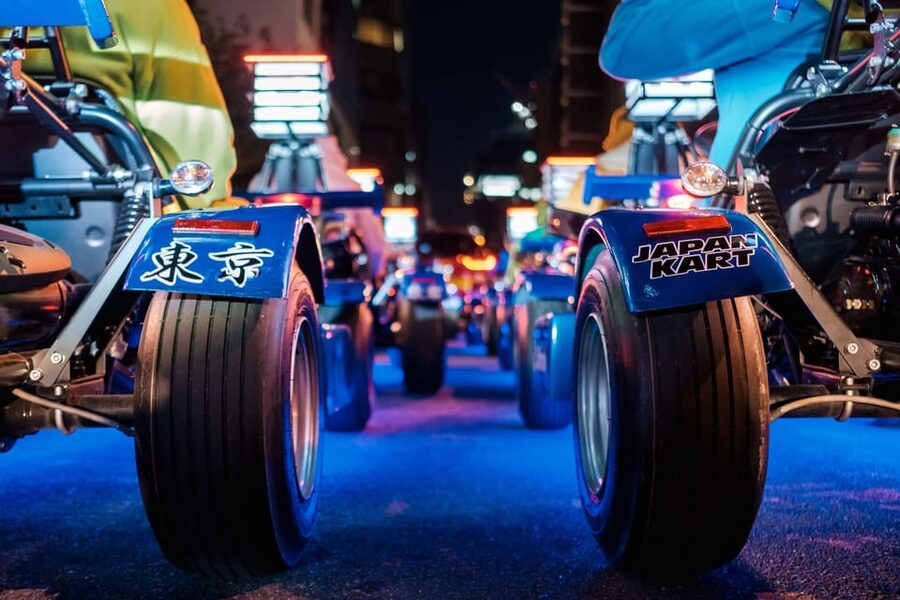
The longer route can include Tokyo Tower, one of the city’s most recognizable landmarks. The tour makes a mid-route break for photos, giving you a chance to appreciate the tower rather than simply passing it at driving speed.
Tokyo Tower works especially well in this format because its orange and white structure rises clearly above the surrounding streets. You may find the photo stop more valuable than the driving stretch itself, since you can pause, regroup and let the guide capture pictures.
Roppongi is listed as a pass-by point. It is a central district known for dining, nightlife and large modern buildings, but this tour does not provide a dedicated walking stop there. Treat it as part of the city panorama.
The Imperial Palace is also listed as a pass-by point rather than a full visit. You will get a sense of its central setting and surrounding roads, but you will not have time here to explore palace grounds or gardens. If the palace is a major priority, plan a separate visit on foot.
Tokyo Station and the changing city view
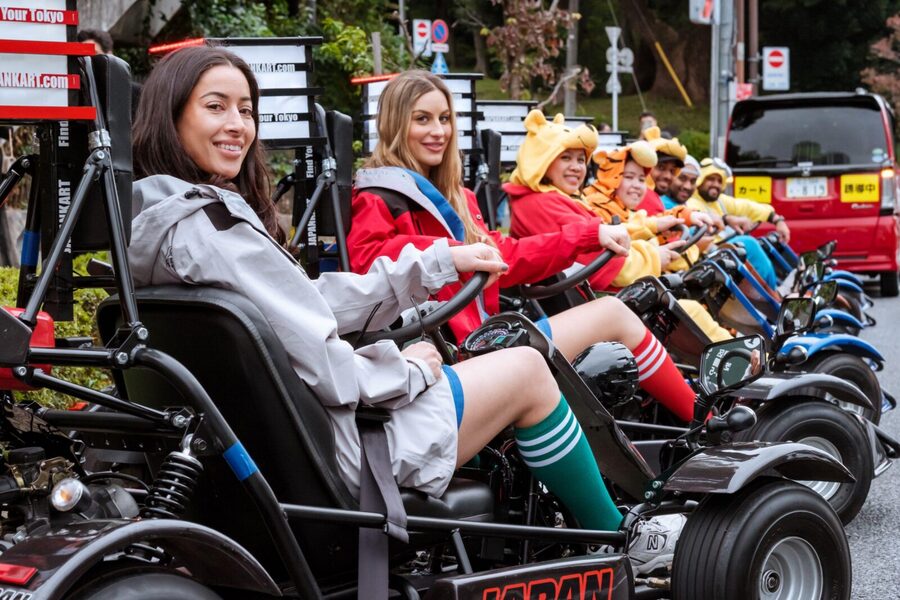
Tokyo Station provides another strong photo opportunity. Its architecture contrasts nicely with Shibuya’s giant screens and Shinjuku’s entertainment signs.
The station is a useful reminder of how quickly Tokyo changes character. One moment you are near commercial towers and major road junctions, and soon you are looking at a grand station facade and broad city streets.
The exact order of sights can vary. The published route ends at one of the JAPANKART branches in Kanda or Shinjuku, depending on the option. That means you should avoid scheduling a tight connection immediately afterward, especially if traffic is heavy or the group needs extra time for photos.
Safety support and the pace of the ride
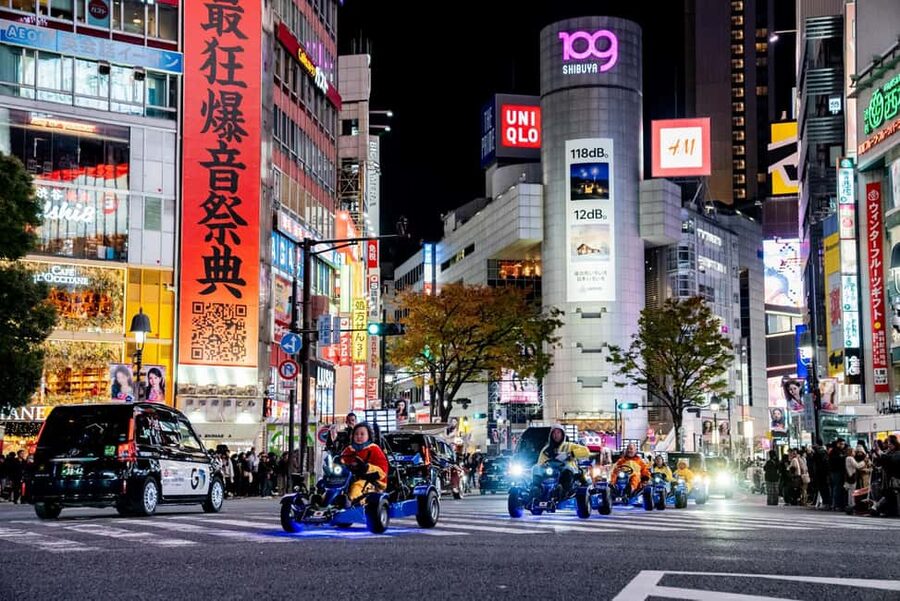
The strongest feature of this experience is the way the staff manage a group of small vehicles in normal traffic.
The ride begins with a full safety briefing. The guides explain how the karts work and give instructions in English. The company’s support setup can include a lead car in front, a following car and a motorcycle at the rear. This helps when traffic lights or lane changes separate the group.
You may still become briefly split from the main line. One person noted that cars or traffic signals can create gaps, but staff vehicles are around to guide people back. This is reassuring, though you should still pay attention and follow instructions rather than treating the ride as an independent drive.
The karts are described as easy to operate, but you are still a driver on Japanese roads. You need to be comfortable with traffic, signals and staying with the group. If you are nervous, tell the staff. One anxious participant found the team patient and helpful while confidence built during the first few minutes.
The guides also take pictures and videos along the way. Photos and short clips were provided without an extra charge on the rides described. Some groups used mounts for a GoPro or phone, so you may have a way to record your own view as well. Ask what is available at your branch on the day.
Costumes, weather and what to wear
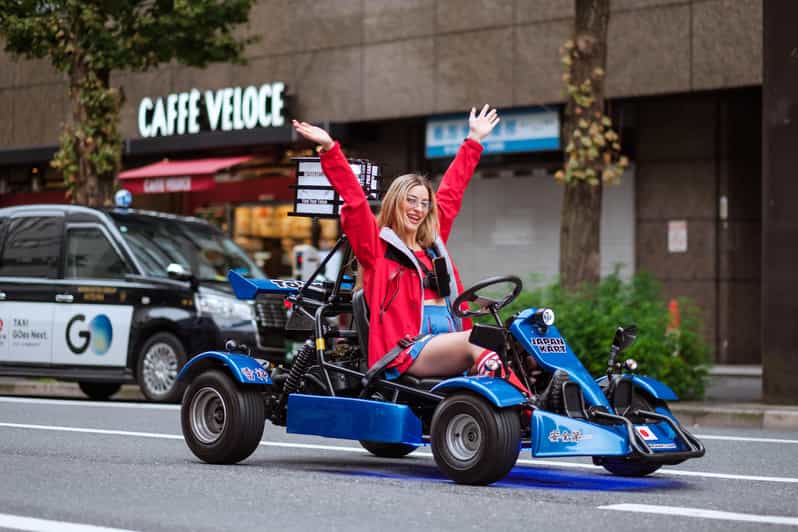
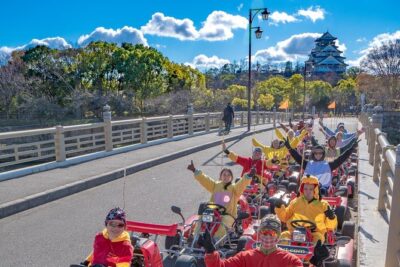
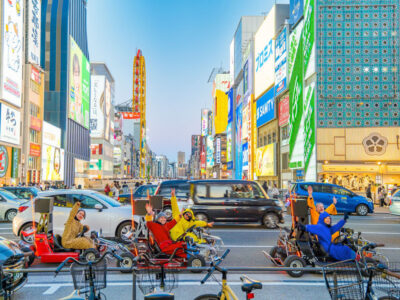
Costumes are included, and they are not a minor detail. Dressing up changes the mood from a simple drive into a playful public show. People along the route may smile, wave or take pictures, which adds a social element you will not get on a standard bus tour.
Jackets are provided during colder months. Even so, an open kart exposes you to wind, so dress more warmly than you might for a normal indoor sightseeing day.
Summer brings the opposite concern. One ride took place in temperatures of 35 degrees Celsius, and the staff supplied ice water along the way. That is a thoughtful touch, but you should still expect direct sun and warm road conditions.
Rain can make the experience colder and harder. A rainy ride was still enjoyable because the staff helped throughout, but the weather reduced comfort. Check the forecast and avoid treating this as an all-weather plan. If bad weather causes cancellation, you can receive a full refund or reschedule if space is available.
Wear proper shoes. Sandals and flip-flops are not allowed. Alcohol and drugs are prohibited, and you cannot bring alcoholic drinks into the vehicle.
The most important issue: Japanese driving documents
Do not book this activity until you understand the paperwork.
Most drivers need all three of these items:
- Your valid driving license from your home country
- A hard-copy international driving permit issued under the Geneva Convention of 1949
- Your passport
The international permit must come from an approved authority in your own country. Common examples include AAA or AATA in the United States, AAA in Australia, AA or RAC in the United Kingdom, and CAA in Canada.
Japan does not accept international permits issued under the Vienna Convention of 1968. It also does not accept a permit bought from a random online company. The permit must be a booklet, not a loose paper form or a digital copy.
Drivers from Switzerland, Germany, France, Taiwan, Belgium, Estonia or Monaco follow a different process. They need their original driving license, an official Japanese translation from the authorized organization, and their passport.
US military SOFA license holders need their active military ID and stateside driver’s license.
The responsibility is yours. If you arrive without the correct documents, you will be denied participation with no refund. Bring the physical documents, not photographs on your phone. Drivers must be at least 18 years old.
Is $122 a fair price?
At $122 per person, this is not a cheap way to get from one Tokyo district to another. You are paying for the kart, fuel, safety briefing, staff support, costumes, cold-weather jackets when needed and the guided route.
The value depends on what you want. If you only want landmark photos, Tokyo’s trains and observation decks cost less and let you spend more time at each stop. If you want an unusual activity that combines driving, city views, costumes and free media, the price is easier to justify.
The staff presence adds real value. A lead vehicle, rear support and route guidance make the experience more approachable than renting a vehicle on your own. The free photos and videos also save you from trying to handle a camera while driving.
Traffic affects the value. A two-hour booking does not mean two hours of fast movement. Some of that time may be spent stopped at lights or moving slowly behind other vehicles. I would book this for the novelty and the street-level experience, not for efficient sightseeing.
Who will enjoy this most?
I would recommend it to adults who want an active, slightly silly way to see Tokyo. It suits couples, friends and small groups who enjoy being part of the scene rather than quietly observing it.
It is also a good choice for a return visit. If you have already seen the major districts by train and on foot, the kart gives you a new angle on familiar places.
You may want to skip it if you dislike traffic, cold wind, public attention or strict document checks. It is not suitable for anyone under 18, and it is not a substitute for a detailed walking tour of the Imperial Palace, Harajuku or Asakusa.
The supplied highlights also refer to Ginza, Ueno and Asakusa, but the listed route details focus on West Tokyo, central landmarks and the Kanda or Shinjuku branches. Confirm your selected option if those eastern districts are important to you.
Final verdict: book it if the paperwork is ready
I would book this tour if you want a memorable Tokyo story rather than a standard sightseeing circuit. The best parts are the Shibuya Crossing run, the friendly guidance, the costumes and the chance to receive photos and videos without paying extra.
I would choose the two-hour option for the broadest mix of Tokyo landmarks, or the 90-minute route if Shibuya, Harajuku and Shinjuku are your main interests. Pick a time with enough room afterward, since traffic can slow the ride.
Most of all, secure the correct Geneva 1949 permit before you pay. With the documents in hand and realistic expectations about traffic, this is a high-energy, good-humored way to see Tokyo from the road.
FAQ
How long does the JAPANKART tour take?
The available tours last about 90 minutes to two hours, while the activity listing gives an overall duration range of two to three hours. Check the exact option and starting time when booking.
Where does the tour start and finish?
You can start at the JAPANKART Kanda Branch or JAPANKART Shinjuku Branch. The return point depends on the selected option and may be either branch.
Is Shibuya Scramble Crossing included?
Yes. Shibuya Scramble Crossing is included on the listed routes, and some routes pass through it twice.
What driving documents do I need?
Most drivers need their home-country driving license, a hard-copy international driving permit issued under the Geneva Convention of 1949, and their passport.
Are Vienna Convention 1968 permits accepted?
No. International driving permits issued under the Vienna Convention of 1968 are not accepted in Japan for this activity.
Can drivers from France, Germany or Switzerland participate?
Yes, but they need their original driving license, an official Japanese translation from the authorized organization, and their passport.
Are photos and costumes included?
Costumes are included. The staff take photos and videos during the ride, and the supplied experience details indicate that these may be provided without an extra charge.
What happens if bad weather cancels the tour?
You can receive a full refund if the tour is canceled because of bad weather. Rescheduling may also be possible, depending on availability.
Just added in Tokyo
- Manga Lesson with a Professional Japanese Manga Artist in Nakano★ 5.0 · 77 reviews
- Making a bento box with cute character look in Japan★ 5.0 · 15 reviews
- Tokyo/Ikebukuro Manga drawing workshop by pro-Manga artists★ 5.0 · 65 reviews
- Tokyo Ueno Food & Nature & Localtown Tour: 10Dishes+ Drinks★ 5.0 · 34 reviews
- Make Your Own Bonsai with a Professional Bonsai Artist in Tokyo★ 4.5 · 18 reviews
- Luxury Tokyo Sake, Cocktail, Whisky and Pairing Tour★ 5.0 · 18 reviews
- Make Traditional Nerikiri Sweets & Matcha experience in Shibuya★ 5.0 · 130 reviews
- Daikoku Parking Tokyo Drift & APIT Car Meet JDM Culture Tour★ 5.0 · 79 reviews
Go-Karts, compared.
Flagship 2-Hours Official Street Go-Kart Tour – Tokyo Bay Shop
Read our review →
Shibuya Go Karting Experience by Akiba Kart Shibuya
Read our review →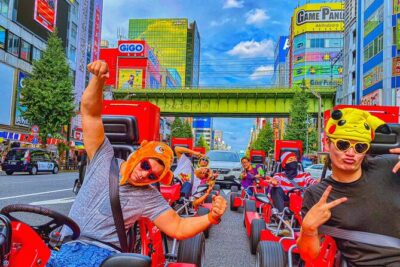
Tokyo Go Kart: Asakusa, Skytree, and Akihabara **IDP MUST**
Read our review →
Shibuya Official Street Go-Kart in Shibuya Annex
Read our review →Browse the lists this tour appears in