Reviewed · OSAKA TOURS
Osaka & Kyoto & Nara Top Hightlights English Speaking Tour
Three famous sights, one very full day. This $54 English-speaking tour links Kyoto’s Kiyomizu-dera and Fushimi Inari with Nara’s deer park, then finishes in Osaka. I like the efficient route and the chance to see the Great Buddha, red torii gates, old Kyoto streets, and friendly deer without arranging several train journeys yourself.
I also like the clean transport, included fuel and highway costs, and guides such as Anna, Amy Ono, Yang, Lou, and Kou Ran, who have been praised for clear explanations and helpful sightseeing tips. The tradeoff is simple: this is a highlights sampler, not a slow cultural tour, and the long transfers, walking, traffic, and sometimes brief commentary can make the day feel rushed.
In This Review
- The five details that shape your day
- What this $54 day actually buys you
- Kiyomizu-dera and the old Kyoto lanes
- Fushimi Inari’s red gate corridor
- Nara Park and the deer
- Todaiji and the Great Buddha
- Shinsaibashi and the Osaka finish
- Transport, guiding, and the pace
- Walking, lunch, and what to carry
- Who should book this tour?
- Final verdict: a useful sampler with clear limits
- FAQ
- How long does the Osaka, Kyoto, and Nara tour last?
- Where does the tour start?
- Where does the tour end?
- Is transportation included?
- Are meals included?
- Is admission to Kiyomizu-dera included?
- Is admission to Fushimi Inari included?
- Is Nara Park free to enter?
- Is admission to Todaiji included?
- Can I cancel for a full refund?
The five details that shape your day
- Kiyomizu-dera gets about two and a half hours, including time for lunch and the old lanes of Higashiyama.
- Fushimi Inari includes about 70 minutes, enough to see a section of the famous Senbon Torii gates but not hike the entire mountain.
- Nara Park gives you about 90 minutes, with time for deer, Todaiji Temple, and nearby sights if you move briskly.
- Todaiji admission is extra, although the park itself is free and the temple receives only a short scheduled visit.
- The day ends in Osaka, not Kyoto, so anyone starting in Kyoto must plan the return train separately.
- The tour runs with at least one person, has a maximum of 45, and costs $54 per person.
What this $54 day actually buys you
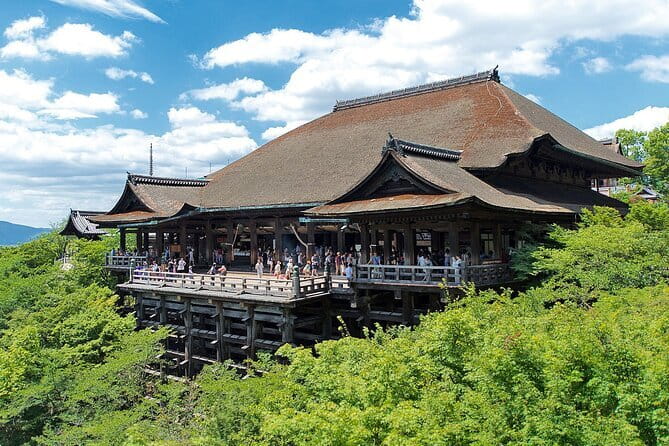
At $54, this tour is priced as a practical transport-and-sightseeing package. The vehicle, fuel, highway tolls, guide service, and driver are included. Food, drinks, temple admission, and personal purchases are not.
That matters because Kyoto and Nara are easy to visit by train, but linking these particular sights in one day takes planning. You avoid working out several connections, and a driver handles the long road sections between Osaka, Kyoto, and Nara. For a first visit, that convenience can be worth more than a few dollars saved on independent transport.
You should not mistake the price for a private tour. The group may reach 45 people, and the day is built around shared departure times. At some stops, the guide may give instructions and send you off to explore rather than walk every path with you.
I would treat the tour as a well-priced introduction. It can show you the main images many people associate with the Kansai region: temple roofs, vermilion gates, deer, the Great Buddha, and Osaka shopping streets. It cannot give each place the time it deserves.
A few more options to weigh up in Japan
- Universal Studios Japan Studio Pass
★ 4.8 · 89,883 reviews - Universal Studios Japan Express Pass
★ 4.7 · 53,138 reviews - Osaka Amazing Pass
★ 4.7 · 21,697 reviews
Kiyomizu-dera and the old Kyoto lanes
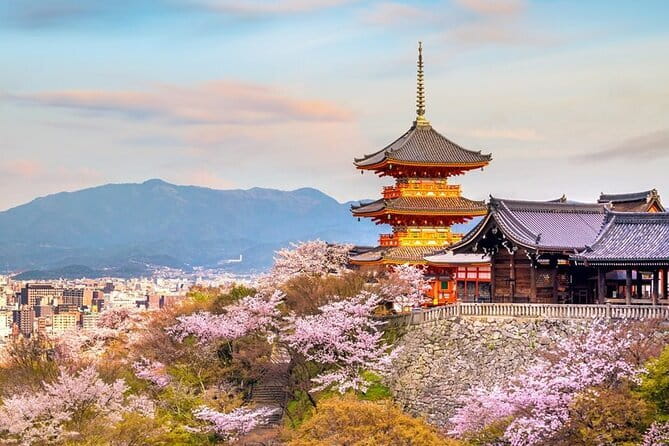
The first major stop is Kiyomizu-dera, with about two and a half hours allocated to the temple area and lunch. This is the most generous stop on the schedule, and wisely so. The temple sits above Kyoto on a broad wooden stage, while the approach passes through historic lanes filled with shops, food stalls, and small cultural details.
The route can include Nineizaka and Sanneizaka, Ishibei-koji Alley, Hanamikoji Street, and Yasaka Shrine. Taken together, these streets offer a better sense of old Kyoto than a quick temple photo alone. You can look for traditional façades, tiled roofs, narrow lanes, and the occasional glimpse of someone dressed in a kimono.
Kiyomizu-dera admission is not included, so bring money for the entrance fee. The exact order can change, and the time may be divided between the temple, surrounding streets, and lunch.
This is also where the walking begins in earnest. The streets around Kiyomizu-dera include slopes and stone paving. Wear shoes that can handle a full day on foot, and do not spend every minute inside a shop if you want time for the temple itself.
The tour offers an optional kimono experience that must be reserved ahead of time. That can add a memorable cultural touch, but it also uses part of your limited Kyoto time. I would choose it only if dressing traditionally is a major goal for you.
Fushimi Inari’s red gate corridor
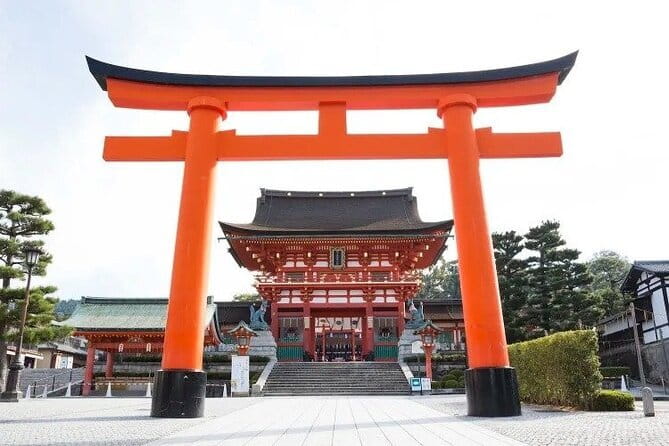
Fushimi Inari Taisha receives about 70 minutes of free time, and admission is included because the shrine grounds are free to enter. The famous feature is the Senbon Torii, a long run of orange-red gates climbing through the wooded hillside.
Seventy minutes is enough to walk through the lower section, take photographs, and get a feel for the shrine. It is not enough for a relaxed climb to every upper shrine. If you try to walk too far uphill, you risk spending the next stop watching the clock.
The lower gates can be crowded, especially on weekends and public holidays. Your best use of time is to move beyond the first dense cluster, take your photographs, and return with a few minutes in hand. The shrine is more than a photo backdrop, so pause to notice the fox statues and devotional details along the path.
One practical issue matters here: you must remember where and when to return to the vehicle. Some people have found the meeting instructions unclear, and the bus may park away from the main attraction. Save the guide’s contact details and vehicle registration number as soon as you receive them.
Nara Park and the deer
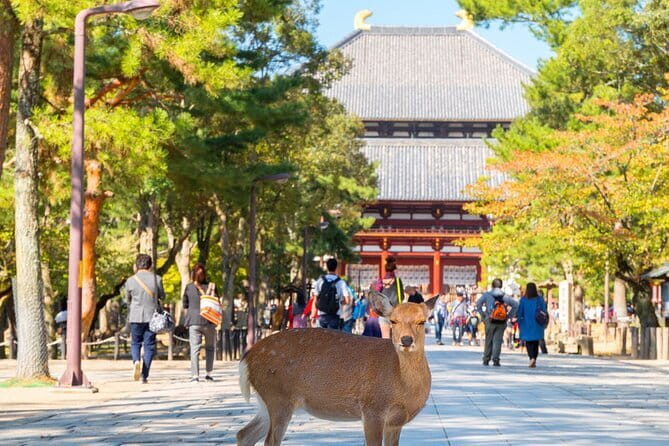
Nara Park is the emotional highlight for many people. You receive about an hour and a half of free time in the park, where deer roam around the paths and temple grounds. The animals are accustomed to people and are one of Japan’s most memorable encounters.
You can spend this stop watching the deer, buying food for them, visiting Todaiji, or walking toward another nearby sight. You probably cannot do all of those at a leisurely pace. The best choice is to decide in advance what matters most.
If you want to feed the deer, ask the guide early where to buy the appropriate food. The deer food is a simple local treat, but the timing can be tight. Keep your hands clear once the food is gone, and pay attention to your belongings around the animals.
Nara is also the point where timing problems can become serious. The bus may park around 20 minutes from Todaiji, according to the experience of some participants. That walking time can reduce the time available inside the temple, especially on a busy day.
Traffic and crowds can change the schedule. On New Year’s Day, large numbers of people visit temples and shrines for first prayers, and access can become especially slow. I would avoid this date if your main aim is to see several religious sites in a calm, orderly way.
A completely different kind of day out:
- Tokyo Disney Resort – Tokyo Disneyland & Tokyo DisneySea Park Tickets
★ 4.8 · 99,488 reviews - SHIBUYA SKY Ticket
★ 4.7 · 46,509 reviews - Mt. Fuji Instagram-Worthy Spots Day Tour: Ladder Town, Oshino Hakkai, Lake Kawaguchi, Lawson Convenience Store (Departing from Tokyo Station or Shinjuku Station)
★ 4.8 · 35,467 reviews - JR Whole Japan Rail Pass
★ 4.8 · 29,150 reviews
Todaiji and the Great Buddha
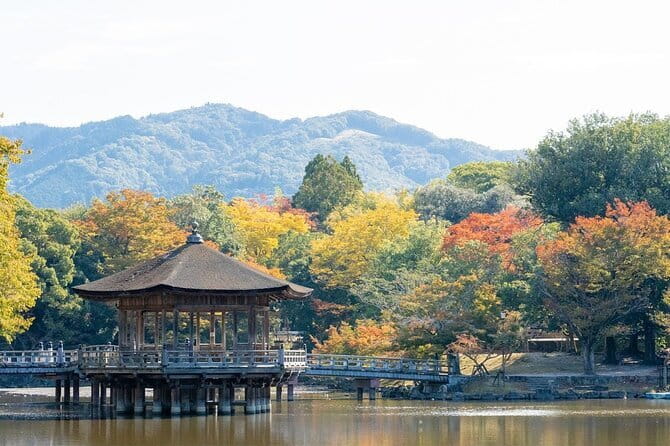
Todaiji is famous for its enormous bronze Great Buddha and its vast wooden temple hall. The scheduled visit is only about 20 minutes, and admission is not included.
That is a short visit for one of Japan’s most important monuments. If the bus stop is far away, much of the stop can disappear into walking. You may have enough time to enter, see the Great Buddha, take a few photographs, and leave, but not to study every building or linger in the grounds.
Still, the stop earns its place on the route. Even a brief look inside the hall gives you a sense of scale that photographs do not fully convey. If you prefer temples, architecture, and religious art to shopping, make Todaiji your priority in Nara and keep the deer visit focused.
The itinerary description also contains a confusing reference to Suzumushi Temple, but the scheduled Nara stop is Todaiji Temple. I would confirm the day’s exact order with the guide rather than rely on a generic description.
Shinsaibashi and the Osaka finish
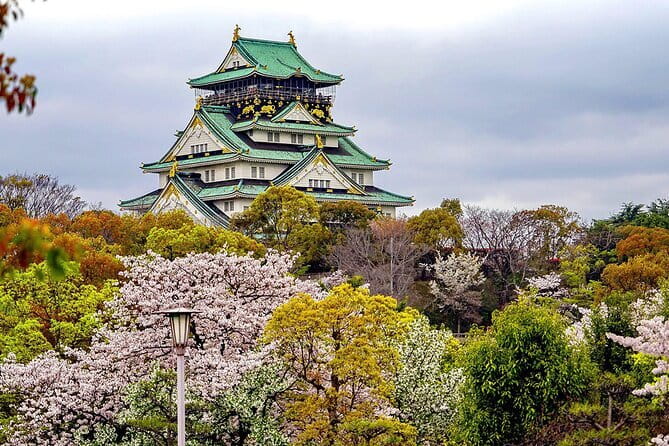
The final stop allows about an hour in Shinsaibashi, in central Osaka. This is useful if you want food, shopping, or a short look at one of Osaka’s best-known urban areas after a day of temples and deer.
Shinsaibashi is not presented as a guided Osaka sightseeing circuit. No detailed Osaka commentary is promised, and the stop is mainly free time. Think of it as a convenient finish rather than a full Osaka tour.
The end point is in the Shinsaibashi and Namba area, around Osaka Nihonbashi Exit 2. The stated meeting point is 1-chōme-3-6 Nipponbashi, Chuo Ward, Osaka, and the tour returns to Osaka rather than Kyoto.
This final arrangement is the most important planning detail for people boarding in Kyoto. You will need to take a train back to Kyoto on your own. Some people have expected a return shuttle, so read the end-point information carefully before paying.
Transport, guiding, and the pace

The tour lasts about nine hours and 20 minutes, including driving and lunch. The vehicle service covers fuel and highway tolls, which makes the price easier to judge. Clean buses and punctual departures have helped make the day feel orderly for many people.
The quality of the guiding can shape the experience. Several guides have received strong praise for being friendly, attentive, funny, and clear. Anna is noted for combining historical information with a warm personality. Amy Ono is praised for efficient time management and for answering questions with descriptive detail. Yang has been described as clear and helpful, while Lou and Kou Ran, also called Kosa, have been appreciated for practical advice.
The experience is not perfectly consistent. Some people have received useful cultural context at each stop, while others have felt that the guide mainly dropped them at the entrance and gave limited explanation. If you want detailed history, read about the sites before you go. That way, the tour’s transport and route do not have to carry the full educational burden.
The bus itself can also vary. One complaint involved weak air conditioning during hot weather. That may be an isolated vehicle problem, but summer heat makes it worth carrying water, a small towel, and clothing you can adjust.
The group size may reach 45 people. That means the guide must spend time counting heads and giving clear meeting instructions. Keep your phone charged, save the meeting location, and return early rather than testing the departure time.
Walking, lunch, and what to carry

This is a bus-and-walk tour. You will climb lanes around Kiyomizu-dera, walk through Fushimi Inari, cross paths in Nara Park, and possibly walk 20 minutes between the bus and Todaiji. The total effort is much greater than the timetable’s sightseeing hours suggest.
Food and drinks are not included. Lunch takes place during the Kiyomizu-dera portion, but the supplied details do not specify a restaurant or fixed menu. Carry water and budget separately for food, drinks, temple admission, and deer food.
Do not bring large luggage unless you register it when booking. One piece per person is allowed, with an extra charge of 100 yuan per additional piece or for luggage not declared in advance. A foldable stroller may be carried only if you tell customer service before the tour, and the driver can refuse boarding if this is not arranged.
Keep your passport and valuables with you. The operator places responsibility for loss, theft, or damage on you, so this is not the day to leave important items loose in the vehicle.
Who should book this tour?
I would recommend it to a first-time visitor who wants a broad introduction to Kyoto and Nara while staying in Osaka. It suits you if you value convenience, do not mind an early start and a long day, and would rather see several headline sights than spend half a day at one temple.
It also suits families and couples who want the deer, gates, temples, and old streets without building the route themselves. Children who occupy a seat pay the adult price on a small-group tour. On a bus tour, children from zero to two years old are free only if they are carried and do not occupy a seat.
I would not choose it for a slow Kyoto visit, detailed temple study, or a relaxed New Year’s outing. Independent rail travel is a better choice if you are comfortable navigating Japan and want control over your time. It is also better if returning to Kyoto the same evening matters and you do not want to manage the train afterward.
The tour runs daily with a minimum of one person, and departure is guaranteed for the selected day. That is useful when your schedule is tight, but the date cannot be changed after confirmation, and late arrival or no-show receives no refund.
Final verdict: a useful sampler with clear limits
At $54, I see real value here. You get a complicated regional route, road transport, fuel, tolls, a driver, and a guide in one package. Kiyomizu-dera, Fushimi Inari, Nara Park, and Todaiji are strong choices for a first look at the area.
The price comes with compromises. The schedule is tight, commentary may be brief, crowds can disrupt the plan, and the Osaka finish may surprise anyone expecting a return to Kyoto. You must also accept plenty of walking and a group that could be as large as 45 people.
Book it if you want breadth and convenience. Skip it if you want depth, quiet temple time, or a guaranteed Kyoto return. Prepare by checking the meeting email, saving the vehicle details, researching the sites, carrying water, and planning your trip back from Osaka. With those points clear, this can be an efficient and enjoyable first taste of Kansai.
FAQ
How long does the Osaka, Kyoto, and Nara tour last?
The tour lasts approximately 9 hours and 20 minutes, including travel time and lunch.
Where does the tour start?
The stated meeting point is 1-chōme-3-6 Nipponbashi, Chuo Ward, Osaka, 542-0073, Japan.
Where does the tour end?
The tour ends in Osaka near Osaka Nihonbashi Exit 2, in the Shinsaibashi and Namba area. It does not return to Kyoto.
Is transportation included?
Yes. Vehicle service, fuel costs, highway tolls, the driver and guide service fee, and tour guide service are included.
Are meals included?
No. Food and drinks are not included in the tour price.
Is admission to Kiyomizu-dera included?
No. Admission to Kiyomizu-dera is listed as an additional cost.
Is admission to Fushimi Inari included?
Yes. Admission to Fushimi Inari Taisha is included, and the listed admission is free.
Is Nara Park free to enter?
Yes. Nara Park is listed with free admission.
Is admission to Todaiji included?
No. Todaiji Temple admission is listed as an additional cost.
Can I cancel for a full refund?
You can cancel at least 24 hours before the experience start time for a full refund. Cancellations or changes made less than 24 hours before the start time are not refunded or accepted.
Just added in Japan
- A One-of-a-Kind Sushi Experience in a Special Place of Japan★ 5.0 · 15 reviews
- Tokyo Cute Bento Cooking Class – Make a Kawaii Character Lunchbox★ 5.0 · 126 reviews
- Japanese Home Cooking Class & Walk in Todoroki Temple Tokyo★ 5.0 · 88 reviews
- Japan Tokyo Tower Observatory Deck E-Ticket★ 4.0 · 34 reviews
- Catch a Baseball Game in Tokyo with a Local – Tickets Included★ 5.0 · 24 reviews
- JDM Experience with Fast&Furious RX-7 (English speaking Driver)★ 5.0 · 57 reviews
- Tokyo Private Day Tour by Car with English speaking Driver Guide★ 4.0 · 29 reviews
- Japan Classic 10 Day – One Life Adventures★ 5.0 · 129 reviews
Osaka Tours, compared.


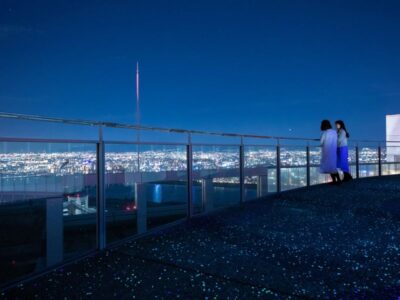
Umeda Sky Building & Kuchu Teien Observatory Ticket in Osaka
Read our review →