
Reviewed · PRIVATE DRIVERS
Kyoto and Nara Private Car Tour with a Local English Guide Driver
Kyoto rewards a smart private route. This 10-hour tour pairs an English-speaking local guide with a licensed Japanese driver, hotel pickup, air conditioning, and the freedom to shape your day. I like the door-to-door comfort and the chance to hear local context from guides such as Yama and Hibiki. I also like that the vehicle can carry up to 13 people, making the $459.81 group price more attractive for families and larger groups.
The main catch is the enormous menu of possible stops. You cannot sensibly visit every Kyoto, Nara, Amanohashidate, and Ine sight in one day. The best experience will come from choosing a tight route before departure, then paying attention to extra entrance fees, road costs, and the ¥10,000 cash allowance for gas, parking, and highways.
In This Review
- Key points to know before booking
- What the 10-hour private format really gives you
- Choosing between Yama, Hibiki, and the local guide team
- Arashiyama: bamboo, bridges, temples, and too many choices
- Kyoto’s essential temples and old districts
- Adding Nara without turning the day into a race
- Amanohashidate and Ine need their own day
- Price, extras, and the real value
- Who should book this private car day?
- Should you book it?
- FAQ
- How long is the Kyoto and Nara private car tour?
- How many people can join the private tour?
- Is hotel pickup and drop-off included?
- Are attraction entrance fees included?
- Are gas, parking, and highway fees included?
- Can I cancel for a full refund?
Key points to know before booking
- A private car covers difficult Kyoto ground: You avoid repeated train changes, crowded platforms, and long walks between widely scattered sights.
- Yama and Hibiki are named guide options: Past bookings praise their friendly English and ability to explain sites without making the day feel stiff.
- The tour is genuinely customizable: You can focus on Kyoto, add Nara, or ask about special activities such as ninja training or chopstick-making.
- The full stop list is not a realistic one-day route: Amanohashidate and Ine require a very different plan from central Kyoto and Nara.
- The group price can be strong value: At $459.81 for up to 13 people, the per-person cost drops quickly, but admission and road expenses remain extra.
- Japanese local support is a useful safety net: The company offers help with emergencies, Shinkansen arrangements, and restaurant reservations.
What the 10-hour private format really gives you
Kyoto is not difficult to visit by train, but it is spread out. Fushimi Inari lies south of the center. Arashiyama is in the west. Kinkaku-ji is northwest, Gion and Kiyomizu-dera are east, and Nara is beyond the city. Public transit works well for one or two districts, but a packed sightseeing day can turn into a study in train maps and bus queues.
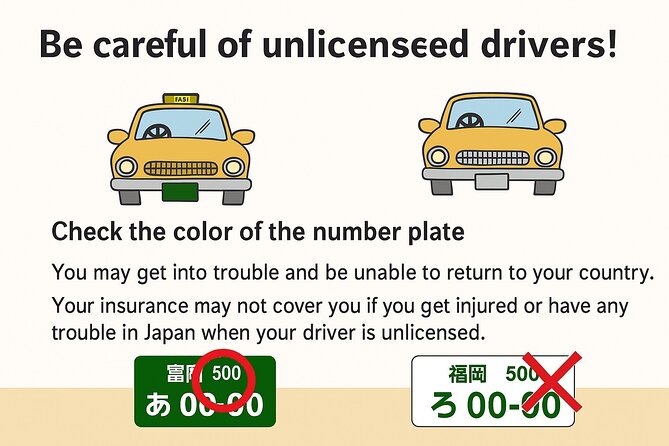
Here, your hotel pickup and drop-off simplify the day. A private vehicle with a professional licensed driver, identified by its green number plate, takes care of the long transfers. Wi-Fi is included, and the vehicle is air-conditioned. Those details matter in Kyoto’s warm months, when a cool car between temples can save your energy.
The private setup is especially useful for families, older people, and groups with children. One booking specifically praised the chance to avoid train stations, taxis, and long walks. That does not mean every stop is effortless. Monkey Park requires a mountain trail, and Kyoto’s major temples still involve walking. The car simply removes the least rewarding parts of getting around.
Your guide can speak English and Japanese, and the company says all members were born and raised in Japan. That local background may help with small decisions, such as which district to visit first or how to adjust the route around your interests. The company also offers complimentary support for Shinkansen and restaurant reservations, which is handy if your wider Japan trip needs a little help.
A few more options to weigh up in Kyoto
- Explore Kyoto | Private Tour – Local English Driver(guide option)
★ 4.5 · 203 reviews - Kyoto Private 6 hour Tour: English Speaking Driver Only, No Guide
★ 5.0 · 88 reviews - Kyoto Private Day Tour with English-Speaking Driver from Kyoto
★ 4.5 · 85 reviews
Choosing between Yama, Hibiki, and the local guide team
Yama receives specific praise for explaining the history at major Kyoto stops and helping with shopping at Nishiki Market. If you want a classic first-time Kyoto day with Fushimi Inari, Kinkaku-ji, Ginkaku-ji, and market time, that sounds like a good match.
Hibiki is also praised for speaking English well and showing a group many Kyoto and Nara sights. The operator receives credit for strong English communication, too. That matters before the tour begins, since a clear conversation about priorities can prevent an overstuffed schedule.
The company also highlights experience guiding Hollywood actors, including Lance Gross. That detail suggests confidence with VIP-style service, though the more important question for most people is simpler: Can your guide listen, explain, and keep the day practical? The available feedback points to friendly guides who help make the outing easy and pleasant.
The guide is not only there to point at famous buildings. You can ask for local information, help during an emergency, or assistance with reservations. If you are interested in Japanese customs, food, or everyday details, tell the guide early. A private tour gives you more room for questions than a large group excursion.
Arashiyama: bamboo, bridges, temples, and too many choices
Arashiyama can fill half a day by itself. The Bamboo Forest is the visual star, with tall stalks forming a narrow green corridor. It is photogenic and free, but the listed 15-minute visit is enough only for a quick walk and pictures. If this is high on your list, ask for more time.
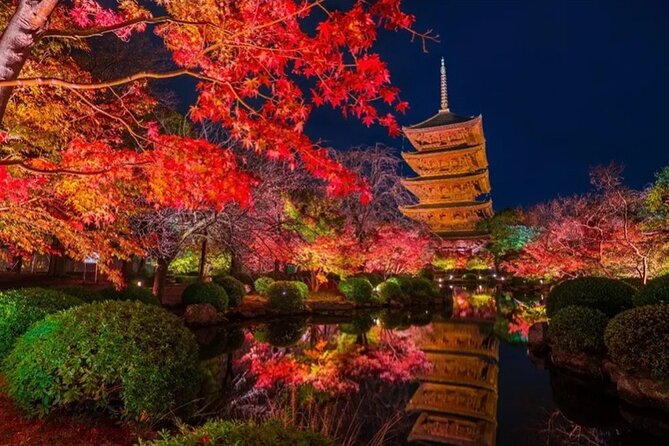
Tenryu-ji adds a quieter cultural stop. This UNESCO World Heritage temple is known for its gardens and traditional buildings, and its admission fee is not included. I would favor it over trying to collect every nearby attraction, especially if gardens and temple design matter to you.
Togetsukyo Bridge gives you a broad view along the Katsura River. The bridge itself is free, and the area is particularly attractive during spring blossoms or autumn color. Fifteen minutes works for a photo stop, but not for a relaxed riverside visit.
The Arashiyama Kimono Forest is a modern installation near Arashiyama Station. Pillars wrapped in colorful kimono fabric create a quick, playful photo stop, especially when lit. It is easy to add if you are already nearby, but it should not replace a major temple if this is your first Kyoto visit.
The Sagano Romantic Train offers a vintage-style ride through the Hozugawa Gorge. The ticket costs extra, and a train departure controls your schedule. It is not a casual hop-on stop, so reserve time for the ride and coordination with your driver. If you want this experience, build the day around it rather than adding it at the last minute.
Monkey Park Iwatayama is another special option, but the 15-minute listing is not realistic for the full experience. You climb a short mountain trail to see Japanese macaques and look across Kyoto from above. The admission fee is extra, and the walk demands more effort than a shrine courtyard. I would choose the park only if your group is comfortable with the climb.
Kyoto’s essential temples and old districts

Fushimi Inari-taisha is one of the strongest choices for a short Kyoto visit. Its red torii gates rise into the wooded slopes of Mount Inari, creating the famous tunnel effect. Admission is free, but the full route climbs much farther than most first-time visitors expect. With limited time, you can walk through the lower gates, take photographs, and return to the car without attempting the whole mountain.
Kinkaku-ji, the Golden Pavilion, is another obvious priority. The gold-covered temple reflected in its pond makes a quick visit worthwhile, though admission is extra and the grounds can feel busy. This is a place where a guide can provide useful context, since the photograph is only one part of the site’s story.
Ginkaku-ji, the Silver Pavilion, offers a different mood. It was never actually covered in silver. Its appeal comes from restrained design, moss gardens, and carefully shaped sand features. The admission fee is extra, and I would not try to pair every northern temple with Nara unless your group accepts a fast pace.
Kiyomizu-dera is one of Kyoto’s signature sights, known for its large wooden stage and hillside setting. The approach can be crowded and involves walking uphill, while admission costs extra. Still, it earns its place for first-time visitors, particularly if you want a sweeping view and one of Kyoto’s most recognizable temple buildings.
Sanjusangendo is less about outdoor scenery and more about the interior. Its long wooden hall contains 1,001 life-size statues, making it a memorable stop even when you have seen several temples already. Admission is extra, and photography rules inside should be respected.
Nijo Castle gives you a different look at Kyoto. Built as Tokugawa Ieyasu’s Kyoto residence, it has palace buildings, gardens, and the famous floorboards designed to make a nightingale-like sound underfoot. The entrance fee is extra, and the site needs more than a quick roadside photograph if you want to see the palace rooms and grounds properly.
Chion-in is a grand Jodo Buddhist complex with an enormous Sanmon Gate. It is free according to the tour details, making it a useful addition if your paid admissions are adding up. Yasaka Shrine is also free and sits between Gion and Higashiyama, with lanterns and strong ties to the Gion Matsuri festival.
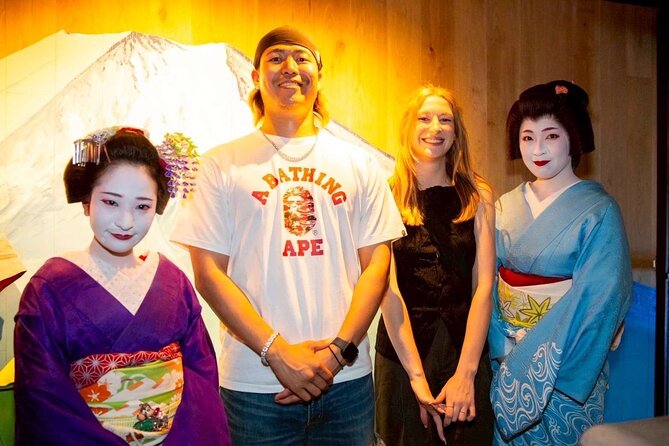
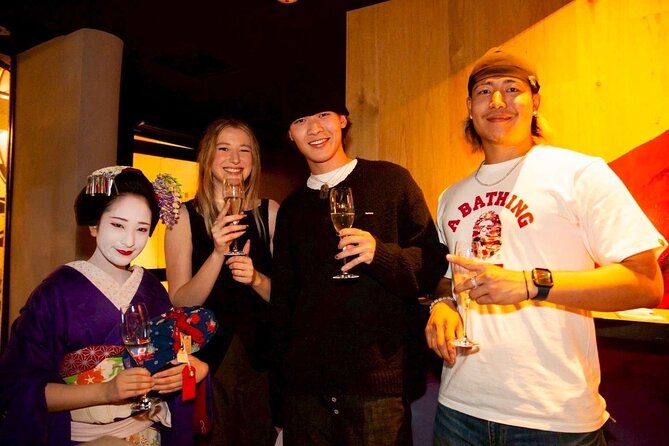
Gion offers wooden streets, traditional architecture, and the possibility of seeing geisha or maiko moving between appointments. Treat the district respectfully. A private guide can help you understand what you are seeing, but the tour does not promise a geisha encounter. The company does advertise access to invitation-only ochaya and private geisha or maiko performances through local connections, so ask specifically about availability and added cost before assuming it is part of the standard day.
Nishiki Market is Kyoto’s food-shopping corridor, with more than 100 stalls and shops. It is a good place to ask your guide about local specialties and find gifts, but it can be crowded and easy to rush. If food is a main reason for booking, reserve proper time here rather than treating it as a 15-minute photo stop.
A completely different kind of day out:
- PERFECT KYOTO 1-Day Bus Tour
★ 5.0 · 13,518 reviews - [Kyoto & Nara Day Tour] Sagano Scenic Railway & Nara Park & Fushimi Inari Taisha Thousand Torii Gates & Togetsukyo Bridge & Bamboo Grove & Kimono Forest (Departing from Osaka)
★ 4.9 · 10,942 reviews - Kyoto: Fushimi Inari, Kinkakuji, Bamboo Grove 1 Day Bus Tour
★ 4.8 · 4,316 reviews - Kyoto: Tea Ceremony in a Traditional Tea House in Kiyomizu
★ 4.9 · 3,519 reviews
Adding Nara without turning the day into a race
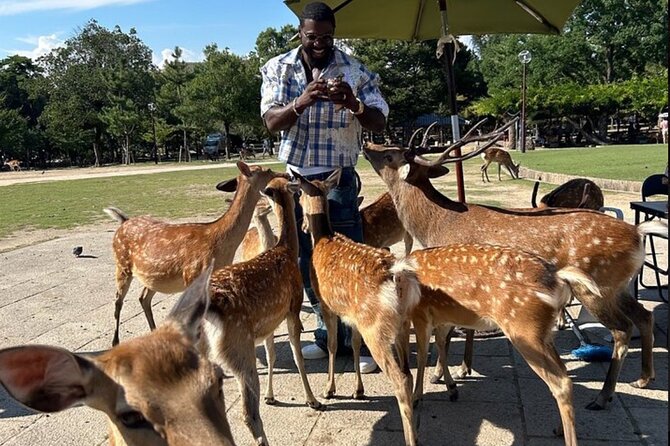
Nara works well as a second focus, but it deserves more than a quick drive-by. Nara Park is famous for its freely roaming deer and is free to enter. The deer are a memorable part of the visit, though you should follow local instructions and keep food handling sensible.
Todai-ji is the major reason to continue to Nara. Its Great Buddha Hall houses a huge bronze Buddha and is one of Japan’s most impressive temple interiors. Admission is extra, and this is not a five-minute stop. Give yourself time to enter the hall and appreciate its scale.
Kasuga Grand Shrine is known for its stone and bronze lanterns and its old Shinto setting. The shrine has an admission fee according to the tour details, so check which areas you plan to enter. Kofuku-ji, near central Nara, adds a historic Buddhist site and a famous five-story pagoda. Its listing also notes an admission fee, though the exact cost is not provided.
The sensible Kyoto and Nara plan chooses a handful of major sites. For example, you might select Fushimi Inari, Kiyomizu-dera, Kinkaku-ji, Nishiki Market, Todai-ji, and Nara Park. That is already a full day. You can ask the operator to build a route around your hotel location and the interests of your group.
Amanohashidate and Ine need their own day
Amanohashidate is a 3.6-kilometer pine-covered sandbar in Miyazu, known as one of Japan’s Three Scenic Views. Amanohashidate View Land provides a viewpoint over the sandbar, and admission is extra. The setting is a major change from central Kyoto, but it is not a sensible add-on to a full Kyoto and Nara schedule.
Ine no Funaya is a fishing village famous for wooden boathouses built directly over the water. The lower level traditionally stores boats, while the upper level is used as living space. It is a distinctive place, but its distance makes it better suited to a separate northern Kyoto route.
Their appearance in the selectable stops is useful if you have an extra day or want a custom excursion. It is also a warning to discuss distances carefully. A private car gives you flexibility, not extra hours in the day.
Price, extras, and the real value
The base price is $459.81 per group of up to 13 people. For two people, that is a costly private day. For six, eight, or 13 people, the arithmetic improves quickly, especially since hotel pickup, drop-off, a private vehicle, driver, guide, and Wi-Fi are included.
You still need to budget for temple and attraction admissions. Tenryu-ji, the Sagano Romantic Train, Monkey Park, Kinkaku-ji, Kiyomizu-dera, Ginkaku-ji, Sanjusangendo, Nijo Castle, Amanohashidate View Land, Todai-ji, Kasuga Grand Shrine, and Kofuku-ji are all listed with entrance fees not included.
You also need ¥10,000 in Japanese yen cash per booking for gas, parking, and highway fees. Meals are not included. Mercedes-Benz V-Class service is available as a higher-cost VIP option, and Kansai Airport transfer is an extra-fee choice.
For a large group, the price can beat arranging several taxis and paying separate fares. For a couple on a tight budget, trains and buses will cost less, though they will not give you the same privacy or direct transfers. The strongest value comes from convenience, group size, and a well-planned route.
Who should book this private car day?

I would recommend it to families, multigenerational groups, first-time visitors with a long must-see list, and anyone who dislikes changing trains. It also suits people who want a guide available for English and Japanese communication, restaurant bookings, or Shinkansen help.
It is less suitable if you want a slow temple day. The large stop menu can tempt you into collecting photographs instead of enjoying places. It is also not ideal for a small group determined to keep costs low.
Before booking, send a short priority list. Mark three must-see places, two nice-to-have places, and anything you are willing to skip. If you want Nara, say so clearly. If you want Arashiyama’s train or Monkey Park, identify that as the day’s main activity. This gives the operator a fair chance to create a route that works.
Free cancellation is available up to 24 hours before the start time. Changes made inside that period are not accepted, and the payment is not refunded for a late cancellation.
Should you book it?
Book this tour if your group values comfort, direct transportation, and a flexible English-guided day more than the lowest possible price. The strong points are the licensed Japanese driver, local English support, hotel pickup, and the ability to build a route around your group.
I would not book it expecting to see all 24 listed stops. Choose Kyoto or Nara as the main focus, then add only nearby sights. With that approach, the private car becomes a practical way to see more and worry less, particularly when children, older family members, or a large group are involved.
FAQ
How long is the Kyoto and Nara private car tour?
The tour lasts approximately 10 hours.
How many people can join the private tour?
The listed price covers one private group of up to 13 people.
Is hotel pickup and drop-off included?
Yes. Hotel pickup and drop-off are included.
Are attraction entrance fees included?
No. Entrance fees are not included. Several temples and attractions on the route require separate admission.
Are gas, parking, and highway fees included?
No. You need to provide ¥10,000 in Japanese yen cash per booking on the tour day for gas, parking, and highway fees.
Can I cancel for a full refund?
Yes, if you cancel at least 24 hours before the experience start time. Cancellations made less than 24 hours in advance are not refunded.
Just added in Kyoto
- The “Golden Route” and Ancient Japan by DIAMIR Erlebnisreisen – 14-Day Tour★ 2.0 · 2 reviews
- Japan: Castles & Cuisine by G Adventures – 6-Day Kyoto to Osaka Tour★ 4.5 · 4 reviews
- Cycle Japan by Explore! – 13-Day Kyoto to Tokyo Tour★ 4.7 · 12 reviews
- Cycle Japan by Intrepid Travel – 11-Day Kyoto to Tokyo Tour★ 4.8 · 2 reviews
- Classic Japan by Intrepid Travel – 11-Day Kyoto to Tokyo Tour★ 4.4 · 14 reviews
- Ancient & Modern Japan 14-Day Tour by Exodus Adventure Travels★ 4.4 · 40 reviews
- 5 Day Cultural Adventure of Kyoto, Nara & Osaka by Tourist Journey★ 2.5 · 2 reviews
- 12 Days Kinosaki Onsen Escape: A Journey Through Japan’s Timeless Towns by UME Travel★ 4.8 · 5 reviews
Private Drivers, compared.
Mt Fuji Private Tour with English Speaking Driver
Read our review →
Mt. Fuji & Hakone Private Day Tour with English-Speaking Driver
Read our review →
Mount Fuji Full-Day Small Group driver-guide tour (with Pick-up option)
Read our review →
Haneda Airport (HND) Private Transfer to Central Tokyo
Read our review →
Mt. Fuji, Hakone Full-Day Private Tour with English Driver Guide
Read our review →
Mt. Fuji Day Trip from Tokyo with English Speaking Driver Guide
Read our review →Mt. Fuji Private Tour with English Speaking Driver
Read our review →
Mt. Fuji & Hakone Private Custom Tour English Driver
Read our review →Browse the lists this tour appears in