
Reviewed · HALF-DAY
Perfect Nara Park Half-Day Bus Tour with English Speaking Guide
Nara rewards a little structure. This four-hour bus tour brings you to Todaiji Temple, Kasuga Taisha Shrine, and Mt. Wakakusa without making you sort out every connection yourself. I especially like the included English-speaking guide, who explains how to pray, answers questions, and helps with photos, and the small cultural extras, including a deer fortune, rice crackers, and an original handkerchief.
The tour also includes temple admission, shrine admission, and a Nara-Yamatoji 2-Day Pass for unlimited local bus rides in the designated area. The main point to consider is pace: transportation time is part of the four-hour schedule, so each stop has a firm limit, and Mt. Wakakusa requires a moderate level of fitness.
In This Review
- Key points at a glance
- Why this half-day tour works well in Nara
- Todaiji Temple and the Great Buddha Hall
- Kasuga Taisha and the English deer fortune
- The Nara Okuyama Driveway and Kasugayama Primeval Forest
- Mt. Wakakusa and the view over Nara
- The guide makes the cultural details easier
- What the $66.05 price includes
- Timing, meeting details, and drop-off choices
- Who should book this Nara tour?
- Weather, changes, and cancellation rules
- Should you book the Perfect Nara Park Half-Day Bus Tour?
- FAQ
- How long is the Nara Park bus tour?
- What sites are included?
- Is admission to Todaiji and Kasuga Taisha included?
- Is an English-speaking guide provided?
- Is lunch included?
- Are deer crackers included?
- What is the Nara-Yamatoji 2-Day Pass?
- Where does the tour finish?
- What happens if bad weather cancels the tour?
Key points at a glance
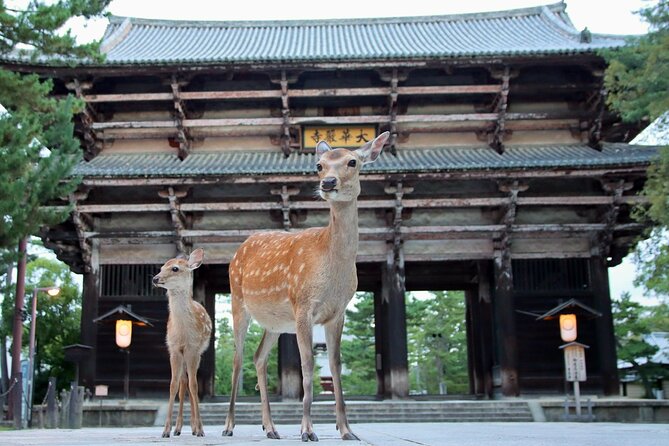
- Todaiji in 70 minutes: See the Nandaimon Gate and the Great Buddha Hall with admission included.
- Kasuga Taisha in one hour: Visit the main shrine and draw an English deer fortune.
- Mt. Wakakusa views: Spend about 40 minutes at the summit for a broad view over Nara.
- Helpful cultural guidance: Learn how to pray at the shrine and temple, with an English-speaking guide available for questions.
- Useful extras included: Deer crackers, temple and shrine fees, an original handkerchief, and the Nara-Yamatoji 2-Day Pass.
- Simple return options: The bus is scheduled to reach Kofukuji at 4:20 p.m., Kintetsu Nara Station at 4:25 p.m., and JR Nara Station afterward.
Why this half-day tour works well in Nara
Nara’s major sights are close enough to connect, but the route is easier when someone else handles the vehicle and timing. This tour gathers three different sides of Nara into one outing: Buddhist architecture at Todaiji, Shinto worship at Kasuga Taisha, and an open view from Mt. Wakakusa.
I like that the experience is not limited to looking at buildings from the outside. You enter the main paid areas, receive guidance on local customs, draw a deer fortune, and feed the famous Nara deer with rice crackers. Those details give the tour a bit more character than a basic sightseeing transfer.
The group is limited to a maximum of 25 people. That is large enough to keep the price reasonable, but small enough for an English-speaking guide to answer questions and help with practical matters. The tour has a perfect five-star rating from 49 reviews and a 100 percent recommendation rate, with particular praise for clear English, useful explanations, kindness, and help taking photographs.
Still, this is a scheduled group outing, not a leisurely private walk. If you like lingering inside a temple, browsing every corner of a shrine, or stopping often for photos, you may find the timing brisk.
A few more options to weigh up in Nara
- World Heritage Kyoto & Nara Uji Authentic Matcha Experience
★ 5.0 · 1,573 reviews - Nara Half Day Trip Walking Tour (Private Option Available)
★ 5.0 · 937 reviews - Nara Early Morning Tour (Kyoto or Osaka Departure Available)
★ 5.0 · 676 reviews
Todaiji Temple and the Great Buddha Hall
The first major stop is Todaiji Temple, with about 70 minutes set aside. Your visit includes the Nandaimon Gate and the Great Buddha Hall, along with the required admission fee.
The Nandaimon Gate gives you an impressive first view of the temple complex. It is a strong opening to the tour because the scale changes quickly from ordinary city streets to monumental religious architecture. Your guide can add context as you move through the entrance area, which is useful if this is your first visit to Nara.
Inside the Great Buddha Hall, the focus is the enormous Buddha statue. The hall itself is a major part of the experience, so do not rush straight toward the statue without looking up and around. The size of the building helps explain why Todaiji is one of Nara’s essential sights.
The 70-minute visit is long enough for a guided introduction and a proper look at the main areas, but not long enough for an unhurried exploration of every part of the grounds. I would keep your photography organized here. Take the main shots early, then listen to the guide rather than trying to document every detail.
This is also one of the places where the guide’s practical instruction matters. The tour includes explanations of how to pray, which can make the visit feel less like a quick monument stop and more like an introduction to Japanese religious customs.
Kasuga Taisha and the English deer fortune
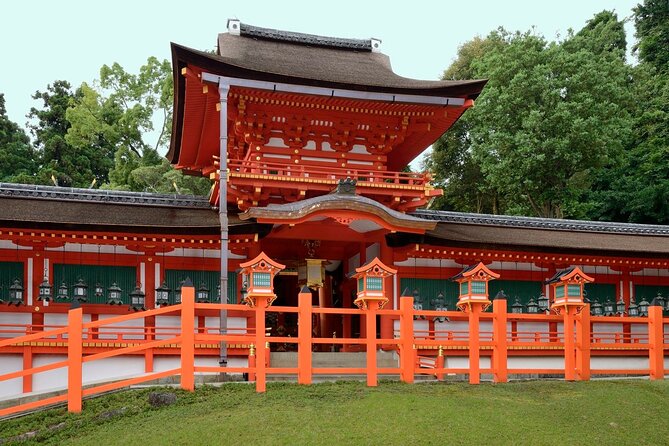
Next comes Kasuga Taisha, also called Kasuga Grand Shrine, with about one hour at the main shrine. The shrine is part of a UNESCO World Heritage setting, and its character differs sharply from Todaiji.
Todaiji is about scale and a monumental hall. Kasuga Taisha feels more focused on shrine ritual, the main worship area, and the atmosphere of the forested surroundings. Your guide helps you understand what to do at the shrine, including how to pray, so you can take part with more confidence.
One of the nicest included extras is the deer fortune. You can draw an English version, which is a useful touch if you want to understand the message rather than simply keep the paper as a souvenir. The fee is included, so you do not need to make a separate decision at the shrine.
The one-hour allocation is reasonable for the main shrine, a short explanation, prayer, and the fortune. It is less suitable if you want to explore the wider shrine grounds at a slow pace. Keep in mind that the tour’s schedule includes transportation, and the guide needs to bring the group along to the next stop.
I like the contrast between the first two visits. Todaiji shows you the grand public face of Nara’s Buddhist tradition, while Kasuga Taisha gives you a more personal look at Shinto practice. Taken together, they make the tour more useful than a simple temple-only outing.
The Nara Okuyama Driveway and Kasugayama Primeval Forest
The route also uses the Nara Okuyama Driveway, located in the Kasugayama Primeval Forest, another World Heritage area. This part is experienced from the tour vehicle rather than presented as a separate long walking stop.
That matters because the bus does more than save time between attractions. It lets you pass through an important natural setting without adding a long hike to an already full half-day. For you, the value is convenience and variety: cultural sites, deer, city views, and forest scenery all fit into one organized route.
The tradeoff is that you will not have unlimited time to stop along the driveway. If your main interest is hiking through the primeval forest, this tour is not designed as a walking excursion. It gives you a look at the route as part of the wider Nara experience.
A completely different kind of day out:
- Osaka: Nara and Uji Day Trip with Deer Park and Hot Spring
★ 4.4 · 302 reviews - Kyoto/Osaka: Kinkakuji, Bamboo Forest, and Nara Deer Park
★ 4.4 · 265 reviews - Nara 6hr Private Tour with Government-Licensed Guide
★ 5.0 · 219 reviews - E-Bike Nara Highlights – Todaiji, Knives, Deer, Shrine
★ 4.8 · 186 reviews
Mt. Wakakusa and the view over Nara
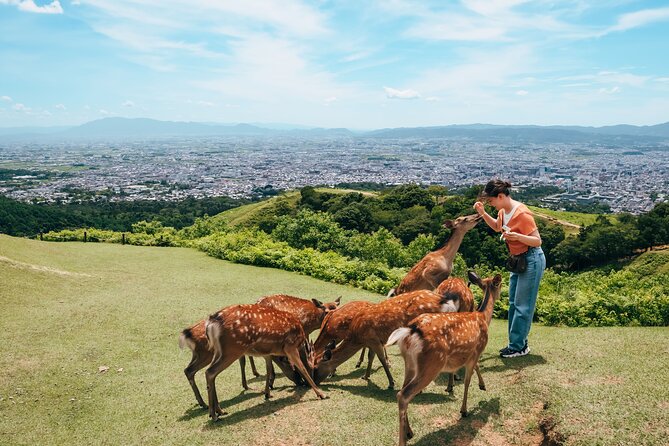
The final major stop is Mt. Wakakusa, with about 40 minutes scheduled at the summit. The mountain is covered in grass and offers a panoramic view over Nara city.
This stop changes the rhythm of the day. After temple halls and shrine buildings, you get open space and a broad view. I consider it one of the most useful parts of the tour because it helps you understand Nara’s setting, not just its monuments.
The tour information calls for a moderate level of physical fitness, and that warning is worth taking seriously. Mt. Wakakusa is not presented as a fully effortless viewpoint. You should be ready for some walking and an uphill section, though the precise walking distance and slope are not specified.
The 40-minute time limit keeps the group moving. It gives you time to take in the view and photograph the city, but it is not a long mountain visit. Wear comfortable shoes and avoid planning another activity that requires you to be back at an exact time immediately afterward.
This stop also connects with Nara Park’s most famous residents. You can feed the deer with rice crackers, and the deer cracker fee is included. Use the treats as a small part of the visit rather than the whole purpose. The animals are a memorable feature, but the mountain view is the reason this stop adds something different to the day.
The guide makes the cultural details easier
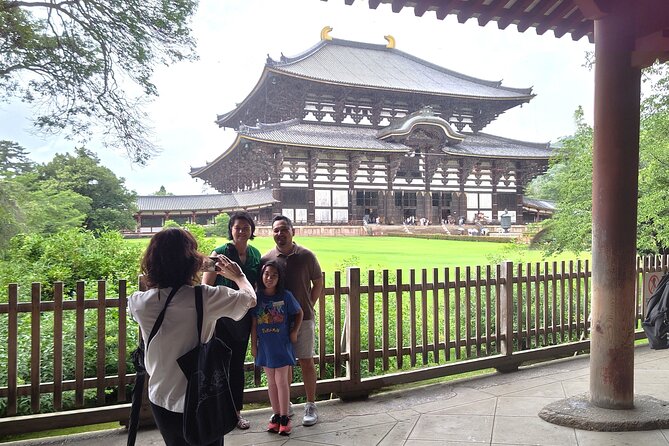
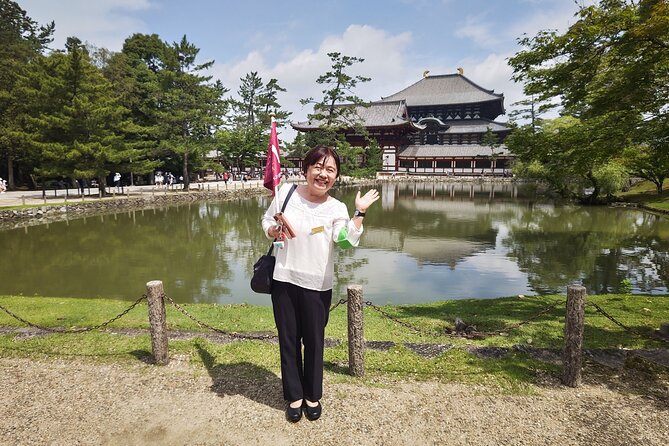
The strongest reason to choose this tour instead of arranging the same route alone is the guide. The English-speaking guide provides commentary throughout the day, explains the sites, answers questions, and helps you understand local customs.
Clear English matters most at Todaiji and Kasuga Taisha, where a short explanation can change how you see the visit. At the shrine, learning how to pray removes the guesswork. At the temple, hearing the story behind the major structures gives the architecture more meaning.
The guide also helps with small but useful tasks. One detailed account praised the guide for taking photos, answering questions, and keeping the group involved. That kind of help is valuable if you are visiting with friends and want a group picture without handing your camera to a stranger.
You should still expect a group format. The maximum is 25 people, so commentary may be delivered to everyone together rather than tailored to your personal interests. If you want a private specialist guide or a very slow pace, this will feel less flexible.
What the $66.05 price includes
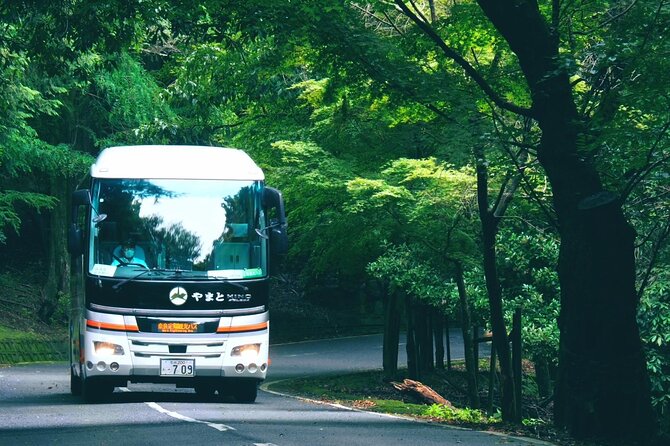
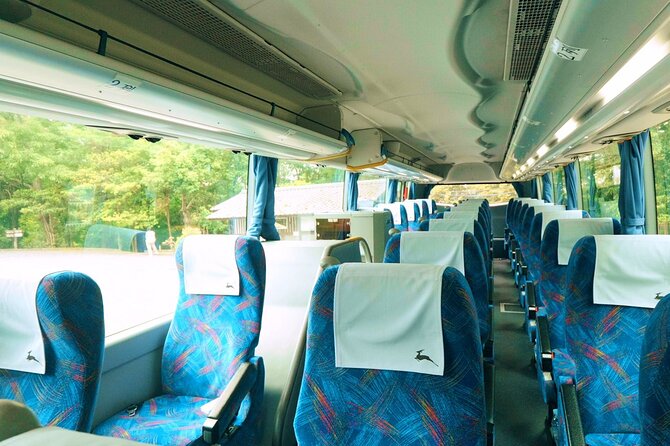
At $66.05 per person, the tour is priced as a convenience package rather than as a basic bus ride. The cost includes the air-conditioned vehicle, English guide, temple and shrine admission, the deer fortune, deer crackers, consumption tax, and the Nara-Yamatoji 2-Day Pass.
That list changes the value calculation. You are paying for transport between several stops, an organized route, entry fees, and a guide who can explain what you are seeing. You also receive an original handkerchief and a pass offering unlimited local bus rides within the designated area for two days.
The bus pass may be especially useful if you plan to continue exploring Nara after the tour. Its value depends on how many local bus journeys you make and where you go, so I would not treat it as a major reason to book by itself. It is best viewed as a useful bonus.
Lunch is not included. The four-hour duration means you can plan a meal before or after the outing, but you should not expect a scheduled lunch break. Bring any food or drink you need according to the operator’s rules, and leave enough room in your day for the return journey.
Timing, meeting details, and drop-off choices
You must reach the bus stop and show your boarding pass 10 minutes before departure. That early arrival matters because the tour runs on a fixed schedule, and late arrivals can miss the vehicle.
The tour is scheduled to arrive at Kofukuji at 4:20 p.m. You can choose to leave there if that location works better for your plans. It is then scheduled to reach the Kintetsu Nara Station drop-off point at 4:25 p.m., followed by JR Nara Station.
These drop-offs make the tour practical if you are staying near one of the stations or connecting to another part of your Japan itinerary. I would avoid booking a tight train connection immediately afterward, since traffic delays can occur, especially during tourist season.
The total duration is about four hours, and transportation time is already included. That is helpful to know when comparing this experience with a four-hour walking tour. You are not receiving four full hours at the monuments, but you are also not spending the entire outing navigating between them.
Who should book this Nara tour?
This experience suits first-time visitors who want to see Nara’s major highlights with explanations in English. It is also a good choice for friends or families who want an easy shared outing and do not want to coordinate buses, temple admission, shrine customs, and the return route themselves.
I would also consider it for a second visit if your earlier trip was mostly an independent walk. A guide can add context that you may have missed, and the combination of Mt. Wakakusa, Kasuga Taisha, and the bus route gives the day a different shape.
The tour may be less suitable if you want:
- A private guide and a custom schedule
- Long, quiet time inside each site
- A full forest hike
- A food-focused Nara experience
- An outing with no uphill walking
Children under six can travel free if they do not need a seat. For anyone with mobility concerns, the operator only states that a moderate fitness level is needed, so you should contact the reservation site before booking if you need specific access information.
Weather, changes, and cancellation rules
This tour requires good weather. If poor weather causes cancellation, you will be offered another date or a full refund. The service may also be suspended if conditions are unsafe, and the locations, order of visits, times, and fees may change.
Free cancellation is available up to 24 hours before the experience start time. If you cancel less than 24 hours before departure, the payment is not refunded, and late changes are not accepted.
There is one important booking rule: if you need to change the participation date or number of people, cancel the original reservation and make a new one. A direct change without canceling first will not be accepted.
The tour may also be canceled if its minimum number of participants is not met. In that case, you will be offered another date or experience, or a full refund.
Should you book the Perfect Nara Park Half-Day Bus Tour?
I would book this tour if you want Nara’s major sights in a compact, guided format and value clear English explanations over free time. The strongest points are the useful route, included admissions, deer crackers, English fortune, and the guide’s help with prayer, questions, and photos.
At $66.05, the price is fair when you count the vehicle, guide, entry fees, and two-day bus pass. The main compromise is the fixed pace. You will see a lot in four hours, but you will not have time to wander deeply at every stop.
Choose it for a well-organized first look at Nara, especially if you are visiting Japan for the first time. Skip it only if you already know the sights well and prefer to set your own pace, or if the uphill section at Mt. Wakakusa is a concern.
FAQ
How long is the Nara Park bus tour?
The tour lasts approximately four hours, including transportation time between the stops.
What sites are included?
The tour includes Todaiji Temple, Kasuga Taisha Shrine, the Nara Okuyama Driveway through the Kasugayama Primeval Forest, and Mt. Wakakusa.
Is admission to Todaiji and Kasuga Taisha included?
Yes. Temple entrance and viewing fees are included, as are the admission fees connected with the listed visits.
Is an English-speaking guide provided?
Yes. An English-speaking guide accompanies the group and provides explanations throughout the tour.
Is lunch included?
No. Lunch is not included in the tour price.
Are deer crackers included?
Yes. The deer cracker fee is included, so you can feed the deer during the Nara Park portion of the experience.
What is the Nara-Yamatoji 2-Day Pass?
It provides unlimited rides on local buses within the designated area for two days.
Where does the tour finish?
The scheduled drop-offs are Kofukuji at 4:20 p.m., Kintetsu Nara Station at 4:25 p.m., and JR Nara Station afterward. You can choose to leave at Kofukuji if you prefer.
What happens if bad weather cancels the tour?
You will be offered a different date or a full refund if the tour is canceled because of poor weather.
Just added in Nara
- Hammer a Pattern on Your Ring Workshop★ 5.0 · 57 reviews
- All must-sees in 3 hours – Nara Park Classic Tour! From JR Nara!★ 5.0 · 108 reviews
- Nara Private Tour: Flexible Pickup from Kyoto, Osaka, or Nara★ 5.0 · 17 reviews
- Private Nara Tour and Sake Tasting (Departing from Kyoto/Nara)★ 5.0 · 40 reviews
- Nara Sake Tasting Tour at Local Brewerie(tasting fee included)★ 5.0 · 12 reviews
- Nara World Heritage PRIVATE TOUR★ 4.5 · 15 reviews
- Nara Highlight Walking Tour with Furoshiki Experience with Lunch★ 5.0 · 73 reviews
- Nara – Highlights Bike Tour★ 4.5 · 89 reviews
Half-Day, compared.
Kyoto Arashiyama Bamboo forest & Garden Half-Day Walking Tour
Read our review →
Miyajima Half-day Trip Historical Walking Tour
Read our review →
Naha, Okinawa: Kerama Islands Half-Day Whale Watching Tour
Read our review →
Himeji Half-Day Private Tour with Government-Licensed Guide
Read our review →

Miyajima Half-day Private Tour with Government Licensed Guide
Read our review →Browse the lists this tour appears in