Reviewed · TOKYO TOURS
Shibuya: Ramen Dojo Tokyo | Make All 3 (Tonkotsu/Shoyu/Miso)
Ramen gets better when you make it yourself. At Ramen Dojo Tokyo, you knead, roll, and cut fresh noodles, prepare chicken chashu, and taste tonkotsu, shoyu, and miso in one compact workshop. I especially like the chance to compare three soups side by side and the clear English instruction for beginners. I also like that the digital recipe lets you try the process at home.
The main thing to know is that this is not a full ramen-from-scratch kitchen course. The long-cooking soup bases are prepared in advance, while you make the noodles, finish the chicken, adjust the soup, and assemble the bowls. Three mini bowls can be surprisingly filling, so arrive hungry and avoid eating a large meal beforehand.
In This Review
- The best parts of the class
- A ramen workshop near Shibuya Station
- What happens during the 90 minutes
- First 10 minutes: check-in and ramen basics
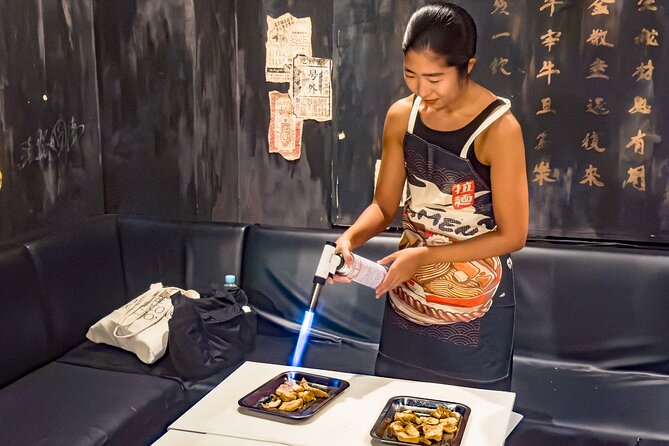
- Five minutes: preparing the chicken chashu
- Twenty minutes: kneading and cutting fresh noodles
- Ten minutes: finishing the chicken
- Ten minutes: boiling noodles and adjusting soup
- Five minutes: plating your ramen trio
- Thirty minutes: tasting and photo time
- What you really make, and what is prepared ahead
- Why the $64 price can be worth it
- Who should book this experience
- Useful practical tips before you go
- Should you book Ramen Dojo Tokyo?
- FAQ
- How long does Ramen Dojo Tokyo last?
- Where is the studio located?
- Which ramen styles will I taste?
- Do I make the ramen noodles from scratch?
- Are the soup bases cooked from scratch during the class?
- Is the class taught in English?
- How many people can join the class?
- Are dietary accommodations available?
- What should I wear and when should I arrive?
The best parts of the class
- Three ramen styles in one sitting: Compare tonkotsu, shoyu, and miso without choosing only one bowl.
- Fresh noodles made by hand: Knead dough, roll it, and cut it with a professional noodle machine.
- A practical home-cooking lesson: The method can be repeated at home without special equipment.
- Small groups of up to eight: Instructors can give hands-on help and answer questions.
- Chicken chashu and custom soup: Prepare the meat and adjust the soup strength before plating.
- A useful souvenir: Your digital recipe arrives after class, so the experience does not end at the studio.
A ramen workshop near Shibuya Station
Ramen Dojo Tokyo is about a 10-minute walk from Shibuya Station, at 1F, 2-16-29 Ohashi, Meguro-ku, Tokyo 153-0044. The class begins and ends at the same studio, which makes it easy to continue sightseeing in Shibuya afterward.
This location suits a busy Tokyo day. You do not need to commit half a day to a distant cooking school, and the 90-minute schedule fits neatly between other plans. I would still allow enough time to find the studio, since arriving five or more minutes late can mean joining after the activity has started or being refused for safety and class-flow reasons.
Doors open 10 minutes before the start. There is no waiting area and no early entry, so the practical plan is simple: arrive five to 10 minutes before your booked time, not much earlier.
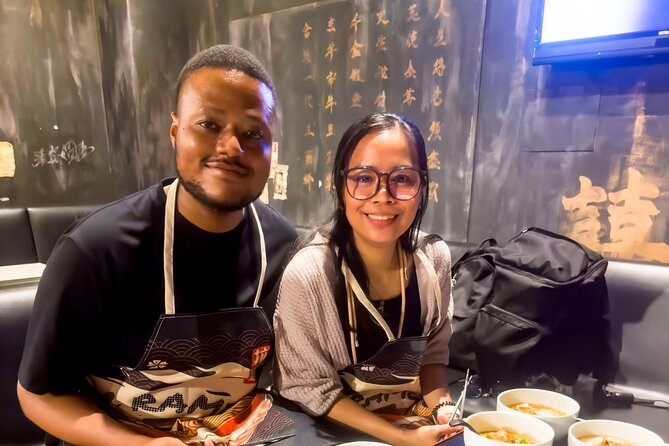
The setting is a small-group studio rather than a restaurant dining room. That matters because the class is built around participation. With a maximum of eight people, you are not watching a chef work from across a large room. You are handling the dough, taking part in the preparation, and building your own bowls.
A few more options to weigh up in Tokyo
- Tokyo Disney Resort – Tokyo Disneyland & Tokyo DisneySea Park Tickets
★ 4.8 · 99,488 reviews - SHIBUYA SKY Ticket
★ 4.7 · 46,509 reviews - JR Whole Japan Rail Pass
★ 4.8 · 29,150 reviews
What happens during the 90 minutes
The schedule moves quickly but has a sensible rhythm. You get a short briefing first, then work through preparation, cooking, plating, and tasting.
First 10 minutes: check-in and ramen basics
The opening briefing gets everyone settled and explains the steps ahead. The instructors speak English and Japanese, with the class designed for first-timers rather than trained cooks.
This is a useful start because ramen has several moving parts. Dough texture, noodle thickness, soup strength, toppings, and cooking time all affect the final bowl. An instructor such as Kazuki, Kensei, Kai, or Arata may lead your session, and the teaching style appears friendly, direct, and easy to follow.
You should expect demonstrations and step-by-step guidance rather than a lecture. That keeps the class light and gives you time to ask questions. A few people have had especially small sessions, including classes with only two participants, which can provide extra time with the instructor. Group size varies, so do not count on a private lesson, but the eight-person limit keeps the class manageable.
Five minutes: preparing the chicken chashu
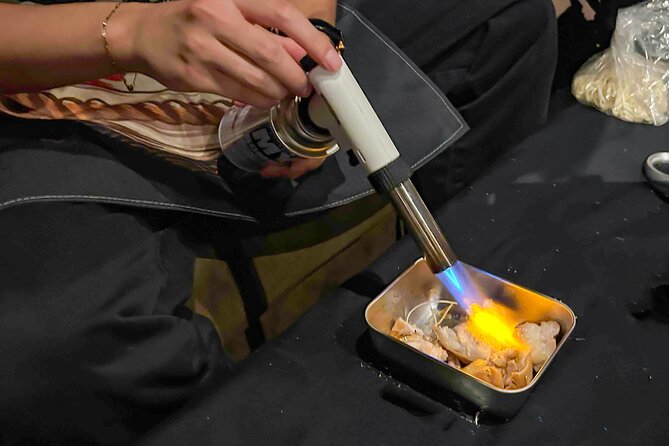
Next comes chicken chashu preparation. The meat is part of your hands-on work, while other ingredients and longer cooking steps are handled by the studio.
This is a good compromise for a 90-minute class. Traditional ramen broth can take many hours, so making every soup from raw ingredients would either produce weak results or turn this into a much longer course. By preparing the soup bases ahead of time, the class gives you time to focus on the parts you can realistically repeat at home.
The chicken also gives you a chance to work with a key ramen topping rather than simply adding ready-made meat at the end. You later finish the chashu before plating, which gives the preparation a clear beginning and end.
A completely different kind of day out:
- Mt Fuji and Hakone 1-Day Bus Tour Return by Bullet Train
★ 5.0 · 26,383 reviews - TOKYO SKYTREE® Ticket
★ 4.7 · 25,136 reviews - teamLab Borderless Tickets: MORI Building DIGITAL ART MUSEUM
★ 4.7 · 24,126 reviews - teamLab Planets TOKYO Ticket
★ 4.7 · 21,663 reviews
Twenty minutes: kneading and cutting fresh noodles
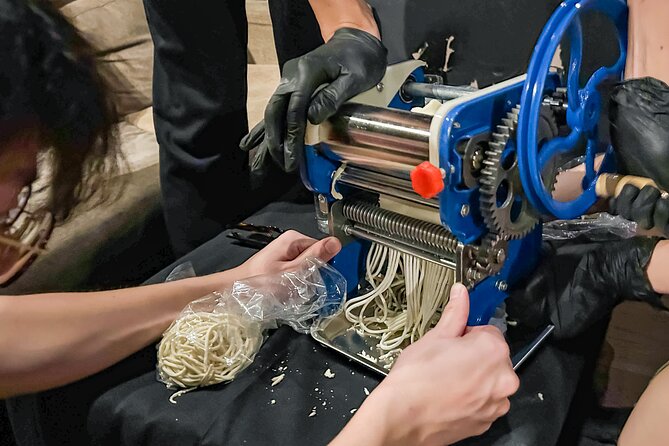
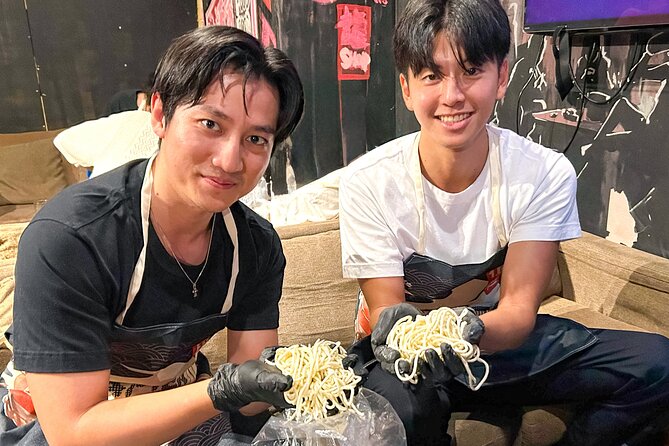
The noodle-making section is the heart of the experience. You knead the dough, roll it, and cut it into noodles using a professional noodle machine.
There is a nice balance here between traditional technique and practical equipment. You get the feel of working the dough by hand, then use the cutter to create even noodles. One instructor, Kazuki, has encouraged hand technique over relying only on electronic equipment, which makes sense for a class focused on understanding the process.
Do not expect every noodle to look factory-perfect. That is part of the fun. The dough may resist, the rolling stage may take some effort, and the machine can feel like a workout. Those small struggles make the result more satisfying, especially when the noodles reach the bowl.
You may get flour on your clothes during this stage. Aprons are provided, but I would still avoid wearing anything delicate or difficult to clean. This is a working kitchen activity, not a sit-down demonstration.
Ten minutes: finishing the chicken
After the noodle work, you finish the chicken chashu. The class continues to divide tasks so that you are involved in more than one part of the meal.
The instructors keep the pace moving, but the process remains beginner-friendly. You do not need prior cooking experience, and staff can help with technique and timing. If you have questions, ask them during this stage rather than waiting until the tasting period, since the cooking steps go by quickly.
Ten minutes: boiling noodles and adjusting soup
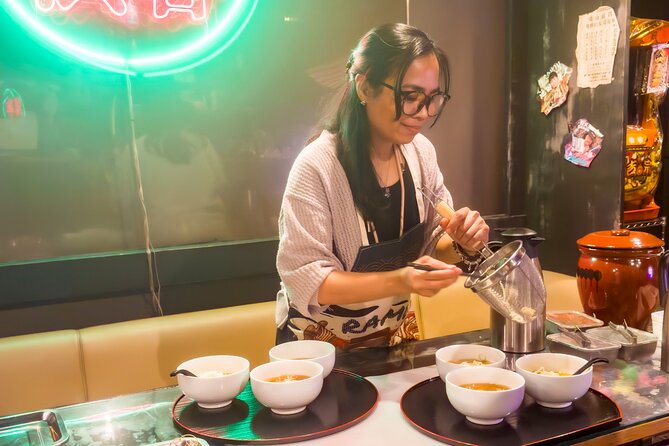
The noodles are boiled, and you prepare the three soup styles: tonkotsu, shoyu, and miso. The bases are prepared in advance because of their long cooking times, but you can adjust the soup to your preferred strength.
This is one of the most useful parts for anyone who eats ramen often. You can taste how the broths differ, then think about how salt, richness, and seasoning change the finished bowl. Tonkotsu brings the rich pork-bone style associated with creamy ramen. Shoyu gives you a soy-sauce-based profile, while miso adds a fuller, savory character.
The point is not to turn you into a ramen chef in one afternoon. It is to help you notice the building blocks of the dish. Tasting three types in the same session makes those differences easier to understand than ordering one bowl on three separate days.
Keep in mind that pork is among the listed ingredients, even though the topping you prepare is chicken chashu. The class also uses wheat, egg, soy, chicken, and pork, and complete prevention of cross-contamination cannot be guaranteed.
Five minutes: plating your ramen trio
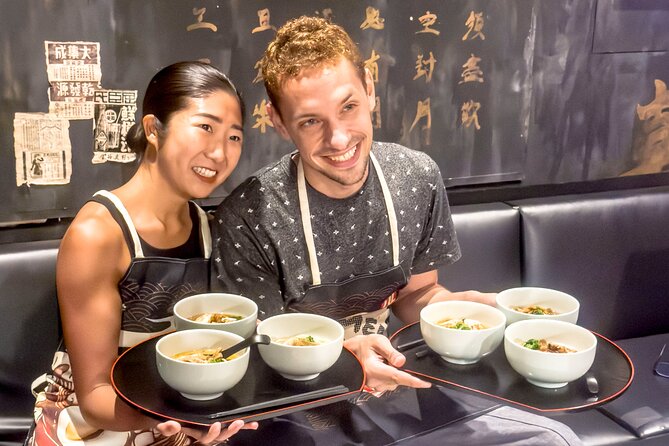
Plating is short, but it is where the separate pieces finally come together. You add noodles, soup, chicken chashu, and toppings to create three mini bowls.
This is the most photo-friendly moment. The three bowls make a colorful comparison, and you can photograph the finished set before eating. Photography is welcome, and the studio appreciates posts using #RamenDojoTokyo.
The bowls are smaller than standard restaurant portions, but do not mistake that for a light snack. Eating three different ramen bowls can make a full meal, particularly after handling dough and cooking. I would book a lunchtime or dinner session as a meal activity rather than planning another large meal immediately afterward.
Thirty minutes: tasting and photo time
The final half hour gives you time to eat, compare the broths, take pictures, and talk with the instructor. This longer tasting period helps the class avoid feeling like a rushed assembly line.
You can notice how the fresh noodles behave with each soup. A noodle that feels perfect with one broth may seem different with another, and that comparison is a central reason to choose this class over a simple ramen meal.
The food receives repeated praise for flavor, and the teaching receives just as much attention. Instructors such as Kazuki, Kensei, Kai, and Arata are described as patient, warm, funny, and clear in their explanations. That combination matters. A cooking activity can become frustrating if the teacher gives vague directions, but this class is designed to keep beginners involved without making them feel clumsy.
What you really make, and what is prepared ahead
The phrase make all three can sound like you will cook three complete ramen broths from raw ingredients. That is not quite what happens.
You make the noodles from scratch, prepare and finish the chicken chashu, adjust the soup bases, add toppings, and assemble three bowls. The tonkotsu, shoyu, and miso bases are prepared ahead because proper broth-making takes much longer than 90 minutes.
I see this as a sensible design rather than a flaw. A full broth course would require long simmering, more equipment, and a much longer visit. Here, you get the tactile work that teaches you the most in a short session, plus a chance to taste three finished styles.
The digital recipe is provided after class. The method is reported to be realistic for home cooking in Australia and elsewhere, without special equipment. That gives the experience more lasting value than a meal you simply enjoy and forget.
Why the $64 price can be worth it
At $64 per person, this is not a cheap bowl of ramen. If your only goal is to eat noodles, you can spend much less at a Tokyo ramen shop.
The value comes from combining a meal, a cooking lesson, English support, kitchen equipment, ingredients, and a cultural activity in 90 minutes. You also taste three styles instead of paying for three separate restaurant meals, and you receive a recipe to use later.
I would call the price fair for visitors who want to participate rather than just dine. It is especially useful on a short Tokyo stay, when you want an organized activity that fits around sightseeing. Couples and friends can share the work, compare results, and leave with something more memorable than another restaurant stop.
The value is weaker if you want a serious culinary course or expect to learn every stage of broth production. The soup bases are not cooked from scratch during the class, and the experience is built for accessibility and enjoyment rather than professional training.
Who should book this experience
I think this class suits:
- First-time cooks who want clear guidance
- Ramen fans who want to compare tonkotsu, shoyu, and miso
- Couples looking for a shared activity near Shibuya
- Families with children ages six and up
- Visitors who want an English-led cultural experience
- Anyone hoping to recreate the noodles at home
Children are recommended from age six, but adults should still follow the staff’s safety instructions closely. The class involves flour, hot cooking equipment, kitchen preparation, and stairs.
It may not suit people with severe wheat, egg, or soy allergies, celiac disease, severe airborne flour sensitivity, or strict dietary requirements. The listed ingredients include gluten, egg, soy, chicken, and pork. Partial accommodation for no chicken or pork, vegetarian, and vegan requests may be possible, but you need to ask in advance, and strict substitutes are not guaranteed.
The studio is accessible by stairs only. If you cannot use stairs, this is not the right choice.
Useful practical tips before you go
Arrive five to 10 minutes early, and contact the provider before the start time if you are running late. On class days, the emergency contacts are Instagram at @ramendojo_japan and [email protected].
Wear clothes that can handle a little flour. Aprons are supplied, but noodle making can get messy.
Plan your food carefully. Go with an appetite, since three mini bowls may add up to a substantial meal. I would also avoid booking the class directly after a heavy lunch.
Bring your questions. The instructors are there to explain the process, and the small group format gives you a better chance to ask about noodles, soup strength, and home preparation.
If your plans might change, cancellation is free up to 24 hours before the activity for a full refund. You can also reserve and pay later, which is useful when arranging a Tokyo schedule around weather, shopping, and other timed attractions.
Should you book Ramen Dojo Tokyo?
Book it if you want to do something with ramen, not simply eat it. The strongest parts are the fresh noodle work, the three-broth comparison, the friendly English instruction, and the recipe you can take home.
I would skip it if you need a strict allergy-safe kitchen, cannot manage stairs, or expect to cook the broths from the beginning. For everyone else, the $64 price buys a well-paced meal and a practical activity, with enough hands-on work to make the final ramen feel like your own.
FAQ
How long does Ramen Dojo Tokyo last?
The experience lasts 90 minutes. The schedule includes check-in, chicken preparation, noodle making, finishing the chicken, soup preparation, plating, and tasting.
Where is the studio located?
The studio is at 1F, 2-16-29 Ohashi, Meguro-ku, Tokyo 153-0044, Japan. It is about a 10-minute walk from Shibuya Station.
Which ramen styles will I taste?
You will make and taste three mini bowls: tonkotsu, shoyu, and miso.
Do I make the ramen noodles from scratch?
Yes. You knead the dough, roll it, and cut fresh noodles with a professional noodle machine.
Are the soup bases cooked from scratch during the class?
No. The long-cooking soup bases are prepared in advance. During the class, you adjust the soup and use the tonkotsu, shoyu, and miso bases to assemble your bowls.
Is the class taught in English?
Yes. English instruction is provided, and Japanese is also available. The listed instructors speak English and Japanese.
How many people can join the class?
The small-group class is limited to eight participants.
Are dietary accommodations available?
Partial accommodation may be possible for no chicken or pork, vegetarian, and vegan requests if you ask in advance. The class uses wheat, egg, soy, chicken, and pork, and complete prevention of cross-contamination cannot be guaranteed.
What should I wear and when should I arrive?
Aprons are provided, but flour may get on your clothing, so wear something practical. Arrive five to 10 minutes before the start time. Do not arrive more than 10 minutes early because there is no waiting area, and arrivals five or more minutes late may not be admitted.
Just added in Tokyo
- Manga Lesson with a Professional Japanese Manga Artist in Nakano★ 5.0 · 77 reviews
- Making a bento box with cute character look in Japan★ 5.0 · 15 reviews
- Tokyo/Ikebukuro Manga drawing workshop by pro-Manga artists★ 5.0 · 65 reviews
- Luxury Tokyo Sake, Cocktail, Whisky and Pairing Tour★ 5.0 · 18 reviews
- Tokyo Ueno Food & Nature & Localtown Tour: 10Dishes+ Drinks★ 5.0 · 34 reviews
- Make Your Own Bonsai with a Professional Bonsai Artist in Tokyo★ 4.5 · 18 reviews
- Make Traditional Nerikiri Sweets & Matcha experience in Shibuya★ 5.0 · 130 reviews
- Daikoku Parking Tokyo Drift & APIT Car Meet JDM Culture Tour★ 5.0 · 79 reviews
Tokyo Tours, compared.

Tokyo Disney Resort – Tokyo Disneyland & Tokyo DisneySea Park Tickets
Read our review →

Mt Fuji and Hakone 1-Day Bus Tour Return by Bullet Train
Read our review →

teamLab Borderless Tickets: MORI Building DIGITAL ART MUSEUM
Read our review →