Reviewed · TOKYO TOURS
Shibuya: Ramen Dojo Tokyo | Make All 3 (Tonkotsu/Shoyu/Miso)
Three bowls, one class, plenty to learn. This Shibuya ramen workshop gives you a hands-on way to explore tonkotsu, shoyu, and miso in one 90-minute session. I like the fresh noodle work with a professional cutter, and I like that you taste all three styles instead of committing to just one bowl. The main consideration is that the broth is prepared for you, so this is more a noodle-and-assembly class than a full broth-making lesson.
The small group, capped at eight people, should give you good access to the English-speaking instructor. I also like the practical recipe sent after class, which gives the experience value beyond the meal. At $86.22 per person, it is not a cheap lunch, but it is fair for a guided cooking activity, three tastings, equipment use, ingredients, and a lesson you can repeat at home.
In This Review
- Key Points Before You Book
- Why This Ramen Class Works in Shibuya
- What You Actually Make in 90 Minutes
- Kneading Dough and Cutting Fresh Noodles
- The Chicken Chashu Step
- Three Bowls, Three Different Ramen Styles
- Flavor Adjustments and Plating
- How Much Value Do You Get for $86.22?
- Who Will Enjoy This Most
- Timing Your Visit Around Shibuya
- What to Bring and What Is Provided
- Should You Book Ramen Dojo Tokyo?
- FAQ
- Where does the ramen class meet?
- How far is the studio from Shibuya Station?
- How long does the experience last?
- What types of ramen will I make?
- Are the ramen portions full-size?
- Is the class taught in English?
- How many people can join the class?
- Are ingredients and kitchen equipment included?
- Do I learn how to make the broth from scratch?
- Is the class suitable for people with food allergies?
- Is transportation included?
- Can I cancel for a full refund?
Key Points Before You Book
- Make three ramen styles: Compare tonkotsu, shoyu, and miso in one sitting.
- Work with fresh noodles: Knead dough and cut it using a professional noodle machine.
- Small group access: The maximum group size is eight, allowing close support from the instructor.
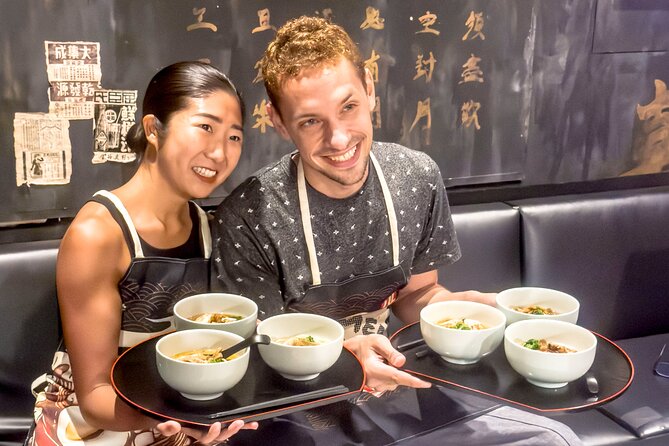
- Tasting is built in: Three mini bowls are included, so you finish with a proper meal.
- Shibuya location: The studio is about a 10-minute walk from Shibuya Station.
- Know the food limits: The class is not suitable for severe wheat, egg, or soy allergies, celiac disease, severe airborne flour sensitivity, or strict vegan and religious diets.
Why This Ramen Class Works in Shibuya
Tokyo has endless ramen shops. You can eat excellent bowls across the city without touching a rolling pin. This class offers something different: instead of only consuming ramen, you get to see how several parts come together.
The workshop takes place at a studio near Shibuya Station, with the start and finish at the same address. That makes the timing easy to manage. You can visit before class, walk over from the station, then return to Shibuya afterward without arranging a separate ride.
The location is at Umekita Building, 7-11 Maruyamachō, Shibuya, Tokyo 150-0044. The walk from the station takes about 10 minutes, so allow enough time to find the building and arrive ready for the check-in briefing.
I see the class as a good match for someone who wants a cultural activity with food at the center. It also suits families, couples, friends, and solo participants who enjoy making things rather than simply taking photographs. An 8-year-old was accommodated successfully, though the hands-on kitchen work still means an adult should be ready to help younger children.
A few more options to weigh up in Tokyo
- Tokyo Disney Resort – Tokyo Disneyland & Tokyo DisneySea Park Tickets
★ 4.8 · 99,488 reviews - SHIBUYA SKY Ticket
★ 4.7 · 46,509 reviews - JR Whole Japan Rail Pass
★ 4.8 · 29,150 reviews
What You Actually Make in 90 Minutes
The class follows a compact schedule. Ninety minutes is long enough to give you real kitchen work, but short enough to fit neatly into a busy Tokyo day.
The first 10 minutes cover check-in and a briefing. This is when you get oriented, learn the flow of the class, and receive instructions before handling the ingredients and equipment.
Next comes five minutes of chicken chashu preparation. Chashu is the sliced topping commonly associated with ramen, and here you work with chicken rather than simply receiving a finished garnish. This adds a useful cooking step, though it is brief.
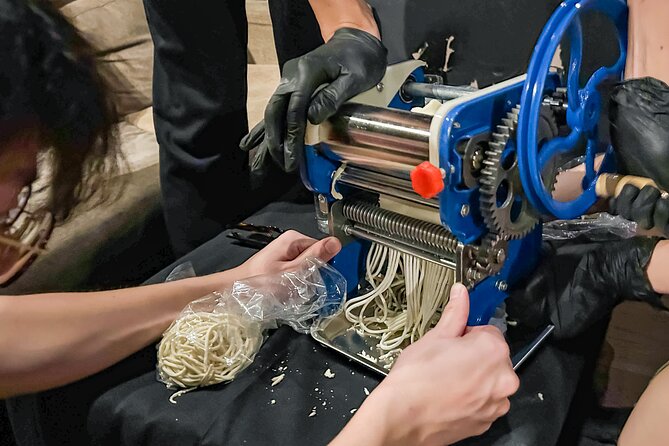
Noodle making receives the biggest early block, at 20 minutes. You knead the dough, then push it through a professional cutter. This is the most distinctive part of the class because it gives you a physical sense of how ramen noodles are formed. You are not just watching an instructor run a machine behind a counter.
After that, you spend 10 minutes finishing the chicken chashu. The schedule then moves to boiling the noodles and preparing the soups for another 10 minutes. The noodles need careful timing, so this part helps connect your earlier work with the final bowls.
Plating takes five minutes. You arrange the noodles, soup, chicken chashu, and toppings into three small servings. The portions are designed for tasting rather than for one enormous restaurant-style bowl, which is the right choice here. You can compare the styles without filling up after the first one.
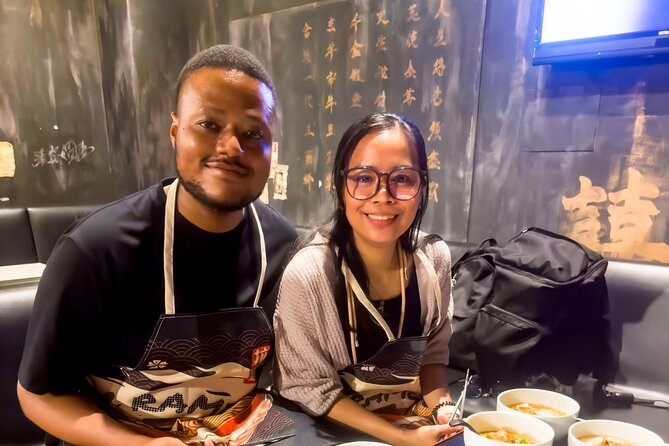
The final 30 minutes are for tasting and photographs. This is not a rushed stand-up sample. You sit down with the three mini bowls, adjust the flavors, take pictures, and eat what you made.
Kneading Dough and Cutting Fresh Noodles
The noodle section gives the class its strongest hands-on character. You knead the dough yourself, then use the professional cutter to form the noodles. For a first-time cook, the dough may feel awkward at first. That is normal, and patient guidance matters more than prior skill.
One participant described the process as difficult at first but manageable with the instructors’ help. That is useful advice for beginners: do not expect perfect noodles on your first attempt, but do expect clear support as you work through each stage.
The noodle machine also adds a sense of occasion. You are using kitchen equipment that helps produce a consistent shape, rather than trying to cut every strand with a home knife. The digital recipe provided after class can help you remember the ingredients and general method later.
Still, keep your expectations in check. The experience gives you a practical introduction, not a full professional noodle-making course. The supplied information does not promise detailed lessons on flour chemistry, hydration, or noodle thickness. You will get the useful basics and the satisfaction of making the noodles yourself.
The Chicken Chashu Step
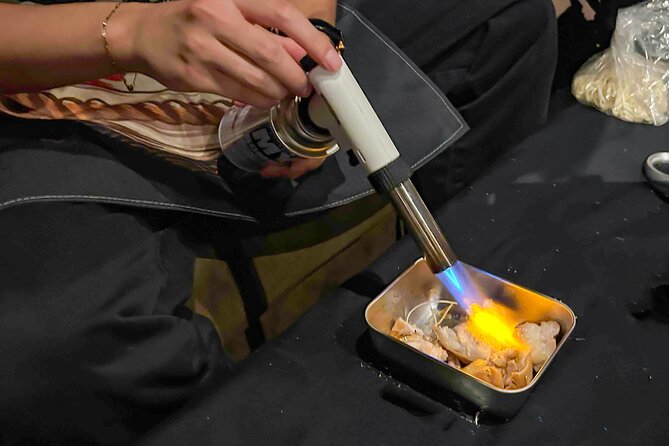
The chicken chashu preparation lasts only five minutes, followed by another 10 minutes to finish it. That means this part is a supporting activity rather than the main focus.
It is still worthwhile because toppings affect the final ramen as much as the noodles do. You learn how the chicken fits into the bowl and how a simple topping can make the finished dish look and taste more complete.
If you are hoping for a long lesson on meat preparation, this class may feel light. The schedule gives most of its attention to noodles, soup adjustment, plating, and tasting. I would view the chicken chashu as one useful element in a larger ramen lesson, not as a separate cooking course.
A completely different kind of day out:
- Mt Fuji and Hakone 1-Day Bus Tour Return by Bullet Train
★ 5.0 · 26,383 reviews - TOKYO SKYTREE® Ticket
★ 4.7 · 25,136 reviews - teamLab Borderless Tickets: MORI Building DIGITAL ART MUSEUM
★ 4.7 · 24,126 reviews - teamLab Planets TOKYO Ticket
★ 4.7 · 21,663 reviews
Three Bowls, Three Different Ramen Styles
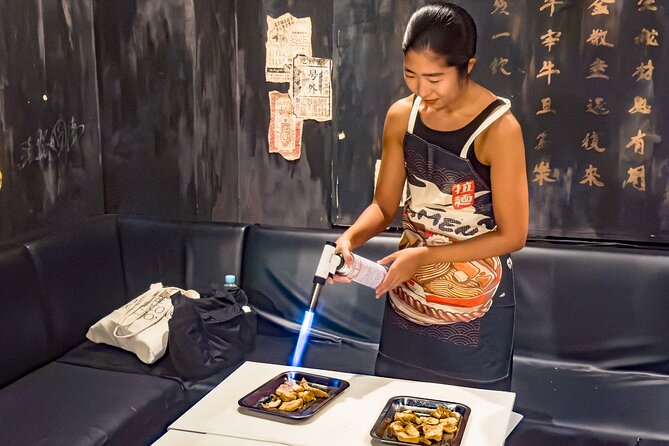
The best reason to book this experience is the side-by-side tasting. You prepare and sample three mini bowls: tonkotsu, shoyu, and miso.
Tonkotsu gives you one of the most recognizable ramen styles, with a broth profile that is different from the other two. Shoyu brings a soy sauce-based style into the comparison, while miso offers its own stronger, savory character. The exact balance can be adjusted to your taste during the session.
Tasting three styles in one class is more useful than eating one standard bowl and trying to remember it later. You can compare the soup, noodles, toppings, and seasoning while the differences are fresh in your mind.
The three small portions also solve a common problem with food activities: one serving can leave you too full to notice much else. Here, you can try all three without the first bowl ending your experiment. The three bowls together function as both lunch and a tasting lesson.
The broth is also where you should set a clear expectation. The ingredients for the noodles are prepared in advance, and the soups are shown and adjusted rather than made entirely from raw ingredients during the 90 minutes. One participant particularly wanted more broth instruction and found that part less detailed than expected.
That does not make the class poor value. It simply defines the lesson. If your main goal is to learn how to build a ramen stock from bones, aromatics, or long simmering, this is not the right format. If your goal is to make noodles, understand three soup styles, season them, and assemble attractive bowls, it fits much better.
Flavor Adjustments and Plating
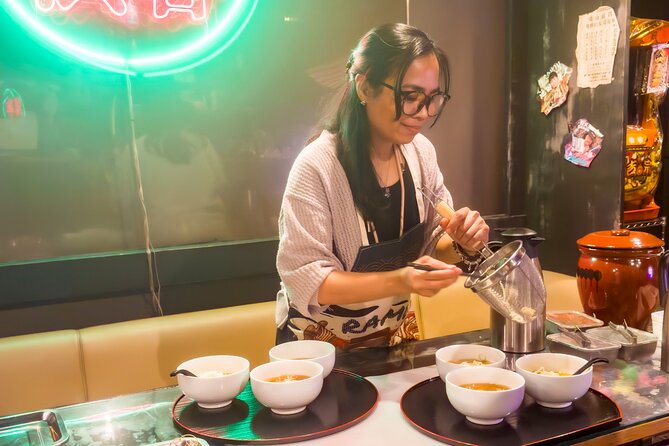
The class lets you adjust the soup to your preferred taste. This is a small detail with real practical value. At home, ramen is not only about following a fixed recipe. You also need to know how to change the balance when a soup is too salty, too mild, or not quite suited to your preference.
You then add toppings and arrange the three bowls. The photo time is built into the schedule, so you do not need to rush through the presentation. A trio of different ramen bowls naturally makes a more interesting picture than one ordinary serving.
I like that the activity connects cooking with presentation without making photography the whole point. You first do the work, then enjoy the result. The meal remains central.
The instructor’s role matters here. The class is conducted in English, and the small group should make it easier to ask questions or request help. The available feedback repeatedly praises the guides for being kind and patient, especially with beginners and children.
How Much Value Do You Get for $86.22?
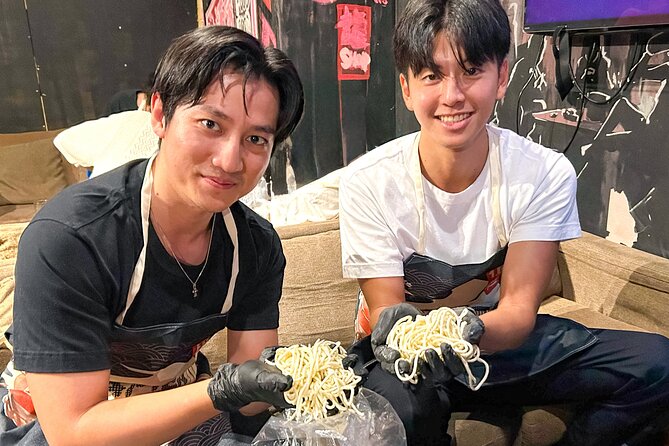
At $86.22 per person, this costs more than eating a bowl of ramen in Tokyo. That comparison is fair, but incomplete. You are paying for food, instruction, an English-speaking guide, ingredients, kitchen equipment, an apron, a small group, and a digital recipe.
The three mini bowls add to the value because you are not paying for a lesson and then buying lunch afterward. You leave having tasted all three styles. The recipe also gives you a way to repeat part of the experience at home.
The price makes the most sense if you value participation over quantity. A ramen shop will give you a larger serving for less money. This class gives you a guided activity, personal help, fresh noodle practice, and a better understanding of how the bowl is assembled.
The maximum of eight people is important. A much larger class could turn the noodle machine and plating steps into a queue. With eight or fewer participants, you have a better chance to receive corrections and ask questions without losing half the session waiting.
I would consider it good value for a visitor who wants a planned food activity near Shibuya. I would be more cautious if your only goal is to eat as much ramen as possible or learn advanced broth production.
Who Will Enjoy This Most
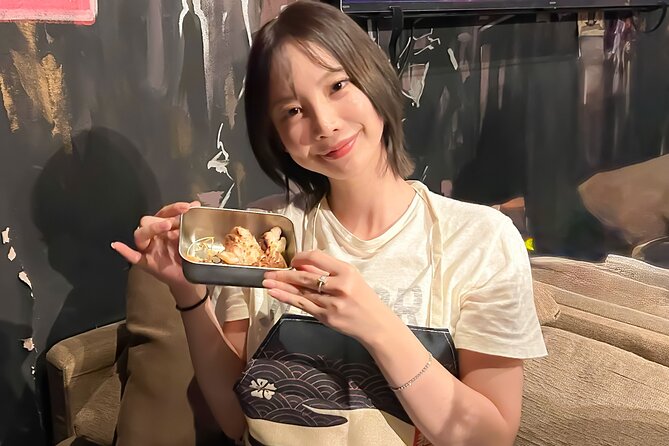
This workshop suits first-time cooks because the instructors provide close support and the process is broken into short steps. You do not need to arrive with professional kitchen skills.
It also works well for families, although the age and comfort level of each child matter. An 8-year-old was accommodated, and the activity has enough variety to hold a child’s interest: kneading, machine-cut noodles, toppings, and tasting. Adults should still expect to supervise younger children around kitchen tools and hot food.
Food-focused couples and friends may like the balance between learning and eating. You can work together, compare the three soup styles, and finish with photographs of the bowls you assembled.
Solo visitors should also find the format workable. The small group creates a social setting without requiring you to bring a partner. The English instruction is useful if you want to ask questions without relying on Japanese cooking vocabulary.
The class is less suitable for strict dietary needs. It is not intended for severe wheat, egg, or soy allergies, celiac disease, severe airborne flour sensitivity, or fully strict vegan or religious diets. Special dietary substitutes beyond the stated offering are not included.
Timing Your Visit Around Shibuya
The activity lasts about 90 minutes and begins and ends at the same studio. That makes it easy to place between other Shibuya plans.
Allow about 10 minutes to walk from Shibuya Station, plus extra time to find the building. The class has a set sequence, so arriving late could mean missing the briefing or an early preparation step.
Because no hotel pick-up or drop-off is included, you need to reach the meeting point on your own. The studio is near public transportation, and the fixed location means you can continue sightseeing after the meal.
I would avoid booking it immediately before a timed attraction if your schedule is tight. The class includes cooking, tasting, and photo time, and you will enjoy it more if you are not watching the clock.
Free cancellation is available when you cancel at least 24 hours before the local start time. Cancellations or changes within 24 hours are not refunded or accepted, so check your Tokyo plans before booking.
What to Bring and What Is Provided
An apron is supplied, along with all ingredients and kitchen equipment. You do not need to bring cooking tools.
The digital recipe is provided after the class. Keep it somewhere easy to access because its main value comes later, when you try to recreate the noodles or ramen at home.
Alcoholic drinks are not included, and personal expenses and gratuities are also outside the price. The key included food is the tasting of three mini bowls: tonkotsu, shoyu, and miso.
Wear something comfortable for a short kitchen session. The provided information does not specify a dress code, so there is no need to pack special cooking clothing.
Should You Book Ramen Dojo Tokyo?
Book it if you want to make fresh noodles, taste three ramen styles, and learn a repeatable home method in a small English-language class. The patient guidance, family-friendly tone, and three-bowl format make it especially appealing to beginners.
Think twice if broth-making is your main reason for booking. You will see and adjust the soups, but the experience does not provide a full from-scratch broth lesson. Strict dietary needs are another clear reason to choose a different activity.
For most visitors, this is a well-sized Shibuya food experience: practical, social, and filling without taking half a day. It gives you something more lasting than a restaurant meal, while still delivering the meal at the end.
FAQ
Where does the ramen class meet?
The class starts at Umekita Building, 7-11 Maruyamachō, Shibuya, Tokyo 150-0044, Japan.
How far is the studio from Shibuya Station?
The studio is about a 10-minute walk from Shibuya Station.
How long does the experience last?
The class lasts approximately 90 minutes.
What types of ramen will I make?
You will make and taste mini bowls in three styles: tonkotsu, shoyu, and miso.
Are the ramen portions full-size?
The experience includes three mini bowls for tasting, rather than three full-size restaurant bowls.
Is the class taught in English?
Yes. An English-speaking instructor leads the class.
How many people can join the class?
The maximum group size is eight participants.
Are ingredients and kitchen equipment included?
Yes. All ingredients and use of the kitchen equipment are included. An apron is also provided.
Do I learn how to make the broth from scratch?
The class shows three different soups and lets you adjust their flavors, but it does not provide a full from-scratch broth-making lesson.
Is the class suitable for people with food allergies?
It is not suitable for severe wheat, egg, or soy allergies, celiac disease, severe airborne flour sensitivity, or people requiring strict vegan or religious dietary compliance.
Is transportation included?
No. Hotel pick-up, drop-off, and private transportation are not included.
Can I cancel for a full refund?
Yes, if you cancel at least 24 hours before the experience start time. Cancellations within 24 hours are not refunded.
Just added in Tokyo
- A One-of-a-Kind Sushi Experience in a Special Place of Japan★ 5.0 · 15 reviews
- Tokyo Cute Bento Cooking Class – Make a Kawaii Character Lunchbox★ 5.0 · 126 reviews
- Japanese Home Cooking Class & Walk in Todoroki Temple Tokyo★ 5.0 · 88 reviews
- Japan Tokyo Tower Observatory Deck E-Ticket★ 4.0 · 34 reviews
- Catch a Baseball Game in Tokyo with a Local – Tickets Included★ 5.0 · 24 reviews
- JDM Experience with Fast&Furious RX-7 (English speaking Driver)★ 5.0 · 57 reviews
- Tokyo Private Day Tour by Car with English speaking Driver Guide★ 4.0 · 29 reviews
- Japan Classic 10 Day – One Life Adventures★ 5.0 · 129 reviews
Tokyo Tours, compared.

Tokyo Disney Resort – Tokyo Disneyland & Tokyo DisneySea Park Tickets
Read our review →
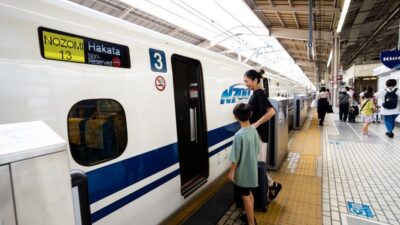

Mt Fuji and Hakone 1-Day Bus Tour Return by Bullet Train
Read our review →

teamLab Borderless Tickets: MORI Building DIGITAL ART MUSEUM
Read our review →