Reviewed · TOKYO TOURS
Tasting All Types of Sake with Sommelier
Sake makes more sense after one good tasting. This 90-minute session in Shinjuku turns a confusing drinks menu into something you can actually understand, with six to seven different sakes, clear explanations, and advice on what to order in Japan. I especially like the small sake-bar setting and the chance to taste styles that can be hard to find outside Japan.
I also like the guide’s practical approach. Aki, also called Akira, explains how sake is made, how to read a bottle label, and how different styles pair with food. The main consideration is that this is a serious tasting, not simply a quick drink stop. You receive a lot of information, and the alcohol adds up quickly, so eat beforehand.
In This Review
- What Makes This Shinjuku Sake Tasting Worth Your Time
- Starting at 4:00 pm in Shinjuku 3 Chome
- The Short Walk to the Sake Bar
- A Tasting That Covers More Than One Sake Style
- Learning How Sake Is Made
- How to Read a Sake Label in Japan
- Aki’s Role: Teacher, Host, and Tokyo Adviser
- Adding Kabukicho and Golden Gai to the Conversation
- Is the $62.76 Price Fair?
- Group Size, Pace, and Who Will Enjoy It
- Practical Details Before You Book
- Should You Book This Sake Experience?
- FAQ
- Where does the sake tasting take place?
- What time does the experience start?
- How long does the sake tasting last?
- How many types of sake will I taste?
- What styles of sake are included?
- Is the tasting suitable for beginners?
- Is the guide able to speak English?
- Does the experience include food?
- What is the maximum group size?
- Can I cancel for a full refund?
What Makes This Shinjuku Sake Tasting Worth Your Time
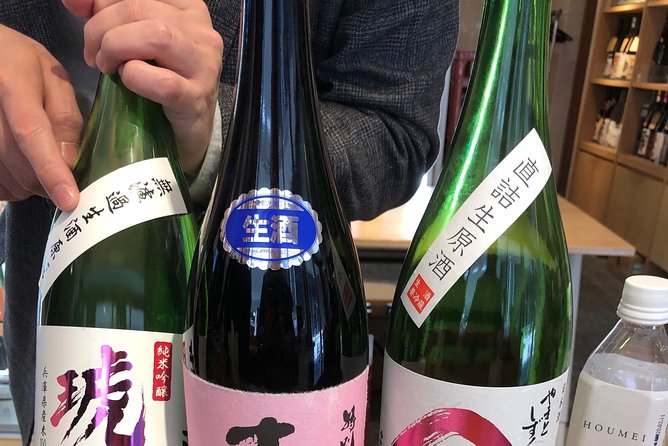
- Six to seven contrasting sakes: Taste sweet, dry, sparkling, hot, pasteurized, and unpasteurized styles rather than sampling one nearly identical pour after another.
- Aki’s clear teaching style: He explains production, flavor, history, labels, and drinking methods in friendly English, while leaving room for questions.
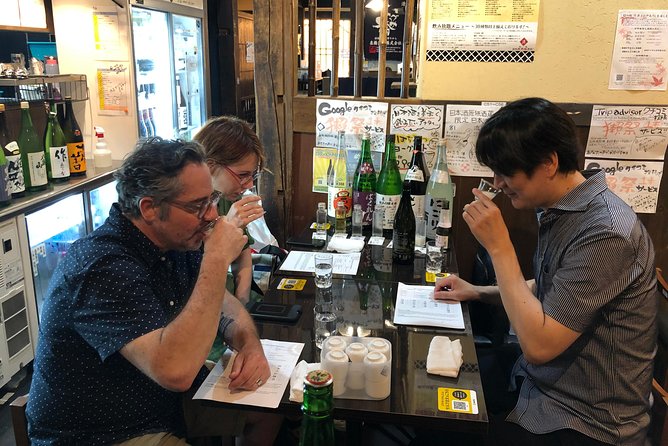
- A small sake bar beside Louis Vuitton Shinjuku: The tasting takes place in a compact bar setting rather than a large formal classroom.
- Useful shopping advice: You learn what to look for when buying sake in Japan or choosing a bottle at a restaurant.
- A short walk through Shinjuku: The session includes some orientation around Shinjuku 3 Chome, Kabukicho, and Golden Gai.
- A good introduction for beginners: You can arrive knowing almost nothing about nihonshu and leave with a working vocabulary for ordering it.
Starting at 4:00 pm in Shinjuku 3 Chome
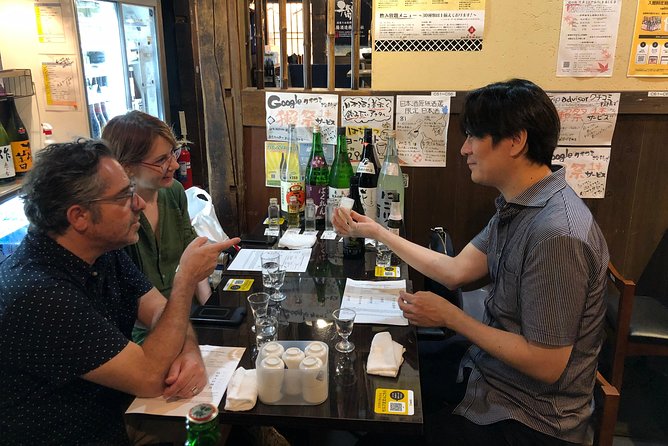
The meeting point is in front of Shinjuku San Chome at 3 Chome 4 8, Shinjuku City. The experience begins at 4:00 pm and finishes back at the same general meeting point.
That location matters. Shinjuku is one of Tokyo’s easiest places to reach by train, and the meeting area puts you close to department stores, restaurants, bars, Kabukicho, and Golden Gai. You do not need to build a separate day around this tasting. It fits neatly into an afternoon of shopping or sightseeing before dinner.
The opening part lasts only about five minutes. Aki talks briefly about Shinjuku and then gives a little background on Shinjuku 3 Chome. This is not a full neighborhood tour, but it helps place the tasting in one of Tokyo’s best-known entertainment districts.
You should pay close attention when meeting the guide. Shinjuku can be confusing, especially around station exits and crowded streets. Aki makes a point of finding participants at the busy meeting spot, which is useful if you are new to the area.
A few more options to weigh up in Tokyo
- Tokyo Disney Resort – Tokyo Disneyland & Tokyo DisneySea Park Tickets
★ 4.8 · 99,488 reviews - SHIBUYA SKY Ticket
★ 4.7 · 46,509 reviews - JR Whole Japan Rail Pass
★ 4.8 · 29,150 reviews
The Short Walk to the Sake Bar
From Shinjuku 3 Chome, the group walks toward the sake bar beside Louis Vuitton Shinjuku. The walk is brief, with the main tasting taking about 1 hour and 20 minutes. The full experience is advertised at approximately 1 hour and 30 minutes, though one participant found the tasting lasted closer to two hours.
That difference is worth keeping in mind if you have a dinner reservation immediately afterward. The official duration gives you a good planning guide, but an enthusiastic discussion and questions can stretch the session.
The stop beside Louis Vuitton is easy to use as a landmark. Still, the meeting and bar area are in the middle of central Shinjuku, so allow time to reach the first meeting point. The experience is near public transportation, but the exact train exit you use can make a large difference in how quickly you arrive.
A Tasting That Covers More Than One Sake Style
The heart of the experience is the tasting itself. You try around six or seven types of sake, with an additional welcome sake possible. The selection can include sparkling, sweet, dry, hot, pasteurized, and unpasteurized examples.
That range is the best reason to book. If you order one sake with dinner, you may decide only that you like or dislike sake. Here, the contrast between styles helps you work out what you actually enjoy.
A sparkling sake may feel gentle and approachable. A dry sake can be sharper and cleaner. A sweet pour may work better with certain foods, while a more delicate bottle may be easier to appreciate chilled. Hot sake gives you another point of comparison, since temperature changes the way aromas and flavors come across.
The guide explains what he notices in each pour and how it is best served. That makes the tasting practical rather than purely academic. You are not just told that two bottles are different. You get help understanding why they feel different and when you might choose one over another.
The tasting also includes special sake available only in Japan. One useful point is unpasteurized sake, which can be difficult to ship abroad. If you already enjoy sake, this may be the most appealing part of the session because it gives you access to styles you may not have encountered at home.
Learning How Sake Is Made
Aki gives an overview of how sake is produced, along with the ingredients, aging, market, and broad categories of nihonshu. He also provides a small pamphlet covering the making of sake and its different types.
The handout is useful after the tasting, especially if you want to remember terms while shopping. You can use it as a simple reference when you are standing in front of a refrigerated shelf filled with Japanese labels.
The session is not aimed only at beginners. It can also suit a sake drinker who wants to understand production more clearly. Aki also has experience with whiskey and wine, so questions may extend beyond sake, though the main focus remains nihonshu.
One minor limitation is that the handout may not list every bottle tasted or provide detailed figures for each one, such as acidity or pasteurization information. If those details matter to you, ask Aki while each bottle is being served and take your own notes.
A completely different kind of day out:
- Mt Fuji and Hakone 1-Day Bus Tour Return by Bullet Train
★ 5.0 · 26,383 reviews - TOKYO SKYTREE® Ticket
★ 4.7 · 25,136 reviews - teamLab Borderless Tickets: MORI Building DIGITAL ART MUSEUM
★ 4.7 · 24,126 reviews - teamLab Planets TOKYO Ticket
★ 4.7 · 21,663 reviews
How to Read a Sake Label in Japan
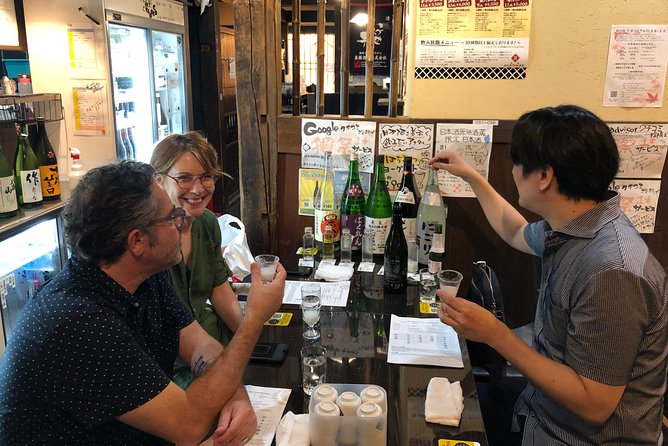
For many people, the label lesson is the most useful part of the afternoon. Japanese sake bottles can appear difficult to decode, particularly when you are shopping without Japanese language skills.
Aki explains the main information to look for and how to choose a bottle based on your personal taste. That is valuable because sake labels can tell you far more than simply the producer’s name, but the details are not always obvious to a first-time buyer.
You learn how to connect label information with flavor. The goal is not to memorize every technical term. It is to leave with enough confidence to ask for something dry, sweet, sparkling, hot, or unpasteurized, and to understand the answer you receive.
I would book this early in a Tokyo visit if sake is part of your food plans. The lesson can help you order at later dinners and make better choices in shops. Several people found that timing useful, since the experience gives you a basic sake vocabulary before you start exploring restaurants on your own.
Aki’s Role: Teacher, Host, and Tokyo Adviser
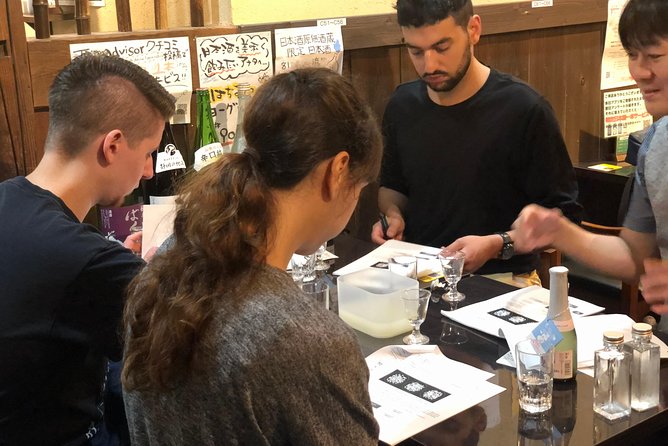
The guide is the central reason this experience receives such strong praise. Aki is described as friendly, funny, patient, passionate, and very well informed about sake. He speaks good English and makes it easy to ask questions, including questions not directly related to sake.
That personality matters in a tasting. Technical explanations can become dry, especially when you are learning about brewing methods, pasteurization, and flavor profiles. Aki keeps the mood relaxed while still offering enough detail for people who want more than a casual drink.
He also gives advice about Japan, Tokyo nightlife, places to visit, and things to avoid. His experience as a well-traveled guide adds context beyond the glass in front of you.
The strongest praise centers on his ability to combine information with conversation. You get a class, but it does not feel like a lecture. Friends and families can enjoy it together, and first-time sake drinkers should feel comfortable asking basic questions.
Adding Kabukicho and Golden Gai to the Conversation
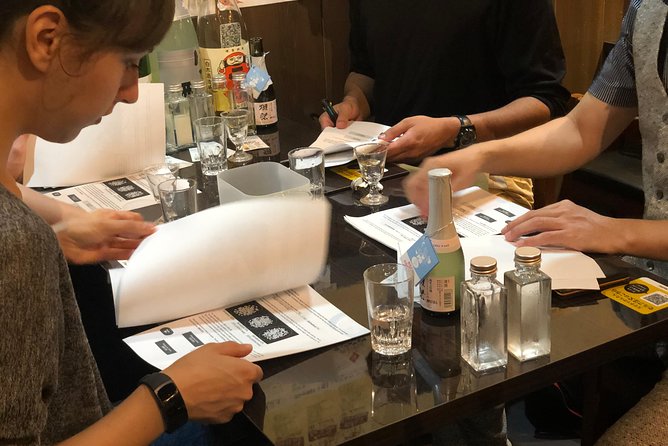
The experience includes discussion of Kabukicho and Golden Gai, two well-known parts of Shinjuku’s nightlife district. These areas add local color to an afternoon that might otherwise remain inside the bar.
Do not expect a long guided walk through every alley. The published timing gives only a short introduction around the meeting area and the bar. The value is in the orientation and advice, particularly if you plan to explore Shinjuku after the tasting.
Golden Gai is especially relevant after a sake session because it is known for tiny bars and a distinct evening atmosphere. Aki can provide pointers about Tokyo nightlife, but you should still treat the tasting as the main event rather than a full nightlife tour.
The end point returns to the meeting area, leaving you in a useful part of town for dinner, shopping, or further exploration. Just remember that the tasting finishes after alcohol consumption, so pace yourself before deciding on a late-night plan.
Is the $62.76 Price Fair?
At $62.76 per person, this is not the cheapest way to have a drink in Tokyo. It is also not priced like a simple bar crawl. You are paying for six or seven pours, an expert-led explanation, a printed guide, label-reading advice, and access to sake that may be difficult to find outside Japan.
The value is strongest if you are curious about sake and expect to order it again during your trip. One useful lesson can prevent several uninformed purchases or disappointing orders later.
The price also makes more sense for people who want a structured experience. You could certainly visit a sake bar alone for less money, but you would not necessarily know what you were drinking, why the bottles differ, or how to choose the next one.
For a group of friends or family members, the tasting offers a shared activity that does not require anyone to be a sake expert. It also works well as an early-trip orientation, provided everyone is comfortable with alcohol and has eaten first.
Group Size, Pace, and Who Will Enjoy It
The group is limited to a maximum of 12 people. That is small enough for questions and conversation, though the experience may feel more personal when only a few people book. One couple received an especially private-feeling session because they were the only participants at their time.
A group of 12 is still large enough that you should not expect a one-on-one consultation for the entire tasting. If you have a particular interest, such as unpasteurized sake or food pairing, ask about it early.
I would recommend this for:
- First-time sake drinkers who want an easy introduction
- Sake fans looking for Japanese-only bottles
- Couples, families, and friends who enjoy guided tastings
- Visitors who want help shopping for sake in Japan
- People planning to explore Tokyo nightlife after an afternoon activity
I would be more cautious about booking it if you dislike alcohol tastings, prefer a fast-moving sightseeing tour, or have a strict schedule after 5:30 pm. The teaching is detailed, and the session can run longer when discussion gets going.
Practical Details Before You Book
Confirmation is provided when you book, and the experience uses a mobile ticket. Most people can participate, and public transportation is nearby.
The activity begins at 4:00 pm. It ends back at the meeting point, so you do not need to arrange a separate return transfer. The maximum group size is 12.
Eat before you arrive. This is one of the most practical tips for enjoying the afternoon. Six or seven pours, plus a welcome drink, can affect you more than expected, especially when you are focused on listening and comparing flavors.
Free cancellation is available if you cancel at least 24 hours before the start time. Cancellations made less than 24 hours in advance are not refunded, and changes within that same period are not accepted. Cutoff times follow local Tokyo time.
Should You Book This Sake Experience?
I would book it if you want to understand sake rather than simply taste it. The combination of contrasting pours, label advice, rare Japanese bottles, and Aki’s relaxed teaching style gives you tools you can use throughout the rest of your trip.
The best timing is early in your Tokyo stay, after a proper meal and before a free evening in Shinjuku. You can use what you learn at restaurants, department-store food halls, and bottle shops.
Skip it if you only want a quick drink or a broad walking tour of Shinjuku. But if sake feels confusing, this session gives you a friendly way in, with enough detail to make your next order much more confident.
FAQ
Where does the sake tasting take place?
The experience meets in Shinjuku 3 Chome at 3 Chome 4 8, Shinjuku City, Tokyo. The sake bar is beside Louis Vuitton Shinjuku.
What time does the experience start?
The start time is 4:00 pm.
How long does the sake tasting last?
The advertised duration is approximately 1 hour and 30 minutes. The main tasting portion takes about 1 hour and 20 minutes, though the session can last longer when discussion continues.
How many types of sake will I taste?
You will taste approximately six to seven types of sake, with an additional welcome sake possible.
What styles of sake are included?
The tasting can include sparkling, sweet, dry, hot, pasteurized, and unpasteurized sake.
Is the tasting suitable for beginners?
Yes. The session explains how sake is made, how to read a label, how to choose a bottle, and how different types are best enjoyed.
Is the guide able to speak English?
The guide, Aki or Akira, is described as speaking good English and answering questions during the session.
Does the experience include food?
The provided information describes sake tastings but does not state that food is included. Eat before arriving so you are not drinking on an empty stomach.
What is the maximum group size?
The experience accepts a maximum of 12 participants.
Can I cancel for a full refund?
Yes, if you cancel at least 24 hours before the scheduled start time. Cancellations made less than 24 hours before the start time are not refunded.
Just added in Tokyo
- A One-of-a-Kind Sushi Experience in a Special Place of Japan★ 5.0 · 15 reviews
- Tokyo Cute Bento Cooking Class – Make a Kawaii Character Lunchbox★ 5.0 · 126 reviews
- Japanese Home Cooking Class & Walk in Todoroki Temple Tokyo★ 5.0 · 88 reviews
- Japan Tokyo Tower Observatory Deck E-Ticket★ 4.0 · 34 reviews
- Catch a Baseball Game in Tokyo with a Local – Tickets Included★ 5.0 · 24 reviews
- JDM Experience with Fast&Furious RX-7 (English speaking Driver)★ 5.0 · 57 reviews
- Tokyo Private Day Tour by Car with English speaking Driver Guide★ 4.0 · 29 reviews
- Japan Classic 10 Day – One Life Adventures★ 5.0 · 129 reviews
Tokyo Tours, compared.

Tokyo Disney Resort – Tokyo Disneyland & Tokyo DisneySea Park Tickets
Read our review →
Mt Fuji and Hakone 1-Day Bus Tour Return by Bullet Train
Read our review →

teamLab Borderless Tickets: MORI Building DIGITAL ART MUSEUM
Read our review →