Reviewed · TOKYO TOURS
Tokyo: Calligraphy on Kanji Fan & Scroll with Drink
Brush, ink, and a little patience. This 80-minute workshop at Shodo Cafe 7557 gives you a calm break from central Tokyo while teaching the basics of Japanese calligraphy, or shodō. I like the personal focus: you can write your name or a favorite word in kanji, then place it on a traditional fan and hanging scroll. I also like the generous collection of take-home items, including a personalized hanko stamp, keychain, coaster, pouch, and tote bag.
The main consideration is that calligraphy takes practice. Your first strokes may look more like ink experiments than polished art, and the activity can last anywhere from 60 minutes to two hours. The instructors are patient, but you should come ready to slow down and repeat the basic movements before working on your final pieces.
In This Review
- Key Points to Know Before You Go
- Finding Shodo Cafe 7557 in Roppongi
- A Quiet Start With Matcha or Another Drink
- Learning Why Each Brush Stroke Matters
- Choosing a Name or Favorite Kanji
- Creating the Fan and Hanging Scroll
- Making Your Hanko Stamp and Sorting the Souvenirs
- How the Instructors Shape the Experience
- Is $53 a Good Value in Tokyo?
- Who Should Book This Calligraphy Class?
- Booking, Cancellation, and Practical Details
- Should You Book It?
- FAQ
- Where is the calligraphy class located?
- How do I reach the studio by train?
- How long does the activity last?
- Is the lesson taught in English?
- What drinks are included?
- What will I create during the workshop?
- What souvenirs are included?
- Can I cancel the booking?
Key Points to Know Before You Go
- Three minutes from Roppongi Station: The studio is on the second floor of the Crest Roppongi Building, near the National Art Center Tokyo.
- A personal kanji project: Choose a favorite character or have your name translated into kanji, then use it on your handmade artwork.
- More than a brush lesson: You practice strokes, learn the meaning of the characters, and create a hanging scroll and traditional paper fan.
- A drink is included: Pick a matcha latte, green tea, coffee, soda, or beer while you work.
- A large souvenir package: Your artwork comes with a hiragana hanko stamp, kanji goods, and other small gifts.
- Friendly for first-timers: English instruction, wheelchair access, and patient guidance make this suitable for beginners and families.
Finding Shodo Cafe 7557 in Roppongi
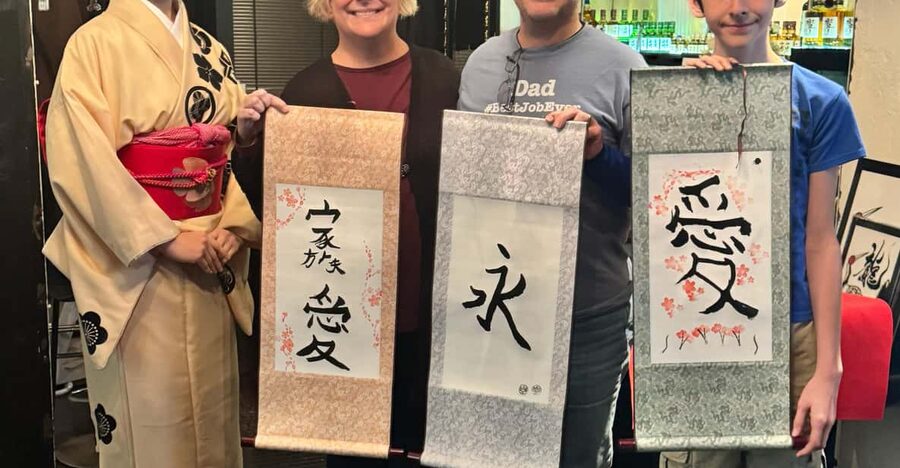
Shodo Cafe 7557 sits at 7-9-3 Roppongi, Minato-ku, on the second floor of the Crest Roppongi Building. It is close to the National Art Center Tokyo and easy to reach from the Toei Oedo Line.
From Roppongi Station, use Exit 7. Cross the pedestrian crossing toward Family Mart, then keep to the right and walk toward the National Art Center along Bijutsukan Dori. Look for a large crane sign on the left. The studio is in that building, upstairs.
I would allow a few extra minutes to find the entrance, especially if you are carrying luggage or arriving with children. Searching for Shodocafe7557 in Google Maps should help. If you take a taxi, show the driver the studio name and mention the Crest Roppongi Building near the National Art Center Tokyo.
The location works well as part of a museum day. You can visit the National Art Center before or after the class, though you should check your start time before planning a tightly packed afternoon. The class is listed as 80 minutes, but the actual activity may run from one hour to two hours.
A few more options to weigh up in Tokyo
- Tokyo Disney Resort – Tokyo Disneyland & Tokyo DisneySea Park Tickets
★ 4.8 · 99,488 reviews - SHIBUYA SKY Ticket
★ 4.7 · 46,509 reviews - JR Whole Japan Rail Pass
★ 4.8 · 29,150 reviews
A Quiet Start With Matcha or Another Drink
The experience begins in the studio with a drink. Matcha latte is the natural choice, but you can also order green tea, coffee, soda, or beer. This small detail matters because the activity is meant to feel calm rather than rushed. You have a chance to settle in before handling the brush.
The drink is included in the $53 price, which makes the class feel more like a relaxed cultural visit than a simple craft lesson. Additional food and drinks are not included, so keep that in mind if you are looking for a full café meal.
The setting is especially useful after a busy day in Tokyo. Roppongi can be energetic, crowded, and full of bright signs. Inside the studio, the focus shifts to ink, paper, and controlled movement. You are still in one of Tokyo’s busiest districts, but the class gives you a quieter hour.
Learning Why Each Brush Stroke Matters
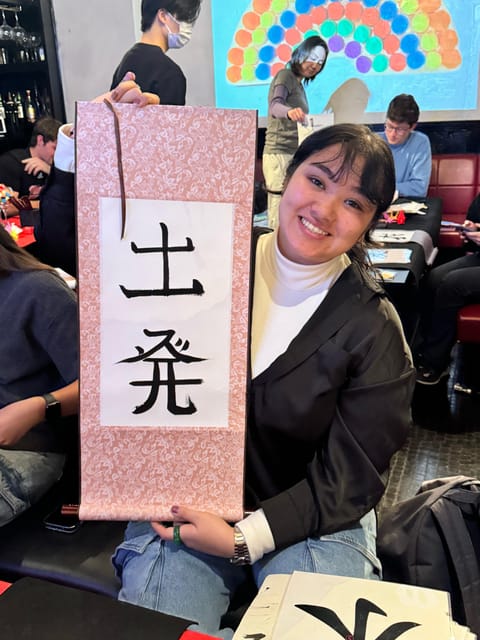
Japanese calligraphy is not simply decorative handwriting. The lesson introduces the basic brush strokes and explains how the order and direction of those strokes shape the character. You learn that a kanji character has structure, balance, and meaning.
The instructors guide you through practice attempts before you work on the final fan or scroll. This is important for beginners. You do not need to arrive with artistic talent or any knowledge of Japanese. The teaching is in English, and the focus is on helping you understand the process one step at a time.
The brush can be tricky at first. Pressure changes the width of the line, and the amount of ink affects the finished mark. Several people found the practice stage challenging but enjoyable, which is exactly the right expectation. You may not produce a perfect character immediately, but repeated attempts let you see progress.
I would not treat this as a class where you sit back and watch an expert perform. You will be doing the work yourself. That is what makes the final souvenirs meaningful, but it also means you should accept a few uneven strokes along the way.
Choosing a Name or Favorite Kanji
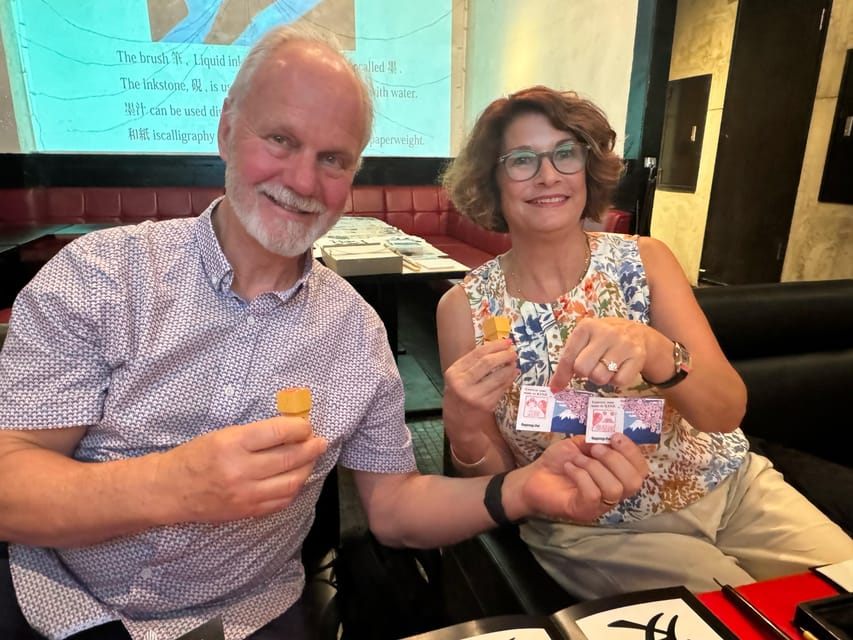
One of the best parts of the workshop is deciding what to write. You can choose a favorite kanji character or have your name translated into kanji. The instructors explain the meaning behind the selected character, so the finished work is not just a decorative symbol with no connection to you.
When you book, provide the names of all participants in English. The studio may prepare a special animated video showing your names in kanji and explaining their meaning. This is a thoughtful extra, and it gives the name translation more context than a simple printed card.
You can also ask about using a different word if the prepared name option is not what you want. One useful tip is to share your preferred word or theme in advance. If you want a word connected to a quality, place, or personal interest, early communication gives the instructors more time to prepare.
Names can be complicated across languages, so you should view the translation as a creative Japanese rendering rather than a direct spelling in the Latin alphabet. The point is to connect your name with kanji sounds and meanings. Ask questions if you want to understand why a particular character was selected.
A completely different kind of day out:
- Mt Fuji and Hakone 1-Day Bus Tour Return by Bullet Train
★ 5.0 · 26,383 reviews - TOKYO SKYTREE® Ticket
★ 4.7 · 25,136 reviews - teamLab Borderless Tickets: MORI Building DIGITAL ART MUSEUM
★ 4.7 · 24,126 reviews - teamLab Planets TOKYO Ticket
★ 4.7 · 21,663 reviews
Creating the Fan and Hanging Scroll
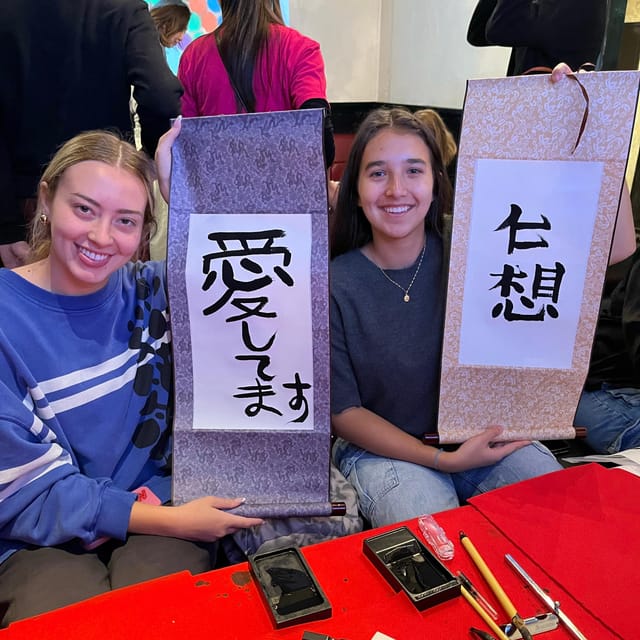
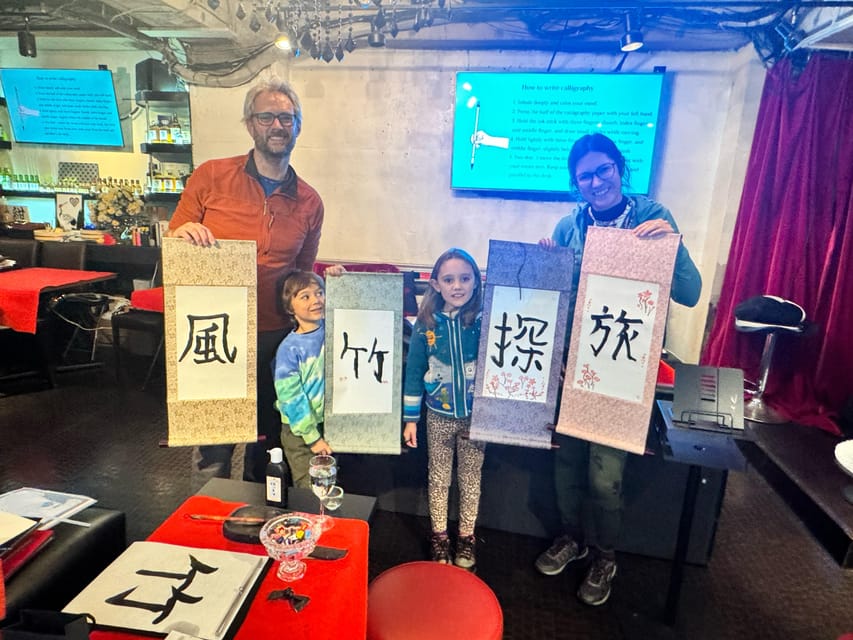
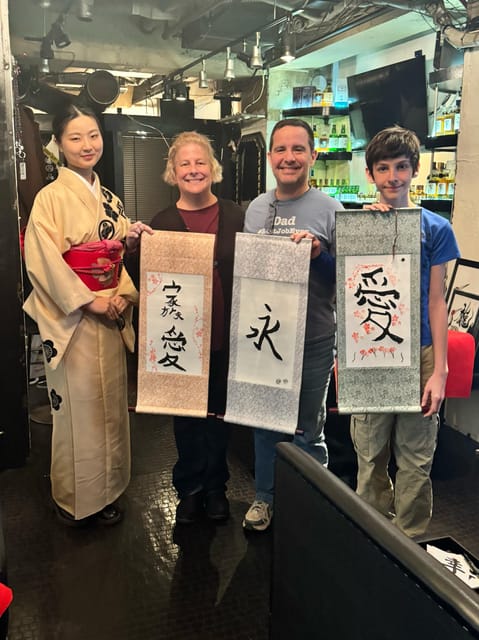
The final art projects turn the lesson into something you can display at home. You create an uchiwa, a traditional Japanese paper fan, and a kakejiku, or hanging scroll. Both give you a different surface and a different feel.
The fan is a practical souvenir with a distinctly Japanese shape. It also gives you a compact canvas for your chosen character. The hanging scroll feels more formal and display-worthy, especially if you want to remember the experience as a piece of home décor.
The activity information describes the calligraphy board and folding fan, or hanging scroll, as included, while the main experience description says you create both the fan and scroll. Since the exact combination can vary, I would confirm the final project arrangement when booking if having both pieces is essential to you.
You will practice before using the final materials. That is good news for anyone worried about making a mistake. Still, ink is permanent once it lands on the finished paper, so listen carefully to the brush guidance and take your time.
The final work will probably have small imperfections. I see that as part of the charm. This is not a factory-made souvenir. It records your own attempt to learn a traditional art form in Tokyo.
Making Your Hanko Stamp and Sorting the Souvenirs
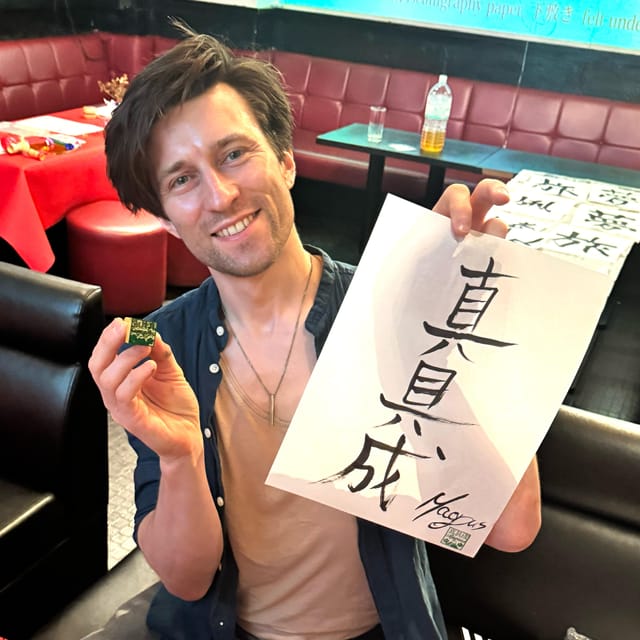
The personalized hanko stamp is one of the most distinctive inclusions. The stamp uses your name in hiragana and gives you a small personal mark to take home. In Japan, personal seals have a long practical and cultural role, so this souvenir connects more directly with everyday Japanese writing than a standard souvenir-shop trinket.
The included items also include:
- A kanji tote bag
- A kanji keychain
- A kanji coaster
- A kanji pouch
- Your calligraphy artwork
- A personalized hiragana hanko stamp
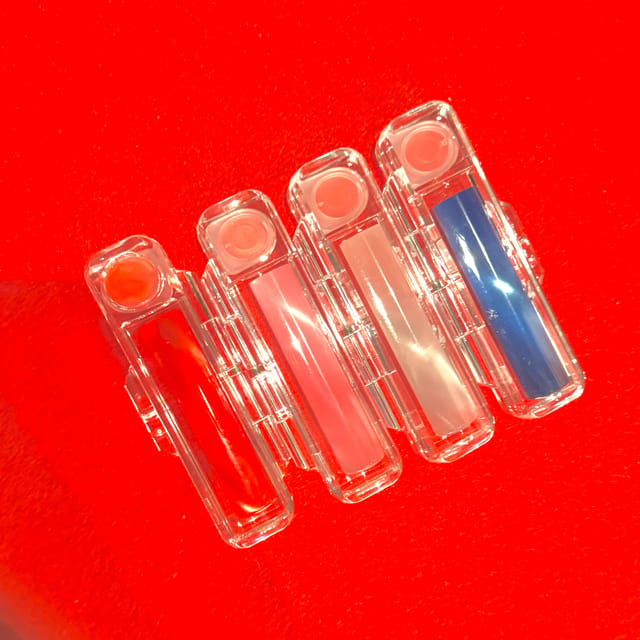
The exact souvenir presentation may vary, but the package is unusually generous for a $53 activity. Several people received a full bag of items and especially liked the combination of handmade work and prepared gifts.
The quantity is not the only value. These objects help you keep the lesson in your memory after you leave Tokyo. A tote bag is useful, while the stamp and original art have a stronger personal connection. If you are looking for a meaningful gift for someone at home, the class also gives you something with a story behind it.
How the Instructors Shape the Experience
The most strongly praised part of the class is the teaching. Kana, Kanako, and Tomi are mentioned by name in the feedback, with Kana receiving particular praise for her patience, warmth, and clear help. The experience may be led by one or several instructors, but the common thread is personal attention.
That patience matters because brushwork is unfamiliar to most English-speaking visitors. The instructors explain the history and technique, guide you through repeated practice, and encourage you without making the class feel like a test.
The atmosphere also works well for families. A parent and daughter enjoyed learning together, and the class welcomes all ages and skill levels. The official age restriction only excludes people over 95, so the stated policy is unusually broad.
I would still consider each person’s ability to sit, hold a brush, and follow instructions. The experience is wheelchair accessible, but the supplied information does not describe every detail of the building or studio layout. If you need specific access arrangements, contact the provider before arrival.
Is $53 a Good Value in Tokyo?
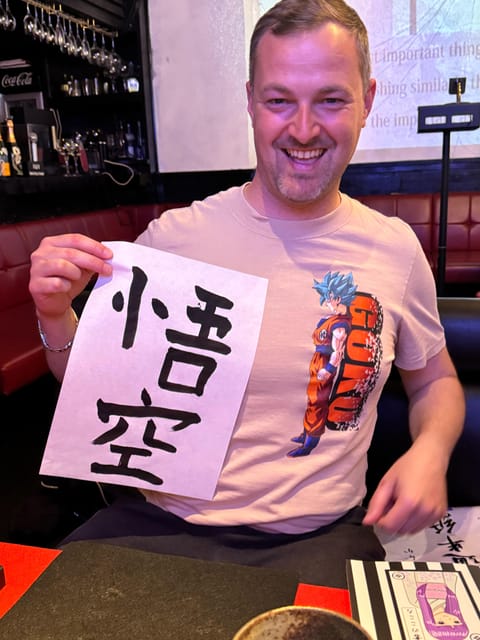
At $53 per person, this is not the cheapest way to spend 80 minutes in Tokyo. You can visit temples, browse markets, or buy calligraphy souvenirs for much less. The value here comes from the guided instruction and the number of personal items you take home.
You receive a calligraphy lesson, tools, a drink, your artwork, and several prepared souvenirs. You also get the chance to create a name stamp and learn why the characters and brush movements matter. If you value hands-on activities, that is a strong package.
The price makes less sense if you only want a quick demonstration or a professionally made piece of calligraphy. This class asks you to participate. You will spend time practicing, making choices, and working through imperfect attempts.
For couples, families, and small groups, the class gives everyone a shared project without requiring previous experience. It can also fill a holiday or a day when many other businesses are closed. One participant found it especially useful on New Year’s Day, when other activities were limited.
Who Should Book This Calligraphy Class?
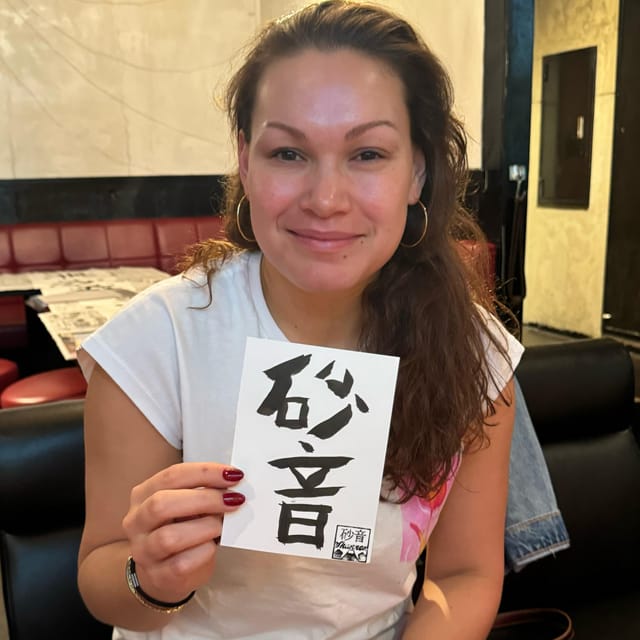
I would recommend this experience to you if you want a creative activity with a clear connection to Japanese culture. It is a strong choice for first-time visitors who have already seen major sights and want to do something more personal.
It also suits people who enjoy stationery, lettering, crafts, Japanese language, or carefully made souvenirs. Children can take part, and kanji enthusiasts can ask more detailed questions about characters and meanings.
This may not be the best choice if you dislike structured lessons or want to spend your Tokyo hours outdoors. The activity takes place indoors and requires concentration. You should also avoid booking it as a rushed stop between two attractions, since the class can run longer than the advertised 80 minutes.
Plan your meeting time carefully, arrive with the names of all participants ready, and decide in advance if you have a favorite word. Those simple steps can make the personal part of the class smoother.
Booking, Cancellation, and Practical Details
The class is taught in English and has no hotel pickup or drop-off. You make your own way to Shodo Cafe 7557 in Roppongi, with Exit 7 at Roppongi Station being the recommended route.
You can cancel up to 24 hours before the activity for a full refund. Reserve now and pay later is also available, which helps if your Tokyo schedule is still changing. Starting times vary, so check availability before planning museum visits, meals, or train connections.
The studio has more than 400 positive Google reviews and a 5 out of 5 rating based on 210 reviews. The strongest pattern is clear: people value the patient instruction, warm welcome, relaxing pace, and large number of souvenirs. I would use that information to set realistic expectations, not to assume every finished character will look professional.
Should You Book It?
Book this class if you want to make something yourself and learn the meaning behind it. The patient English-speaking instruction, included drink, personal name translation, hanko stamp, and original fan and scroll give the experience more substance than a standard souvenir stop.
Skip it if you prefer a fast sightseeing schedule or have no interest in practicing a traditional art. For everyone else, Shodo Cafe 7557 offers a gentle, memorable way to spend part of a Tokyo day, especially near the National Art Center. Bring curiosity, not perfect brush control.
FAQ
Where is the calligraphy class located?
Shodo Cafe 7557 is on the second floor of the Crest Roppongi Building at 7-9-3 Roppongi, Minato-ku, Tokyo, near the National Art Center Tokyo.
How do I reach the studio by train?
Take the Toei Oedo Line to Roppongi Station and use Exit 7. Cross toward Family Mart, turn right, and walk toward the National Art Center along Bijutsukan Dori. A large crane sign appears on the left side.
How long does the activity last?
The advertised duration is 80 minutes, but the activity can last between 60 minutes and two hours.
Is the lesson taught in English?
Yes. English instruction is included.
What drinks are included?
You can choose a matcha latte, green tea, coffee, soda, or beer. Additional drinks and food are not included.
What will I create during the workshop?
The activity includes calligraphy artwork on a traditional paper fan and a hanging scroll. The included materials also refer to a calligraphy board and a folding fan, or a hanging scroll, so confirm the exact combination if both final pieces are important to you.
What souvenirs are included?
Included items are a hiragana hanko stamp with your name, a kanji tote bag, kanji keychain, kanji coaster, kanji pouch, and your original calligraphy artwork.
Can I cancel the booking?
Yes. You can cancel up to 24 hours in advance for a full refund. Reserve now and pay later is also available.
Just added in Tokyo
- Manga Lesson with a Professional Japanese Manga Artist in Nakano★ 5.0 · 77 reviews
- Making a bento box with cute character look in Japan★ 5.0 · 15 reviews
- Tokyo/Ikebukuro Manga drawing workshop by pro-Manga artists★ 5.0 · 65 reviews
- Luxury Tokyo Sake, Cocktail, Whisky and Pairing Tour★ 5.0 · 18 reviews
- Tokyo Ueno Food & Nature & Localtown Tour: 10Dishes+ Drinks★ 5.0 · 34 reviews
- Make Your Own Bonsai with a Professional Bonsai Artist in Tokyo★ 4.5 · 18 reviews
- Make Traditional Nerikiri Sweets & Matcha experience in Shibuya★ 5.0 · 130 reviews
- Daikoku Parking Tokyo Drift & APIT Car Meet JDM Culture Tour★ 5.0 · 79 reviews
Tokyo Tours, compared.

Tokyo Disney Resort – Tokyo Disneyland & Tokyo DisneySea Park Tickets
Read our review →
Mt Fuji and Hakone 1-Day Bus Tour Return by Bullet Train
Read our review →

teamLab Borderless Tickets: MORI Building DIGITAL ART MUSEUM
Read our review →