Reviewed · TOKYO TOURS
Tokyo: Daikoku Car Meet Tour at Night with JDM Guides
Tokyo’s car scene comes alive after dark. This three-hour outing takes you onto the Bayside Line and popular Wangan routes, past Tokyo Tower and Rainbow Bridge, and out to Daikoku Parking Area, the best-known meeting place in Japan’s JDM world. I like the mix of real local car culture and big-city night views, plus the chance to ride in a randomly assigned sports or JDM car.
I also like that the guides are active car people, not simply drivers following a script. Names praised in the feedback include Renon, JJ, Wangun OG, Mori, Daiki, and Ryosuke. The main caution is simple: Daikoku is not guaranteed to be packed. Weather, police activity, traffic, and the day of the week can change the night considerably.
At $160 per person, this is not a cheap ride across Tokyo. It can still be fair value if you care about Japanese cars, highway driving, and access to a place that is awkward to reach on your own. You need to arrive on time, accept that cars and group arrangements vary, and treat the meet as a living scene rather than a fixed attraction.
In This Review
- Key points before you book
- Why Daikoku PA matters to JDM fans
- The Tokyo meeting point and evening departure
- APIT: a useful stop for parts, engines, and souvenirs
- The Bayside Line and Tokyo’s night views
- What your Daikoku visit may look like
- When Daikoku is closed or unusually quiet
- The random JDM car ride
- Is $160 a fair price?
- Who will enjoy this most?
- Should you book the Daikoku night tour?
- FAQ
- How long is the Daikoku car meet tour?
- Where is the meeting point?
- What time does the tour start?
- Is hotel pickup available?
- Is the tour private?
- What cars might I ride in?
- Can I ride in a GTR, RX-7, R34, or Silvia?
- Does the tour always visit Daikoku Parking Area?
- Is food included?
Key points before you book
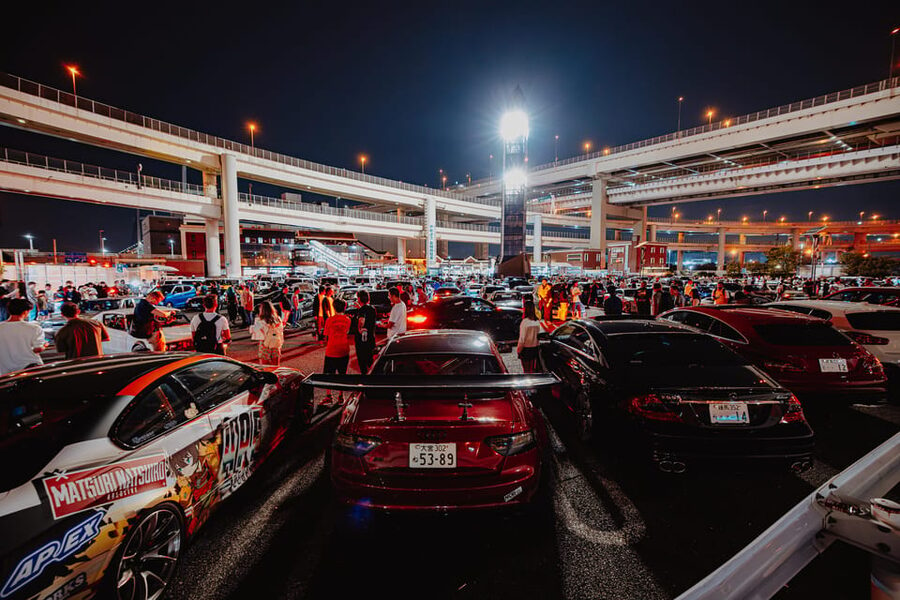
- Daikoku PA is the main event: You may see tuned JDM cars, sports cars, rare builds, and local owners gathering around the famous bayside stop.
- The drive matters too: The route includes Tokyo’s expressways, the Bayside Line, Rainbow Bridge, and views of Tokyo Tower.
- Your ride is assigned at random: Subaru and RX-8 rides are listed among the possibilities. A GTR or RX-7 is not included, and special cars require a different package.
- APIT adds a daytime car-shop stop: On Monday through Thursday, the tour may visit this large parts and accessory shop before heading to Daikoku.
- The meet can change quickly: Daikoku may be quiet, restricted, or closed by police. Umihotaru PA has been used as an alternative.
- Timing is strict: Meet at 7:30 PM Monday through Thursday, or 6 PM Friday through Sunday, depending on the selected arrangement.
Why Daikoku PA matters to JDM fans
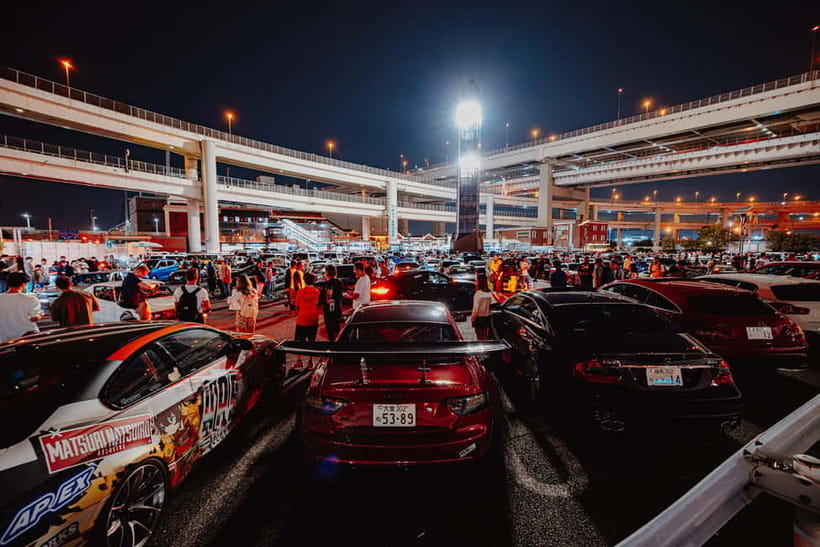
Daikoku Parking Area is not a museum or a scheduled motor show. It is a service stop on the expressway system, and its appeal comes from the cars and people who happen to gather there. That makes it exciting, but also unpredictable.
On an active night, you might find rows of modified Japanese cars, sports cars, unusual body kits, and machines that rarely appear together in ordinary city traffic. The selection changes by day. Friday nights and weekends can be especially appealing, but no date guarantees a certain model or crowd.
You are not just looking at cars behind barriers. The experience includes interaction with local car owners, when circumstances allow. A good guide can explain what you are seeing, point out details, and help you approach the scene politely. That human contact is one reason this works better for a car enthusiast than simply taking a taxi to a parking area.
The setting adds plenty of atmosphere. Daikoku sits among Yokohama’s port facilities and expressways, far from Tokyo’s usual sightseeing circuit. The lights, concrete ramps, and open views give the stop a very different feeling from Shibuya or Asakusa.
A few more options to weigh up in Tokyo
- Tokyo Disney Resort – Tokyo Disneyland & Tokyo DisneySea Park Tickets
★ 4.8 · 99,488 reviews - SHIBUYA SKY Ticket
★ 4.7 · 46,509 reviews - JR Whole Japan Rail Pass
★ 4.8 · 29,150 reviews
The Tokyo meeting point and evening departure
The listed meeting point is in front of BAR STAND T near Tokyo Station, at 1-5-1 Marunouchi, Chiyoda-ku. The cars are parked in front of the shop, so look for the custom vehicles and guides rather than relying only on the bar sign.
The departure time depends on the day:
- Monday through Thursday: 7:30 PM
- Friday through Sunday: 6 PM
The earlier weekend departure gives you more evening time and may suit visitors who want a fuller night out. The later weekday start works better after dinner or sightseeing, though you should allow extra time to reach the meeting point. If you choose hotel pickup, wait in front of the hotel five minutes before the arranged time.
Punctuality matters more than it might on a casual walking tour. One delayed participant caused a 45-minute wait in a car and reduced the time available at Daikoku for everyone else. If you are running late, contact the operator immediately, but do not assume the group can hold the departure.
APIT: a useful stop for parts, engines, and souvenirs
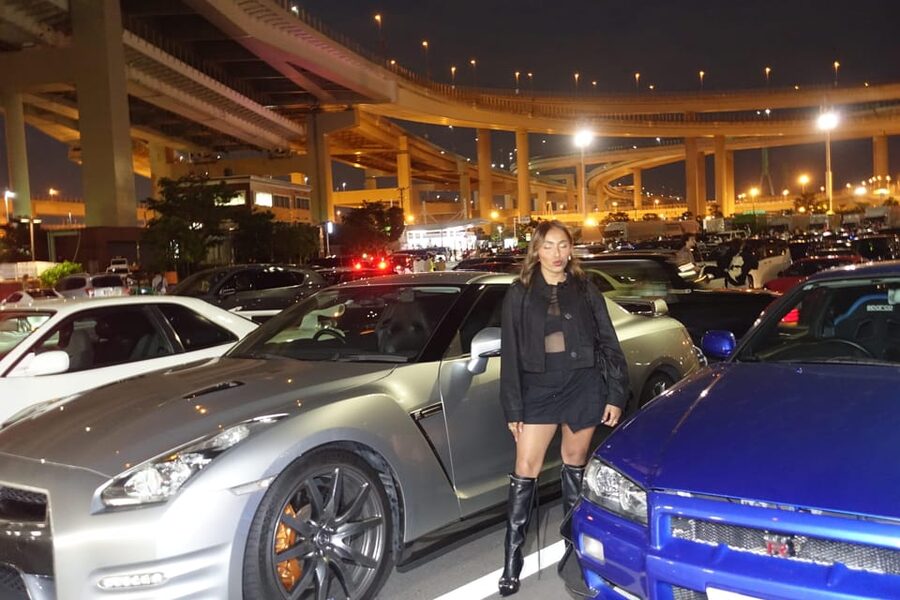
On Monday through Thursday, the route may include APIT, one of the largest car shops in the Tokyo area. This stop is not part of the Friday, Saturday, and Sunday schedule.
APIT is useful because it shows the practical side of Japan’s car hobby. You can browse parts, accessories, souvenirs, and car-related goods. Actual engines are displayed, which gives the stop more interest than a standard retail visit.
I would treat APIT as a bonus, not the reason to book. If you are deeply interested in tuning, it can add context before Daikoku. If you mainly want the night drive and the car meet, the shop may feel like a short pause before the main event.
The weekday schedule also creates a tradeoff. Weekdays include the possibility of APIT, but the meet itself may have fewer cars than a strong Friday or weekend gathering. You need to decide which matters more to you: the extra shop stop or the best chance of a busy parking area.
The Bayside Line and Tokyo’s night views
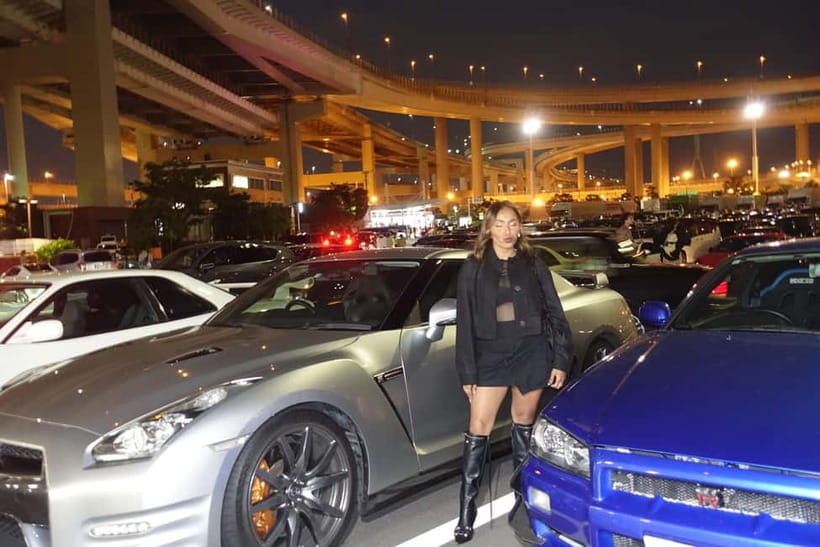
The road portion is a major part of the experience. You ride through Tokyo’s expressway network and along popular runner routes toward the waterfront. The route can include the Bayside Line and a crossing of Rainbow Bridge, with Tokyo Tower appearing during the city drive.
The landmarks are viewed from the car, not visited with long stops. That distinction matters. You should not book this as a Tokyo sightseeing tour if you want to get out, take a full set of photos, or tour each landmark. Instead, the views work as moving scenery between the city and the port.
For car fans, the highway setting is part of the fun. Several people particularly enjoyed the connection to games and films set on Tokyo’s expressways, including Tokyo Xtreme Racer, Wangan Midnight, and Tokyo Drift. The soundtrack and the road can bring back that familiar fictional version of Japan, but the real value is seeing how the roads connect the city, bridges, and port areas.
Guides often point out photo spots and landmarks as they drive. Christian praised the drive and the later Tokyo Tower photo stop, while other feedback highlights Rainbow Bridge and the commentary along the way. The exact route can change with traffic, so keep your camera ready rather than expecting a single planned photo location.
A completely different kind of day out:
- Mt Fuji and Hakone 1-Day Bus Tour Return by Bullet Train
★ 5.0 · 26,383 reviews - TOKYO SKYTREE® Ticket
★ 4.7 · 25,136 reviews - teamLab Borderless Tickets: MORI Building DIGITAL ART MUSEUM
★ 4.7 · 24,126 reviews - teamLab Planets TOKYO Ticket
★ 4.7 · 21,663 reviews
What your Daikoku visit may look like
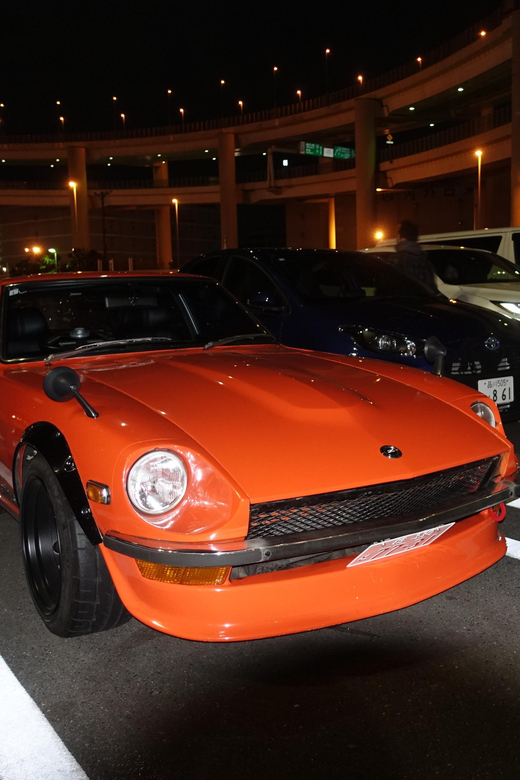
After the highway run, the group reaches Daikoku PA. You generally have time to get out, walk around, study the cars, and take pictures. One detailed account estimated about an hour at the site, with the rest of the three hours spent driving there and back.
The stop has practical facilities, including restrooms and convenience stores. You can buy food, drinks, small goods, and car toys, though these costs are not included in the tour price. Bring your own spending money if you want a snack or souvenir.
The guides can help you understand the local etiquette and identify interesting cars. Ask questions. A guide who is genuinely involved in the scene can add much more than a list of model names. Renon was praised for his car knowledge and easy conversation, while JJ was repeatedly described as friendly, funny, and well informed about Tokyo’s car culture.
English ability varies among the guides. Some speak very fluently, while others are still improving and may use Google Translate. The operator asks you to request a highly fluent English speaker in advance if that is important to you. For many car-focused conversations, a few words, photos, and translation tools may be enough, but it is sensible to state your preference before booking.
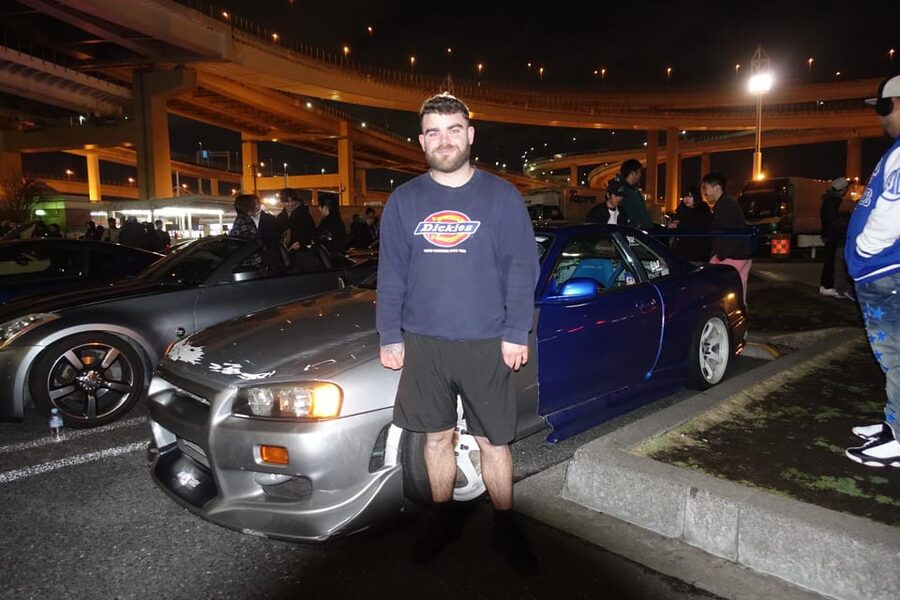
Do not expect a guaranteed R34, Silvia, RX-7, or GTR sighting. Those cars might appear at the meet, but they are not promised. The included ride is random, and the listed examples include Subaru and RX-8. The experience is about the whole gathering, not one dream car.
When Daikoku is closed or unusually quiet
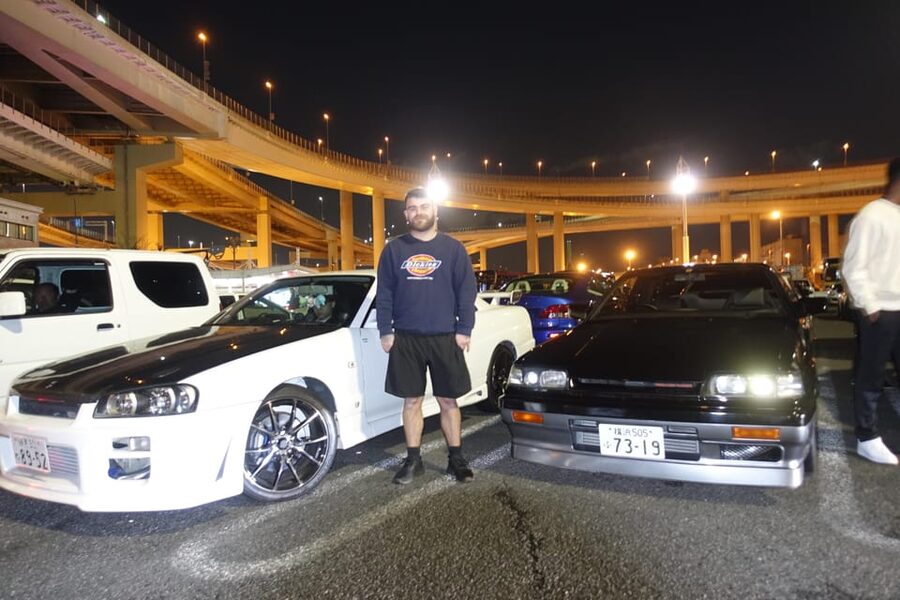
Daikoku is an active public parking area, not a private attraction reserved for tour groups. Police may close the area or move people along. On one night, the group was redirected to Umihotaru Parking Area, where the cars had gathered instead. That alternative still produced an enjoyable evening, including R34s, R35s with Liberty Walk body kits, an NSX, and an RX-7 with a Veilside kit.
This is an important point for your expectations. A substitute stop can work well, but it is not the same as visiting Daikoku. The operator can adapt, but cannot control police decisions, traffic, weather, or the number of cars that arrive.
A quiet night is also possible. The experience information clearly warns that weather and time of day can leave the parking area with very few cars. I would book this only if you can enjoy the drive, views, guide, and car culture even when the final parking area is not full.
The random JDM car ride
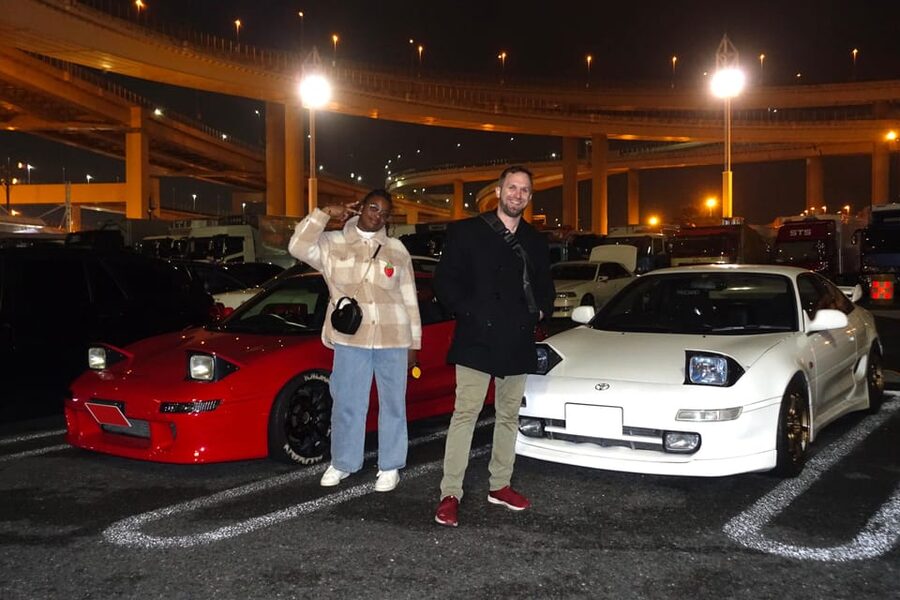
The random car ride is a strong part of the package, but the wording matters. You are not buying a guaranteed drive in a particular iconic model. The included experience may be in a Subaru or RX-8, and the vehicle depends on availability and assignment.
The listing specifically excludes rides in a GTR and RX-7, along with some other special cars. R34s, Silvias, and similar high-demand vehicles require checking the VIP package. Some feedback describes rides in a Nissan Skyline or Toyota Land Cruiser, while another person rode in an S15. That tells you the fleet and arrangements can vary, not that those cars are guaranteed.
You may share a car with other participants. This affects comfort and conversation, especially during the longer highway portions. A private group is available, but you should confirm the exact arrangement if having a private vehicle is important to you.
The best way to view the ride is as access to a local enthusiast’s car and a chance to see Tokyo from the passenger seat. It is not a track session, driving lesson, or guaranteed high-speed run. One account refers to a driver showing what the car could do, and another mentions seeing a race in the tunnels, but those are not promised features. Responsible driving and local rules should come first.
Is $160 a fair price?
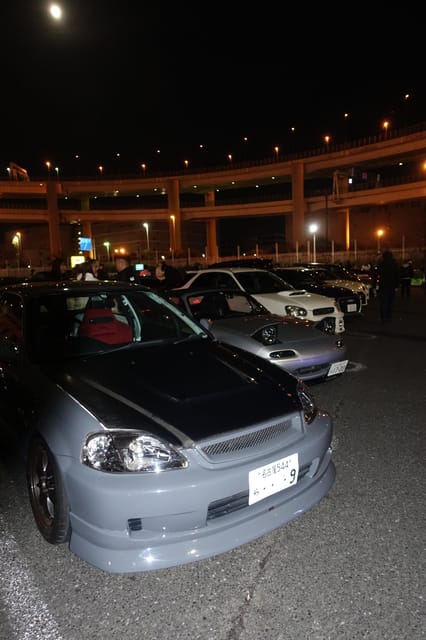
At $160 per person, the cost covers more than transportation to Daikoku. You are paying for a three-hour evening, a guide, a car enthusiast’s perspective, expressway travel, optional pickup near Shinbashi Station, drop-off, and photo help on request.
The price makes the most sense if you would otherwise struggle to reach Daikoku. The location is not a simple subway stop, and getting there by taxi does not give you the same local explanation or group connection. Several people valued hotel pickup and drop-off, which can remove a lot of planning from the night.
The value drops if your only goal is to see one specific car. There is no promise of a full meet, no guarantee of a GTR or RX-7 ride, and no included food or drinks. You also have roughly one hour at the main stop, so much of your money goes toward the drive and guide rather than time walking around a car show.
I see it as good value for a serious JDM fan, a fan of Japanese street-car culture, or someone who wants a memorable first evening in Tokyo. It is less compelling for a general sightseer who would rather spend $160 on several fixed attractions.
Who will enjoy this most?
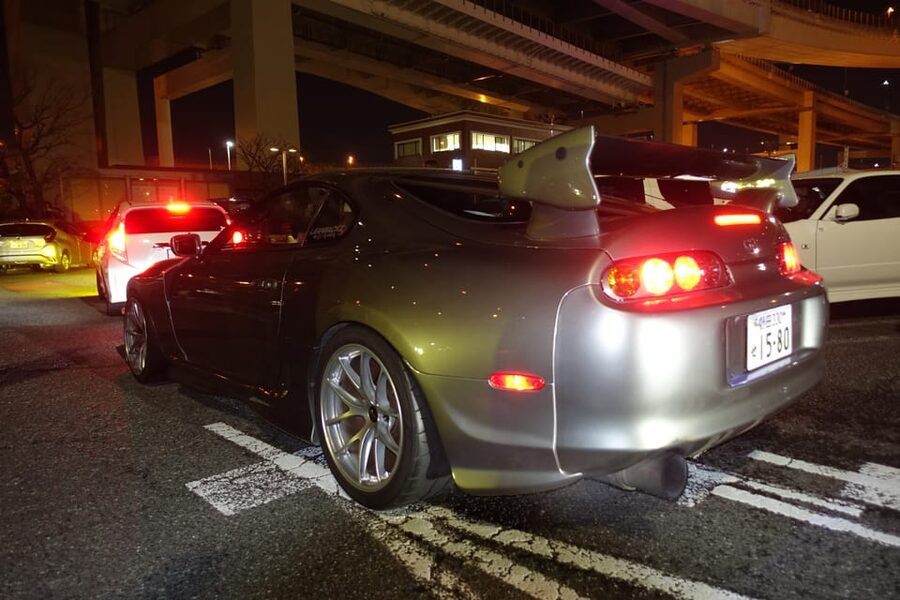
You are a strong match if you:
- Follow Japanese sports cars, tuning, or the Wangan scene
- Want to see Tokyo’s expressways and port areas at night
- Enjoy talking with local enthusiasts
- Are happy with a random vehicle assignment
- Can accept that Daikoku may be quiet or replaced
- Want a guided experience rather than arranging transport alone
Families can join, and one account describes a grandson enjoying the chance to sit in a car for photos. Still, the evening is built around highways, cars, and a late meeting time. It may not suit very young children, and baby strollers are not allowed.
Bring comfortable shoes, warm clothing, and a camera. The waterfront can feel cool at night, and you will want to walk around the parking area rather than view everything through the window. Alcohol and drugs are not allowed.
The tour has an overall rating of 4.6 from 193 ratings, with repeated praise for friendly guides, safe driving, useful commentary, and the excitement of reaching Daikoku. The names vary by date, but the strongest pattern is clear: the guide makes a major difference. Renon, JJ, Wangun OG, Mori, Daiki, Ryosuke, and several others were singled out for warmth, humor, car knowledge, or good communication.
Should you book the Daikoku night tour?
Book it if the journey matters as much as the destination. The best parts are the highway ride, the port views, the guide’s stories, the chance to meet local car people, and the possibility of seeing an excellent collection at Daikoku.
Skip it if you need a guaranteed vehicle, a guaranteed car model, or a packed meet. You should also skip it if a fixed sightseeing schedule matters more than flexibility.
For the best odds of a lively scene, Friday through Sunday offers the earlier departure and may provide stronger activity, though no day is certain. If APIT interests you, choose a Monday through Thursday departure and accept that Daikoku may be quieter. Canceling is free up to 24 hours in advance, which gives you some protection if your plans change.
My call: this is worth booking for car enthusiasts, especially on a first visit to Tokyo. Go with realistic expectations, arrive early, dress warmly, and enjoy the whole night rather than judging it by the number of supercars in one parking lot.
FAQ
How long is the Daikoku car meet tour?
The tour lasts three hours, including the drive to and from the car meet and the time spent visiting the area.
Where is the meeting point?
The meeting point is in front of BAR STAND T at 1-5-1 Marunouchi, Chiyoda-ku, near Tokyo Station. Look for the custom cars parked in front of the shop.
What time does the tour start?
The meeting time is 7:30 PM Monday through Thursday and 6 PM Friday through Sunday. Confirm the exact time for your selected date.
Is hotel pickup available?
Pickup is optional. Free pickup and drop-off are available near Shinbashi Station, and other pickup arrangements may depend on the selected option.
Is the tour private?
A private group option is available, but some participants may share a car with other people.
What cars might I ride in?
The included random JDM car ride may feature cars such as a Subaru or RX-8. The specific vehicle is not guaranteed.
Can I ride in a GTR, RX-7, R34, or Silvia?
Those special cars are not included in the standard ride. Check the VIP package if you specifically want a ride in an R34, Silvia, or another special JDM car.
Does the tour always visit Daikoku Parking Area?
The planned destination is Daikoku PA, but police activity, weather, traffic, or other conditions can lead to a different location. Umihotaru PA has been used as an alternative.
Is food included?
No. Food and drinks are not included, though convenience stores are available at the parking area.
Just added in Tokyo
- A One-of-a-Kind Sushi Experience in a Special Place of Japan★ 5.0 · 15 reviews
- Tokyo Cute Bento Cooking Class – Make a Kawaii Character Lunchbox★ 5.0 · 126 reviews
- Japanese Home Cooking Class & Walk in Todoroki Temple Tokyo★ 5.0 · 88 reviews
- Japan Tokyo Tower Observatory Deck E-Ticket★ 4.0 · 34 reviews
- Catch a Baseball Game in Tokyo with a Local – Tickets Included★ 5.0 · 24 reviews
- JDM Experience with Fast&Furious RX-7 (English speaking Driver)★ 5.0 · 57 reviews
- Tokyo Private Day Tour by Car with English speaking Driver Guide★ 4.0 · 29 reviews
- Japan Classic 10 Day – One Life Adventures★ 5.0 · 129 reviews
Tokyo Tours, compared.
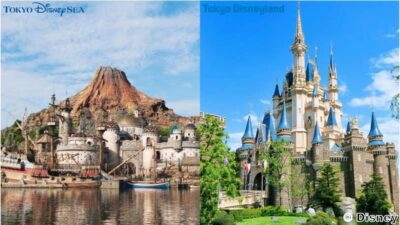
Tokyo Disney Resort – Tokyo Disneyland & Tokyo DisneySea Park Tickets
Read our review →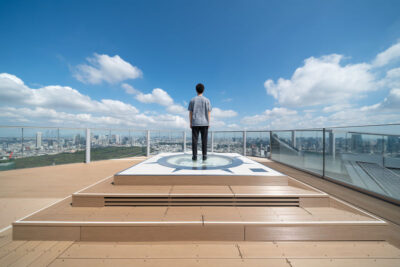
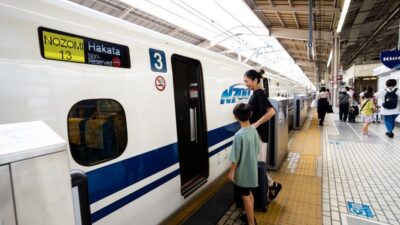
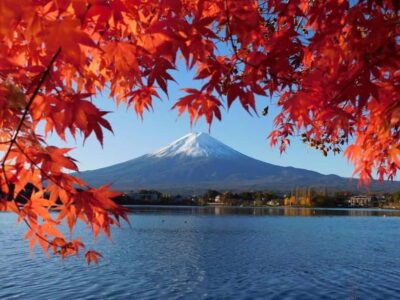
Mt Fuji and Hakone 1-Day Bus Tour Return by Bullet Train
Read our review →
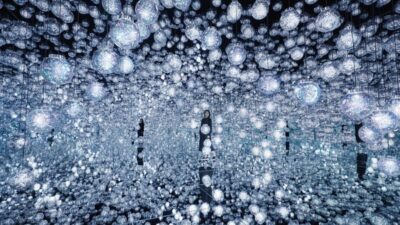
teamLab Borderless Tickets: MORI Building DIGITAL ART MUSEUM
Read our review →