Reviewed · TOKYO TOURS
Tokyo: Daikoku JDM Car Meet & Night Car Culture Tour
Tokyo’s car scene comes alive after dark. This four-hour Daikoku JDM tour combines famous expressway routes, skyline views, automotive shopping, and a full hour at Japan’s best-known car meet. I especially like the access to Daikoku Parking Area and the chance to ride with guides who know both the cars and the city. The main catch is simple: the cars are never guaranteed, and Daikoku can close without notice.
I also like the small-group setup, with no more than 10 people, and the sensible approach to driving. You get the atmosphere behind Tokyo Drift, Initial D, and Wangan Midnight, but not illegal racing or staged drifting. Go with the right expectations, and this feels less like a theme-park stunt and more like a guided look at a real enthusiast community.
In This Review
- Key points before you book
- Why Daikoku is worth the four-hour outing
- A night drive through Tokyo’s famous roads
- APIT Autobacs: 25 minutes among Japanese car parts
- Tatsumi 1st Parking Area and the changing schedule
- Spending an hour at Daikoku Parking Area
- The vehicles: comfort or automotive fantasy
- The guides add the human side
- Price, timing, and practical value
- Who should book this Tokyo car tour?
- Should you book the Daikoku JDM experience?
- FAQ
- How long does the Daikoku JDM car tour last?
- Where does the tour meet?
- Is Daikoku Parking Area guaranteed to be open?
- What cars will I see?
- Is the tour available in languages besides English?
- Can children join the tour?
- What is included in the price?
Key points before you book
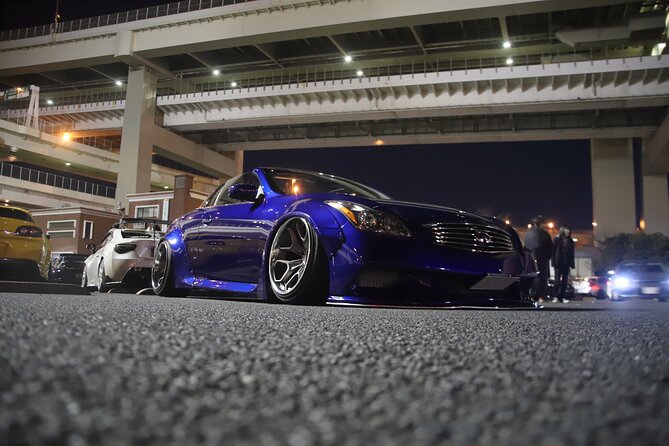
- Daikoku Parking Area is the main event: You get about one hour to walk around and see the cars that happen to gather that night.
- Night routes bring the city to life: Rainbow Bridge, Tokyo Tower, and the expressways make the drive part of the experience, not just transport.
- APIT Autobacs is a car-lover’s stop: Allow about 25 minutes for parts, merchandise, tuning goods, and Japanese automotive culture.
- The vehicle can shape your evening: Options may include vans, sedans, a Nissan Skyline, or an RX-7, depending on availability and group size.
- The schedule is flexible for a reason: Weather, traffic, weekday timing, and closures can change the exact route and secondary stops.
- The tone is safe and respectful: Expect careful driving and conversation about cars, not street racing or Hollywood-style drifting.
Why Daikoku is worth the four-hour outing
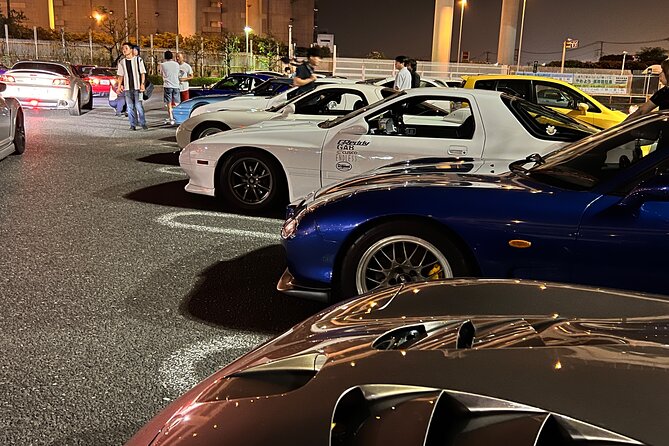
Daikoku Parking Area sits away from central Tokyo, so reaching it on your own is not as simple as hopping on a train and walking over. This tour solves that problem by taking you along the expressways in a private vehicle with a host who can explain what you are seeing.
The destination is a public highway rest stop, not a permanent car museum. That distinction matters. The cars change from night to night, and some evenings will be far stronger than others. You might see tuned Nissan Skylines, GT-Rs, older Japanese models, European exotics, or American cars. You might also arrive during a quiet spell.
That uncertainty is part of the appeal, but it is also the tour’s biggest limitation. Nobody can promise a particular model, a packed car park, or a dramatic arrival by a famous build. The strongest nights in the supplied experiences included multiple generations of GT-R, Ferraris, Lamborghinis, and even an LFA. Another evening had a full lot on a Friday. Those are exciting possibilities, not guarantees.
For me, the value lies in seeing the setting and learning how the gathering works. Daikoku has attracted car enthusiasts for more than 30 years. The scene is passionate, but the tour makes clear that it is not a free-for-all. You are visiting a real public place where courtesy, local rules, and quiet observation matter.
A few more options to weigh up in Tokyo
- Tokyo Disney Resort – Tokyo Disneyland & Tokyo DisneySea Park Tickets
★ 4.8 · 99,488 reviews - SHIBUYA SKY Ticket
★ 4.7 · 46,509 reviews - JR Whole Japan Rail Pass
★ 4.8 · 29,150 reviews
A night drive through Tokyo’s famous roads
The tour usually begins around the Dōgenzaka area, at 2-chōme-29-8 Dōgenzaka, though the exact meeting option depends on the booking. Hotel pickup and drop-off are not included, so you need to reach the stated meeting point yourself.
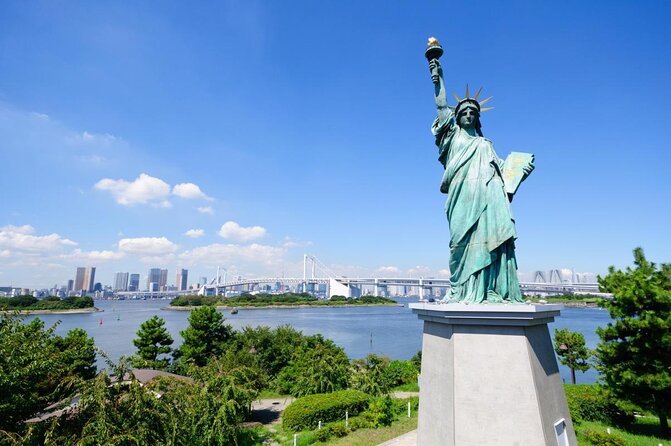
Once aboard, the route becomes part sightseeing trip and part automotive history lesson. The vehicle passes Roppongi Hills before heading toward the Rainbow Bridge. At night, the bridge gives you broad views across Tokyo’s illuminated skyline. The city lights, elevated roads, and passing traffic create the exact mood many people hope to find when they book a Japanese car-culture outing.
The drive also passes Tokyo Skytree, central Tokyo, Haneda Airport, Yokohama, and Tokyo Tower. You do not stop at all of these places, so think of them as moving views rather than sightseeing visits. That is still useful: you get a sense of Tokyo’s scale while listening to the host explain the roads, the city, and the cars.
Several people singled out the expressway loop as one of the best parts. One described it as feeling like Gran Turismo in real life, which is a fair way to picture it. You are not driving a racing lap, but the elevated routes and city views make the journey feel special.
Your guide can make or break this section. Hosts named in the supplied feedback include Michael, Mori, Jason, Karim, Julian, and others. Michael received repeated praise for his car and city knowledge, while Mori was especially good at explaining street-racing history and details about Tokyo. Jason was praised for safe driving and for hosting passengers in an RX-7. The exact guide depends on the date, but the company says its lead auto-industry insider has more than 25 years of experience with Japanese, European, and American brands.
APIT Autobacs: 25 minutes among Japanese car parts
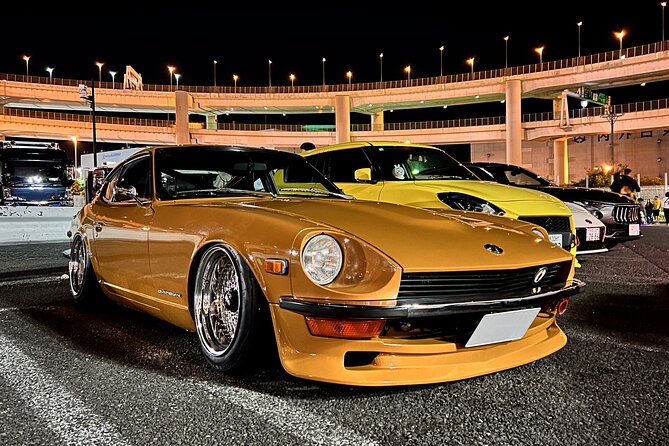
The first main stop is APIT Autobacs Shinonome. This is far more than a gas station shop. It is a large automotive store filled with tuning parts, accessories, memorabilia, merchandise, and impressive cars.
You get roughly 25 minutes here. That is enough to look around and buy a souvenir, but it may feel short if you want to study every shelf. One person openly wished for more time in the shop, though that limitation may protect your wallet. If you like model cars, racing goods, Japanese brands, or tuning culture, set a spending limit before you enter.
APIT adds useful context to the evening. At Daikoku, you see the social side of car culture. At APIT, you see the commercial and practical side: the parts, tools, styling choices, and branded goods that support the hobby. It is also a good stop if your group includes someone who is curious about cars but not ready to spend an hour in a parking area.
The itinerary may use a different automotive stop on some dates. The provider says the secondary locations can include Tatsumi, Umihotaru, Autobacs, or Gaienmae. At least three stops are normally made, and Daikoku is included in the planned route, subject to closure and operating conditions.
Tatsumi 1st Parking Area and the changing schedule
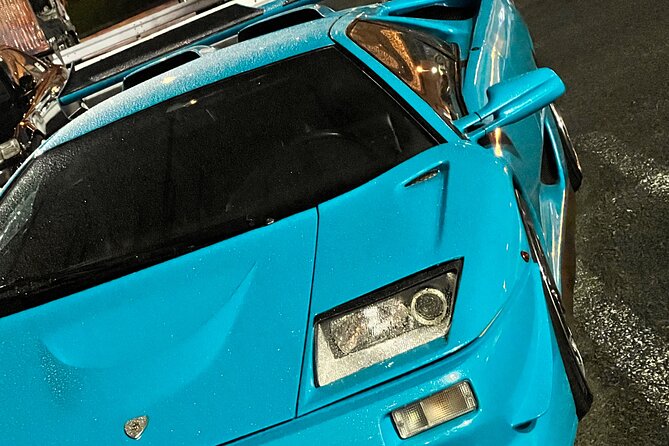
Tatsumi 1st Parking Area is listed as a 15-minute stop. Like Daikoku, it is a highway rest area connected to Tokyo’s car scene. The visit is brief, but it can give you another chance to see cars gathered in a less formal setting.
Do not treat the illustrated route as a rigid promise. The schedule changes with the day of the week and the time of day, especially on weekends. Traffic can also force changes. One person arrived at a second meet location after it had closed, but the guide still drove by so the group could see the area.
This is a good example of the tour’s practical strength. The hosts cannot control every parking area or every car owner, but they can adjust the route and keep the evening moving. If one spot is quiet, you may get a different stop or more city driving instead.
A completely different kind of day out:
- Mt Fuji and Hakone 1-Day Bus Tour Return by Bullet Train
★ 5.0 · 26,383 reviews - TOKYO SKYTREE® Ticket
★ 4.7 · 25,136 reviews - teamLab Borderless Tickets: MORI Building DIGITAL ART MUSEUM
★ 4.7 · 24,126 reviews - teamLab Planets TOKYO Ticket
★ 4.7 · 21,663 reviews
Spending an hour at Daikoku Parking Area
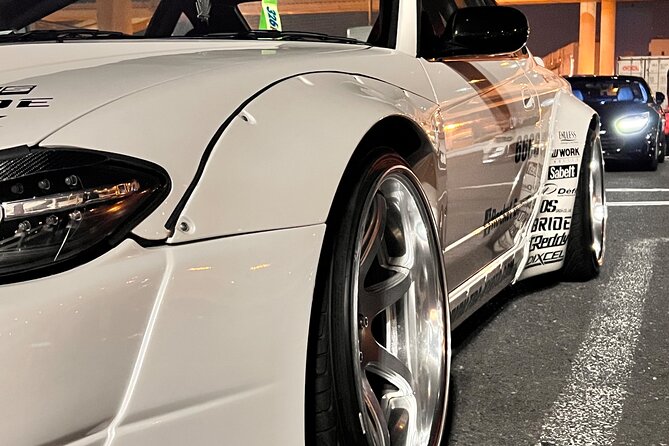
Daikoku is scheduled for about one hour, which is the right amount of time for a first visit. You have enough time to walk around, photograph cars, ask questions, and take in the scene without turning the night into a long wait in one parking lot.
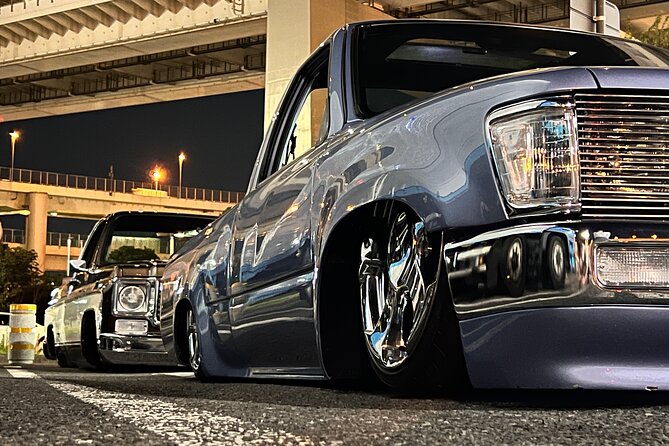
The cars are the obvious draw. You could see heavily modified JDM cars, older Skylines, GT-Rs, Japanese sports cars, European performance models, luxury vehicles, and the occasional unexpected arrival. The range depends on the night. A Friday or Saturday may offer a stronger turnout, but even that is not certain.
The atmosphere is not a choreographed show. Cars arrive and leave. People gather around their own vehicles. Some nights may be packed, while others may be modest. Your guide can help you understand the differences between factory performance cars and owner-modified builds, but you should still give owners space and avoid treating the area like a photo set.
This is where the tour’s respectful tone matters most. The experience is inspired by films and games, but it does not promise drifting, burnouts, street racing, or loud rev battles. All driving is conducted within local laws. If you want to watch illegal action, this is the wrong activity. If you want to see genuine car enthusiasm in Japan, it is a much better fit.
The vehicles: comfort or automotive fantasy
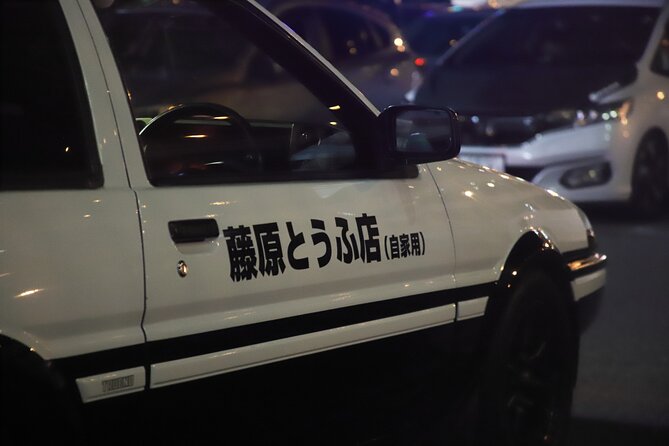
The operator uses a mix of well-maintained JDM, European, and luxury vehicles. Depending on the booking, group size, and availability, you may ride in a spacious van, sedan, performance car, or another selected vehicle.
The vehicle choice is not fully guaranteed, so do not book solely because you hope for one particular model. Some customized vehicles belong to the company, while others are factory high-performance cars. The supplied experiences included rides in an RX-7, Nissan Skyline, Lexus LS, and sedan options.
A ride in an iconic car can add a lot to the night. One person described the RX-7 as a true legend, though also noted that the back seat was small but manageable for someone about 5 feet 4 inches tall. That is useful advice if you are tall or carrying a larger group. The van option gives you more practical space, but your party may be split between two vans if seats are limited.
I would ask about vehicle availability before booking if the car itself is the main reason you want to go. If your priority is the route, the guide, and Daikoku, the vehicle matters less. In either case, smoking, alcohol, food, and drinks are not allowed inside.
The guides add the human side
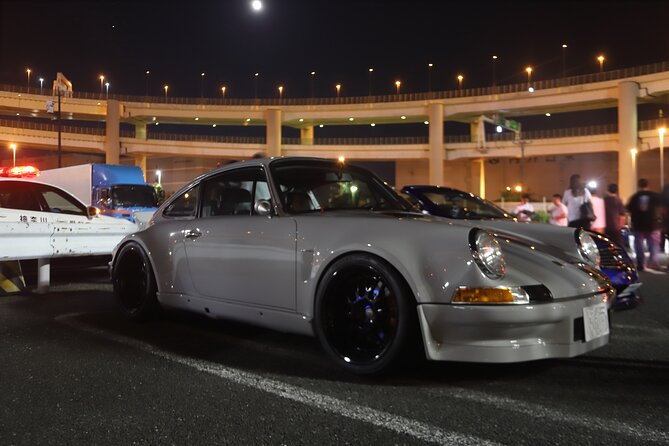
A strong guide turns a drive between parking areas into a proper introduction to Tokyo’s car culture. The most praised guides were friendly, careful, and able to talk about more than horsepower. They explained the roads, city landmarks, car history, and the difference between movie fantasy and local reality.
Michael was repeatedly praised for his detailed car explanations and easy conversation. Mori received warm comments for explaining Tokyo and the history of street racing. Karim was noted for safe driving and for making the route enjoyable even in rain. Jason was praised for both his driving and his work hosting in the RX-7. Julian was appreciated for keeping the schedule relaxed while giving people enough time at each stop.
The company hosts in English by default and may also provide Japanese, Polish, Italian, or German. Language availability can depend on the guide assigned, so check that detail if it is important for your group.
The small-group limit of 10 participants helps here. You can ask questions without trying to get the guide’s attention across a crowded coach. It also means the social mood depends on the group. Several experiences included easy car talk between people who had just met, which is a pleasant bonus if you enjoy swapping opinions about cars.
Price, timing, and practical value
At $98 per person, this is not a cheap way to see Tokyo, but it offers more than a simple transfer to Daikoku. The price covers the four-hour guided outing, transportation, taxes and fees, access to the planned meet locations, and the host’s local and automotive knowledge.
The value is strongest if you would otherwise struggle to reach Daikoku or would not know how to read the scene once there. You also get the Rainbow Bridge views, APIT Autobacs, city routes, and a guide who can connect the cars to Japanese culture. A car fan can easily spend that amount on transport, admission to other attractions, and souvenirs without reaching the same places.
The value is weaker if you only want a guaranteed supercar display or a specific vehicle. There is no promise about the type or number of cars, and the main stop can close without notice. Heavy rain may cancel the tour, while lighter rain usually means the outing continues with adjustments.
You can cancel up to 24 hours before departure for a full refund, and the reserve-now, pay-later option helps if your Tokyo schedule is still shifting. Bring a passport or ID card. Children under five cannot join, wheelchair access is not available, and families needing a booster seat for a child aged five to seven should contact the provider before the date.
Who should book this Tokyo car tour?
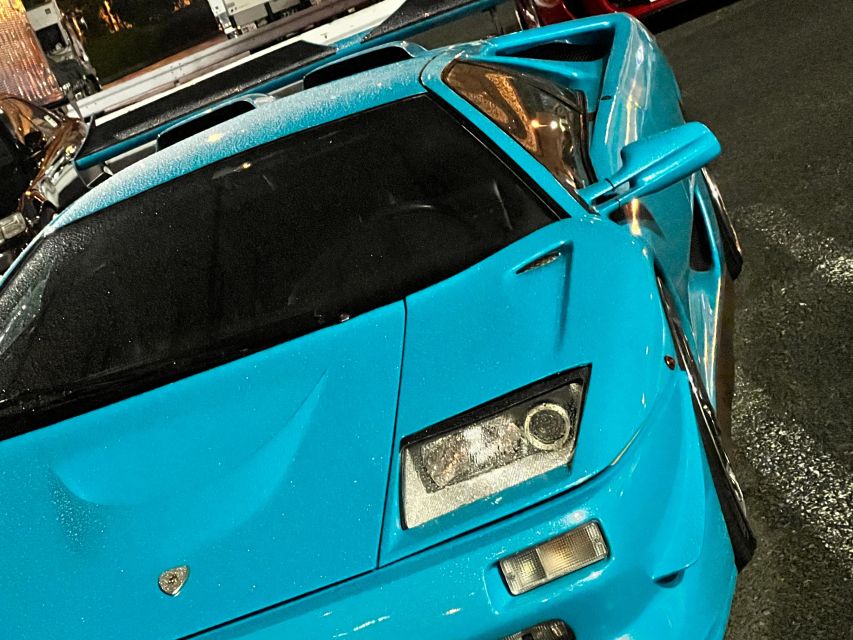
You should book if you like Japanese cars, racing games, automotive photography, or the city’s expressway culture. It also suits a partner or parent who is not a serious car fan but enjoys unusual sightseeing. The city views and guide conversation give non-specialists something to enjoy beyond identifying engine swaps and body kits.
It is especially good for people who want a safe version of the Tokyo Drift fantasy. You will ride through the same kind of city setting, but the real experience is calmer and more social. You see owners sharing their cars, shop for parts and souvenirs, and learn why Daikoku matters.
I would skip it if you need guaranteed access to a particular car, expect professional drifting, or dislike flexible schedules. I would also think twice if your group needs wheelchair access or a child under five is joining.
Should you book the Daikoku JDM experience?
For most car fans visiting Tokyo, yes. The best reasons are the hour at Daikoku, the night views from the Rainbow Bridge, and the chance to hear useful stories from a guide who spends time around the scene. A rating of 4.8 from 626 bookings, with 92 percent giving transport a perfect score, supports the picture of a well-run outing.
Book on a Friday or weekend if your main hope is a busy meet, but remember that no night is guaranteed. Ask about the vehicle option if riding in a Skyline, RX-7, or luxury sedan matters to you. Otherwise, focus on the experience as a whole: a guided expressway ride, APIT Autobacs, several car-culture stops, and a respectful look at one of Japan’s most famous enthusiast meeting places.
FAQ
How long does the Daikoku JDM car tour last?
The experience lasts four hours. Starting times depend on availability, so check the date you want to book.
Where does the tour meet?
The listed starting area is 2-chōme-29-8 Dōgenzaka, at the Tōeidō Building, though the meeting point can vary with the option you book.
Is Daikoku Parking Area guaranteed to be open?
No. Daikoku is a public rest stop and can close without notice. If it is closed, the host adjusts the route and provides alternative stops.
What cars will I see?
There is no guaranteed type or number of cars. You might see Japanese performance cars, tuned builds, European vehicles, luxury cars, or American models, depending on what arrives that night.
Is the tour available in languages besides English?
English and Japanese are offered, with Polish, Italian, and German also available when the appropriate guide is available.
Can children join the tour?
Children under five cannot join. If a child aged five to seven needs a booster seat, contact the activity provider before the tour date.
What is included in the price?
The price includes transportation during the tour, all fees and taxes, access to the planned car-meet locations, Tokyo views, and a host who explains the car scene and Japan. Food, drinks, souvenirs, and hotel pickup or drop-off are not included.
Just added in Tokyo
- A One-of-a-Kind Sushi Experience in a Special Place of Japan★ 5.0 · 15 reviews
- Tokyo Cute Bento Cooking Class – Make a Kawaii Character Lunchbox★ 5.0 · 126 reviews
- Japanese Home Cooking Class & Walk in Todoroki Temple Tokyo★ 5.0 · 88 reviews
- Catch a Baseball Game in Tokyo with a Local – Tickets Included★ 5.0 · 24 reviews
- Japan Tokyo Tower Observatory Deck E-Ticket★ 4.0 · 34 reviews
- JDM Experience with Fast&Furious RX-7 (English speaking Driver)★ 5.0 · 57 reviews
- Tokyo Private Day Tour by Car with English speaking Driver Guide★ 4.0 · 29 reviews
- Japan Classic 10 Day – One Life Adventures★ 5.0 · 129 reviews
Tokyo Tours, compared.
Tokyo Disney Resort – Tokyo Disneyland & Tokyo DisneySea Park Tickets
Read our review →
Mt Fuji and Hakone 1-Day Bus Tour Return by Bullet Train
Read our review →

teamLab Borderless Tickets: MORI Building DIGITAL ART MUSEUM
Read our review →