Reviewed · TOKYO TOURS
Tokyo: Full Course Tour: Explore 10 Must-Sees & Hidden Gems
Tokyo rewards a good plan. This seven-hour outing links major sights, local corners, temples, markets, and pop culture districts by metro and on foot, giving you a useful first look at a city that can otherwise feel enormous. I especially like the small group of no more than seven and the chance to learn everyday Japanese manners from guides who grew up here. The main catch is the pace: expect up to 20,000 steps, several metro rides, and little time to linger.
I also like that the tour mixes famous stops with practical orientation. You learn how to move through Tokyo, where to find food, and what to notice at a shrine or temple, rather than simply collecting photographs. Guides Sam and Yasuko have earned especially warm praise for their kindness, clear explanations, and help with questions. This is a strong introduction, but it is not a relaxed sightseeing day.
In This Review
- Key points to know before booking
- Why this tour works well on your first Tokyo day
- Starting at Yoyogi and learning konbini culture
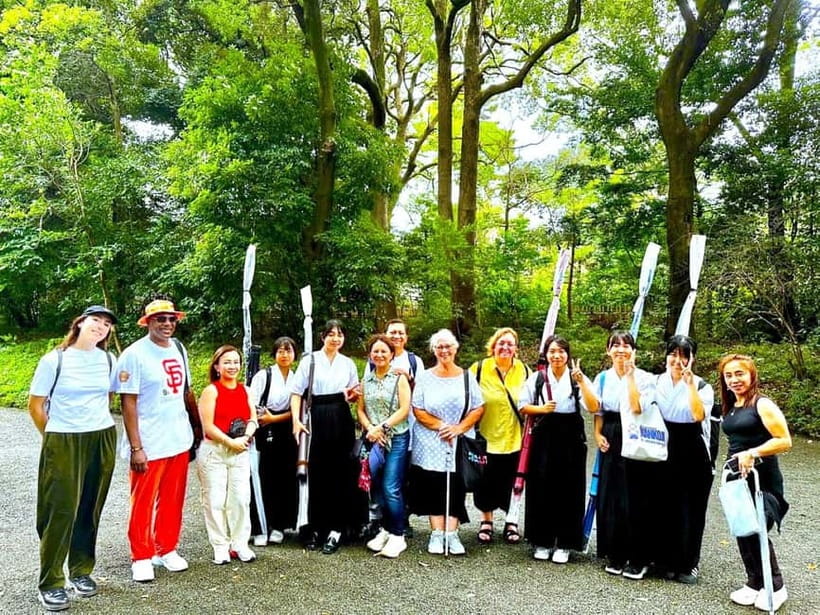
- Meiji Jingu, a quiet forest beside Harajuku
- Shibuya’s Hachiko and the scramble crossing
- Tsukiji Honganji and lunch at the outer market
- The Imperial Palace, Marunouchi, and Tokyo Station
- Akihabara and the city’s pop culture side
- Sensoji and Asakusa’s old Tokyo atmosphere
- The guide makes the difference
- What seven hours and 20,000 steps really mean
- Is $77 a fair price?
- Booking details worth taking seriously
- Should you book this Tokyo tour?
- FAQ
- How long does the Tokyo tour last?
- How many people can join the group?
- What language is the tour conducted in?
- Where does the tour meet?
- Are transportation costs included?
- Is food included?
- What should I bring?
Key points to know before booking
- Up to 10 major sights in seven hours: The route covers Tokyo’s famous districts and several cultural stops, though the exact number and timing can vary.
- Born-and-raised Tokyo guides: Sam and Yasuko are among the guides praised for explaining history, local customs, transport, and daily life.
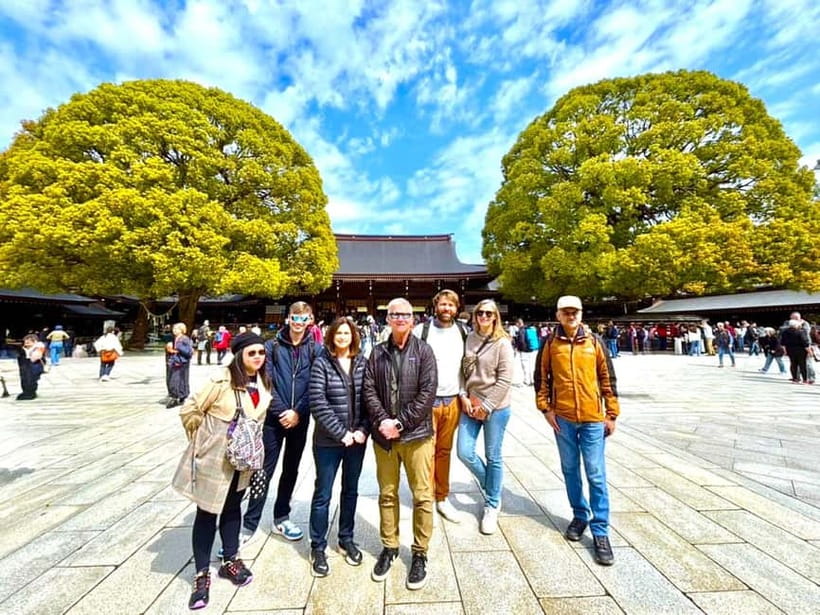
- Small groups make questions easy: With a maximum of seven people, you are less likely to lose the guide in a crowded station.
- You pay extra for transport and food: Set aside about 1,500 JPY, roughly $10, for metro and JR fares, plus lunch and snacks.
- This is a walking workout: Comfortable shoes and easy-moving clothes are essential for a day that may reach 20,000 steps.
- All listed attractions are free to enter: The cost covers the guide and taxes, not meals, drinks, trains, or metro fares.
Why this tour works well on your first Tokyo day
Tokyo is not difficult because the trains are poor. The opposite is true: the system is vast, fast, and spread across many operators and stations. A guide can save you time while showing you how to behave on public transport, read the rhythm of the city, and get from one district to another without wasting half the day.
The route also gives you a broad first look. You move from a convenience store to a forest shrine, from Shibuya’s famous crossing to the old streets around Asakusa, then on to the Imperial Palace, Tokyo Station, Tsukiji, and Akihabara. That range matters because Tokyo is not one city experience. It is a collection of very different neighborhoods.
I would treat this as an orientation day, not a final visit to every stop. You will see enough to decide where you want to return for a slower afternoon. Several people who enjoyed the tour most appreciated exactly that benefit: the day helped them choose which places deserved more time later.
A few more options to weigh up in Tokyo
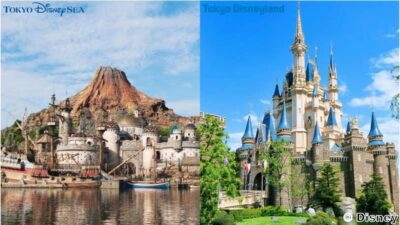
- Tokyo Disney Resort – Tokyo Disneyland & Tokyo DisneySea Park Tickets
★ 4.8 · 99,488 reviews - SHIBUYA SKY Ticket
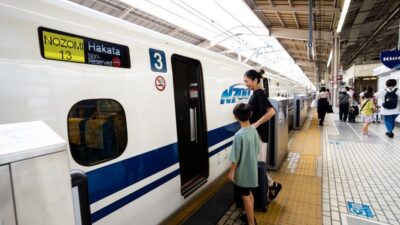
★ 4.7 · 46,509 reviews - JR Whole Japan Rail Pass
★ 4.8 · 29,150 reviews
Starting at Yoyogi and learning konbini culture
The meeting point is outside the ticket gate at the West Exit of JR Yoyogi Station. Be precise here. The tour leaves on time, and late arrivals cannot join. Your guide’s name and photo are provided after booking, which is useful in a busy station area.
The early convenience store stop introduces konbini culture through a Seven-Eleven. This may sound like an odd sightseeing choice, but it is one of the smartest parts of the route. Japanese convenience stores are part of daily life, and they offer far more than drinks and packaged sweets. Your guide can explain the appeal of these shops and point you toward snacks worth trying.
This stop also sets the tone. The tour is not only about grand buildings. It shows you ordinary systems that make Tokyo work. Bring Japanese yen in cash, since some small shops and food stops may not accept cards. Your transport card should also be ready before the tour begins. A pre-charged Suica, Pasmo, or Icoca is required for the metro portions.
Meiji Jingu, a quiet forest beside Harajuku
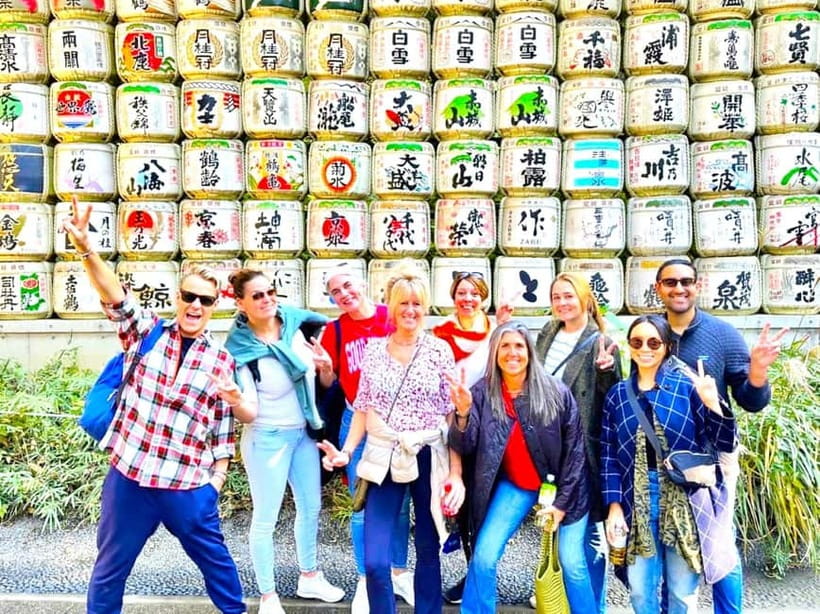
Meiji Jingu gives the day a sharp change of mood. After the station and convenience store, you enter a large forested shrine setting where the city noise falls away. It is a useful introduction to Shinto practice, spiritual manners, and the importance of quiet behavior at religious sites.
Your guide can help you understand what to do at the entrance, how to approach the shrine, and why certain gestures matter. This practical explanation is more useful than simply snapping a picture of the buildings. You also get a better sense of how Tokyo protects calm spaces inside a huge urban center.
The tradeoff is time. A seven-hour route cannot allow a long, unhurried walk through every path. If Meiji Jingu becomes one of your favorite places, plan to return on another day when you can take it slowly.
Shibuya’s Hachiko and the scramble crossing
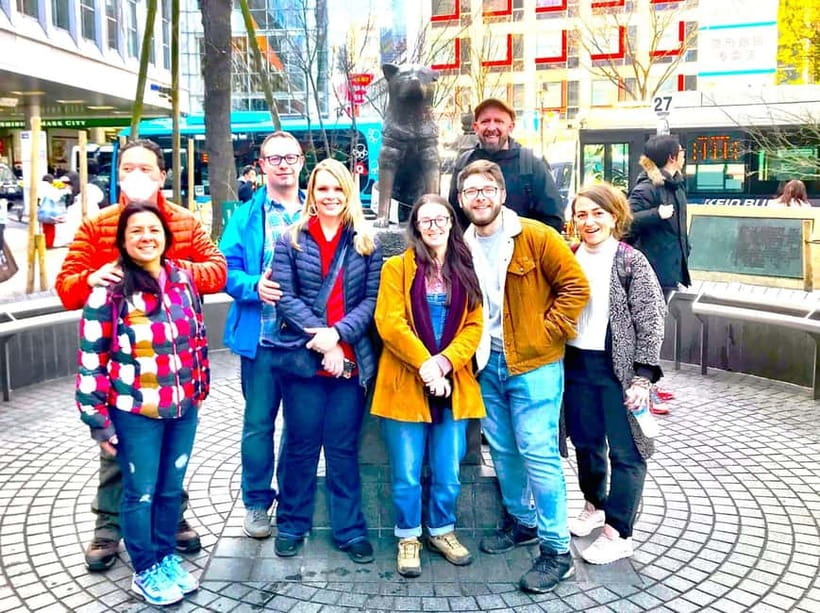
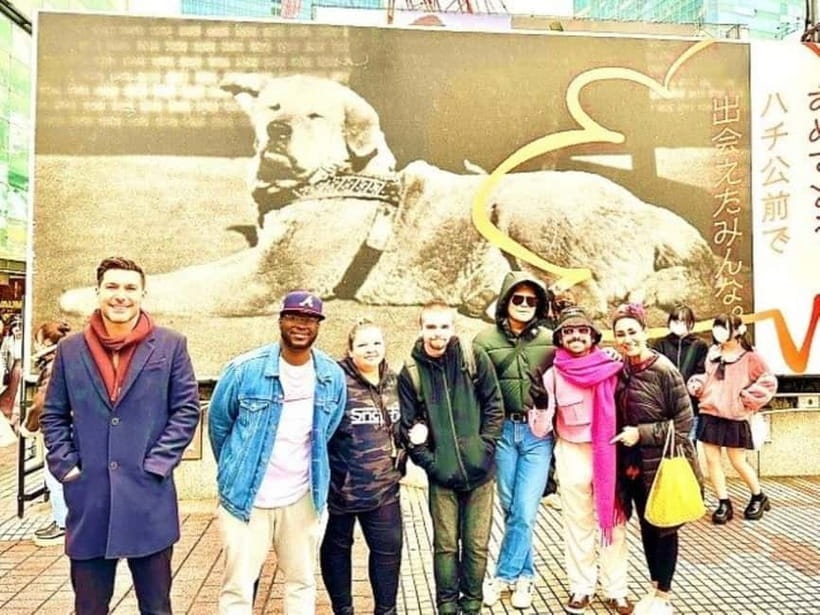
Shibuya supplies the tour’s big-city jolt. The Hachiko statue is a natural place to discuss the famous dog’s story and the meaning of loyalty in Japanese popular culture. It is a small stop, but it gives the area a human story before you face the crowds and screens.
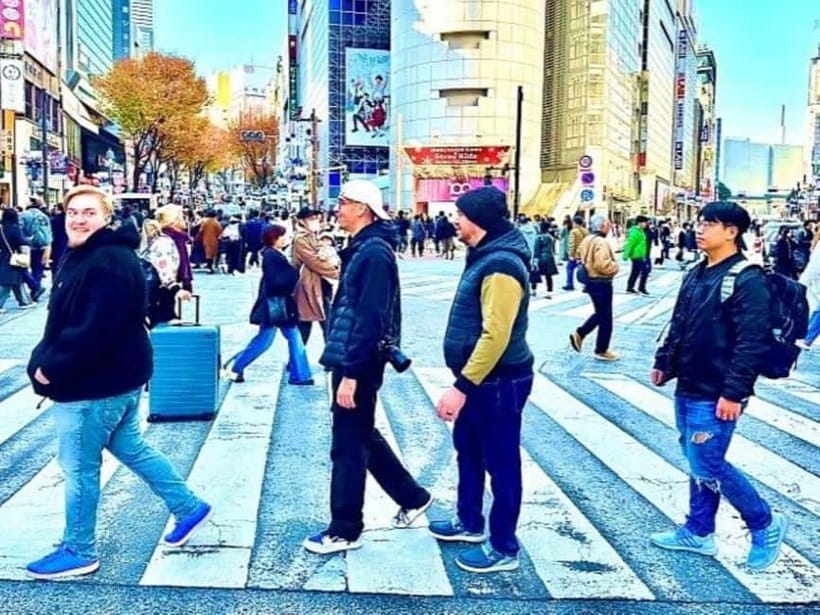
Then comes Shibuya Scramble Crossing, one of Tokyo’s most recognizable scenes. You get the chance to cross with the flow of pedestrians and take in the spectacle from street level. The crossing is free, of course, but finding a perfect photograph may take patience, especially when the area is crowded.
This is also where the group format helps. A guide can arrange a meeting point and keep everyone together before and after crossing. Do not wander off for a quick shop visit. The guide cannot leave the group to search for anyone who disappears, and the tour runs on a tight schedule.
A completely different kind of day out:
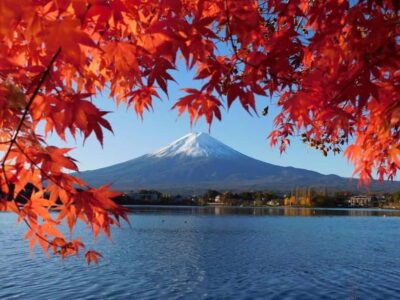
- Mt Fuji and Hakone 1-Day Bus Tour Return by Bullet Train
★ 5.0 · 26,383 reviews - TOKYO SKYTREE® Ticket
★ 4.7 · 25,136 reviews - teamLab Borderless Tickets: MORI Building DIGITAL ART MUSEUM
★ 4.7 · 24,126 reviews - teamLab Planets TOKYO Ticket
★ 4.7 · 21,663 reviews
Tsukiji Honganji and lunch at the outer market
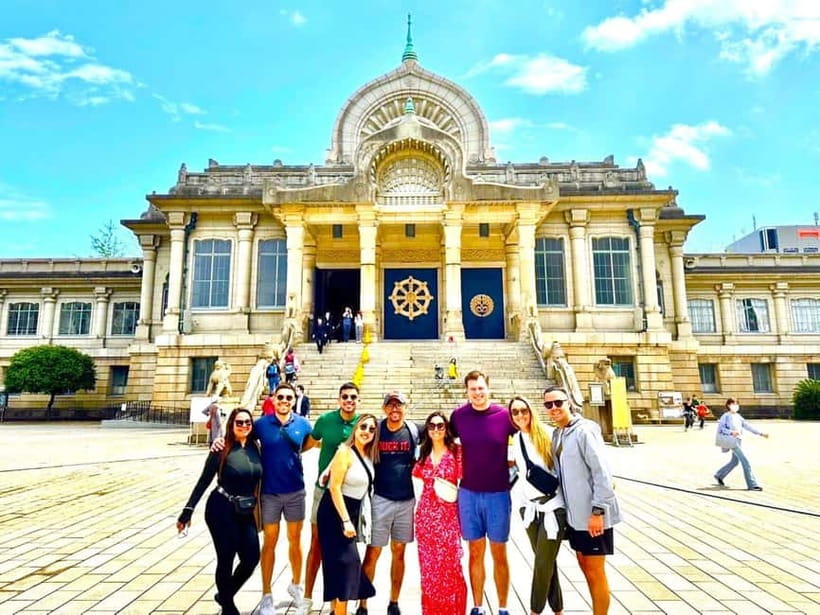
Tsukiji combines religion, architecture, and food. Tsukiji Honganji Temple is known for its unusual Indian-inspired design and striking stained glass. It does not look like a standard neighborhood temple, so it adds welcome variety to the day.
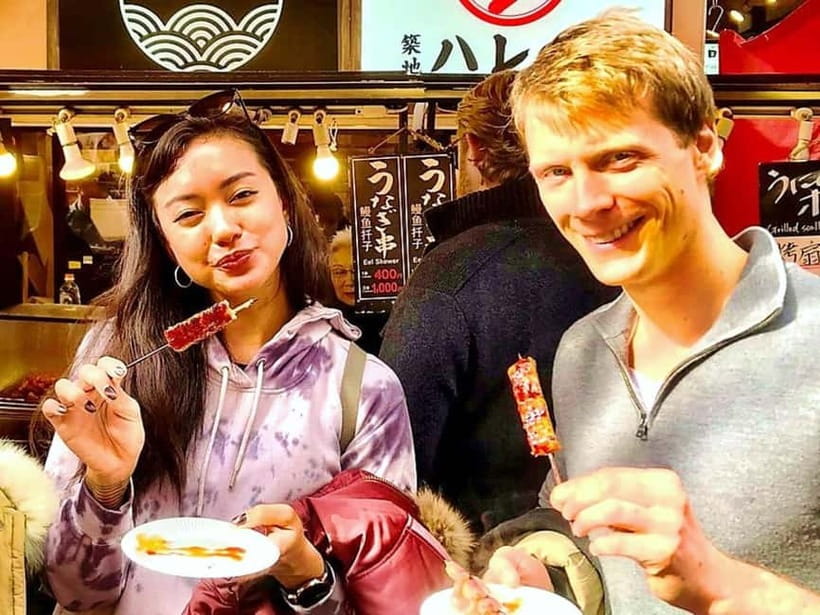
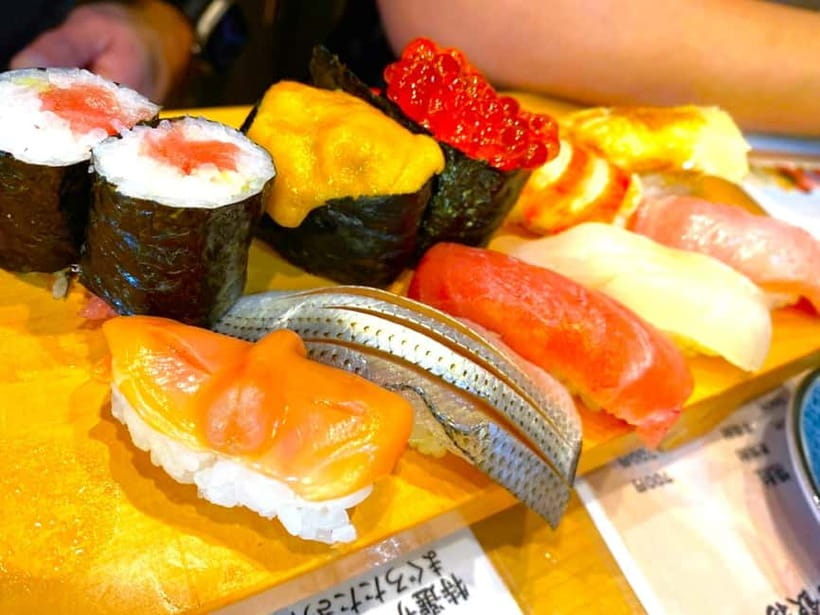
Afterward, you explore Tsukiji Outer Market, once widely known as Tokyo’s kitchen and still a prime place to browse food stalls and small shops. The route may introduce you to seafood, Wagyu, snacks, and other local specialties. Lunch is not included, so you should budget separately and carry cash.
Food choices are not limited to meat or seafood. Vegetarian and vegan options are available, but tell the guide about your needs early so the group can make sensible choices. Since lunch takes place during an already full day, do not expect a long restaurant meal. Think of it as a chance to sample the area and keep moving.
The Imperial Palace, Marunouchi, and Tokyo Station
The Imperial Palace area brings you back to Tokyo’s political and historical center. You walk around the grounds connected with the former Edo Castle, including impressive stone walls and formal open spaces. The value here is the context: a guide can explain how the old castle district relates to modern Tokyo.
The nearby Marunouchi district offers a different view. Sleek office towers sit close to the Imperial Palace, creating one of the clearest contrasts between old authority and present-day business Tokyo. This is a good stretch for seeing how the city combines inherited traditions with modern work life.
Tokyo Station provides another visual change. The red-brick building is a historic gateway surrounded by a huge transport hub. You will not simply see a station facade. You will also learn how the city connects rail travel, business districts, and underground movement.
The drawback is that these stops are easy to rush. If you want detailed architecture photographs or time inside the station’s many shops, return later. The tour gives you orientation and context, not a full station tour.
Akihabara and the city’s pop culture side
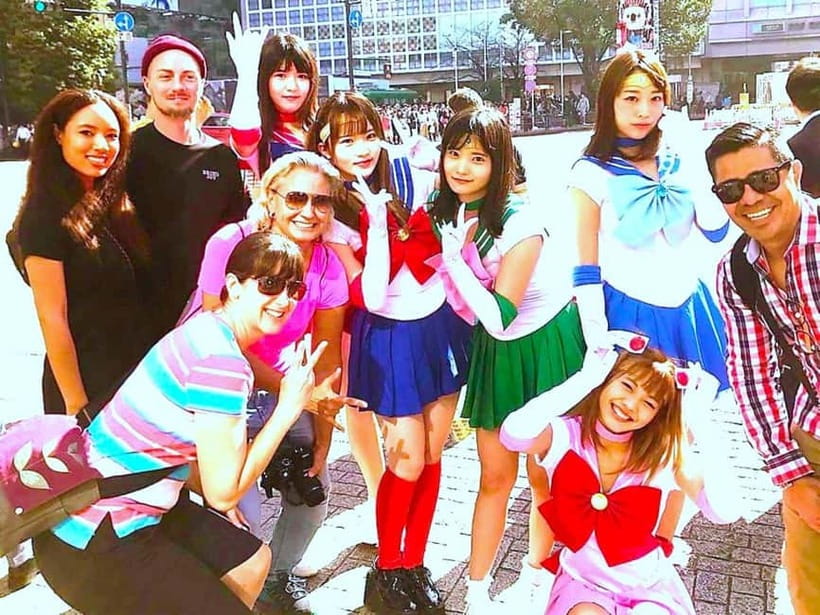
Akihabara turns the volume up again. Known as Electric Town, it is the stop for anime, gaming, electronics, and Japanese pop culture. Including it is important because Tokyo cannot be understood through shrines and imperial sites alone.
The area also shows why the tour appeals to first-time visitors who want more than a traditional sightseeing route. One highly positive assessment of the experience specifically appreciated the mix of historical places with locations of pop culture importance. That balance helps you see modern Tokyo as well as its older traditions.
Your time here will be limited. Akihabara is easy to spend an entire afternoon exploring, and the tour is unlikely to let you browse every shop. Make a mental note of what interests you, then return independently if you want to shop or explore gaming culture in greater detail.
Sensoji and Asakusa’s old Tokyo atmosphere
Sensoji is Tokyo’s oldest temple and one of the day’s essential stops. Entering through Kaminarimon Gate gives you a clear sense of Asakusa’s spiritual and historic character. The approach is visually memorable, but it can also be crowded, so stay close to your guide.
The nearby Asakusa Shrine adds a quieter Shinto perspective within the same broader temple area. Learning the difference between the temple and shrine helps you read other Japanese religious sites during the rest of your trip. Your guide can also explain the complicated history that links the two places.
Asakusa is one of the stops where a local guide adds real value. Without context, you may see gates, incense, statues, and ritual gestures without knowing what they mean. With an explanation, the visit becomes more than a photo stop.
The guide makes the difference
The strongest part of this experience is the human help. Sam has been praised for being an excellent introduction to Tokyo, bringing warmth and useful explanations to the day. Yasuko has also received especially strong praise for her positive attitude, patience, local knowledge, and willingness to answer questions.
That matters on a route this busy. A guide who can explain a shrine, then help you understand a metro transfer, then suggest a restaurant is doing more than reciting facts. You receive a practical introduction to Japanese history, culture, values, etiquette, and daily habits.
The guide may also use maps or slides on an iPad to explain where you are and how the city fits together. That is helpful in Tokyo, where a traveler can lose the larger picture while moving between stations and districts. Ask questions as you go. The small group makes this much easier than a large coach excursion.
What seven hours and 20,000 steps really mean
The tour lasts seven hours, but the effort can feel greater because the route includes walking, station navigation, standing, crossing streets, and moving between sights. The stated estimate of 20,000 steps is not a minor detail. It should guide your booking decision.
Wear sporty shoes and easy-moving clothes. High heels are not suitable, and large luggage, baby strollers, and baby carriages are not permitted. The experience is not suitable for people with mobility issues, wheelchair users, pregnant women, people with back problems, people with a cold, or those with a low level of fitness.
Rain does not automatically stop the tour. Bring an umbrella or raincoat. You should also be comfortable remaining with the group throughout the day, since the guide cannot pause the route to look for someone who has gone missing.
Is $77 a fair price?
The listed price is $77 per person, with the professional guide fee and taxes included. You will pay extra for metro and JR fares, estimated at about 1,500 JPY, or roughly $10, as well as food and drinks.
I consider the price reasonable if you value time and orientation. You are paying for a local English-speaking guide, a carefully linked route, cultural explanations, transport help, and access to a small group rather than a large crowd. Because the attractions themselves are free, the guide is the main product.
The value is lower if you already know Tokyo’s transport system and prefer spending an hour or more at each site. You could visit many of these places independently for less, but you would need to plan the route, manage transfers, understand etiquette, and decide where to eat. For a first day, that work may be worth more than the savings.
Booking details worth taking seriously
Free cancellation is available up to seven days before the tour for a full refund. Under-18s must travel with an adult, and anyone under 13 requires a private tour. The experience is designed for leisure travelers, not professional tour research or language training.
Bring cash, a pre-charged IC card, water, weather protection, and no oversized bags. Food, drinks, transport, and any entrance fees are not included, although all listed attractions are free to enter. The tour is conducted in English, and the maximum group size is seven.
Should you book this Tokyo tour?
Book it if you have limited time, want a strong first-day introduction, or feel uneasy about Tokyo’s rail system. It is particularly useful for a short stopover because it covers Shibuya, Meiji Jingu, Tsukiji, the Imperial Palace area, Akihabara, Tokyo Station, and Asakusa in one organized day.
Skip it if your priority is slow photography, long meals, shopping, or quiet time at one temple. The pace is demanding, and the route gives you a sample of many districts rather than a deep visit to any one of them.
For the right person, this is a practical way to get a grip on Tokyo fast. You leave with a clearer map in your head, a better sense of local manners, and a short list of places worth revisiting. That is a lot of value from one very full day.
FAQ
How long does the Tokyo tour last?
The tour lasts seven hours.
How many people can join the group?
The group is limited to seven participants.
What language is the tour conducted in?
The live tour guide speaks English.
Where does the tour meet?
The meeting point is outside the ticket gate at the West Exit of JR Yoyogi Station, at 1-chōme-34 Yoyogi, Shibuya City, Tokyo 151-0053.
Are transportation costs included?
No. Metro and JR train fares are separate and cost approximately 1,500 JPY, or about $10.
Is food included?
No. Lunch at Tsukiji, snacks, drinks, and other food purchases are separate. Vegetarian and vegan options are available.
What should I bring?
Bring comfortable sporty shoes, easy-moving clothes, cash, rain gear, and a pre-charged Suica, Pasmo, or Icoca card for metro travel.
Just added in Tokyo
- A One-of-a-Kind Sushi Experience in a Special Place of Japan★ 5.0 · 15 reviews
- Tokyo Cute Bento Cooking Class – Make a Kawaii Character Lunchbox★ 5.0 · 126 reviews
- Japanese Home Cooking Class & Walk in Todoroki Temple Tokyo★ 5.0 · 88 reviews
- Japan Tokyo Tower Observatory Deck E-Ticket★ 4.0 · 34 reviews
- Catch a Baseball Game in Tokyo with a Local – Tickets Included★ 5.0 · 24 reviews
- JDM Experience with Fast&Furious RX-7 (English speaking Driver)★ 5.0 · 57 reviews
- Tokyo Private Day Tour by Car with English speaking Driver Guide★ 4.0 · 29 reviews
- Japan Classic 10 Day – One Life Adventures★ 5.0 · 129 reviews
Tokyo Tours, compared.
Tokyo Disney Resort – Tokyo Disneyland & Tokyo DisneySea Park Tickets
Read our review →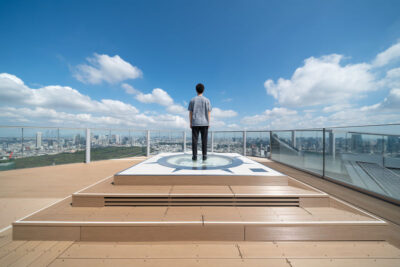
Mt Fuji and Hakone 1-Day Bus Tour Return by Bullet Train
Read our review →

teamLab Borderless Tickets: MORI Building DIGITAL ART MUSEUM
Read our review →