
Reviewed · BOAT TRIPS AND CRUISES
Tokyo: Mt. Fuji and Hakone Tour with Cable Car and Cruise
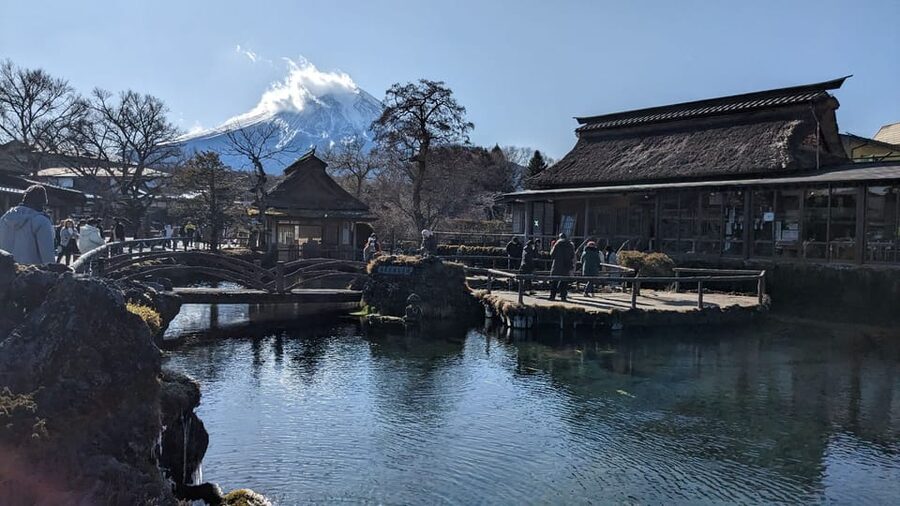
Fuji rewards patience. This long day from Tokyo combines the mountain’s highest road-accessible point, the Owakudani volcanic zone, and a Lake Ashi cruise in one tidy package. I especially like the Mt. Fuji 5th Station at 2,300 meters, where you can visit Komitake Shrine and watch clouds race past the summit. The Hakone Ropeway and cruise also give you three very different views of the area without arranging several separate tickets.
The drawback is time. You spend roughly 2.5 hours reaching the Fuji area and about two hours returning to Tokyo, and traffic can shrink your sightseeing stops. Guides such as Mary-san, Harry, and Yoko, also called Yoyo, have earned strong praise for their humor, warmth, and clear explanations, but the day can still feel hurried when roads are slow.
In This Review
- The key points at a glance
- What this 11-hour Fuji and Hakone day is really like
- The long ride from Shinjuku to Mt. Fuji
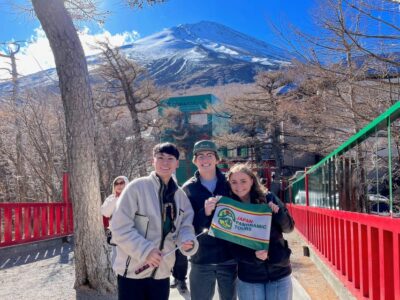
- Mt. Fuji 5th Station at 2,300 meters
- Lunch, hot pot, and the half buffet
- Owakudani and the Hakone Ropeway
- Lake Ashi cruise and the best Fuji gamble
- Guides, group rhythm, and the human side
- Returning to Tokyo, Hakone-Yumoto, or Odawara
- Accessibility and practical comfort
- Who should book this tour?
- FAQ
- How long does the Mt. Fuji and Hakone tour last?
- Is Mt. Fuji guaranteed to be visible?
- What happens if the bus cannot reach Mt. Fuji 5th Station?
- Is lunch included?
- Are the Hakone Ropeway and Lake Ashi cruise included?
- Can I end the tour in Hakone or Odawara instead of returning to Tokyo?
- Can a wheelchair user join the tour?
The key points at a glance
- The 5th Station is the main Fuji moment: At about 2,300 meters, you are close to the summit, with Komitake Shrine, mountain views, and souvenir shops nearby.
- Owakudani feels properly volcanic: Fumaroles and sulfur vents appear around the ropeway route, with black eggs cooked in sulfur-heated water sold separately.
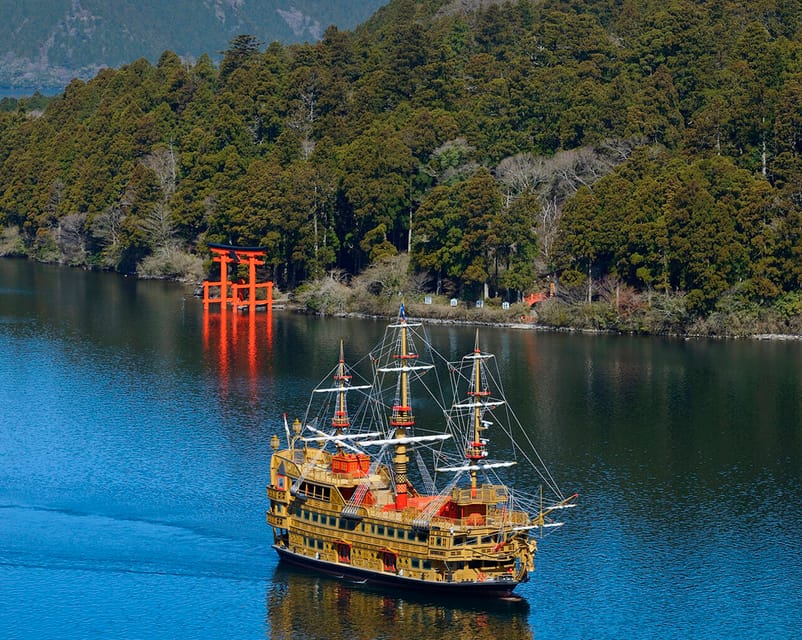
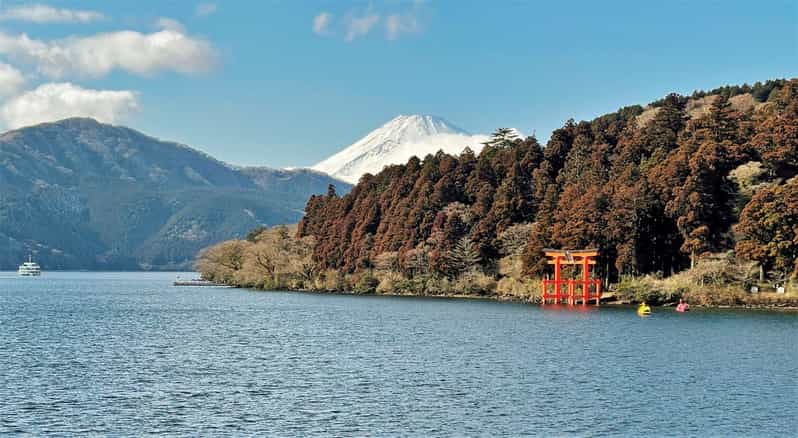
- Lake Ashi adds a calm finish: The cruise gives you broad views across Hakone and a chance to spot Fuji from the deck when the sky is clear.
- Traffic can change the whole day: Road delays have shortened time at the volcanic fields and 5th Station, so take your photos as soon as you arrive.
- Lunch is optional but useful: The selected meal includes a hot pot and half buffet. Without lunch, the schedule does not provide a dedicated meal stop.
- You have useful return choices: You can return to Tokyo, finish at Hakone-Yumoto, or leave at Odawara Station.
What this 11-hour Fuji and Hakone day is really like
This is a full-day bus tour from Tokyo, priced at about $92 per person. The cost covers air-conditioned transportation, an English-speaking guide, the Hakone Ropeway, and the Lake Ashi cruise. Lunch costs extra if you choose that version.
I see the price as fair for a first look at two major areas. Buying the ropeway and cruise separately, then arranging transport to Fuji and Hakone, would take more planning. The catch is that you pay with flexibility. A bus has to keep moving, and a traffic jam on the Chūō Expressway or Subaru Road can take time from the places you came to see.
The meeting point is in the Shinjuku area at the Love Object, though the exact meeting point can vary by the option you book. Arrive early. If you miss the departure, you cannot join later along the route.
The tour is intended only for international visitors. Children up to three may join free, but they do not receive a bus seat or lunch unless you book the child option. That small rule matters if you are traveling with a toddler.
More Boat Trips in Tokyo
- Mt Fuji & Hakone Cruise, Drum Show Bullet Train 1 Day from Tokyo
★ 4.0 · 7,413 reviews - Tokyo Mt Fuji 5th St & Hakone Cruise Bus Tour w/Bullet Train
★ 4.4 · 5,024 reviews - Tokyo: Meiji Shrine, Asakusa, Skytree Bus Tour and Cruise
★ 4.7 · 1,986 reviews
The long ride from Shinjuku to Mt. Fuji
The first leg usually takes about 2.5 hours. You travel through Tokyo and out along the Chūō Expressway, then continue toward the Subaru Line. This ride is part of the practical appeal: you see Japan shift from dense city streets to open country and mountain roads without changing trains or buses.
It is also where the day can become difficult. Traffic is a real factor, especially when the roads are busy. Several visitors found that delays left little time at the 5th Station or Owakudani. The return to Tokyo usually takes about 120 minutes, but that is an estimate rather than a promise.
Bring water and a small snack even if you select lunch. The schedule is tight, and a delayed bus can make the spaces between stops feel longer than expected. Wear shoes suitable for walking and take a light layer. At 2,300 meters, conditions can feel different from central Tokyo, and the mountain weather may change quickly.
Mt. Fuji 5th Station at 2,300 meters
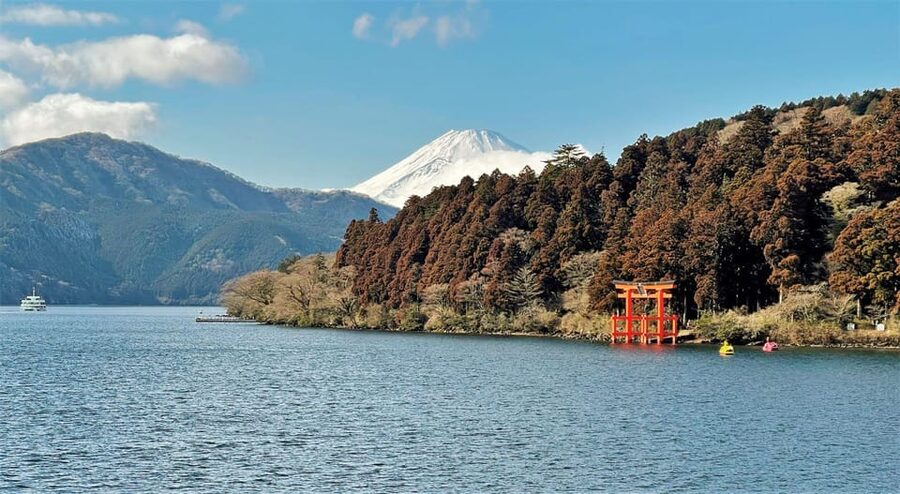
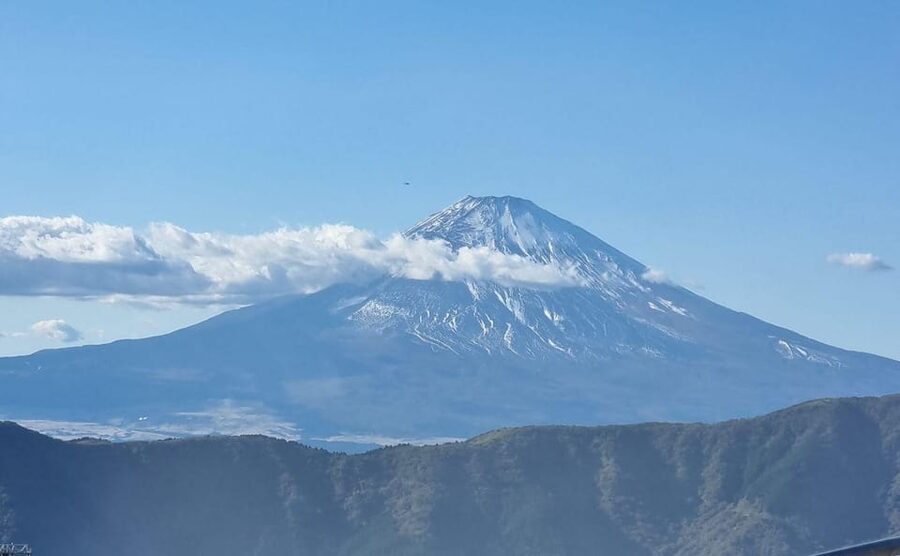
The Subaru Line carries you to Mt. Fuji’s 5th Station, the highest point reached by road on this tour. You are much closer to the summit than you are from Tokyo, but this is not a summit climb. The appeal is the altitude, the mountain air, the shrine, and the chance to look up at the upper slopes.
Komitake Shrine gives the stop a more personal feel than a simple roadside viewpoint. You can also browse for souvenirs. Still, do not let the shops steal your best minutes. Clouds move fast here, and Fuji may appear for only a short spell. Take your photographs first, then visit the shrine or shop if time allows.
This is the single most important practical tip for the day: photograph Fuji immediately at the 5th Station. Some visitors assumed they would get another clear view from the ship or ropeway, only to find that traffic and cloud cover removed that chance.
Weather controls this stop. In heavy rain, fog, or an accident on the road, the bus may not reach the 5th Station. The guide will take the group to the highest point that can be reached safely. You should also accept that Fuji may be completely hidden. No change in schedule or poor weather creates a refund under the stated terms.
Water is limited at the 5th Station, so conserve it when using the restroom. That is a small but worthwhile reminder at a high mountain stop.
Lunch, hot pot, and the half buffet
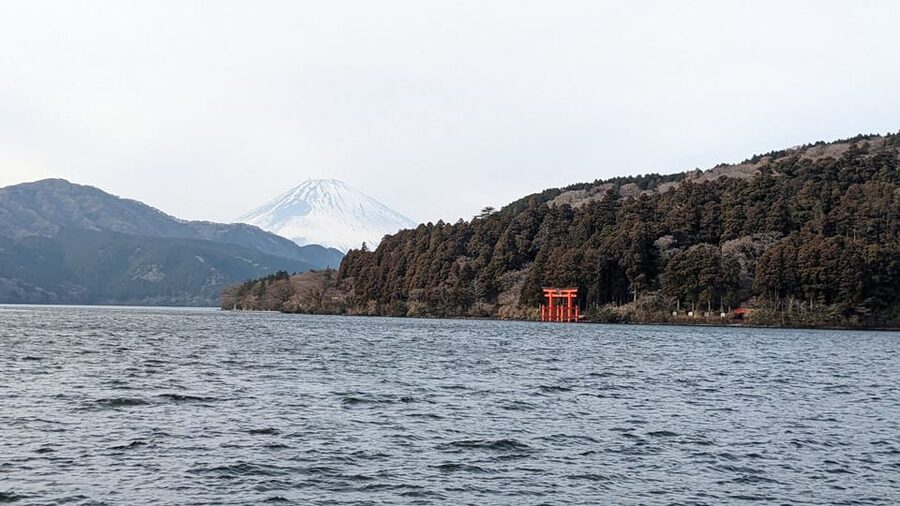
If you choose the lunch option, you get a local meal with a hot pot and half buffet. The planned meal lasts about 45 to 60 minutes, though traffic may shorten the actual time available.
I would choose lunch for convenience, especially on a day with few unplanned breaks. You do not need to search for food while the bus is waiting, and the hot pot gives you something warm after the mountain stop.
Do not expect a large, endlessly replenished buffet. One person found that food was scarce and was not replaced quickly, which made the meal feel thin. The exact selection is not specified, so it is best to think of this as a practical included-style meal rather than a major culinary event.
If you skip lunch, there is no separate meal stop provided. That can work if you prefer to carry food, but you should plan ahead. Tell the operator about food restrictions when booking so arrangements can be made.
A completely different kind of day out:
- Tokyo Disney Resort – Tokyo Disneyland & Tokyo DisneySea Park Tickets
★ 4.8 · 99,488 reviews - SHIBUYA SKY Ticket
★ 4.7 · 46,509 reviews - JR Whole Japan Rail Pass
★ 4.8 · 29,150 reviews - Mt Fuji and Hakone 1-Day Bus Tour Return by Bullet Train
★ 5.0 · 26,383 reviews
Owakudani and the Hakone Ropeway
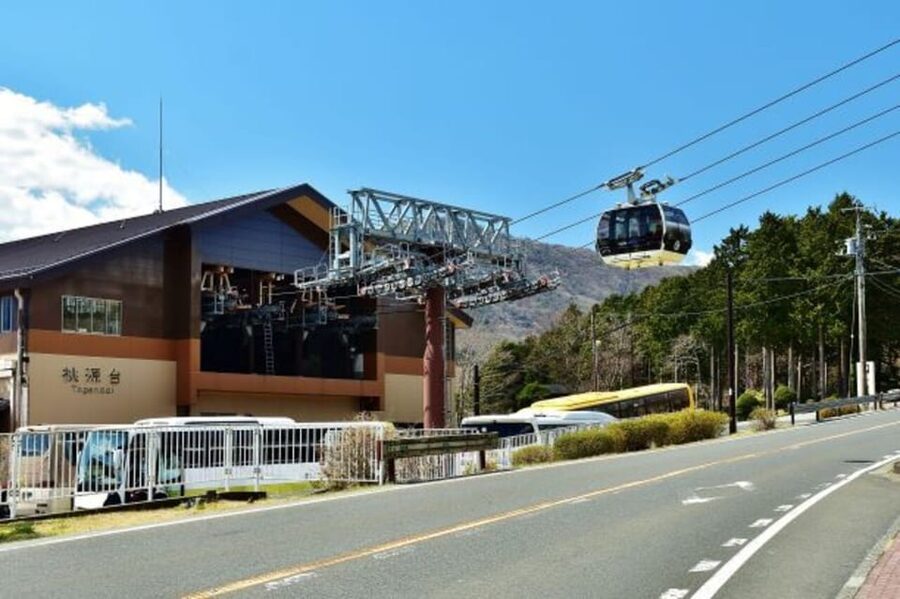
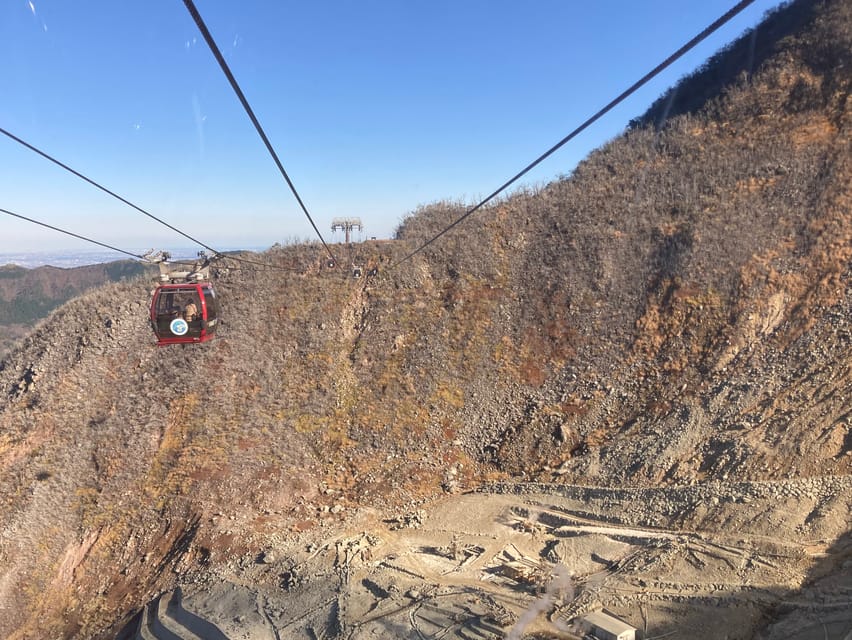
The Hakone Ropeway is one of the most distinctive parts of the day. As the gondola descends toward the Owakudani volcanic area, you watch the elevation change and see the terrain open beneath you. The ride is not just transport. It gives you a moving view of Hakone’s volcanic activity.
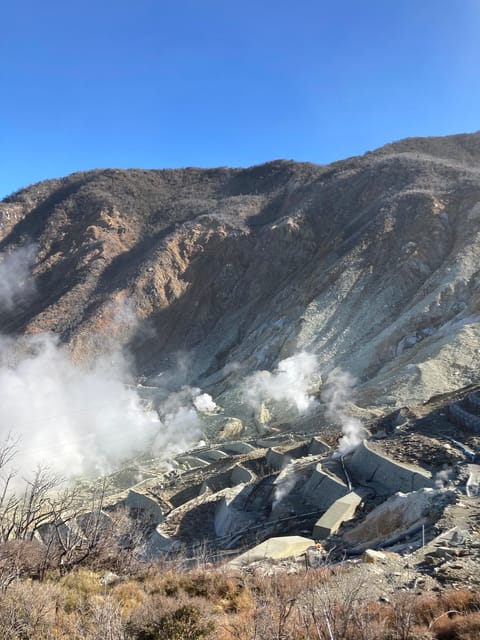
Owakudani is known for fumaroles and sulfur vents. Steam and volcanic gases rise from the ground, creating an otherworldly stop that feels very different from the shrine and mountain scenery earlier in the day. The famous black eggs, boiled in sulfur-heated water, can be bought separately. The fee is not included.
Pay attention to your breathing here. The tour information specifically warns people with respiratory problems to check whether the conditions are suitable. If the ropeway is closed or weather prevents the planned activity, the day may switch to another destination such as a Lake Kawaguchi cruise, the Mt. Fuji Panoramic Ropeway, Mishima Skywalk, Odawara Castle, Hakone-en Aquarium, Narukawa Art Museum, Hakone Checkpoint, or Hakone Shrine.
The volcanic stop is excellent when the schedule works. It is less satisfying when traffic leaves you watching Owakudani from the gondola with almost no time to walk around. If the guide announces limited time, enjoy the view first and save shopping for later, if there is later.
Lake Ashi cruise and the best Fuji gamble
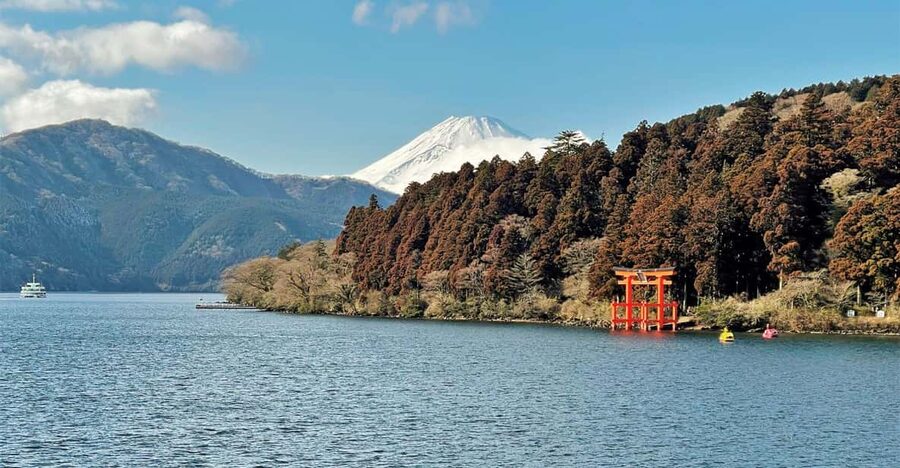
The cruise on Lake Ashi is the day’s most restful section. After the bus rides and mountain stops, you can step onto the ship and look across the water instead of watching the road. The deck offers sweeping views of Hakone, and Fuji may appear beyond the lake when the air is clear.
This is a beautiful idea, but it is weather dependent. A cloudy day can turn the Fuji promise into a general lake cruise, still pleasant but less dramatic. The ship ticket is included, and the cruise provides a useful change of pace from the ropeway.
Do not count on a long stroll around Hakone after leaving the boat. The schedule may allow almost no free time there, particularly after a traffic delay. If you want a slow visit to Hakone’s streets, shops, or cafes, this tour is not designed for that. It is built around seeing several major sights in one day.
Guides, group rhythm, and the human side
The guide can make a major difference on a day this compressed. Mary-san was praised for being friendly, informed, and even adding small sing-alongs. Yoko, also called Yoyo, was described as funny, warm, and very good at explaining the places along the way. Harry was also singled out as an excellent guide.
Those details matter because you spend many hours on the bus. A lively guide can turn the drive into useful background on the region rather than dead time. The driver and assistant have also been praised for keeping the operation moving.
Still, a good guide cannot remove every problem caused by traffic or weather. One poor-weather day produced confusion over whether the ropeway would operate, followed by a last-minute change. There was also a case where the expected bus return did not match what was available that day. Check your chosen return option carefully before departure, especially if you need to connect with another train.
Returning to Tokyo, Hakone-Yumoto, or Odawara
The standard return is by bus to Tokyo Station, with a typical driving time of about two hours. That is convenient if your hotel is in Tokyo and you want a single transport arrangement from start to finish.
You can also choose to finish at Hakone-Yumoto. This makes sense if you have booked a hotel in the Hakone area and do not want to ride back to Tokyo. Another option is Odawara Station, useful if you have a Japan Rail Pass or a separate ticket for onward travel.
The return choice is not a minor detail. A long ride back to Tokyo can be tiring after an already full day, while ending in Hakone or Odawara may suit a wider Japan trip. If you need a shinkansen ticket, this particular tour does not provide one, so book the version that specifically includes bullet train travel.
Accessibility and practical comfort
All sightseeing locations on the tour are described as wheelchair-accessible. The standard buses, however, do not have lifts or ramps. A folding wheelchair can generally go in the luggage compartment, while an electric wheelchair may not fit because of size and weight limits.
Tell the operator at booking if you use a wheelchair. That gives the staff a chance to confirm the arrangements rather than dealing with the issue at the meeting point.
For everyone, the main comfort issue is duration. Eleven hours is a lot of time for a one-day outing, and the bus can consume nearly half of it. You should be comfortable with a structured schedule, fixed departure times, and limited free time at some stops.
Who should book this tour?
I would recommend this tour if you have one free day in Tokyo and want to see Mt. Fuji and Hakone without handling several transfers. It suits first-time visitors, families that value a clear plan, and anyone who wants the ropeway and cruise included in one booking.
It is less suitable if you want a mountain hike, a relaxed Hakone visit, or plenty of time for cafes and shopping. You also need a realistic attitude toward weather. Fuji is not guaranteed, and a foggy day can change the order or replace parts of the plan.
The strongest way to use the tour is to treat it as a broad introduction. Take your Fuji photos at the 5th Station, keep the ropeway and cruise in perspective, and choose your return destination with the rest of your Japan plans in mind. If you want depth at any one stop, travel there independently and stay overnight.
At about $92, the tour offers solid value for a packed first look, especially with transport, a guide, the gondola, and cruise included. I would book it for convenience and variety, not for a slow, intimate day in the mountains.
FAQ
How long does the Mt. Fuji and Hakone tour last?
The experience lasts about 11 hours, or one full day. The drive to the Mt. Fuji area usually takes about 2.5 hours, and the return to Tokyo typically takes about 120 minutes.
Is Mt. Fuji guaranteed to be visible?
No. High humidity, rain, fog, and other weather conditions may hide the mountain. The tour does not provide refunds for weather-related visibility problems.
What happens if the bus cannot reach Mt. Fuji 5th Station?
If bad weather or a road accident prevents access, the group visits the highest point that can be reached safely.
Is lunch included?
Lunch is included only when you select the lunch option. That meal includes a hot pot and half buffet. Drinks are not included.
Are the Hakone Ropeway and Lake Ashi cruise included?
Yes. Transportation by air-conditioned bus, an English-speaking guide, the Hakone Ropeway ticket, and the Lake Ashi cruise ticket are included.
Can I end the tour in Hakone or Odawara instead of returning to Tokyo?
Yes. Depending on the option booked, you can choose drop-off at Hakone-Yumoto or Odawara Station. The standard return is by bus to Tokyo Station.
Can a wheelchair user join the tour?
The sightseeing locations are wheelchair-accessible, but the standard buses do not have lifts or ramps. Folding wheelchairs can generally be stored in the luggage compartment, while electric wheelchairs may not be accepted because of size and weight limits. Inform the operator when booking.
Just added in Tokyo
- A One-of-a-Kind Sushi Experience in a Special Place of Japan★ 5.0 · 15 reviews
- Tokyo Cute Bento Cooking Class – Make a Kawaii Character Lunchbox★ 5.0 · 126 reviews
- Japanese Home Cooking Class & Walk in Todoroki Temple Tokyo★ 5.0 · 88 reviews
- Japan Tokyo Tower Observatory Deck E-Ticket★ 4.0 · 34 reviews
- Catch a Baseball Game in Tokyo with a Local – Tickets Included★ 5.0 · 24 reviews
- JDM Experience with Fast&Furious RX-7 (English speaking Driver)★ 5.0 · 57 reviews
- Tokyo Private Day Tour by Car with English speaking Driver Guide★ 4.0 · 29 reviews
- Japan Classic 10 Day – One Life Adventures★ 5.0 · 129 reviews
Boat Trips and Cruises, compared.
Mt Fuji & Hakone Cruise, Drum Show Bullet Train 1 Day from Tokyo
Read our review →
Tokyo Mt Fuji 5th St & Hakone Cruise Bus Tour w/Bullet Train
Read our review →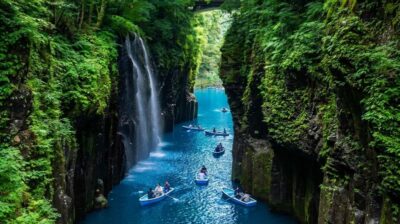
Kyushu: Mount Aso, Kusasenri & Takachiho Gorge Day Tour (Optional Takachiho Boat Ride Experience)
Read our review →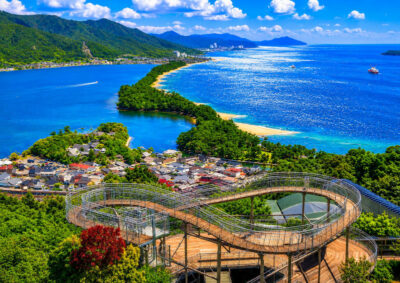
Japan’s Three Scenic Views & Kyoto by the Sea: Amanohashidate Cable Car + Ine Bay Boat Tour Day Trip (Departing from Osaka or Kyoto)
Read our review →
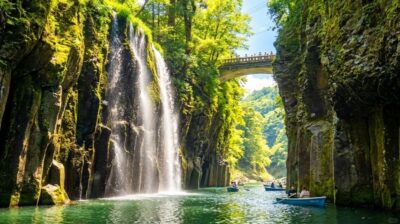
Mt. Fuji 5th Station & Hakone Cruise 1-Day Bus Tour
Read our review →
Meiji Shrine, Asakusa, Skytree Bus Tour and Cruise
Read our review →Browse the lists this tour appears in