Reviewed · TOKYO TOURS
Tokyo: Ramen Tasting Tour with 6 Mini Bowls of Ramen
Ramen gets much more interesting after the first bowl. This three-hour Tokyo food tour lets you taste six small bowls across three specialist shops, with each stop showing a different approach to broth, noodles, and toppings. I especially like the mini-bowl format, since you can sample far more than you could at ordinary ramen shops, and I like the clear explanations that turn a casual meal into a useful lesson about Japanese food.
The route also gives you a look at three Tokyo neighborhoods, including Shibuya or Shinjuku depending on the option and day. Guides such as Sahori, Bunga, Makayla, Daisy, and Manny have earned praise for their enthusiasm and practical Tokyo advice. The main catch is simple: $122 is a serious price for ramen, and you will walk about 3 kilometers between shops, with train fare extra if the route requires it.
In This Review
- Key points at a glance
- Why six small bowls work better than one big bowl
- The Shibuya route: Hokkaido, tonkotsu, and curry
- The Shinjuku route: Tokyo classics and creamy chicken broth
- The Ueno route: Kyushu ramen and dipping noodles
- What you learn between bites
- The guides make the difference
- Walking, trains, and the pace of the afternoon
- Is $122 a fair price for ramen?
- Dietary limits and practical warnings
- Who will enjoy this tour most?
- Should you book the Tokyo ramen tasting tour?
- FAQ
- How many bowls of ramen do I receive?
- Can I choose which ramen I taste?
- How many ramen shops does the tour visit?
- Which Tokyo neighborhoods are included?
- How long does the tour last?
- Is the tour conducted in English?
- Are train tickets included?
- Can vegetarians or vegans join this ramen tasting?
Key points at a glance
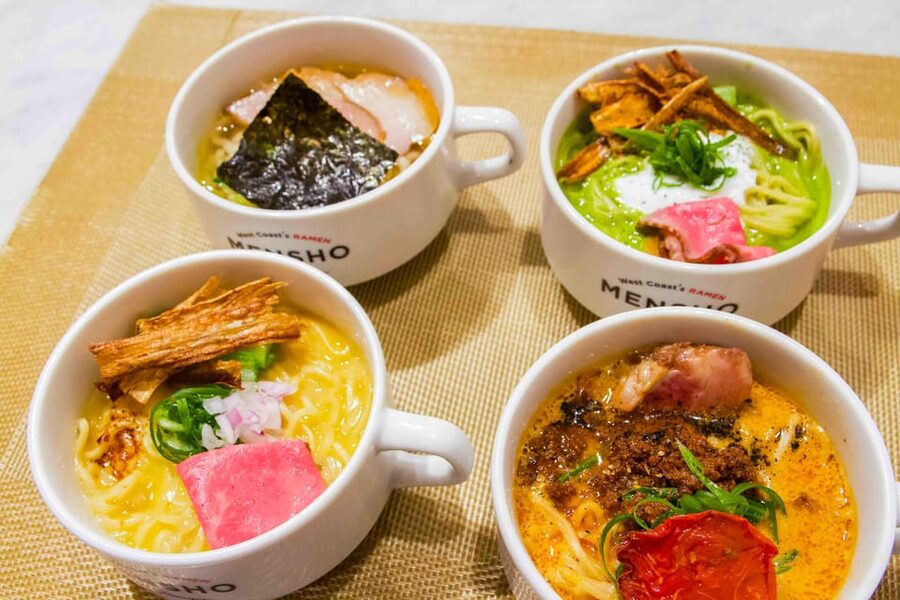
- Six exclusive mini bowls: Each serving is about one-quarter the size of a normal bowl, and you choose six from a selection of 11 or 12.
- Three different ramen shops: Every stop has its own style, from classic regional recipes to modern fusion bowls.
- Three Tokyo neighborhoods: Routes may include Shibuya, Shinjuku, Ueno, and Ebisu, depending on the booking option and day.
- A useful ramen lesson: Slides and handouts explain ramen origins, regional types, broth, noodles, and preparation.
- Small English-speaking group: The tour is limited to eight people, making it easier to ask questions.
- Plan for a large meal: The walking helps, but you should keep lunch light or skip it.
Why six small bowls work better than one big bowl
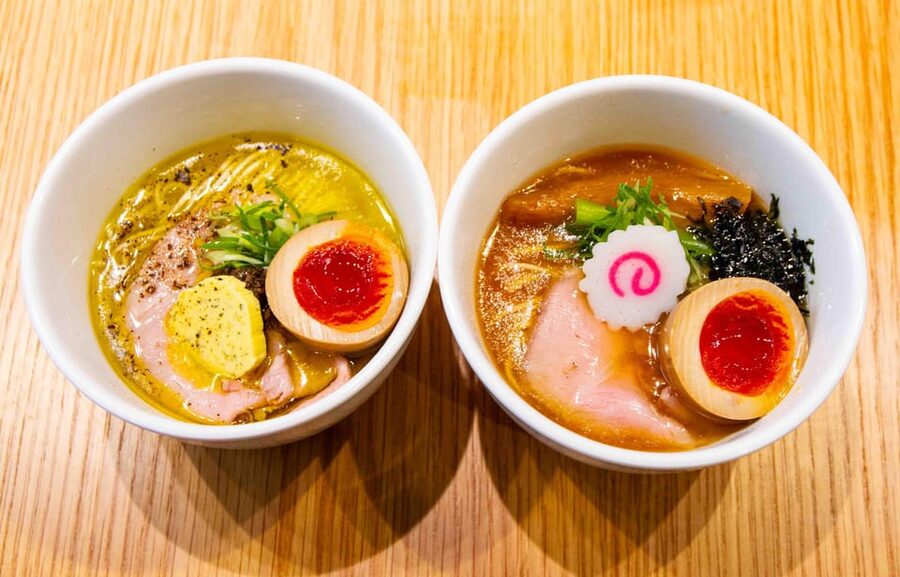
A normal ramen bowl is filling. Six normal bowls would be a heroic act of poor judgment. The small servings solve the problem neatly. Each mini bowl is roughly one-quarter of a full portion, so you can compare several styles without spending the rest of the day horizontal.
At each of the three shops, you generally select two ramen types. The full selection offers 11 or 12 choices, although the exact choices depend on the route and what is available that day. The bowls are made especially for this tour and are not simply half-finished standard portions.
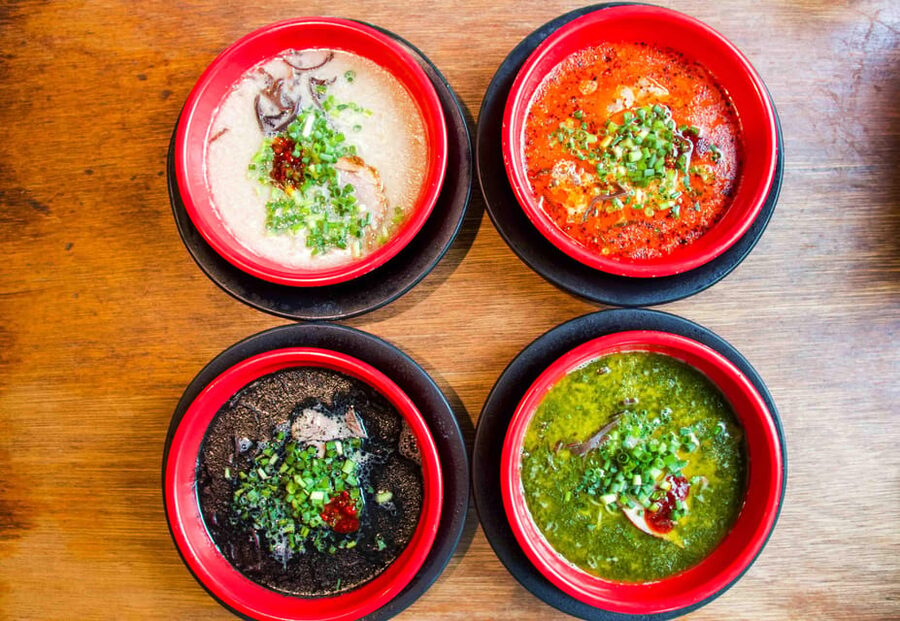
This format gives you contrast. You may move from a familiar salty broth to a creamy chicken soup, then finish with curry, dipping noodles, or a more unusual flavor such as squid ink or pesto. I like this more than a standard ramen crawl, where every stop can blur into the next bowl of noodles.
The portion size is still worth taking seriously. Six tastings add up, especially when the noodles and broth are paired with walking between shops. One useful tip is to avoid a heavy meal beforehand. One guest found the final bowl difficult to finish, and another said the tour was a very filling experience even with the walking.
A few more options to weigh up in Tokyo
- Tokyo Disney Resort – Tokyo Disneyland & Tokyo DisneySea Park Tickets
★ 4.8 · 99,488 reviews - SHIBUYA SKY Ticket
★ 4.7 · 46,509 reviews - JR Whole Japan Rail Pass
★ 4.8 · 29,150 reviews
The Shibuya route: Hokkaido, tonkotsu, and curry
The Shibuya route begins with a classic Hokkaido ramen style. Hokkaido ramen is often associated with hearty flavors, and this first stop gives you a traditional point of comparison before the tour moves into more modern territory.
The second shop serves fusion tonkotsu, the pork-bone style known for its creamy, full-bodied broth. This is a good place to notice how broth texture changes the whole meal. Tonkotsu can be richer and heavier than a clear soup, so the mini serving is especially helpful.
The final Shibuya stop focuses on savory curry ramen. It is an easy reminder that ramen is not one fixed recipe. The noodles may be familiar, but the soup can take the dish in a completely different direction.
The route begins in Shibuya and ends in Ebisu. That makes the walking useful beyond digestion. You are not simply being driven from restaurant to restaurant, and the route gives you time to see the streets between the food stops. One person specifically enjoyed the Shibuya walking portion as much as the ramen.
Rain can affect the experience. The tour involves outdoor walking, and one guide arranged a taxi for the final leg during heavy rain. That is a thoughtful response, but you should still bring suitable shoes and a compact umbrella when the forecast looks poor.
The Shinjuku route: Tokyo classics and creamy chicken broth
The Shinjuku route opens with classic Tokyo ramen. This gives you a traditional local reference point before the meal shifts to newer interpretations.
The second stop features tori paitan, a modern chicken ramen with a thick, creamy broth. It resembles tonkotsu in texture but uses chicken as its main character. This stop can be especially useful if you want to understand how similar-looking broths can have different flavors.
The final choice is a luxurious chicken or fish ramen. The word luxurious here refers to the style offered by the shop, not a guarantee of a particular topping or ingredient combination. The exact selection may vary, so listen carefully to the guide’s explanation before choosing.
Shinjuku is one of the possible neighborhoods on the route, and the tour may end there instead of Ebisu depending on the day. Since the meeting point can vary by option, check your booking details closely rather than assuming every departure follows the same route.
The Ueno route: Kyushu ramen and dipping noodles
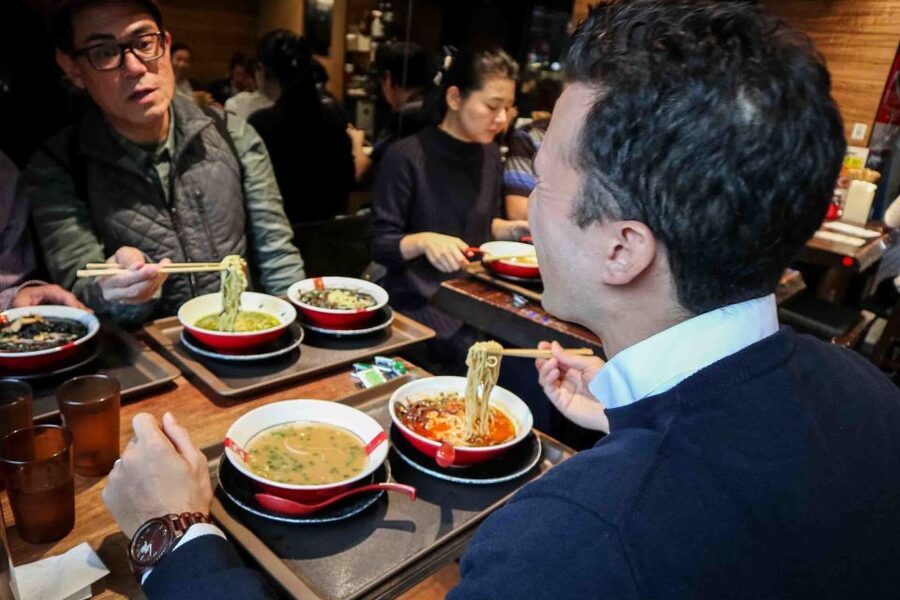
The Ueno route starts with classic Kyushu ramen. This regional style is often linked with pork-bone broth, but the tour’s important food warning applies here and everywhere else: all broths on this experience contain chicken, pork, and fish.
The second Ueno stop serves contemporary tsukemen, or dipping ramen. Instead of sitting in a single bowl of soup, the noodles and dipping broth are served separately. You control how much broth goes with each bite, which makes this one of the more distinct formats on the tour.
The final shop presents modern Tokyo ramen. After the traditional Kyushu bowl and the separate dipping style, this last stop shows how Tokyo chefs continue to reshape the basic ramen formula.
The Ueno option is a good pick if you want the broadest change in eating style, not only a change in broth. Tsukemen gives you a different rhythm at the table and helps explain why ramen menus can feel confusing when you first arrive in Japan.
A completely different kind of day out:
- Mt Fuji and Hakone 1-Day Bus Tour Return by Bullet Train
★ 5.0 · 26,383 reviews - TOKYO SKYTREE® Ticket
★ 4.7 · 25,136 reviews - teamLab Borderless Tickets: MORI Building DIGITAL ART MUSEUM
★ 4.7 · 24,126 reviews - teamLab Planets TOKYO Ticket
★ 4.7 · 21,663 reviews
What you learn between bites
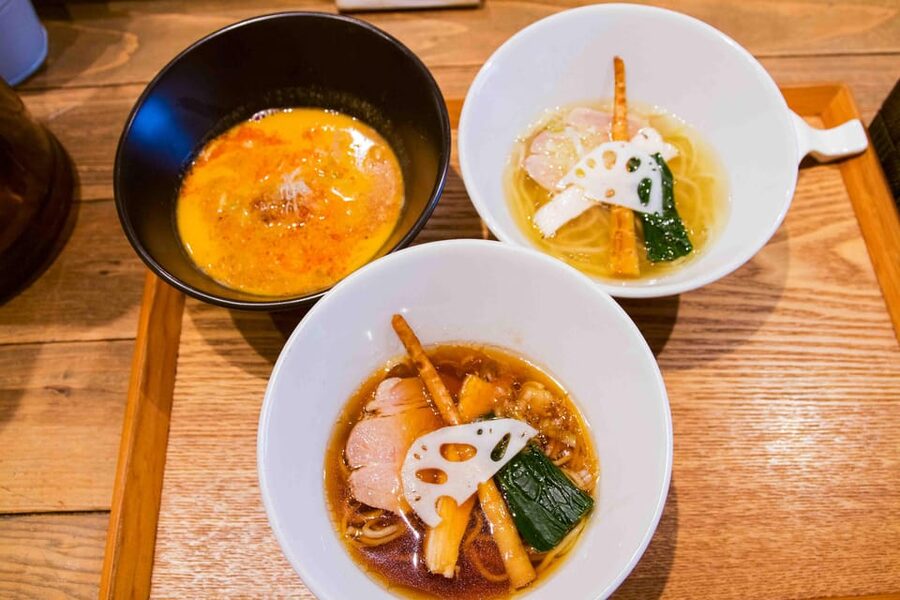
The food is the main event, but the teaching gives the tour its extra value. Guides use colorful slides and handouts to explain ramen’s origins, its development in Japan, regional types, and the basic work behind the bowl.
The visual material matters. A guide with an iPad or tablet can show the differences between styles while you are tasting them, rather than asking you to remember a long speech. The explanations also cover what makes each bowl distinct, including broth, noodles, and preparation.
I would not book this simply as a history lesson. You are here to eat. But the background helps you order with more confidence later in your trip. After six tastings, you should have a better sense of whether you prefer a clear soup, creamy pork broth, chicken broth, curry flavor, or dipping noodles.
The guides also add practical Tokyo context. Daisy helped one family with reservations for an anime-themed activity, while Bunga was praised for offering broader food suggestions and useful advice about Japan. That kind of help is not the advertised core of the tour, so it depends on the guide, but it can make the outing more useful than a meal alone.
The guides make the difference
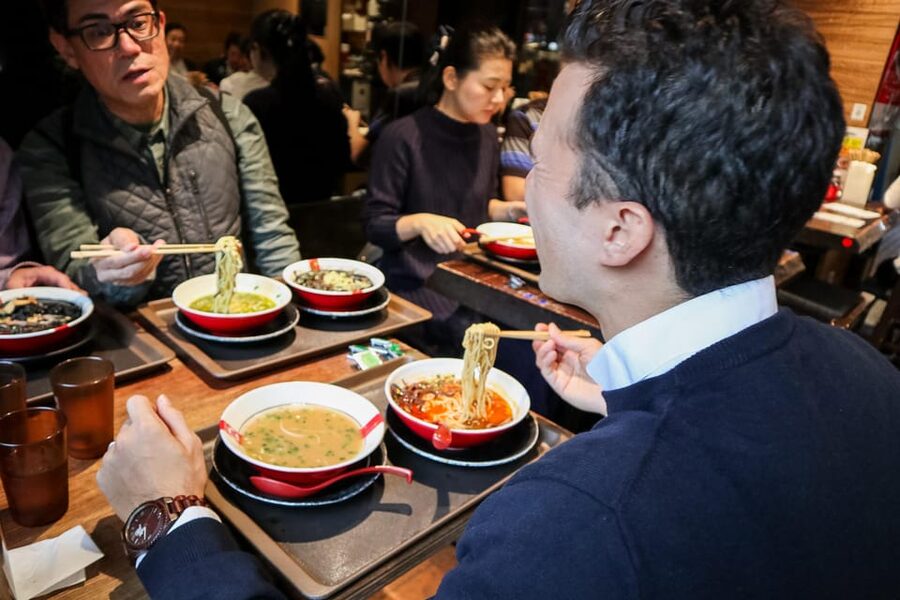
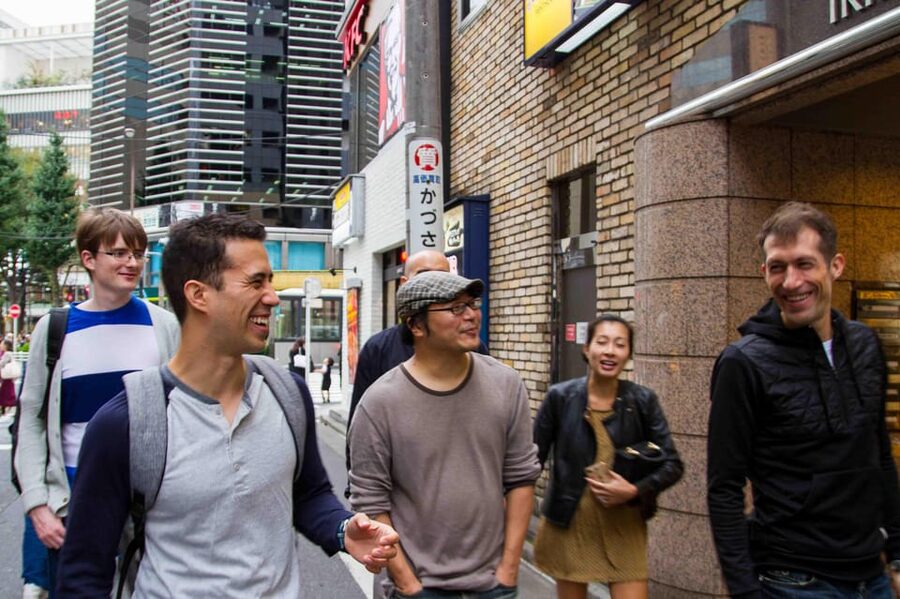
The strongest part of this experience is the guide. The group is capped at eight, so the setting is small enough for questions and conversation. That matters when you are trying to understand unfamiliar ramen styles rather than simply being handed a bowl.
Sahori is repeatedly praised for clear English, warmth, and a strong command of the subject. Bunga brings obvious enthusiasm and has been described as funny, local, and deeply interested in ramen. Makayla is praised for her friendly presentation and use of visual material, while Daisy is noted for patience and helpful Tokyo advice.
Other guides, including Manny and Brian, have also received strong praise for making the food and explanations enjoyable. The experience is not built around a single personality, but the guide’s energy shapes the afternoon. Ramen can be explained in a dry way, or it can become a lively discussion about regional styles and personal taste. This tour aims for the second version.
You should feel comfortable asking questions. The value is not only in hearing prepared information, but in having someone explain why one broth tastes heavier, why one noodle is shaped differently, or how to approach a bowl at a local shop.
Walking, trains, and the pace of the afternoon
Expect about 3 kilometers of walking. That is not an extreme distance, but the tour combines walking with six tastings, and you may be moving through crowded city streets. It is not a good fit if you have a low level of fitness or strongly dislike walking between food stops.
Train travel may be required, and the train ticket is not included. The meeting point changes according to the option you book. The Shibuya route starts in Shibuya and ends in Ebisu, while other versions may start or finish in Shinjuku or use the Ueno route.
This movement is part of the point. The shops are selected for their ramen styles rather than placed in one convenient food court. One participant appreciated that the walking and subway travel suggested the restaurants were chosen for quality and variety, not just ease of access.
Still, build in practical time around the tour. You will not want to schedule an elaborate meal immediately afterward. The tour lasts three hours, and the final bowl may leave you full even if you have a healthy appetite.
Is $122 a fair price for ramen?
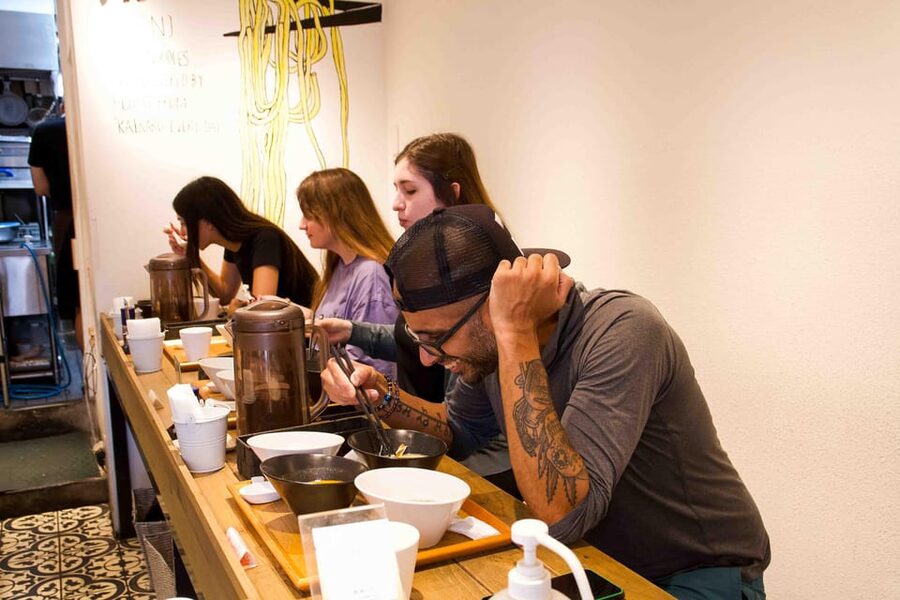
At $122 per person, this is not a budget food outing. You receive six mini bowls, one beverage, a three-hour guided route, restaurant access, and an English explanation of the food. Train fare, if needed, costs extra.
You could spend far less by visiting one ramen shop on your own. You could also order several bowls with a companion and share them, although restaurant rules and portion sizes may make that less practical. The tour’s price pays for comparison, planning, translation help, and access to a set of stops you might not find easily by yourself.
The value improves if you are new to ramen or want a structured introduction. You are not merely eating six similar soups. You are sampling regional and modern styles, learning the vocabulary to understand them, and getting a guided walk through several Tokyo districts.
The price is harder to justify if you already know exactly which ramen style you like and prefer independent eating. Some people specifically call the tour expensive, even while saying it was worth the cost. That is the right way to view it: a premium food experience, not a cheap lunch.
Dietary limits and practical warnings
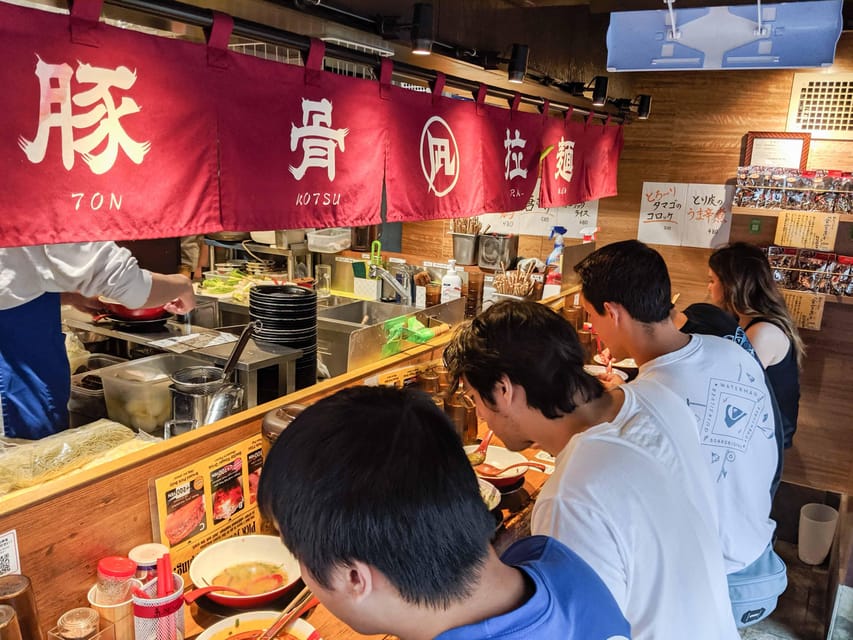
All ramen broths on this tour contain chicken, pork, and fish. That includes the advertised Hokkaido, Tokyo, Kyushu, tonkotsu, tori paitan, curry, and other styles.
Vegans and vegetarians should book the separate Vegan/Vegetarian Ramen Tasting Tour instead. Do not assume that a vegetable topping or a clear-looking broth makes a bowl vegetarian.
The tour is conducted in English, and the group is limited to eight participants. Free cancellation is available up to 24 hours before the activity for a full refund, and you can reserve now and pay later. These policies are useful if your Tokyo schedule is still moving around, but they do not change the need to check the exact route and meeting point for your selected option.
Who will enjoy this tour most?
I would recommend it most strongly to:
- First-time visitors who want an easy introduction to Tokyo ramen
- People who love trying several styles instead of ordering one familiar bowl
- Food-focused travelers who enjoy asking questions and learning as they eat
- Couples, families, and solo visitors who prefer a small group
- Visitors who want a guided walk through Shibuya, Shinjuku, or Ueno
- Anyone who finds Japanese menus intimidating
It may not suit you if you want a cheap meal, avoid long walks, or need strict dietary control. It is also not ideal for someone who wants to linger over one bowl in silence. The pace is built around moving, tasting, listening, and choosing again.
Children can enjoy it, especially if they are open to new flavors. One family had a good experience with a nine-year-old, but the quantity of food and walking still make a child’s appetite and energy important factors.
Should you book the Tokyo ramen tasting tour?
Book it if you want to understand why ramen is far more varied than the standard tonkotsu bowl many visitors know. Six custom mini bowls let you compare styles without committing to six enormous meals, and the small English-speaking group gives you room to ask questions.
I would schedule it early in your Tokyo stay. You will learn useful food terms, discover styles you might otherwise skip, and pick up restaurant ideas for the rest of your visit. Just arrive hungry, wear comfortable shoes, and treat the $122 price as payment for a guided food lesson, not simply six bowls of noodles.
If you are a serious ramen fan, this is an especially strong choice. If you are only mildly curious, the price may feel steep. For the right eater, though, it is a tasty and practical way to turn a familiar comfort food into a much bigger part of your Japan experience.
FAQ
How many bowls of ramen do I receive?
You receive six mini bowls of ramen. Each is approximately one-quarter the size of a full ramen bowl.
Can I choose which ramen I taste?
Yes. You choose six ramen styles from a selection of approximately 11 or 12 choices. The available choices depend on the route and restaurant selections.
How many ramen shops does the tour visit?
The tour visits three ramen shops, with two mini bowls served at each stop.
Which Tokyo neighborhoods are included?
The route visits three distinct Tokyo neighborhoods. Options include Shibuya, Shinjuku, and Ueno, with the exact route depending on the option and day. The Shibuya route starts in Shibuya and ends in Ebisu.
How long does the tour last?
The tour lasts three hours.
Is the tour conducted in English?
Yes. The tour has a live English-speaking guide.
Are train tickets included?
No. Train fare is not included if train travel is required.
Can vegetarians or vegans join this ramen tasting?
The broths all contain chicken, pork, and fish. Vegans and vegetarians should book the separate Vegan/Vegetarian Ramen Tasting Tour.
Just added in Tokyo
- A One-of-a-Kind Sushi Experience in a Special Place of Japan★ 5.0 · 15 reviews
- Tokyo Cute Bento Cooking Class – Make a Kawaii Character Lunchbox★ 5.0 · 126 reviews
- Japanese Home Cooking Class & Walk in Todoroki Temple Tokyo★ 5.0 · 88 reviews
- Japan Tokyo Tower Observatory Deck E-Ticket★ 4.0 · 34 reviews
- Catch a Baseball Game in Tokyo with a Local – Tickets Included★ 5.0 · 24 reviews
- JDM Experience with Fast&Furious RX-7 (English speaking Driver)★ 5.0 · 57 reviews
- Tokyo Private Day Tour by Car with English speaking Driver Guide★ 4.0 · 29 reviews
- Japan Classic 10 Day – One Life Adventures★ 5.0 · 129 reviews
Tokyo Tours, compared.

Tokyo Disney Resort – Tokyo Disneyland & Tokyo DisneySea Park Tickets
Read our review →

Mt Fuji and Hakone 1-Day Bus Tour Return by Bullet Train
Read our review →

teamLab Borderless Tickets: MORI Building DIGITAL ART MUSEUM
Read our review →