

Reviewed · GO-KARTS
Tokyo: Shibuya and Shinjuku Streets Guided Go-Karting Tour
Tokyo traffic becomes the attraction. This one-hour go-kart tour takes you through Shinjuku, Harajuku, Yoyogi Park, and Shibuya Scramble Crossing, giving you a playful street-level view of central Tokyo. I like the route’s variety, and I especially like that the guide photographs the ride for you.
I also like the small-group format, limited to eight people, which makes the outing feel more personal and easier to manage. The main drawback is practical rather than scenic: your driving documents must be exactly right, and one hour goes by quickly once the safety briefing and photo stops are included.
In This Review
- Key points to know before booking
- A playful way to see central Tokyo
- Starting near Shinjuku Central Park
- Shinjuku streets and the first stretch
- Yoyogi Park gives the route a pause
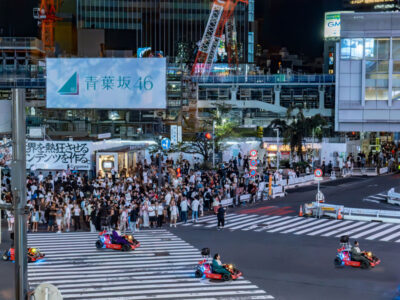
- Shibuya Scramble is the main event
- Harajuku adds a younger, creative edge
- Kabukicho and the return through Shinjuku
- The guide and free photos add real value
- Driving documents are the deal breaker
- Weather, clothing, and timing
- Who will enjoy this most?
- Should you book the Shibuya and Shinjuku kart tour?
- FAQ
- How long is the go-kart tour?
- Where does the tour meet?
- Which areas does the route visit?
- What driving documents do I need?
- Are costumes and photographs included?
- What happens if the weather is poor?
Key points to know before booking

- The route packs in Tokyo’s big-name districts: Shinjuku, Yoyogi Park, Shibuya, Harajuku, and Kabukicho all appear within one short circuit.
- Shibuya Scramble is the headline moment: You pass through one of Tokyo’s best-known intersections from behind the wheel.
- Your guide doubles as photographer: Free photos are taken along the way, including at planned stops.
- Costumes are included: You can add a silly outfit or headwear to make the photos more memorable.
- The tour is small but not private: Groups are limited to eight, and may be split for safety.
- A valid Japanese driving setup is essential: Bring the original required documents, not digital copies or an improvised substitute.
A playful way to see central Tokyo

At $72 per person, this is not a cheap substitute for Tokyo’s trains or walking routes. It is a short entertainment experience, not a standard sightseeing tour. You are paying for the go-kart, the guide, the route planning, the photo service, and the novelty of driving through famous city districts in costume.
That makes the price easier to justify if you want a memorable activity rather than another observation deck or museum. You can see Tokyo from a train window almost anywhere, but a go-kart puts you directly into the city’s streets, signs, traffic lights, and neon scenes.
The ride lasts one hour, with a 15-minute safety briefing at the start. That means the actual driving time is shorter than a full hour, so you should book this for the fun and the photos, not as a serious way to cover every neighborhood in depth.
The strongest part is the combination of movement and spectacle. You are not simply driven around in a vehicle while someone points out landmarks. You control the kart, follow the guide, stop for pictures, and pass through several districts with very different moods.
A few more options to weigh up in Tokyo
- Tokyo Disney Resort – Tokyo Disneyland & Tokyo DisneySea Park Tickets
★ 4.8 · 99,488 reviews - SHIBUYA SKY Ticket
★ 4.7 · 46,509 reviews - JR Whole Japan Rail Pass
★ 4.8 · 29,150 reviews
Starting near Shinjuku Central Park
The meeting point is the operator’s shop at 4-chōme-18-2 Nishishinjuku, near Shinjuku Central Park and behind The Knot Tokyo Shinjuku. It is described as about a 20-minute walk from Shinjuku Station, so allow enough time to leave the station, cross the surrounding streets, and find the shop without rushing.
At the shop, you complete the preparation and safety briefing. This is where the experience becomes more serious than the costumes and photos suggest. You need to listen carefully, understand the instructions, and feel comfortable controlling the kart before setting off.
The guide leads the group through the streets, and English and Japanese guiding are available. The group limit is eight people, though the operator may divide a larger gathering into smaller groups to keep the ride safe and manageable.
That small-group limit matters. A long line of karts would be harder to control in central Tokyo, while a smaller group gives the guide more chance to watch how everyone is handling the ride. If someone in your party feels nervous at first, the briefing and the guide’s patient approach can help. One particularly praised guide was Shingo, who was noted for taking plenty of pictures and keeping the ride enjoyable.
Shinjuku streets and the first stretch

You begin in Shinjuku, one of Tokyo’s major city centers. The early part of the route gives you time to settle into the kart and follow the guide before reaching the most famous photo locations.
This is also where you will notice the difference between sightseeing from a bus and sightseeing from a small open vehicle. Tall buildings, busy junctions, shopfronts, and changing neighborhoods pass at street level. You may not receive a long historical explanation at every stop, but the route gives you a lively visual introduction to western central Tokyo.
The guide’s role is important here. You are not expected to know the route, anticipate every turn, or manage the group on your own. The ride works best when you follow the leader closely and treat the guide as both traffic coordinator and photographer.
The experience is designed to feel fun, and the free costumes are part of that. You can choose a costume or headwear before departure, adding a comic touch to the photos. If you prefer a more ordinary picture, you do not have to turn the whole ride into a costume parade, but the playful clothing is clearly part of the appeal.
Yoyogi Park gives the route a pause
Yoyogi Park brings a change of pace after the city streets. The stop is used for sightseeing and photographs, while the route itself continues to show you Tokyo from the kart.
The value of this stop is visual variety. Central Tokyo is not only towers and illuminated signs. A park setting gives the guide a different backdrop and lets the group pause before continuing toward Shibuya and Harajuku.
You should think of this as a photo stop rather than a full park visit. The tour is only one hour, so there is no time for a long walk or a detailed exploration of the park. If Yoyogi Park is important to your Tokyo plans, return separately on foot or by train.
Still, the pause helps break up the ride. You get a chance to check your costume, settle your nerves, and enjoy a few pictures without the pressure of moving through traffic.
A completely different kind of day out:
- Mt Fuji and Hakone 1-Day Bus Tour Return by Bullet Train
★ 5.0 · 26,383 reviews - TOKYO SKYTREE® Ticket
★ 4.7 · 25,136 reviews - teamLab Borderless Tickets: MORI Building DIGITAL ART MUSEUM
★ 4.7 · 24,126 reviews - teamLab Planets TOKYO Ticket
★ 4.7 · 21,663 reviews
Shibuya Scramble is the main event

The approach to Shibuya is the part many people book this for. Shibuya Scramble Crossing is one of Tokyo’s most recognizable public spaces, famous for the waves of pedestrians crossing from several directions when the signals change.
Passing through the area in a go-kart gives you a very different view from standing on the pavement or watching from an upper-floor café. You become part of the street scene for a moment, with the district’s large signs, buildings, and crowds around you.
The crossing is not a private attraction, and traffic conditions can affect how the route feels. You should expect to follow the guide’s pace rather than race or choose your own path. The ride is about controlled fun in a real city environment.
This is also one of the best places for photographs. The guide takes pictures during the trip and at selected stops, so you can concentrate on driving instead of trying to operate a camera while wearing a costume and keeping up with the group.
Several departures are available, depending on the schedule. A late afternoon start can be a smart choice. One ride time praised by participants was around 6 p.m., because it offered a mix of daylight and Tokyo’s illuminated evening streets. If you want the full night-light effect, a later slot may be more suitable, but availability can vary.
Harajuku adds a younger, creative edge

The route continues through Harajuku, an area known for fashion, youth culture, and eye-catching street scenes. From the kart, you get a quick look rather than a shopping expedition.
That distinction is important. You will pass through Harajuku, but you will not have time to browse shops, eat at a café, or explore side streets on this tour. If you want Takeshita Street or the neighborhood’s shops, plan a separate visit.
As part of the driving circuit, Harajuku works well because it changes the feel of the route again. Shinjuku gives you a major business and entertainment center, Shibuya brings the famous crossing, and Harajuku adds a more playful visual character.
The guide may stop for photographs here or simply pass through, depending on traffic and timing. The experience is best understood as a moving sampler of Tokyo districts, not a detailed walking tour of each one.
Kabukicho and the return through Shinjuku

Kabukicho brings the ride back toward Shinjuku’s entertainment district. Its signs, streets, and dense commercial setting help create the kind of Tokyo images people often hope to see after dark.
A nighttime departure can make this part especially appealing, as the city lights become a bigger part of the scenery. A daytime ride has its own advantage: you can see more of the buildings and neighborhood details without relying on neon.
The route then returns toward Shinjuku, with scenic views along the way, before finishing at the original shop. The circuit includes the Tokyo Metropolitan Government Building area in the advertised route, giving you another major Shinjuku landmark near the end of the outing.
You should not expect to stop and enter the building. The attraction here is the view as you pass through the district, along with the feeling that you have covered a surprisingly broad section of central Tokyo in a short time.
The guide and free photos add real value

The guide is more than someone who leads the karts. The guide explains the ride, watches the group, helps nervous drivers, and takes photographs along the route.
That last part is easy to underestimate. Go-karting is an activity where you cannot safely take many pictures yourself. Having a guide capture action shots means you can focus on the road and still go home with a record of the experience.
The photo service also makes the costumes worthwhile. A silly hat or character outfit might feel excessive at the shop, but it gives the images a clear sense of occasion. One useful tip from the experience is simple: if you are considering a costume, choose one. It is part of what separates this from an ordinary drive.
Guides have been praised for being friendly, patient, efficient, and good at English. Shingo received specific praise for taking many photos, while other participants highlighted the staff’s clear instructions and kind approach. That does not remove the need for you to pay attention, but it does make the tour easier for first-time drivers.
Driving documents are the deal breaker

You cannot treat the license rules as a minor booking note. To drive legally in Japan, you need the original driving license, a passport, and an International Driving Permit in the required booklet format, issued under the 1949 Geneva Convention.
The operator specifically says that IDPs from Brazil, China, Indonesia, Mexico, Qatar, Saudi Arabia, Bahrain, Pakistan, and Kuwait are not accepted. You should check your own country’s eligibility before paying for the activity.
Drivers from Switzerland, Germany, France, Belgium, Monaco, and Taiwan have a different requirement. You must bring your original domestic license, an official Japanese translation from an authorized organization, and your passport. All three documents are required.
Incorrect paperwork can mean being refused on the day with no refund. Do not rely on a phone image, a photocopy, or an IDP format that looks similar but does not meet the Japanese rules. Check the Japan Automobile Federation guidance before booking and carry every original document required for your nationality.
Alcohol is also a firm restriction. Anyone judged to be under the influence will not be allowed to participate and will not receive a refund.
Weather, clothing, and timing
The tour requires good weather. If poor conditions force a cancellation, you can receive a full refund or choose to reschedule.
Because the karts are open to the weather, clothing affects your comfort. The experience has provided gloves during cold rides, which is useful in winter, but you should still dress for the forecast. You may enjoy the ride less if you arrive underdressed for a cool evening or unprepared for changing conditions.
Time of day changes the mood. A morning or daytime outing gives you clearer views of the buildings and streets. An evening departure can provide both daylight and illuminated Tokyo, depending on the start time. The 6 p.m. option was especially useful for getting both versions of the city in one ride.
The route may also be adjusted by traffic, safety needs, and group management. The advertised stops give you a good idea of the outing, but the guide has to make sensible choices on the road.
Who will enjoy this most?
I would recommend this for adults and older teens who already meet the driving requirements and want a high-energy break from temples, department stores, and train stations. It suits first-time visitors who want a quick introduction to several famous districts, as well as repeat visitors looking for a different view of Tokyo.
It is particularly good for couples, friends, and small groups who enjoy taking pictures together. The costumes, guide photos, and famous streets make it easy to create a shared memory rather than simply collect another set of city snapshots.
It may not suit you if you dislike driving in traffic, feel uncomfortable in an open kart, or want a quiet sightseeing experience. It is also a poor choice if you need a long stop at each attraction. The route is fast and broad, not slow and detailed.
Families and groups should also confirm that every intended driver meets the license rules. The supplied information does not list age, height, or weight requirements, so you should ask the operator directly if those details affect anyone in your party.
Should you book the Shibuya and Shinjuku kart tour?
Book it if you want a funny, active, photo-friendly hour in central Tokyo and you have the correct driving documents. The best reasons are the Shibuya Scramble crossing, the changing route through Shinjuku, Harajuku, and Yoyogi Park, and the guide’s free photos.
I would choose a late afternoon or early evening departure if available. You may get daylight, city lights, and a more dramatic finish through Kabukicho and Shinjuku.
Skip it if you are looking for a full sightseeing tour, dislike street driving, or cannot prove your legal eligibility. At $72, the value depends on seeing it as a one-hour Tokyo experience with photography and costumes, not as transportation or a replacement for exploring these neighborhoods on foot.
FAQ
How long is the go-kart tour?
The activity lasts one hour, including a 15-minute safety briefing at the start.
Where does the tour meet?
You meet at the activity provider’s store at 4-chōme-18-2 Nishishinjuku, near Shinjuku Central Park and behind The Knot Tokyo Shinjuku. The store is about a 20-minute walk from Shinjuku Station.
Which areas does the route visit?
The route includes Shinjuku, Yoyogi Park, Shibuya Scramble Crossing, Harajuku, Kabukicho, and the Tokyo Metropolitan Government Building area before returning to the shop.
What driving documents do I need?
You need your original driving license, a passport, and a booklet-type International Driving Permit issued under the 1949 Geneva Convention. Drivers from Switzerland, Germany, France, Belgium, Monaco, and Taiwan need an original domestic license, an official Japanese translation, and a passport instead.
Are costumes and photographs included?
Yes. The tour includes free costumes, a professional guide, and photographs taken during the ride and at photo stops.
What happens if the weather is poor?
If the operator cancels because of poor weather, you can receive a full refund or reschedule. You can also cancel up to 24 hours in advance for a full refund.
Just added in Tokyo
- A One-of-a-Kind Sushi Experience in a Special Place of Japan★ 5.0 · 15 reviews
- Tokyo Cute Bento Cooking Class – Make a Kawaii Character Lunchbox★ 5.0 · 126 reviews
- Japanese Home Cooking Class & Walk in Todoroki Temple Tokyo★ 5.0 · 88 reviews
- Japan Tokyo Tower Observatory Deck E-Ticket★ 4.0 · 34 reviews
- Catch a Baseball Game in Tokyo with a Local – Tickets Included★ 5.0 · 24 reviews
- JDM Experience with Fast&Furious RX-7 (English speaking Driver)★ 5.0 · 57 reviews
- Tokyo Private Day Tour by Car with English speaking Driver Guide★ 4.0 · 29 reviews
- Japan Classic 10 Day – One Life Adventures★ 5.0 · 129 reviews
Go-Karts, compared.
Flagship 2-Hours Official Street Go-Kart Tour – Tokyo Bay Shop
Read our review →
Shibuya Go Karting Experience by Akiba Kart Shibuya
Read our review →
Tokyo Go Kart: Asakusa, Skytree, and Akihabara **IDP MUST**
Read our review →
Shibuya Official Street Go-Kart in Shibuya Annex
Read our review →Browse the lists this tour appears in