
Reviewed · BOAT TRIPS AND CRUISES
Tokyo Spectacular View Day-Cruise in 90 Minutes
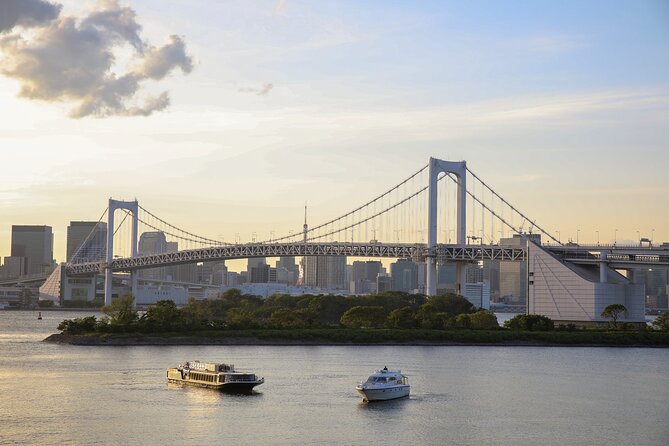
Tokyo looks different from the water. This 90-minute Tokyo Bay cruise gives you open-air skyline views, a calm ride, and a fresh angle on famous sights such as Rainbow Bridge and Tokyo Tower. I like the choice between an afternoon sailing and a night trip, and I like that you can move between the photo-friendly top deck and the heated lower level. The main drawback is price: at $65.89 per person, this is not a cheap sightseeing ride.
The cruise also works well when you want a simple evening plan. The boat leaves from Tennozu Yamatsu Pier, returns to the same place, and has clean facilities, tables, a restroom, and air conditioning. Just keep in mind that the top deck can feel cold at night, and one passenger found the guide’s commentary hard to hear without a microphone.
In This Review
- Key points to know before booking
- Why seeing Tokyo from the water works
- Starting at Tennoz Yamatsu Pier
- Choosing afternoon or night
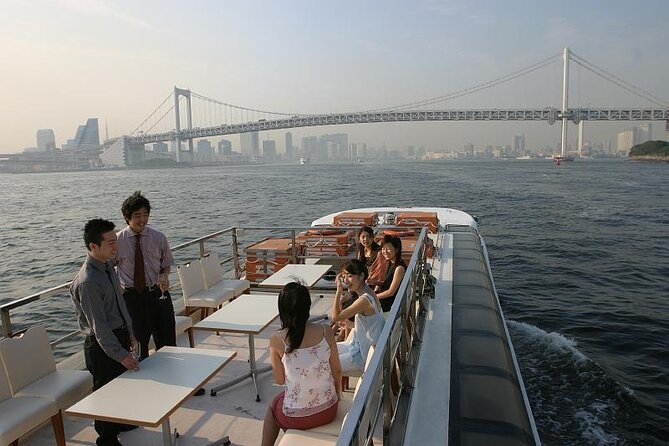
- Rainbow Bridge from below
- Tokyo Tower across the bay
- Kachidoki Bridge and Tokyo’s working river
- Tsukiji from the water
- Eitai Bridge and older Tokyo
- Toyosu Market and Odaiba Seaside Park
- What the boat experience is like
- Is $65.89 a fair price?
- Who should book this cruise?
- Should you book the Tokyo Spectacular View Day-Cruise?
- FAQ
- How long does the Tokyo Spectacular View Day-Cruise last?
- Where does the cruise start?
- Where does the cruise end?
- Are food and drinks included?
- What is included in the ticket?
- Can I cancel for a full refund?
Key points to know before booking
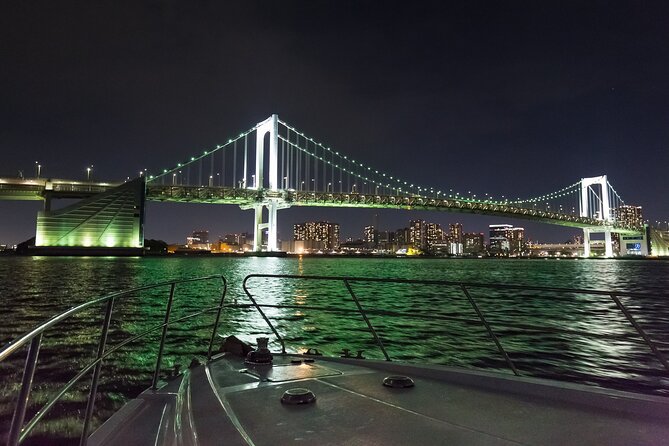
- Rainbow Bridge from below: The boat passes under one of Tokyo’s largest bridges, giving you a view that is difficult to get from land.
- Tokyo Tower at night: Evening departures offer glittering city lights and reflections across Tokyo Bay.
- Open-air and indoor seating: Use the upper deck for photographs, or sit downstairs at a table in air-conditioned comfort.
- Seven notable sights: The route includes Rainbow Bridge, Tokyo Tower, Kachidoki Bridge, Tsukiji, Eitai Bridge, Toyosu Market, and Odaiba Seaside Park.
- Small-group possibility: The boat can hold up to 57 people, though one late Wednesday sailing had only about 10 passengers.
- Simple cancellation terms: You can receive a full refund if you cancel at least 24 hours before departure, subject to weather and minimum-number rules.
Why seeing Tokyo from the water works
Tokyo can feel like a city built for trains, shopping streets, and high viewpoints. A cruise gives you a slower hour and a half, with room to watch the city change from old river bridges to modern towers and waterfront development.
I like this experience because it is not only a skyline photo stop. The route connects several parts of Tokyo that can feel separate on a land-based visit. You see the industrial waterfront, historic bridges, former market districts, and newer attractions around Odaiba in one continuous ride.
The boat is also a practical break from walking. You can sit at a downstairs table, order a Japanese alcoholic drink or a light snack for an extra charge, and let the scenery come to you. That makes the cruise useful after a full day of temples, department stores, and crowded train stations.
The route is guided, with the crew explaining architecture and local history. The English on board has been praised as clear, though the commentary may not reach everyone equally well. If you want every detail, sit near the guide or ask where the best listening position is before the boat gets underway.
More Boat Trips in Tokyo
- Mt Fuji & Hakone Cruise, Drum Show Bullet Train 1 Day from Tokyo
★ 4.0 · 7,413 reviews - Tokyo Mt Fuji 5th St & Hakone Cruise Bus Tour w/Bullet Train
★ 4.4 · 5,024 reviews - Tokyo: Meiji Shrine, Asakusa, Skytree Bus Tour and Cruise
★ 4.7 · 1,986 reviews
Starting at Tennoz Yamatsu Pier
The meeting point is Tennozu Yamatsu Pier at 1-chome-39-21 Higashishinagawa, Shinagawa City. The pier is near public transportation, which helps, but you should still allow time to locate the exact boarding area. A mobile ticket is accepted, and confirmation arrives at booking.
The cruise returns to the same pier, so you do not need to plan a separate ride from the endpoint. That is a small but useful advantage in Tokyo, where a scenic outing can become less relaxing if you must solve a complicated return trip late at night.
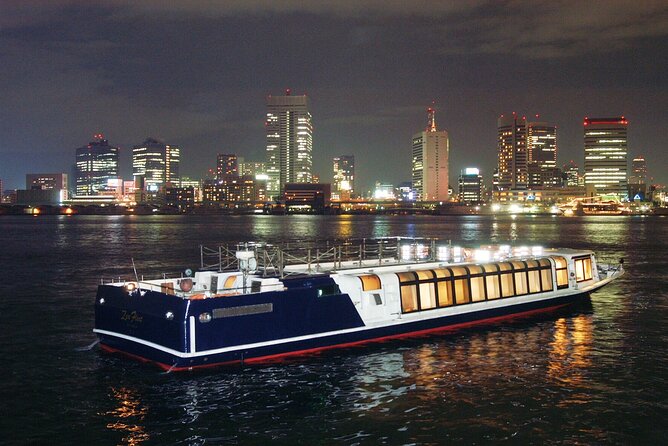
The boat has a maximum capacity of 57 people. That is large enough to create a social feel but not the scale of a huge sightseeing ship. Actual crowding can vary by departure. One late Wednesday evening trip had only around 10 passengers, which made the ride feel almost private. You should not count on that level of quiet, but less busy sailings are possible.
Choosing afternoon or night
The afternoon option is the better choice if you want to study the details of the bridges and waterfront buildings. Daylight makes it easier to see the structure of Rainbow Bridge, the broad shape of Odaiba, and the changing riverbanks around the older bridges.
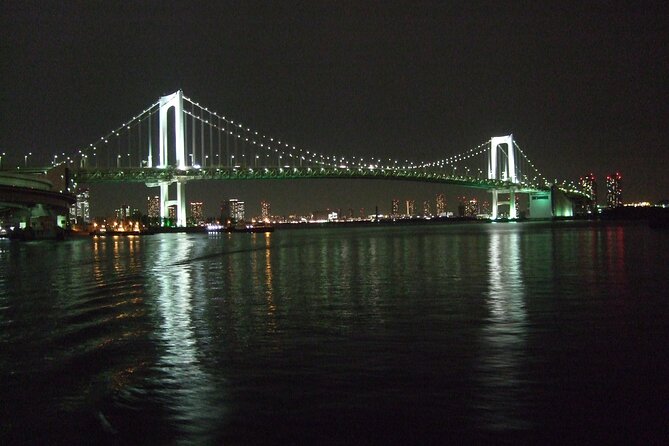
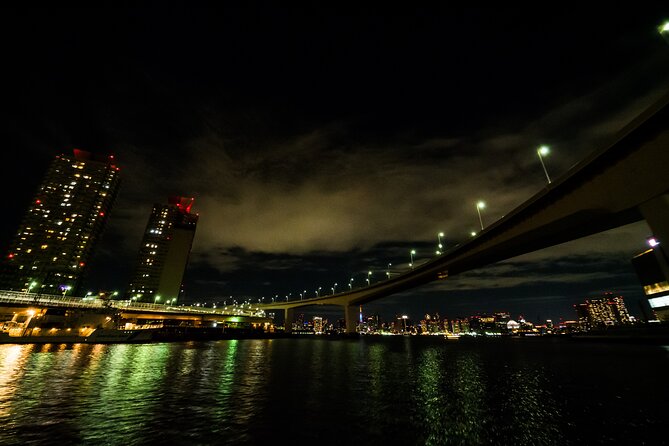
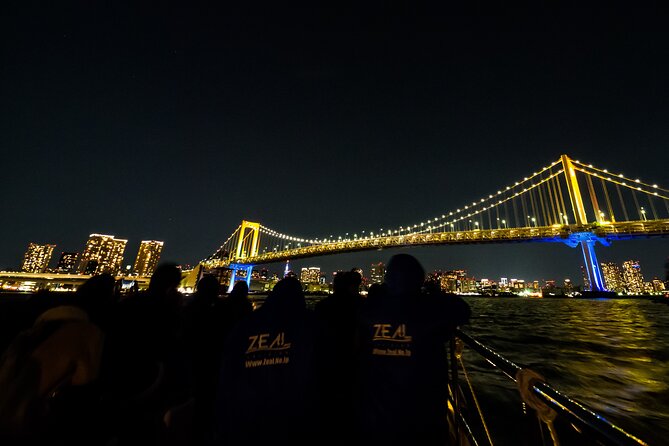
The night option has a different appeal. Tokyo Tower glows above the water, bridges light up, and the city takes on a more dramatic look. The reflections are a big part of the experience, especially if the water is calm. Several strong comments about the cruise focus on the beauty of the lights and colors after dark.
Night also brings two practical issues. The upper deck is the best place for unobstructed photographs, but it can be chilly. Blankets are not provided, so bring an extra layer if you plan to stay outside for much of the ride. Also, city noise and wind can make spoken explanations harder to hear.
I would choose the afternoon for architecture and sightseeing detail. I would choose the evening for atmosphere, photography, and a memorable final night in Tokyo.
Rainbow Bridge from below
One of the first major sights is Rainbow Bridge, which links Shibaura and Odaiba. Its deck sits about 50 meters above sea level, giving the boat enough clearance to pass underneath.
Seeing a bridge from below changes its scale. From the waterfront, you usually notice the roadway and suspension cables. From the boat, you can look up at the supporting structure as the bridge passes overhead. It is one of the most distinct moments on the route, so keep your camera ready before the boat reaches it.
The bridge is also useful as a marker. It helps you understand how Tokyo Bay connects the central city with Odaiba, a waterfront district built on reclaimed land. You will not stop under the bridge, so photographs need to be taken while moving. The open-air deck is the best place for that view.
A completely different kind of day out:
- Tokyo Disney Resort – Tokyo Disneyland & Tokyo DisneySea Park Tickets
★ 4.8 · 99,488 reviews - SHIBUYA SKY Ticket
★ 4.7 · 46,509 reviews - JR Whole Japan Rail Pass
★ 4.8 · 29,150 reviews - Mt Fuji and Hakone 1-Day Bus Tour Return by Bullet Train
★ 5.0 · 26,383 reviews
Tokyo Tower across the bay
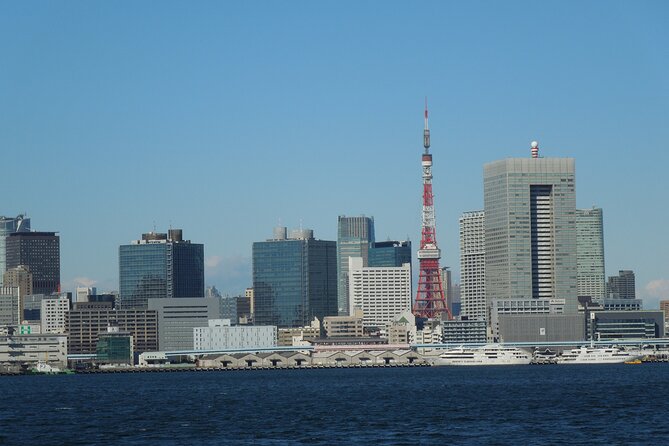
Tokyo Tower is introduced from the water rather than from its base. It was Japan’s tallest television tower from 1958 until 2011, and it remains one of the city’s best-known symbols.
From the boat, you get a wider view than you would near the tower itself. The tower becomes part of the larger city scene, surrounded by buildings and reflected light rather than blocked by nearby streets. At night, its illumination gives you a strong focal point for photographs.
This is not a Tokyo Tower admission ticket, and the boat does not take you up the tower. I see the cruise as a way to place the tower in the city’s wider setting. If you have already visited the observation decks, this view adds variety. If you have not, it will not replace going inside.
Kachidoki Bridge and Tokyo’s working river
The route passes beneath Kachidoki Bridge, one of the few bascule bridges in Japan. A bascule bridge lifts part of its deck to let ships through, a design linked to the period when large vessels used the Sumida River more heavily.
The guide’s explanation gives this bridge more meaning than a quick photograph would. You can look at the structure and imagine the river as a working transport route, not only a scenic backdrop. The bridge is especially interesting for anyone who enjoys engineering or urban history.
As with Rainbow Bridge, this is a pass-by sight, not a shore stop. You will have a short window for pictures. Try to listen first, then photograph, rather than spending the whole approach with your eyes on the screen.
Tsukiji from the water
The boat passes Tsukiji, once Japan’s largest central market. The wholesale functions later moved to Toyosu because of the age of the original facilities, but Tsukiji remains closely tied to Tokyo’s food culture.
From the water, you see the district in relation to the city’s wider waterfront. This is a useful counterpoint to visiting the market streets on foot. A land visit focuses on food stalls and small shops. The cruise gives you a broader view of the district’s place along the river.
Do not expect to leave the boat for a market walk. Tsukiji is one of the sights viewed from the water, and the value comes from the route’s wider context. If you plan to visit Tsukiji separately, the cruise helps connect that visit to Toyosu and the bay.
Eitai Bridge and older Tokyo
Eitai Bridge was built in 1926. The guide also explains an earlier chapter of Japanese bridge construction, when iron was first used for a road bridge in Japan in 1897. That earlier structure had a wooden floor and was later destroyed by fire.
This part of the route is less about a single famous photo and more about seeing how Tokyo rebuilt and adapted its crossings over time. The bridge adds age and texture to a cruise that also includes very modern towers and waterfront buildings.
I like this balance. Tokyo is often presented as ultra-modern, but the river reveals a city shaped by fires, shipping, markets, bridges, and repeated rebuilding. The commentary helps you notice those layers while you are sitting comfortably on board.
Toyosu Market and Odaiba Seaside Park
The cruise passes Toyosu Market, which took over the central wholesale role once associated with Tsukiji. The newer complex has a distinctive shape, and the boat offers a broad view of the building from the water.
Toyosu is a useful sight even if you have no interest in market logistics. It shows how Tokyo continues to move major facilities outward and reshape its waterfront. From the boat, you can appreciate the scale of the complex in a way that is harder to do from within the surrounding streets.
The route then passes through Odaiba Seaside Park. The name Odaiba comes from daiba, a place where cannons were installed. At the end of the Edo period, the Tokugawa government built defensive positions in response to the perceived threat of foreign ships.
Today, Odaiba is known for recreation and waterfront views, but the name points to a more defensive past. That contrast is one of the route’s quiet pleasures. You see a relaxed seaside park while hearing how the area once served a military purpose.
What the boat experience is like
The upper deck is the clear choice for photographs and uninterrupted views. It gives you more open sky and a better chance to frame bridges, towers, and the waterfront without window glare.
The lower deck is the sensible choice in cold or poor weather. It is air-conditioned and has tables, so you can sit down, stay warm, and enjoy the ride without standing for 90 minutes. A restroom is also available on board, which makes the cruise easier for families and anyone who prefers not to plan around a short outing.
Children’s chairs are available. The information provided does not describe a wider set of accessibility details, so you should confirm any specific mobility needs before booking.
Alcoholic drinks and snacks are sold on board but are not included in the ticket price. I would treat these as optional extras, not as part of the core value. The main purchase is the boat ride, the route, the guide, and the chance to see Tokyo from the water.
The crew has received repeated praise for being friendly and helpful. The boat has also been described as safe, comfortable, clean, and punctual. Those basics matter. A scenic cruise loses much of its charm if boarding feels chaotic or the facilities are neglected.
Is $65.89 a fair price?
At $65.89 per person, this cruise costs more than a basic public ferry ride. You are paying for a guided sightseeing route, a 90-minute round trip, an air-conditioned vessel, an open-air viewing area, and a planned passage by several major sights.
The price makes the most sense if you value comfort and structure. You do not need to work out a route between Rainbow Bridge, Toyosu, Odaiba, and the central river bridges. You can sit down, hear explanations, and see the city from a position that is not available from most streets.
It is less appealing if you only want a quick skyline photograph or are trying to keep costs low. The boat does not include drinks or snacks, and the key sights are viewed while passing rather than visited directly. You also need good weather, so the outing depends on conditions.
For a special evening, a relaxed first look at Tokyo, or a final activity before leaving Japan, I think the cost can be justified. For budget sightseeing, I would compare it with free waterfront viewpoints and public transport before booking.
Who should book this cruise?
I would recommend it to couples, families, photographers, and first-time visitors who want a gentle overview of Tokyo’s bay and river districts. It is also a good choice for anyone who has already spent several days walking and wants sightseeing without more footwork.
The afternoon departure suits people interested in bridges, markets, and waterfront design. The night departure suits anyone who wants city lights and a more romantic setting. Families may appreciate the restroom, tables, indoor seating, and children’s chairs.
I would be more cautious if you need a fully narrated tour with perfect audio. The guide speaks English well, but one passenger found it difficult to hear at times. Sit close to the guide when possible, and consider the cruise a visual experience first, with commentary as a useful extra.
The cruise requires good weather and a minimum number of participants. If either condition causes cancellation, you can choose another date or receive a full refund.
Should you book the Tokyo Spectacular View Day-Cruise?
Book it if you want Tokyo’s famous sights arranged into one easy water-based outing, especially at night when the bridges and tower are lit. The friendly crew, clean facilities, open-air deck, and strong route make this more than a simple boat transfer.
Skip it if $65.89 feels high for a ride without shore stops, or if your priority is a long visit inside Tokyo Tower, Tsukiji, or Odaiba. For everyone else, I see it as a polished, comfortable way to give Tokyo a little breathing room and to finish the day with a view most city streets cannot provide.
FAQ
How long does the Tokyo Spectacular View Day-Cruise last?
The cruise lasts approximately 1 hour and 30 minutes.
Where does the cruise start?
It starts at Tennozu Yamatsu Pier, 1-chome-39-21 Higashishinagawa, Shinagawa City, Tokyo 140-0002, Japan.
Where does the cruise end?
The cruise returns to and ends at the same meeting point.
Are food and drinks included?
No. Alcoholic drinks and snacks are available for purchase on board, but they are not included in the ticket price.
What is included in the ticket?
The ticket includes the boarding fee, an air-conditioned vehicle, and a restroom on board.
Can I cancel for a full refund?
Yes. You can cancel at least 24 hours before the experience start time for a full refund. Weather or minimum-number cancellations may also result in a different date or a full refund.
Just added in Tokyo
- Toyosu Market Morning Tuna Auction and Tsukiji Food Tour with Licensed Guide★ 4.5 · 146 reviews
- Tsukiji Food and Toyosu Market with Government-Licensed Guide★ 5.0 · 158 reviews
- JDM Itasha trip to famous car meet up spot Daikoku Parking★ 4.5 · 175 reviews
- From Tokyo to Kyoto and Nara: A Captivating Full-Day Private Tour★ 5.0 · 17 reviews
- Master the art of Sushi : Toyosu Market Tour & Tuna Cutting★ 5.0 · 60 reviews
- Private Tour: Tokyo’s Oldest Sake Brewery and Riverside Walk★ 5.0 · 25 reviews
- Tokyo’s Scariest Shitamachi Ghost Tour★ 4.0 · 30 reviews
- 3-Hour Tokyo Private E-Bike Tour Starting from Your Hotel★ 5.0 · 117 reviews
Boat Trips and Cruises, compared.
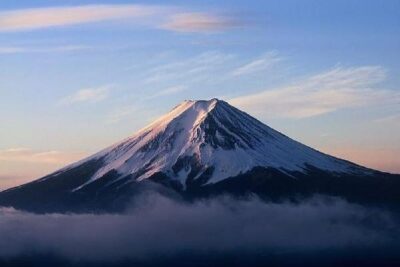
Mt Fuji & Hakone Cruise, Drum Show Bullet Train 1 Day from Tokyo
Read our review →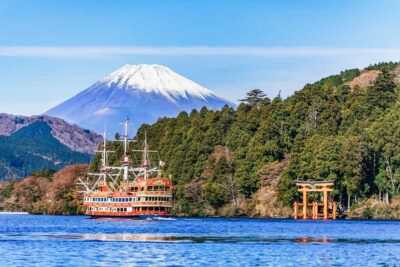
Tokyo Mt Fuji 5th St & Hakone Cruise Bus Tour w/Bullet Train
Read our review →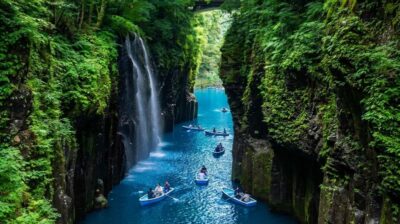
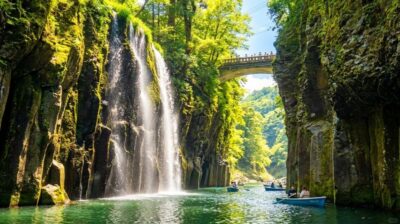
Kyushu: Mount Aso, Kusasenri & Takachiho Gorge Day Tour (Optional Takachiho Boat Ride Experience)
Read our review →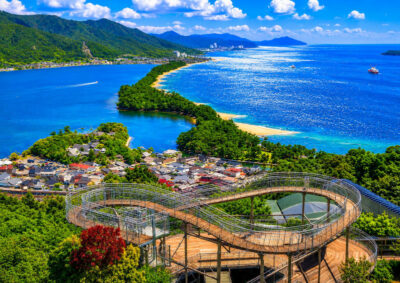
Japan’s Three Scenic Views & Kyoto by the Sea: Amanohashidate Cable Car + Ine Bay Boat Tour Day Trip (Departing from Osaka or Kyoto)
Read our review →
Mt. Fuji 5th Station & Hakone Cruise 1-Day Bus Tour
Read our review →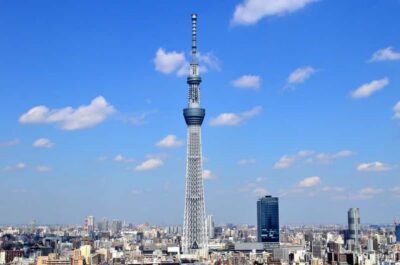
Meiji Shrine, Asakusa, Skytree Bus Tour and Cruise
Read our review →Browse the lists this tour appears in